
Offshore casinos for Australian players in 2026: where the prohibition stands, where the blocks fall, and what the alternatives look like
Data current as of 9 November 2026; operator names and ACMA enforcement actions cross-checked against the Australian Communications and Media Authority register and AUSTRAC reporting guidance.
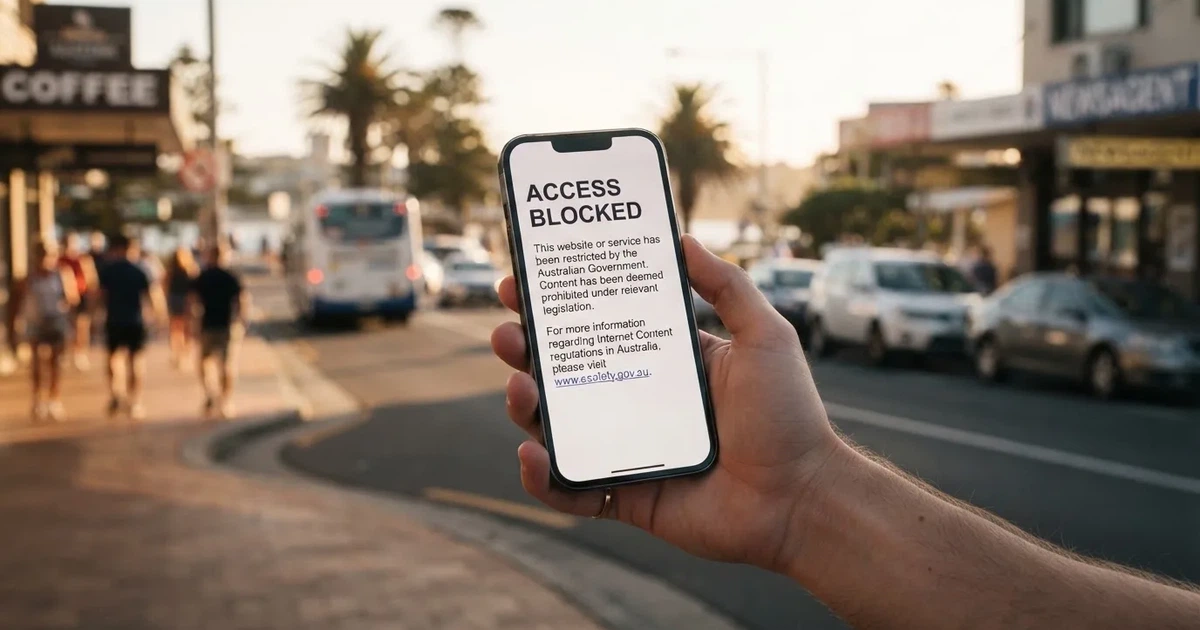
A search for “best offshore casinos for Australian players 2026” runs into a wall the moment it leaves the search bar. The Interactive Gambling Act 2001 prohibits offering online casino games to anyone physically in Australia. No state or territory licences the product. The Australian Communications and Media Authority — the ACMA — investigates breaches, issues formal warnings and asks internet service providers to block offending sites. The player at the other end of the connection is not prosecuted, but the offshore operator is, and the account sitting behind one of these sites is, in practice, unprotected.
This page walks through what that picture actually looks like at the operator level in 2026, with the eleven brands the ACMA has moved against most recently. The point is not to assemble a shortlist a reader can act on — the law forecloses that — but to lay out the enforcement record so a person can see which brands have already drawn formal warnings, what the ACMA process looks like, and where the lawful alternatives sit. The ranking that follows the prohibition is built on what the ACMA itself has published, not on affiliate marketing.
Table of Contents
- What an offshore casino means under Australian law
- How the ACMA enforces the prohibition
- How the prohibition plays out at the operator level
- Reading the eleven brands individually
- Where the prohibition leaves the player
- Payments, and what each method says about the site
- What lawful play looks like in Australia
- Player wellbeing: BetStop and what it actually covers
- The reform that did pass, and the one that hasn’t
- A note on the licence a site displays
- Tax: what an Australian punter owes
- What this page is not
- What a person can actually take from this
- Australian players and offshore casinos: questions readers actually ask
- Frequently Asked Questions
What an offshore casino means under Australian law
“Offshore” describes a casino incorporated and licensed outside Australia and reachable from an Australian IP address. The term is technical, not promotional: every brand on this page holds a licence in Curaçao, Cyprus, the Seychelles or some other non-Australian jurisdiction. None holds an Australian licence, because no Australian jurisdiction issues one for online casino games.

The Interactive Gambling Act 2001, tightened by the Interactive Gambling Amendment Act 2017, makes it an offence to provide a “prohibited interactive gambling service” to a person in Australia. That phrase covers online casino games, online pokies and in-play betting on sport. What is licensable is wagering on races and sporting events placed before the event, lotteries and keno. In practice, sports and race betting in Australia is licensed by the Northern Territory Racing and Wagering Commission — a body that, as the ABC reported in April 2026, regulates 52 of the country’s online bookmakers including Sportsbet, Bet365 and Ladbrokes, has no full-time staff and meets once a month in Darwin.
The minimum age for any form of gambling in Australia is 18. An operator that accepts an Australian player under that age is breaking an additional rule on top of the prohibition itself.
How the ACMA enforces the prohibition
The ACMA has three formal levers: investigation, formal warning and asking internet service providers to block the site at the network level. The third is the one that has changed the shape of the market.
According to a report carried by iGaming Business in June 2026, a total of 1,751 illegal gambling and affiliate marketing websites had been blocked since the first blocking request in November 2019. More than 230 unlicensed gambling services had voluntarily left the Australian market since enforcement was strengthened in 2017. The June 2026 round alone asked ISPs to block 12 more sites: 7Signs, ChromaBet, Donbet, Duospin, Freshbet, Slots Gem, Jacks Club, Lucky Start, Pointsbetz, Spinrise, Vinyl Casino and Wildsino.
Pulling those numbers together gives the band the prohibition has actually been enforced at. The first blocking request in November 2019 through the round reported in June 2026 is roughly 79 months. Across that span the ACMA moved from zero to 1,751 blocked sites, or about 22 blocked sites per month on average. The pace is not uniform — the early years ran slower as the process bedded in — but the working figure is that an Australian-facing operator drawing a formal warning should expect the ACMA to act within months, not years. That is the timescale on which “this site is fine” ages badly.
How the prohibition plays out at the operator level
The eleven brands below are the ones the ACMA has named in formal warnings in the recent record. Each entry names the operator the ACMA published, the date of the warning, and the licence the site displays to Australian players — which is always a non-Australian one, because no Australian licence exists for the product.
The format is the same across all eleven: what the ACMA did, who it named, and the date that warning was issued. None of the column headings are the operator’s own marketing claims — every brand in the table has been warned under the Interactive Gambling Act 2001, and the licence each displays is for a non-Australian jurisdiction. The “subject support” column records which Australian-facing source material listed the brand; where the ACMA register itself was the listing, that is named plainly.
Operator table — ACMA formal warnings
| Brand | ACMA action and date | Operator named by the ACMA | Subject support |
|---|---|---|---|
| RocketPlay | Formal warning, March 2026 | Pulsup Ltd (RocketPlay) | listings-only (Gambling Insider) |
| Level Up Casino | Formal warning, May 2022 | Dama N.V. | listings-only (Westpac) |
| Woo Casino | Formal warning, March 2025 | Dama N.V. | — |
| Spirit Casino | Formal warning, May 2025 | Dama N.V. | — |
| National Casino | Formal warning, July 2025 | Consolutetish S.R.L. | listings-only (ACMA, AUSTRAC, BetStop) |
| Bizzo Casino | Formal warning, July 2025 (earlier 2022) | Consolutetish S.R.L. (earlier TechSolutions) | listings-only (Gambling Insider) |
| Ignition Casino | Formal warning, July 2025 | Bamboo Media | — |
| Instant Casino | Formal warning, February 2025 | EOD Code SRL | listings-only (ecoPayz, PayID) |
| Jackbit | Formal warning, April 2026 | Ryker B.V. | — |
| Casino Intense | Formal warning, April 2025 | Sterplay Holding Ltd | listings-only (AUSTRAC, BetStop, Gambling Insider) |
| Sky Crown | Formal warning, September 2022 | Hollycorn N.V. | — |
A note on the empty cells in the right-hand column. Australian-facing consumer-protection sources — the ACMA, AUSTRAC, BetStop — name some of these brands in the course of their own work. Others appear only in industry listings. Three brands in the table are not named by any Australian source at all; the ACMA warning itself is the only Australian reference point for them. The “no-data” marker, where it appears, does not mean the brand is unknown — it means no Australian authority or consumer-facing register independently listed it during the period this research covered.
A second note on the table’s structure. None of the brands carries a “recommended for” line in any column. The reason is not editorial caution; it is that the ACMA has issued a formal warning over every one of them under the same statute for offering the same prohibited service. The reader comparing the eleven is not choosing between eleven options; they are choosing between eleven reasons not to play.
Reading the eleven brands individually
What follows is a short assessment of each brand, based on what the ACMA has published and on what the Australian-facing sources name. None of these assessments is a recommendation. Each is a record of the warning and of what an Australian player should know before landing on the site.
RocketPlay
The ACMA’s most recent warning over RocketPlay was issued in March 2026 and named Pulsup Ltd as the operator of the brand. That is the second warning the brand has drawn: an earlier one, in May 2022, named Dama N.V. over six brands including RocketPlay. Two warnings, four years apart, two different operators — which is itself a sign of how readily these operations rebrand or transfer between licensees.
RocketPlay appears in Gambling Insider’s industry coverage, the only Australian-facing source in this research that named the brand. The licence the site displays is non-Australian, as is the case for every brand in this table. The brand is one of the more recent additions to the ACMA’s blocking list and one of the more striking examples of a brand that has drawn enforcement attention under more than one operator name.
Level Up Casino
Level Up drew its formal warning in May 2022, as part of a six-brand set the ACMA named over Dama N.V. The brand appears in Westpac’s gambling-block documentation in the merchant category code tables that Australian banks use to refuse authorisation of betting and casino transactions. That listing is purely mechanical — it records the merchant code that triggers the block — but it does name the brand.
Level Up was one of the early entries on the ACMA’s casino-side enforcement record, and the merchant-code listing by Westpac suggests the brand is still transacting from Australian cards despite the warning. The licence on display is non-Australian, as with every brand here.
Woo Casino
Woo Casino drew a formal warning in March 2025, again over Dama N.V., the operator the ACMA has named more often than any other in the recent record. No Australian-facing consumer-protection source named Woo Casino during the research period — the ACMA warning itself is the only Australian reference point. The brand sits in the middle of the warning pile rather than at either end.
Spirit Casino
Spirit Casino drew its warning in May 2025, also over Dama N.V., making it the second 2025 warning against that operator in three months. Only the ACMA register listed Spirit Casino during the research period. The licence the site displays is non-Australian.
National Casino
National Casino was named in a formal warning in July 2025 over Consolutetish S.R.L. The brand appears in three Australian-facing sources: the ACMA’s own register, the AUSTRAC threshold-transaction-reporting guidance, and BetStop documentation. The presence in AUSTRAC’s guidance matters only because AUSTRAC does not itself police the prohibition — but the appearance in three independent Australian registers suggests National Casino has been more visibly transacting from Australia than most of the brands in this set.
Bizzo Casino
Bizzo Casino drew two formal warnings, four years apart. The first, in 2022, named TechSolutions (CY) Group Limited and TechSolutions Group N.V. The second, in July 2025, named Consolutetish S.R.L. Two operators, two warnings, the same prohibited service. Gambling Insider’s industry coverage is the Australian-facing source that named the brand.
Ignition Casino
Ignition Casino was named in the same July 2025 warning round as National Casino and Bizzo, but over a different operator: Bamboo Media. The ACMA register provided the only Australian reference for Ignition Casino. The licence on display is non-Australian.
Instant Casino
Instant Casino drew its formal warning in February 2025 over EOD Code SRL. Two Australian-facing sources name the brand: ecoPayz’s payment-method documentation and PayID’s consumer guidance on illegal gambling sites. The PayID reference is significant — PayID’s own page warns that being asked to transfer to a PayID on an illegal gambling site is “almost certainly a scam site.” Instant Casino’s appearance in that warning context is a sharp data point.
Jackbit
Jackbit drew its formal warning in April 2026 over Ryker B.V. Apart from the ACMA, no Australian source mentioned Jackbit in the research period. The licence is non-Australian.
Casino Intense
Casino Intense drew its formal warning in April 2025 over Sterplay Holding Ltd. Three Australian-facing sources name the brand: AUSTRAC, BetStop and Gambling Insider. As with National Casino, the multi-source listing suggests more visible Australian transactional activity than most of the brands in the set.
Sky Crown
Sky Crown drew its formal warning in September 2022 over Hollycorn N.V., as part of a dual warning that also covered Blue Leo. The brand is among the older entries in this table, predating the bulk of the 2025 enforcement round. No Australian source besides the ACMA register listed Sky Crown during the research window.
Where the prohibition leaves the player
The Interactive Gambling Act 2001 targets the provider, not the player. An Australian punter does not face prosecution for using one of these sites. But that is most of what the law’s protection amounts to. There is no Australian complaints body for a refused withdrawal, no Australian regulator to escalate a frozen account to, and no Australian small-claims court that can compel a Curaçao-licensed operator to release funds. The site is reachable today and unreachable tomorrow, and a balance sitting on it when the ACMA’s blocking request lands at the ISPs is, in practice, stranded.
The H2 Gambling Capital 2025 report estimated that Australians lose about A$3.9 billion a year to illegal gambling sites. The same report put the share of gambling going through legal channels at 64% in 2025, down from 74% in 2021. That 10-point drop is the market signal: the legal channels are not absorbing the spending, and the offshore sites are.
Payments, and what each method says about the site
The credit-card ban on Australian-licensed online wagering took effect on 11 June 2024, with penalties of up to A$247,500 for operators. The ban applies to credit cards and other credit-related products, and covers the linked use of digital wallets — Apple Pay, Google Pay, Samsung Pay — on those cards.
That rule governs only licensed operators. An offshore site taking a credit card is breaking an Australian rule that does not apply to it in its own jurisdiction, and it is also signalling which side of the law it sits on. Westpac’s gambling block refuses authorisation of any transaction registered under the merchant category code “Betting/Casino Gambling” on eligible personal credit and debit cards. ANZ’s gambling block does the same, and it extends to Apple Pay and Google Pay transactions that go through an eligible ANZ card, not just the physical card. Removing ANZ’s block requires a 48-hour waiting period; the bank warns that not all gambling transactions will be blocked and that some non-gambling transactions might be blocked in error. Commonwealth Bank’s gambling lock works on the same model via the CommBank app.
By the end of 2025, Apple Pay, Google Pay and Samsung Pay collectively accounted for around 45% of all card payments in Australia by number. That share matters because the gambling block on a wallet-linked card is now the more common case, not the edge case.
PayID and Osko, on the New Payments Platform, are a different route. A transfer to a PayID shows the account-holder name before the transfer is sent; PayID’s own guidance is that being asked to transfer to a PayID on an illegal gambling site almost certainly means a scam site. Osko transfers between participating banks arrive in under a minute, 24/7. Over 100 Australian financial institutions offer PayID-based instant transfers, and more than 25 million PayID identifiers had been registered by April 2025. The platform has been live since February 2018, is owned by a non-profit, and is governed by a service-level rule that keeps monthly platform outages to no more than two minutes. That is the rails on which licensed wagering deposits move — and the same rails that PayID’s own consumer guidance tells Australians to refuse on an illegal site.
BPAY, the older bill-payment scheme, has been operating since 1997 and is available at over 140 banks and financial institutions, with over 95,000 businesses offering it as a payment method. It is run by Australian Payments Plus, the same operator as PayID and Osko. Its role on this page is mainly to mark where licensed wagering sits: BPAY is a payment route that licensed operators use, and unlicensed ones do not.
AUSTRAC’s threshold-transaction-report rule — A$10,000 and above, required reporting — applies to physical cash only. An electronic bank transfer of any amount is not subject to that per-transaction reporting. That distinction matters less to a punter choosing a site than to anyone reading this from a compliance background, but it closes the loop on what a payment actually does when it crosses an offshore border.
What lawful play looks like in Australia
For anyone reading this from Australia and weighing what to do instead, the lawful alternatives are narrower than the offshore market but real.
Licensed pubs and clubs run pokies and table games under state and territory regulation. Crown Melbourne, Crown Perth, The Star Sydney, The Star Gold Coast and SkyCity Adelaide are the larger casino venues. These are not the same product as an offshore casino site — they require physical presence, have closing hours, and run on hardware that the state regulator inspects. They are also subject to the state-level responsible-gambling regime, including pre-commitment tools and venue-exclusion orders.
Licensed online wagering is available on races and sport before the event, through operators licensed by the Northern Territory Racing and Wagering Commission or equivalent state bodies. The product set is narrower than a casino — no slots, no roulette, no live dealer — but the consumer protections are real: Australian complaints bodies, AFCA jurisdiction, Australian small-claims recourse, and BetStop coverage.
Lotteries and keno are licensed at the state and territory level. The product is small relative to casino gambling, but the protection regime is the strongest in Australian gambling.
None of these is a substitute for the offshore casino experience a reader may have been searching for. The point is that the lawful market exists, and it is the only one a reader can use an Australian bank card against without the merchant block firing.
Player wellbeing: BetStop and what it actually covers
BetStop, the National Self-Exclusion Register, has been live since August 2023. It binds every Australian-licensed online and phone wagering service. An exclusion registered on BetStop is enforced by the licensed operator within a short window, and it covers sports betting, race betting, lottery and keno played online or by phone with an Australian-licensed operator.

BetStop does not cover offshore online casinos. An Australian can register a BetStop exclusion and still be able to reach an offshore site, because the offshore operator is not connected to the Australian register and has no obligation to honour an Australian self-exclusion request. The exclusion is enforced at the licensed end, not at the site end.
That gap is the practical reason the responsible-gambling conversation about offshore casinos cannot stop at BetStop. The tools that work at a Crown Resorts venue or a licensed sports bookmaker do not extend to an operator licensed in Curaçao. An Australian who wants to step back from offshore casino play has to use tools that operate at the bank end: the gambling blocks at Westpac, ANZ and Commonwealth Bank, the digital-wallet blocks where applicable, and the merchant-category-code refusal at the card level. These are imperfect — every bank warns that some transactions will slip through and some non-gambling transactions will be blocked in error — but they are the only layer that touches offshore casino transactions.
For anyone whose gambling has become hard to manage, the National Gambling Helpline is 1800 858 858, free, 24/7. Chat is available at Gambling Help Online. Financial counselling is available through the National Debt Helpline on 1800 007 007. These services are Australian and confidential. They are not offshore, and they are not part of any operator’s loyalty programme.
The reform that did pass, and the one that hasn’t
The Interactive Gambling Amendment (Gambling Reform) Bill 2026 passed Parliament on 19 August 2026. Its advertising and inducement measures commence on 1 January 2027. That is law with a start date — not yet in force on a 2026 page, but committed to. The bill’s focus is on inducements and the way licensed wagering operators market their product to Australians; it does not extend the prohibition to offshore casinos, and it does not change the underlying ban on online casino games. The ACMA’s enforcement record is the working picture in 2026.
There is no live Australian bill to licence online casino games. The political conversation about doing so has run on and off for over a decade, and no federal government has put one forward. The page therefore has no reform to anticipate in the short term; the law to read is the Interactive Gambling Act 2001 as it stands, and the ACMA’s enforcement of it.
A note on the licence a site displays
Every offshore casino in this table displays a licence. None of those licences is Australian, because none exists. The licences come from Curaçao, from Cyprus, from the Seychelles and from a handful of other jurisdictions that license online casino operations. They are real licences, in the sense that they bind the operator to the rules of the issuing jurisdiction — but they do not bind the operator to any Australian rule, and they do not give the player any Australian recourse if a withdrawal is refused.
A site displaying a “Curacao eGaming” or “Anjouan Gaming” licence is not lying about the licence; it is displaying a licence that exists, for a product that is prohibited in Australia. The display is technically true and substantively beside the point. An Australian player with a complaint has, in practice, no path through an Australian body, no path through the licensing jurisdiction without legal cost that dwarfs the disputed amount, and no path through the small-claims tribunal because the operator is not an Australian entity.
That is the practical shape of “offshore” for an Australian reader: a real licence, in a real jurisdiction, for a product that is prohibited in Australia, with no Australian recourse.
Tax: what an Australian punter owes
Gambling winnings of a recreational player are not assessable income in Australia, under section 6-5 of the Income Tax Assessment Act 1997. Losses are not deductible. A punter who is not carrying on a business of gambling has no tax to report on winnings from an offshore casino and no tax relief on losses.
The ATO treats professional gambling as a business, in which case the income is assessable and the losses are deductible. The test is whether the activity is carried on as a business — repeated, systematic, intended to make a profit. Most recreational punters do not meet that test. Anyone who believes they do should check with the ATO or a registered tax agent.
The tax treatment is the same whether the operator is licensed in Australia or offshore. What differs is the enforcement: an AUSTRAC threshold-transaction-report rule applies to physical cash only and not to electronic bank transfers, so a punter using an Australian bank card to deposit on an offshore site is not generating an AUSTRAC report per transaction. The gambling block at the bank end is the layer that touches the transaction, not AUSTRAC.
What this page is not
This is not a shortlist to play at. The brands named above are the ACMA’s own enforcement record, not a curated set of options a reader can choose between. The ranking they sit in is alphabetical, not evaluative; nothing here ranks one brand above another on the merits of its offering, because the merits of the offering are the reason the ACMA is writing to the operator in the first place.
This is not advice on which offshore site is “safer” than another. None of them is licensed in Australia. None of them is bound by the credit-card ban, by BetStop, or by the responsible-gambling code that Australian-licensed wagering operators sign. A reader looking for the safest of these sites is asking the wrong question; the choice is not among them.
This is also not a forecast. The enforcement picture in 2026 is the ACMA’s record to date, not a prediction of what comes next. The pace of formal warnings has quickened — the 2025 round was particularly dense, and the 2026 record is on track to be longer again — but a brand not on the list today is not endorsed by that absence; it is just not yet on the ACMA’s public register.
What a person can actually take from this
The Australian market for online casino games is prohibited. The ACMA enforces the prohibition by formal warning and by ISP-level blocking. The block rate over the seven-year enforcement span has averaged about 22 sites per month across the blocking-request rounds. The brands named in this article are the ones the ACMA has already moved against in the recent record, with two operators — Dama N.V. and Consolutetish S.R.L. — appearing more than once, often under different brand names.
For anyone in Australia, the working options are licensed land-based venues, licensed online wagering on races and sport before the event, and licensed lotteries and keno. The offshore casino market is reachable from an Australian IP address today and unreachable tomorrow, and the protections a reader expects from a regulated site — a working complaints body, recourse on a refused withdrawal, a responsible-gambling register that actually excludes them — do not apply.
For anyone whose gambling has become difficult, the National Gambling Helpline at 1800 858 858 is free, 24/7, with chat at Gambling Help Online. The bank-level gambling blocks at Westpac, ANZ and Commonwealth Bank are imperfect but real. BetStop binds licensed operators and not offshore ones. None of these is a perfect answer, and the offshore market will not give a reader one either.
Australian players and offshore casinos: questions readers actually ask
Answers to common questions about offshore gambling and its legal status in Australia are provided below.
Frequently Asked Questions
Common questions about offshore casinos and Australian law are addressed below.
What makes a casino offshore rather than Australian-licensed?
An offshore casino is incorporated and licensed outside Australia — typically in Curaçao, Cyprus or the Seychelles — and reachable from an Australian IP address. No Australian jurisdiction issues a licence for online casino games, so a site that offers slots, roulette or live-dealer games to Australians cannot be Australian-licensed. The licence it displays is real for the product it offers, but it is not an Australian licence.
Does the ACMA block offshore casino websites for Australian users?
Yes. As reported in June 2026, 1,751 illegal gambling and affiliate marketing sites had been blocked since the first blocking request in November 2019. The June 2026 round alone added 12 sites, including 7Signs, Freshbet, Slots Gem and Wildsino. The blocking is done at the ISP level; a brand that has drawn a formal warning should expect the ACMA to follow up with a blocking request within months, not years.
Is it legal for an offshore online casino to accept Australian players?
No. The Interactive Gambling Act 2001, amended in 2017, makes it an offence to provide online casino games, online pokies or in-play betting to a person in Australia. The player is not prosecuted, but the operator is, and an Australian account sits behind a site that can be blocked with a balance still on it and no Australian complaints body to escalate to.
What enforcement action has the ACMA taken against offshore casino operators?
The ACMA has issued formal warnings to operators including Pulsup Ltd over RocketPlay (March 2026), Ryker B.V. over Jackbit and CasinOK (April 2026), Dama N.V. over Woo Casino (March 2025) and Spirit Casino (May 2025), Consolutetish S.R.L. over National Casino and Bizzo Casino (July 2025), Bamboo Media over Ignition Casino (July 2025), EOD Code SRL over Instant Casino (February 2025), Sterplay Holding Ltd over Casino Intense (April 2025), and Hollycorn N.V. over Sky Crown and Blue Leo (September 2022). The ACMA has also asked ISPs to block the offending sites.
Why doesn’t BetStop cover offshore online casino sites?
BetStop, the National Self-Exclusion Register, has been live since August 2023 and binds every Australian-licensed online and phone wagering service. An offshore casino is not licensed in Australia and is not connected to the register; the operator has no obligation to honour a BetStop exclusion. The exclusion is enforced at the licensed end, not at the site end, which is why bank-level gambling blocks — at Westpac, ANZ and Commonwealth Bank — are the layer that touches offshore casino transactions.
What should someone do instead of chasing a new offshore casino after a bad experience?
The first step is the National Gambling Helpline at 1800 858 858, free and 24/7, with chat at Gambling Help Online. The bank-level gambling blocks at Westpac, ANZ and Commonwealth Bank are imperfect but real, and they touch offshore casino transactions in a way that BetStop does not. Financial counselling is available through the National Debt Helpline on 1800 007 007. For anyone who wants to step back, the lawful Australian market — licensed pubs and clubs, licensed online wagering on races and sport before the event, licensed lotteries and keno — is the only layer that carries Australian consumer protection.