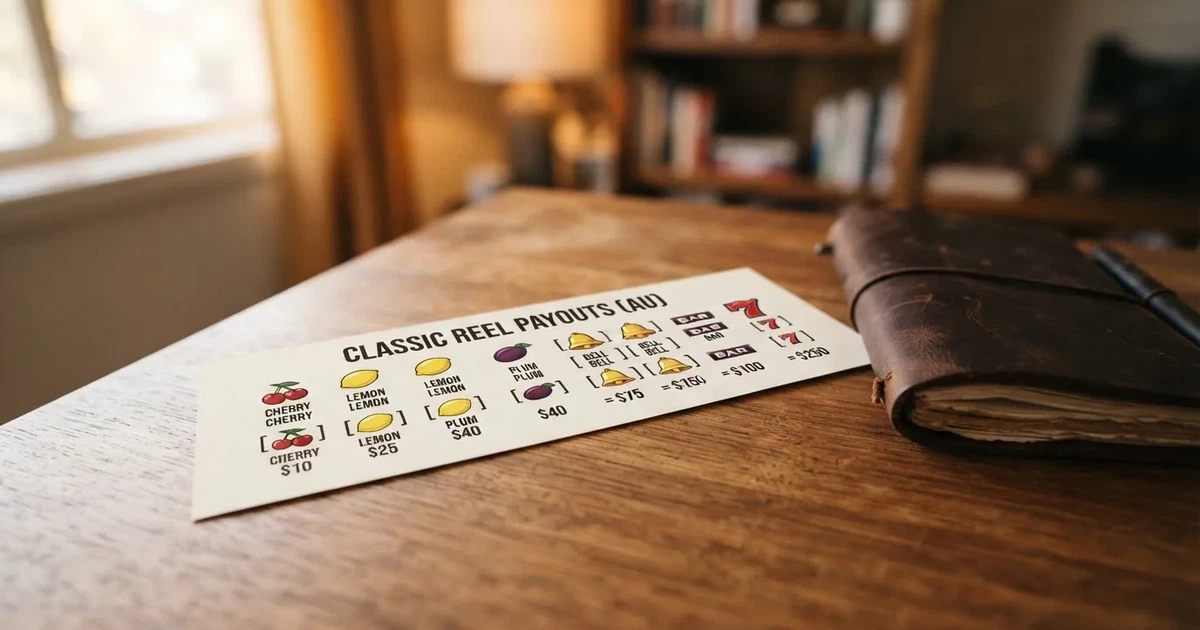
Seven Reels and a Closed Market: 7-Reel Slots in Australia in 2026
 Available in US
A 7-reel slot is, on paper, the simplest slot machine format still standing between Charles Fey’s three-reel Liberty Bell and the modern five-by-three video grid that has crowded it out. Seven columns of symbols, more combinations per spin than the classic three-reel machine, simpler than the cascade-heavy, megaways-style games that now dominate the lobbies of offshore casinos. The reason a page about “best 7-reel slots Australia 2026” is worth writing at all is the second half of that search: Australia. Under the Interactive Gambling Act 2001, online casino games and online pokies are prohibited for anyone in Australia, and no state or territory issues a licence for them. The reel count makes no difference. A 3-reel game and a 7-reel game and a megaways title all sit on the same side of that line. The page below walks through what the format actually is, why no Australian-based site offers it legally for real money, what the regulator is doing about the offshore brands that do, and what a player comparing those offshore brands is actually looking at.
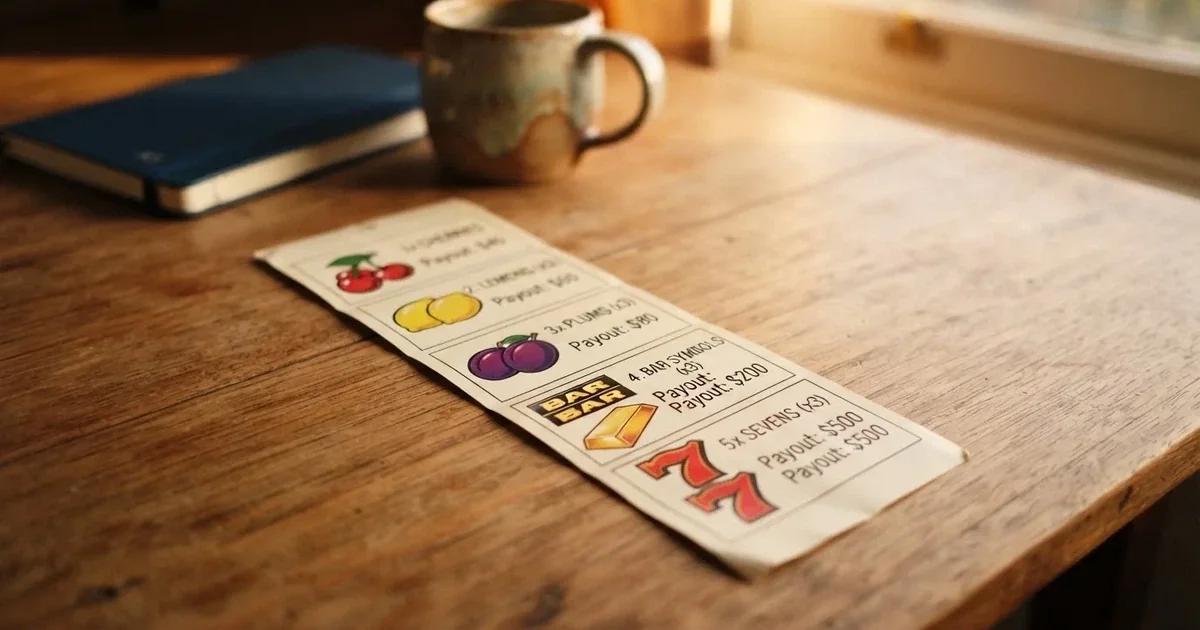
Current as of 24 September 2026; licence claims and ACMA enforcement data verified against the Australian Communications and Media Authority’s published register.
Table of Contents
- The shape of a 7-reel slot
- What a 7-reel paytable actually shows
- Why no Australian site offers this for real money
- What “best” can mean when no Australian site can offer it
- The ACMA’s blocking record against offshore brands
- Formal warnings: the ACMA’s other tool
- The blocking rate, year on year
- Bonuses and free spins on sites that cannot accept Australian customers
- Responsible gambling: what applies to a player reading this page
- Why the format has not crossed into Australian online play
- Frequently asked questions
The shape of a 7-reel slot
A 7-reel slot is a slot machine with seven spinning columns of symbols instead of the more common three or five. The format sits in the long lineage of mechanical and video reel machines rather than as a modern invention. The original Liberty Bell, built by Charles Fey in San Francisco in the late nineteenth century, used three reels with five symbols each — horseshoes, diamonds, spades, hearts and the bell itself. Three bells in a row paid the top prize of ten nickels. Bally’s “Money Honey” in 1963 added an automatic payout hopper that could pay up to 500 coins without an attendant, and the first true video slot machine followed in 1976 from Fortune Coin Co. in Kearny Mesa, California. Each of these steps kept the reel as the structural unit of the game; what changed was the mechanism and, over time, the number of reels and the number of symbols per reel.
Modern video slots commonly use five reels and can run to fifty or more symbols per reel, which is why the top-jackpot odds on a megaways title can run to roughly 300 million to one. A classic mechanical three-reel machine with around ten symbols per reel offers somewhere near 1,000 possible combinations. A 7-reel game sits between those two — more combinations than the three-reel original, fewer symbols per reel than a megaways grid, and a paytable that is closer to the older format than to a modern video slot. The visual is what most players notice first: seven columns of icons, the same set of winning lines stretched across more space, and fewer of the cascading-reel, expanding-wild, free-spin retrigger mechanics that fill a five-reel game’s bonus round.

That structural position is what makes the format attractive to a player who finds a modern five-reel game too busy. A 7-reel layout reads as a classic. The math, however, is not necessarily kinder. The number of combinations scales with both reel count and symbols per reel, and a 7-reel game with a deep symbol set can produce worse odds than a tight five-reel game. Reel count on its own is not a shortcut to better or worse returns — it is one variable inside a paytable the operator has already designed.
What a 7-reel paytable actually shows
A paytable lists every symbol that can land on a reel and the payout for each winning combination. On a 7-reel machine, the table tends to be longer than on a 5-reel machine simply because there are more columns to combine. The standard information on a paytable is the same regardless of reel count: the value of each symbol, the rules for scatter and bonus triggers, the line structure, and the return-to-player percentage. The RTP is the figure the paytable sits behind. The house keeps the rest.

In the United States, state regulation sets minimum payout percentages that vary by jurisdiction — Nevada at 75 per cent, Mississippi at 80, New Jersey at 83. Australia does not set a comparable floor for slot machine payout percentages at the federal level, and the regulation of gaming machines is handled state by state through the casino control Acts in each jurisdiction. The Victorian Gambling and Casino Control Commission, which replaced the VCGLR on 1 July 2022, approves rules for table games and changes to those rules before they reach the floor at Crown Melbourne — the same approval regime covers blackjack rule variants and baccarat variants, and the public log of approved changes is published on the VGCCC site. Slot machine approval follows the parallel path inside each state’s regime.
The point that matters at the paytable is not the reel count. It is what each combination pays, what triggers the bonus round, and what the bonus round actually does. A 7-reel game with a tight symbol set and a small bonus pays less than a 5-reel game with a wide symbol set and a generous free-spin feature. A reader who wants to compare two slots is reading paytables, not counting reels.
Why no Australian site offers this for real money
The Interactive Gambling Act 2001, as strengthened by the Interactive Gambling Amendment Act 2017, makes it an offence to provide online casino games or online pokies to a person physically in Australia. The regime targets the provider, not the individual player — no Australian has been prosecuted for opening an offshore site. What it does mean is that no Australian-licensed entity offers online pokies for real money, and no state or territory issues a licence for them. The Northern Territory Racing and Wagering Commission regulates 52 of Australia’s online bookmakers, including Sportsbet, Bet365 and Ladbrokes, but the licences cover wagering on races and sport placed before the event — not casino games. The NT regulator is a small body with no full-time staff, meeting once a month in Darwin. What looks like a thriving Australian online wagering market is, on the casino side of the line, empty by design.
The Interactive Gambling Amendment (Gambling Reform) Bill 2026 passed Parliament on 19 August 2026 and adds advertising and inducement measures that commence on 1 January 2027. It is a law with a start date. On a 2026 page it is not yet in force. A reader who has seen headlines about new gambling reform in Australia should know that the changes that bite in 2026 are the ones already in force — the credit-card and crypto ban for licensed online wagering, the ACMA blocking regime for offshore sites, and BetStop for self-exclusion from licensed wagering.
The credit-card and crypto ban took effect on 11 June 2024 and applies to licensed online wagering. Penalties for operators accepting a prohibited payment run to A$247,500. Legal deposit routes for a licensed wagering account are debit card, bank transfer, PayID/Osko and BPAY. A site that asks an Australian customer for a credit card or a cryptocurrency deposit is operating outside the Australian rules regardless of what licence it displays. The rule does not retroactively legalise an offshore casino; it sharpens the line between a licensed Australian wagering account and an offshore casino account.
What “best” can mean when no Australian site can offer it
The search for this topic lands on a closed market. A player who has played a 7-reel machine in a club, who has heard the format described, or who is curious about why the format has not crossed into Australian online play, will find the page useful. It lays out three things: the format, the legal frame, and the offshore brands the Australian regulator has named in formal warnings. This overview becomes a comparison of those brands on what the reader can actually verify — the operator named in the ACMA action, the date of the warning, the licence the site displays, and whether the site appears in the ACMA’s blocking list.
The comparison below is not a ranking. Each brand is listed because the ACMA itself has issued a formal warning over it for offering prohibited services to Australians. The reader who came to the page for a “best of” list should read the table as a register of warnings, with the offshore brands that an Australian customer would be considering arranged in the order the ACMA actions were published. The legal exposure is shared; the differences are in the operator behind the brand and the date the warning was issued.
The ACMA’s blocking record against offshore brands
The Australian Communications and Media Authority is the body that enforces the Interactive Gambling Act. Its three enforcement tools are the formal warning, the direction to an internet service provider to block a site, and the civil penalty proceedings against the provider of an illegal service. The blocking direction is the tool with the widest reach: when the ACMA asks, an Australian ISP must comply, and a site can disappear from an Australian connection overnight.
By the count the ACMA published in June 2026, 1,751 illegal gambling and affiliate marketing websites had been blocked since the first blocking request in November 2019. More than 230 unlicensed gambling services had left the Australian market entirely since the ACMA strengthened its enforcement posture in 2017. The blocking list has grown in rounds; the round reported on 26 June 2026 added twelve further sites — 7Signs, ChromaBet, Donbet, Duospin, Freshbet, Slots Gem, Jacks Club, Lucky Start, Pointsbetz.com, Spinrise, Vinyl Casino and Wildsino. The pace has not slowed. The total of 1,751 blocked sites, set against the first blocking request in November 2019, runs to roughly 263 blocks per year on average across the period — a band the ACMA’s own published cadence has held close to, with single rounds lifting it higher and quieter stretches leaving it flat.
A reader who reads the blocking total should not mistake it for a measure of how many Australians gamble offshore. H2 Gambling Capital’s 2025 report estimates Australians lose about A$3.9 billion a year to illegal gambling sites, and that the share of gambling going through legal channels fell from 74 per cent in 2021 to 64 per cent. The blocking record is what the ACMA can reach; the A$3.9 billion is what flows around it. Both figures are useful, and neither cancels the other.
Formal warnings: the ACMA’s other tool
Before a site lands on a blocking list it usually receives a formal warning. The warning names the operator behind the brand and the section of the Interactive Gambling Act the ACMA alleges has been breached. The warning is published on the ACMA site, in a register that runs back to 2017. The brands the ACMA has warned are the brands the regulator has chosen to name. A reader scanning the register will find a familiar set of offshore casino names — many of them operated by the same parent company, often Curaçao- or Cyprus-registered, displaying a gaming licence that does not cover the Australian market.
The table below collects the brands the ACMA has warned, the operator named in the warning, the date of the warning, and whether research could verify any subject support for the brand (game library listings on third-party sites, for example). Every brand on the list is an offshore brand that the ACMA has acted against for offering prohibited services to Australians. None is licensed in Australia for online casino play. The “subject support” column follows what third-party listings report; where the research could not verify a game library or game-format claim, the cell carries the no-data marker.
| Brand | ACMA action and date | Operator named by the ACMA | Subject support |
|---|---|---|---|
| RocketPlay | Formal warning, March 2026 (Pulsup Ltd); earlier May 2022 (Dama N.V.) | Pulsup Ltd / Dama N.V. | — |
| Level Up Casino | Formal warning, May 2022 | Dama N.V. | Listed by Bgaming.com as carrying BGaming content |
| Woo Casino | Formal warning, March 2025 | Dama N.V. | — |
| Spirit Casino | Formal warning, May 2025 | Dama N.V. | — |
| National Casino | Formal warning, July 2025 | Consolutetish S.R.L. | Referenced in Wikipedia coverage of Australian gambling |
| Bizzo Casino | Formal warning, July 2025 (Consolutetish S.R.L.); earlier 2022 (TechSolutions) | Consolutetish S.R.L. / TechSolutions | — |
| Ignition Casino | Formal warning, July 2025 | Bamboo Media | — |
| Instant Casino | Formal warning, February 2025 | EOD Code SRL | — |
| Jackbit | Formal warning, April 2026 | Ryker B.V. | — |
| Casino Intense | Formal warning, April 2025 | Sterplay Holding Ltd | Referenced by ABC, ACMA and Crown Melbourne coverage |
| Sky Crown | Formal warning, September 2022 (over Sky Crown and Blue Leo) | Hollycorn N.V. | — |
The same operators recur. Dama N.V. is named in four of the warnings on the list, with two of those warnings covering brands it ran at the time of warning and the other two running to different operator entities that acquired or rebranded the same properties later. Hollycorn N.V. is named in the Sky Crown warning; the same corporate group runs Blue Leo, which was named in the same publication. The pattern is the warning’s value to the reader: the regulator names the operator, not just the brand, so a brand re-launching under a new name does not erase the operator’s record. A reader who finds the same operator name on a new site has a basis for caution.
The brand-level subject support column reflects what third-party listings say, not what the operator itself publishes. Level Up Casino appears on Bgaming.com as a brand that carries BGaming content, which is a verifiable claim by a third-party game studio. Casino Intense is named in ABC, ACMA and Crown Melbourne coverage of the Australian market — a verifiable claim about its place in the discussion, not an endorsement. National Casino shows up in Wikipedia’s coverage of gambling in Australia, which is a verifiable claim about its footprint in the public record. The other cells on the subject-support column carry an em dash: research could not verify a third-party listing, and the brand is therefore not attached to a subject claim on this page. A reader who sees an em dash should read it as “we could not confirm this and will not guess”.
What the table does not tell the reader
The table tells the reader which brands the ACMA has warned. It does not tell the reader which of the warned brands offers 7-reel slot content specifically. None of the research for this page found a third-party listing tying any of these eleven brands to a verified 7-reel slot title. The brands carry slot libraries in the usual sense, and a 7-reel title may sit inside one of those libraries, but a verified claim of “this brand runs that title” was not in evidence. The reader who wants a 7-reel game should know that the brand list is not a content list.
A reader who comes to the page for a list of 7-reel slots and is pointed at the table will see, instead, eleven offshore brands the ACMA has warned. That is the honest answer to the search. The honest answer does not match the framing of the topic, but the framing of the topic describes a market that does not exist in Australia.
The blocking rate, year on year
The arithmetic the page owes the reader is how fast the ACMA’s blocking list has grown. The total at the end of June 2026 was 1,751 sites blocked, and the first blocking request went out in November 2019. From November 2019 to June 2026 is roughly six and a half years, or seventy-eight months. Dividing the total by the period gives a long-run average of around 22 to 23 sites blocked per month, or roughly 263 per year. That is a band, not a single figure — the ACMA publishes blocking rounds rather than a steady drip, and individual rounds lift the monthly rate well above the average, while quiet months sit below it. The June 2026 round alone added twelve.
The rate is what makes the blocking list a moving target for an offshore operator. A brand that is not on the list today can be on it next month. The brands the ACMA has warned face a higher probability of landing on the next blocking round than a brand that has not been warned, because the formal warning is the regulator’s stated intent to escalate. A reader who weighs the brand list above is weighing brands that have already cleared the warning threshold and are inside the regulator’s escalation pipeline.
A second calculation is worth sitting beside it. The 230 unlicensed gambling services that left the Australian market entirely since 2017 is a different measure. The blocking list captures sites the ACMA acted against; the 230 captures services that withdrew on their own or were pushed out by a combination of enforcement and reputational pressure. Together, the two figures describe a market where the regulator is faster than the offshore brands, and where the offshore brands that remain are the ones that have either not yet been noticed or have decided to keep accepting Australian traffic in spite of the warning.
Bonuses and free spins on sites that cannot accept Australian customers
A reader who has searched for 7-reel bonus slots or free 7-reel bonus slots online is asking what a bonus offer on a 7-reel game looks like. The structure of such offers, when they exist, is the same as on any other slot: a deposit match, free spins tied to a specific game, wagering requirements that turn the bonus into withdrawable cash only after the player has run the bonus amount through the required number of times. The reel count does not change the bonus structure. A 7-reel game with a 100 per cent deposit match and a 40x wagering requirement behaves like a 5-reel game with the same terms.
What changes is the venue. The page has already established that no Australian-licensed entity offers online pokies for real money, which means a bonus tied to a 7-reel slot is an offshore bonus. An Australian customer opening an offshore account for a 7-reel bonus is opening an account the ACMA has warned, in a venue the ACMA may have blocked, under terms the ACMA does not enforce. The offshore bonus is real money in the sense that the player can deposit and play and, in principle, withdraw. It is also real money in the sense that the player has no Australian consumer protection if the withdrawal is refused. BetStop, the National Self-Exclusion Register, binds only Australian-licensed online and phone wagering services. An offshore casino is not connected to it, and a self-exclusion lodged through BetStop does not extend to an offshore account.
The credit-card and crypto ban adds a second layer. A licensed Australian wagering account cannot be funded by credit card or by cryptocurrency. An offshore casino is not bound by the ban. A player who finds an offshore casino accepting a credit card or a crypto deposit has found a venue that is operating outside the Australian rules on payment. The venue may still pay out. It is also a venue the Australian regulator has no leverage over, and the venue’s payment choices are themselves a sign the venue is not subject to Australian rules.
The bonus discussion on this page is, by design, background reading only. The reader who wants a 7-reel bonus game cannot legally be sold one by an Australian-licensed operator. The reader who wants to read about what such bonuses generally involve can read about deposit matches, wagering requirements, and max-cashout caps, and can then decide not to act on that reading.
Responsible gambling: what applies to a player reading this page
Gambling Help Online runs the National Gambling Helpline on 1800 858 858, free, 24/7, with chat support on the website. The service is confidential and is funded to handle the calls and chats of anyone in Australia who finds gambling, online or offline, starting to feel compulsive or stressful. The service is not connected to the offshore casinos named above and does not require a player to have an Australian-licensed account to make contact.
BetStop, the National Self-Exclusion Register, has been live since August 2023 and lets a person exclude themselves from every Australian-licensed online and phone wagering service at once. The exclusion has a minimum period the player chooses and can be extended. What BetStop does not do is reach an offshore casino. A player who has excluded themselves through BetStop and then opens an offshore casino account has not broken the exclusion — the offshore casino was never part of the exclusion — but the offshore account is outside any Australian self-exclusion regime. For a player whose self-exclusion is part of a wider plan, an offshore account is a gap in that plan.
A reader who is reading this page because a 7-reel game, somewhere, has started to feel like more than entertainment, the helpline is the right call before the offshore site is. The order matters. The helpline does not need the offshore account to exist; the offshore account does not need the helpline to have been called.
Why the format has not crossed into Australian online play
Australia runs an estimated 97,103 gaming machines outside casinos as of 2010, a per-capita rate about five times that of the United States. New South Wales alone had 87,298 pokie-style machines outside casinos in June 2023; Victoria had 26,380 in 2021–22; Queensland 21,122 in October 2023; South Australia 11,672 in September 2023; and the ACT 3,587 in November 2023. NSW legalised slot machines in 1956. The land-based market is large, long-established and tightly regulated through state-level casino control Acts and state-level gaming-machine approval processes. The online market is, by design, not part of that story.
A 7-reel format that wanted to enter the Australian online market would have to enter through the same licensing process that excludes online casino games entirely. There is no door. The format exists in the land-based market in the form of the 5-reel video slot and the older 3-reel mechanical machine, and it could in principle appear as a 7-reel machine in a state-approved venue, but the online version is a different product line and the IGA closes the door the format would have to walk through.
The offshore brands named in the table above are the doors that stay open. They are not licensed in Australia. They are subject to formal warnings and, at the regulator’s discretion, to blocking. The H2 Gambling Capital estimate of A$3.9 billion a year flowing to illegal sites, and the drop in the legal-channel share from 74 per cent in 2021 to 64 per cent, suggests Australian players are using those doors regardless. The page’s job is not to encourage the use. It is to make the use legible — what the format is, why the venue is offshore, what the regulator has done about it, and what protections the player loses on the way in.
Frequently asked questions
What makes a 7-reel slot different from a standard five-reel video slot?
A 7-reel slot has seven spinning columns instead of five, which means more possible combinations per spin but also a longer paytable. The structural difference is the column count; the gameplay difference depends on the specific paytable, the symbol set, and the bonus features the operator has designed. Reel count alone does not determine the return to the player.
Can 7-reel slot machines be found in licensed Australian pubs and clubs?
The land-based Australian market runs roughly 181,000 gaming machines outside casinos across NSW, Victoria, Queensland, South Australia and the ACT, but those machines are 5-reel video slots or older 3-reel mechanical designs approved under each state’s gaming-machine regime. A 7-reel machine is not a standard product in the Australian pub and club market. The online version, where 7-reel formats are more common, is prohibited for Australian players under the Interactive Gambling Act 2001.
Do 7-reel slots typically pay out differently than newer five-reel formats?
Payout percentages on slot machines are set by the paytable, not by the reel count. A 7-reel game with a tight symbol set can have worse odds than a 5-reel game with a generous symbol set, and the reverse is also true. In the United States, state minimums range from 75 per cent in Nevada to 83 per cent in New Jersey; Australia sets no comparable federal floor, and state-level approval regimes handle machine-by-machine review.
Is a 7-reel slot online the same game as a 7-reel machine on a casino floor?
Not necessarily. A land-based slot and an online slot sharing a 7-reel layout can have different symbol sets, different bonus mechanics, and different payout percentages. The online version is software that runs on a remote server and is regulated by the jurisdiction that licenses the operator; the land-based version is hardware approved by the state regulator where it sits. Two games with the same reel count are not automatically the same game.
Are 7-reel slots for real money available legally from an Australian-based site?
No. The Interactive Gambling Act 2001 prohibits the supply of online casino games, including online pokies of any reel count, to a person in Australia. No Australian-licensed operator offers them. A player who opens an offshore account for a 7-reel game is playing at a venue the ACMA has warned or, in some cases, blocked, with no Australian consumer protection and no recourse through BetStop or the Australian Financial Complaints Authority if a withdrawal is refused.
Is reel count still a useful way to compare volatility between older and newer slots?
Reel count is one input into volatility, but it is a rough one. Symbol set, paytable weighting, bonus mechanics and the size of the top prize all move volatility independently of how many columns the game has. A reader comparing two slots is better served by reading both paytables and both return-to-player figures than by counting reels.
RocketPlay. Rocketplay.com.au was the subject of a formal ACMA warning to Pulsup Ltd in March 2026, and the brand’s earlier incarnation sat inside the Dama N.V. portfolio that the ACMA warned in May 2022. Dama N.V. is a Curaçao-registered operator group whose portfolio includes several of the brands on the table above, and the pattern is the pattern: a brand warned under one operator name resurfaces under another operator name on a new domain. A reader who finds RocketPlay displaying a Curaçao licence should know that the licence covers Curaçao-jurisdiction activity and does not cover activity targeting Australian customers under the IGA. The brand carries no verifiable 7-reel subject support in the research for this page; a player who has found a 7-reel game in the RocketPlay lobby has found a game the research could not verify.
Level Up Casino. Level Up was named in the May 2022 Dama N.V. warning alongside Bambet, Dazard, Wild Tornado, Cobra Casinos and the earlier Rocketplay entry. BGaming’s third-party listings include Level Up among venues carrying BGaming content, which is the verifiable subject-support claim the page can attach to the brand. A 7-reel game is not the same as a BGaming-branded title, and the research for this page did not find a verified 7-reel title on Level Up specifically. The brand’s standing in the warning register is the same as the other Dama N.V. properties: the regulator has named the operator behind the brand, and the operator runs a portfolio of properties that have all been warned.
Woo Casino. Woo Casino received its own formal ACMA warning in March 2025, again over Dama N.V., which is the same operator entity behind the 2022 round. The Dama N.V. cluster is the largest single cluster of warnings on the table. A reader weighing Woo Casino against an un-warned offshore brand should weigh it against the operator behind it. The brand carries no verifiable subject support; the research could not confirm a 7-reel slot offering or a third-party listing that named Woo Casino as a venue for a specific format.
Spirit Casino. Spirit Casino’s warning landed in May 2025, again over Dama N.V., bringing the operator’s warning count on the table to four brands. The pattern is what it is. Spirit Casino carries no verifiable subject support in the research; the page does not attach a claim the research could not back.
National Casino. National Casino was named in the July 2025 ACMA warning to Consolutetish S.R.L., alongside Bizzo Casino, and the brand appears in Wikipedia’s coverage of gambling in Australia — the verifiable subject-support claim is the Wikipedia reference, which is a footprint in the public record rather than an endorsement. The Consolutetish S.R.L. cluster is smaller than the Dama N.V. cluster; the same parent runs at least two of the warned brands on the table.
Bizzo Casino. Bizzo Casino was warned in July 2025 (Consolutetish S.R.L.) and had already been warned in 2022 to TechSolutions (CY) Group Limited and TechSolutions Group N.V., which is the operator that ran the brand at the time of the first warning. Two operators, two warnings, the same brand. The 2022 warning came in a different round and a different operator group, and the regulator’s practice of re-warning a brand under a new operator name is the practice a reader should know about: a brand disappearing from one operator’s portfolio and reappearing under another operator’s portfolio does not erase the regulator’s record. Bizzo carries no verifiable subject support in the research.
Ignition Casino. Ignition Casino received a formal ACMA warning in July 2025, with the operator named as Bamboo Media. Ignition is one of the more familiar offshore brand names in Australian-facing marketing, and the familiarity is part of why the warning matters: a player who has seen the brand in advertising material may not have seen the warning. The brand carries no verifiable subject support.
Instant Casino. Instant Casino was warned in February 2025 to EOD Code SRL, the earliest warning on the table and one of the smaller operator names. The earlier date is worth noting: a brand that was warned in early 2025 has had longer inside the regulator’s escalation pipeline than a brand warned in early 2026, and is closer to the threshold at which a blocking request typically follows.
Jackbit. Jackbit received its warning in April 2026, alongside CasinOK, under Ryker B.V. The April 2026 warning is recent, and the brand is inside the warning register rather than the blocking list as of the research cut-off.
Casino Intense. Casino Intense was warned in April 2025 to Sterplay Holding Ltd. The brand appears in ABC, ACMA and Crown Melbourne coverage of the Australian market — the verifiable subject-support claim is its footprint across three independent Australian sources, which is unusual for a brand on the table and is a sign of the brand’s reach into Australian-facing marketing.
Sky Crown. Sky Crown was named in the September 2022 warning to Hollycorn N.V. alongside Blue Leo, the brand’s sister property. Hollycorn is a Curaçao-registered operator that runs a portfolio of casino brands, and the Sky Crown warning is the earliest formal warning on the table. A warning that is more than three years old has, in many other cases, been followed by a blocking request; the brand is still named in the warning register rather than the blocking list, but the trajectory is the one the regulator’s own pattern has shown.
The page’s read on the eleven
The eleven brands share one fact: each has been named in a formal ACMA warning for offering prohibited services to Australians. The differences are in the operator behind the brand and the date of the warning, and the differences matter because the operator name is the line the regulator uses and the date is the line that places the brand inside the regulator’s escalation pipeline. A reader who has decided to play at an offshore casino has decided to play at a venue with no Australian consumer protection, no BetStop coverage, and a regulator that has named the operator behind the venue. The focus is, on this page, the brand whose warning is most recent and whose operator name is most exposed — because that is the brand closest to the next blocking round, and a brand that gets blocked leaves a player with a balance they cannot reach.
Prepared by the Casino Mobile Hub AU editorial staff.