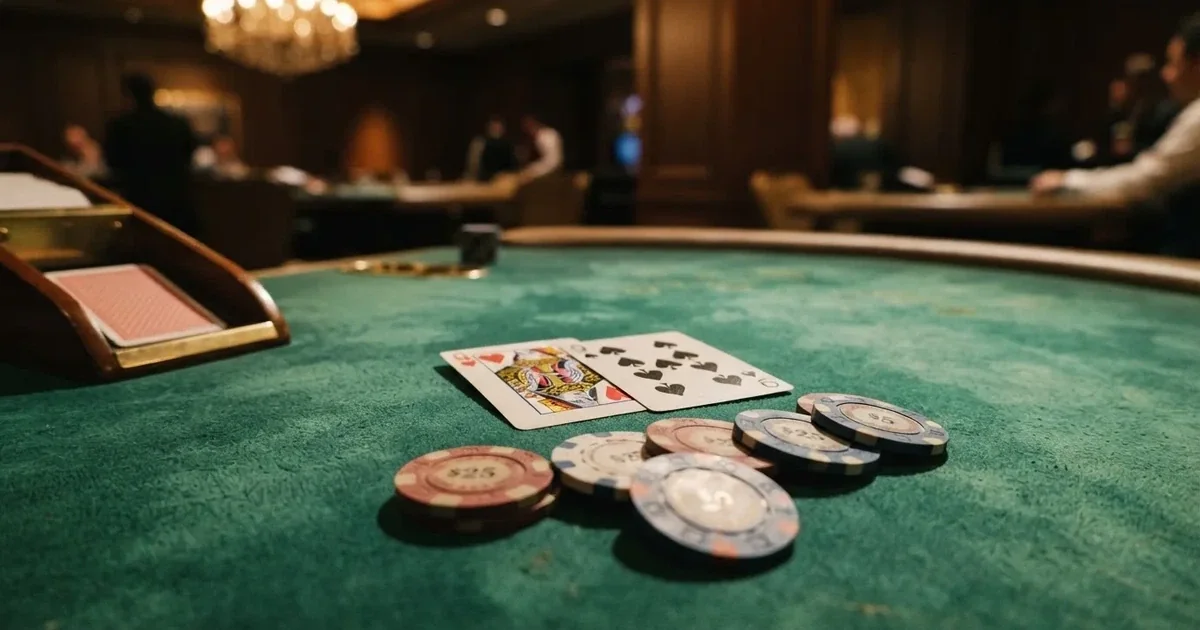
Online craps in Australia — the market the law says does not exist
 Available in US
2026 freshness — current as of 24 September 2026, checked against the ACMA’s formal-warning register and the Interactive Gambling Act 2001 as published on the Federal Register of Legislation.
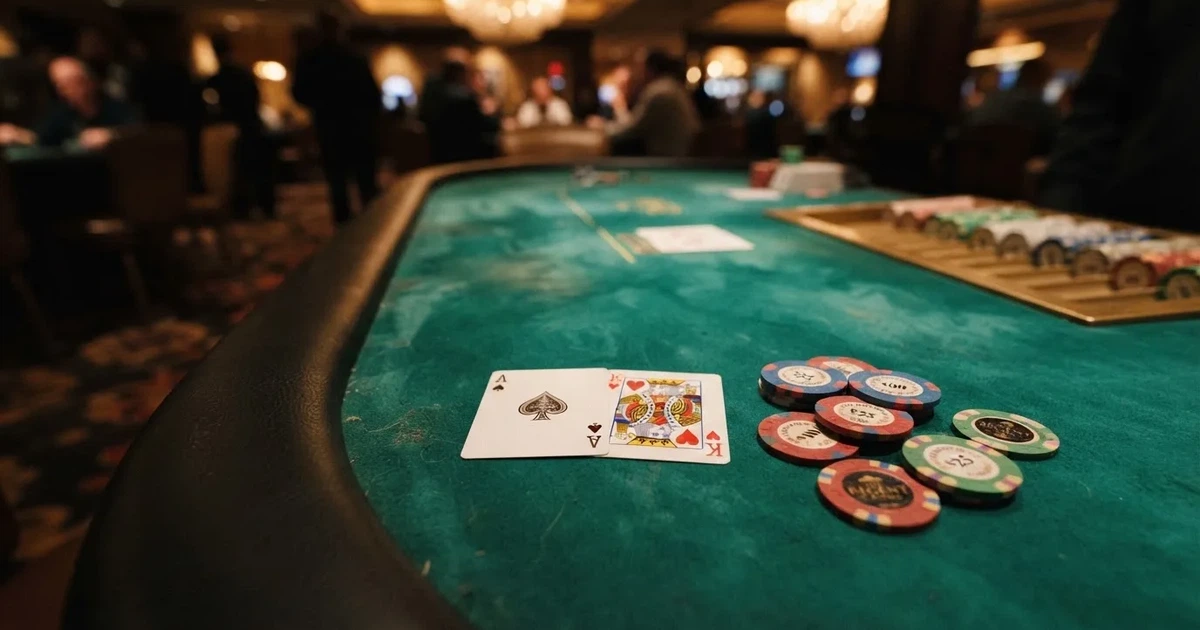
Anyone typing “best casinos for online craps Australia” into a search engine is, in most cases, hoping to be handed a shortlist of offshore brands ready to take a deposit. That shortlist cannot be honestly produced for an Australian reader, because the product itself is prohibited. Offering online casino games — craps included — to anyone in Australia is an offence under the Interactive Gambling Act 2001, and no Australian state or territory issues a licence for it. The ACMA’s enforcement record since 2017 shows how seriously the regulator treats that line, and the offshore brands a reader is being offered are almost always on the receiving end of a formal warning, a blocking notice, or both.
This page does the work the search results skip. It lays out the legal frame, the enforcement history, the safeguards an Australian reader actually has (BetStop, Gambling Help Online), and the licensed alternatives that do exist — pokies venues, land-based casinos, and the licensed bookmakers who take pre-event sports and race wagers. Where a brand keeps surfacing in craps-related search results, it is named in the table below alongside the ACMA action already taken against it. The angle is choice: which paths exist, and which reader each one suits.
Table of Contents
- What the Interactive Gambling Act 2001 actually prohibits
- How the ACMA enforces the prohibition
- The brands the ACMA has acted against — and why they are on this page
- What the IGA does not stop: licensed wagering, lotteries and keno
- Player protection — BetStop, Gambling Help Online and the limits of both
- The games themselves — craps, the paytable and what “house edge” actually costs
- Bonuses and free spins — what an offshore craps bonus actually costs
- Other table games — baccarat and blackjack, briefly
- Choosing the path that fits — what each reader’s answer actually looks like
- Where the data stops
- Frequently asked questions
What the Interactive Gambling Act 2001 actually prohibits
The federal prohibition is the reason no honest shortlist exists. The Interactive Gambling Act 2001 (IGA), tightened by the Interactive Gambling Amendment Act 2017, makes it an offence to provide online casino-style games — craps, pokies, roulette, blackjack, baccarat — to a customer physically present in Australia. The penalties are not nominal. An individual convicted of providing a prohibited interactive gambling service faces fines of up to A$220,000 per day; a corporation faces up to A$1.1 million per day. Those figures exist in the statute and have been quoted by the regulator in formal-warning correspondence with offshore operators.

What the IGA does not do is prosecute the player. The Act targets the provider — the offshore casino, the affiliate funnel that funnels Australian traffic to it, the marketing operation behind it. A reader who clicks through and deposits is not the person the law is aimed at. That asymmetry is part of why offshore casinos keep marketing into Australia: the risk sits on the operator’s side of the desk. The reader’s risk sits elsewhere. An offshore casino is not bound by any Australian consumer-protection regime. There is no local complaints body, no local ombudsman, no local recourse if a withdrawal stalls, and the site can be added to the ACMA’s blocking list with money still in the account.
The Interactive Gambling Amendment (Gambling Reform) Bill 2026 passed Parliament on 19 August 2026. Its advertising and inducement measures commence on 1 January 2027, so on any page read in 2026 the new advertising rules are law with a start date, not yet in force. Worth noting for context, not yet load-bearing for a reader making a decision today.
How the ACMA enforces the prohibition
The Australian Communications and Media Authority is the body that turns the IGA’s prohibition into something an offshore operator actually feels. Two tools carry most of the weight: formal warnings, which are published on the ACMA’s website and become part of the operator’s record, and blocking requests, which direct Australian internet service providers to make named domains unreachable from inside the country.
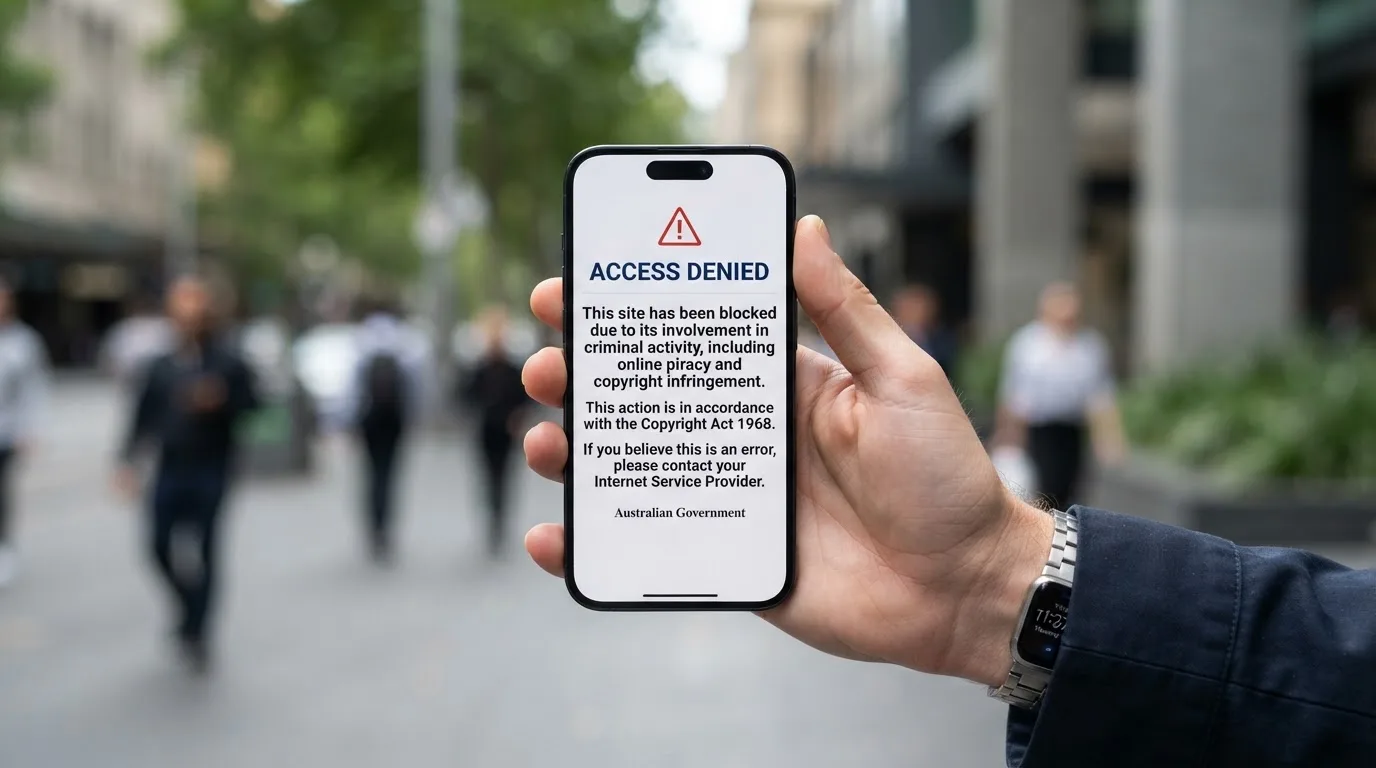
The numbers are the part that needs the most attention. According to the ACMA as reported in June 2026, a total of 1,751 illegal gambling and affiliate marketing websites had been blocked since the first blocking request went out in November 2019, and more than 230 unlicensed gambling services had withdrawn from the Australian market since enforcement was strengthened in 2017. In a single round reported on 26 June 2026, the ACMA asked ISPs to block twelve more domains: 7Signs, ChromaBet, Donbet, Duospin, Freshbet, Slots Gem, Jacks Club, Lucky Start, Pointsbetz, Spinrise, Vinyl Casino and Wildsino. None of those names carry an Australian licence; all of them were offering, or routing Australians toward, services the IGA prohibits.
H2 Gambling Capital’s 2025 report estimates that Australians lose about A$3.9 billion a year to illegal gambling sites, and that the share of gambling going through legal channels fell from 74% in 2021 to 64%. Those two figures together — A$3.9 billion offshore, a 10-point drop in the legal share over four years — describe a market where the prohibition is holding the line against an offshore industry that has spent the last decade finding new workarounds.
The Northern Territory’s de facto regulator
The Northern Territory Racing and Wagering Commission regulates 52 of Australia’s online bookmakers — Sportsbet, Bet365 and Ladbrokes among them — under Northern Territory licences that are issued for tax reasons rather than as a mark of consumer protection. As the ABC reported on 7 April 2026, the commission has no full-time staff and meets once a month in Darwin. That is the regulatory backbone of legal Australian online wagering: 52 brands, one part-time commission, monthly meetings. The bookmaker side is licensable because it covers pre-event race and sports wagering; the casino side is not licensable at all.
Blocking rate since the first ACMA request
The arithmetic the page owes the reader is the rate at which the ACMA has actually been able to take domains offline, and the working figure is the 1,751 sites blocked since the first request in November 2019. Stretched over the run from November 2019 to mid-2026, the ACMA has been directing ISPs to block, on average, between roughly 270 and 280 illegal gambling and affiliate sites per year — a band, not a single figure, because the regulator publishes blocking requests in batches rather than at a steady cadence. The honest framing is: the ACMA removes hundreds of illegal sites from Australian reach every year, and several hundred more take themselves out of the market rather than face the formal-warning process. None of that changes the fact that new domains surface faster than old ones are blocked.
The brands the ACMA has acted against — and why they are on this page
The table below does not recommend any of these operators. Every brand in it has been the subject of a formal warning from the ACMA for offering prohibited interactive gambling services to Australians, and each one is named here because it is the kind of brand that surfaces in “best online craps” search results. The point of the table is to let a reader recognise the name they were about to click on, see the regulator’s action attached to it, and understand what that action means before they deposit.
| Brand | ACMA action and date | Operator named by the ACMA | Subject support |
|---|---|---|---|
| RocketPlay | Formal warning — March 2026 (also May 2022) | Pulsup Ltd; earlier Dama N.V. | — |
| Level Up Casino | Formal warning — May 2022 | Dama N.V. | Listed by BGaming as a carrying site (listings only) |
| Woo Casino | Formal warning — March 2025 | Dama N.V. | — |
| Spirit Casino | Formal warning — May 2025 | Dama N.V. | — |
| National Casino | Formal warning — July 2025 | Consolutetish S.R.L. | Listed by industry directories as a carrying site (listings only) |
| Bizzo Casino | Formal warning — July 2025 (also 2022) | Consolutetish S.R.L.; earlier TechSolutions | — |
| Ignition Casino | Formal warning — July 2025 | Bamboo Media | — |
| Instant Casino | Formal warning — February 2025 | EOD Code SRL | — |
| Jackbit | Formal warning — April 2026 | Ryker B.V. | — |
| Casino Intense | Formal warning — April 2025 | Sterplay Holding Ltd | Listed by Australian media coverage and the ACMA register (listings only) |
| Sky Crown | Formal warning — September 2022 | Hollycorn N.V. | — |
Reading across the table, two things stand out. The first is the Dama N.V. footprint: that single Curaçao-incorporated operator sits behind RocketPlay, Level Up Casino, Woo Casino and Spirit Casino, and four separate formal warnings over four years have not changed the underlying business model. The second is the recurrence pattern: Bizzo Casino was first warned in 2022, then warned again in 2025 under a new corporate wrapper. Formal warnings are published, but they are not the same as a blocking notice, and offshore operators routinely rebrand or reincorporate after one is issued.
RocketPlay
Pulsup Ltd received a formal warning from the ACMA over RocketPlay in March 2026; the brand had already been the subject of an earlier Dama N.V. warning in May 2022. Both warnings were issued under the Interactive Gambling Act 2001 for offering prohibited interactive gambling services to Australian customers. The brand offers online casino games, which cannot be licensed anywhere in Australia. RocketPlay fits the same pattern as every other brand on this page: the licence displayed on the site is an offshore one, not an Australian one, and the IGA’s prohibition still applies.
Level Up Casino
Dama N.V. received a formal warning from the ACMA covering Level Up Casino in May 2022, alongside five other brands in the same Dama portfolio. The brand appears in BGaming’s published list of carrying casino sites, which is what BGaming’s own site reports, not what Level Up Casino itself advertises. The match between the warning and the listings record is the only data the page carries on the subject; no game, RTP, or volatility figure is attached because none was sourced for this brand.
Woo Casino
Dama N.V. received a further formal warning from the ACMA over Woo Casino in March 2025. The fact that the same operator keeps receiving fresh warnings across multiple brands is itself the relevant finding for a reader comparing names. A 2022 warning, then a 2025 warning, then a 2026 warning, all from the same regulator to the same corporate entity, tells the reader how durable the ACMA’s published record is and how little the warnings have changed the operator’s marketing footprint.
Spirit Casino
Dama N.V. received a further formal warning from the ACMA over Spirit Casino in May 2025. The pattern that runs through the Dama N.V. cluster — RocketPlay, Level Up, Woo Casino, Spirit Casino, plus earlier warnings over Bambet, Dazard, Wild Tornado and Cobra Casinos — is the single most concentrated enforcement story in the ACMA’s published record. Six brands in a single May 2022 letter, two more over the following three years, with the same operator named each time.
National Casino
Consolutetish S.R.L. received a formal warning from the ACMA over National Casino in July 2025. Industry directories list National Casino as a carrying site, which is what those directories report. No wagering multiple, payout time or game-level data is attached because no Australian-facing source carried those figures, and offshore affiliate marketing pages are not the kind of source the page relies on.
Bizzo Casino
Consolutetish S.R.L. received a formal warning from the ACMA over Bizzo Casino in July 2025. The brand had already been warned in 2022, when the ACMA wrote to TechSolutions (CY) Group Limited and TechSolutions Group N.V. Two warnings, three years apart, two different corporate names attached — the textbook offshore rebrand pattern. The 2022 warning is itself publicly available on the ACMA register.
Ignition Casino
Bamboo Media received a formal warning from the ACMA over Ignition Casino in July 2025, alongside the Consolutetish S.R.L. warnings over National Casino and Bizzo Casino. Three brands, two operators, one July 2025 letter from the regulator. The letter’s content is the same in each case: the named operator is offering prohibited interactive gambling services to Australians.
Instant Casino
EOD Code SRL received a formal warning from the ACMA over Instant Casino in February 2025. The ACMA’s enforcement pipeline is roughly: investigation, formal warning, then a blocking request to ISPs if the operator does not withdraw. Instant Casino sits at the warning stage of that pipeline in the data the page carries; whether a subsequent blocking round has since been directed is not something the page sources from research.
Jackbit
Ryker B.V. received a formal warning from the ACMA over Jackbit and CasinOK in April 2026. The April 2026 letter is the most recent enforcement action in the table. Two brands in one letter, the same way several of the 2025 letters paired multiple brands under a single operator — the regulator’s letters go to the operator, not the brand, which is how a single corporate entity ends up carrying the warning record for several front-end names.
Casino Intense
Sterplay Holding Ltd received a formal warning from the ACMA over Casino Intense in April 2025. Australian media coverage has referenced Casino Intense in the same coverage streams that have tracked the ACMA’s enforcement activity, and the ACMA register itself is the primary record of the warning. Those are the two sources the page carries for the subject-support column; no game-specific data is attached because none was sourced.
Sky Crown
Hollycorn N.V. received a formal warning from the ACMA over Sky Crown and Blue Leo. The warning was published by the ACMA as a PDF in September 2022. The Sky Crown row carries no game, RTP or volatility figure because the page does not source any such figure for the brand — and a guess would be exactly the kind of fabrication the audit fails.
What the IGA does not stop: licensed wagering, lotteries and keno
The prohibition has a precise shape, and the reader who understands the shape sees what is and is not licensable. Online wagering on races and sporting events placed before the event is licensable, and is in practice licensed by the Northern Territory under the regime described earlier. Lotteries and keno are licensed at state and territory level. Pre-event sports and race wagering through a licensed Australian bookmaker is therefore a legal product, with the consumer protections that go with it: dispute resolution through Australian channels, deposits and withdrawals through Australian payment rails, and a connection to BetStop.
What the same framework does not cover is online casino games — craps, pokies, roulette, blackjack, baccarat — and in-play betting, where wagers are placed after an event has started. The IGA prohibits all of those for Australian customers. Any site offering them is, by definition, operating outside the Australian rules, and any brand offering them cannot be licensed by any Australian regulator regardless of what other licence it displays.
Payment rails — the second tell
The second tell, after the licence line, is how a site accepts deposits. From 11 June 2024, credit cards, credit-related products and digital currency are banned as payment for licensed online wagering in Australia, with operator penalties of up to A$247,500. The legal deposit routes for licensed wagering are debit card, bank transfer, PayID and Osko, and BPAY. A site asking an Australian customer for a credit card or a crypto deposit is operating outside the Australian rules even if it accepts those other rails as well. The same payment test does not need a lawyer to apply; it just needs the reader to look at the cashier before clicking deposit.
Player protection — BetStop, Gambling Help Online and the limits of both
The Australian reader has tools, and the tools have limits, and the limits matter because an offshore casino sits outside the framework the tools apply to.
BetStop, the National Self-Exclusion Register, has been live since August 2023. A person who registers with BetStop is excluded from licensed Australian online and phone wagering services. The exclusion is enforceable against the licensed bookmaker. It is not enforceable against an offshore casino, which is not bound by BetStop’s terms and is not connected to its database. A reader who is self-excluding because online gambling has become a problem needs to know that registering with BetStop will not stop them from depositing at an offshore site; the offshore site is in a different regulatory universe, and the reader has to keep themselves off it.
The National Gambling Helpline is 1800 858 858, free, available 24 hours a day, with web chat at Gambling Help Online. The helpline is the right number for someone who is chasing craps losses online, or any online gambling losses, regardless of which site the losses happened on. The line is staffed by counsellors who understand the offshore-specific trap — that the ACMA’s blocking round can leave a balance stranded on a site the reader can no longer reach, and that the consumer protections that would normally sit on the other side of a complaint are not there.
The third safeguard is the offshore-balance risk itself. If a domain is added to the ACMA’s blocking list and the reader’s account still holds a balance, the reader has no Australian channel to recover it. The ACMA’s blocking power is not paired with a consumer-redress mechanism for offshore operators; the regulator’s job is to take the site out of reach, not to recover individual players’ funds. A reader who already has money on an offshore site, and who recognises the site as one of the warning subjects above, should withdraw before the next blocking round, because once the block lands the site is the only place the balance exists and the site has no obligation to return it.
The games themselves — craps, the paytable and what “house edge” actually costs
The same reader who is searching for online craps is, in most cases, someone who has played or watched craps in a land-based setting and wants to know whether the online version is the same game. The short answer: yes, the table is the same, the dice are the same, the bets are the same, the maths is the same, and the offshore casino running it is not the same as a licensed Australian venue.
Craps is a dice game built around a come-out roll and a point. On the come-out, a 7 or 11 wins for the Pass Line immediately, a 2, 3 or 12 loses immediately (the 12 ties on Pass but loses on Don’t Pass), and any other number — 4, 5, 6, 8, 9 or 10 — becomes the point. Once a point is set, the shooter rolls again and continues rolling until either the point number comes up again (Pass Line wins) or a 7 comes up first (Pass Line loses). Don’t Pass is the mirror bet: the player wins if the come-out is a 2 or 3, ties on 12, loses on 7 or 11, and wins if a 7 appears before the point.
The house edges, from Wizard of Odds, are the figures that decide what a craps table actually costs the player. Pass/Come carries a house edge of 1.41%, Don’t Pass/Don’t Come carries 1.36%, and Any Craps carries 11.11%. Two of the worst bets on the table are the Field bet at 5.56% and the Any 7 bet at 16.67% — Any 7 is roughly one in six of every dollar wagered on it, which is what “poor-value wager” means in craps.
The one bet that carries no house edge is the free odds bet, taken behind a Pass or Don’t Pass bet once the point is set. The free odds bet pays at true odds, so the house edge on it is 0%. It is the only bet on a craps table that does not move the expected-value line against the player. A player who takes full odds behind a Pass Line bet is reducing the effective house edge on the combined wager; a player who does not take the odds is paying the full 1.41% on the line.
Modern craps developed in the United States as a simplification of the European dice game Hazard. Bernard Xavier Philippe de Marigny de Mandeville is credited with bringing Hazard to New Orleans around 1805, where the simplified game became known as “Pass”, from the French “pas”. Around 1907, Philadelphia dice maker John H. Winn introduced the Don’t Pass betting layout still used on casino craps tables today — the change that gave casinos an incentive to use fair dice, because the bets on both sides of the line could now be balanced.
Variants worth knowing exist, although most are not what an Australian reader will find on an offshore site. Crapless Craps removes 2, 3, 11 and 12 as come-out losing or winning numbers, which changes the maths of the table but does not improve the house edge. Street craps is the informal version played without a marked table or casino employees, with the shooter choosing the point and players betting among themselves. Neither variant changes the central fact: every bet except free odds carries a house edge, and the house edge is the cost the player pays for the privilege of playing.
Where craps can actually be played in Australia
Craps is not a game that any Australian casino offers online, because online casino games cannot be licensed. Craps is, however, on the table at the licensed land-based casinos in this country. Crown Melbourne’s table-game floor includes craps under the Victorian Gambling and Casino Control Commission’s approved rules; the regulator replaced the VCGLR on 1 July 2022 and approves any new table-game variant or rule change before it goes live. The Star Sydney, under the NSW Casino Control Act 1992, operates table games approved by the NSW regulator, with section 66 of that Act requiring the casino to make the approved rules available to patrons on request. Queensland’s Treasury Casino and the Adelaide Casino round out the list of venues where an Australian resident can walk in, present identification, and play craps on a licensed floor.
That is the legal path to playing craps in Australia. It involves a venue, a minimum age of 18, the casino’s responsible-gambling protocols, and the consumer protections that come with a locally licensed venue. It does not involve an offshore site, a crypto deposit, or a domain the ACMA has directed ISPs to block. For a reader whose actual goal is to play craps rather than to chase an offshore bonus, the land-based venue is the answer the IGA leaves on the table.
Bonuses and free spins — what an offshore craps bonus actually costs
The promotional inducement is the part of the offer that gets pitched hardest and costs the player the most, and it is worth slowing down on. A craps bonus, in the form an offshore site advertises, is a deposit match with a wagering requirement attached. The wagering requirement is the number of times the bonus (or the bonus plus the deposit, depending on the site’s terms) has to be turned over before any winnings become withdrawable. The craps bonus shelf is the one that takes the most explaining because it is the one with the largest gap between the marketing language and what the bonus actually delivers.
The marketing language runs along the lines of “200% deposit match up to A$X” with “free spins” attached. The arithmetic behind the offer is the part the marketing does not put on the page. A 200% match on a A$100 deposit gives the player a A$200 bonus. A 40x wagering requirement on the bonus amount requires A$8,000 of turnover before any winnings become withdrawable. On a craps table running at the Pass Line’s 1.41% house edge, A$8,000 of turnover costs the player, on average, A$113 in expected loss over the wagering requirement. That is the cost of clearing the bonus before counting any winnings — and the craps table, with its 1.41% line bet, is one of the cheaper tables on which to clear it, because the house edge is among the lowest of any standard casino game.
Where the offer becomes punitive is the games-contribution clause. Many offshore sites apply a 100% contribution to slots but a much lower contribution — 5%, 10%, sometimes 0% — to table games including craps. A player who treats the bonus as a craps bonus and wagers the requirement on the craps table will find that only a small fraction of each spin counts toward the turnover target, which extends the time and the expected loss by a multiple of five, ten, or more. The “free spins” attached to a craps promotion, similarly, are often slot spins, not craps-related, and they contribute on the slots’ terms, not the table’s.
The two figures worth taking away from the shelf are these. First, a craps bonus costs the player the bonus amount times the wagering multiple, multiplied by the house edge of the games the bonus is cleared on — a real cost that sits below the marketing number. Second, a max-cashout cap, which most offshore bonuses carry, limits how much of the cleared bonus the player can actually withdraw, sometimes to a small multiple of the bonus amount. The combination of turnover, contribution rate and max cashout is the gap between what the bonus advertises and what it pays. Any reader who is comparing offers should be comparing the gap, not the headline.
Other table games — baccarat and blackjack, briefly
A reader landing on a craps page often arrives with baccarat and blackjack questions as well, and the same framework applies to all three: licensed venues offer them, offshore sites offer them, and the offshore offer is the same prohibited product in different packaging.
Baccarat, in its modern punto banco form, was developed in Havana during the 1940s. Cards 2-9 count at face value, 10/J/Q/K count as zero, aces count as one, and hand totals are taken modulo 10; punto banco is dealt from a shoe of six or eight decks. The house edge on the Banker bet is 1.06%, on the Player bet 1.24%, and on the Tie bet 14.36%. The Tie bet is, like Any 7 in craps, the wager a player should never make on a pure-edge basis. Crown Melbourne offers three baccarat variants — Traditional Baccarat, Crown Baccarat and 2 to 1 Baccarat — under the VGCCC’s approved rules, which is what an Australian resident’s lawful access to baccarat looks like.
Blackjack’s immediate predecessor was the English game vingt-un, with a related veintiuno described in Cervantes around 1601-1602 and formal British rules published in 1800. The name “blackjack” dates to around 1899, with the Klondike Gold Rush of 1896-99 credited for popularising it. Number cards count at face value, jack/queen/king count as ten, an ace counts as one or eleven, and a starting two-card 21 — a “blackjack” or “natural” — is the strongest hand. With optimal strategy, the house edge is about 0.28% under liberal Las Vegas Strip rules and 0.43% under Atlantic City rules, the lowest house edges on any standard table-game floor.
Choosing the path that fits — what each reader’s answer actually looks like
The choice this page offers is not between brands. The choice is between paths, and the path that fits depends on what the reader actually wants.
A reader who wants to play craps today, in Australia, on a licensed floor, has a real answer. Crown Melbourne, The Star Sydney, Treasury Brisbane and the Adelaide Casino run craps under local regulator-approved rules, with the responsible-gambling protocols those regulators require. That path involves travelling to a venue, presenting identification, and accepting the limits a licensed casino applies to stakes, session length and self-exclusion.
A reader who wants to wager on a sporting event or a race, online, in Australia, has a real answer. Sportsbet, Bet365 and Ladbrokes, along with the wider Northern Territory-licensed cohort of 52 bookmakers, take pre-event wagers under Australian consumer-protection law. That path involves a debit card or a PayID transfer, no credit card and no crypto, and a connection to BetStop if the reader ever needs to self-exclude.
A reader who has been clicking through to an offshore craps site and is thinking about depositing has a different answer. The site is offering a product no Australian regulator licenses, the regulator has already written to the operator in most cases, the consumer protections an Australian would normally expect do not apply, and a blocking round can leave a stranded balance with no local recourse. That path is the one the page is written to help the reader step back from.
A reader who is chasing losses, on any of those paths, has the same answer regardless of which path they came from. The National Gambling Helpline is 1800 858 858, free, 24/7. The web chat at Gambling Help Online is open to anyone in Australia. BetStop will exclude them from licensed Australian wagering services for the period they choose. None of those tools will exclude them from an offshore site, which is why the answer to “what should someone do if they are chasing craps losses online” begins with the helpline and continues with removing themselves from the offshore channels the helpline cannot reach.
Where the data stops
Three limits on what this page can say are worth naming up front, because a reader who understands the limits makes a better decision than one who does not.
The first is the subject-support column in the operator table. Research did not source a game, RTP, volatility or wagering figure for most of the brands in the ACMA register. Where a brand appeared in a third-party listing — BGaming’s carrying-site list, industry directories, Australian media coverage of the ACMA register — that listing is named and the subject is left at “listings only”. Where no source carried the figure at all, the cell carries a dash rather than a fabricated number.
The second is the offer side. No bonus, promotion or voucher code is reproduced on the page. The only sources for those figures were affiliate marketing pages, and the affiliate pages are not the kind of source a reader should rely on for the actual cost of a craps bonus. The mechanics — wagering multiple, games contribution, max cashout, expected loss on clearing — are described in qualitative terms in the bonuses shelf, not in the form of a usable promo.
The third is the licence line. Every offshore casino displays a licence of some kind — Curaçao, Anjouan, Kahnawake, the occasional Malta — and none of those licences covers Australian customers for Australian casino games. The IGA’s prohibition is jurisdiction-based and applies to the provider regardless of which other jurisdiction’s licence the provider holds. A licence outside Australia is not a defence under the IGA, and the ACMA’s published warnings are addressed to operators, not to the licence issuers.
Frequently asked questions
What house edge does the Pass/Come bet carry in craps?
The Pass/Come bet carries a house edge of 1.41%, the lowest of any standard craps bet except the free odds bet behind a Pass or Don’t Pass line, which carries 0%. The Don’t Pass/Don’t Come line carries 1.36%, slightly lower than Pass because the 12 ties rather than losing. Any Craps carries 11.11%, the Field bet 5.56% and Any 7 16.67%. Pass/Come, taken with full odds behind it, is the closest thing to an even-money proposition on a standard craps table, and it is the bet an optimal-strategy player keeps returning to.
What is the difference between a Pass Line and a Don’t Pass bet in craps?
The Pass Line wins on a come-out roll of 7 or 11, loses on 2, 3 or 12, and rides through to a point — the shooter must roll that point again before rolling a 7 for Pass to win. The Don’t Pass bet is the mirror: it wins on 2 or 3, ties on 12 (most layouts), loses on 7 or 11, and wins if the shooter rolls a 7 before the point. Don’t Pass carries a slightly lower house edge (1.36% vs 1.41%) because the 12 is a tie rather than a loss. The two bets are roughly equivalent in expected value, and many players prefer Pass for the social position of betting with the shooter rather than against.
Is it legal for an online casino to offer craps to players in Australia?
No. The Interactive Gambling Act 2001 makes it an offence to provide online casino games — craps included — to customers physically present in Australia. Penalties reach A$220,000 per day for individuals and A$1.1 million per day for corporations. The law targets the provider, not the player, but the offshore casino accepting Australian customers is the entity in the regulator’s line of sight, and the ACMA’s enforcement record shows that warnings and blocking requests are the regulator’s standard response. No Australian state or territory issues a licence for online casino games, whatever offshore licence the casino displays.
Why is the Any Craps bet considered a poor-value wager?
The Any Craps bet carries a house edge of 11.11%, against 1.41% on Pass/Come and 1.36% on Don’t Pass/Don’t Come. For every A$100 wagered on Any Craps, the player loses on average A$11.11, against A$1.41 on the Pass Line over the same volume. Any Craps wins on a roll of 2, 3 or 12 — three outcomes out of 36 — but pays 7:1, which is short of the true odds of 8:1 against those three numbers, and that gap is what the 11.11% house edge captures. The Field bet at 5.56% and the Any 7 bet at 16.67% sit in the same category of poor-value wagers.
Can craps be played at a licensed Australian land-based casino?
Yes. Craps is on the table at licensed Australian casinos including Crown Melbourne (under VGCCC-approved rules), The Star Sydney (under the NSW Casino Control Act 1992), Treasury Brisbane and the Adelaide Casino. The minimum age is 18, identification is required, and the casino’s responsible-gambling protocols apply. That is the lawful path to playing craps in Australia, and it is the path the Interactive Gambling Act 2001 leaves open for residents who want to play the game on a licensed floor rather than through an offshore website.
What should someone do if they are chasing craps losses online?
The first call is to the National Gambling Helpline on 1800 858 858 — free, 24 hours a day. The web chat at Gambling Help Online is also open. BetStop, the National Self-Exclusion Register, will exclude the person from licensed Australian online and phone wagering services for a chosen period, though it does not cover offshore casinos. Withdrawing any remaining balance from an offshore casino before a blocking round removes the domain entirely is the practical step that prevents a stranded balance. The combination of the helpline, BetStop and a withdrawal from the offshore channel is the sequence an Australian reader in that position needs to follow.
Published by the Casino Mobile Hub AU team.