
International Casinos Reaching Australian Players in 2026: What Stands, What Doesn’t
 Available in US
The phrase “international casino” is doing a lot of work in search results, and almost none of it serves the reader typing it from Australia. A shortlist of offshore brands, presented as a recommendation, would in this market be a list of services the Australian Communications and Media Authority has spent years warning, blocking and fining. The honest page on the subject is not a ranking. It is a map of where the legal ground actually sits, where the offshore offers land on that ground, and what an Australian reader who wants to gamble can lawfully do instead.
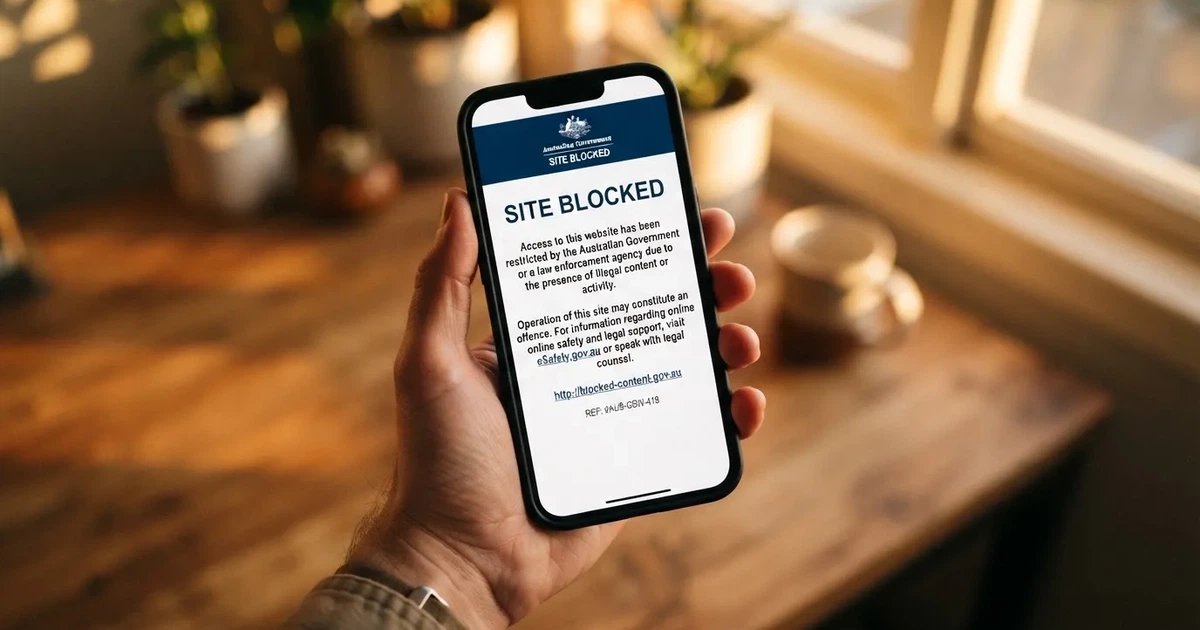
Currency of the comparison: data current as of 24 September 2026, checked against the ACMA’s published formal warnings register and the Interactive Gambling Act 2001 as amended through 2023.
Table of Contents
- The Brands Marketed as International Casinos to Australian Players
- Why an Offshore “International Casino” Cannot Serve Australia Lawfully
- What “International Casino” Actually Means in Plain Language
- Payments: What an Australian Can and Cannot Send
- The Lawful Alternatives an Australian Reader Actually Has
- Responsible Gambling: The Safeguards That Apply
- What the ACMA’s Enforcement Record Actually Shows
- What a Reader Who Has Already Deposited Should Do
- The Calculation: What the Blocklist’s Pace Tells an Australian Reader
- What an Australian Reader Should Take From This
- Frequently Asked Questions
The Brands Marketed as International Casinos to Australian Players
This table covers eleven operators the ACMA has acted against. None of them holds an Australian licence for online casino games, because none can: the Interactive Gambling Act 2001 prohibits offering those games to anyone physically in Australia, and no state or territory issues a licence for the activity. The columns below name the brand the way readers meet it, the formal ACMA action with its date, the operating entity the regulator named, and what third-party listings say about payment support. The supporting listings are not endorsements; they describe what each service reportedly accepts, not what an Australian should send to it.
| Brand | ACMA action and date | Operator named by the ACMA | Subject support |
|---|---|---|---|
| RocketPlay | Formal warning, March 2026; earlier warning to Dama N.V. in May 2022 | Pulsup Ltd (Rocketplay.com.au); Dama N.V. previously | Listings-only (Gamblinginsider.com) |
| Level Up Casino | Formal warning, May 2022 | Dama N.V. | Listings-only (Westpac.com.au) |
| Woo Casino | Formal warning, March 2025 | Dama N.V. | No data |
| Spirit Casino | Formal warning, May 2025 | Dama N.V. | No data |
| National Casino | Formal warning, July 2025 | Consolutetish S.R.L. | Listings-only (acma.gov.au, austrac.gov.au, betstop.gov.au) |
| Bizzo Casino | Formal warning, July 2025; earlier warning in 2022 | Consolutetish S.R.L.; TechSolutions Group N.V. previously | Listings-only (Gamblinginsider.com) |
| Ignition Casino | Formal warning, July 2025 | Bamboo Media | No data |
| Instant Casino | Formal warning, February 2025 | EOD Code SRL | Listings-only (Ecopayz.com, Payid.com.au) |
| Jackbit | Formal warning, April 2026 | Ryker B.V. | No data |
| Casino Intense | Formal warning, April 2025 | Sterplay Holding Ltd | Listings-only (austrac.gov.au, betstop.gov.au, Gamblinginsider.com) |
| Sky Crown | Formal warning, September 2022 | Hollycorn N.V. | No data |
The picture this table paints is the only honest one for an Australian reader. Every row is a brand the regulator has formally told to stop offering online casino games to people in this country. Some of them — RocketPlay, Bizzo Casino — have been warned twice under different corporate shells, which tells its own small story about how quickly an offshore operator can rebrand when an Australian warning lands on the previous entity. The “no data” cells in the right-hand column mean the page has nothing reliable to say about how the service takes money from Australian customers; absence is not a recommendation, and the column exists only to keep the gap visible.
Why an Offshore “International Casino” Cannot Serve Australia Lawfully
The reason no row above ends in an Australian licence is structural rather than incidental. The Interactive Gambling Act 2001 makes it an offence for a provider to supply online casino games, online pokies or in-play betting to a person physically in Australia. The 2017 amendments gave the regulator teeth: enforcement was strengthened, formal warnings started carrying real weight, and the blocking regime that began in November 2019 turned the prohibition from a letter into a wall. What an Australian-licensed operator can offer is wagering on races and sport placed before the event, lotteries and keno. What none of them can offer is roulette, blackjack, slots, or any other casino game played against the house online.

The regulator doing the enforcement is the ACMA. It investigates complaints, issues formal warnings that name the operator and the brand, and asks Australian internet service providers to block sites that keep ignoring them. The player is not the target of the law — the IGA goes after the provider — but the practical consequences for an Australian user are not small. An offshore site carries no Australian consumer protection, no complaints body a local player can approach, and no recourse when a withdrawal stalls or refuses. A balance sitting on a blocked site is, in plain terms, a balance the reader may not be able to get back.
How the Blocklist Has Grown
The ACMA’s running total, as reported in June 2026, was 1,751 illegal gambling and affiliate marketing websites blocked since the first blocking request went out in November 2019. That works out to a steady drumbeat over roughly six and a half years, with the more recent rounds — June 2026 alone added twelve names including 7Signs, ChromaBet, Donbet, Duospin, Freshbet, Slots Gem, Jacks Club, Lucky Start, Pointsbetz.com, Spinrise, Vinyl Casino and Wildsino — landing faster than the early ones. The rate, given the running total and the time elapsed since the first blocking request, sits in the band of roughly 20 to 25 sites blocked per month across the life of the regime, with the heavier months clustering around the more recent rounds.

That arithmetic tells the reader what kind of problem they would be walking into. The regulator is not posting one warning a year and hoping for the best; it is running a continuous programme, with rounds every few months, each round adding a double-digit blocklist of new names and addresses. A site an affiliate page recommends today may be on next quarter’s list, and the affiliate page will not have updated in time to warn the reader about it.
The H2 Gambling Capital Loss Figure
The market the prohibition is responding to is not small. H2 Gambling Capital’s 2025 report estimates that Australians lose around A$3.9 billion a year to illegal gambling sites, and that the share of gambling going through legal channels has fallen from 74% in 2021 to 64%. The shift is the opposite of what the enforcement regime is meant to achieve, and it is one reason the conversation about offshore brands keeps surfacing in Australian search traffic: the audience exists, the demand is measured in billions, and the supply that reaches them is the supply the regulator is trying to choke off. The reader who finds this page through a search for “international casino” is, statistically, part of that A$3.9 billion figure — which is exactly why the page lays the law out plainly rather than handing over a shortlist.
What “International Casino” Actually Means in Plain Language
The phrase gets used three ways in marketing copy, and they are not equivalent. First, an offshore-licensed online casino site — Curaçao, Anjouan, Kahnawake, the usual jurisdictions — which targets Australian customers with bonuses and accepts AUD or crypto deposits. Second, a multinational online casino brand that happens to operate in other regulated markets and may or may not accept Australian traffic. Third, an international land-based casino resort — Crown Melbourne, The Star Sydney, the integrated resorts in Macau or Singapore — which is a physical building with gaming floors a person can walk into, not a website.
Only the third of those is unambiguously lawful for an Australian to use. Land-based casinos in Australia are licensed by their state or territory regulator, operate under Australian consumer law, and answer to Australian complaints bodies if something goes wrong. The first two run on offshore licences that carry no weight inside Australian consumer law, and they are the brands the ACMA’s warning register is built around. The search query the reader typed does not usually distinguish between the three; the page does.
The Offshore Licence Is Not an Australian Licence
A Curaçao or Anjouan sub-licence on a casino’s footer is a piece of corporate paperwork between the operator and the jurisdiction that issued it. It is not, and has never been, an entitlement to take bets from people physically in Australia. The Interactive Gambling Act 2001 does not recognise foreign licences; it asks whether the service is being provided to a person in Australia, and the answer is yes or no regardless of what the footer says. An operator that has been formally warned by the ACMA and continues to accept Australian customers is choosing to keep doing so in the face of that warning, which is a fact about the operator, not about the licence.
The Northern Territory Online Bookmaker Quirk
A small but persistent confusion in this market comes from the Northern Territory Racing and Wagering Commission. The NTRWC regulates 52 of Australia’s online bookmakers — Sportsbet, Bet365, Ladbrokes among them — which are licensed in the Territory for tax reasons. The commission has no full-time staff and meets once a month in Darwin, which is itself a story about how thinly regulated the licensable half of the market is. What it does not do is license online casino games; no Australian jurisdiction does. A reader who sees “Australian-licensed” on a betting site is looking at a sports or racing bookmaker, not at a casino, and the games the casino offers are still the prohibited category.
Payments: What an Australian Can and Cannot Send
The payment side of the picture is where the offshore brands get exposed most quickly, because the law on what an Australian-licensed operator can accept is precise. Since 11 June 2024, Australian-licensed online wagering services cannot accept payment by credit card or other credit-related products. The same rule constrains gambling use of linked digital wallets like Apple Pay, because the wallet is just the surface and the underlying instrument is still a credit card. Digital currency is out as well. What is permitted is debit card, bank transfer, PayID/Osko and BPAY — and an offshore site asking for a credit card or a crypto deposit is, by that request alone, operating outside the Australian rules.
Card-Level Gambling Blocks at the Major Banks
The banks have built their own layer on top of the law. Westpac’s gambling block works at the card level: it refuses authorisation of transactions registered under the merchant category code for betting and casino gambling on eligible personal credit and debit cards. ANZ’s block, activated through the ANZ app, also blocks gambling transactions made through a digital wallet such as Apple Pay on an eligible card, not just the physical card. Commonwealth Bank lets customers apply a gambling lock to eligible cards through the CommBank app, which automatically blocks most gambling transactions, with the caveat that the bank cannot guarantee every gambling-related purchase will be stopped. The card block is a blunt tool, and like all blunt tools it catches some non-gambling transactions and lets some gambling transactions through — but the direction of travel is clear.
ANZ adds one friction point worth knowing: once the block is on, removing it again requires a 48-hour waiting period. That delay is deliberate. It is built into the product so that a player who wakes up at 2 a.m. wanting to undo the block cannot do it on impulse. The other banks run similar mechanisms with similar delays.
Apple Pay, Google Pay, Samsung Pay and the Reserve Bank’s Surcharge Review
The mobile wallets are now a large slice of how Australians pay. By the end of 2025, Apple Pay, Google Pay and Samsung Pay transactions collectively accounted for around 45% of all card payments in Australia by number. Apple does not charge fees to consumers for using Apple Pay in stores, online or in apps — any surcharge is the merchant’s card-processing fee, not Apple’s — and Apple states that transaction limits and PIN requirements are set by the card issuer or merchant, not by Apple itself. The Reserve Bank of Australia’s July 2025 review proposes removing surcharges only on eftpos, Mastercard and Visa transactions, explicitly leaving American Express outside the proposed surcharge ban. The relevance to gambling is that the surcharge review only addresses surcharging, not whether the underlying transaction is permitted; an Australian-licensed wagering service still cannot accept a credit card even if no surcharge is applied.
PayID, Osko and the New Payments Platform
PayID-based instant transfers are available at over 100 Australian financial institutions, and with Osko a bank transfer between participating Australian banks arrives in under a minute, 24/7 including weekends, whether it is addressed to a BSB and account number or to a PayID. The platform went live to the public on 13 February 2018 and is owned by New Payments Platform Australia Ltd, a non-profit company whose 13 shareholders include the Reserve Bank of Australia and the major banks. More than 25 million PayID identifiers had been registered by April 2025. Participants must keep the platform’s monthly outages to no more than two minutes, and in 2021 the ACCC authorised merging NPP Australia with BPAY and eftpos into a single company, Australian Payments Plus.
The reader-facing point is that paying to a PayID shows the name of the account holder before the transfer is sent — and AP+ warns that being asked to transfer money to a PayID on an illegal gambling site almost certainly means a scam site. That warning is the payments layer doing what the blocklist alone cannot: giving the reader a last-second chance to see whose account they are about to fund.
BPAY
BPAY is a bill-payment service in online banking: the payer enters the Biller Code and the Customer Reference Number printed on the bill. It has operated in Australia since 1997, is available in the online banking of over 140 banks and financial institutions and is offered by over 95,000 businesses. It is run by Australian Payments Plus, the same operator as PayID and Osko. It is not, and has never been, a deposit route for offshore casinos — it is a bill-payment system designed for Australian billers, which is why an offshore casino asking a customer to BPAY money somewhere is a category mistake the reader should treat as a red flag.
AUSTRAC and the A$10,000 Threshold
A persistent rumour in this market is that ordinary bank transfers above A$10,000 attract a reporting requirement. They do not. AUSTRAC’s threshold-transaction-report rule applies only to physical cash; ordinary electronic bank transfers are not subject to that per-transaction reporting requirement, regardless of the amount. The reader sending A$15,000 by PayID to a PayID they have just been given is not generating an automatic AUSTRAC report. The reverse is also true: the absence of a report is not a clearance.
The Lawful Alternatives an Australian Reader Actually Has
The page is not going to pretend the prohibition erases demand. Australians want to gamble, the A$3.9 billion in losses to illegal sites proves they do, and the ACMA’s enforcement record proves the regulator knows it. What the prohibition does is restrict the lawful options to a narrower list, and that list is worth stating plainly.
Licensed Pokies Venues
Pokies — the Australian term for slot machines — are legal in licensed clubs, pubs and casinos in every state and territory. The clubs and pubs are the everyday version: tens of thousands of machines across the country, in venues a reader can walk into with ID and a wallet. They are licensed locally, they answer to local regulators, and a payout dispute goes through an Australian complaints body. They are not the product the search query was looking for, but they are the product the law actually permits.
Licensed Land-Based Casinos
Crown Melbourne, Crown Perth, The Star Sydney, The Star Gold Coast, Sky City Adelaide and the casino at Lasseters in Alice Springs are the major integrated resorts. They are licensed, regulated, and subject to Australian consumer law. The international resorts in Macau, Singapore and Las Vegas are a different category — physical destinations an Australian can travel to and gamble in under that jurisdiction’s rules — and the question of whether that counts as an “international casino” depends on what the reader means by the phrase.
Licensed Online Wagering
Sportsbet, Bet365, Ladbrokes, TAB and the other Australian-licensed online bookmakers are licensable because what they offer is wagering on sport and racing before the event, not casino games. They take debit card, bank transfer, PayID/Osko and BPAY. They do not take credit cards. They connect to BetStop. They are the lawful online wagering surface, and they are not what the reader searching “international casino” was hoping to find — but they are what the law makes available.
What the Reader Cannot Lawfully Do Online
Roulette, blackjack, slots, online pokies, live dealer casino games, in-play betting — none of these can be offered online to an Australian under an Australian licence. The sites offering them are the sites the ACMA warns and blocks. The reader is not prosecuted for using one, but the protections an Australian consumer expects are absent, the withdrawal can be refused without recourse, and the site can be blocked with a balance still sitting on it.
Responsible Gambling: The Safeguards That Apply
The Australian responsible-gambling framework is built around the licensed half of the market, and that is both its strength and its limit. The safeguards work for the products they cover; they do not reach the products they do not.
BetStop, the National Self-Exclusion Register
BetStop went live in August 2023 and is the National Self-Exclusion Register. It binds Australian-licensed online and phone wagering services, which means a person who registers with BetStop is excluded from every Australian-licensed bookmaker simultaneously. The exclusion periods run from a minimum of three months up to a permanent exclusion, and the registered person cannot open new accounts with the bound services while the exclusion is active. The limit of BetStop is that it only reaches the licensed services. An offshore casino is not connected to it. A BetStop registration will not stop a person from signing up with an offshore brand the regulator has warned. That asymmetry is the single most important fact for an Australian reader weighing self-exclusion as a step.
The National Gambling Helpline
The National Gambling Helpline is 1800 858 858. It is free, available 24/7, and offers counselling, information and referral to local services. Chat is available through Gambling Help Online. The helpline is the right first call for a person who feels their gambling is moving from a choice into a problem, whether that gambling happens through a licensed Australian operator, an offshore site, a pokies venue or a land-based casino. The helpline does not need the reader to have stopped gambling before calling.
The Card-Level Blocks and Self-Exclusion Working Together
The card-level gambling blocks at Westpac, ANZ and Commonwealth Bank are a different kind of safeguard — a friction layer at the payment rail rather than a behavioural commitment by the player. They work alongside BetStop: a person who has registered with BetStop and activated a card block is making both a regulatory commitment and a financial one, which is more robust than either alone. The same combination does not, and cannot, reach the offshore sites a person might use a prepaid card or a crypto wallet to fund.
The Limits on What Self-Exclusion Can Do
The Australian framework is honest about this. Self-exclusion under BetStop is enforceable against Australian-licensed operators. It is not enforceable against offshore operators, which are not connected to the register and have no obligation to honour an Australian self-exclusion request. A person who has registered with BetStop and continues to gamble on offshore sites is still gambling; the register has done its job for the licensed half of the market and the offshore half is outside its reach. The reader who is registering because they want to stop gambling altogether needs to know that registering alone is not the whole answer for the offshore end.
What the ACMA’s Enforcement Record Actually Shows
The ACMA has been busy on this file for years. The formal warnings the regulator publishes name the operator and the brand, the date the warning was issued, and the section of the Interactive Gambling Act the operator is alleged to have breached. Reading the register chronologically tells a story the marketing pages do not.
The May 2022 warning to Dama N.V. covered six casino brands: Bambet, Dazard, Level Up, Rocketplay, Wild Tornado and Cobra Casinos. The March 2025 warning to the same operator added Woo Casino; the May 2025 warning added Spirit Casino. The July 2025 warnings went wider: Bamboo Media over Ignition Casino, Consolutetish S.R.L. over National Casino and Bizzo Casino, with Bizzo Casino having already been warned back in 2022 under TechSolutions (CY) Group Limited and TechSolutions Group N.V. — a rebrand under a new corporate shell that did not escape the regulator’s attention. The February 2025 warning went to EOD Code SRL over Instant Casino. The April 2025 warning went to Sterplay Holding Ltd over Casino Intense. The September 2022 warning to Hollycorn N.V. covered Sky Crown and Blue Leo. The April 2026 warning went to Ryker B.V. over Jackbit and CasinOK. The March 2026 warning to Pulsup Ltd covered Rocketplay.com.au, the second warning that brand has received.
The picture that emerges is not a one-off crackdown. It is a continuous programme, with warnings issued every few months across years, against a long list of operators and an even longer list of brand names. The operators change; the brand names multiply; the underlying service — online casino games offered to people in Australia — does not. A reader who treats one warning as a quirk and assumes the next brand will be different is reading the register wrongly.
What a Formal Warning Actually Does
A formal warning from the ACMA is not a fine and not a court order. It is a written notice that the regulator has formed the view the operator has breached the Interactive Gambling Act, that further enforcement action may follow if the conduct continues, and that the warning will be published. The publication is the deterrent: the warning appears on the ACMA’s website, named operator and named brand, and any future compliance action references it. Operators that ignore formal warnings move from the warning track to the blocking track, which is faster and harder to recover from. The blocking request goes to Australian internet service providers; the site goes dark for Australian users regardless of what the operator does next.
What a Reader Who Has Already Deposited Should Do
The reader who has already deposited with one of the brands above, or with any other offshore casino marketed to Australians, is in a position the law has not made easy. The site may still be reachable, or it may already be on the latest blocklist; either way, an Australian consumer protection pathway does not exist for disputes with it. The withdrawal the reader is waiting on is owed by an offshore operator under the operator’s own terms, not under Australian law.
The practical steps are limited but they exist. The first is to request withdrawal through the operator’s own process and document every communication. The second is to check whether the bank used for the deposit offers a chargeback route for unauthorised or disputed transactions, and whether the transaction is recent enough to qualify. The third is to file a complaint with the ACMA, which will not recover the money but does add the operator to the record and may contribute to a future enforcement round. The fourth is to talk to a financial counsellor through the National Gambling Helpline on 1800 858 858, who can help with the budgeting side of the recovery as well as the gambling side.
A reader who has not yet deposited is in a different and better position. The blocklist, the card-level gambling blocks at the major banks, and the bank-side warnings are all easier to use before money has moved than after.
The Calculation: What the Blocklist’s Pace Tells an Australian Reader
The arithmetic on the blocklist is the page’s core analysis, and it is worth stating in plain terms.
Inputs: the ACMA’s running total of 1,751 illegal gambling and affiliate marketing websites blocked, and the date of the first blocking request in November 2019, as reported in June 2026.
Result: the running total over roughly six and a half years puts the long-run block rate in the band of roughly 20 to 25 sites per month, with the more recent months clustering toward the higher end of that band. June 2026 alone added twelve names.
Condition: the band assumes the monthly pace has held roughly steady across the life of the regime, which is a working estimate rather than a guarantee. The figure is a rate, not a forecast.
What this tells the reader is straightforward. The regulator is not posting a warning a year and waiting to see what happens. It is running a continuous programme, with rounds every few months, each round adding a double-digit blocklist of new names. A site an affiliate page recommends today may be on next quarter’s list; the affiliate page will not have updated in time. The pace is what makes “international casino” the wrong phrase to type if the goal is a recommendation that holds up six months later.
What an Australian Reader Should Take From This
The page started by refusing to ship a shortlist, and it ends by being clear about what it is actually offering instead. The honest read on “international casinos for Australian players” is that the question is partly answerable and partly not. The land-based half is answerable: Crown, The Star, the international integrated resorts in Macau and Singapore, all licensed, all subject to the law of the jurisdiction they sit in. The licensed online wagering half is answerable: sports and racing bookmakers, debit-funded, PayID-funded, BPAY-funded, connected to BetStop. The online casino half is the part the search query was actually about, and it is the part the law has closed off — every brand on it is a brand the ACMA has formally warned, the rate at which new names join the blocklist is in the twenties per month, and the protections an Australian consumer expects do not reach the offshore end.
The reader who came to the page looking for a recommendation has not been given one, and the reason is not that a recommendation did not exist. The reason is that the recommendation the marketing pages offer is built on a product the law prohibits from being offered, and an editor’s job is to say so rather than to dress it up.
A reader who came to the page looking for what is actually possible has been given the list: licensed pokies venues, licensed land-based casinos, licensed online wagering on sport and racing before the event, BetStop for self-exclusion, the National Gambling Helpline for help. The product the search query described is not on that list, and pretending it is would not have made it available.
Frequently Asked Questions
What does international casino mean as distinct from an Australian-licensed one?
An international casino, in the way the search results use the phrase, is an offshore-licensed online casino site that targets Australian customers — usually Curaçao or Anjouan sub-licensed — and offers the casino games no Australian jurisdiction licenses. An Australian-licensed operator is licensed locally and is restricted to wagering on sport and racing before the event, lotteries and keno; online casino games are not on that list.
Can an international online casino legally accept players located in Australia?
No. The Interactive Gambling Act 2001 prohibits offering online casino games to anyone physically in Australia, and no state or territory licenses that activity. The ACMA enforces the prohibition through formal warnings and by directing Australian internet service providers to block offending sites; a site that accepts Australian players is operating outside Australian law regardless of what licence its footer displays.
Does an overseas gambling licence carry any weight for an Australian player?
An overseas gambling licence is a piece of corporate paperwork between the operator and the issuing jurisdiction. It has no standing inside Australian consumer law. An Australian player dealing with an offshore operator has no Australian complaints body to approach, no Australian consumer guarantee to rely on, and no Australian regulator to escalate to. The licence the site displays is real, it is just not for the Australian market.
What protections, if any, apply to an Australian using an international casino site?
None of the Australian protections apply. BetStop, the National Self-Exclusion Register, binds Australian-licensed wagering services; offshore casinos are not connected to it. Australian consumer law does not apply to disputes with an offshore operator. The card-level gambling blocks at Westpac, ANZ and Commonwealth Bank can refuse transactions at the merchant category code level, which catches many deposits but is not complete. The short answer is that the protections an Australian consumer expects are absent on the offshore end.
Are international land-based casino resorts different from the international online sites people search for?
Yes, materially. An international land-based casino resort — Crown Melbourne, The Star Sydney, the integrated resorts in Macau or Singapore — is a physical venue, licensed by its local jurisdiction, subject to local consumer law, and reachable by walking through the door. The international online sites the search results turn up are offshore-licensed websites offering games that are prohibited from being offered to Australians online. The two are different products operating under different legal regimes, and the same search phrase covers both.
Who can an Australian contact if an international casino site will not pay out?
The first call is to the operator’s own complaints process, documented in writing. The second is to the bank that funded the deposit, to ask about a chargeback on a recent transaction. The third is to the ACMA, which will not recover the funds but does record the complaint and may contribute to a future enforcement round. The fourth is the National Gambling Helpline on 1800 858 858, free and 24/7, which can help with the financial recovery as well as the gambling side. There is no Australian complaints body that can order an offshore operator to pay.
Written by the editors at Casino Mobile Hub AU.