
GameBeat online casinos in Australia — the law, the ACMA record, and what actually remains lawful
GameBeat is a slot studio that says it was set up in 2021 to supply games only to licensed operators and commercial partners, never to players directly. In Australia, every casino-style product that would carry those games is prohibited under the Interactive Gambling Act 2001. There is no lawful Australian online casino, GameBeat-branded or otherwise — so the only honest reading of “best GameBeat online casinos Australia” is the gap itself, and what sits on either side of it: the offshore sites Australians do reach, and the wagering, lottery and land-based options the law still allows.

Data current as of 9 November 2026; ACMA enforcement record checked against acma.gov.au.
Table of Contents
- Paytable warnings: the 11 brands the ACMA has named since 2019
- Fundamentals: what GameBeat actually is and where it sits in the supply chain
- Prohibition: the Interactive Gambling Act 2001 and how it is enforced
- Player protection tools available in Australia
- Payments at offshore GameBeat sites: what moves and what does not
- Bonus mechanics: why offshore offers are hard to value
- Mobile play: browser-based GameBeat on Australian phones
- The catalogue: what GameBeat’s 2021 studio actually makes
- How fast the prohibited list is growing: the blocking rate since November 2019
- Frequently asked questions
- The eleven operators in detail
- What an Australian reader is actually weighing
Paytable warnings: the 11 brands the ACMA has named since 2019
There is no ranking here. The eleven brands below sit together because the ACMA issued a formal warning over each one for offering prohibited interactive gambling services to Australians — not because any of them is a better or worse place to play. A “best” list requires a lawful product to rank, and the product does not exist. What the list does is lay out the enforcement record: who the ACMA named, when, and what the research carries about GameBeat’s connection to each.
The table uses an em dash where research carries no data on the subject for that row, and the “listings only” tag where the only evidence of a GameBeat connection comes from third-party listings, not from the brand or the studio themselves.
The 11 brands and their ACMA record
| Brand | ACMA action and date | Operator named by the ACMA | GameBeat connection as the research carries it |
|---|---|---|---|
| RocketPlay | Formal warning, March 2026; prior warning to the same brand’s earlier operator Dama N.V., May 2022 | Pulsup Ltd (Rocketplay.com.au) | — |
| Level Up Casino | Formal warning, May 2022 | Dama N.V. | Wazdan listings only |
| Woo Casino | Formal warning, March 2025 | Dama N.V. | — |
| Spirit Casino | Formal warning, May 2025 | Dama N.V. | — |
| National Casino | Formal warning, July 2025 | Consolutetish S.R.L. | Betsoft, Wikipedia and Pragmatic Play listings only |
| Bizzo Casino | Formal warning, July 2025; earlier warning to a different operator in 2022 | Consolutetish S.R.L. (2025); TechSolutions (CY) Group Ltd and TechSolutions Group N.V. (2022) | — |
| Ignition Casino | Formal warning, July 2025 | Bamboo Media | — |
| Instant Casino | Formal warning, February 2025 | EOD Code SRL | — |
| Jackbit | Formal warning, April 2026 | Ryker B.V. | — |
| Casino Intense | Formal warning, April 2025 | Sterplay Holding Ltd | 1spin4win, Wikipedia and UK Gambling Commission listings only |
| Sky Crown | Formal warning, September 2022 | Hollycorn N.V. | — |
Eleven rows, three operators appear more than once. Dama N.V. accounts for four of the warnings — the May 2022 action covered six of its brands in a single round, then two more followed in 2025. Consolutetish S.R.L. was named in July 2025 for both National Casino and Bizzo Casino, the latter of which had already been warned once under TechSolutions in 2022. The third repeat is RocketPlay itself, named under Pulsup Ltd in March 2026 after an earlier 2022 warning to Dama N.V. for the same brand name.
Three rows carry a “listings only” tag. That is the full extent of the evidence the research holds for a GameBeat connection to any of these eleven: third-party aggregator pages, supplier directories and an encyclopedia entry that mention the studio in passing. None of the warnings the ACMA issued over any of these eleven names was issued because the site carried GameBeat titles — the warnings cover the prohibited product generally, and the GameBeat tag is a marketing label that sits on top of it. For the other eight rows, research carries nothing on GameBeat at all, so the connection is neither affirmed nor denied; the row is shown on the brand’s other fields.
The cluster of 2025 warnings is the heaviest single year in the table — five of the eleven entries fall in that calendar year, four of them within the space of three months. The 2026 entries so far sit at the other end of the timeline. Sky Crown is the oldest warning still relevant, dating from September 2022.
Fundamentals: what GameBeat actually is and where it sits in the supply chain
A reader looking for a “GameBeat casino” is searching for a label, not a relationship. The studio’s own description of itself is the place to start: it was set up in 2021, operates as a business-to-business software developer and technology provider, and supplies games only to licensed operators and commercial partners, not to players directly. That posture is the standard one for an online slot studio — the studio sells to operators, the operators sell to players, and the studio’s name surfaces in marketing material rather than on a cashier page.

GameBeat does not publish a consumer-facing game list. The fact bank carries one direct GameBeat entry — the studio’s own self-description — and the rest of the entries on adjacent studios and suppliers that an Australian reader may also encounter. These are not GameBeat products, and naming them here is not endorsement. They are the companies whose names turn up in the same casino lobbies and aggregator pages where GameBeat appears, and a reader who has been following “GameBeat casino” labels has almost certainly been offered them in the same breath.
1spin4win, founded in 2021 by iGaming professionals with fifteen years of experience, builds its slots in HTML5 for low-bandwidth connections, holds a Curaçao gaming licence at Scharlooweg 39 in Willemstad, and reports a portfolio of more than 190 slots and over 1,000 operator and aggregator partnerships. The studio’s own figures say its total bet sum grew 46 per cent in the first half of 2025 against the first half of 2024. Betsoft, founded in 2006, describes a catalogue of more than 200 RNG games spanning slots, table games, video poker and specialty titles, with RNG certification from Quinel and Gaming Labs International and stated partnerships with more than 500 operators across regulated markets in Europe, Scandinavia, Latin America and Africa. BGaming, the brand name that debuted in 2018, lists 250-plus certified games including video slots, video poker, lottery, card, scratch, crash and casual titles, holds a Malta Gaming Authority Critical Gaming Supply Licence (MGA/B2B/785/2020) issued on 18 March 2021, and reports more than 3,000 operators using its games. Booming Games (Malta) Limited holds an MGA B2B licence numbered MGA/B2B/459/2018 and a UK Gambling Commission account (#57254).
None of those licences is an Australian licence. None of those operators is licensed to offer online casino games to a person in Australia. The studios’ licensing footprint is real in Europe and in Curaçao; it is not, and cannot be, an Australian authorisation for the product being marketed.
Prohibition: the Interactive Gambling Act 2001 and how it is enforced
The Interactive Gambling Act 2001, as tightened by the Interactive Gambling Amendment Act 2017, makes it an offence to provide online casino games, online pokies or in-play betting to a person physically in Australia. No state or territory issues a licence for those products. What is licensable is wagering on races and sport placed before the event, lotteries and keno — and in practice that licence is granted by the Northern Territory. The Northern Territory Racing and Wagering Commission regulates 52 of Australia’s online bookmakers, including Sportsbet, Bet365 and Ladbrokes, all licensed in the Territory for tax reasons; the commission has no full-time staff and meets once a month in Darwin.
Minimum age for any Australian-licensed wagering is 18. The Interactive Gambling Amendment (Gambling Reform) Bill 2026 passed Parliament on 19 August 2026 and its advertising and inducement measures commence on 1 January 2027 — a law with a start date, not yet in force on a 2026 page. A reader weighing the legality of any site advertised to them in Australia does not need to wait for that commencement; the underlying prohibition has been in force since 2017.
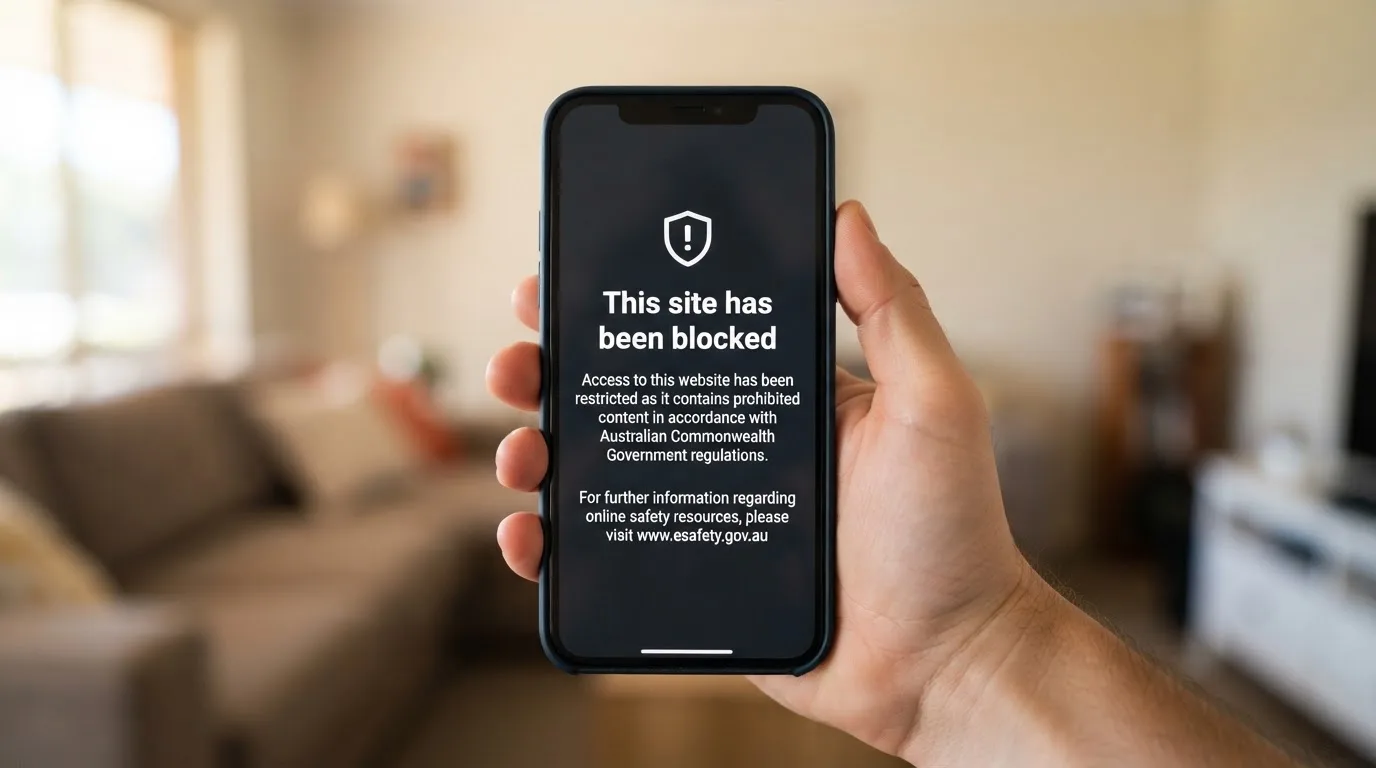
The ACMA enforces that prohibition by investigating, issuing formal warnings, and directing Australian internet service providers to block illegal sites at the domain level. The most recent round of action reported on 26 June 2026 asked ISPs to block 12 more sites: 7Signs, ChromaBet, Donbet, Duospin, Freshbet, Slots Gem, Jacks Club, Lucky Start, Pointsbetz.com, Spinrise, Vinyl Casino and Wildsino. The cumulative total of blocked sites since the first blocking request in November 2019 stood at 1,751 in that round. The page returns to that figure in the calculation section further down.
The legal action targets the provider, not the individual player. Australians are not prosecuted for placing a bet with an offshore site. That is not the same as the activity being safe. An offshore casino carries no Australian consumer protection, no complaints body and no recourse if a withdrawal stalls, and the ACMA can have the domain blocked with a balance still on the account. H2 Gambling Capital’s 2025 report estimates that Australians lose about A$3.9 billion a year to illegal gambling sites, and that the share of gambling going through legal channels fell from 74 per cent in 2021 to 64 per cent. The economic cost is the silent headline under the marketing.
The provider side of that cost is the ACMA’s record. More than 230 unlicensed gambling services have left the Australian market since enforcement was strengthened in 2017, and the eleven brands named in the table above are the ones the ACMA has named in formal warnings, not in informal contact. A formal warning is a documented, published action; a brand that has received one has been told in writing that the ACMA considers its service prohibited, and continues to be named in acma.gov.au’s register thereafter.
Player protection tools available in Australia
The responsible-gaming infrastructure in Australia was built for the products the law allows, and that frame is the one any Australian reader’s protections live inside. The headline tool is BetStop, the National Self-Exclusion Register, live since August 2023. BetStop binds Australian-licensed online and phone wagering services — it does not bind an offshore casino that has no Australian licence, accepts Australian sign-ups regardless, and routes support through a customer service inbox in a jurisdiction the reader cannot compel. A BetStop registration closes off the lawful channels; it does not close off the prohibited ones.
The 24/7 support line is the National Gambling Helpline on 1800 858 858, free from any Australian phone, with chat available through Gambling Help Online. Both services take calls from people whose gambling has moved onto prohibited offshore sites, and both are the place to start before a balance problem turns into a debt problem.
The protections the reader does have inside the prohibited frame are thin. Offshore sites typically publish their own self-exclusion and deposit-limit tools, run on their own house rules, and apply them inconsistently. Where a site holds a Curaçao or Malta licence the local regulator may have a complaints route, but it is not an Australian route and it offers no compensation fund, no local ombudsman and no guarantee that the operator will respond at all. A player who has self-excluded from every Australian-licensed product and then deposits with an offshore site has exited the only protection regime that covered them.
The practical order for an Australian who has been playing offshore and wants out is: register with BetStop to lock the lawful channels, contact the National Gambling Helpline on 1800 858 858 for a structured conversation about next steps, and treat any outstanding balance on an offshore site as a debt to be pursued through the operator’s own complaints process rather than an Australian one. None of these tools undoes a loss; what they do is close the ones still open.
Payments at offshore GameBeat sites: what moves and what does not
The payment frame for Australian wagering is one of the sharpest contrasts on the page. Since 11 June 2024, credit cards, credit-related products and digital currency are banned as payment for licensed online wagering in Australia, with penalties up to A$247,500 for operators that accept them. The lawful deposit routes for a licensed Australian wagering account are debit card, bank transfer, PayID/Osko and BPAY. An offshore casino that asks an Australian customer for a credit card or a crypto deposit is, by definition, operating outside the Australian rules, and the deposit method itself is a quick tell.
The reason the payment method matters more than the deposit bonus is that the payment rail is what an Australian bank can see, hold or reverse. A debit card transaction through PayID or BPAY sits inside the local banking system; the bank has both visibility and a duty of care. A credit-card payment or a crypto transfer sits outside it; the bank has neither, and the only recourse on a failed withdrawal is the offshore operator’s own complaints process. The deposit method is also the first thing the ACMA looks at when assessing whether a service is targeting Australians — a site that accepts AUD denominated methods and is publicly marketed at Australian traffic is making the targeting argument for itself.
Payout speed on offshore sites is a marketing word. Affiliate pages routinely publish “instant withdrawals” or “24-hour payouts” as headline figures. The reality the research documents is that no offshore operator is bound by an Australian payment standard, the published speed is the speed under ideal conditions, and the speed under disputed conditions is whatever the operator decides on the day. A withdrawal that stalls on an offshore site stalls outside any Australian framework that can compel it.
For an Australian comparing sites, the payment test is short. Does the deposit method sit inside the Australian banking system, or does it route through credit or crypto? Is the AUD the account currency, or is it a converted balance running on a foreign exchange margin the operator sets? Does the operator publish a complaints body the Australian customer can actually write to? Three no-answers and the site is, in practical terms, an offshore proposition with offshore recourse — whatever the licence in the footer says.
Bonus mechanics: why offshore offers are hard to value
The promotional inducement on offshore GameBeat sites is built around the same vocabulary the lawful market uses, but the constraints are different. A bonus on a Curaçao-licensed offshore site can carry a 35x or 40x wagering multiple, a max-cashout cap on free-spin winnings, game-weighting that excludes the highest-RTP titles from the playthrough, and a withdrawal queue that triggers identity verification the site reserves the right to extend. None of those terms is illegal at the operator’s licensing jurisdiction. All of them are written into the bonus terms the reader has to accept before claiming, and all of them are there because the house edge on the bonus itself would otherwise be inverted — the operator paying out more, on average, than it takes in.
The marketing word “free” is where the cost sits. A free-spin package that pays out in bonus funds with a 40x playthrough and a max-cashout cap is not free in the sense a reader takes the word; it is a loan of play with a repayment cost built in. The expected value of the bonus depends on the RTP of the games the playthrough is allowed to run on, the weighting the operator applies to those games, and the cap on what can be withdrawn at the end. Each of those is a number the operator sets, and the offer as a whole can carry a negative expected value to the player even when every individual spin returns its published RTP.
The deeper cost is the one the bonus terms cannot reprice. An Australian claiming an offshore bonus is asserting, by the act of claiming, that the operator is a legitimate counterparty for Australian customers — and the ACMA’s register of formal warnings is the public record of how often that assertion is contested. A reader who values the bonus at its face amount is also valuing the operator’s willingness to pay out at its face amount, which is a willingness the ACMA has tested eleven times in the table above without the operator conceding the point.
The Australian comparison is the honest one. A licensed Australian wagering account offers no casino bonus — by design, because the product is prohibited — but it offers a regulated dispute path, a banking system that can hold and reverse a transaction, and a responsible-gambling framework with real teeth. The bonus is the price of the unregulated alternative, not a free addition to it.
Mobile play: browser-based GameBeat on Australian phones
Modern slot studios build in HTML5, and GameBeat’s adjacent studios publish the same — 1spin4win, for example, builds for low-bandwidth connections specifically. The result is that a GameBeat title loads in a phone browser the same way it loads on a desktop, without a separate app to download, and without the operator’s own wrapper getting in the way of the gameplay. The technology is not the obstacle; the legal status of the product is.
A native app is a different question. Most offshore GameBeat casinos do not publish an Australian app store listing, and the apps they do publish are typically webview wrappers around the mobile site — useful for push notifications and faster re-entry, but legally identical to the browser version. A downloaded app is not a licence to offer a prohibited product in Australia; it is a delivery mechanism for one, and the ACMA’s enforcement record applies to the service the app points at.
The mobile experience for an Australian reader who has been playing these sites is the experience of a prohibited product on a small screen. The same withdrawal queue, the same bonus terms, the same operator in the same jurisdiction — only the screen size has changed. The browser-versus-app choice does not move the legality in either direction.
The lawful alternative on the same phone is a licensed Australian wagering app for racing, sport, lotteries or keno. Those apps are listed in the Australian app stores, run on Australian banking rails, and sit inside the BetStop self-exclusion register. The product set is narrower — no slots, no table games — but the protection set is wider.
The catalogue: what GameBeat’s 2021 studio actually makes
The single GameBeat-specific fact the research holds is the studio’s own self-description: set up in 2021, business-to-business only, supplying games to licensed operators and commercial partners and never to players directly. The studio does not publish a public catalogue on its consumer-facing pages, does not list operator customers by name, and does not announce individual title releases in a way the public fact bank can verify.
That posture is the right one to read carefully. A B2B slot studio’s catalogue is what its operator customers choose to expose. A GameBeat title that exists on a backend is not necessarily a GameBeat title a player can reach; whether it surfaces at all depends on the operator’s lobby, the operator’s geo restrictions, and the operator’s own marketing priorities. The “GameBeat casino” label in an affiliate’s headline is the affiliate’s editorial decision, not the studio’s distribution footprint.
The adjacent studios the research does name — 1spin4win, Betsoft, BGaming, Booming Games — give a picture of the wider slot market an Australian reader is being offered on offshore sites. 1spin4win’s portfolio sits above 190 slots; Betsoft’s above 200 RNG games; BGaming’s above 250 certified titles; Booming Games holds the MGA B2B licence and the UK Gambling Commission account that mark a serious European supply footprint. These are real studios with real catalogues, real licences in real jurisdictions, and zero Australian authorisation for the product they supply. They are the context, not the subject — and the subject, GameBeat, has been named in this research only by its own self-description.
For an Australian reader, the practical effect of that thin catalogue is that “best GameBeat casino” is a phrase built on a label, not a relationship. There is no GameBeat casino; there are offshore casinos that include GameBeat titles in their lobbies alongside titles from every other studio. The ranking is on the casino, not on GameBeat’s own ranking, and the casino’s own ranking — by Australian standards — is settled by the table above.
How fast the prohibited list is growing: the blocking rate since November 2019
The ACMA’s blocking record is a single running total updated by each round of action. The first blocking request was issued in November 2019. The cumulative total reached 1,751 blocked sites in the round reported on 26 June 2026. The interval from the first request to that snapshot is roughly six years and seven months — about 79 months.
Dividing the total by the interval gives a band rather than a single figure, because the ACMA’s action comes in irregular rounds rather than at a steady monthly pace. A reader can put the rate somewhere between roughly 20 and 25 sites blocked per month across the full period — the lower end of the band reflecting quieter stretches between rounds, the upper end reflecting the heavier rounds of 2025 and 2026. On an annualised basis that puts the rate at roughly 250 to 280 sites a year, again as a band rather than a precise figure. The exact annual count has varied year to year, and the 12-site round reported on 26 June 2026 sits inside a heavier cluster of enforcement action, not at the average pace.
The band is the honest way to state the figure. A single number implies a steady monthly rate the ACMA has never actually run at, and given that the rounds are published in batches the average conceals the lumpy pattern underneath. The point the rate carries is the one the table of eleven brands also carries: enforcement is active, it is ongoing, and it is the ACMA’s standing answer to the marketing proposition that an “Australian GameBeat casino” exists.
For an Australian reader considering any of the offshore sites on the table above, the rate matters because it is a leading indicator of the site’s future availability. A site blocked under the ACMA’s process is no longer reachable through a normal Australian ISP without a VPN, and the operator’s response is typically to spin up a new domain under a different name rather than to acquire a licence. The marketing proposition a reader meets today may be unreachable through its advertised URL by the time the reader returns to it.
Frequently asked questions
What kind of games does GameBeat actually make?
GameBeat is a B2B slot studio that says it was set up in 2021 to supply games to licensed operators and commercial partners only, not to players directly. The catalogue the studio itself describes consists of online slot games built around standard RNG mechanics. The studio does not publish a public game list on its consumer-facing pages.
Does any operator licensed in Australia carry GameBeat games?
No Australian operator is licensed to carry online casino games. The Interactive Gambling Act 2001 prohibits offering them to anyone in Australia, and no state or territory issues a licence for the product. The Northern Territory Racing and Wagering Commission regulates online bookmakers for pre-event wagering on racing and sport, which is a different product.
Is it lawful for someone in Australia to play GameBeat slots online?
No. The Interactive Gambling Act 2001 targets the provider, not the individual player — Australians are not prosecuted for playing. That does not make the activity safe. An offshore site offers no Australian consumer protection, no complaints body and no recourse when a withdrawal stalls, and its domain can be blocked with a balance still on the account.
Are GameBeat titles available at land-based Australian venues?
GameBeat describes itself as a business-to-business supplier to licensed operators and commercial partners, and the studio does not list Australian land-based venues among its customers. Australian pokies floors are dominated by other suppliers; Aristocrat Leisure, the largest Australian machine manufacturer, is the most prominent. GameBeat itself is not a name the venues publish.
What should a reader check before trusting a site that advertises GameBeat?
Start with the licensing claim. No Australian jurisdiction licences online casino games, so any site claiming an Australian licence for casino-style product is misrepresenting itself. Cross-check the operating company against the ACMA register of formal warnings. Read the payment terms — credit cards and crypto are not lawful deposit routes for Australian wagering. Treat any “GameBeat casino” marketed into Australia as a prohibited service by default.
The eleven operators in detail
What follows is each of the eleven ACMA-warned brands, in the order the research names them, with the warning date, the named operator, and a verdict that takes a different angle for each. These are not recommendations and not a ranking; they are the record the ACMA itself has published about the brand, plus what the research says about GameBeat’s connection to it.
RocketPlay — a brand warned twice under two different operators
The ACMA’s most recent formal warning, March 2026, named Pulsup Ltd over Rocketplay.com.au. The same brand name had been caught up in the May 2022 warning to Dama N.V., which covered six casino brands including Rocketplay at that time. The intervening four years gave the brand time to move to a different operating company; the prohibition followed it.
The verdict here is on the pattern, not on the player experience. A brand name that has attracted two separate ACMA actions under two separate operators is a brand name the ACMA treats as ongoing business. For an Australian weighing the marketing proposition, the relevant question is not whether Rocketplay will pay out today’s withdrawal but whether Rocketplay.com.au as a domain will still be reachable from an Australian IP address next month.
Level Up Casino — a 2022 Dama N.V. brand with only third-party GameBeat listings
The May 2022 formal warning to Dama N.V. covered Level Up alongside five other brands in a single round. The only GameBeat evidence the research carries for Level Up is a Wazdan listing — a third-party aggregator page that mentions the studio in passing, not an attestation from the brand or the studio. The GameBeat connection here is the weakest kind: a name in someone else’s directory.
For an Australian, that makes Level Up a brand to evaluate as a prohibited GameSense site first, and as a GameBeat site second. The first question is whether it should be used at all; the second question — does it carry GameBeat specifically — is the question the Wazdan listing cannot answer by itself.
Woo Casino — a 2025 warning inside the Dama N.V. cluster
The March 2025 formal warning to Dama N.V. over Woo Casino was the second warning to that operator in three years, after the May 2022 round covered six brands under the same corporate umbrella. Woo Casino was not in the 2022 list; it joined the warning register in 2025.
The verdict here is on what the warning tells an Australian reader about the operator’s likely response. A group that has been told twice in three years that its Australian-facing brands are prohibited, and continues to launch new brands for the same market, is a group for which the formal warning has not changed the commercial behaviour. For a reader, the calculation is whether to be the customer who pays for the operator’s decision to keep marketing into Australia anyway.
Spirit Casino — a second 2025 Dama N.V. brand two months later
The May 2025 formal warning over Spirit Casino followed the Woo Casino warning by two months, naming the same operator on a different brand. The cadence — two warnings to the same parent in 60 days — is itself the data point. The ACMA does not issue formal warnings casually; each one is a written, published determination that the named service is prohibited.
For an Australian, the cost of Spirit Casino is the cost of any other brand in the Dama N.V. cluster: the prohibition is on the offer to Australians, not on the brand name, and the parent has been told so repeatedly. The verdict sits on the cumulative pattern rather than on this single warning.
National Casino — a Consolutetish brand with the most documented third-party listings
The July 2025 formal warning named Consolutetish S.R.L. over National Casino. The research carries the largest set of third-party GameBeat listings for any of the eleven brands: Betsoft, Wikipedia and Pragmatic Play all name the studio in connection with National Casino. None of those is the studio itself or the operator; all three are third-party directories.
The verdict on a brand with that documentation footprint is that the marketing label “GameBeat casino” is third-party in origin and direction. The brand has not claimed GameBeat; aggregators have. For an Australian, the practical reading is that the studio’s presence in the lobby is incidental to the brand’s own positioning — and that the prohibition applies to the offer to Australians regardless of which studios’ games are in the rotator.
Bizzo Casino — a brand warned twice under two different operators in three years
The July 2025 formal warning to Consolutetish S.R.L. over Bizzo Casino was the brand’s second warning; the first was in 2022 to TechSolutions (CY) Group Limited and TechSolutions Group N.V. Two operators, two warnings, one brand name. The intervening three years produced a change in the parent company and no change in the brand’s posture toward Australia.
The verdict here is on the brand name itself. A name that has attracted two operators in three years and has kept marketing into Australia through both is a name the ACMA has, in effect, certified as a continuing target. For an Australian, the right comparison is not “is this brand better than the others” but “is any brand under this name a safer choice than the others on the table.”
Ignition Casino — a Bamboo Media brand warned in mid-2025
The July 2025 formal warning to Bamboo Media over Ignition Casino added another operator to the ACMA’s register. Bamboo Media is not a name that appears elsewhere on the table; the warning is the only record the research carries for the operator.
For an Australian weighing Ignition Casino specifically, the warning is the only signal the research holds, and the absence of earlier Bamboo Media entries does not soften it. A formal warning is the ACMA’s published determination that the named service is prohibited; that determination is the same weight whether it is the operator’s first or fifth.
Instant Casino — the earliest 2025 entry and a single-operator record
The February 2025 formal warning to EOD Code SRL over Instant Casino was the earliest 2025 entry on the table and the only warning the research carries for EOD Code SRL as an operator. By the time of the June 2026 reporting round, the Instant Casino domain was the subject of one of the ACMA’s blocking requests, not just a warning.
The verdict for an Australian is that Instant Casino has moved from the ACMA’s warning list to its block list within the research window. A reader who reaches the site today through a normal Australian ISP is, in practical terms, reaching a service the regulator has already asked to be made unreachable.
Jackbit — the most recent ACMA warning on the table
The April 2026 formal warning to Ryker B.V. over Jackbit and CasinOK is the most recent entry on the table. Jackbit shares the warning with CasinOK, a sibling brand under the same operator in the same action.
For an Australian reader, the recency of the warning is itself the signal. A brand that the ACMA has named within the last few months of the research window is a brand whose offer to Australians has just been formally declared prohibited, and the operator’s response — whether to comply, to spin up a new domain, or to continue marketing under the existing one — is the next data point. Jackbit is the row to watch.
Casino Intense — a Sterplay brand with 1spin4win, Wikipedia and UKGC listings
The April 2025 formal warning to Sterplay Holding Ltd over Casino Intense is the only entry on the table for that operator. The research carries three third-party GameBeat listings: 1spin4win’s own pages, a Wikipedia entry, and the UK Gambling Commission’s public materials. None of those is a GameBeat operator licence in Australia; none changes the prohibition.
For an Australian, the third-party listing pattern is the same as for National Casino — the GameBeat label is a directory artefact rather than a brand positioning choice. The Casino Intense verdict sits on the ACMA warning, and the GameBeat detail is editorial context, not a counter-argument to it.
Sky Crown — the oldest warning on the table, still on the register
The September 2022 formal warning to Hollycorn N.V. over Sky Crown (and Blue Leo, named in the same warning) is the oldest entry on the table and the most dated. A formal warning remains on the ACMA’s published register after the date of issue; the passage of three and a half years has not moved Sky Crown off it.
The verdict on the oldest warning is the one a careful reader will weigh heaviest. A formal warning from 2022 is a record of a 2022 determination, and the ACMA has not retracted it. For an Australian, the question is not whether Sky Crown was a prohibited service in 2022 — the ACMA has settled that — but whether the brand has changed posture since. The published record the research carries does not show that it has.
What an Australian reader is actually weighing
The search term the page is built around is a phrase the Australian market cannot satisfy. A reader searching for the “best GameBeat online casinos Australia” is searching for a product the Interactive Gambling Act 2001 has prohibited since 2017, supplied by a studio that does not sell to players directly, and marketed at Australians by operators the ACMA has warned by name. The cost of pursuing that search is not the bonus terms or the wagering multiples that an offshore site would advertise — it is the unprotected exposure to a service that can be blocked with a balance still on the account, with no Australian complaints body to write to when the withdrawal stalls.
The lawful alternatives are narrower than the prohibited product, and that is the trade-off the law has chosen. Licensed Australian wagering on racing and sport, lotteries and keno, played through Australian banking rails, registered with BetStop if self-exclusion is needed, supported by the National Gambling Helpline on 1800 858 858 if the gambling has moved past the lawful frame. Land-based pokies at Australian venues, dominated by suppliers like Aristocrat Leisure rather than by GameBeat. Those are the products this search cannot name, and they are the ones that come with a regulator’s protection on the other side of the bet.