
Safe online pokies in Australia: the checks that hold up and the licences that don’t
Online pokies marketed at Australians are prohibited products. That is the legal floor underneath every other conversation about safety, and it shapes what “safe” can even mean for a player sitting in Sydney, Perth or Hobart. This page works through what an Australian player can actually check before depositing, what the regulator has done about the brands advertising at them, and where a person turns if the entertainment stops feeling like entertainment.
Current as of 9 November 2026. Operator and licence claims cross-checked against the ACMA’s formal warning register and the Interactive Gambling Act 2001.
Table of Contents
- Eleven operators the ACMA has acted against — and what those actions mean
- What “safe” can mean when the product itself is prohibited
- How to judge a pokies site that advertises at Australians
- The legal picture Australians actually face
- Responsible play: what is available, and what is not
- The rate at which the ACMA has been blocking sites
- What an Australian player should actually do
- Reading the ACMA’s actions on each brand
- Frequently asked questions
Eleven operators the ACMA has acted against — and what those actions mean
The brands below are not ranked and not recommended. They are listed because the Australian Communications and Media Authority (ACMA) has issued a formal warning over each of them for offering prohibited online casino services to people in Australia. That makes them useful case studies, not destinations. Every one of them displays a foreign licence of some kind, and every one of them is operating outside Australian law for the product Australians would be playing.
The table is read column by column: which brand sits at which domain, what the regulator named and when, and what the supporting sources say about the underlying product. The licence a site shows you is rarely the licence it operates under for Australian customers.
| Brand | ACMA action and date | Operator named by the ACMA | Subject support |
|---|---|---|---|
| RocketPlay | Formal warning, March 2026 (earlier May 2022) | Pulsup Ltd (RocketPlay); Dama N.V. | — |
| Level Up Casino | Formal warning, May 2022 | Dama N.V. | Listed on BGaming’s operator directory |
| Woo Casino | Formal warning, March 2025 | Dama N.V. | — |
| Spirit Casino | Formal warning, May 2025 | Dama N.V. | — |
| National Casino | Formal warning, July 2025 | Consolutetish S.R.L. | Listed in Wikipedia’s gambling-industry entries |
| Bizzo Casino | Formal warning, July 2025 (earlier 2022) | Consolutetish S.R.L.; TechSolutions Group | — |
| Ignition Casino | Formal warning, July 2025 | Bamboo Media | — |
| Instant Casino | Formal warning, February 2025 | EOD Code SRL | — |
| Jackbit | Formal warning, April 2026 | Ryker B.V. | — |
| Casino Intense | Formal warning, April 2025 | Sterplay Holding Ltd | Mentioned by ABC reporting and the ACMA register |
| Sky Crown | Formal warning, September 2022 | Hollycorn N.V. | — |
Two patterns jump out of that table without anyone telling you to look. First, the same offshore holding companies keep cycling back into the regulator’s sights under different brand names — Dama N.V. alone accounts for four of the eleven, and Hollycorn, Consolutetish and TechSolutions account for the others. Second, the ACMA does not stop a site by naming it once. RocketPlay was warned in May 2022 under Dama N.V. and warned again in March 2026 under Pulsup Ltd, which is what an operator changing corporate shells looks like from the regulator’s side. A “new” offshore brand is often an old one in fresh packaging.

The third column is sparse because most of these operators do not publish a verifiable support footprint for Australian players — they exist as marketing surfaces. Where research turns up a third-party listing, it is named; where it doesn’t, the cell is empty.
What “safe” can mean when the product itself is prohibited
No state or territory in Australia licenses online pokies for real-money play. That is the Interactive Gambling Act 2001, strengthened in 2017, and it makes it an offence to provide the product to a person physically in Australia. The provider is the target, not the player — an individual punter will not be prosecuted for opening an account — but the consequence for the player is that the entire safety net that comes with an Australian licence is absent.
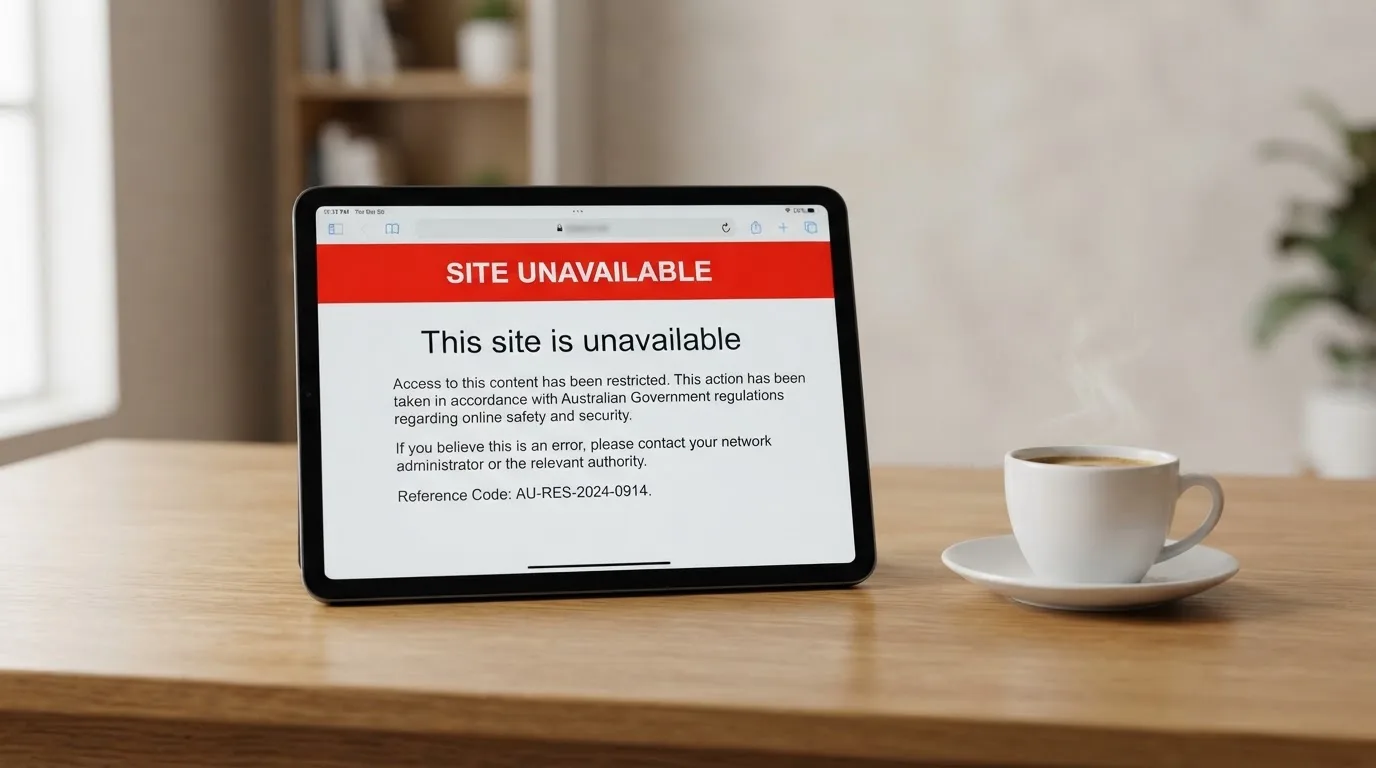
A licence from Curaçao, Malta, the Isle of Man or Anjouan is a licence to operate from that jurisdiction. It is not a licence to serve Australians, and the regulator behind it has no obligation to a player who lives in Brisbane. If a withdrawal is refused, a bonus term is changed after the fact, or the site simply disappears with a balance on it, the player has no Australian complaints body to approach and no Australian court with clear jurisdiction over the dispute. The site’s own terms usually make this explicit. Most “alternative dispute resolution” clauses name a service in the licence country, where the operator calls the shots.
This is the frame inside which every other safety check sits. A genuine fairness certificate, an independently tested return-to-player figure, a published house edge, a working self-exclusion button — any one of these can be true of an offshore site. None of them make it legal, and none of them give an Australian consumer the protection the law was written to provide.
How to judge a pokies site that advertises at Australians
The checks below are not a path to a safe offshore site. They are the things an Australian can verify, in the open, before depositing with any site that holds itself out as safe for Australian players. They are written as the questions a careful punter should be able to answer “yes” to — and the honest answer to most of them, for most offshore brands, is “no” or “I cannot check”.
The legal picture Australians actually face
The Interactive Gambling Act 2001 prohibits the supply of online casino games, online pokies and in-play betting to a person in Australia. Sports and race wagering placed before the event, lotteries and keno are licensable; in practice most online bookmakers — Sportsbet, Bet365, Ladbrokes among them — are licensed through the Northern Territory Racing and Wagering Commission. The NTRWC has 52 online bookmakers on its books, no full-time staff and meets once a month in Darwin, which has prompted reform calls in its own right.
Land-based pokies are a different question. Electronic gaming machines are licensed and regulated state by state, with the legal minimum return-to-player ranging from 85% in NSW, the NT, Queensland and Victoria (87% at Crown Melbourne) up to 90% in Western Australia. New South Wales alone had 87,298 machines outside casinos across 2,195 venues as of June 2023, with player losses of A$8.18 billion across 2022–23. Queensland had 21,122 machines across 351 venues in October 2023; Victoria had 26,380 outside Crown Casino across 488 venues under a 30,000-machine statewide cap.
Online pokies, as a category, are not in that system. They are prohibited.
The enforcement lever the ACMA uses is the section 313 blocking notice, which directs Australian internet service providers to make illegal gambling domains unreachable. In a round reported on 26 June 2026 the ACMA asked ISPs to block twelve more sites — 7Signs, ChromaBet, Donbet, Duospin, Freshbet, Slots Gem, Jacks Club, Lucky Start, Pointsbetz, Spinrise, Vinyl Casino and Wildsino — bringing the cumulative total of blocked and warned services to 1,751 websites since the first blocking request in November 2019, with more than 230 unlicensed operators having left the Australian market since enforcement was strengthened in 2017.
The 2025 H2 Gambling Capital estimate puts annual Australian losses to illegal gambling sites at around A$3.9 billion, and shows the share of gambling going through legal channels falling from 74% in 2021 to 64%. The direction of travel matters more than any single year’s number — the regulated share has been shrinking for half a decade.
The Interactive Gambling Amendment (Gambling Reform) Bill 2026 passed Parliament on 19 August 2026. Its advertising and inducement measures commence 1 January 2027. As of any page read in 2026, that is law on the books with a start date that has not yet arrived.
Responsible play: what is available, and what is not
The responsible-gambling tools that exist for Australians are designed around the products Australians can actually use legally. They are useful for the licensed wagering market and for the licensed land-based pokies in every state and territory. For the offshore sites this page is about, they are largely absent.
BetStop, the National Self-Exclusion Register
Live since 21 August 2023, BetStop is the formal mechanism by which an Australian can exclude themselves from every licensed online and phone wagering service in one registration. The exclusion can be set for three months, twelve months, or permanently, and licensed operators are required to honour it across every channel. Offshore casino operators are not participants. A self-imposed block at an offshore site is a polite request the operator has no obligation to enforce across its sister brands.
The National Gambling Helpline
1800 858 858 is free, confidential and available 24 hours a day, every day. It is the entry point for counselling, financial counselling and referral to face-to-face services in the player’s state or territory. Chat support is available through Gambling Help Online. A person whose pokies play — online or in a venue — has started to feel like something they cannot control, is what the helpline is for. The call does not require the player to have stopped.
State-based support services
Each state and territory runs its own problem-gambling program. New South Wales runs GambleAware; Victoria runs the Responsible Gambling Foundation; Queensland runs Gambler’s Help. The services offer counselling in person, over the phone and online, and most are free at the point of use.
Practical protections for a session
For the licensed wagering market, Australian customers can set deposit limits, time-out periods, and self-exclusion through the operator. None of these are substitutes for the structural protections of an Australian-licensed product, but for someone who has decided to keep using an offshore site against the advice above, they are the only mechanism the offshore operator offers voluntarily.
The rate at which the ACMA has been blocking sites
The regulator’s blocking record is the most concrete public measure of how fast the offshore market is being shut off. Between the first blocking request in November 2019 and the reporting round on 26 June 2026, the ACMA asked Australian ISPs to block 1,751 illegal gambling and affiliate marketing websites, with more than 230 unlicensed operators having left the Australian market since enforcement was strengthened in 2017. That gives a working rate — a band, not a single figure, because the ACMA does not publish blocking requests at fixed intervals and several months at a time carry no new notices.
Over the roughly eighty months from November 2019 to June 2026, 1,751 blocks works out to a band of roughly 22 blocks per month on average, with the true monthly figure swinging between zero in some months and a much larger round in others. The 26 June 2026 round alone blocked twelve sites. That is the useful way to read the figure: not “X per month” but “a sustained, lumpy enforcement programme that has cut the addressable surface for Australian-facing offshore gambling by a thousand-plus domains in six and a half years”.
For a player, the consequence is practical. A site blocked in March may reappear in April at a slightly different domain, on a different front company, under a different licence number. The blocking programme slows the market, it does not seal it. The honest summary for a careful Australian is that the legal and enforcement environment makes the offshore market smaller and harder to reach every year, and also that no enforcement round closes the door on what is already in a player’s account history.
What an Australian player should actually do
Three moves, in order.
Check the ACMA’s formal warning register before opening an account. The list is at acma.gov.au and is searchable by brand. If the brand is there, the regulator has already done the verification work.
For any product that is licensed in Australia — sports and race wagering, lotteries, keno, land-based pokies — use the licensed version. The protection available is real: BetStop binds the operator, the operator answers to an Australian regulator, deposits can be made with a debit card or PayID without the offshore restrictions, and complaints can be escalated to an Australian body. The product on offer is narrower than the offshore catalogue. The protection is correspondingly broader.
For support, the National Gambling Helpline is 1800 858 858. It is free and it is confidential. The conversation is not a commitment to stop; it is information, and it is the right next step for anyone whose play has started to feel different from what they intended.
Reading the ACMA’s actions on each brand
What follows is the regulator’s record for each of the eleven brands in the table at the top of the page, in the order the ACMA’s own publications give them, and a short note on what the action tells an Australian player. These are not reviews of the brands. They are the regulator’s actions, read for what they say.
RocketPlay was first warned in May 2022 as one of six Dama N.V. brands. The ACMA’s most recent formal warning over it is dated March 2026, naming Pulsup Ltd as the operator of RocketPlay. Two warnings under two different legal entities, separated by four years, on the same brand, is the pattern offshore operators use to extend their reach while changing the entity on the regulator’s paperwork. The Australian player looking at it sees a brand that the regulator keeps having to re-name.
Level Up Casino was warned in May 2022 as one of the original Dama N.V. six. The brand still appears in third-party industry directories as a BGaming-licensed operator. The Australian-facing position has not changed since 2022.
Woo Casino and Spirit Casino are both Dama N.V. brands the ACMA warned in 2025, in March and May respectively. They illustrate how a single holding company holds multiple brands and absorbs regulator attention across the portfolio. An Australian who has used one Dama N.V. brand and self-excluded has not self-excluded from the others.
National Casino and Bizzo Casino were both warned in July 2025 under Consolutetish S.R.L. Bizzo Casino was also the subject of an earlier 2022 warning to TechSolutions (CY) Group Limited and TechSolutions Group N.V., which is the second example on this list of the same brand appearing under different corporate shells.
Ignition Casino was warned in July 2025 under Bamboo Media. The operator is the only one on the list where the ACMA-named entity is not one of the larger holding companies already represented by other brands on the page.
Instant Casino was warned in February 2025 under EOD Code SRL. It sits early in the 2025 cluster and is named once.
Jackbit was warned in April 2026 under Ryker B.V., which also covers CasinOK in the same action. That makes Jackbit the most recent Dama-N.V.-adjacent cluster action, and it is the only brand on the page where the ACMA’s action covers a sister brand explicitly.
Casino Intense was warned in April 2025 under Sterplay Holding Ltd. ABC reporting has touched on Sterplay in the broader coverage of offshore operators marketing at Australians, which is why the brand shows up in third-party sources more often than the others.
Sky Crown was warned in September 2022 under Hollycorn N.V., together with Blue Leo. It is the oldest formal warning on the page and the one that best illustrates how durable a regulator-named brand can remain: a 2022 warning does not remove a domain from the addressable market.
Frequently asked questions
Does using PayID for pokies deposits make a site any safer, or just faster?
Faster. PayID is a real-time payment rail operated by Australian banks through the New Payments Platform, and it is one of the legal deposit routes for licensed Australian wagering. The safety of PayID is the safety of the underlying bank account — refunds, transaction disputes, and bank-level fraud detection still apply. What PayID does not do is change the legal status of the merchant receiving the payment. A PayID deposit to an offshore casino is still a deposit to a prohibited provider, with no Australian recourse if the operator refuses a withdrawal.
What should someone check before trusting a site’s own claim to be a ‘safe’ pokies operator?
Three things, in this order: the ACMA’s formal warning register, the corporate entity behind the licence and whether that entity is searchable in the named regulator’s public register, and the payment methods accepted. A site accepting credit cards or cryptocurrency is operating outside Australian payment rules. A site whose operator name does not appear in the licence-country register is operating behind a corporate front. A site on the ACMA’s list has already been adjudicated. The site’s own “safe and secure” banner is marketing, not verification.
Is there such a thing as a genuinely ‘safe’ offshore online pokies site for an Australian player?
No. The product is prohibited under the Interactive Gambling Act 2001, and no offshore licence changes that for a person in Australia. What an offshore licence can offer is a tested game, a published return-to-player, and a corporate entity a player can name in a complaint to that entity’s home regulator. What it cannot offer is the Australian consumer protection, complaints body and self-exclusion coverage that come with an Australian licence. The honest framing for an Australian is that “safe” offshore is a contradiction in terms, and the safer course is the licensed product that exists.
How does a site’s self-exclusion option relate to whether it’s actually safe to use?
A self-exclusion button inside an offshore casino account is the operator’s voluntary mechanism, not the Australian-registered BetStop. BetStop binds every Australian-licensed wagering operator with one registration and is enforced across brands and channels. An offshore site’s self-exclusion only covers that single account at that single brand, and the same holding company usually operates several brands. A player who self-excludes from one Dama N.V. casino and opens another Dama N.V. casino the next day is not excluded anywhere that matters.
What’s different about assessing safety for pokies specifically versus table games or live dealer games?
The structural question is the same for every prohibited product — none of them are licensed in Australia. The product-specific question is variance. Pokies are designed for high variance at a low house edge per spin, with most spins losing and the small share of winning spins doing most of the work for the headline return-to-player. Table games like blackjack and baccarat run at a much lower house edge with more predictable per-hand outcomes — blackjack around 0.28% with optimal play under liberal Las Vegas Strip rules, baccarat 1.06% on the Banker bet. Pokies are the product where the gap between an honest RTP and a marketed RTP costs the player the most over time.
Where can an Australian go for free, confidential support if online pokies use starts feeling unsafe?
The National Gambling Helpline on 1800 858 858, free and available 24/7, with chat support through Gambling Help Online. State and territory services — GambleAware in NSW, the Responsible Gambling Foundation in Victoria, Gambler’s Help in Queensland — offer face-to-face, phone and online counselling. BetStop, the National Self-Exclusion Register at betstop.gov.au, is the formal self-exclusion mechanism for Australian-licensed wagering. The first call does not have to be a commitment to stop; it is information, and it is the right next step at any point the play stops feeling like what was intended.
Is the game independently tested, and is the return-to-player published?
A real return-to-player (RTP) figure is published by the game provider — Pragmatic Play, BGaming, Betsoft, NetEnt — and tested by a laboratory such as iTech Labs, GLI or BMM Testlabs. The figure should match between the provider’s own page and the casino’s game information screen. If a site shows an RTP noticeably higher than the provider’s published figure, that is a marketing number, not a tested one.
For pokies specifically, RTPs in the high 90s are common on individual titles; RTPs in the high 80s are also common, and the difference matters at scale. A game at 96% versus a game at 88% over A$10,000 of play is a A$800 gap in expected return. The site displaying an “average” or “up to” figure is hiding the per-game variance.
Does the operator show the legal entity behind the brand?
A Curacao-licensed site should display its licence number, the company name on the licence, and the registered address. A search of the Curacao Gaming Authority’s public register, or the equivalent for whichever jurisdiction is named, should turn up the same entity. Many of the ACMA-warned brands above — Dama N.V., Hollycorn N.V., Ryker B.V. — are searchable because they have been the subject of regulatory action; the fact that an operator has been warned is itself a data point the player can verify.
If a site will not say which company operates it, that is the answer.
Does the site connect to BetStop, the National Self-Exclusion Register?
BetStop has been live since August 2023 and binds every Australian-licensed wagering provider — online and phone — to honour a self-exclusion registration. An offshore pokies site is not connected to BetStop. A self-exclusion button inside the account is the operator’s own voluntary mechanism; it does not stop the player opening a new account with a different email, a different card, or a different brand under the same holding company. This is the single most important safety gap between an Australian-licensed product and an offshore one, and it is the gap a responsible-gambling page on an offshore site will not advertise.
What does the cashier actually accept?
Since 11 June 2024 credit cards, credit-related products and digital currency are banned as payment for any licensed Australian online wagering. The legal deposit routes are debit card, bank transfer, PayID/Osko and BPAY. An Australian-facing site asking for a credit card or a crypto wallet is operating outside Australian rules on payment, regardless of what the rest of the site says. PayID is fast, which is the reason offshore sites like advertising it — speed is not the same thing as safety.
Is the ACMA’s formal warning register clean?
The ACMA publishes its formal warnings at acma.gov.au, with the operator named and the date. The list is searchable. If the brand a player is considering appears there, the player does not need to do any further work — the regulator has already done it.