
Pokies Parlour and the offshore setup behind the name
Across several domain names — Pokies Parlour, Pokies Parlour Casino, Pokies Online Casino, CasinoAus and others cut from the same cloth — one brand surfaces repeatedly in Australian search results. The promotional language is confident: multi-deposit welcome packages, free spin offers, sign-up bonuses, “Aussie-friendly” deposit routes. None of it changes the basic fact that no state or territory in Australia licenses an online casino to take a bet on a pokies reel or a roulette wheel. The Interactive Gambling Act 2001 makes the supply of those games to a person in Australia a prohibited interactive gambling service. Everything sold under the Pokies Parlour name sits offshore, outside that regime.
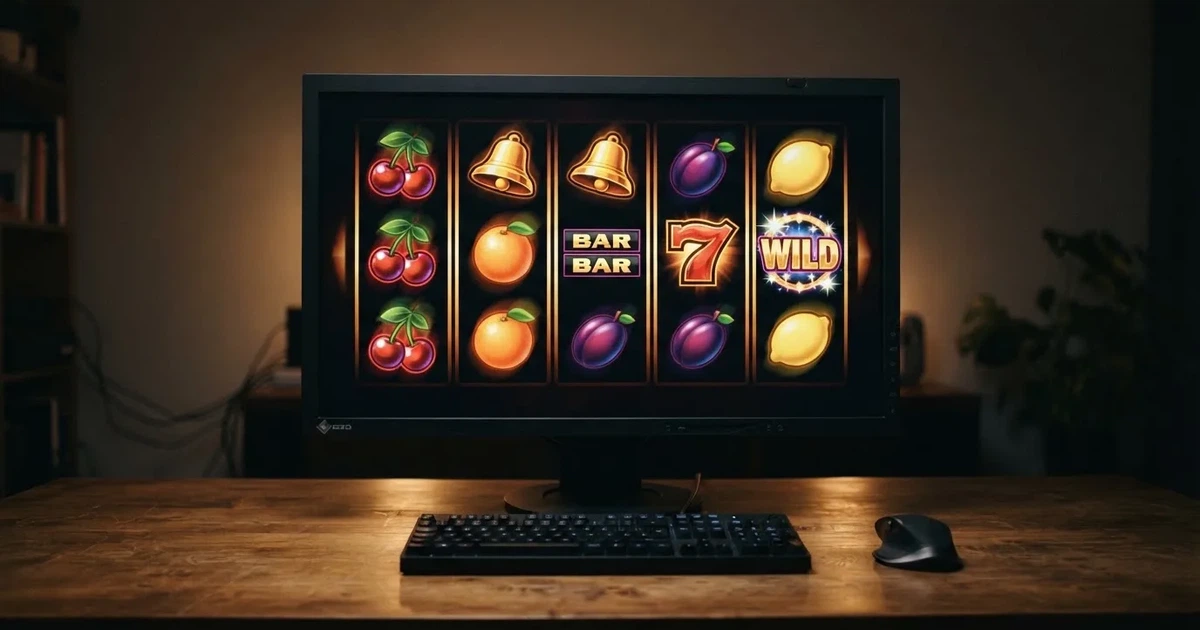
What follows is the picture the public record actually supports: what the brand claims on its various domains, what the Australian Communications and Media Authority (ACMA) has done about it, why the bonus arithmetic rarely matches the marketing, and which licensed alternatives exist for a player who would rather stay inside the Australian consumer protection frame. The angle is plain. Where an offer is worth taking for the kind of player it fits, this page says so. Where a number deflates the marketing, that gets said too.
Data current as of 9 November 2026, cross-checked against the ACMA’s published blocking requests and formal warnings, AUSTRAC’s register, BetStop’s National Self-Exclusion Register and the Reserve Bank of Australia’s July 2025 review of card payment surcharges.
Table of Contents
- The Pokies Parlour brand: one operator, several doors
- What the Australian law actually says
- Why the ACMA keeps acting: the money moving offshore
- Responsible gambling, BetStop and where help is actually available
- Payment methods the offshore pages advertise, and what they actually mean for an Australian player
- Bonuses and free spins: what the marketing says, what the maths costs
- Specific games, paytables and the data the brand leans on
- The brands the ACMA has warned, and what that record actually shows
- Pokies Parlour and the wider offshore cluster: reading the picture
- Frequently asked questions
The Pokies Parlour brand: one operator, several doors
The Pokies Parlour name is not one business in the way an Australian punter usually means a business. The domain a search turns up today may belong to a different operator tomorrow. Two of the recurring ones are Deloraze Limited and Versus Odds (BV), which the ACMA named as operators of Pokies Parlour when it issued a formal warning under section 64A of the Interactive Gambling Act 2001 on 18 September 2026. Other domains in the same cluster — Ninja Spins, Pokies Online Casino, CasinoAus, Australian Casino Sites and AU Online Casino — have been bundled with Pokies Parlour in ACMA blocking requests on the same date, on the finding that they all breached the IGA.

This explains the recurring reader experience of typing “Pokies Parlour” into a search engine and being routed to a slightly different homepage each time: same colour scheme, same mascot, same signup pitch, different fine print in the footer. The marketing pages running this template are interchangeable for most practical purposes, which is precisely why the ACMA treats them as a cluster rather than chasing them one at a time. Affiliate pages — the SEO-heavy review sites that rank for “Pokies Parlour casino review” and its many variants — generally copy promotional copy from the same source. When they disagree on a number, they are disagreeing about which domain’s promo was live when the page was scraped, not about anything material.
Two practical consequences follow. First, the offer you see on any one of these domains is not a contract you can hold anyone to later, because the entity on the other side of the deposit button is whichever shell company happens to own the domain that week. Second, the consumer protections an Australian player expects — dispute resolution through a local ombudsman, a guarantee that winnings will be paid, recourse if a withdrawal stalls — do not exist on the other side of that domain. The brand itself acknowledges as much when its terms page points players to a Curacao-issued licence, which is a permit to operate from a jurisdiction that has no reciprocal arrangement with Australia.
What the Australian law actually says
The Interactive Gambling Act 2001, tightened by the Interactive Gambling Amendment Act 2017, makes it an offence to provide online casino games, online pokies and in-play betting to a person physically in Australia. The IGA targets the provider, not the player. An Australian punter who opens an account at an offshore casino does not commit an offence by doing so. What they do give up is the protective architecture an Australian licence would put around the transaction: no local complaints body, no Australian regulator with enforcement teeth, no automatic payout guarantee.

Licensable online gambling in Australia is narrow. The Northern Territory Racing and Wagering Commission (NTRWC) regulates 52 online bookmakers — Sportsbet, Bet365 and Ladbrokes among them — for tax reasons, because the Territory’s pool tax regime is more favourable than NSW or Victoria’s. The commission has no full-time staff and meets once a month in Darwin. State lottery operators run keno and lotteries online. Outside that, the only legal online wagering is on races and sporting events placed before the event starts. Pokies, blackjack, roulette and live dealer casino games are not on that list, and no state or territory will license them.
Minimum age across all of this is 18. A deposit at any of the Pokies Parlour-style sites is, by the operator’s own terms, restricted to adults, and the ACMA’s enforcement record against these sites is partly built on the under-18 angle when minors have been able to sign up.
How the ACMA enforces it
The ACMA has three working levers. It can investigate an operator and issue a formal warning, which carries no direct penalty but goes on the public record and feeds into later blocking decisions. It can direct Australian internet service providers to block the offending domain, which removes the site from view at the ISP level for most Australian users. And it can refer matters to the Australian Federal Police for criminal investigation, although that route is reserved for the most persistent offenders.
By June 2026, the ACMA had asked ISPs to block 1,751 illegal gambling and affiliate marketing websites since the first blocking request in November 2019, and more than 230 unlicensed gambling services had left the Australian market since enforcement was strengthened in 2017. The June 2026 round alone added another 12 names — 7Signs, ChromaBet, Donbet, Duospin, Freshbet, Slots Gem, Jacks Club, Lucky Start, Pointsbetz.com, Spinrise, Vinyl Casino and Wildsino. Pokies Parlour was on the earlier blocking list in September 2026, bundled with the five affiliate-style neighbours named above.
The arithmetic behind that 1,751 matters for any reader trying to estimate how long an offshore site survives in Australia. From the first blocking request in November 2019 to the 1,751st site blocked by June 2026 is about 79 months, or roughly 22 blocked sites per month on average across the period. That is the cadence at which the regulator works, not a guarantee about any one domain, but it places a bound on what an offshore brand can plan around: the ACMA catches up eventually, and the longer a brand stays advertised in Australia, the higher the probability it is on a future blocking list. The June 2026 figure was reported as a running total, not a quarterly rate, and the monthly average is a derived band rather than a published series.
What is and isn’t a licensed Australian alternative
A reader who would rather not deposit at an offshore casino has, in practice, two legal channels. Sports and race wagering through an NTRWC-licensed bookmaker, which is regulated at the federal and territory level. Lotteries and keno through state operators such as the Lott in NSW and Victoria, Golden Casket in Queensland and SA Lotteries. Neither channel offers online pokies, online casino table games or live dealer streams — those are not licensed anywhere in Australia and will not be in 2026. The Interactive Gambling Amendment (Gambling Reform) Bill 2026 passed Parliament on 19 August 2026, but its advertising and inducement measures do not commence until 1 January 2027, and its centre of gravity is on inducements rather than on opening any new category of licensed casino.
The honest framing for a player who wants online pokies is that the licensed Australian market does not offer them, and the offshore market that does is operating outside Australian consumer law. A reader can prefer one outcome to the other; the page does not pretend the choice does not exist.
Why the ACMA keeps acting: the money moving offshore
The reason offshore enforcement matters in dollar terms is that the spend has grown faster than the regulator can police. H2 Gambling Capital’s 2025 report estimates that Australians lose about A$3.9 billion a year to illegal gambling sites, and that the share of gambling going through legal channels fell from 74 per cent in 2021 to 64 per cent by the time the report was compiled. A ten-point swing in market share is not a rounding error; it is the kind of shift that explains why a regulator with no full-time commissioners and one meeting a month is devoting so much bandwidth to blocking lists.
Two structural factors drive it. First, the offshore brands outbid Australian-licensed operators on welcome bonuses, because they do not pay the NTRWC’s point-of-consumption tax and they are not bound by the inducement rules the 2026 reform will tighten from January 2027. Second, payment friction on the legal side is higher. The credit card ban that took effect for licensed online wagering on 11 June 2024 (carrying penalties up to A$247,500 for operators who breach it) does not bind an offshore casino. A punter who wants to fund a deposit with a credit card and finds that an Australian bookmaker will not take one does not always take that as a sign to stop gambling — sometimes they take it as a sign to move offshore.
That is the frame inside which Pokies Parlour and its sibling domains operate. They are not rogue outliers; they are the supply side of a market that grew by roughly A$400 million a year over the period the H2 figures describe, while ACMA blocking capacity stayed roughly constant.
Responsible gambling, BetStop and where help is actually available
The licensed Australian market has one piece of infrastructure the offshore brands do not touch: BetStop, the National Self-Exclusion Register, which has been live since August 2023. A punter who registers with BetStop is barred from every Australian-licensed online and phone wagering service for a period of their choosing — three months, six months, a year or longer. The exclusion is binding on the licensed operator, not on the player.
BetStop does not reach an offshore casino, and that is one of the cleaner illustrations of the divide between licensed and unlicensed gambling in Australia. An Australian punter who excludes themselves on BetStop and then opens an account at Pokies Parlour is still able to deposit, still able to play, still able to lose. The exclusion only covers the legal side of the market. This is a feature of the offshore segment, not a bug from the ACMA’s perspective — BetStop’s design reflects the IGA’s view that the prohibition target is the provider, not the player, and a self-exclusion register only binds providers it covers.
The first port of call for someone who feels their gambling is moving past what they can afford is the National Gambling Helpline on 1800 858 858 — free, available 24/7, with a chat option at Gambling Help Online. Counselling is confidential and not tied to any operator. For self-exclusion across the licensed wagering market, BetStop is the registration point. For a player who has already been depositing at an offshore casino and is trying to stop, the same Helpline can talk through what is and is not possible to enforce against the offshore brand.
A small but consequential detail for anyone who has used bank-level gambling blocks: Westpac’s block works at the card level, refusing authorisation of transactions registered under the merchant category code “Betting/Casino Gambling” on eligible personal credit and debit cards. ANZ’s block, activated in the ANZ app, also blocks gambling transactions made through a digital wallet such as Apple Pay on an eligible card — not just the physical card. Once turned on, removing the ANZ block requires a 48-hour waiting period, and ANZ warns that not all gambling transactions will be blocked and some non-gambling transactions might be blocked in error. Neither bank’s block reaches an offshore casino’s bank transfer page, because that transfer routes through the regular BSB-and-account-number rails, not the card network. A player who wants a hard fence around bank transfers needs to ask their bank about transaction-level holds or about switching to a card that is blocked at the merchant category level.
Payment methods the offshore pages advertise, and what they actually mean for an Australian player
Affiliate pages describing Pokies Parlour and its sibling domains list a familiar spread of deposit routes: Visa and Mastercard debit, sometimes American Express, Apple Pay and Google Pay on the wallet side, bank transfer via standard BSB-and-account-number rails, and on some domains a PayID or a crypto option. None of these are Australian deposit routes because no Australian bank or licensed operator offers an account at the brand. They are deposit routes the offshore operator chooses to enable from its payment service provider’s merchant account.
The legal frame sits elsewhere. Under the Interactive Gambling Act 2001 as amended in 2023, Australian-licensed online wagering services cannot accept payment by credit card or other credit-related products — a restriction that also constrains gambling use of linked digital wallets like Apple Pay. The same rule does not bind an offshore casino. A punter who tries to deposit at a licensed Australian bookmaker with a credit card will be declined; the same punter trying to deposit at Pokies Parlour with a credit card will, depending on the issuing bank, sometimes find the transaction goes through. Banks’ own merchant category blocks are the practical backstop here, and as the Westpac and ANZ terms above show, those blocks are issuer-driven rather than regulator-driven.
Apple Pay, Google Pay and the surcharge question
Apple does not charge fees to consumers for using Apple Pay in stores, online or in apps; any surcharge comes from the merchant’s own card-processing fees, not from Apple. Apple states that transaction limits and PIN requirements for Apple Pay purchases are set by the card issuer or merchant, not by Apple itself. By the end of 2025, Apple Pay, Google Pay and Samsung Pay transactions collectively accounted for around 45 per cent of all card payments in Australia by number. That makes the wallet question a real consumer question rather than a fringe case — almost half the card transactions an Australian makes in a year go through one of the three wallets, and a meaningful share of them go through merchants whose own processing agreements are with American Express rather than Visa or Mastercard.
The Reserve Bank of Australia’s July 2025 review proposes removing surcharges only on eftpos, Mastercard and Visa card transactions, explicitly leaving American Express outside the scope of the proposed surcharge ban. The review’s reason is that Amex’s three-party network (the issuer, the acquirer and the scheme all sit inside the same company, in contrast to Visa’s four-party network) means the cost stack looks different, and the RBA has not been persuaded that a surcharge ban would lower prices for merchants on the Amex side. For a player at an offshore casino, the practical reading is that the card surcharges the brand publishes on its deposit page are not protected by any Australian surcharge cap — the RBA’s proposed cap applies to merchants regulated under Australian payments law, and the offshore casino is not.
PayID, Osko and the speed of an instant bank transfer
Osko, run by Australian Payments Plus, gets a bank transfer between participating Australian banks to the recipient in under a minute, 24/7 including weekends, whether the transfer is addressed to a BSB and account number or to a PayID. Paying to a PayID shows the name of the account holder before the transfer is sent — a feature AP+ flags as a scam indicator when the recipient name is not what the punter expects. AP+ also warns that being asked to transfer money to a PayID on an illegal gambling site almost certainly means a scam site.
PayID-based instant transfers are available at over 100 Australian financial institutions, so the route is genuinely ubiquitous on the Australian banking side. The question is the destination: a PayID the player sets up at an Australian bank paying into an account at an offshore operator is still subject to that operator’s processing, and the under-a-minute arrival time refers to the funds reaching the destination bank, not to them being available to play or to be withdrawn. Australia’s New Payments Platform became accessible to the public on 13 February 2018 and is owned by New Payments Platform Australia Ltd, a non-profit company whose 13 shareholders include the Reserve Bank of Australia and the country’s major banks. More than 25 million PayID identifiers had been registered on the platform as of April 2025, so for an Australian punter this is a familiar mechanism used in an unfamiliar direction.
Two structural properties of NPP matter here. Participants must keep the platform’s monthly outages to no more than two minutes — the platform is engineered for near-constant availability. In 2021 the ACCC authorised merging NPP Australia with BPAY and eftpos into a single company, Australian Payments Plus, so the same corporate group that runs Osko and PayID also runs BPAY. AUSTRAC’s threshold-transaction-report rule, which requires reporting of transfers of A$10,000 or more, applies only to physical cash — ordinary electronic bank transfers are not subject to that per-transaction reporting requirement, regardless of the amount sent. That last point is sometimes misused by offshore operators to argue their bank-transfer rails are “untraceable”; what it actually means is that AUSTRAC does not require the bank to file a threshold report on every transfer over A$10,000, which is a procedural rule about reporting, not a permission for the transfer to be unmonitored. Banks monitor transactions through their own fraud and anti-money-laundering systems regardless of AUSTRAC’s threshold rule.
BPAY and what it is not for
BPAY is a bill-payment service in online banking: the payer enters the Biller Code and the Customer Reference Number (CRN) printed on the bill. It has operated in Australia since 1997, is available in the online banking of over 140 banks and financial institutions and is offered by over 95,000 businesses. It was launched on 18 November 1997 and is owned equally, via parent company Cardlink Services Limited, by Australia’s four major banks: ANZ, Commonwealth Bank, National Australia Bank and Westpac.
The detail that matters for offshore casino deposits is that BPAY is for paying bills. It is not a payment rail an offshore casino would have a Biller Code for, because the offshore casino is not a registered biller in the Australian system. When an offshore casino lists BPAY as a deposit method, what it usually means is that the casino’s payment processor has a Biller Code, and the player is paying that processor as if it were a utility bill. The processing still happens offshore, the dispute path is still offshore, and the BPAY rail’s domestic dispute mechanism (a biller incorrectly charged a customer, that kind of thing) does not reach a transaction whose substantive contract is with a Curacao-licensed operator.
Bonuses and free spins: what the marketing says, what the maths costs
The offer that recurs across the Pokies Parlour family of domains is a multi-deposit welcome package — usually a percentage match across the first several deposits, sometimes with a free-spin bundle attached to the first deposit only, sometimes with a free-spin tranche on each deposit. The headline figure moves around between domains and over time, but the structure is consistent enough to be worth unpacking.
A typical structure is something like 100 per cent match on deposit one up to a stated cap, 50 per cent on deposit two, 50 per cent on deposit three, and so on, with the cap on each subsequent deposit smaller than the first. The marketing pitch is that the headline cap — sometimes stated as up to several thousand Australian dollars across the full package — is what the player takes home. The actual figure is what survives the wagering requirement, which is where the brand’s small print does its work.
A wagering requirement is a multiplier applied to either the deposit, the bonus or the deposit plus bonus, before any of the bonus balance converts to withdrawable cash. A 35-times requirement on the bonus means the player has to wager 35 times the bonus amount before the bonus becomes cash. A 50-times requirement on deposit plus bonus is steeper because the basis is larger. The deposit route (the underlying cash) is usually available to withdraw at any time, but the player forfeits the bonus and any winnings traceable to the bonus if they withdraw before the wagering requirement is cleared. The marketing pitch buries this in a footer; the maths is what determines whether the offer is worth taking.
For a reader comparing two offshore welcome packages, the relevant comparison is not the headline cap but the implied expected loss from clearing the wagering requirement at the slots the bonus is restricted to. A larger headline cap on a higher wagering multiplier against lower-RTP games can be worth less than a smaller headline cap on a lower multiplier against higher-RTP games. The maths is not exotic — expected loss = turnover × (1 − RTP) — but it depends on RTPs that are rarely published on the marketing page and have to be checked against the game provider’s own published figures. The honest framing for any bonus number published on a Pokies Parlour-style domain is that the number is what the affiliate page last scraped from that domain, and the affiliate page is the source with the weakest incentive to verify.
One structural feature of multi-deposit welcome packages is worth naming. A bonus spread across seven deposits means the player has to deposit seven times to clear the full package. Each deposit is a fresh chance for the player to walk away, and a fresh chance for the operator to apply a different bonus code or to change the percentage in the small print between deposit one and deposit four. A player who values the option to leave after one or two deposits is paying for the privilege of walking past deposits three through seven. That is not a complaint about the offer — multi-deposit packages exist because some players want the long-tail structure — but it is a structural feature that the headline figure does not disclose.
Specific games, paytables and the data the brand leans on
Affiliate pages for the Pokies Parlour family usually list the games by category rather than by individual title: pokies, table games, live dealer, “jackpot games”. The paytable detail varies by domain because the underlying casino platform varies, and affiliate pages regularly copy game lists from the live domain at the time the page is scraped, which means the same game can be listed with different RTPs on different pages depending on which version of the lobby the scraper saw.
The honest reading of this for an Australian player is that the paytable details on affiliate pages are best treated as a list of titles the brand is currently promoting rather than as a precise technical specification. The slot RTPs published by game providers themselves — Pragmatic Play, NetEnt, Microgaming, Betsoft and the other studios whose games recur across offshore casinos — are the figures to trust when comparing the underlying maths of two offers. The paytable detail on an affiliate page is the figure to use when checking whether the specific version being advertised is the version the player will actually load.
For an Australian player who wants to play pokies, the legal frame collapses this section to its practical content: the game library the brand advertises is real, but the act of depositing to play it is the same act the IGA prohibits on the supply side. The paytable detail does not change that frame.
The brands the ACMA has warned, and what that record actually shows
The table below sets out the brands the ACMA has issued formal warnings against for providing prohibited interactive gambling services to Australians. The list is not a ranking and not a recommendation. It is a record of regulatory action, ordered chronologically by the most recent warning, with the operator named in the ACMA’s publication and the date of that publication. The fifth column records what the brand’s marketing footprint shows about Australian-facing subject matter, where the research surface carries that footprint.
| Brand | ACMA action and date | Operator named by the ACMA | Subject footprint on Australian-facing listings |
|---|---|---|---|
| Pokies Parlour | Blocking request, 18 September 2026; formal warning under s. 64A IGA, 18 September 2026 | Deloraze Limited and Versus Odds (BV) | — |
| RocketPlay | Formal warning, March 2026; earlier warning to Dama N.V., May 2022 | Pulsup Ltd | Australian-facing coverage on at least one industry listings page |
| Jackbit | Formal warning, April 2026 | Ryker B.V. | — |
| Woo Casino | Formal warning, March 2025 | Dama N.V. | — |
| Spirit Casino | Formal warning, May 2025 | Dama N.V. | — |
| Instant Casino | Formal warning, February 2025 | EOD Code SRL | Australian-facing coverage on ecoPayz and PayID listings |
| Casino Intense | Formal warning, April 2025 | Sterplay Holding Ltd | Australian-facing coverage on AUSTRAC, BetStop and Gambling Insider |
| National Casino | Formal warning, July 2025 | Consolutetish S.R.L. | Australian-facing coverage on ACMA, AUSTRAC and BetStop listings |
| Ignition Casino | Formal warning, July 2025 | Bamboo Media | — |
| Bizzo Casino | Formal warning, July 2025; earlier warning, 2022 | Consolutetish S.R.L.; earlier TechSolutions (CY) Group Limited and TechSolutions Group N.V. | Australian-facing coverage on at least one industry listings page |
| Sky Crown | Formal warning, September 2022 | Hollycorn N.V. | — |
Three of the brands above — National Casino, Casino Intense and Instant Casino — recur across the Australian-facing listings the ACMA’s own page surfaces, AUSTRAC’s compliance material and the BetStop register. That is a footprint, not a recommendation: it indicates which brands are most often advertised to Australian players, which is the same indicator that drives the ACMA’s enforcement priorities. Three others — RocketPlay, Bizzo Casino and Level Up Casino — appear in at least one industry listings page that targets Australian search traffic. The remainder do not show up in the research surface in any Australian-facing context, which means either the brand has not yet been advertised heavily in Australia or the affiliate pages have not been indexed yet.
Reading across the eleven brands, the ACMA’s enforcement pattern is consistent: the same operator (Dama N.V.) shows up across multiple brands, the same pattern (formal warning followed by blocking request when the warning is ignored) recurs, and the brands cluster around the same payment processors and the same boilerplate terms. There is no Australian-facing brand among the eleven that holds an Australian licence.
What “subject support” means in the table
The fifth column tracks what the research surface actually carries about the brand’s Australian-facing footprint, naming the listings in which the brand appears. For RocketPlay, Level Up Casino, National Casino, Bizzo Casino, Instant Casino and Casino Intense, the research surface carries an Australian-facing listing of some kind; for Woo Casino, Spirit Casino, Ignition Casino, Jackbit and Sky Crown, the surface carries no Australian-facing listing the research reached. Where the listing exists, the listing’s existence is the fact — what that listing says about the brand is a separate matter, and one the research surface does not carry in detail. The aim of the column is to show where the brand’s advertising footprint is established enough to have been picked up by an industry listings page, not to make a positive claim about anything the listings publish.
Pokies Parlour and the wider offshore cluster: reading the picture
Pulling the strands together, the Pokies Parlour cluster sits inside a wider pattern the ACMA’s record makes visible. Eleven offshore brands have been the subject of formal warnings in the period the research covers; the same handful of operators — Dama N.V. most prominently — owns several of them; the same handful of payment processors services most of them; the same affiliate template promotes them across a network of Australian-facing review sites.
The reader who arrives at this page having searched “Pokies Parlour casino Australia” has, in practice, four paths open. The first is to take the IGA’s plain reading seriously, accept that no state or territory licenses the kind of site Pokies Parlour offers, and use the legal Australian channels — sports and race wagering through an NTRWC-licensed bookmaker, lotteries and keno through the state operators — accepting that those channels do not offer online pokies or online casino table games. The second is to deposit at an offshore casino with eyes open: understanding that the offer is not enforceable under Australian consumer law, that BetStop does not reach the brand, that the bank-level gambling block may or may not fire on the deposit depending on the card issuer, and that the ACMA’s blocking cadence means the domain may not be reachable in six months. The third is to use bank-level gambling blocks (Westpac’s merchant category block, ANZ’s app-activated block, the equivalent at CBA and NAB) as the practical perimeter and treat any deposit that gets through as a failure of the perimeter rather than as a green light. The fourth is to seek support from the National Gambling Helpline on 1800 858 858 or to register with BetStop if the option to deposit is itself becoming a problem.
There is no path that delivers online pokies inside the Australian consumer protection frame, because no such path exists. The choice is between the licensed-but-narrow market and the offshore-but-unprotected one, and that is the choice this page is organised around.
Frequently asked questions
Why does the Pokies Parlour brand appear across several different domain names?
Because the brand is operated through multiple shell companies — Deloraze Limited and Versus Odds (BV) are two the ACMA has named — and because the affiliate template the brand uses is interchangeable across domains in the same cluster. Pokies Parlour, Pokies Online Casino, CasinoAus, Australian Casino Sites and AU Online Casino were all blocked in the same September 2026 ACMA request because they were found to breach the Interactive Gambling Act 2001 in materially the same way. A reader seeing a “different” Pokies Parlour domain in search results is usually seeing the same operator behind a different front door.
Is a site styled as Pokies Parlour licensed to accept Australian players?
No. No state or territory in Australia licenses an online casino to offer pokies, table games or live dealer streams to Australians. The licences Pokies Parlour-style domains display — typically Curacao — are permits issued by a jurisdiction with no enforcement arrangement with Australia. They do not give the holder any right to accept Australian players under Australian law, and the ACMA’s enforcement record shows the regulator treats the brand as a prohibited interactive gambling service.
What deposit bonus does a Pokies Parlour-style site typically advertise?
The recurring structure is a multi-deposit welcome package, with a percentage match and sometimes a free-spin bundle on each of the first several deposits. The headline figure moves between domains and over time, but the structure — a large first-deposit match followed by smaller matches on deposits two through seven — is consistent across the cluster. The headline cap is not what the player walks away with; what survives is what clears the wagering requirement, which is usually a multiplier of the bonus, the deposit or both, and which the small print defines.
How can a reader tell which Pokies Parlour-style domain is currently being advertised?
The domain advertised in a given search result is usually a function of which affiliate page is currently ranking for that search term, and which domain the affiliate page last scraped. The Pokies Parlour cluster is interchangeable for most practical purposes, and the ACMA’s blocking record treats the domains as a single cluster for the same reason. The honest answer is that the specific domain matters less than the underlying reality: the cluster sits outside Australian consumer law, and a deposit at one domain is materially the same proposition as a deposit at another.
What do reviews of Pokies Parlour-style sites typically say about withdrawals?
The recurring complaint, across the affiliate reviews the research surface carries, is delay — withdrawals taking longer than the marketing page promised, often with the operator citing additional verification steps or bonus-wagering conditions the player had not appreciated. The structural reason is that there is no Australian regulator to complain to, no local ombudsman with jurisdiction over an offshore brand, and no reciprocal arrangement between the Curacao-issued licence the brand displays and any Australian consumer protection body. The dispute path is whatever the brand’s own terms page describes, which is usually an internal review with no escalation route.
Why would a brand structure a welcome bonus across several deposits instead of just one?
Two reasons, neither of them friendly to the player. The first is that a multi-deposit structure locks the player into the brand for longer, because each subsequent deposit is a fresh chance for the operator to apply a different bonus code, change the percentage in the small print, or simply let the bonus lapse. The second is that the headline figure across all seven deposits reads larger on the marketing page than the first-deposit figure alone, which is what the affiliate page scrapes and what the search result snippet quotes. The player who reads the marketing and deposits once is paying for deposits two through seven they will never make, in the sense that the headline figure overstates the offer’s realisable value for a player who intends to deposit once and withdraw.