
Golden Pokies in Australia, 2026: the offshore market around it, the rules it sits inside, and what a player actually faces
Currency and licence register checks current as of 9 November 2026 against the ACMA formal warning register and Australian Payments Plus guidance.
Golden Pokies is a brand built for one purpose: pulling an Australian punter in with a headline number and a free spin offer before the regulator can finish typing its next warning letter. That is not a judgement that needs a great deal of evidence. The Australian Communications and Media Authority ordered Golden Pokies blocked in March 2021, alongside Play Croco, Aussie Play, Golden Reels, All Spins Win, Bonza Spins, Pokie Spins, House of Pokies, Pokie Mate and PokieZ. Every one of those names lived the same brief life: launch, advertise, get listed, get blocked. The blocking request in 2019 was the regulator’s first; by the round reported in June 2026, the cumulative count had reached 1,751 illegal gambling and affiliate marketing websites blocked, and more than 230 unlicensed services had withdrawn from the Australian market. The fact that Golden Pokies keeps reappearing under slightly different skins tells the reader what the brand actually is: a slot machine wrapped in a domain name and a banner ad, where the value proposition depends on the player never quite catching up to the terms underneath it.
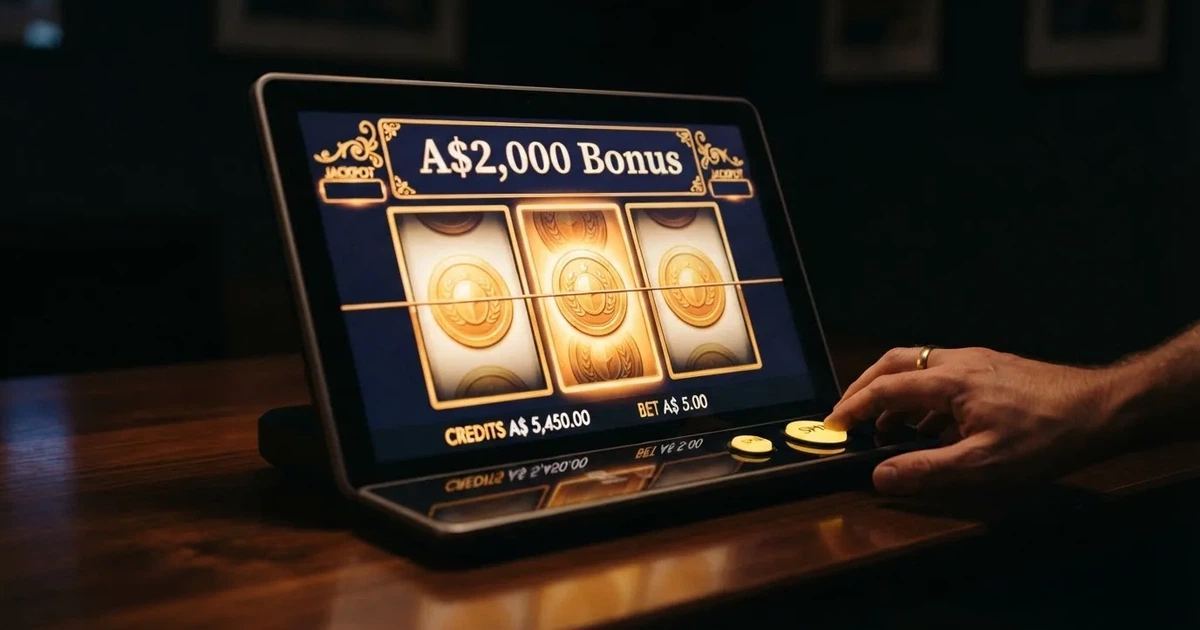
What this page does is different from a promotional write-up. It walks through what Golden Pokies and the offshore market around it actually offer, what they cost, and what the regulatory and payment framework in Australia does to a player who decides to use one anyway. The brands are described. None is recommended. The reader’s bankroll and the player’s right to a refund sit at the centre of every section.
Table of Contents
- The offshore casino cluster around Golden Pokies
- The legal frame Golden Pokies sits inside
- Payments and what an Australian player can actually use
- Bonuses, free spins and what they actually cost
- The catalogue: what a Golden Pokies slot is
- Landscape: brands named in formal warnings
- What each brand looked like to the ACMA
- The blocking arithmetic the regulator publishes
- Frequently asked questions
The offshore casino cluster around Golden Pokies
The offshore cluster around Golden Pokies is not a coherent product category. It is a marketing category — sites that share a target audience, a license jurisdiction that is not Australia, and a willingness to advertise at Australian traffic regardless. Beyond those three things, the brand-to-brand differences are mostly cosmetic: which provider supplies the games, which company licence is displayed in the footer, which e-wallet appears in the cashier.

What Golden Pokies actually sells
Golden Pokies sells sign-up offers and free spins. That is the whole of the marketing pitch. Behind the offers sits the same shape any offshore casino has: a slots catalogue, a live-dealer room with the standard blackjack and roulette, a cashier that lists some combination of card, voucher, e-wallet and crypto, and a bonus terms page that operates on multipliers. The paytable a player sees on a Golden Pokies slot is the same paytable the same game carries on every other site that licenses it from the same studio — the title is the product, the brand is the wrapper.
Two consequences follow from this. First, the value of the catalogue cannot be evaluated brand by brand, only title by title — the RTP and volatility of any given slot travel with the slot, not with the operator. Second, the only thing Golden Pokies actually controls is the offer page and the cashier. That is also the only part of the site the operator’s licensing regime does not standardise. Every other piece of the experience is shared with whichever offshore brands are licensing from the same upstream providers this quarter.
Why the brand comes back after being blocked
The persistence is not a mystery. Blocking a domain costs the ACMA a round of correspondence with ISPs; spinning up a fresh domain costs the operator minutes. The pattern is visible in the formal warning register: Dama N.V. was warned over six brands in May 2022, again over Woo Casino in March 2025, and again over Spirit Casino in May 2025. Consolutetish S.R.L. was warned over National Casino and Bizzo Casino in July 2025, with Bizzo Casino having already been warned at the TechSolutions level in 2022. The warning is the regulator’s loudest tool; the operator’s response is to rebrand and continue. The sites blocked since November 2019 are the count after that pattern has played out many times over.
The legal frame Golden Pokies sits inside
The legal frame is the section of this page that does the most work, because the legal frame is what makes a recommendation impossible. The reader who came here looking for “is Golden Pokies safe” needs to understand that the question is not “is the operator trustworthy”, it is “is this service allowed to be offered to me at all”. The answer to that second question is the law, not the operator’s reputation.
Online casino games are prohibited in Australia
The Interactive Gambling Act 2001, as tightened by the Interactive Gambling Amendment Act 2017, makes it an offence to provide online casino games, online pokies or in-play betting to a person physically in Australia. No state or territory issues a licence for an online casino product. What is licensable is wagering on races and sport placed before the event, lotteries and keno. The minimum age for any licensable gambling product is 18.
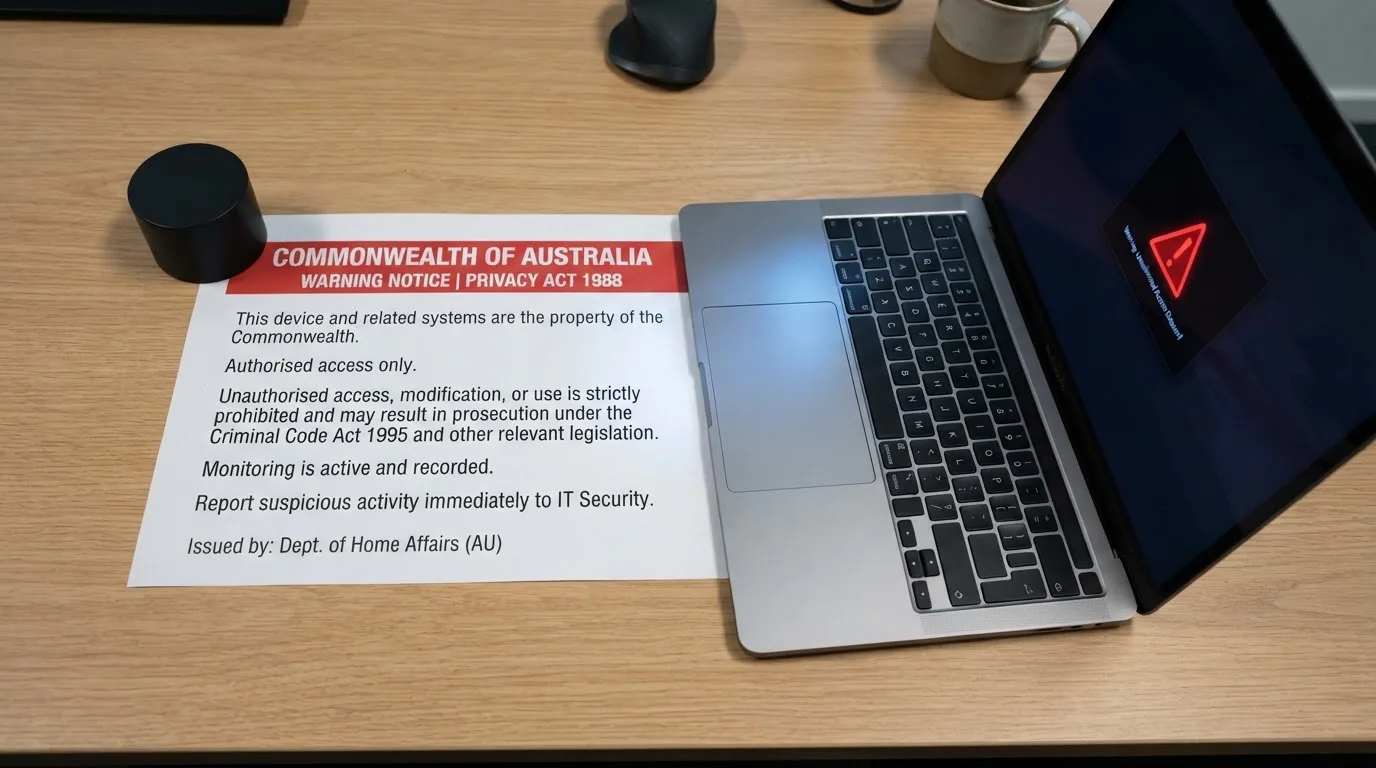
Golden Pokies is not offering a licensable product under Australian law. The licence it displays — Curaçao, Anjouan, whatever the footer states this week — is a permission to operate from a foreign jurisdiction. It is not, and cannot be, an Australian licence, because no Australian licence exists for what Golden Pokies sells. The same is true of every other brand reviewed on this page, and the same was true of every brand the ACMA has issued a formal warning over.
How the ACMA enforces against offshore sites
The ACMA investigates complaints, issues formal warnings, and can direct Australian internet service providers to block illegal sites. The individual Australian player is not prosecuted under the IGA — the Act targets the provider. But a player has no consumer protection: there is no Australian complaints body for an offshore site, no recourse if a withdrawal is refused, and a balance can sit locked the morning a blocking order takes effect. The blocking order does not refund anything.
The enforcement arithmetic is the one bit of information the regulator has handed readers in usable form. The first blocking request went out in November 2019. By the round reported on 26 June 2026, the running total reached 1,751 illegal gambling and affiliate marketing websites, with more than 230 unlicensed services having left the Australian market since enforcement was strengthened in 2017. The latest round named 7Signs, ChromaBet, Donbet, Duospin, Freshbet, Slots Gem, Jacks Club, Lucky Start, Pointsbetz, Spinrise, Vinyl Casino and Wildsino. The blocking rate, calculated across the period from November 2019 to the June 2026 cut-off, runs at roughly 260 sites per year as a long-run average, but that average hides the surge: roughly 350 per year over the last three years as enforcement has scaled up and affiliate marketing has been pulled into scope.
What changes on 1 January 2027
The Interactive Gambling Amendment (Gambling Reform) Bill 2026 passed Parliament on 19 August 2026. Its advertising and inducement measures commence on 1 January 2027. A page dated in 2026 reports that as law with a future start date, not as a rule currently in force. The changes that arrive in 2027 tighten the frame around inducements — the kind of “A$2,000 bonus” banner that brings most players to a Golden Pokies front page in the first place. Until 1 January 2027 the inducement rules are the pre-amendment rules; from that date they tighten.
What player protection actually covers
BetStop, the National Self-Exclusion Register, has been live since August 2023. It binds Australian-licensed online and phone wagering services. An offshore casino is not a BetStop participant, because an offshore casino is not an Australian-licensed service. Registering on BetStop does not stop a player who decides to use Golden Pokies. The National Gambling Helpline (1800 858 858) is free, runs 24/7, and offers chat at Gambling Help Online. The helpline operates regardless of whether the gambling activity took place on a licensed or an offshore site — it is a service to a person, not to a brand. The framework Australian-licensed operators sit inside is real. The framework does not reach Golden Pokies.
Payments and what an Australian player can actually use
The payment side of an offshore casino is where the marketing and the regulation collide. The casino advertises one set of methods. Australian banking policy rejects another. The intersection is small, and it is where the practical story of funding a Golden Pokies account lives.
What the law bans as a funding route
Since 11 June 2024 no Australian-licensed online wagering service may accept payment by credit card or other credit-related products. Digital currency is banned for the same purpose. The penalty for an operator who accepts either runs up to A$247,500. That is the rule for licensed wagering. For an offshore casino it is irrelevant, because the offshore casino is not operating under the Australian licence to which the rule applies. But the ban applies symmetrically to the player side at Australian banks, which is where the friction actually appears.
What banks actually block
The major Australian banks operate gambling transaction blocks. Westpac’s block works at card level: it refuses authorisation of transactions registered under the merchant category code for betting and casino gambling on eligible personal credit and debit cards. ANZ’s block, activated in the ANZ app, blocks gambling transactions made through a digital wallet such as Apple Pay on an eligible card, not just the physical card. Once turned on, removing the ANZ block requires a 48-hour waiting period, and ANZ warns that not all gambling transactions will be blocked and some non-gambling transactions might be blocked in error.
These blocks are not inviolable. They rely on merchant category coding, which is accurate at Visa and Mastercard level but less reliable for some offshore sites whose MCC is miscategorised. A player who has turned a block on cannot rely on it as a guarantee. A player who has not turned one on will find their bank declining a chunk of their attempted deposits and refunds happening in days, not minutes.
Card networks and the surcharge picture
American Express operates a three-party network — it issues the card, processes the transaction, and pays the merchant — rather than the four-party model Visa and Mastercard use. The Reserve Bank of Australia’s July 2025 review proposed removing surcharges on eftpos, Mastercard and Visa card transactions, and explicitly left American Express outside the proposed surcharge ban. For a player, the practical upshot is that paying with Amex at an Australian merchant has historically been the most expensive option by surcharge; at an offshore casino, where surcharging is whatever the cashier decides it is, that pattern does not transfer cleanly. There is no published baseline of surcharges on offshore casino deposits to compare against.
Apple Pay does not charge consumers a fee for transactions in stores, online or in apps; any surcharge is the merchant’s processing cost, not Apple’s. Apple states that transaction limits and PIN requirements for Apple Pay purchases are set by the card issuer or merchant. The underlying card still triggers the issuer’s gambling block where one is on — that is the point of ANZ’s digital-wallet extension. By the end of 2025 Apple Pay, Google Pay and Samsung Pay collectively accounted for around 45% of all card payments in Australia by number, which means the digital-wallet extension of any bank’s block reaches a very large share of card payments.
PayID, Osko, BPAY and the deposit story
PayID is the addressing layer on top of Australia’s New Payments Platform. Paying to a PayID shows the account holder’s name before the transfer is sent. Australian Payments Plus warns that being asked to transfer money to a PayID on an illegal gambling site almost certainly means a scam site. The point is sharper than it sounds: if the cashier is asking the player to send money to a PayID under someone’s name, that someone’s name is unlikely to be “Golden Pokies” or its operator. PayID-based instant transfers are available at over 100 Australian financial institutions.
Osko is the instant-transfer service that runs across the New Payments Platform — a bank transfer between participating banks arrives in under a minute, 24/7, addressed either to a BSB and account number or to a PayID. The platform became accessible to the public on 13 February 2018, is owned by New Payments Platform Australia Ltd, and by April 2025 had more than 25 million PayID identifiers registered. Participants must keep monthly outages to no more than two minutes; in 2021 the ACCC authorised the merger of NPP Australia with BPAY and eftpos into Australian Payments Plus.
BPAY is the bill-payment service in online banking: the payer enters a Biller Code and the Customer Reference Number printed on the bill. It has operated in Australia since 1997 — launched on 18 November that year — and is available in the online banking of over 140 banks and financial institutions, used by over 95,000 businesses. BPAY is run by Australian Payments Plus, the same operator as PayID and Osko, and is owned equally via Cardlink Services Limited by ANZ, Commonwealth Bank, National Australia Bank and Westpac.
AUSTRAC’s threshold-transaction-report rule requires reporting of transfers of A$10,000 or more in physical cash. Ordinary electronic bank transfers are not subject to that per-transaction reporting requirement, regardless of the amount sent. The implication for a player funding an offshore site is not that they will be reported on, it is that the funds path looks like a normal bank transfer to the bank’s systems until the merchant code is examined.
What this means in practice
The deposit journey at an offshore casino in 2026 is, in order of likelihood: a card transaction that gets blocked, a card transaction that goes through because the merchant code is miscategorised, an e-wallet or voucher purchase, or a bank transfer through PayID or Osko where the destination name on the PayID is not the brand on the front page. The withdrawal journey is the same journey in reverse with longer timeframes and additional verification steps. Neither is what the operator’s marketing material describes. Both are governed by what the player’s bank will and will not do, which is set by Australian policy and the player’s own settings, not by anything printed on the cashier page.
Bonuses, free spins and what they actually cost
The bonus is the front door of an offshore casino. It is also the part of the site where the gap between the marketing line and the actual number is widest, and the section where the audit of what an offer really costs is most worth doing.
The shape of an offshore sign-up offer
An offshore sign-up offer is described in three pieces: a maximum bonus amount, a percentage match against the deposit, and a list of “free spins” on a named slot. The headline number on a Golden Pokies-style brand may run into thousands of Australian dollars and dozens of spins. None of those figures is what the player keeps. What the player keeps depends on the wagering multiplier applied to the bonus, the maximum conversion cap, the list of games that contribute to wagering at less than 100%, and the per-spin stake ceiling during the wagering period. The bonus terms page is where any of those conditions lives. The marketing line is not where any of them lives.
The reader who treats a “A$2,000 bonus” as A$2,000 of withdrawable cash has misread the page. The reader who treats it as a wagering requirement to be cleared at a stated multiplier has read it correctly, and from there can ask the only useful question: how much play does the requirement translate into, and at what expected cost?
Free spins and the winnings cap
Free spins carry their own internal ceiling. The headline figure on the offer page is the number of spins, the stake per spin, and the slot. The number that matters is what winnings the spins generate and how those winnings are treated. Some operators run free-spin winnings as bonus money, subject to the same multiplier as the deposit match. Some run them as cash, capped at a small multiple of the stake. The offer page usually states neither. The bonus terms page usually states both. The player who wants to know which model applies reads the terms page before accepting the offer. The audit on this page is not whether the model is fair — it almost never is — but whether the player can see it in advance.
The “no-deposit” overlay
A no-deposit offer removes the funding step but does not remove the rest. A free-spins or free-chips bonus that requires no deposit still asks the player to register, to verify an account, and to meet wagering requirements before any winnings are withdrawable. The verification step is where the operator’s internal review happens — identity documents, source-of-funds checks, sometimes a phone confirmation. A no-deposit offer that pays out at all usually pays out a small amount after a long process, with a maximum cashout cap that defines the ceiling of what the player will ever see from the offer regardless of what the spins produced.
The “no deposit” framing is the marketing word for that offer structure. The arithmetic underneath is the same arithmetic as any deposit bonus: a multiplier against a turnover target, a list of excluded games, a cap on the result. The deposit is the only thing the label removes.
Where the value actually sits
A player who understands the bonus structure looks for two things: the multiplier, and the game weighting. A 35× multiplier on bonus funds is broadly standard for the offshore market; higher is steeper. Game weighting is the percentage of every dollar wagered that counts toward clearing the multiplier, and slots typically contribute 100% while table games often contribute less. The combination is what determines how much real play the bonus buys, and how much of that play is on the house.
The advertised headline number on the offer page is not a proxy for any of this. The reader who takes the headline at face value overpays for the offer every time, regardless of which brand is on the page.
The catalogue: what a Golden Pokies slot is
A Golden Pokies slot catalogue is not Golden Pokies’ catalogue. It is a sub-licence of upstream game studios, presented under the operator’s branding with the operator’s promotional overlays on top. The paytable is the studio’s. The RTP is the studio’s. The volatility class is the studio’s. The only things that move with the brand are the bonus offers attached to particular titles and the navigation skin over the lobby.
What travels with the slot and what does not
For any given slot title, the RTP, the hit frequency, the volatility class and the maximum win are properties of the game engine, not of the operator. A “Book of”-style slot at one offshore site and the same title at another site, both licensed from the same studio, will present the same return profile. The brand’s contribution is which titles it chooses to surface, which ones it pairs with free-spin offers, and which ones it excludes during wagering. None of that changes what the slot pays out per spin.
The volatility class — high, medium, low — is the speed at which a given slot spends its bankroll against its payout structure. A high-volatility slot returns less frequently and in larger amounts when it does return. A low-volatility slot returns more frequently and in smaller amounts. The class is set by the game designer. The operator’s “high rollers” tab and the operator’s “frequent wins” tab are marketing positions over a fixed catalogue, not a change to the catalogue.
The live-dealer room and table games
A live-dealer room at an offshore casino is a stream from a studio, supplied by a third-party provider (Evolution, Pragmatic Play Live and a smaller set of competitors), and presented under the operator’s branding with the operator’s bet limits and the operator’s bonus treatment. The game rules are the studio’s. The bet limits and the table layout are the operator’s. The choice of blackjack variants, roulette wheels, baccarat, game shows and the regional studios depends on what the operator has licensed from the studio.
Why this matters for an Australian player
The catalogue being upstream-licensed is the reason a brand is interchangeable with its competitors for game content purposes. The catalogue being branded by the operator is the reason the bonus treatment differs from one site to the next. For a player who cares about which slots they can play, the relevant comparison is the catalogue. For a player who cares about bonus value, the relevant comparison is the terms page. Those are not the same comparison, and an offshore brand that wins on one can lose on the other.
Typical payment route features
| Method | Typical time | Availability | Regulator note |
|---|---|---|---|
| PayID/Osko | < 1 min | 24/7 | Scam risk if PayID is not the site’s name |
| BPAY | 1-3 days | Common | Only for licensed wagering |
| Card | Instant/Blocked | Bank-dependent | Triggered by merchant code |
Landscape: brands named in formal warnings
The table below is a snapshot of brands the ACMA has named in formal warnings. It is not a ranking. It is the regulator’s own list of who has been pulled up for offering prohibited services to Australians, with the operator name and the date the warning was issued as the ACMA published it.
| Brand | Operator named by the ACMA | ACMA action and date | Subject support |
|---|---|---|---|
| RocketPlay | Pulsup Ltd | Formal warning, March 2026 (earlier Dama N.V., May 2022) | listings-only |
| Level Up Casino | Dama N.V. | Formal warning, May 2022 | listings-only |
| Woo Casino | Dama N.V. | Formal warning, March 2025 | — |
| Spirit Casino | Dama N.V. | Formal warning, May 2025 | — |
| National Casino | Consolutetish S.R.L. | Formal warning, July 2025 | listings-only |
| Bizzo Casino | Consolutetish S.R.L. (earlier TechSolutions) | Formal warning, July 2025 (earlier 2022) | listings-only |
| Ignition Casino | Bamboo Media | Formal warning, July 2025 | — |
| Instant Casino | EOD Code SRL | Formal warning, February 2025 | listings-only |
| Jackbit | Ryker B.V. | Formal warning, April 2026 | — |
| Casino Intense | Sterplay Holding Ltd | Formal warning, April 2025 | listings-only |
| Sky Crown | Hollycorn N.V. | Formal warning, September 2022 | — |
The pattern in the table is the operator side of the enforcement arithmetic. Dama N.V. appears three times across four brands in four years. Consolutetish S.R.L. appears once in 2025 for two brands. TechSolutions appears for Bizzo Casino in 2022 and is followed by Consolutetish S.R.L. for the same brand in 2025 — the operator-side rebranding that lets a brand continue after a warning. Bamboo Media, EOD Code SRL, Ryker B.V., Sterplay Holding Ltd and Hollycorn N.V. each appear once. The 1,751 sites blocked since November 2019 is what the table looks like when extended to the full register.
What each brand looked like to the ACMA
Each entry below names the brand, the operator behind it as the ACMA has published it, and what the page can say about how the brand presented itself. The judgement on each brand is not whether it is worth recommending — none of them is — but what the brand’s published profile tells the reader about the kind of operation it is.
RocketPlay
The May 2022 warning to Dama N.V. covered RocketPlay alongside Bambet, Dazard, Level Up, Wild Tornado and Cobra Casinos. The March 2026 warning named Pulsup Ltd specifically over RocketPlay. The fact that the same brand surfaces twice, with a different operating company on the second occasion, is the rebranding pattern visible elsewhere in the register: a brand that finds itself on the warning list re-emerges under a new corporate wrapper. RocketPlay has been visible in third-party listings as a multi-provider casino; the listing presence is not the same as an Australian licence, because no offshore brand has an Australian licence for casino games. What a reader can take from RocketPlay’s record is that the regulator has returned to it more than once, which is a stronger signal than a single warning.
Level Up Casino
Level Up Casino was named in the May 2022 Dama N.V. warning alongside five other brands. The single-warning record is the most common profile in the register, and Level Up Casino sits in that main cluster. What the publicly visible profile shows is a Dama N.V. multi-brand wrapper: the operator runs a portfolio, several brands in that portfolio receive warnings in the same round, and the offshore platform itself stays in operation through the corporate structure. For a player, the relevant question is not whether Level Up Casino as a brand is a one-off — it is part of a portfolio, and a warning to the operator covers the portfolio.
Woo Casino
Woo Casino was named in a March 2025 formal warning to Dama N.V., one of the two Dama N.V. warnings in 2025 (Spirit Casino being the other). The Dama N.V. pattern — operator name repeated across multiple brands, multiple warnings — places Woo Casino inside the same operational cluster as RocketPlay and Level Up Casino. The brand’s exposure to the regulator is on the same scale as those two. There is no published third-party listing data for the brand to set it apart on catalogue or payment coverage.
Spirit Casino
Spirit Casino was named in the May 2025 formal warning to Dama N.V., the second Dama N.V. warning in 2025 after Woo Casino in March. Two warnings to the same operator in three months is unusual within the register, and it places Spirit Casino alongside Woo Casino inside the most-repeatedly-warned operator cluster on the page. The brand has no published third-party listing data to set it apart, which means the comparison falls back to the operator record and the operator record is two warnings in three months.
National Casino
National Casino was named in the July 2025 formal warning to Consolutetish S.R.L. alongside Bizzo Casino. Consolutetish S.R.L. is the second offshore operator on this page to receive a warning covering multiple brands in the same round. National Casino carries the same exposure profile as Bizzo Casino from the regulator’s perspective. Where it differs from the Dama N.V. cluster is the operating company: a different corporate structure, a different portfolio. The public profile shows National Casino in the standard listings channels; that presence does not translate into any Australian licence or any Australian consumer protection.
Bizzo Casino
Bizzo Casino is the only brand on this page with two formal warnings from two different operating companies: TechSolutions (CY) Group Limited and TechSolutions Group N.V. in 2022, then Consolutetish S.R.L. in July 2025. The pattern is a brand that has been warned, that has continued under a different operator, and that has been warned again. The third-party listing presence is the strongest signal of continuity: the brand has been visible through the operator change, which suggests it has not been re-launched as a fresh domain. A reader who treats the brand as a long-running operator is reading the record correctly. A reader who treats the 2022 warning as historical is not — the brand was warned again in 2025.
Ignition Casino
Ignition Casino was named in the July 2025 formal warning to Bamboo Media. It is the only brand in the July 2025 round tied to Bamboo Media, which sets it apart from the Dama N.V. and Consolutetish S.R.L. clusters where multiple brands appear in the same round. There is no third-party listing data to set Ignition Casino apart on the public profile. The single-warning, single-operator shape is the most common profile on the register. It is the shape the reader should treat as the baseline, not as a signal of any particular strength.
Instant Casino
Instant Casino was named in the February 2025 formal warning to EOD Code SRL. The brand has third-party listing presence around its payment options. The EOD Code SRL warning is a single operator record; the brand has not appeared in repeated-warning rounds. For a reader comparing Instant Casino to the Dama N.V. cluster, the relevant difference is that Instant Casino has a single-warning operator record and a visible payment-method profile, where the Dama N.V. cluster has repeated warnings on the same operator. The relevant similarity is the legal status: no Australian licence, no Australian consumer protection, no recourse to an Australian complaints body.
Jackbit
Jackbit was named in the April 2026 formal warning to Ryker B.V., alongside CasinOK in the same round. The pair-of-brands shape places Ryker B.V. inside the same multi-brand operator pattern as Dama N.V. and Consolutetish S.R.L., just at a smaller scale. There is no published third-party listing data for the brand. The brand’s exposure profile sits inside the multi-brand operator cluster; the freshness of the warning (April 2026) means the regulator has reached Ryker B.V. more recently than it has reached any of the older clusters.
Casino Intense
Casino Intense was named in the April 2025 formal warning to Sterplay Holding Ltd. The brand has third-party listing presence in the standard channels. The single-warning record is the baseline profile. For a player comparing Casino Intense to other brands on the page, the differentiation is the third-party listing presence, not the ACMA record: the warning is the same in legal terms as the warnings against any of the other brands.
Sky Crown
Sky Crown was named in the formal warning to Hollycorn N.V., alongside Blue Leo casino. The Hollycorn N.V. warning is the September 2022 entry on the register, and it is the oldest on this page’s set. There is no published third-party listing data to set Sky Crown apart. The brand’s exposure sits inside a multi-brand operator pattern at an older point in the register than any of the other operators reviewed here. The older date is not, on its own, a more favourable signal: a 2022 warning is still a warning, and the brand has not been removed from the register on that account.
The blocking arithmetic the regulator publishes
The blocking rate is the single number the regulator publishes that lets a reader place the offshore market in proportion. The first blocking request went out in November 2019. The cumulative count reached 1,751 websites by the round reported on 26 June 2026, with more than 230 unlicensed services having left the Australian market since enforcement was strengthened in 2017.
Run across the full window from November 2019 to the June 2026 reporting point, the long-run average is roughly 260 sites blocked per year. Across the most recent three years, the pace has been higher — around 350 per year — as affiliate marketing sites have been pulled into scope and the ACMA’s capacity has scaled. The latest round in June 2026 named 12 sites: 7Signs, ChromaBet, Donbet, Duospin, Freshbet, Slots Gem, Jacks Club, Lucky Start, Pointsbetz, Spinrise, Vinyl Casino and Wildsino. None of those names overlap with the brands reviewed on this page, which is itself a useful signal: the page’s reviewed brands were named earlier and have been worked into the blocking list over multiple rounds, not the latest one.
The arithmetic here is simple by design. The regulator publishes two numbers (the cumulative blocked count and the running tally of services that have withdrawn) and one date anchor (the November 2019 first blocking request). The reader can place those against the year’s enforcement picture and against the brand-specific warnings above. The blocking rate is the only number on this page that is the page’s own, calculated from the regulator’s published inputs.
Frequently asked questions
Is Golden Pokies legal for someone in Australia to use for real-money play?
No. The Interactive Gambling Act 2001 makes it an offence to provide online casino games, online pokies or in-play betting to a person in Australia, and no Australian licence exists for an online casino product. Golden Pokies is not licensed by any Australian regulator. The operator’s offshore licence — whatever jurisdiction the footer displays this week — is a permission to operate from a foreign jurisdiction, not an Australian licence. The player is not prosecuted under the IGA, but the IGA targets the provider, not the player, and an offshore site gives no Australian consumer protection, no complaints body, and no recourse if a withdrawal is refused.
What does a Golden Pokies no-deposit bonus code actually unlock?
A no-deposit code unlocks a small bonus — typically free spins on a named slot, sometimes a small free-chips amount — without the player funding the account first. The bonus still carries wagering requirements, an internal review on withdrawal, and usually a maximum cashout cap that limits what the player can ever see from the bonus regardless of what the spins produced. The “no deposit” label describes the funding step only. The verification step, the wagering requirement, and the cap all apply afterwards, exactly as they do on a deposit-funded bonus.
Is the Golden Pokies app a separate product from its browser-based site?
No. The browser site and the mobile app sit on the same offshore platform and share the same catalogue, the same cashier, and the same bonus terms. The mobile app is a wrapper over the same underlying site, presented through the operating system’s native download flow. The player sees the same RTP, the same volatility, and the same wagering multiplier on either surface. The legal status of an Australian player using the app is the same as the legal status of an Australian player using the browser.
What kind of slot titles are listed under the Golden Pokies catalogue?
A Golden Pokies slot catalogue is a sub-licence of upstream game studios, presented under the operator’s branding. The titles are standard offshore fare — the same “Book of”-style games, the same cluster of high-volatility pokies, the same live-dealer rooms from the major studio providers. The RTP, the volatility class, and the maximum win of any given slot travel with the slot, not with the operator. The catalogue is interchangeable with any other offshore brand licensing from the same upstream studios.
What conditions usually apply before a Golden Pokies sign-up bonus can be withdrawn?
A sign-up bonus carries a wagering multiplier applied to the bonus amount (a 35× multiplier on bonus funds is broadly standard for the offshore market; higher is steeper). Game weighting determines what percentage of every dollar wagered counts toward clearing the multiplier; slots typically contribute 100%, table games often contribute less. A maximum cashout cap is usually attached to bonus-derived winnings. The verification step on the first withdrawal is the operator’s internal review — identity documents, source-of-funds checks. None of these conditions is unusual for the offshore market, and none of them is described on the marketing line of the offer.
How does Golden Pokies compare with other offshore sites offering similar sign-up bonuses?
The catalogue comparison falls back to the upstream studios, which are shared across most offshore brands. The bonus comparison falls back to the terms page, which differs brand by brand. The legal comparison is identical: no offshore brand has an Australian licence for online casino games, no offshore brand offers Australian consumer protection, no offshore brand is connected to BetStop, and no offshore brand offers recourse to an Australian complaints body if a withdrawal is refused. The decision between two offshore brands is a decision between two unregulated products, and the reader who treats it as a consumer comparison is missing the layer above it.