
What “best video slots australia 2026” actually gets you — and what the law says about looking for them
A short preamble on the shape of the question. Modern video slots — five reels, dozens of paylines, bonus rounds, cascading wins — are the default product on every offshore casino site pitched at Australians. The IGA makes offering that product to a person in Australia a criminal offence. The page below works the seam between those two truths: what the game format actually is, what Australia formally licenses in its place, how the ACMA has been enforcing against the offshore brands that market it here, and why a “best of” ranking with $ bonuses attached is not the comparison a reader here can use the same way they could in, say, Ontario or New Jersey.
Current as of 9 November 2026 — data checked against the ACMA’s published warnings and blocking orders, and against the IGA 2001 (as amended 2017) as it stands.
Table of Contents
- How a video slot actually differs from a classic poker machine
- What the Interactive Gambling Act actually prohibits
- Onshore alternatives: what an Australian can legally play
- Keeping play in check: BetStop, the helpline, and the limits that actually bind
- How bonus offers on video slots actually work — and why a 96% RTP does not save an offer
- Mobile play: browser, app, and what each actually delivers
- Providers and the catalogue: who’s actually on the menu
- The brands the ACMA has warned — what’s known and what isn’t
- Picking the path that actually suits an Australian reader
- Where Australian players get help if play stops being fun
- Frequently asked questions
How a video slot actually differs from a classic poker machine
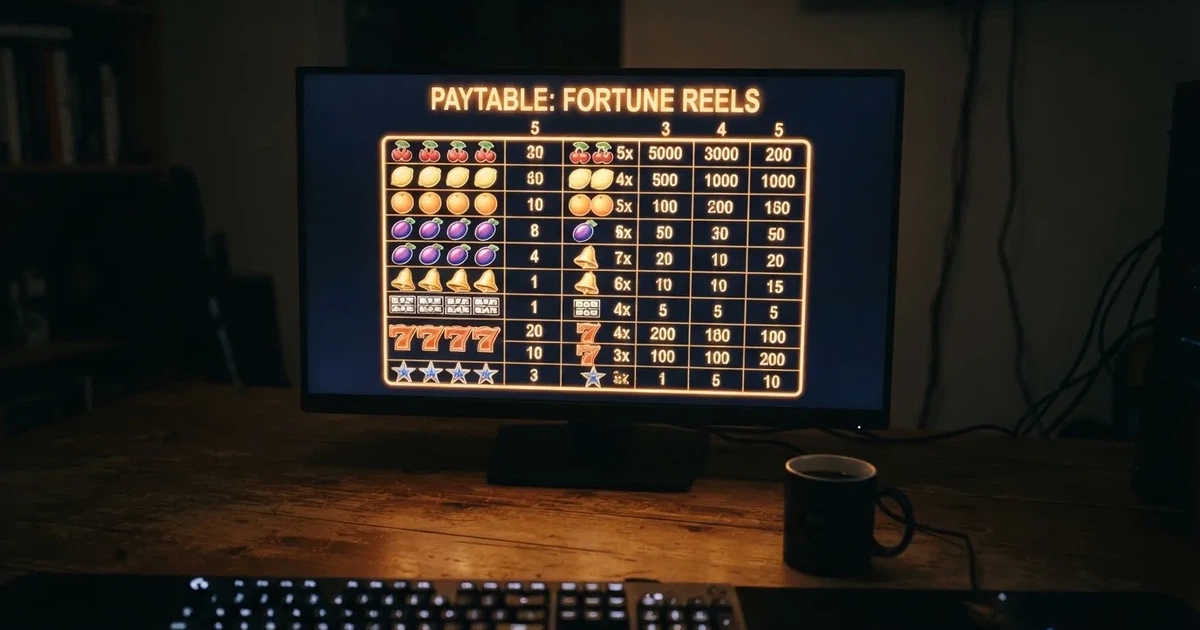
The word “pokies” still covers nearly every slot-style game a player finds in an Australian pub or club, and most of them are no longer the three-reel machine the name suggests. The modern video slot is the format every offshore site sells, and it differs from the classic three-reel machine on three axes that matter to a player: the reel set, the symbol count, and the way outcomes get resolved.

Charles Fey’s late-19th-century automatic slot had three reels with five symbols — horseshoes, diamonds, spades, hearts and the Liberty Bell — and three bells in a row paid the top prize of ten nickels. Bally’s “Money Honey” in 1963 introduced the bottomless hopper that let the machine pay up to 500 coins without an attendant; the first true video slot came in 1976 from Fortune Coin Co. in California. Each step since has added reels, symbols, and features rather than changing the underlying idea. Modern video slots can run five reels or more with 50-plus symbols per reel, producing combinations well into the hundreds of millions — a stark line beside the roughly 1,000 possible combinations on a classic three-reel machine with ten symbols per reel.
The visible result. Bonus rounds, free-spin features, cascading wins, expanding wilds and pick-me games are what a player actually notices. Mechanically, they all do the same thing: they multiply the number of ways a spin can pay, and they do it by layering extra randomness on top of the base reels. From the player’s seat, a modern video slot is the difference between spinning for a single line and playing a five-reel board with two or three side features firing at any moment. That extra randomness is also why two games from the same provider can have completely different hit patterns — variance gets built into the features, not just the reels.
A practical note before the rest of the page: in NSW, Victoria, Queensland, South Australia and the ACT, the licensed gaming machines outside casinos number in the tens of thousands per state — 87,298 in NSW as of June 2023, 26,380 in Victoria in 2021–22, 21,122 in Queensland in October 2023, 11,672 in South Australia in September 2023, and 3,587 in the ACT in November 2023. Those machines are the only legal slot product for Australians on the mainland, and many of them are now video-format themselves — the same five-reel layout with bonus rounds an offshore site offers, just delivered through a different licence and a different payout regime.
What the Interactive Gambling Act actually prohibits
The IGA 2001, tightened by the Interactive Gambling Amendment Act 2017, makes it an offence to provide online casino games (including online pokies and online slots) to a person physically in Australia. No state or territory licenses them. What stays licensable is wagering on races and sport placed before the event, lotteries and keno — in practice most online bookmakers (52 of them, including Sportsbet, Bet365 and Ladbrokes) hold Northern Territory licences via the NTRWC, a commission that has no full-time staff and meets once a month in Darwin.
Minimum age is 18 across every licensed channel. The IGA targets the provider, not the individual player — no Australian has been arrested for placing a bet on an offshore site — but the same offshore site gives no Australian consumer protection, no complaints body, and no recourse if a withdrawal stalls. It can also be blocked with a balance still sitting on it, because blocking looks at the domain, not at the account.
Enforcement runs through the ACMA. The regulator investigates, issues formal warnings, and directs Australian ISPs to block illegal sites. In its most recent reported round on 26 June 2026, the ACMA asked ISPs to block 12 more illegal gambling websites — 7Signs, ChromaBet, Donbet, Duospin, Freshbet, Slots Gem, Jacks Club, Lucky Start, Pointsbetz, Spinrise, Vinyl Casino and Wildsino — taking the cumulative total of blocked illegal gambling and affiliate marketing sites since the first blocking request in November 2019 to 1,751. More than 230 unlicensed services have left the Australian market since enforcement was strengthened in 2017.
Why those numbers look the way they do. Offshore operators cycle domains and shell companies faster than the ACMA can chase them, so the blocking register grows every quarter even as individual names fall out of the active list. The 1,751 figure is the running total of distinct URLs and operators acted against, not a count of currently live sites. Brand-name search traffic still lands on at least some of those domains through mirrors and affiliates — a separate enforcement target, which is why affiliate marketing URLs make up part of the block list rather than just the casino front-ends.
The cost side: what illegal gambling takes out of the legal market
H2 Gambling Capital’s 2025 report puts annual Australian losses to illegal gambling sites at around A$3.9 billion, and shows the legal-channel share of all gambling falling from 74% in 2021 to 64%. The math behind the ratio is the more useful number: every additional dollar lost offshore is a dollar that bypasses the consumer protections, probity checks and harm-minimisation requirements the licensed channels carry. Offshore operators are not subject to BetStop (the National Self-Exclusion Register), do not have to honour Australian self-exclusion, and do not publish a problem-gambling threshold on their deposit pages. The A$3.9 billion estimate is also a moving target; as more sites get blocked, the harder-to-reach ones tend to charge a higher vig and load the gates tighter.
Onshore alternatives: what an Australian can legally play
The licensed path in Australia is the poker machine at a pub, club or casino, plus licensed wagering, lotteries and keno. The pub and club machines are governed by state and territory regulators, with NSW the largest market by machine count at 87,298 EGMs in June 2023. Victoria’s clubs and hotels account for another 26,380 machines, and the smaller jurisdictions — Queensland, South Australia and the ACT — add tens of thousands more. The Crown Melbourne complex and the Sydney casino are the venue-level EGMs most players will encounter, with approved games listed by the relevant regulator (the VGCCC in Victoria, the Liquor & Gaming NSW regime in NSW).
The 2026 reform agenda. The Interactive Gambling Amendment (Gambling Reform) Bill 2026 passed Parliament on 19 August 2026, with its advertising and inducement measures set to commence on 1 January 2027. It is law with a start date, not yet in force at the time of writing, and it changes the inducement rules around licensed wagering rather than opening online casinos. Reading the page on a 2026 date treats those rules as a known framework, not an active one.
Keeping play in check: BetStop, the helpline, and the limits that actually bind
An Australian-facing review of any gambling product has to keep two separate protections distinct, because they are not interchangeable. BetStop — the National Self-Exclusion Register, live since August 2023 — binds only Australian-licensed online and phone wagering services. Offshore casinos do not connect to it. A player who self-excludes from BetStop and then deposits at an offshore casino has self-excluded from one list and not from the other. That is not a glitch — the register was designed around the IGA’s licensed-channel scope — and it is the single largest gap a reader has to understand before trusting any offshore site’s “responsible gaming” page.
For harm that has already started, the National Gambling Helpline at 1800 858 858 runs free, 24/7, with online chat through Gambling Help Online. The helpline is the one avenue of support that works regardless of which channel the play came through. State-based face-to-face counselling and financial counselling are also available; the helpline routes to them by postcode.
Limits a player can set themselves. Each licensed Australian wagering site has to offer deposit limits and self-exclusion. Offshore sites vary widely and most are built around deposit caps that the player can raise with a support call — a softer regime than the IGA-licensed one, where deposit-limit increases have a cool-down period. Reading an offshore site’s “responsible gaming” page before depositing is the only honest version of the exercise: if the page lists BetStop, the site is a licensed Australian bookmaker; if it does not, the player is dealing with an offshore operator and the page’s deposit limits are voluntary.
How bonus offers on video slots actually work — and why a 96% RTP does not save an offer
The hook an offshore site hangs everything on is the bonus — a match percentage, a stack of free spins, occasionally both — wrapped around the video slots the catalogue runs. The shape of an offer reads the same across sites: a deposit is matched up to a cap, the matched amount is locked behind a wagering multiple, and free-spin wins are usually locked behind their own multiple with a max-cashout cap. Players who read only the headline figure end up playing through the bonus more times than they expected, with a smaller-than-expected final withdrawal.
A worked reading, using the formulas the maths actually follows. Wagering requirements are a multiplier on the bonus (or bonus + deposit), not a fixed value. A A$100 bonus with a 40× requirement on the bonus alone means A$4,000 in qualifying bets before the bonus funds convert to withdrawable cash; a 40× on bonus + deposit at A$200 deposited means A$12,000 in qualifying bets before any withdrawal. Free-spin offers tend to be lighter on the multiplier but carry a max-cashout cap — “up to A$50 withdrawable from free-spin wins” is a common line that converts a 50-spin batch into a fixed-value coupon rather than a real chance at a payout.
RTP is the slot’s promise, not the offer’s. A 96% RTP means the machine returns, on average across millions of spins, A$96 of every A$100 wagered. Over a few thousand spins the realised figure swings widely; a 40× wagering requirement on the example above takes around 40,000 spins at A$0.10 a spin, or about 55 hours at the casino’s usual 3-second spin interval. The 4% house edge compounds on the wagering itself, so the expected loss on a A$4,000 playthrough at 96% RTP is A$160 — the bonus’s real cost before any luck gets involved. The same arithmetic on a A$12,000 playthrough at 96% RTP gives A$480 expected loss. The marketing word is “free”; the math says the player carries the variance and the edge.
The pattern that breaks most players. Bonuses advertised with small or no deposit, free spins awarded on a high-volatility slot, max-cashout capped at or below the headline win, and a 50×–80× wagering multiple on bonus + deposit. Each of those terms is fine on its own; together they make the offer look generous on the front page and shrug away most of the value at cashout time. The scrutiny is the offer’s small print, not its banner.
Mobile play: browser, app, and what each actually delivers
A modern video slot’s payload is small by modern standards — animations, a paytable, a sound layer — and the mobile experience converges on what the desktop one delivers within a generation or two. The two shapes a player meets:
- In-browser play. No download, no install, the slot opens in the same Safari or Chrome session the player is already using. Performance has caught up to the desktop one for most titles; the screens that lag the most are the most recent 3D-heavy release on older phones. The trade-off is that the casino lives inside the browser tab — closing the tab can clear a session, and a phone call interrupts the spin.
- Dedicated app. Faster access from the home screen, push notifications for bonuses, and a more reliable session on flaky networks. The trade-off is real: app stores in Australia do not carry online-casino apps for offshore operators, so the install path is a profile download from the casino’s own site, which means the OS’s normal app-level permissions, sandboxing and update guarantees do not apply in the same way. The licensed Australian bookmakers have a clean app-store presence; offshore casino apps live outside it.
The touch interface is the bigger change. Reels and paytables are designed to be readable on a 6-inch screen, and the more demanding 3D-heavy slots sometimes drop features in their mobile build. For most mainstream video slots, the desktop and mobile versions are the same game on the same maths; what differs is the frame rate on the slot intro animations and the size of the bonus-round UI. If a particular feature is part of the decision to play, the safest check is a demo spin on the phone before committing a bankroll.
Providers and the catalogue: who’s actually on the menu
The video-slot market is a provider oligopoly at the top: a handful of studios (Pragmatic Play, NetEnt, Microgaming, Play’n GO, Evolution for live-dealer-adjacent content, BGaming for crypto-leaning catalogues) license their games to most of the offshore casinos an Australian is likely to see. A casino site’s “providers” filter is the quickest read on what the catalogue is built on — between ten and thirty provider names is the normal offshore range, and a site naming fifty-plus is usually white-labelling a single aggregator’s library rather than curating its own.
What providers do not control. The paytable — RTP, volatility, hit rate — is set by the provider per game per market, but the casino chooses which version of each game it runs. A “96% version” of a popular slot can sit on one site while a “94% version” of the same title sits on another; the catalogue shows the title and the artwork, not the configuration behind it. Reputable providers publish a per-game RTP list; reputable casinos link to it. Where the page is choosing which version of a known title to recommend (and outside Australia this is how reviews work), that link is the most important page on the site. Inside Australia the relevant licence doesn’t exist, so the choice is between onshore venues and offshore sites, not between RTP variants of a single offshore catalogue.
The brands the ACMA has warned — what’s known and what isn’t
The eleven brands below are not a ranking. Each is named because the ACMA itself has issued a formal warning about it for offering prohibited interactive gambling services to Australians. The only data the page carries from research is the warning itself, the operator, and the date; it does not carry bonus terms, because the affiliate pages that publish those terms are exactly the marketing layer the ACMA’s blocking orders target. The table’s columns are the matters the research covers; a column for bonus terms would be empty by design.
| Brand | ACMA action and date | Operator named by the ACMA | Subject support |
|---|---|---|---|
| RocketPlay | Formal warning, March 2026 (Pulsup Ltd); earlier Dama N.V., May 2022 | Pulsup Ltd / Dama N.V. | — |
| Level Up Casino | Formal warning, May 2022 | Dama N.V. | BGaming (listed on provider directory) |
| Woo Casino | Formal warning, March 2025 | Dama N.V. | — |
| Spirit Casino | Formal warning, May 2025 | Dama N.V. | — |
| National Casino | Formal warning, July 2025 | Consolutetish S.R.L. | Listed on Wikipedia’s casino-software page |
| Bizzo Casino | Formal warning, July 2025; earlier TechSolutions, 2022 | Consolutetish S.R.L. / TechSolutions | — |
| Ignition Casino | Formal warning, July 2025 | Bamboo Media | — |
| Instant Casino | Formal warning, February 2025 | EOD Code SRL | — |
| Jackbit | Formal warning, April 2026 | Ryker B.V. | — |
| Casino Intense | Formal warning, April 2025 | Sterplay Holding Ltd | Per directory listings (ABC, ACMA, Crown Melbourne) |
| Sky Crown | Formal warning, September 2022 | Hollycorn N.V. | — |
Three things the table leaves unspoken but worth saying out loud. First, “no-data” in the support column is not a positive finding — research turned up no per-brand evidence of named providers, not evidence that none exist. Second, the operator behind a brand can change hands: Dama N.V. holds warnings over six different brands (Bambet, Dazard, Level Up, Rocketplay, Wild Tornado and Cobra Casinos), so a brand name and an operator name are not the same thing. Third, a 2022 warning does not mean the brand has stopped operating under the same front-end; the ACMA’s 2026 blocking round shows the same operators reappearing under new domains. The only honest reading is that the ACMA’s blocking list is a moving target and the brand roster is, too.
The blocking-rate arithmetic — how fast the ACMA’s list is growing
The first blocking request under the IGA’s enforcement framework went out in November 2019; the running total of blocked illegal gambling and affiliate marketing sites reached 1,751 by 26 June 2026. That’s an average of roughly 25–30 sites added per month across the six-and-a-half-year span, but the rate is far from steady. Earlier rounds blocked one or two sites at a time; the June 2026 round alone blocked 12. The ACMA’s enforcement has accelerated rather than settled — a band of around 220–260 new sites per year for the last two reporting years, against an earlier baseline closer to 150.
The block rate’s meaning for a reader. The fastest-growing portion of the list is the affiliate-marketing URLs that promote offshore casinos, not the casino front-ends themselves; the ACMA has been working through the marketing layer to cut off traffic at the search-engine source. The practical upshot is that a domain a reader sees advertising today is more likely than not to be on a future block list within twelve months. A player who keeps a balance on an offshore site at the moment a block is requested loses access to that balance until support resolves it — and the support channel itself is offshore, with no Australian complaints body to escalate to. The arithmetic is not a prediction; it is the stated direction of enforcement.
Picking the path that actually suits an Australian reader
A “best video slots” page set in a market where online casino is illegal can say which path suits which reader without recommending a single offshore brand. Three profiles cover most of the people who land on this kind of search:
- Players who want a regulated experience. The licensed path — pubs, clubs, casinos, online wagering through an NT-licensed bookmaker — runs inside the IGA’s consumer-protection framework. BetStop is honoured, deposit limits have cool-downs on increases, and complaints go to AFCA. The trade-off is that the catalogue stops at the games each venue is licensed to offer, and the video slot features available at, say, a suburban club are a smaller set than what an offshore site advertises.
- Players who want the broadest catalogue and accept the legal exposure. Offshore sites carry the largest libraries and the most aggressive bonus offerings, and they sit outside the IGA’s protection. The exposure is concrete: the site can be blocked mid-balance, there is no Australian complaints body, and any inducement offer is the marketing layer the ACMA’s blocking orders specifically target. A reader who lands here knowing those four consequences has made a clear-eyed decision; a reader who hasn’t run into them hasn’t been told yet.
- Players who want to play without identity verification or with crypto. No offshore site that the ACMA has warned about in the last three years accepts Australian registration without identity checks (KYC is built into the payment rails for them), and crypto deposits are the payment route the IGA 2024 payment ban was designed to close off for licensed wagering. Some offshore sites still advertise crypto deposits; a reader who follows that route is paying with an asset the licensed system explicitly rejects as a deposit method.
The profile a “best video slots Australia 2026” search usually hides is the third one — players who came looking for a casino that won’t ask for ID or a casino that takes Bitcoin. Both routes exist at offshore sites; neither survives an honest comparison with the licensed path, and an honest page says so without softening it. For the first two profiles, the rest of the page is reference material; the decision is the three paragraphs above.
Where Australian players get help if play stops being fun
The fastest path to help is the National Gambling Helpline at 1800 858 858 — free, 24/7, with online chat through Gambling Help Online. State-based face-to-face counselling and financial counselling are reachable from the helpline. The page keeps these at the end on purpose: the catalogues above treat play as a choice the reader is making, and these are the resources that meet play when the choice is no longer a comfortable one.
A closing remark on what the page does and doesn’t recommend. It does not recommend an offshore brand. The eleven brands named in the comparison table are named because the ACMA named them, not because the page found them worth recommending — and the ACMA named them to put Australians on notice, not to put them on a player list. The licensed path runs inside the IGA’s protection; the offshore path runs around it. A reader who treats that distinction as the first thing to read has the rest of the page as background; a reader who treats it as the last thing to read will end up wishing it had been the first.
Frequently asked questions
How is a modern video slot different from a classic three-reel poker machine?
A modern video slot runs five or more reels with 50 or more symbols per reel, producing combinations in the hundreds of millions, while a classic three-reel machine with ten symbols per reel offers around 1,000 possible combinations. The visible difference is the bonus rounds, free-spin features, cascading wins and expanding wilds that come with the bigger reel set. The mechanical difference is that the extra features layer more randomness on top of the base reels, which is why two games from the same provider can feel completely different at the seat.
Do bonus rounds mean a video slot pays out more than a classic machine?
Not necessarily. Bonus rounds multiply the number of ways a spin can pay, but the underlying RTP is set per game per market, and a 96% RTP video slot does not pay more than a 96% RTP classic. What the bonus features change is the variance — wins come less often but in larger chunks, which is why a bonus-heavy slot feels more exciting without actually giving the player a better mathematical edge. The edge is built into the paytable, not into the bonus round.
Is the mobile-browser version of a video slot the same game as the desktop one?
For most mainstream video slots from the major providers, yes — the maths, the RTP and the feature set are the same; what changes is the frame rate on intro animations and the size of the bonus-round UI. Some 3D-heavy releases drop features in their mobile build, so if a particular feature matters the safest check is a demo spin on the phone first. The licensed Australian bookmaker apps come through the official app stores; offshore casino apps arrive as a profile download from the casino’s own site.
How many paylines does a typical modern video slot use?
A typical modern video slot uses 20 to 50 paylines, with many titles moving to the “ways to win” model — every adjacent-symbol combination counts, producing hundreds or thousands of winning lines rather than the fixed 20 of older games. Five-reel video slots with 243 ways to win were standard through the early 2010s; newer releases sometimes offer megaways-style layouts where the number of winning ways changes every spin. The exact mechanism matters less than the volatility class: a low-volatility 20-line slot pays more often in smaller amounts, while a high-volatility 243-ways slot pays rarely in larger ones.
Why do two video slots from the same provider have different volatility even within the same series?
Volatility is built into the features, not just the reels. A series that includes both a low-volatility and a high-volatility variant is doing it by stacking the bonus-round multipliers, the hit-rate of the free-spin feature, and the maximum exposure differently across each title — the same provider maths, with the math tuned to a different hit pattern. Two slots can share a reel set and a paytable and still feel like different games because the feature layers diverge. Which one suits a player depends on whether they prefer regular small wins or longer dry stretches with a chance at a larger payout.
Which Australian state has the most licensed gaming machines outside casinos?
New South Wales, by a wide margin — 87,298 EGMs as of June 2023 — followed by Victoria with 26,380 machines in 2021–22, Queensland with 21,122 in October 2023, South Australia with 11,672 in September 2023, and the ACT with 3,587 in November 2023. The gap between NSW and every other state is large because NSW legalised slot machines in 1956 and built a dense pub and club network around them; the rest of the country followed in stages. By 2010 Australia operated an estimated 97,103 gaming machines outside casinos in total, a per-capita rate about five times that of the United States.