
Best pokie machine to play Australia 2026: the honest read
Data current as of 6 November 2026, checked against the ACMA’s published list of formal warnings and blocking actions.
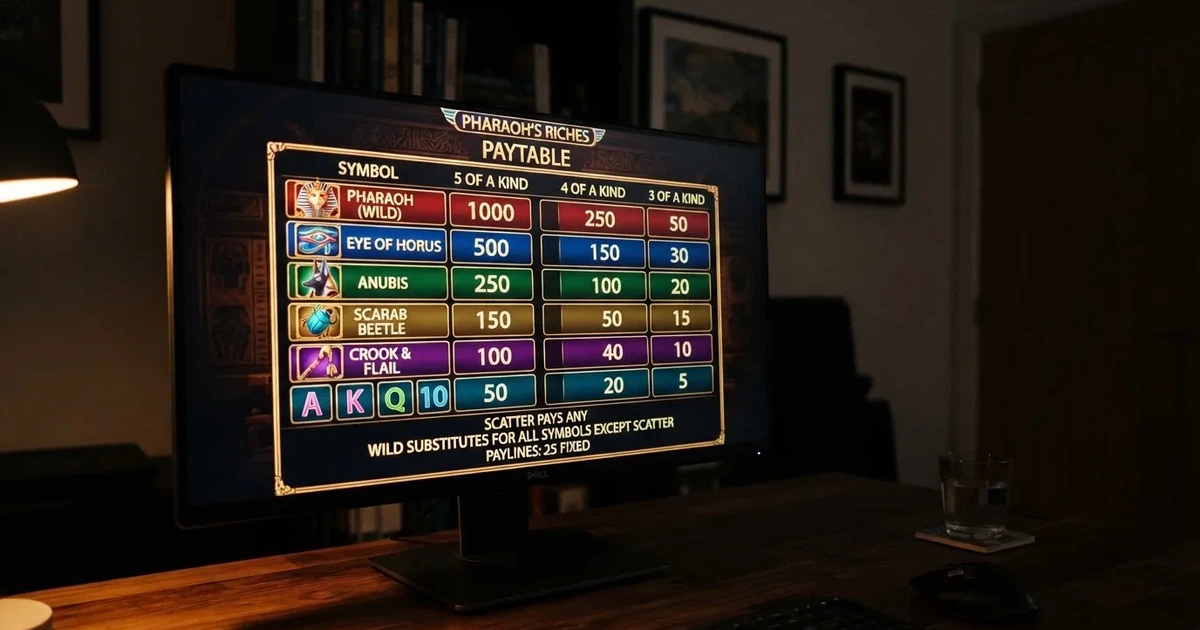
Ask any Australian which pokie to play and the first answer is usually the wrong one: “the one that’s paying out.” That answer conflates a memory of one good session with a machine’s underlying mathematics. A pokie’s short-term behaviour is nearly random; its long-term behaviour is fixed by design and is published, in every Australian state and territory, in figures the venues themselves have to honour. Choosing one well is a job of reading those numbers against the bankroll you actually have, and against the rules the regulator in your state writes.
That is the work this guide is for. It does not name a single “best” machine, because there isn’t one. It lays out what to look at, what the numbers mean in plain language, where each Australian state sets its floor, and which offshore sites are not an option for Australian residents regardless of how they market themselves. The licensed land-based machines at your local pub or club are the legal answer to this question; the rest of the page explains why, and what to do with that answer.
Table of Contents
- The fundamentals of a pokie machine
- How Australian law treats pokies
- The state-by-state floor on return-to-player
- Where the machines actually live
- Choosing a machine: what to read on the screen
- Volatility in plain language
- Does bet size change the odds?
- Multi-line versus single-line
- How to find a specific machine’s payout percentage before playing
- Who audits the machines
- Responsible gambling and where to get help
- Payment rules at Australian-licensed sites
- Tax treatment of pokie winnings
- Offshore sites Australians should not play
- Reading the offshore market as a whole
- Choosing between licensed venues in your state
- What a licensed Australian venue offers that an offshore site does not
- Other games at licensed Australian venues
- A note on the marketing of “best” and “highest paying”
- What to take from this page
- Frequently asked questions
The fundamentals of a pokie machine
A pokie machine — in NSW the colloquialism is “poker machine”, in Victoria and South Australia it is “pokies”, in Western Australia and Tasmania it is largely a casino-only product — is an electronic gaming machine whose outcome on every spin is determined by a random number generator. That single fact does most of the explanatory work on this page. The machine has no memory of what it paid out last week, no “hot streak” to ride and no “cold streak” due for a reversal. Each spin is independent, and the probabilities are baked into the game’s design and audited before the machine can be placed on a venue floor.

The three numbers that matter when you stand in front of one are return-to-player, volatility and bet size.
Return-to-player, or RTP, is the percentage of all money wagered that the machine is programmed to return over its entire operating life. A machine with an RTP of 87% keeps, on average, 13 cents of every dollar wagered. That figure is calculated over millions of spins; over the course of a single session it is meaningless — a 30-minute session can return 40% of what was bet or 240%, and neither outcome tells you anything about the long-run figure the regulator has approved.
Volatility describes how the RTP is distributed across the machine’s payouts. A low-volatility game pays small amounts frequently and stretches a bankroll across more spins. A high-volatility game pays infrequently but pays larger amounts when it does, which means longer dry stretches between meaningful hits and a higher risk of busting the session before the math catches up. The headline RTP is the same; the experience of playing is utterly different.
Bet size sets the denominator for every figure the machine reports. A A$1 spin with a maximum line bet at one credit per line is not the same machine as a A$5 spin at twenty lines and a multiplier — the math is the same in ratio terms, but the absolute swings track your actual dollars.
Those three figures are the answer to most of the practical questions Australians ask about pokies. The pages below work through them in detail and apply them to the Australian regulatory landscape.
How Australian law treats pokies
The Australian market for gaming machines splits cleanly into two parts. The licensed, physical machines in pubs, clubs and casinos are legal, state by state, and tightly regulated. Online casino games — including online pokies — are prohibited under federal law for anyone in Australia, and have been since the Interactive Gambling Act 2001 was tightened by the Interactive Gambling Amendment Act 2017. No state or territory licences an online casino product; the offshore sites that accept Australian players do so without any Australian licence.
The regulator that enforces that prohibition is the ACMA, the Australian Communications and Media Authority. Its job is to investigate complaints, issue formal warnings to operators it considers to be offering prohibited services, and ask Australian internet service providers to block illegal sites. The individual player is not prosecuted under the IGA — the law targets the provider, not the customer — but an offshore site carries real consumer risk: no Australian complaints body, no recourse if a withdrawal is refused, and the very real possibility that the ACMA will block the site while money is still on it.
Enforcement against the offshore sector has been steady. The ACMA’s own figures, as reported in June 2026, put the running total at 1,751 illegal gambling and affiliate marketing websites blocked since the first blocking request in November 2019, with more than 230 unlicensed gambling services having left the Australian market since enforcement was strengthened in 2017. A round reported on 26 June 2026 added twelve more names: 7Signs, ChromaBet, Donbet, Duospin, Freshbet, Slots Gem, Jacks Club, Lucky Start, Pointsbetz, Spinrise, Vinyl Casino and Wildsino.
The scale of the leakage is significant. H2 Gambling Capital’s 2025 estimate is that Australians lose roughly A$3.9 billion a year to illegal offshore sites, and that the share of gambling going through legal channels fell from 74% in 2021 to 64%. The licensed wagering industry in Australia is the country’s biggest per-capita gambling market; a third of its spend has migrated offshore in four years.
The state-by-state floor on return-to-player
Every Australian state and territory sets a legal minimum return-to-player for poker machines operating under its jurisdiction. The figure varies by more than five percentage points across the country, which means the same nominal “best” machine in one state can be a worse machine than the legal floor two states over.
The published minimums are: 85% in New South Wales, the Northern Territory, Queensland and (generally) Victoria, with Crown Melbourne’s machines set at 87%; 87% in the Australian Capital Territory and Tasmania; 87.5% in South Australia; and 90% in Western Australia, where machines are confined to Crown Perth. Those figures are floors, not averages — actual machines on venue floors generally operate above the minimum, and most are clustered in a narrow band above it, but the regulatory ceiling for how low the operator can set a game is fixed by the state in which the venue sits.
That spread is worth taking seriously. A 90% machine in Perth returns A$5 more per A$100 wagered than an 85% machine in NSW, before any other difference in game design. Over an evening’s play, the difference compounds.
| Jurisdiction | Minimum RTP |
|---|---|
| New South Wales, NT, Queensland, Victoria | 85% |
| Crown Melbourne | 87% |
| ACT, Tasmania | 87% |
| South Australia | 87.5% |
| Western Australia | 90% |
Where the machines actually live
Poker machines are everywhere in Australian pubs and clubs — except in Western Australia, where they were banned outside the casino when Crown Perth opened in 1985. Crown Perth’s own count has grown from about 200 machines that year to roughly 2,500 today, all approved by the state’s Gaming and Wagering Commission.
NSW is the largest market by volume. As of June 2023, the state had 87,298 gaming machines outside casinos operating across 2,195 venues, with player losses of A$8.18 billion in 2022–23. Queensland had 21,122 machines in 351 venues in October 2023. Victoria had 26,380 machines outside Crown Casino in 488 venues in 2021–22, operating under a state-wide cap of 30,000. Tasmania ran poker machines under a monopoly licence held by Federal Group from 1968 until November 2021, when legislation passed that ended that monopoly and moved oversight of the machines to the Tasmanian Liquor and Gaming Commission. The state’s planned mandatory pre-commitment cards for those machines were originally intended to be the first of their kind in Australia, but implementation of the reform was delayed until late 2025.
Registered clubs in NSW operated the country’s first legal poker machines from 1956. The industry has been continuous since.
Choosing a machine: what to read on the screen
The licensed Australian pokie carries its own disclosure on the help screen. A player can call up the game’s information page — usually labelled “info” or “help” — and find its theoretical RTP, its volatility rating (sometimes called variance) and, on modern machines, the rules of any feature round. That information is required to be available on every machine by every state regulator, and is the only public, audited source for the figures the marketing never mentions.
A practical sequence for choosing well, then, runs in this order:
First, set the budget for the session in cash, not in credits. The most common reason Australian players lose more than they intended is the friction of feeding a machine with a debit card — each top-up is small enough to feel routine, but the cumulative total after two hours is not what any of them would have handed over the counter in one go.
Second, decide on the volatility that fits the bankroll. A short session on a small budget wants a low-volatility game; the RTP is the same in the long run, but fewer long dry stretches means more spins of entertainment per dollar wagered. A long session on a larger bankroll, where surviving the variance matters less, can tolerate higher volatility for the chance of a larger payout.
Third, look at the help screen and confirm the RTP. Anything below the state floor is illegal; anything at the floor is legal but ordinary; the better machines on the floor will be a point or two above the floor. Within a single venue, the choice is usually between a handful of permitted games with closely clustered RTPs.
Fourth, set a stop-loss and a stop-win. The mathematics of the session is settled before the first spin; the only thing a player can control is whether they leave the machine with the budget intact.
Volatility in plain language
A low-volatility pokie machine pays out small wins frequently. The player at one of these is more likely to see small hits every few spins, fewer dead spins in a row, and a session that ends close to where it started. These games suit short sessions and small bankrolls, and they suit a player who wants the entertainment to last.
A high-volatility pokie machine pays out less often but pays more when it does. The session is more likely to contain long stretches of nothing followed by a hit that meaningfully moves the balance. The expected return over a million spins is the same — that is what RTP measures — but the path to that return is much rougher, and the bankroll required to ride the variance is much larger.
A medium-volatility game is the most common on Australian floors, because it is the easiest to live with for the broadest range of players. The line between medium and high is where most of the difficult sessions happen: a player expecting the high game’s payout frequency, on a high game’s bankroll requirement, runs out before either the variance or the math plays out.
Does bet size change the odds?
No, but it changes the experience in a way that gets confused for changing the odds. The random number generator does not consult the size of the bet when it produces its outcome; the mathematical RTP is constant across all bet sizes within a single game.
What bet size does change is the absolute value of every payout. A machine set to a A$1 minimum bet returns, at 87% RTP, A$0.87 of every A$1 wagered. The same machine at A$5 per spin, with proportional credits on every line, returns A$4.35 of every A$5 wagered — the percentage is identical, but the dollar swing on each spin is five times larger. A player betting larger is not playing a “better” machine, but is exposing a larger bankroll to the same variance per spin. The choice of bet size is a bankroll management decision, not an odds decision.
A related question is whether the maximum-bet setting unlocks a larger RTP — sometimes a “feature” or a jackpot is only available at the maximum bet. That is a game design choice specific to the title, not a rule of pokies, and it is described on the help screen. Where a feature is gated behind max bet, the only honest read is whether the expected value of that feature justifies the increase in stake.
Multi-line versus single-line
Multi-line pokies — games with twenty, forty or more paylines active per spin — are not more likely to pay out than single-line games. Each line is a separate independent bet against the same random number generator, and the aggregate probability of a hit on any one line is the same as the probability on a single-line game with a comparable layout. What multi-line play does is distribute the wager across more outcomes, so any one spin is more likely to produce some kind of return; the magnitude of that return is smaller on a per-line basis because the wager was smaller.
That is the design rationale: more frequent, smaller wins. The session feels more active. The expected return per dollar wagered is unchanged. For a player who enjoys the engagement of regular small wins, the multi-line game delivers that; for a player who prefers the shape of infrequent, larger wins, the single-line game is closer to what they want.
How to find a specific machine’s payout percentage before playing
The answer is on the machine itself, in the help or info menu. Every licensed Australian pokie is required to disclose its theoretical RTP, and the figure is part of the information the player can call up at any time during play.
For a machine that is not the one in front of you, the venue is the next source. The licensee of every pub, club and casino in Australia is required to keep records of the RTPs of the games it offers, and most will produce that information on request from a player. The state regulator’s published gaming reports carry aggregated RTP data across machines in their jurisdiction, which is a useful guide to the floor of the market but not to a specific game.
The information will not be on the marketing materials at the venue’s entrance. The venue has no incentive to publish it prominently — the RTP does not help sell a session. The help screen does, because state regulation requires it.
Who audits the machines
The audit chain runs from the game’s developer through an independent testing laboratory, through the state regulator, and onto the venue floor. A machine cannot be placed in an Australian pub, club or casino until its software has been tested and certified by an accredited laboratory against the technical standards of the relevant state regulator, and the regulator has issued the venue with a licence to operate the game.
In practical terms, the testing laboratories most often named in Australian regulatory publications are the international firms that specialise in electronic gaming machine certification — GLI (Gaming Laboratories International) and BMM Testlabs are the two best-known — and their certificates are filed with each state regulator before the game is approved for play. Once the machine is on the floor, the regulator’s inspectors audit it again on a continuing basis, and the random number generator’s performance is monitored against the theoretical RTP.
That chain is the reason a pokie in a licensed Australian venue can be trusted to do what its help screen says it does. The trust does not extend to offshore sites, which operate outside that audit chain regardless of what their pages claim.
Responsible gambling and where to get help
Australia’s gambling-harm support network is built for the licensed market, not the offshore one. The two services a player should know about are:
Gambling Help Online, which runs the National Gambling Helpline on 1800 858 858, free, 24 hours a day, with a chat service on its website. The helpline is staffed by counsellors and is funded by the Australian and state governments.
BetStop, the National Self-Exclusion Register, which went live in August 2023 and lets a person exclude themselves from every Australian-licensed online and phone wagering service with one registration. The exclusion is binding on the licensed operator. It is not, however, binding on an offshore site, because the offshore operator is not connected to the Australian register. A player who has self-excluded through BetStop and then opens an account at an offshore casino has not undone the self-exclusion — the offshore operator simply never honoured it.
Each state and territory also runs its own self-exclusion scheme for land-based venues. Those schemes cover pubs, clubs and casinos in their jurisdiction and have the force of regulation behind them; the venue can refuse entry to an excluded person and faces penalties if it does not.
Payment rules at Australian-licensed sites
Credit cards, credit-related products and digital currency are banned as payment for licensed online wagering in Australia from 11 June 2024. The ban carries penalties of up to A$247,500 for operators that breach it. The legal deposit routes for licensed wagering are debit card, bank transfer, PayID, Osko and BPAY.
A licensed wagering site asking an Australian customer for a credit card number or a crypto wallet address is not, on the payment method alone, operating outside the rules — it is operating outside the rules for a more fundamental reason. The illegal offshore casinos that take Australian customers will often accept whatever payment method the player offers, including credit cards and cryptocurrency, because they accept none of the Australian regime that constrains a licensed operator. The convenience of a wider choice of deposit methods is the convenience of an operator who is not subject to Australian law on that front either.
Tax treatment of pokie winnings
Gambling winnings of a recreational player are not assessable income in Australia under section 6-5 of the Income Tax Assessment Act 1997, and gambling losses are not deductible, unless the person carries on a business of gambling. For the overwhelming majority of Australian pokie players, the tax treatment is therefore nil — what is won is not taxed, and what is lost cannot be claimed against other income. A player who treats gambling as anything other than recreation is advised to confirm the position with the ATO.
Offshore sites Australians should not play
Online pokies are prohibited for people in Australia. The land-based machines are licensed and regulated state by state; the online equivalents are not offered by any licensed Australian operator. The offshore sites that accept Australian players do so without any Australian licence, and the ACMA has issued formal warnings to many of them by name. The table below lists the brands the regulator has acted against most recently, with the operator and the date as the ACMA published them.
The list is not a ranking. It is not a recommendation. It is a record of who has been warned, in the words of the regulator, for offering a product that cannot be licensed in this country. The offshore brands below were not reviewed on the merits of their games or their payouts, because no Australian player can lawfully sign up and play them — and because the audit chain that underwrites a licensed Australian machine does not apply to them.
The table reads as a regulator’s own ledger: brand, the action the ACMA took, the date of that action, the operator the ACMA named, and whether the research uncovered anything else the operator is publicly associated with. Where a research source listed the brand on a third-party page that is not the ACMA, the cell says so — that listing is the listing’s claim, not a fact about the operator’s entitlement to take Australian customers.
Landscape of blocked operators
| Brand | ACMA action and date | Operator named by the ACMA | Subject support |
|---|---|---|---|
| RocketPlay | Formal warning, March 2026 | Pulsup Ltd | — |
| Level Up Casino | Formal warning, May 2022 | Dama N.V. | listed by BGaming as a partner |
| Woo Casino | Formal warning, March 2025 | Dama N.V. | — |
| Spirit Casino | Formal warning, May 2025 | Dama N.V. | — |
| National Casino | Formal warning, July 2025 | Consolutetish S.R.L. | listed on Wikipedia |
| Bizzo Casino | Formal warning, July 2025 | Consolutetish S.R.L. | — |
| Ignition Casino | Formal warning, July 2025 | Bamboo Media | — |
| Instant Casino | Formal warning, February 2025 | EOD Code SRL | — |
| Jackbit | Formal warning, April 2026 | Ryker B.V. | — |
| Casino Intense | Formal warning, April 2025 | Sterplay Holding Ltd | listed by ABC, ACMA, Crown Melbourne |
| Sky Crown | Formal warning, September 2022 | Hollycorn N.V. | — |
The pattern in the table tells the same story the ACMA has been telling since 2017. The operators named in the formal warnings are largely the same handful of companies: Dama N.V. recurs across three entries (Level Up, Woo Casino, Spirit Casino), with earlier warnings in May 2022 and additional warnings through 2025; Consolutetish S.R.L. recurs across National Casino and Bizzo Casino; the remaining operators are each named once, but the structure of the warning — an offshore company, a brand name that travels, an Australian-facing URL — is consistent across the list. The ACMA’s formal warning is not a one-off event; it is a public record of who has continued to offer a prohibited product after the regulator has asked them to stop.
How the blocking rate stacks up
The arithmetic on this page belongs to the player weighing up the choice. The ACMA’s published totals as of June 2026 were 1,751 illegal gambling and affiliate marketing websites blocked since the first blocking request in November 2019 — a span of roughly six and a half years. That works out to an average blocking rate somewhere between 22 and 23 sites per month across the lifetime of the regime, though the rate has not been steady: the early years were slower as the ACMA developed its enforcement procedures, and the more recent rounds have been larger. The point of the rate is not precision but scale. The enforcement is not a token gesture; it is an active program that has shut Australian players out of hundreds of offshore sites and continues to add to that total on a regular cadence. The math is the ACMA’s own, the dates are its own, and the conclusion is that the roadblock is real.
RocketPlay
RocketPlay was the subject of an ACMA formal warning to Pulsup Ltd in March 2026, with the regulator naming the Australian-facing RocketPlay. The earlier operator of record was Dama N.V., which received a warning in May 2022 across six brands that included RocketPlay at the time. The site carries no Australian licence and offers online casino games, which are not a product that can be licensed in this country. Whatever marketing page an Australian reader lands on, the offer underneath it is a prohibited interactive gambling service.
For an Australian player choosing a pokie machine, RocketPlay is not on the menu. The fact that the ACMA has had to warn the operator twice in four years — once under the previous operator of record, once under the current one — is the answer to the question of how seriously that operator treats the regulator’s view.
Level Up Casino
Level Up Casino received an ACMA formal warning in May 2022 as one of six Dama N.V. brands the regulator named in a single action. The operator is publicly listed as a partner on BGaming’s site, which is a developer-side commercial fact rather than a regulatory one — BGaming’s catalogue of partner operators is a marketing page on the developer’s site and is not an endorsement of any operator’s licensing status in any given country.
An Australian player on Level Up Casino is using an offshore site without Australian consumer protection, and the ACMA’s 2022 warning has not been followed by evidence of an Australian-facing exit. The brand stays on the regulator’s published list because the regulator considers it to be offering a prohibited service.
Woo Casino
The ACMA issued a formal warning to Dama N.V. over Woo Casino in March 2025, three years after the same operator received a warning covering six other Dama brands. The newer warning makes Woo Casino one of the brands in the same corporate group the regulator has had to contact more than once.
The offer on Woo Casino, like every other brand in this list, is online casino games — a product the Interactive Gambling Act prohibits from being supplied to anyone in Australia. An Australian player signing up is taking on the full set of risks that goes with an offshore site: no recourse if a withdrawal is refused, no Australian complaints body, and a regulator that can block the site while the account still has money on it.
Spirit Casino
Dama N.V. received an ACMA formal warning over Spirit Casino in May 2025. The brand sits in the same Dama portfolio as the other six the regulator warned in 2022, and the May 2025 follow-up over Spirit is the latest in a sequence of warnings to the same operator across different brand names.
The pattern of warning the same operator under different brand names is itself the point. The offshore sector rebrands with some regularity, and the ACMA’s published warnings are a way of following the names through those changes. For an Australian player reading a casino review of Spirit Casino, the regulator’s own ledger is the more relevant reference.
National Casino
The ACMA issued a formal warning to Consolutetish S.R.L. over National Casino in July 2025. The brand is also listed in passing on the Wikipedia page for Gambling in Australia, alongside other examples of offshore operators serving Australian customers.
National Casino is an offshore operator without an Australian licence, offering a product that cannot be licensed in Australia. The same warnings apply as to every other brand in the table: no Australian consumer protection, no BetStop coverage, no recourse through an Australian complaints body.
Bizzo Casino
Consolutetish S.R.L. received an ACMA formal warning over Bizzo Casino in July 2025. The brand was already on the ACMA’s record: TechSolutions (CY) Group Limited and TechSolutions Group N.V. had received a formal warning over Bizzo Casino in 2022, which makes Bizzo one of the brands the regulator has had to warn twice, under two different operating companies.
The shape of the warning history is consistent with what the ACMA reports more broadly: offshore operators changing corporate form, the regulator following the changes, and the underlying offer — online casino games to Australian customers — continuing. An Australian player on Bizzo Casino is, in practical terms, on an unregulated site whose regulator is the regulator that has told it twice to stop.
Ignition Casino
Bamboo Media received an ACMA formal warning over Ignition Casino in July 2025. The brand has been a long-standing name in the offshore poker and casino market, and its Australian-facing presence falls under the same prohibition as every other entry in the table.
Ignition Casino is not licensed for Australian customers and cannot be. An Australian player on the site is using an offshore operator outside the Australian regulatory perimeter, with no recourse through Australian complaints mechanisms.
Instant Casino
The ACMA issued a formal warning to EOD Code SRL over Instant Casino in February 2025. Instant Casino has been one of the more heavily advertised offshore brands on Australian-facing affiliate pages, which is itself a record of where the brand has chosen to spend its marketing budget.
For an Australian player, the warning is the regulator’s own assessment that the site is offering a prohibited service. The affiliate pages that carry the brand’s ads are not an Australian regulatory authority, and their listings do not modify the warning.
Jackbit
The ACMA issued a formal warning to Ryker B.V. over Jackbit in April 2026, naming both Jackbit and CasinOK in the same action. The brand is one of the newer entrants to the offshore market and has been marketed at Australian customers through affiliate channels.
The April 2026 warning is the ACMA’s published view that Jackbit is offering a prohibited interactive gambling service. An Australian player on Jackbit is using a site the regulator has asked to stop serving Australian customers and that can be blocked at the regulator’s direction.
Casino Intense
Sterplay Holding Ltd received an ACMA formal warning over Casino Intense in April 2025. The brand appears in reporting by the ABC, the ACMA’s own publications and Crown Melbourne’s site, listed alongside other examples of offshore operators serving Australian customers. The three-way listing is a record of how widely the brand’s Australian-facing marketing has reached, not an endorsement from any of the publishers.
Casino Intense is an offshore site without an Australian licence, offering a product that is not licensable in this country. The relevant consumer protections for an Australian player are those offered by the operator’s own jurisdiction, not by an Australian regulator.
Sky Crown
The ACMA issued a formal warning to Hollycorn N.V. over Sky Crown and Blue Leo casino services in September 2022. Hollycorn N.V. is one of the more prolific offshore operators by number of brands, and the ACMA’s warning names two of them in a single action.
For an Australian player on Sky Crown or Blue Leo, the regulator’s view has been on the public record since 2022. The site is not licensed for Australian customers and cannot be, and an account held with the operator sits outside the Australian regulatory perimeter.
Reading the offshore market as a whole
The eleven brands above are a representative cross-section of the offshore operators the ACMA has acted against most recently, but they are not the entire list. The regulator’s June 2026 blocking round alone named twelve additional sites: 7Signs, ChromaBet, Donbet, Duospin, Freshbet, Slots Gem, Jacks Club, Lucky Start, Pointsbetz, Spinrise, Vinyl Casino and Wildsino. Earlier rounds have added hundreds more since November 2019.
The common pattern is consistent: an offshore corporate vehicle, a brand or two or six, an Australian-facing URL, and an offer of online casino games to Australian customers. The ACMA’s formal warning is followed, where the operator continues to serve the Australian market, by a request to internet service providers to block the site at the network level. The block is the enforcement, and the formal warning is the public record of what was offered before the block.
For an Australian player looking for a pokie machine to play, the offshore sector is not the answer to that question. The legal answer is the pub, club or casino in the state or territory in which the player sits, under the rules of that state’s regulator. The offshore sector is the alternative the ACMA has spent the last several years systematically blocking.
Choosing between licensed venues in your state
Once the choice has been narrowed to a licensed venue in the player’s own jurisdiction, the practical selection work is between machines on the venue floor rather than between jurisdictions. The state regulator has already set the floor, the audit chain has already checked the math, and the venue has decided which games to stock from the approved list.
The choice within a venue turns on three variables: the game’s RTP relative to other games on the same floor; the volatility that suits the player’s bankroll; and the minimum and maximum bet sizes the venue allows. Most venues stock a range of denominations, from one-cent credit lines at A$1 total stake per spin up to higher-denomination games where a single spin can cost A$5, A$10 or more. The choice between denominations is a bankroll decision, not an odds decision — the RTP and the volatility are independent of the denomination, but the swings in absolute dollars are not.
A player who wants the longest session per dollar will generally pick a low-denomination, low-volatility game and play small. A player who wants the chance at a larger payout, and has the bankroll to ride the variance, will pick a higher-volatility game at a denomination they can sustain for the planned session. Both are legitimate ways to play; the choice is about what the player is there for.
What a licensed Australian venue offers that an offshore site does not
The licensed venue offers protections that an offshore site does not. A player at a licensed venue has access to the state regulator’s complaints process if a payout is refused; has access to the state’s self-exclusion scheme if they want to be barred from the venue; has the assurance that the machines on the floor have been audited and are running at the published RTP; and has the venue’s own licence on the line if the operator breaches the rules. None of those protections apply at an offshore site.
The offshore site offers a wider catalogue of games, the convenience of a browser or an app, and the option to deposit by credit card or crypto. The convenience is real; it is also the convenience of a product that cannot be lawfully supplied in Australia, on a site that can be blocked while the account holds a balance, with no recourse through any Australian complaints body. The two offers are not equivalent on the player’s side of the ledger, and the ACMA’s enforcement record is the public acknowledgement of that.
Other games at licensed Australian venues
The licensed Australian venue offers more than pokies. Crown Melbourne offers three baccarat variants — Traditional Baccarat, Crown Baccarat and 2 to 1 Baccarat — as approved table games regulated by the Victorian Gambling and Casino Control Commission, which replaced the VCGLR as Victoria’s casino regulator on 1 July 2022. Baccarat carries a house edge of 1.06% on the Banker bet, 1.24% on the Player bet and 14.36% on the Tie — the lowest house edge of any game most players will encounter in the venue.
Blackjack, with optimal strategy, runs a house edge of about 0.28% under liberal Las Vegas Strip rules — dealer stands on soft 17, double on any two cards, double after split, resplit aces, late surrender — and about 0.43% under Atlantic City rules. The game has variants including Spanish 21, played without 10s but with liberal player-favourable rules; Double Exposure Blackjack, where both dealer cards are dealt face-up; Blackjack Switch, where the player can swap cards between two hands; and Super Fun 21, which allows up to four splits.
Neither baccarat nor blackjack is the question this page answers, but a player walking into a Crown casino or a larger club venue will encounter both, and the math on the table game is significantly more favourable than the math on the pokie. A player who enjoys card play and is comfortable with the rules will get more play per dollar at a blackjack table than at any pokie on the floor.
A note on the marketing of “best” and “highest paying”
The phrase “highest paying pokie machine” is a marketing phrase, not a mathematical one. Two machines on the same venue floor can have theoretical RTPs within half a percentage point of each other and be marketed with very different superlatives, because the marketing is selling volatility, theme, feature round or brand recognition — not the long-run return, which is closely clustered.
The honest read of a “highest paying” claim is to ask for the figure. The licensed Australian venue is required to publish the figure on the help screen of the machine; an offshore site is not. Where the figure is not published, the claim is the marketing’s, not the machine’s.
The same caution applies to “loose” machines — the pub-talk term for a pokie that is paying out. Loose is a description of a session, not a property of a machine. A machine that pays out heavily for a fortnight and reverts to the long-run average has not been loose; it has run a short sequence at one end of its variance.
What to take from this page
A pokie machine is a game of chance with a fixed house edge, audited in licensed Australian venues and unregulated offshore. The licensed venue is the legal answer to the question this page was written to answer. The choice within that venue is between machines on the floor, by RTP, volatility and denomination, against the bankroll the player has decided to commit to the session.
The offshore sector is not a substitute. It is the alternative the ACMA has spent years blocking, and the operators that continue to serve Australian customers are doing so without an Australian licence, without Australian consumer protections, and with the regulator’s formal warning on the public record.
The mathematics of the choice is straightforward: pick the highest-RTP machine within the volatility that suits the bankroll, set the stop-loss and the stop-win before the first spin, and leave the venue when either is hit. The most useful thing a player can do beyond that is to know the help services — Gambling Help Online on 1800 858 858, BetStop for self-exclusion — and to use them if the session stops being entertainment.
Frequently asked questions
What is the difference between a low-volatility and a high-volatility pokie machine?
A low-volatility machine pays out small amounts frequently, with few long dry stretches, and is suited to short sessions or smaller bankrolls. A high-volatility machine pays out less often but in larger amounts when it does, requiring a larger bankroll to ride the variance to its expected return. The long-run RTP is the same on both; the path to that RTP is different.
Does bet size change the odds on a pokie machine?
No. The random number generator produces the same outcome distribution at every bet size within a single game. What changes is the absolute dollar value of each payout and each loss. A larger bet means larger swings on every spin, not better odds.
Are mobile pokie-machine apps the same as the licensed machines in a pub or club?
No. Online pokies are prohibited for people in Australia under the Interactive Gambling Act 2001, and no state or territory licences an online casino product. Apps offering “real” pokie machines to Australian customers are offshore products without an Australian licence, and the ACMA has issued formal warnings to many of the operators behind them. The licensed machines are the physical machines in pubs, clubs and casinos.
How can someone find the payout percentage of a specific pokie machine before playing?
The help or info screen on the licensed machine itself publishes its theoretical RTP, and that is the audited figure for the specific game. The venue can also produce the RTP of any game it offers on request. Aggregated RTP data is published by state regulators in their gaming reports but does not identify individual machines.
Are multi-line pokie machines more likely to pay out than single-line ones?
No. Each line is an independent bet against the same random number generator, and the probability of a hit on any one line is the same. Multi-line play distributes the wager across more outcomes, so any one spin is more likely to produce some return, but the expected return per dollar wagered is unchanged. The hit is more frequent and smaller, not more likely.
Who audits pokie machines in licensed Australian venues?
Independent testing laboratories — Gaming Laboratories International and BMM Testlabs are the two most commonly named in Australian regulatory filings — certify a game’s software against the technical standards of the relevant state regulator before it can be placed on a venue floor. State regulators then audit the machines on a continuing basis. The chain is the reason a pokie in a licensed Australian venue can be trusted to perform at the RTP its help screen publishes.