
Where big jackpot slots sit in the Australian market, and why that question does not have the answer the search results imply
Most pages written for this search start with a top-ten list and work backwards. This one starts the other way around, because the product the search implies is not a product an Australian can lawfully buy. The Interactive Gambling Act 2001 makes it an offence to provide online casino games, online pokies or in-play betting to a person physically in Australia. No state or territory licenses them. What is licensed is wagering on races and sport placed before the event, lotteries and keno, and the regulator that does most of that licensing sits in Darwin and meets once a month. The honest shortlist for an Australian who wants a big jackpot experience is not a list of offshore casinos. It is the licensed pokies venues in their own state, the land-based casino floors, and a self-exclusion register called BetStop that the offshore brands are not even connected to.
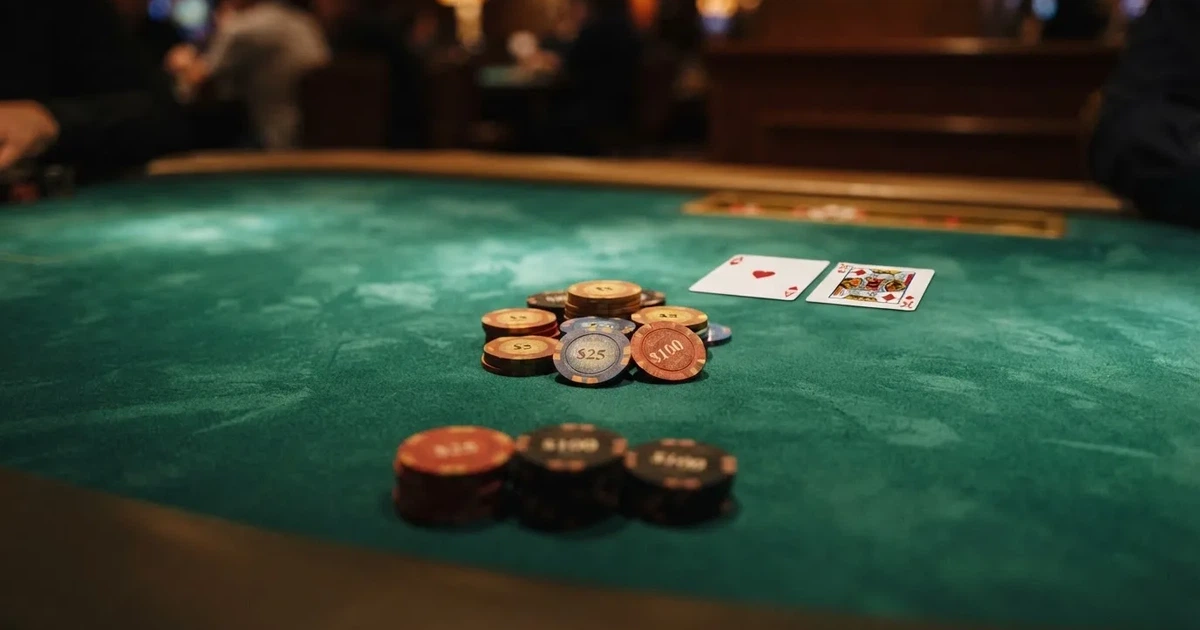
The rest of this page works through that gap: the catalogue of big jackpot slots and how progressive prizes actually behave, the ACMA’s running list of formal warnings and blocked sites, and the eleven offshore brands the ACMA itself has named. The choice the page keeps coming back to is not which offshore brand to play, because none of them are lawful to offer, but which reader still has a real path to a jackpot-style experience and what that path looks like.
Current as of 30 October 2026; data verified against the Australian Communications and Media Authority’s register of formal warnings and blocked websites.
Table of Contents
- Reading this page without falling into the trap it is built around
- Responsible gaming comes before the shortlist, not after it
- The mechanics of a big jackpot slot, set out plainly
- Why jackpot slots pay out less often between big wins
- Other games worth knowing on the same floor
- What the ACMA’s blocking record actually shows
- The legal frame, stated without softening
- The eleven offshore brands the ACMA has named
- What the regulator’s record looks like when it is read across all eleven
- What an Australian reader can actually do
- Frequently asked questions
Reading this page without falling into the trap it is built around
The search phrase “best online casinos with big jackpot slots” sounds like a shopping question. It is not. It is a question with a fact in front of it that has to be answered first, and the marketing layer that surrounds jackpot slots is built precisely to bury that fact. A jackpot slot is a slot machine with a prize pool that grows with each losing wager until someone wins it, then resets to a floor and starts again. The mechanics are interesting. The marketing is relentless. Neither of those changes what the IGA says, and neither of them is a reason an Australian reader should expect a safe or recoverable experience from the offshore sites advertising the largest progressive pools.

This page is laid out so the reader can reach the right answer in their own order. The legal frame is first because every other shelf sits on top of it. The mechanics come second because they are worth understanding regardless of which path the reader takes. The responsible gaming shelf comes third, because for some readers that is the only shelf that matters. The shortlist of brands the ACMA has acted against comes last, because once the legal frame is in view, those names read very differently than they do in an affiliate’s top-ten.
Responsible gaming comes before the shortlist, not after it
The gambling industry talks about responsible gaming as a footer. In Australia, with the National Self-Exclusion Register live since August 2023, it is a working tool, and it works only against the operators that are licensed here. BetStop binds Australian-licensed online and phone wagering services, which in practice means the sports and racing bookmakers — Sportsbet, Bet365, Ladbrokes and the rest — that operate under a Northern Territory licence. An offshore casino that takes Australian deposits is not bound by BetStop, cannot read its register, and is not required to honour any exclusion a person has set. A player who has registered with BetStop and then opens an offshore account has not protected themselves; they have moved outside the system that would have honoured the exclusion.
The National Gambling Helpline on 1800 858 858 is free, runs around the clock, and is the same number from any state or territory. Chat support is available through Gambling Help Online. Both are funded to handle the situation regardless of where the gambling is happening, including offshore. The point is not that these services are a substitute for self-exclusion. The point is that they exist and they reach the reader that this page reaches, which makes them more useful information than a list of welcome bonuses that cannot lawfully be claimed from inside Australia.
A second responsible-gaming fact worth keeping close is that gambling winnings of a recreational player are not assessable income in Australia, and losses are not deductible. The tax treatment is symmetrical: the ATO does not tax the win and does not allow the loss, which means the cost of a session is the net loss, full stop. A player carrying on a business of gambling — a professional punter, in the ATO’s own framing — sits in different territory, and that reader should be checking with the ATO rather than with this page.
The mechanics of a big jackpot slot, set out plainly
A progressive jackpot grows with each losing wager until it is won, then resets to a floor and starts to climb again. Casinos fund the growth out of a slice of their margin, the prize pool is a separate balance from the regular slot payouts, and the same game can be linked locally inside one venue or across many venues, which is what makes the eight-figure prizes possible. The Megabucks progressive slot, made by International Game Technology, paid out its inaugural jackpot of $4,988,842.17 on 1 February 1987, and the structure that produced that payout is the same one that produced the largest online slot jackpot on record.
That record stands at €19,430,723.60. It was won on 27 April 2021 by a player in Belgium, at Napoleon Sports & Casino, on Microgaming’s Absolootly Mad: Mega Moolah. The jackpot network is now distributed by Games Global, the business that grew out of Microgaming, and the company has reported later Mega Moolah wins of £11.5 million and 13.5 million — smaller than the Belgian hit, but well clear of anything a single-venue progressive tends to produce. The relevant fact for a reader weighing offshore brands is not which Mega Moolah variant pays the most; it is that the brand names lining up to advertise these jackpots are the same brand names the ACMA has been formally warning for years.
A variant worth knowing about is the must-hit-by progressive. In a must-hit-by game, a random number generator picks the exact payout amount inside a preset range — a $1,000 to $3,000 window is typical — the moment the previous jackpot is won, and the next qualifying player triggers it. The symbol combination does not need to be specific. The trade-off is that the pool cannot grow beyond the upper bound of the range, which is why must-hit-by progressives rarely reach the eight-figure territory of network progressives like Mega Moolah. They are a different product with a different payout shape, and the pages that mix them in with the headline prizes are doing so to inflate the impression of what a jackpot slot pays.
A theoretical point worth knowing, with the usual caveat: in some progressive games the pool can grow large enough to push the theoretical return to player above 100%, which would turn the game into a positive-expectation bet. The catch is that slot machines do not publish their reel layouts, so a player cannot reconstruct where that break-even point sits. The bet can become mathematically favourable; proving that it has, on a specific game, at a specific moment, is what the missing reel data prevents.
Why jackpot slots pay out less often between big wins
A progressive jackpot is paid out of a separate pool, fed by a slice of every losing wager, and the pool resets when it is won. Between resets, the slot still pays its regular line wins, free-spin triggers and bonus features at the rate the paytable specifies; the difference is that a slice of each spin is being routed into the progressive pool rather than into the house’s margin. The same return to player is split across two channels. Players who never trigger the progressive are paid the regular game at the regular rate; players who do trigger it collect the pool on top. There is no version of the math that pays more often between big wins — the math routes a slice of every spin into a prize the average player will not see, and that routing is what produces the headline number.
The marketing copy that frames a jackpot slot as a “regular slot with a bonus on top” is misleading for the same reason. The bonus is the prize, and the prize is funded by reducing the frequency and size of the smaller wins along the way. A player who sits at a Mega Moolah machine for an hour and never hits the progressive has not played a bonus slot. They have played a regular slot that happens to be siphoning a slice of every spin into a prize that another player, on another spin, will collect. The mechanics are not hidden, but the framing tends to be, and a reader who wants to understand what they are paying for has to read past the framing.
Other games worth knowing on the same floor
The same offshore brands advertising jackpot slots also run baccarat, blackjack and craps, and a few of the law-and-rule lines on those games are worth keeping, because they show how the licensed Australian venues differ from the offshore sites the ACMA has been warning.
Baccarat’s house edge is 1.06% on the Banker bet, 1.24% on the Player bet and 14.36% on the Tie. The game is banked at all times in the modern punto banco variant, which was developed in Havana during the 1940s and is dealt from a shoe of six or eight decks. Cards 2-9 count at face value, 10/J/Q/K count as zero and aces count as one, with hand totals taken modulo 10. Under section 66 of the NSW Casino Control Act 1992, an operator must not let a game such as baccarat be played in NSW unless the regulator has approved its rules, and a copy of the approved rules must be available on request. Crown Melbourne offers three baccarat variants — Traditional Baccarat, Crown Baccarat and 2 to 1 Baccarat — approved by the Victorian Gambling and Casino Control Commission, which replaced the VCGLR as Victoria’s casino regulator on 1 July 2022.
Blackjack with optimal strategy sits at about 0.28% house edge under liberal Las Vegas Strip rules and about 0.43% under Atlantic City rules. Number cards count at their number, jack/queen/king count as 10, an ace counts as 1 or 11, and a starting two-card 21 is called a natural. Variants worth knowing include Spanish 21 (no 10s, liberal player-favourable rules), Double Exposure (both dealer cards face up), Blackjack Switch (swap cards between two hands) and Super Fun 21 (up to four splits). In Victoria, the VGCCC must approve any blackjack rule and any change to it before it is introduced at Crown Melbourne, and the public log records specific changes — Perfect Pairs renamed to Crown Pairs on 23 December 2024, a Free Bet option with a new Pot of Gold side bet on 25 March 2024.
In craps the Pass/Come bet has a 1.41% house edge, Don’t Pass/Don’t Come 1.36%, and Any Craps 11.11%. The come-out roll wins on 7 or 11, loses on 2, 3 or 12, and any other number becomes the point, which the shooter must roll again before rolling a 7 to win the Pass Line bet.
The reason these numbers are on a page about jackpot slots is that the offshore brands the ACMA has warned are running all of these games alongside their progressive slots, and the licensed Australian venues the reader can actually walk into are running the same games under the same math with the regulator’s rules on file. The casino control regimes in NSW, Victoria and the other states exist for exactly that reason: to make the rules of the game available, to require the operator to follow them, and to give a player a place to complain if they do not.
What the ACMA’s blocking record actually shows
The ACMA’s running totals, as published in June 2026, are the most direct evidence of how the IGA is being enforced. A total of 1,751 illegal gambling and affiliate marketing websites have been blocked since the first blocking request in November 2019, and more than 230 unlicensed gambling services have left the Australian market since enforcement was strengthened in 2017. In the round reported on 26 June 2026 the ACMA asked Australian internet service providers to block another twelve: 7Signs, ChromaBet, Donbet, Duospin, Freshbet, Slots Gem, Jacks Club, Lucky Start, Pointsbetz, Spinrise, Vinyl Casino and Wildsino. The numbers are not a sample; they are the running count.
H2 Gambling Capital’s 2025 report estimates that Australians lose about A$3.9 billion a year to illegal gambling sites, and that the share of gambling going through legal channels fell from 74% in 2021 to 64%. The two figures together describe a market in which more money is moving through offshore sites each year even as the regulator’s enforcement record grows, which is the situation the IGA was last strengthened to address.
A useful exercise is the blocking rate. The first blocking request went out in November 2019. By June 2026, 1,751 sites had been blocked. That works out to an average of roughly 260 sites a year, or just over five a week, blocked from the first round to the most recent count. The figure understates the pressure the ACMA is putting on the offshore market in 2026 specifically, because the early years ran at a lower pace and the recent rounds have been denser, but it gives the reader a sense of the scale: the offshore market has been under continuous blocking pressure for more than six years, and the regulator’s pace has not slowed.
The same exercise is worth doing for the formal warnings. The list of brands the ACMA has warned — Rocketplay, Woo Casino, Spirit Casino, National Casino, Bizzo Casino, Ignition Casino, Instant Casino, Jackbit, Casino Intense, Sky Crown, Level Up Casino and others — is not a marketing blacklist. It is the regulator’s own record of who has been told, in writing, that what they are doing to Australians is prohibited. The brands are listed below in that order, and the rest of this section is the picture the regulator’s record draws once it is read in sequence.
The legal frame, stated without softening
The Interactive Gambling Act 2001, strengthened by the Interactive Gambling Amendment Act 2017, makes it an offence to provide online casino games, online pokies or in-play betting to a person in Australia. No state or territory licenses online casino games. What is licensed is wagering on races and sport placed before the event, lotteries and keno. The Northern Territory Racing and Wagering Commission regulates 52 of Australia’s online bookmakers, including Sportsbet, Bet365 and Ladbrokes — a fact that occasionally surprises readers who assume a regulator with that much market share would be a larger body, but the commission has no full-time staff and meets once a month in Darwin. The minimum age to gamble in Australia is 18.
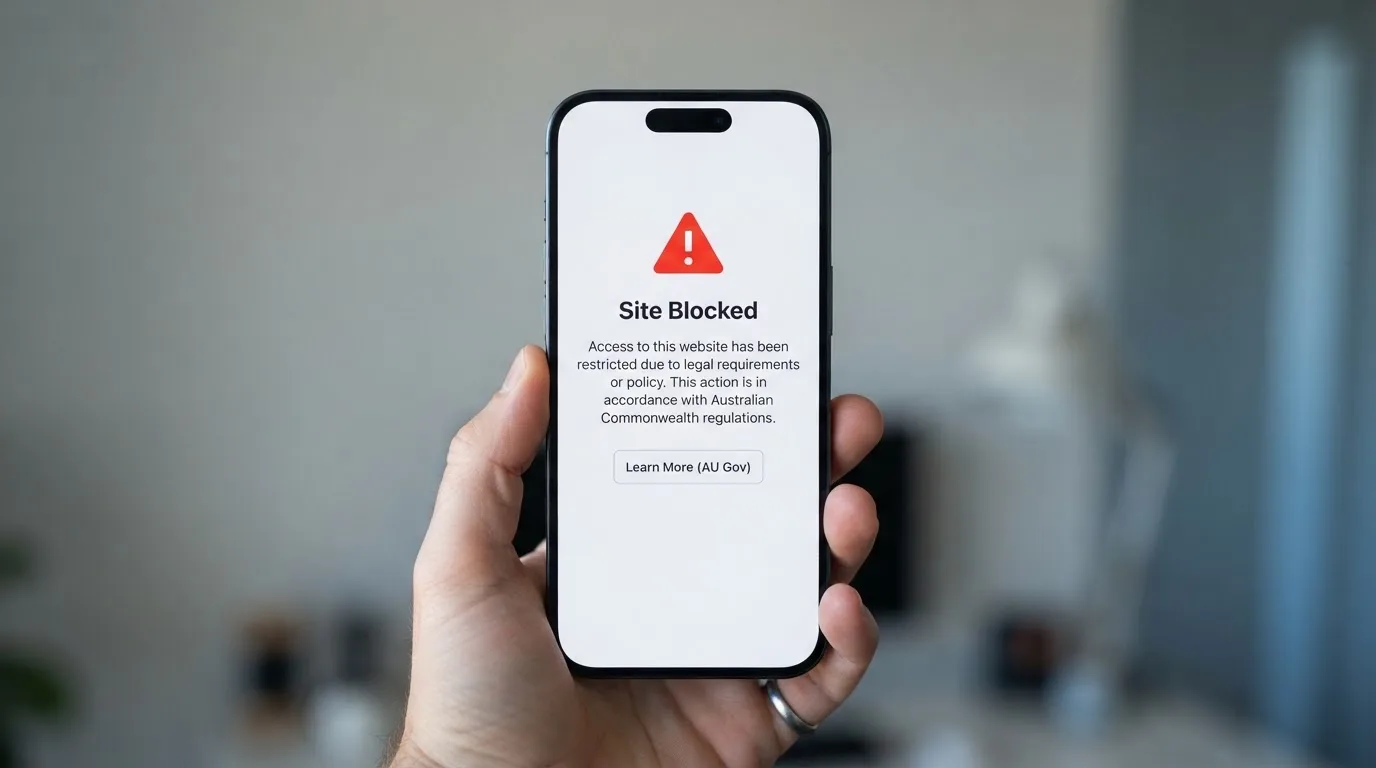
The ACMA investigates, issues formal warnings and directs internet service providers to block illegal sites. The individual player is not prosecuted — the IGA targets the provider — but an offshore site gives no Australian consumer protection, no complaints body and no recourse if a withdrawal is refused. A blocked site can still hold a player balance, and the balance is then unrecoverable through any Australian channel. A reader who treats that risk as hypothetical is reading the regulator’s record the wrong way: the balance is the regulator’s record’s most concrete cost.
The Interactive Gambling Amendment (Gambling Reform) Bill 2026 passed Parliament on 19 August 2026. Its advertising and inducement measures commence 1 January 2027, which makes it law with a start date, not yet in force on a page written in 2026. The changes the bill brings are aimed at the inducements that surround offshore offers — bonus structures, “free” spin packages and the affiliate-driven marketing that drives much of the search traffic this page is competing with — and they will change the framing more than the underlying prohibition.
Payment rules follow the same shape. Credit cards, credit-related products and digital currency are banned as payment for licensed online wagering since 11 June 2024, with penalties up to $247,500 for operators who breach the rule. Legal deposit routes for licensed wagering are debit card, bank transfer, PayID/Osko and BPAY. A site asking an Australian for a credit card or a crypto deposit is operating outside the Australian rules, regardless of any other licence it displays.
The eleven offshore brands the ACMA has named
The brands below are the brands the ACMA itself has issued formal warnings to for offering prohibited services to Australians. They are not ranked. They are not recommended. The order is the regulator’s own order, by the date of the most recent action, and each one carries the operator name and date exactly as the ACMA has published it. No bonus terms are listed; the only sources for those are affiliate marketing pages, and the legal status of the offer makes the terms academic for an Australian reader regardless.
RocketPlay
The ACMA issued a formal warning to Pulsup Ltd over Rocketplay in March 2026. An earlier warning had been issued to Dama N.V. in May 2022 over six casino brands, including Rocketplay, alongside Bambet, Dazard, Level Up, Wild Tornado and Cobra Casinos. The current operator is the 2026-named Pulsup Ltd; the historical operator was Dama N.V. Online casino games cannot be licensed anywhere in Australia, whatever licence the site displays. For a reader weighing the offshore market, the practical effect is that this is a brand the regulator has named twice across four years, with the operator entity changing in between. A brand that has cycled operators under continued regulator pressure is not a brand whose future conduct is easy to predict.
Level Up Casino
The ACMA issued a formal warning to Dama N.V. in May 2022, with Level Up Casino named among the six brands covered by that warning. Dama N.V. is also the operator the regulator returned to in March 2025 (Woo Casino) and May 2025 (Spirit Casino). For an Australian reader, the relevant question is not whether the site displays a Curaçao or other offshore licence, but whether the regulator’s name appears in its own history with this operator. The answer here is yes, and the relevant action sits in 2022. The site appears in the games provider BGaming’s public catalogue as a host for their titles; that catalogue is a distribution listing rather than an endorsement, and it is recorded here only because the ACMA record does not carry the catalogue entry.
Woo Casino
The ACMA issued a formal warning to Dama N.V. in March 2025 over Woo Casino. Dama N.V. is the same operator the regulator had warned in May 2022 over six brands and returned to in May 2025 over Spirit Casino. Three formal warnings to the same operator within three years is the regulator’s pattern with this corporate group, and the brands it operates are not insulated from that pattern by changing their front-end branding. For a reader choosing among Dama N.V. brands, the choice is between three warnings to one operator, not three separate operators.
Spirit Casino
The ACMA issued a formal warning to Dama N.V. in May 2025 over Spirit Casino, two months after the Woo Casino warning. The pattern is the same one the regulator’s record shows across the rest of this list: a brand is named, the warning is published, the operator is told in writing that the service is prohibited, and the brand either continues under the same operator or recycles into a new one. Spirit Casino is the third Dama N.V. brand on this page; reading the entries in sequence, the pattern is the point.
National Casino
The ACMA issued a formal warning to Consolutetish S.R.L. in July 2025 over National Casino. The site appears in the Wikipedia record of online gambling companies as a Consolutetish S.R.L. property; that listing is a directory entry rather than an endorsement, and is recorded here because the ACMA’s own publication does not name the underlying corporate structure. The reader-facing fact is that the regulator’s named operator is a single SRL entity covering National Casino and Bizzo Casino at the same date, which means the regulator is treating the two brands as one operation in its enforcement record.
Bizzo Casino
The ACMA issued a formal warning to Consolutetish S.R.L. in July 2025 over Bizzo Casino. The same brand had already been the subject of a 2022 formal warning to TechSolutions (CY) Group Limited and TechSolutions Group N.V. A brand that has cycled through two different operator entities and drawn two formal warnings across three years is, by the regulator’s own record, a brand that has been told twice that its Australian-facing operations are prohibited. The first warning did not change the conduct; the second warning did not require the regulator to escalate, because the IGA’s enforcement track runs from formal warning to blocking request. The next step after a second formal warning is the blocking request.
Ignition Casino
The ACMA issued a formal warning to Bamboo Media in July 2025 over Ignition Casino. The relevant reader-facing fact is that Bamboo Media is the named operator, not a Curaçao or Kahnawake shell, and that the ACMA’s enforcement record is by operator rather than by brand. A reader looking for a clean comparison between this brand and the others on the list will not find one in the operator names; the regulator is naming the people behind the brands, and the people change.
Instant Casino
The ACMA issued a formal warning to EOD Code SRL in February 2025 over Instant Casino. The warning is earlier than most of the rest of this list, and the relevant fact for a reader weighing recency is that an early-2025 warning is no less in force than a 2026 one. The regulator does not age out its warnings; a brand that was told in February 2025 that its Australian-facing service is prohibited is still, in 2026, a brand that was told.
Jackbit
The ACMA issued a formal warning to Ryker B.V. in April 2026 over Jackbit and CasinOK. Two brands under one warning is a useful marker: the regulator is treating Jackbit and CasinOK as the same operation, and the formal warning is against the operator rather than against the brand. For a reader, the practical effect is that switching between Jackbit and CasinOK does not put them outside the regulator’s record; the record is by Ryker B.V., and the brand is a label on top of it.
Casino Intense
The ACMA issued a formal warning to Sterplay Holding Ltd in April 2025 over Casino Intense. The site appears in public listings maintained by mainstream Australian media and by the ACMA itself, alongside references in coverage of land-based operators such as Crown Melbourne — useful only because the listings establish the brand is known in the Australian market, not because any of those listings constitute endorsement.
Sky Crown
The ACMA issued a formal warning to Hollycorn N.V. over Sky Crown and Blue Leo. The action is recorded in the ACMA’s published PDF notice from September 2022, which predates most of the rest of the list. The reader-facing pattern is the same one the rest of this shelf shows: a single corporate entity operating multiple brands, with the regulator’s record following the entity rather than the brand.
What the regulator’s record looks like when it is read across all eleven
Read across the eleven entries, the regulator’s record shows three patterns an Australian reader should see before choosing what to do next. First, the brands are not separate operators: Dama N.V. runs three of the eleven (Woo Casino, Spirit Casino, Level Up Casino), Consolutetish S.R.L. runs two (National Casino and Bizzo Casino), and the Hollycorn N.V. and Ryker B.V. warnings cover two brands each. The regulator is naming fewer operators than brands, and an offshore brand is a label on top of an operator the regulator has already documented.
Second, formal warnings are not the end of the regulator’s track. The IGA’s enforcement track runs from formal warning to blocking request, and the ACMA’s running count of 1,751 blocked sites since November 2019 is the size of the next step. A brand on this page is a brand that has been warned; a brand that does not change course after the warning is a brand that joins the blocked list.
Third, the brand names cycling under the same operator do not reset the regulator’s clock. Dama N.V. was warned in May 2022, then warned again in March 2025 and May 2025 over different brands. A reader who sees a brand relaunching under a new label is not seeing a brand with a clean record; the operator’s record follows the operator, not the label.
What an Australian reader can actually do
The licensed path is straightforward, and it is the one this page keeps returning to because the unlicensed path leads back to the regulator’s record. Licensed pokies venues operate in every state and territory, and they run progressive jackpot networks of their own. Crown Melbourne in Victoria runs baccarat, blackjack and progressive slots under VGCCC-approved rules, and the public log of approved changes is available on the regulator’s site. Clubs NSW operates hundreds of licensed venues across New South Wales. The Star Sydney operates under the NSW Casino Control Act 1992. The land-based casino floors run the same games as the offshore sites, under the same math, with the regulator’s rules on file and a complaints body a player can actually reach.
For readers who want to exclude themselves from online wagering, BetStop is the National Self-Exclusion Register and has been live since August 2023. It binds Australian-licensed online and phone wagering services, which in practice means the sports and racing bookmakers operating under Northern Territory licences. An offshore casino is not connected to BetStop, and a BetStop registration does not reach one. The 1800 858 858 helpline is free, 24/7, and reaches the reader regardless of where the gambling is happening.
For readers who want a working shortlist, the offshore brands on this page are not it. They are the regulator’s list of who has been warned for offering what is prohibited. The reader who came to this page looking for a top-ten comparison is owed a clear statement: the comparison the search implied cannot be honestly made, and the legal frame is what the comparison rests against. The licensed venues and the BetStop register are what the page can offer in their place.
Frequently asked questions
What is the largest jackpot ever won on an online slot?
The record online slot jackpot is €19,430,723.60, won on 27 April 2021 by a player in Belgium at Napoleon Sports & Casino on Microgaming’s Absolootly Mad: Mega Moolah. The Mega Moolah network is now distributed by Games Global, and the company has reported later wins of £11.5 million and 13.5 million.
Can a jackpot slot be funded with a cryptocurrency deposit?
The licensed Australian wagering market has banned digital currency as a deposit method since 11 June 2024. An offshore casino accepting crypto from an Australian customer is operating outside that ban, and the ban sits alongside the broader prohibition on unlicensed online casino games rather than replacing it.
Is it legal for an online casino to offer jackpot slots to Australians?
No. The Interactive Gambling Act 2001, strengthened by the Interactive Gambling Amendment Act 2017, makes it an offence to provide online casino games and online pokies to a person in Australia. No state or territory licenses online casino games. The ACMA enforces this through formal warnings and blocking requests; the individual player is not prosecuted, but the provider is.
Why do jackpot slots pay out less often between big wins?
A slice of every losing wager is routed into the progressive pool rather than into the house’s margin, which is what produces the headline prize. The regular game pays out at the rate its paytable specifies; the progressive pays out only when the pool is won. Between big wins, the average player is collecting a smaller regular game and funding a prize they will not see.
What happened to the Mega Moolah jackpot record from 2021?
The €19.4 million win on 27 April 2021 at Napoleon Sports & Casino on Absolootly Mad: Mega Moolah remains the record online slot jackpot. The Mega Moolah network has continued to pay out seven-figure and eight-figure wins under Games Global’s distribution; none has yet exceeded the 2021 figure.
Is there a way to play jackpot-style slots for real money through a licensed Australian venue?
Yes. Licensed pokies venues and land-based casinos in every state and territory operate progressive jackpot networks under local casino control regimes. The NSW Casino Control Act 1992, Victoria’s Casino Control Act 1991 and the equivalent legislation in other states require the regulator to approve the rules, and the licensed venues run baccarat, blackjack and progressive slots under the same math as the offshore sites — with the regulator’s rules on file.