
Online pokies for Australians: what “best” actually means when nothing is licensed
There is no licensed, ranked list of online pokies sites for Australians. The phrase looks like a comparison the way “best beachside suburb” looks like a comparison, but the underlying product does not exist in a form an Australian regulator authorises. Under the Interactive Gambling Act 2001, online pokies are a prohibited interactive gambling service, and no state or territory issues a licence for them. The closest legal version of a pokie is the gaming machine sitting in a licensed pub, club or casino — a different product, with a different return-to-player floor, a different regulator, and a different bill at the end of the night.
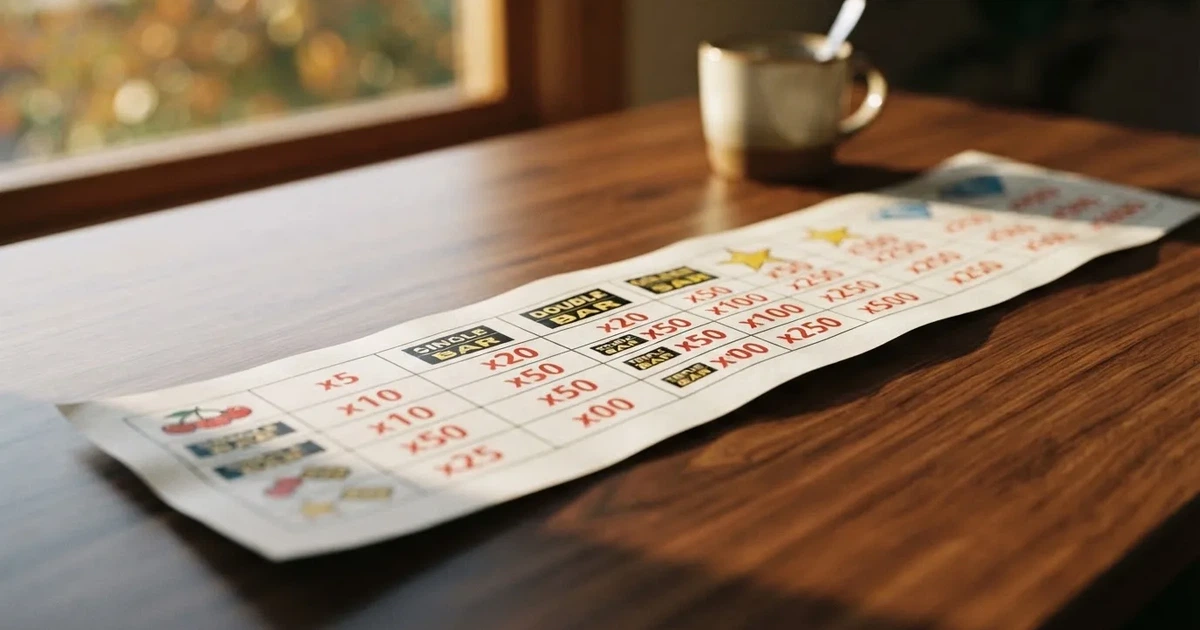
The page that follows takes that as its starting point rather than its conclusion. It walks through the legal frame, the harm-minimisation routes that do exist, the payments side an Australian reader keeps meeting in marketing, what a paytable generally looks like without pointing to a real-money machine, the comparison framework a fair ranking would weigh, and the eleven offshore brands the Australian Communications and Media Authority has formally warned over the past several years — brands that turn up when Australians search, and that the ACMA itself has acted against. The angle is the choices an Australian reader actually has, and the costs of each.
Currency of the data: 2 November 2026 · licence and enforcement claims verified against the Australian Communications and Media Authority (ACMA) and the Interactive Gambling Act 2001.
Table of Contents
- How the Australian online pokies market actually works
- The legal frame: what the Interactive Gambling Act 2001 actually prohibits
- Harm minimisation: what is actually available to an Australian player
- Payments and payout speed: what the Australian money side actually shows
- Bonuses and free spins: what an offshore offer generally involves, as background
- What an online pokie actually shows on the paytable
- The comparison framework a fair ranking would weigh — and why no fair ranking exists here
- The brands the ACMA has formally warned over
- What an Australian comparing these brands actually weighs
- Responsible gambling: the practical order for an Australian who is worried
- What 2026 has actually changed
- The frame, in one paragraph
- FAQ
How the Australian online pokies market actually works
Online pokies in Australia are not a market in the ordinary sense. They are a prohibition with a parallel set of offshore offers behind it. The legal product is the land-based gaming machine — the pokie in its original sense — licensed and regulated state by state, with a minimum return-to-player floor that varies between 85% and 90% depending on the jurisdiction. The online version is not licensed anywhere in Australia, and offering it to a person physically present in Australia is an offence against the Interactive Gambling Act 2001 (strengthened by the Interactive Gambling Amendment Act 2017).

That distinction is the entire reason this page cannot be a ranked review. A ranking presupposes a set of licensable competitors. There is no such set. What an Australian reader sees when typing “best aus pokies online” is the offshore end of the global online casino market, sorted by affiliate site rather than by regulator, and the only Australian body that has any say over those offers is the ACMA — which acts against them, not for them.
The numbers frame the scale. According to the ACMA, a total of 1,751 illegal gambling and affiliate marketing websites had been blocked since the first blocking request in November 2019, and more than 230 unlicensed gambling services had left the Australian market since enforcement was strengthened in 2017. In the round reported on 26 June 2026, the ACMA asked Australian internet service providers to block twelve more sites in one batch: 7Signs, ChromaBet, Donbet, Duospin, Freshbet, Slots Gem, Jacks Club, Lucky Start, Pointsbetz.com, Spinrise, Vinyl Casino and Wildsino. H2 Gambling Capital’s 2025 estimate puts Australian losses to illegal gambling sites at roughly A$3.9 billion a year, with the share of gambling going through legal channels falling from 74% in 2021 to 64%.
The legal channel is narrower than the marketing suggests. What an Australian-licensed operator can offer is wagering on races and sport placed before the event, lotteries and keno. Online casino games, online pokies and in-play betting sit outside the licensable set. The Northern Territory Racing and Wagering Commission (NTRWC) regulates 52 of Australia’s online bookmakers — Sportsbet, Bet365 and Ladbrokes among them — for tax reasons, but a bookmaker licence does not extend to casino games. The NTRWC itself runs with no full-time staff and meets once a month in Darwin.
The rate at which the ACMA moves against the offshore set is the practical answer to “how many of these are out there right now”. A blocking round with twelve names is not unusual. Earlier rounds added comparable numbers, and the warnings published separately cover still more brands that have not yet reached the blocking stage. The arithmetic sits in a band rather than at one figure: the rate at which the ACMA has been adding sites to the blocked list has run at roughly 200 per year over the period since November 2019, against a backdrop of more than 230 unlicensed services having already left the market since 2017. The figure is best read as a moving boundary, not a final total.
The legal frame: what the Interactive Gambling Act 2001 actually prohibits
The Interactive Gambling Act 2001 is the federal statute that defines the prohibition. Its 2017 amendments added the offence of providing a prohibited interactive gambling service to a person in Australia, and tightened the rules on in-play betting. The ACMA, as the regulator, has three tools: investigating complaints, issuing formal warnings, and directing Australian internet service providers to block sites.

The prohibition covers online casino games, online pokies and in-play betting. It does not cover wagering on races and sport placed before the event, lotteries or keno — those remain licensable in practice through the Northern Territory, with limited additional state-level involvement. Online wagering operators licensed in Australia cannot offer a casino product; offshore operators offering a casino product to Australians are breaking the IGA, regardless of any overseas licence they hold.
Enforcement falls on the provider, not the player. An Australian who opens an account with an offshore casino and plays online pokies is not personally prosecuted under the IGA. What the player loses is the Australian consumer-protection layer that licensed wagering services are required to maintain: an Australian complaints body, dispute resolution that an Australian body can compel, and the guarantee that a withdrawal request will be honoured if the operator’s own terms are met. None of that exists on an offshore site. If the operator declines a withdrawal, freezes a balance, or disappears, the Australian player’s only recourse is whatever the offshore licensing jurisdiction offers — typically Curaçao, Anjouan or similar regimes with no practical reach into Australian disputes.
The other practical cost is interruption. An offshore site can be blocked by an Australian ISP at the ACMA’s direction, and a player with funds on it at that moment has no Australian body to turn to. The blocked-with-balance scenario is not hypothetical — it is exactly what the blocking round is designed to produce.
Harm minimisation: what is actually available to an Australian player
Australian player protection is built around licensed wagering, not around online casino, because that is what is licensed. The two anchors are BetStop and Gambling Help Online.
BetStop — the National Self-Exclusion Register — went live in August 2023 and binds every Australian-licensed online and phone wagering service. A person who registers with BetStop is excluded from opening new accounts, depositing, or betting with any licensed Australian wagering provider. The exclusion can be set for periods from three months up to a lifetime. BetStop does not bind offshore casinos. An Australian self-excluding through BetStop who then opens an account with an offshore site is not protected by the register on that site; the exclusion is a domestic-wagering mechanism, not a global one.
Gambling Help Online is the national counselling service, free and confidential, available 24 hours a day through the National Gambling Helpline on 1800 858 858 and through online chat. The service covers any gambling harm, online or land-based, licensed or unlicensed, and is staffed by professionals who can talk through the practical steps of cutting back, self-excluding from licensed channels, and managing debt. The helpline does not need a person to have already stopped gambling to be useful — a single call is enough.
For an Australian reading this page because they or someone they know is worried about play, the practical order is: call 1800 858 858 or use Gambling Help Online chat, register with BetStop to close the licensed channel, and be aware that BetStop does not reach the offshore set — which is the harder part of the problem and the reason the ACMA exists. The harm-minimisation infrastructure is real and well-resourced for the licensed half of the market; for the offshore half, the protective layer is the absence of the product rather than a wraparound around it.
Payments and payout speed: what the Australian money side actually shows
The payment story splits cleanly along the legal boundary. For licensed wagering, the law forbids credit cards, credit-related products and digital currency as a funding method — a ban in force since 11 June 2024, with penalties up to A$247,500 for operators that breach it. The legal deposit routes for a licensed Australian wagering account are debit card, bank transfer, PayID and Osko, and BPAY. PayID is the Australian instant-transfer layer that lets a player send money to a mobile number or email address through the regular bank rails; it is fast, it is bank-mediated, and it is the route most licensed operators push.
For offshore casino sites — which is the entire subject of this page’s “best online pokies” framing — none of the Australian payment rules apply. Credit cards are routinely accepted. Cryptocurrency deposits are widely offered. PayID appears on some sites as a marketing term; whether a PayID button on an offshore site is actually clearing through the Australian instant-transfer rails, or is a label for a different payment rail with the word “PayID” attached, varies from one site to the next. The reader cannot tell from the front page, and the marketing copy rarely distinguishes.
The practical consequences for an Australian choosing to play on an offshore site are threefold. First, deposit speed is rarely the bottleneck; offshore sites that accept cards, e-wallets and crypto can fund an account in minutes. Second, withdrawal speed is where the friction lives — an offshore operator typically imposes a pending period, may require identity documents not collected at deposit, and may decline a withdrawal on a bonus-related rule the player did not read at sign-up. Third, when a withdrawal is declined there is no Australian complaints body to escalate to. The Australian-licensed equivalent, by contrast, sits inside the Australian complaints framework and is held to the credit-card ban and the BetStop register; an Australian wagering account funds from PayID and pays out under Australian consumer law.
The “best PayID pokies Australia” phrase that appears in search results is a marketing label attached to offshore sites rather than a regulated payment category. PayID is a real Australian payment rail. Its presence on a given site’s deposit page does not make that site Australian, licensed, or legal.
Bonuses and free spins: what an offshore offer generally involves, as background
For an Australian reading about “online pokies Australia bonus credit” or “Australia pokies sign up bonus”, the substantive point is that the offer being described is an offshore marketing construct, not a regulated Australian product. The mechanics it describes — a matched deposit, a bundle of free spins, a wagering requirement before withdrawal — are standard across the global online casino market. They are not standard across the Australian-licensed set, because online casino is not in that set.
A matched deposit bonus adds a percentage of the player’s first deposit as bonus funds. A free-spin bundle attaches a fixed number of spins at a fixed stake to the sign-up. A wagering requirement — typically expressed as a multiplier, such as 40 times the bonus — sets how much the player must turn over before any winnings from bonus funds become withdrawable. A max-cashout cap limits what can be withdrawn from winnings earned on bonus funds; a game-restriction list bars certain high-return-to-player titles from being played through the bonus.
Each of these is a normal offshore-market mechanism. The reason they appear on this page at all is to make the legal frame readable: an offer described this way is an offer on a site the ACMA has standing grounds to warn over or block, not a regulated promotion. The marketing word is “free”. The arithmetic is that a bonus with a 40-times wagering requirement on the bonus amount, played through on a typical online pokie at a return-to-player around 96%, returns the bonus to the player only across many thousands of spins — and during those spins the house edge is operating on every wager.
For an Australian weighing whether to take such an offer, the practical question is not whether the bonus exists but what the withdrawal process looks like once the wagering requirement is met, and what the operator’s own terms say about identity verification at that point. A player who reads the bonus terms, understands the wagering multiple, and is prepared for the identity-check step at withdrawal has a better picture of what they are accepting than a player who reads only the headline figure.
What an online pokie actually shows on the paytable
The product behind every “best online pokies Australia” search result is, mechanically, a video slot. The screen layout is conventional across the market: a grid of reels, a payline structure, a paytable that lists what each symbol pays at each stake, and a bonus feature — free spins, a hold-and-respin, a pick-em round, a cascading reel — that is the centre of the game’s design.
A paytable tells the reader three things. It lists the symbol values: the highest-paying symbols are usually themed — a diamond or a gold mask, a character from the game’s setting — and pay the most on a five-symbol line. It lists the lower-paying symbols, which are often stylised card ranks. It lists the special symbols: the wild (which substitutes for other symbols to complete a line), the scatter (which pays anywhere on the grid and usually triggers the bonus feature), and any bonus-specific symbol.
The return-to-player figure, displayed in the paytable or in the game’s information screen, is the theoretical percentage of wagers that the game returns to players over a very large number of spins. A figure of 96% means the game keeps 4% over the long run. The volatility class — low, medium or high — describes how the wins are distributed: a low-volatility pokie pays out often in small amounts; a high-volatility pokie pays out rarely in larger amounts. Neither figure predicts any individual session. Both are long-run averages across the entire playing population.
The Australian land-based equivalent sits in a different regulatory framework. The minimum return-to-player for a poker machine in a licensed Australian venue is set by the state or territory: 85% in New South Wales, the Northern Territory and Queensland; 87% in the Australian Capital Territory, Tasmania and (generally) Victoria, with 87% at Crown Melbourne; 87.5% in South Australia; and 90% in Western Australia. These floors are a state-level instrument, not a feature of the game. An offshore online pokie does not sit under any of these floors — it sits under whatever the offshore operator has chosen to publish, and an Australian reader has no Australian body to check the figure against.
The distinction matters because the reader’s intuition that “a pokie is a pokie” is partly right and partly wrong. The mechanics — reels, paylines, a bonus feature, a return-to-player figure — are common. The regulatory envelope — a state-level floor on return, harm-minimisation features, venue-level staff, a complaints body — is not common. An Australian playing an offshore online pokie is using the same machine archetype the licensed pub or club pokie uses, without the protective envelope that the licence requires.
The comparison framework a fair ranking would weigh — and why no fair ranking exists here
A ranking of online pokies sites for Australians would, if it were honest, weigh five matters. It would check that each site holds a licence from an Australian regulator. It would weigh the offer’s true cost — the wagering requirement, the max-cashout cap, the game restrictions. It would weigh the withdrawal process — how long, what identity checks, what has historically gone wrong. It would weigh the harm-minimisation layer — whether the site connects to BetStop, whether self-exclusion works on it, whether the player can reach an Australian complaints body. It would weigh the persistence risk — how likely the site is to be blocked by the ACMA during the player’s time on it.
Run that framework across any “top 10 best online pokies Australia” page that comes up in search, and the result is the same: the framework cannot be filled in, because every one of those matters comes back blank on an Australian reading. The site does not hold an Australian licence. The offer’s true cost is the standard offshore-market offer, with the standard offshore-market withdrawal risk. The harm-minimisation layer is absent. The persistence risk is a real, published risk — the ACMA blocks sites in rounds of twelve or more at a time.
What that means is that the “best aus pokies online australia” query is being answered, in practice, by affiliate pages that rank offshore sites on metrics an Australian reader cannot use — deposit bonus size, number of games, software providers listed, mobile-app rating — without ever flagging the legal status of what they are reviewing. The framing “best” is doing work the offshore market cannot earn. An Australian reader who lands on a ranked top-ten list of offshore casinos and clicks through is being treated as a customer of those casinos, not as a person whose regulator has acted against them.
The reason this page does not run that ranking is straightforward. The composition has no honest basis: the operators are not licensable in Australia, the ACMA has warned over the majority of them, and the comparison matters the framework would weigh come back blank. The eleven brands that follow are the brands the ACMA has formally warned over — not as a ranked shortlist but as the published record of what an Australian reader actually sees when they search, and what has been done about it.
The brands the ACMA has formally warned over
The table that follows lists the eleven brands covered on this page. Each is named because the ACMA itself published a formal warning over it for offering prohibited interactive gambling services to Australians. The brand column is the casino or service name. The ACMA action column names the operator the warning was issued to and the date of publication. The “operator named by the ACMA” column gives the corporate entity on the warning. The “subject support” column carries what the source listings report about that brand, and is left blank where the listings have nothing to say.
| Brand | ACMA action and date | Operator named by the ACMA | Subject support |
|---|---|---|---|
| RocketPlay | Formal warning, March 2026; earlier May 2022 | Pulsup Ltd; Dama N.V. (earlier) | — |
| Level Up Casino | Formal warning, May 2022 | Dama N.V. | Listed by Bgaming.com among the operators carrying its content |
| Woo Casino | Formal warning, March 2025 | Dama N.V. | — |
| Spirit Casino | Formal warning, May 2025 | Dama N.V. | — |
| National Casino | Formal warning, July 2025 | Consolutetish S.R.L. | Listed by en.wikipedia.org among operators carrying prohibited services to Australians |
| Bizzo Casino | Formal warning, July 2025; earlier 2022 | Consolutetish S.R.L.; TechSolutions (earlier) | — |
| Ignition Casino | Formal warning, July 2025 | Bamboo Media | — |
| Instant Casino | Formal warning, February 2025 | EOD Code SRL | — |
| Jackbit | Formal warning, April 2026 | Ryker B.V. | — |
| Casino Intense | Formal warning, April 2025 | Sterplay Holding Ltd | Listed by Abc.net.au, acma.gov.au and Crownmelbourne.com.au among the brands the regulator has acted against |
| Sky Crown | Formal warning, September 2022 | Hollycorn N.V. | — |
Each of these is presented in turn below, with the warning publication as the source. The angle is the same for each: an Australian reader meeting the brand should know what the regulator has published about it, what the listed sources have to say about the product side, and what that means for choosing to engage.
RocketPlay
The ACMA published a formal warning to Pulsup Ltd over Rocketplay.com.au in March 2026; an earlier warning to Dama N.V. covered the same brand in May 2022. RocketPlay was offering online casino games — including online pokies — to people in Australia, in breach of the Interactive Gambling Act 2001. The product it offered cannot be licensed anywhere in Australia, whatever licence the site displays on its own footer; the offshore licence RocketPlay does display is from a regime with no Australian reach. The regulator’s repeated action against the same brand under different operators is a clear signal: the brand’s persistence in the Australian market is a direct outcome of affiliate promotion rather than any regulatory clearance.
Level Up Casino
The ACMA published a formal warning to Dama N.V. over Level Up Casino in May 2022, as part of a batch of six Dama N.V. brands that also included Bambet, Dazard, Rocketplay, Wild Tornado and Cobra Casinos. The Bgaming.com listings note Level Up as one of the operators carrying its content. The warning has stood for over four years, and while the ACMA has not targeted this specific site with blocking directions to the same extent as newer batches, the formal warning remains an active indicator of its status.
Woo Casino
The ACMA published a formal warning to Dama N.V. over Woo Casino in March 2025. Woo Casino sits within the same Dama N.V. cluster as Spirit Casino and the earlier Level Up warnings — the same corporate entity, different brands. This recurring pattern highlights a clear corporate strategy: managing multiple brand fronts that are warned individually, yet remain active in the Australian market through continuous affiliate marketing.
Spirit Casino
The ACMA published a formal warning to Dama N.V. over Spirit Casino in May 2025. Spirit Casino is the second Dama N.V. warning in 2025, following Woo Casino in March. The shift toward naming entire corporate groups across multiple brands makes the standard marketing claim—that each is a distinct entity—appear increasingly unreliable.
National Casino
The ACMA published a formal warning to Consolutetish S.R.L. over National Casino in July 2025. en.wikipedia.org’s “Gambling in Australia” article lists National Casino among the operators that have offered prohibited services to Australians. For an Australian reader, the relevant point is that the brand has been the subject of a regulator action in 2025 and continues to appear in listings of operators offering online casino to Australians.
Bizzo Casino
The ACMA published a formal warning to Consolutetish S.R.L. over Bizzo Casino in July 2025. Bizzo Casino had already been the subject of a 2022 formal warning to TechSolutions (CY) Group Limited and TechSolutions Group N.V. — meaning the same brand has been warned twice, under different operators, three years apart. For an Australian reader, the pattern is the same as for the Dama N.V. cluster: a brand persists across operator changes and is re-warned when it surfaces under a new corporate entity.
Ignition Casino
The ACMA published a formal warning to Bamboo Media over Ignition Casino in July 2025. Ignition Casino is one of the more established offshore brands in the Australian-facing market, and the warning represents the first published ACMA action against it on this record. For an Australian reader who has seen Ignition advertised in affiliate lists, the warning is the regulator’s record of what the brand has been doing in Australia.
Instant Casino
The ACMA published a formal warning to EOD Code SRL over Instant Casino in February 2025. Instant Casino is one of the shorter-lived names on this list — the warning came within months of the brand gaining visibility in Australian-facing marketing — and is a useful case of how quickly the ACMA can move once a brand surfaces.
Jackbit
The ACMA published a formal warning to Ryker B.V. over Jackbit and CasinOK in April 2026. Jackbit markets itself heavily on crypto deposits, which under Australian licensed wagering rules is a banned funding method; the brand sits entirely outside the Australian regulatory perimeter.
Casino Intense
The ACMA published a formal warning to Sterplay Holding Ltd over Casino Intense in April 2025. Abc.net.au, acma.gov.au and Crownmelbourne.com.au all list Casino Intense among the brands the regulator has acted against. For an Australian reader, the cross-listing is a small data point: the brand has been independently noted across regulator, public broadcaster and licensed casino as one of the offshore operators in the Australian market.
Sky Crown
The ACMA published a formal warning to Hollycorn N.V. over Sky Crown and Blue Leo casino services, in a PDF published in September 2022. Sky Crown is the earliest formal warning on this list and has been on the ACMA’s published record for the longest period. For an Australian reader, the duration is itself information: a brand that has been the subject of a formal warning for several years and continues to be marketed to Australians is a brand the regulator has not been able to remove from the market, and the ACMA’s tool in that case is the blocking request.
What an Australian comparing these brands actually weighs
The practical comparison, for an Australian weighing the brands above on their own terms — that is, accepting that none of them is licensed and asking only which is the least bad — turns on four matters.
The first is the warning’s age and the operator’s responsiveness. A brand with a 2022 warning that is still being marketed in 2026 has had three years to exit the Australian market and has not done so. A brand with a 2026 warning is at the start of that arc. Neither is good. The earlier-warning brand is, in a narrow sense, more persistent and harder for the ACMA to shift.
The second is the corporate grouping. The Dama N.V. warnings — covering Level Up, RocketPlay, Woo Casino and Spirit Casino across 2022 and 2025 — point to a single operator running multiple brand fronts. A reader who avoids one of these on a warning has avoided one of four or five; a reader who treats them as separate casinos has not.
The third is the payment side. The Jackbit warning sits alongside crypto-deposit marketing; the credit-card ban that binds licensed Australian wagering does not bind these sites. A reader who values keeping the payment layer inside the Australian banking system — and inside the consumer protections that come with it — has already ruled out the offshore set, regardless of which brand.
The fourth is the harm-minimisation layer. None of these brands connects to BetStop; none offers an Australian complaints path; none is required to apply any of the harm-minimisation features that a licensed Australian wagering service is required to apply. A reader who needs those features is reading the wrong page.
Responsible gambling: the practical order for an Australian who is worried
For an Australian reading this page because the question has moved from “which brand” to “how do I stop”, the practical order is short and direct. Call the National Gambling Helpline on 1800 858 858, or use the chat at Gambling Help Online — free, confidential, 24 hours a day. Register with BetStop, the National Self-Exclusion Register, to close the licensed wagering channel for a period from three months up to a lifetime. Understand that BetStop does not bind the offshore set, which is why the ACMA exists — the offshore channel is the harder part of the problem and is the reason the regulator directs ISP blocks.
For an Australian whose concern is about someone they know rather than about themselves, the same channels apply. Gambling Help Online takes calls from family members and friends. The conversation the helpline is set up to have is not “have you stopped” but “what’s happening and what would help”. A single call is enough.
What 2026 has actually changed
Two 2026 developments sit on the record. The Interactive Gambling Amendment (Gambling Reform) Bill 2026 passed Parliament on 19 August 2026; its advertising and inducement measures commence on 1 January 2027. The law is on the books but not yet in force for an Australian reading this in 2026 — which means an Australian reader in the second half of 2026 is reading about a regime that takes effect at the turn of the year, not one that binds today.
The other 2026 development is the ACMA’s continuing enforcement pace: a blocking round of twelve sites in June 2026, formal warnings to Pulsup Ltd over Rocketplay in March 2026, to Ryker B.V. over Jackbit and CasinOK in April 2026. The pace is steady rather than accelerating, and the published total — 1,751 sites blocked since November 2019 — is the result of that steady pace accumulated over more than six years.
The frame, in one paragraph
An Australian typing “best aus pokies online” is typing a phrase the Australian market cannot honour. The licensed equivalent is the pokie in a pub, club or casino, regulated state by state, with a minimum return-to-player floor that runs from 85% to 90% depending on the jurisdiction. The offshore equivalent is an unregulated casino product, marketed to Australians through affiliate channels, formally warned over by the ACMA in a steady stream of publications, blocked by Australian ISPs in batches of around a dozen at a time, and offering no Australian consumer protection if a withdrawal goes wrong. The choice the page makes available is the choice between the licensed product and the offshore product — and the choice, for an Australian who needs harm-minimisation features, who values the consumer-protection layer, or who wants the payment side to stay inside the Australian banking system, is the licensed product, which is not an online pokie at all.
FAQ
Is there any licensed, ranked list of online pokies sites for Australian players?
No. Under the Interactive Gambling Act 2001, online pokies are a prohibited interactive gambling service and no Australian state or territory issues a licence for them. A ranked list of licensed online pokies sites for Australians is, by definition, a list that cannot exist. The lists an Australian reader sees in search are affiliate rankings of offshore sites, ordered by marketing metrics rather than by any Australian regulatory assessment.
Does a PayID deposit option make an online pokies site any more Australian or legal?
No. PayID is an Australian instant-transfer rail and is a legitimate funding method for licensed Australian wagering. Its presence on an offshore casino’s deposit page does not make the site licensed, Australian or legal. An offshore casino accepting PayID is still an offshore casino offering a prohibited service to Australians, and the ACMA has standing grounds to warn over or block it.
What separates a licensed pub or club poker machine from an ‘online pokies’ site?
The licensed pokie is a physical machine in a regulated venue, operating under a state or territory licence with a minimum return-to-player floor that varies between 85% and 90%. It sits inside the Australian harm-minimisation framework. The offshore online pokie is a video slot on a website operated from outside Australia, with no Australian licence, no state-level return-to-player floor, no connection to BetStop, and no Australian complaints path. The mechanics are similar; the regulatory envelope is not.
Can an offshore online pokies site legally advertise a sign-up bonus credit to Australians?
No. Offering any online casino game — including a sign-up bonus tied to one — to a person in Australia is an offence against the Interactive Gambling Act 2001. The bonus itself is not the offence; the offering of the game is. An offshore site advertising a sign-up bonus credit to an Australian reader is advertising a service it cannot lawfully provide, and the ACMA has grounds to warn over it or block it. The Interactive Gambling Amendment (Gambling Reform) Bill 2026 will, from 1 January 2027, add advertising and inducement measures to the framework; on a 2026 page that regime is on the books but not yet in force.
How would payouts on an offshore online pokies site be verified as fair?
They cannot be verified by an Australian body. An Australian-licensed wagering service sits inside an Australian complaints and dispute framework. An offshore casino does not. If a withdrawal is refused, delayed or reversed on an offshore site, the Australian player’s only recourse is whatever dispute process the offshore licensing jurisdiction offers, which in practice is limited. There is no Australian regulator an Australian player can ask to compel an offshore payout, and there is no Australian register of approved game fairness for offshore casino content. The credit-card ban and the BetStop register apply to licensed Australian wagering only.
Is online pokies play covered by the same ban as online casino table games?
Yes. The Interactive Gambling Act 2001 prohibits online casino games, online pokies and in-play betting as a single category of prohibited interactive gambling service. What is licensable is wagering on races and sport placed before the event, lotteries and keno. An Australian playing online pokies on an offshore site is in the same legal position as an Australian playing online baccarat, online blackjack or any other online casino game on an offshore site: outside the Australian licence perimeter, with no Australian consumer protection, and on a site the ACMA has grounds to act against.