
Real-money PayID withdrawals from Australian-facing casinos: what settles in a minute, and what doesn’t
PayID works the way the brochures claim it does. With a mobile number, email, ABN or Organisation Identifier, a transfer between participating Australian banks lands in under a minute, twenty-four hours a day, weekends included — the underlying engine is the New Payments Platform that the Reserve Bank of Australia oversees, with Osko handling the retail leg. That part is straightforward and verifiable. What is not straightforward is the use case it sits inside: an Australian resident trying to pull real-money casino winnings out through PayID is, almost always, attempting a withdrawal from a site that the Interactive Gambling Act 2001 was written to keep offshore. Online casino games and online pokies cannot be licensed anywhere in Australia. What is licensed is wagering on races and sport placed before the event, lotteries and keno — a category that does not, on this page’s subject, exist. The same PayID rail still runs, the prohibition still applies, and the ACMA keeps acting on the gap between them.
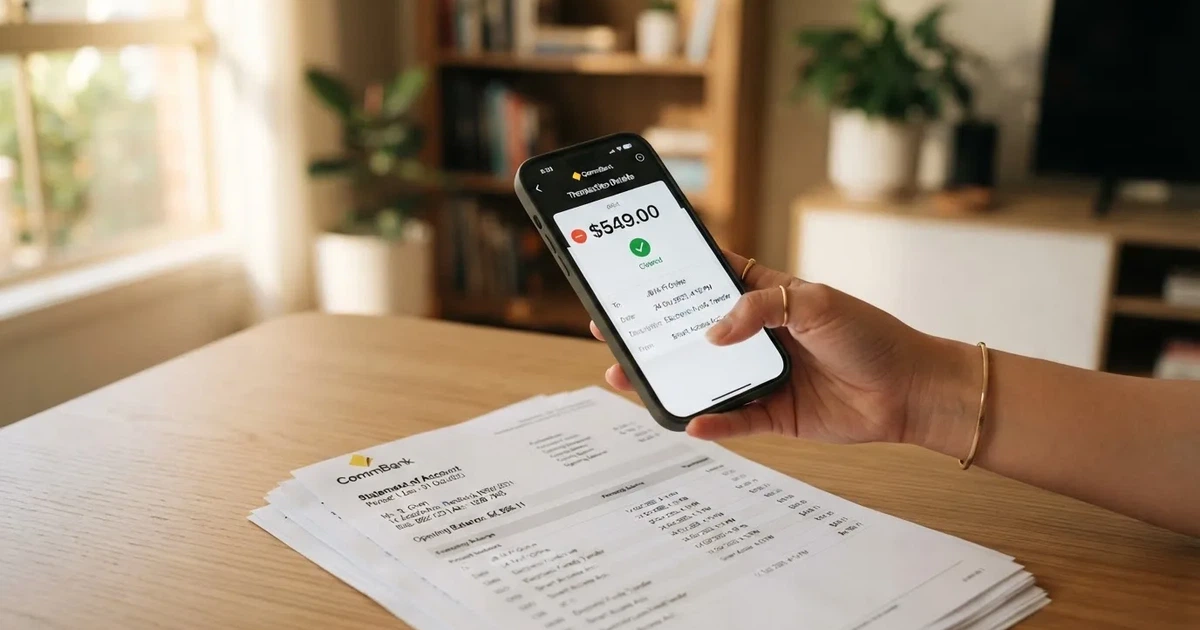
This page reads both halves. It explains how PayID and Osko move money in close to real time, what a casino’s “instant withdrawal” actually depends on behind the speed, and what an Australian player is being asked to do when a brand accepts PayID for casino games — services the IGA 2001 defines as prohibited interactive gambling services, and which no state or territory licence covers. The featured set below is not a recommendation. Each brand sits on the page because the ACMA itself issued a formal warning over it for offering prohibited services to Australians; that is the only thing that gets a brand onto this list, and it is the only thing the page reports about them.
Verified against the ACMA’s published warning register and the Australian Payments Plus PayID pages, current as of 3 November 2026.
Table of Contents
- Responsible play comes before the withdrawal screen
- How PayID and Osko actually settle
- Why a “real-money” PayID withdrawal is not just a PayID withdrawal
- Identity verification: the step that sets the realistic first-withdrawal clock
- What an Australian bank does to a gambling PayID on its own
- The legal frame around the rail
- What the ACMA has actually done, in numbers
- The featured operators: what the ACMA has named
- What the speed of a PayID transfer cannot do
- Choosing a path that fits the reader
- The arithmetic the ACMA’s record actually supports
- What a player deciding on this subject should take from the page
- Frequently asked questions
Responsible play comes before the withdrawal screen
A PayID transfer in under a minute is fast, and that is exactly why the question of what the player is transferring matters. The National Gambling Helpline — 1800 858 858, free, twenty-four hours a day — takes calls from anyone affected by their own or someone else’s gambling. Chat support runs through Gambling Help Online, the same network. Both exist whether the casino in question is licensed in Australia or not, and both are paid for regardless of whether the brand accepts responsibility for the account. Calling them is free, confidential and not contingent on having a complaint to file.

BetStop, the National Self-Exclusion Register, has been live since August 2023. Its reach is narrower than its name suggests. It binds Australian-licensed online and phone wagering services — that is, the racing and sports operators regulated through the Northern Territory and the Australian Capital Territory. An offshore casino is not part of the scheme. A player who has registered with BetStop and then opens an account with a brand from this page has self-excluded from a population of operators that does not include the one they joined. The exclusion protects them in the licensed channel; the offshore brand has no obligation to honour it, no technical connection that would let it, and no Australian complaints body to take the matter to if it doesn’t.
The same budget discipline that fits a deposit fits a withdrawal. Chasing a no-deposit bonus round until it converts to a balance worth pulling out, then reloading to chase the next one, is a known pattern that the helpline hears from. The arithmetic of expected loss holds whether the deposit is ten dollars or a thousand. The section on the speed of a PayID settlement does not change that — a minute-fast rail moves losses the same direction it moves wins.
How PayID and Osko actually settle
PayID is a way of addressing a bank account that already exists. Instead of a BSB-and-account-number combination, the sender uses a PayID — a mobile number, an email address, an ABN, or an Organisation Identifier — and the network looks up the underlying account. Paying to a PayID, the sender is shown the name attached to that PayID before the transfer is sent. That display is the fraud-protection layer AP+ builds into every transaction, and it is the same display that surfaces the warning AP+ has published: being asked to transfer money to a PayID on an illegal gambling site almost certainly means a scam site. AP+ calls the underlying pattern “scambling” — slang for illegal online gambling platforms advertised on social media and messaging apps that trick people into gambling on a scam website — and tells anyone who thinks they have been scambled to contact their financial institution.

PayID itself is offered by more than 100 Australian financial institutions and is built into their online banking. By April 2025, more than 25 million PayIDs had been registered in Australia. The rail that carries the payment, Osko, is operated by Australian Payments Plus and delivers a near-real-time settlement between participating banks, twenty-four hours a day, seven days a week. The Reserve Bank of Australia oversees the New Payments Platform that PayID runs on, and operates the Fast Settlement Service that closes each transaction individually in close to real time. None of that is in dispute.
PayID will never contact a customer directly. Emails or text messages claiming to be from PayID are a scam, and PayID never asks anyone to send money in order to receive money, nor to “upgrade” an account. These three lines are AP+’s published anti-scam guidance, and they matter here because the same rail is being marketed to Australian residents by brands the ACMA has named as operating prohibited services.
What follows from the rail: a transfer from a casino’s nominated payout account to an Australian bank account, addressed by PayID, can land in seconds. The transfer itself does not need to wait for batched end-of-day processing. What it cannot do is move faster than the casino’s own release step — the verification, the bonus-conversion check, the anti-fraud review — and that step is where the realistic wait lives. The architecture of PayID is fast; the architecture of an offshore casino’s withdrawal queue is its own.
Why a “real-money” PayID withdrawal is not just a PayID withdrawal
A bonus balance and a real-money balance are not the same ledger row. A no-deposit bonus is a credit the casino extends without a deposit; before it can be paid out, the player has to convert it by meeting whatever turnover requirement the bonus terms set, sometimes within a time window, sometimes against a maximum-cashout cap. Real money, by contrast, is what the player deposited themselves and what winnings earned from that real-money stake — once the casino’s own release step has cleared it — can be paid out. A PayID transfer at the end of either path looks the same on the bank statement: a deposit, in Australian dollars, in seconds. The path to that statement is not.
An offshore casino that has issued a formal warning over prohibited interactive gambling services may still process both paths through PayID. What it cannot do, under Australian law, is lawfully provide the game that produced the winnings. A fast payout does not retroactively license the activity it pays out — the IGA 2001 targets the provider, not the transaction, and the speed of the settlement is unrelated to whether the service offering it is permitted. The credit-card ban that took effect on 11 June 2024 is the closest analogue: it doesn’t matter how fast the deposit method is, the question is whether the casino may lawfully offer what it is selling.
For an Australian resident, the practical consequences of that gap fall in two places. The first is recourse. If the offshore brand refuses a withdrawal, or pays out a partial amount because of a max-cashout clause that was in the terms the player accepted, there is no Australian complaints body to escalate to, no regulator with jurisdiction over the operator, and no BetStop exclusion that would have stopped it. The second is the timing of an ACMA block. The ACMA can direct Australian ISPs to block an illegal service, and a blocked domain can take a balance with it. A withdrawal queued at the moment the block takes effect is not a withdrawal the player receives.
Identity verification: the step that sets the realistic first-withdrawal clock
A first PayID withdrawal usually requires the casino to complete identity verification once, before settlement is released on the first cash-out. The documents most often requested are a government photo ID, proof of address dated within the last three months, and a proof of payment method showing that the bank account the player is naming accepts PayID. The verification step is what the offshore operator uses to satisfy its own anti-money-laundering obligations, and it is the step that does not compress into the Osko minute. A first withdrawal that the casino flags for enhanced due diligence — a source-of-funds request, a proof-of-income upload — can sit in review for days while PayID itself waits.
Once verification has cleared, subsequent PayID withdrawals on the same account typically settle within minutes on the rail, subject to whatever internal pending period the operator applies. A pending period — the gap between the player requesting a withdrawal and the casino releasing the funds — is operator policy, not a PayID feature. Brands that publish a zero pending period, or a “near-instant” framing, are reporting their own queue length, not the network’s. PayID’s contribution to a one-minute settlement is real and verifiable. The casino’s contribution to a one-minute settlement is a separate, and usually slower, claim.
A real-money PayID withdrawal can take longer than an earlier bonus-funded one for reasons that have nothing to do with PayID. The bonus-funded cash-out may have been pre-approved as part of the bonus-conversion flow, with the documents reviewed before the bonus was even granted. The first real-money withdrawal, by contrast, may trigger a fresh review on a deposit that has been in the account for hours. The same rail, different queue positions.
What an Australian bank does to a gambling PayID on its own
Australian banks apply gambling transaction blocks at card level, and several of those blocks extend to digital wallets such as Apple Pay on the same card. Westpac’s gambling block refuses authorisation of transactions registered under the merchant category code for Betting/Casino Gambling on eligible personal credit and debit cards. ANZ’s gambling transaction block, activated in the ANZ app, blocks gambling transactions made through Apple Pay on an eligible card, not only the physical card; removing it once turned on requires a 48-hour waiting period. ANZ warns that not all gambling transactions will be blocked and that some non-gambling transactions might be blocked in error. The scope is the card. A direct bank transfer addressed by PayID sits outside that scope — the bank sees a transfer to a name and a PayID, not a card-network merchant code, and it does not automatically block on the basis of the recipient alone.
By the end of 2025, Apple Pay, Google Pay and Samsung Pay transactions collectively accounted for around 45% of all card payments in Australia by number. Apple does not charge fees to consumers for using Apple Pay, and any surcharge on a transaction comes from the merchant’s card-processing fees, not from Apple. Transaction limits and PIN requirements for Apple Pay purchases are set by the card issuer or merchant, not by Apple itself. None of that puts Apple Pay inside the scope of the IGA’s credit-card prohibition, because the prohibition is on credit — not on a debit-funded wallet transaction — but it does constrain how a wallet-linked card can be used for wagering on licensed Australian services. A PayID withdrawal is a bank transfer, not a card transaction, and so the bank’s gambling-block at card level is not the lever that catches it.
The legal frame around the rail
The Interactive Gambling Act 2001, as amended by the Interactive Gambling Amendment Act 2017, makes it an offence to provide online casino games, online pokies or in-play betting to a person in Australia. No state or territory licence covers those services. What is licensable is wagering on races and sport placed before the event, lotteries and keno. The Northern Territory Racing and Wagering Commission regulates 52 of Australia’s online bookmakers — including Sportsbet, Bet365 and Ladbrokes — which are licensed in the Territory for tax reasons; the commission has no full-time staff and meets once a month in Darwin. The licensed wagering channel is real, narrow and not the subject of this page.
Enforcement runs through the ACMA. The authority investigates complaints, issues formal warnings, and directs Australian internet service providers to block illegal services. The individual player is not prosecuted — the IGA targets the provider — but an offshore site gives no Australian consumer protection, no complaints body, and no recourse if a withdrawal is refused, and it can be blocked with a balance still on it. H2 Gambling Capital’s 2025 estimate puts annual losses to illegal gambling sites at around A$3.9 billion, with the share of gambling going through legal channels falling from 74% in 2021 to 64%.
The credit-card ban that took effect on 11 June 2024 makes it an offence for an Australian-licensed wagering service to accept credit cards or other credit-related products, with penalties up to A$247,500 for operators. Legal deposit routes for licensed wagering are debit card, bank transfer, PayID and Osko, and BPAY. A site asking an Australian resident for a credit card or a crypto deposit is operating outside the Australian rules on payment. PayID is the legitimate rail for the licensed wagering channel; it is also the rail an offshore casino will quote when it markets to an Australian resident.
On 19 August 2026, the Interactive Gambling Amendment (Gambling Reform) Bill 2026 passed Parliament. Its advertising and inducement measures commence on 1 January 2027 — law with a start date, not yet in force on a 2026 page. The current legal frame remains the IGA 2001 as amended by the 2017 amendments and the credit-card ban of 2024. The reform package is a forward-looking fact, not the operating rule today.
What the ACMA has actually done, in numbers
As of June 2026, the ACMA reports a cumulative 1,751 illegal gambling and affiliate marketing websites blocked since the first blocking request in November 2019. That is the total the authority has directed Australian ISPs to remove from reach. The first round ran from November 2019 onward; the figure seven years later is 1,751. Over the same period, more than 230 unlicensed gambling services have left the Australian market since enforcement was strengthened in 2017. The blocking rate — sites removed per year since the first blocking request — works out to roughly 265 per year across that span. The figure is a band, not a constant: the early years carried fewer blocks as the legal infrastructure caught up, the recent years carry more. The conditional rate the page can quote with confidence is the one bounded by the published totals and the published start date.
In a single round reported on 26 June 2026 the ACMA asked Australian ISPs to block 12 more illegal gambling websites: 7Signs, ChromaBet, Donbet, Duospin, Freshbet, Slots Gem, Jacks Club, Lucky Start, Pointsbetz.com, Spinrise, Vinyl Casino and Wildsino. Each round is one wave in the enforcement record; the names are not a ranking, and they do not rank above or below each other on any measure the ACMA publishes. A formal warning is a separate lever, issued by name against an operator rather than a single domain. The blocking figures and the warning figures are different counts, and the ACMA reports them separately.
The featured set on this page is the brands over which the ACMA has issued formal warnings. The publication of a formal warning is the ACMA’s notice that an operator has provided prohibited interactive gambling services to Australians. It is the public record the ACMA itself maintains, and it is the only criterion by which a brand has been included here.
The featured operators: what the ACMA has named
| Brand | ACMA action and date | Operator named by the ACMA | Subject support |
|---|---|---|---|
| RocketPlay | Formal warning, March 2026; earlier warning to a previous operator, May 2022 | Pulsup Ltd; Dama N.V. | — |
| Level Up Casino | Formal warning, May 2022 | Dama N.V. | Westpac listings |
| Woo Casino | Formal warning, March 2025 | Dama N.V. | — |
| Spirit Casino | Formal warning, May 2025 | Dama N.V. | — |
| National Casino | Formal warning, July 2025 | Consolutetish S.R.L. | AUSTRAC listings; Wikipedia |
| Bizzo Casino | Formal warning, July 2025; earlier warning to a previous operator, 2022 | Consolutetish S.R.L.; TechSolutions | — |
| Ignition Casino | Formal warning, July 2025 | Bamboo Media | — |
| Instant Casino | Formal warning, February 2025 | EOD Code SRL | ecoPayz listings; PayID listings |
| Jackbit | Formal warning, April 2026 | Ryker B.V. | — |
| Casino Intense | Formal warning, April 2025 | Sterplay Holding Ltd | AUSTRAC listings; ITnews listings; NAB listings |
| Sky Crown | Formal warning, September 2022 | Hollycorn N.V. | — |
Each row above is built from the ACMA’s published warning register. The ACMA action and date column states the formal-warning date as the authority has it on file, and the operator named by the ACMA column states the legal entity the authority addressed. A second entry in either column, where one exists, marks an earlier warning to a different operator over the same brand — the ACMA publishes those as separate events when a brand has changed hands. The Subject support column is sourced from public listings that name the brand in a non-ACMA context; an em dash marks rows where no such listing is in the source set. Online casino games cannot be licensed anywhere in Australia, whatever licence the site displays. The table is the ACMA’s record, not a ranking, and not a route for finding a place to play.
RocketPlay
Rocketplay.com.au was the subject of a formal warning issued to Pulsup Ltd in March 2026, on the ACMA’s published register. A separate warning, issued to Dama N.V. in May 2022, covered a longer list of brands including Rocketplay at that time. The brand has therefore appeared on the ACMA’s record across two operators and two dates; the current operator of record, per the March 2026 warning, is Pulsup Ltd. The brand is included here on that record, not on any measure of payout speed, payment-method support, or game library — none of those are in scope, and none are verified from the source set. The honest one-line reading is: the ACMA has formally warned the current operator over prohibited interactive gambling services, and the brand has not been verified against any PayID-payout support figure.
Level Up Casino
The ACMA issued a formal warning to Dama N.V. in May 2022, covering a batch of six brands: Bambet, Dazard, Level Up, Rocketplay, Wild Tornado and Cobra Casinos. The May 2022 batch is the ACMA’s own grouping, and it is the source for the inclusion of Level Up on this page. Subject support listings carry the brand under Westpac’s published guidance — meaning the brand surfaces in a Westpac-facing document that names it, not that Westpac endorses it. The page’s subject is real-money PayID withdrawal; Westpac’s listing does not bear on that, and the brand carries the em-dash marker on PayID-payout support because no such figure is in the source set.
Woo Casino
The ACMA issued a formal warning to Dama N.V. over Woo Casino in March 2025. The warning is a separate event from the May 2022 batch — Dama N.V. was warned again, over a different brand, more than two years later. The ACMA’s own publication makes clear that a brand returning to a previously-warned operator is treated as a fresh formal-warning event, not a continuation. The brand is included on the March 2025 record; no Subject support figure is in the source set, and the row carries the em-dash marker.
Spirit Casino
The ACMA issued a further formal warning to Dama N.V. over Spirit Casino in May 2025. The pattern repeats: same operator, separate brand, separate warning. Spirit Casino was not part of the May 2022 batch, and the May 2025 action is the only ACMA record for the brand.
National Casino
The ACMA issued a formal warning to Consolutetish S.R.L. in July 2025, covering National Casino and Bizzo Casino in the same action. National Casino had not previously appeared on the ACMA’s published warning register at the time of the July 2025 warning, to the best of what the source set confirms. Subject support carries AUSTRAC listings and a Wikipedia reference — public documents that name the brand without endorsing it. The Subject support column is the listings-only marker from the source set; it is not the page’s own finding on whether the brand supports PayID for payouts.
Bizzo Casino
The July 2025 formal warning to Consolutetish S.R.L. covered Bizzo Casino in the same action as National Casino. Bizzo Casino had already been the subject of a 2022 formal warning to TechSolutions (CY) Group Limited and TechSolutions Group N.V. — a different operator, an earlier date. The brand has therefore appeared on the ACMA’s record across two operators and two dates; the current operator of record, per the July 2025 warning, is Consolutetish S.R.L. The em-dash marker on Subject support reflects the absence of a source-set figure; this row is the ACMA’s record, not a measure of payout performance.
Ignition Casino
The ACMA issued a formal warning to Bamboo Media over Ignition Casino in July 2025. The July 2025 warning is the only ACMA record the source set carries for the brand. No Subject support figure is in the source set, and the row carries the em-dash marker. Ignition Casino is included on the ACMA’s published register; it is not included on any measure of game library, payment-method coverage, or payout speed.
Instant Casino
The ACMA issued a formal warning to EOD Code SRL over Instant Casino in February 2025. Subject support carries listings references on ecoPayz and PayID — the brand surfaces in those public documents without the page taking a position on the PayID-payout support those listings report. The Subject support column is a listings-only marker, and the source listings are named in the article language as the source set carries them. A formal warning is the ACMA’s record; the listings references are independent of that record.
Jackbit
The ACMA issued a formal warning to Ryker B.V. over Jackbit and CasinOK in April 2026, in the same action. Jackbit had not previously appeared on the ACMA’s published warning register, and the April 2026 action is the first record for the brand in the source set. The brand sits on this page because the ACMA named it, not because any other measure put it here.
Casino Intense
The ACMA issued a formal warning to Sterplay Holding Ltd over Casino Intense in April 2025. Subject support carries listings references on AUSTRAC, ITnews, and NAB — three independent listings that name the brand. The listings-only marker is used because the source set carries the listings, not a verified PayID-payout support figure from the casino itself. The brand is included on the ACMA’s published register; it is not a recommendation on any measure.
Sky Crown
The ACMA issued a formal warning to Hollycorn N.V. over Sky Crown and Blue Leo casino services, with the warning publication dated September 2022. The September 2022 warning is the ACMA’s published record for both brands in that action. Sky Crown is on the page because the ACMA named it; it is not on the page because any other measure put it here.
What the speed of a PayID transfer cannot do
PayID’s contribution to a withdrawal is the rail and the speed. A PayID transfer, between participating Australian banks through Osko, arrives in under a minute, twenty-four hours a day. That part is verifiable, AP+-published, and the same regardless of who is sending it. An Australian resident transferring a thousand dollars from a casino’s payout account to their own bank account will see the deposit land in seconds, when the casino releases it.
What PayID cannot do is compress the casino’s own queue. The casino’s release step — the verification, the bonus-conversion check, the anti-fraud review — is operator policy. A brand that publishes a zero pending period is reporting its own queue length, not the rail’s. A first withdrawal that the casino flags for enhanced due diligence, including a source-of-funds request or a proof-of-income upload, can sit in review for days while the rail itself waits. The honest reading of “instant PayID withdrawal real money Australia” is that PayID delivers the transfer in a minute, and the casino decides whether the transfer is allowed to leave in a minute.
The legal frame also bounds the speed claim. A PayID transfer to an Australian bank account, from an operator offering prohibited interactive gambling services, is a fast transfer of funds out of a service the IGA 2001 was written to keep out. The speed of the transfer does not retroactively license the service. The credit-card ban of 11 June 2024 is the closest analogue: it doesn’t matter how fast the deposit method is; the question is whether the service is permitted.
Choosing a path that fits the reader
A reader with a wagering account at a licensed Australian operator — a sportsbook or a racing book — has a PayID withdrawal path that fits the page’s framing: a debit-funded bank transfer, addressed by PayID, settled in under a minute by Osko, on a rail the bank recognises. That path is licensed under the IGA 2001 as amended, regulated through the Northern Territory or the Australian Capital Territory, and connected to BetStop for self-exclusion. The withdrawal speed on that path is bounded by the operator’s pending period, not by PayID; once the operator releases, PayID delivers.
A reader with an account at a brand on this page has a PayID withdrawal path that is fast, but is also a path off a service the ACMA has formally warned is operating prohibited interactive gambling services. The transfer itself will land in seconds. The recourse if the operator refuses the withdrawal, or pays out a partial amount because of a max-cashout clause, is an offshore complaints body, if any. The protection if the ACMA directs Australian ISPs to block the brand at the moment a withdrawal is queued is none at all. The same PayID rail, the same Osko minute, and a different legal frame around the source of the funds.
The choice is not between PayID and not-PayID. It is between a licensed channel in which PayID is one of four permitted payment methods, and an offshore channel in which PayID is the rail the brand chose to quote. Both settle in a minute. The legal frame around each is what the page is about.
The arithmetic the ACMA’s record actually supports
The blocking rate the page can state with confidence is bounded by the published total — 1,751 illegal gambling and affiliate marketing websites blocked since the first blocking request in November 2019 — and the published date — June 2026, in the most recent reporting. The span between November 2019 and June 2026 is roughly six and a half years, or about 79 months. Dividing 1,751 by 79 gives a rate of around 22 sites blocked per month, or 265 per year, across the full span. The figure is a band, not a constant: the early years carried fewer blocks as the legal infrastructure caught up, and the recent years have carried more. The conditional statement the page can quote is the one bounded by the published totals and the published start date, without claiming a precise monthly cadence that the source set does not.
The same logic applies to the warning register. The ACMA does not publish a per-month formal-warning rate; it publishes a register of warnings with dates and operators. The eleven brands on this page are the union of the warnings on that register that the source set confirms, and the page does not extrapolate beyond the published record.
What a player deciding on this subject should take from the page
The PayID rail is real, fast, and built into the online banking of more than 100 Australian financial institutions. The Osko settlement is real, near-real-time, and twenty-four hours a day. The credit-card ban that took effect on 11 June 2024 is law, with penalties up to A$247,500 for operators who breach it. The Interactive Gambling Act 2001 prohibits the provision of online casino games, online pokies and in-play betting to Australian residents, and the ACMA has directed Australian ISPs to block 1,751 illegal gambling and affiliate marketing websites since November 2019.
The brands on this page are on it because the ACMA has issued formal warnings over them, not because they were measured against any other criterion. The Subject support column is built from public listings that name the brand; an em dash marks rows where no such listing is in the source set. The speed of a PayID transfer is not in dispute; the legal frame around the source of the funds is the frame the IGA 2001 set, and the ACMA keeps enforcing.
A reader with a licensed Australian wagering account has a PayID withdrawal path that fits the law, the rail and the protection. A reader with an account at a brand on this page has a PayID withdrawal path that is fast, and that the ACMA has formally warned the operator of is operating prohibited services. The minute is the same. The frame around it is not.
Frequently asked questions
Is it legal for an online casino to pay out real money through PayID to a player in Australia?
No, not for the casino-games and online-pokies services the ACMA has named. The Interactive Gambling Act 2001 prohibits the provision of those services to Australian residents, and PayID is a payment rail, not a licence. A licensed Australian wagering operator can accept PayID for racing, sport, lotteries and keno.
What is the difference between withdrawing bonus credit and withdrawing real money through PayID?
A bonus balance sits on a separate ledger row and usually has to meet a turnover requirement — sometimes with a maximum-cashout cap — before it converts to a withdrawable balance. Real money is what the player deposited themselves, plus winnings from real-money stakes, and can be paid out once the casino’s own release step has cleared it. Both paths use the same PayID rail and the same Osko minute; the difference is in the casino’s queue, not the network.
Does a no-deposit bonus balance need to be converted before a real-money PayID withdrawal is possible?
Often, yes. A no-deposit bonus is a credit the casino extends without a deposit, and the terms usually require the player to meet a turnover requirement before the bonus balance becomes withdrawable, sometimes within a time window and sometimes against a cap. The terms the operator publishes are the binding source for what conversion looks like; PayID is the rail that delivers the converted balance, not the step that converts it.
What identity documents are usually required before a first real-money PayID withdrawal?
A government photo ID, a proof of address dated within the last three months, and a proof of payment method showing that the bank account the player is naming accepts PayID. The casino uses the verification step to satisfy its own anti-money-laundering obligations, and the step is what sets the realistic first-withdrawal clock, not the PayID rail.
Is there a minimum real-money balance needed before a PayID withdrawal can be requested?
Most operators set a minimum withdrawal threshold, and that threshold is set by the operator’s terms, not by PayID. The threshold is usually small, but it varies by brand and by payment method, and the page does not have a verified figure for any brand in the featured set. The PayID rail itself has no minimum on the receiving end.
Why might a real-money PayID withdrawal take longer than an earlier bonus-funded one?
The casino’s release step is the difference. A bonus-funded cash-out may have been pre-approved as part of the bonus-conversion flow, with the documents reviewed before the bonus was even granted. The first real-money withdrawal, by contrast, may trigger a fresh review on a deposit that has been in the account for hours. PayID’s minute is the same in both cases; the casino’s queue position is not.