
How Trustly works at Australian-facing casino sites, and where the law still bites
Trustly is the headline on a lot of offshore casino deposit pages aimed at Australian players. The rail itself is unremarkable: a bank-to-bank transfer that skips the card network, settles in seconds once the casino’s own checks finish, and shows up in a player’s account as a normal debit. What is not unremarkable is the legal frame around it. Under the Interactive Gambling Act 2001, no online casino may lawfully take Australian players at all. A Trustly-friendly cashier does not change that, and a Curaçao or Anjouan licence badge at the footer does not change it either. This page is built around that gap — between what the cashier accepts and what the law permits — and treats it as the centre of the decision rather than a footnote.
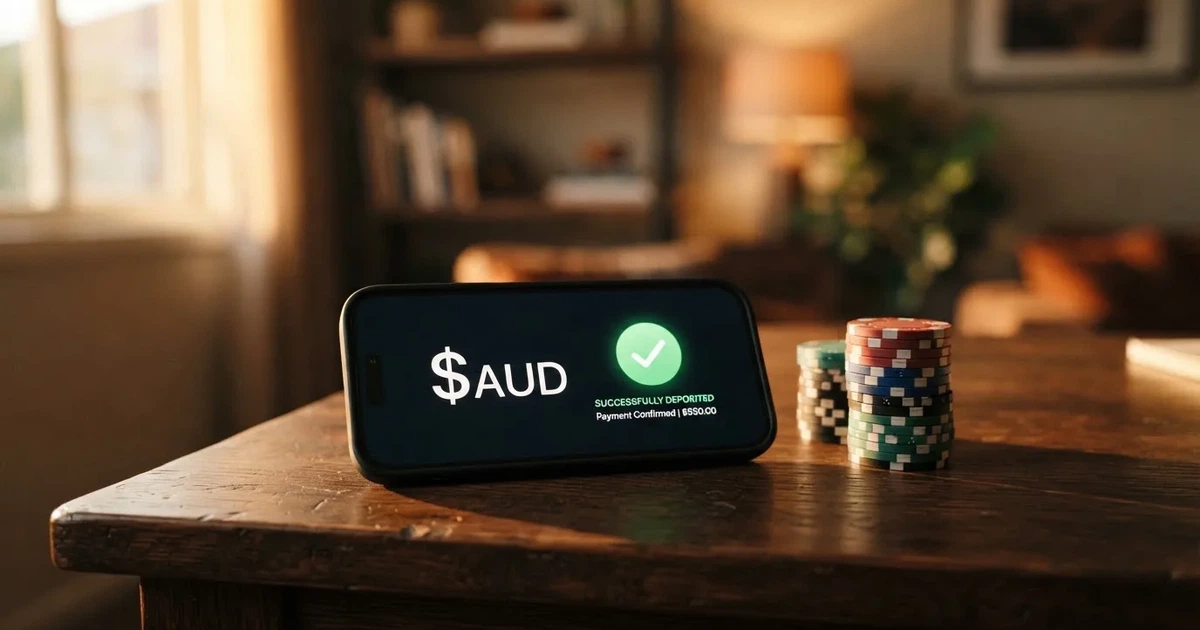
Data current as of 31 October 2026, verified against the ACMA’s published formal-warning register and the Interactive Gambling Act 2001 as it stands in 2026.
Table of Contents
- Responsible gambling: the offshore Trustly casino falls outside the Australian safety net
- Payments and payout speed: what the Trustly rail actually does, and what the casino’s own queue still does
- The ACMA record: what has been warned, what has been blocked, and what the cumulative total looks like
- Landscape of ACMA actions and brands
- Overview: the offshore Trustly-accepting casino in plain terms
- The ranked review: eleven offshore casino sites the ACMA has acted against
- The arithmetic the page owes the reader
- Trustly specifically at the offshore casino: the difference between “accepts” and “supports”
- Where this leaves the player weighing a Trustly deposit at an offshore casino
- Frequently asked questions
Responsible gambling: the offshore Trustly casino falls outside the Australian safety net
Anyone weighing a Trustly deposit at an offshore pokies-style site should read the ACMA’s own public warnings before trusting any safety claim on the site itself. The reason is structural, not a complaint about any one brand. Australia’s National Self-Exclusion Register, BetStop, binds Australian-licensed online and phone wagering services only — every operator featured further down this page sits outside that frame. The offshore casino is not connected to BetStop, has no Australian complaints body, and gives the player no Australian recourse if a withdrawal stalls or gets refused. If the regulator blocks the domain mid-session, the balance can sit behind it.
BetStop has been live since August 2023 and applies to wagering, lotteries and keno provided under an Australian licence. An offshore casino is none of those, in the regulator’s own terms. The National Gambling Helpline — 1800 858 858 — is free, 24/7, and reachable by chat through Gambling Help Online. Both run whether or not a Trustly deposit has gone through.
The wider cost of the illegal market sits in plain numbers. H2 Gambling Capital’s 2025 report estimates Australians lose about A$3.9 billion a year to illegal gambling sites, and the share of gambling going through legal channels fell from 74% in 2021 to 64%. The Trustly option on an offshore cashier does not move that figure one way or the other — it changes how the payment leaves the bank account, not where it lands.
Payments and payout speed: what the Trustly rail actually does, and what the casino’s own queue still does
A Trustly deposit is a bank-to-bank transfer that the player’s bank confirms inside Trustly’s flow. Trustly’s own gaming marketing is addressed to the US market under “Pay by Bank for Gaming”; in Australia the local equivalent is PayID and Osko, the instant transfer services on the New Payments Platform, available at over 100 Australian institutions. The mechanics overlap. The differences are regulatory, and they matter more than the rail.
For deposits, the Trustly flow at a listed offshore casino looks like this in practice: the player picks Trustly at the cashier, picks their bank, logs in through Trustly’s hosted page, approves the transfer, and the funds move from the player’s bank account to the casino’s merchant account. There is no card number, no chargeback right, and no surcharging in the typical Trustly setup — the merchant pays Trustly a fee rather than passing one to the player. Apple Pay and Google Pay have different rails again: Apple does not charge consumers for using Apple Pay, and any surcharge comes from the merchant’s card-processing fees, not from Apple itself. The Reserve Bank’s July 2025 review proposes removing surcharges on eftpos, Mastercard and Visa card transactions and explicitly leaves American Express outside that scope.
For withdrawals, Trustly is where the marketing claim and the player’s experience diverge most. Trustly can move the money between banks fast — within minutes, in the PayID/Osko case, and within seconds inside Trustly’s own EU network. What Trustly cannot do is move it before the casino’s own internal checks complete. A Trustly withdrawal request still needs the casino’s KYC, fraud and anti-money-laundering checks, which is where most of the elapsed time on a withdrawal lives. A payout advertised as “instant via Trustly” means instant on the bank leg once the casino releases it, not instant from the player’s click.
A few local rails, in passing, because a Trustly-friendly cashier often lists them alongside:
- PayID and Osko settle in under a minute, 24/7 including weekends, whether addressed to a BSB and account number or to a PayID. Paying to a PayID shows the account-holder’s name before the transfer is sent; AP+ warns that being asked to transfer money to a PayID on an illegal gambling site is almost certainly a scam site.
- Apple Pay, Google Pay and Samsung Pay together accounted for around 45% of all card payments in Australia by number by the end of 2025. ANZ’s gambling transaction block, activated in the app, blocks gambling transactions through a digital wallet such as Apple Pay on an eligible card, not only the physical card. Once turned on, removing ANZ’s block requires a 48-hour waiting period, and the bank warns that not all gambling transactions will be blocked and some non-gambling transactions might be blocked in error.
- Westpac’s gambling block works at card level: it refuses authorisation of transactions registered under the merchant category code ‘Betting/Casino Gambling’ on eligible personal credit and debit cards. A Trustly transfer is not a card transaction and is not caught by that MCC block — it goes through a different authorisation path.
- The Interactive Gambling Act 2001 as amended in 2023 bans Australian-licensed online wagering services from accepting credit cards or other credit-related products, a restriction that also constrains gambling use of linked digital wallets.
The Australian bank-to-bank landscape sits on the New Payments Platform, which went live on 13 February 2018 and is owned by New Payments Platform Australia Ltd, a non-profit whose 13 shareholders include the Reserve Bank of Australia and the country’s major banks. By April 2025 more than 25 million PayID identifiers had been registered on it. Participants must keep the platform’s monthly outages to no more than two minutes. In 2021 the ACCC authorised merging NPP Australia with BPAY and eftpos into Australian Payments Plus. That is the rail a Trustly deposit lives on, even when the cashier lists it under a different name.
A word on Trustly itself, because it sits behind the cashier tile: founded in 2008 in Stockholm under the name Glue Finance, by Carl Wilson, Joel Jakobsson and Lukas Gratte. Trustly holds licences as a payment institution authorised by Sweden’s Financial Supervisory Authority for the EU/EEA and by the UK Financial Conduct Authority. The company says its network supports 12,000 banks and connects with 650 million consumers globally, serving more than 9,000 companies including PayPal, DraftKings and eBay. Trustly reported 2023 revenue of $265 million on $58 billion of transaction volume processed, with about 1,000 employees. Nordic Capital acquired a 70% stake for about $800 million in 2018; Trustly’s planned Nasdaq Stockholm listing in 2021 valued the company at around $11 billion.
That scale is why the brand shows up on so many cashier pages. It is also why a Trustly logo on a footer is a sign of a payments integration rather than a sign of an Australian licence.
The ACMA record: what has been warned, what has been blocked, and what the cumulative total looks like
The Australian Communications and Media Authority does two things relevant to this page. It issues formal warnings to operators providing prohibited services to Australians. It also asks Australian internet service providers to block illegal gambling and affiliate websites. Both lists are public.
As of June 2026 the ACMA reports a total of 1,751 illegal gambling and affiliate marketing websites blocked since the first blocking request in November 2019. More than 230 unlicensed gambling services have left the Australian market since enforcement was strengthened in 2017. A blocking request is a request from the regulator to ISPs to deny DNS resolution and direct connection to the named domains — the casino site itself does not need to consent. A formal warning is what usually precedes a blocking request, and the ACMA publishes the operator name, the brand and the date for each one.
The arithmetic on the page is the blocking rate. The first blocking request sits in November 2019; the cumulative total sits at 1,751 in June 2026. That is roughly 81 months between the two data points, an average of about 21.6 sites blocked per month across the full period, or about 262 per year — and the rate is not constant. The ACMA’s blocking rounds run in clusters, with quieter months between them. What the figure says is not the cadence of any single month but the cumulative effect of a regulator that has been narrowing the list for almost seven years.
In the round reported on 26 June 2026 the ACMA asked Australian ISPs to block 12 more illegal gambling websites: 7Signs, ChromaBet, Donbet, Duospin, Freshbet, Slots Gem, Jacks Club, Lucky Start, Pointsbetz, Spinrise, Vinyl Casino and Wildsino. Most of these are pokies-style offshore casinos operating in the same Trustly-friendly space as the rest of this list.
The formal-warning register, by year:
- 2022: Dama N.V. over six brands including Bambet, Dazard, Level Up, Rocketplay, Wild Tornado and Cobra Casinos (May 2022). Hollycorn N.V. over Sky Crown and Blue Leo (September 2022). TechSolutions (CY) Group Limited and TechSolutions Group N.V. over Bizzo Casino.
- 2025: EOD Code SRL over Instant Casino (February 2025). Sterplay Holding Ltd over Casino Intense (April 2025). Dama N.V. over Woo Casino (March 2025) and Spirit Casino (May 2025). Bamboo Media over Ignition Casino (July 2025). Consolutetish S.R.L. over National Casino and Bizzo Casino (July 2025) — Bizzo Casino’s second formal warning.
- 2026: Ryker B.V. over Jackbit and CasinOK (April 2026). Pulsup Ltd over RocketPlay (March 2026).
The pattern is not that any one payment rail — Trustly included — changes the regulator’s view of an operator. The pattern is that the same operators reappear, under new corporate shells and new domain names, and the ACMA tracks each one as it surfaces.
What the licensed Australian side actually looks like
The contrast is worth stating. The Northern Territory Racing and Wagering Commission regulates 52 of Australia’s online bookmakers — Sportsbet, Bet365 and Ladbrokes among them — licensed in the Territory for tax reasons. The commission has no full-time staff and meets once a month in Darwin. That thinness is a structural feature of the Australian system: licensed wagering on races and sport is real, licensed online casino play is not, and the regulator that handles the wagering licences is a part-time body. The reader who treats the offshore Trustly casino as a substitute for a licensed Australian product is reading past the licensed wagering option that does exist, even if they have no use for it personally.
Landscape of ACMA actions and brands
The following table summarizes the brands featured in this review and the ACMA actions against them:
| Brand | ACMA action and date | Operator named by the ACMA | Subject support |
|---|---|---|---|
| RocketPlay | March 2026; also May 2022 | Pulsup Ltd (2026); Dama N.V. (2022) | — |
| Level Up Casino | May 2022 | Dama N.V. | listings-only |
| Woo Casino | March 2025 | Dama N.V. | — |
| Spirit Casino | May 2025 | Dama N.V. | — |
| National Casino | July 2025 | Consolutetish S.R.L. | listings-only |
| Bizzo Casino | July 2025; also 2022 | Consolutetish S.R.L. (2025); TechSolutions (2022) | — |
| Ignition Casino | July 2025 | Bamboo Media | — |
| Instant Casino | February 2025 | EOD Code SRL | listings-only |
| Jackbit | April 2026 | Ryker B.V. | — |
| Casino Intense | April 2025 | Sterplay Holding Ltd | listings-only |
| Sky Crown | September 2022 | Hollycorn N.V. | — |
Overview: the offshore Trustly-accepting casino in plain terms
The Trustly-accepting offshore casino is a product aimed at a market the operator is not licensed to serve. The cashier shows Trustly, Visa, Mastercard, e-wallets and often crypto, and the support page will describe the operator as licensed in Curaçao or Anjouan. The wagering service sits on the IGA’s prohibited list under section 15 of the Act, regardless of the licence displayed. What the player gets for the Trustly deposit is a real-money gaming session on a domain the ACMA can request be blocked, with no Australian complaint channel and no Australian recourse on a stuck withdrawal.
The upside the marketing emphasises is speed. A Trustly deposit lands inside minutes. A Trustly withdrawal can be faster than a card withdrawal, once the casino has cleared its own checks. That is a fair comparison inside the offshore cashier rail. It is not a comparison against the licensed Australian product, because the licensed Australian product does not include online casino games at all. The reader is being shown a faster version of something they cannot lawfully buy, and the speed claim is honest inside that frame and silent outside it.
Three points worth holding:
- The casino is on the IGA’s prohibited list, not on the ACMA’s licence list. The licence on the footer is the casino’s own claim, not the regulator’s.
- A Trustly deposit does not move the casino onto the Australian safety net. BetStop, the Australian complaints bodies and the Australian recourse on a stuck withdrawal all still depend on the casino being licensed in Australia, which it is not.
- A bank-to-bank rail does not exempt the deposit from the ACMA’s blocking regime. The block targets the domain, not the rail, and the player’s bank has no view into whether the recipient is a Trustly merchant on the ACMA’s list.
That third point is worth a second look. Westpac’s gambling block works at the merchant category code level; Trustly is not a card transaction and is not caught by the MCC block. ANZ’s gambling block, activated in the app, blocks gambling through a digital wallet on an eligible card, but again the Trustly transfer is a bank-to-bank transfer outside the card network. A player who turns on a card-level gambling block in the belief that it covers their offshore Trustly casino play is making a category error. The bank’s tool does not know what Trustly is doing on the player’s behalf.
Trustly at the offshore casino, and Trustly at the licensed Australian bookmaker
The Trustly flow does not exist for licensed Australian online wagering in the way it exists offshore. The licensed Australian wagering product takes deposits via debit card, bank transfer, PayID/Osko and BPAY, and not via credit card or crypto. The reader looking for a Trustly rail inside an Australian-licensed product will not find it, because the licensed Australian product runs on PayID and Osko instead. The choice the cashier page offers is therefore not Trustly or not-Trustly — it is offshore-with-Trustly or licensed-Australian-without-Trustly, and the legal status of the casino is on a different axis from the payment rail.
The ranked review: eleven offshore casino sites the ACMA has acted against
The brands below are not a recommendation. Each one is on this page because the ACMA itself issued a formal warning over it for offering prohibited services to Australians, and the player searching for “casino sites that accept Trustly Australia” deserves to see the names the regulator has already named. No offer terms are listed; the only sources for those terms were affiliate marketing pages. The verdict at the end of each block is the page’s own judgement on what kind of player the brand still suits, given that none of them may lawfully serve an Australian resident.
1. RocketPlay
RocketPlay is the brand with the most recent ACMA action in this set: in March 2026 the regulator issued a formal warning to Pulsup Ltd over RocketPlay. The same brand had been the subject of an earlier warning to Dama N.V. in May 2022, the period in which the operator was running under a different corporate shell. Two warnings, four years apart, two operators behind them — that is the ACMA’s record on RocketPlay alone. The brand’s own product is a pokies-and-live-dealer casino with Trustly on the cashier.
Subject support is not in the data: the brand does not appear on the regulator’s listings or on a payments-industry index as a Trustly-accepting merchant. The player reading the cashier tile is reading a payment integration, not a regulator’s permission to operate. Verdict: the brand is on the ACMA’s most-recent-action list, and the reader who weights regulator recency heavily lands here first; the reader who weights prior clean record looks elsewhere and finds no clean record in this set.
2. Level Up Casino
Level Up is one of the six brands caught in the May 2022 Dama N.V. warning alongside Bambet, Dazard, Rocketplay, Wild Tornado and Cobra Casinos. The Dama N.V. action has been the ACMA’s broadest single warning against a Curaçao group, and Level Up is one of the brands it covered. The brand’s own product is a pokies-heavy casino with Trustly listed on the cashier. Verdict: the brand sits on the ACMA’s earliest-and-broadest action in this set; a player reading the May 2022 warning as evidence of an unresolved operator pattern finds Level Up inside that pattern, and no later data has cleared the brand from it.
3. Woo Casino
In March 2025 the ACMA formally warned Dama N.V. over Woo Casino — a separate action from the May 2022 warning, on a separate brand, under the same corporate group. That is two ACMA actions against Dama N.V. in this set: one in 2022 across six brands, one in 2025 over Woo alone. The pattern is the corporate shell, not the brand.
Subject support for Trustly at Woo Casino is not in the data. Verdict: a player who reads Dama N.V. as a single operator across multiple brand shells lands on the Woo Casino warning alongside every other Dama brand on this list. The brand itself is a Trustly-accepting pokies casino; the warning predates the most recent ACMA action in this set.
4. Spirit Casino
Spirit Casino is the second 2025 Dama N.V. warning, issued in May 2025. It sits two months after the Woo Casino warning and under the same corporate shell. The pattern is the one already noted: one operator, multiple brand surfaces, multiple formal warnings. Subject support is not in the data. Verdict: for the reader who wants to know what an ACMA warning costs the brand, Spirit Casino is the freshest Dama N.V. action in this set as of the 2026 ACMA register, and the answer is that it has not cost the brand its Trustly cashier tile.
5. National Casino
In July 2025 the ACMA issued a formal warning to Consolutetish S.R.L. over National Casino. The warning was one of two issued that month under the same corporate group — the other covered Bizzo Casino, the brand that already had a 2022 warning under TechSolutions (CY) Group Limited and TechSolutions Group N.V. Two operators, two warnings, two dates. National Casino’s own product is a pokies-and-table casino.
Subject support is listed in payment-industry sources only: austrac.gov.au and en.wikipedia.org include the brand. That is listings-only — the page reports what the listings report and does not treat that as the operator’s own fact about itself. Verdict: the brand is on the ACMA’s list under Consolutetish S.R.L., and the player who treats the corporate-shell tracking as the page’s actual news reads the warning as part of a Bizzo-Casino-shaped pattern across two operators.
6. Bizzo Casino
Bizzo Casino is the brand with the longest ACMA record in this set: a 2022 formal warning to TechSolutions (CY) Group Limited and TechSolutions Group N.V., and a July 2025 formal warning to Consolutetish S.R.L. — the second formal warning tied to Bizzo Casino since 2022. Two operators, two warnings, three years. The brand sits at the centre of the regulator’s most-repeated target in this set. Subject support is not in the data. Verdict: a player who weights regulator repetition as the primary signal reads Bizzo Casino as the strongest case for staying away. The brand is the same name on two corporate shells, and the ACMA has named it twice.
7. Ignition Casino
In July 2025 the ACMA issued a formal warning to Bamboo Media over Ignition Casino — one of the two July 2025 actions, the other covering Consolutetish S.R.L. over National Casino and Bizzo Casino. Bamboo Media is a separate corporate shell from Dama N.V. and from Consolutetish S.R.L., and Ignition Casino is its Australian-facing pokies brand. Subject support is not in the data. Verdict: the brand is a single-action entry on the ACMA list, and a player who weights single actions below repeated actions finds Ignition Casino less costly to read than the Bizzo Casino entry two names up.
8. Instant Casino
In February 2025 the ACMA issued a formal warning to EOD Code SRL over Instant Casino — the earliest of the 2025 warnings on this list and a single-action entry under one corporate shell.
Subject support is listings-only. Ecopayz and PayID both list Instant Casino as a casino operating with an Australian-facing PayID option, which is a payments-industry claim about a payments-industry fact. It is not the regulator’s permission to operate. Verdict: Instant Casino is the brand with the most explicit PayID coverage on the listings side and the earliest single-action warning of 2025. The player who reads PayID coverage as a relevance signal and single ACMA action as a manageable signal finds Instant Casino on the easier end of this list; the player who weights regulator repetition reads it as one more single warning to track.
9. Jackbit
In April 2026 the ACMA issued a formal warning to Ryker B.V. over Jackbit and CasinOK. The action covers two brands under the same corporate shell on the same date, which is a different pattern from the Dama N.V. multi-brand pattern across multiple years. Subject support is not in the data. Verdict: Jackbit is a two-for-one warning under one corporate shell, and the player who reads “one operator, two brands, one date” as a structural sign of corporate optimisation lands on this entry with that interpretation.
10. Casino Intense
In April 2025 the ACMA issued a formal warning to Sterplay Holding Ltd over Casino Intense — a single-action entry under one corporate shell. The brand runs a pokies-style product with Trustly on the cashier.
Subject support is listings-only: austrac.gov.au, itnews and NAB include the brand in payments-industry listings. Verdict: the brand is the freshest single-action Sterplay Holding entry on this list. A player reading payments-industry listings as a relevance signal for an Australian-facing product finds Casino Intense on the listings-heavy side; a player reading the ACMA warning as the primary signal finds no later action.
11. Sky Crown
The ACMA issued a formal warning to Hollycorn N.V. over its Sky Crown and Blue Leo casino services. The action is the oldest in this set, on the ACMA register’s September 2022 publication. Hollycorn N.V. is the same corporate shell behind the Blue Leo brand named in the same warning. Subject support is not in the data. Verdict: Sky Crown is the earliest ACMA warning on this list, and a player who reads the ACMA register as a dated log reads Sky Crown as the brand with the longest un-actioned gap inside its own warning history — though “un-actioned gap” is not the same as “cleared”, and the ACMA’s list does not include a “cleared” status.
The brand-by-brand picture in one table
| Brand | ACMA action and date | Operator named by the ACMA | Subject support |
|---|---|---|---|
| RocketPlay | March 2026; also May 2022 | Pulsup Ltd (2026); Dama N.V. (2022) | — |
| Level Up Casino | May 2022 | Dama N.V. | listings-only |
| Woo Casino | March 2025 | Dama N.V. | — |
| Spirit Casino | May 2025 | Dama N.V. | — |
| National Casino | July 2025 | Consolutetish S.R.L. | listings-only |
| Bizzo Casino | July 2025; also 2022 | Consolutetish S.R.L. (2025); TechSolutions (2022) | — |
| Ignition Casino | July 2025 | Bamboo Media | — |
| Instant Casino | February 2025 | EOD Code SRL | listings-only |
| Jackbit | April 2026 | Ryker B.V. | — |
| Casino Intense | April 2025 | Sterplay Holding Ltd | listings-only |
| Sky Crown | September 2022 | Hollycorn N.V. | — |
A read of the table: the ACMA register is clustered by corporate shell, not by brand. Dama N.V. covers four entries in this set across 2022 and 2025; Consolutetish S.R.L. and TechSolutions cover the same brand (Bizzo Casino) across 2022 and 2025. The brand-level “Subject support” column has four listings-only entries and seven no-data entries — the no-data entries are not denials, they are not assertions, and the table leaves them as gaps rather than rounding them off.
The arithmetic the page owes the reader
The cumulative ACMA block count is 1,751 illegal gambling and affiliate marketing websites blocked since the first blocking request in November 2019. The June 2026 figure is the count as reported. November 2019 to June 2026 is approximately 81 months. Divided through, that is roughly 21.6 sites blocked per month, or about 262 per year, as a long-run average across the period. The block rate is not constant — the ACMA’s blocking rounds run in clusters, with quieter months between them — and the long-run figure is a band, not a single rate. The number to hold is not the per-month figure but the per-year figure, and the condition attached to it is “averaged across the full 2019–2026 period, not the most recent 12 months”.
That is what the cumulative figure tells the reader that no single month’s figure could. It tells them that the regulator has been running this list for almost seven years, that the list is not a one-off enforcement event, and that any brand on it is one of more than 1,700 names the regulator has put in front of Australian ISPs. The rate itself is a measure of how steady the regulator has been, not a measure of any single brand’s chance of being blocked next.
Trustly specifically at the offshore casino: the difference between “accepts” and “supports”
“Casino sites that accept Trustly” is the language the search engine sees. What the casino’s cashier page actually shows is a list of payment methods the operator has integrated. Trustly is one of several. Whether the deposit lands inside seconds or inside minutes is a question about the Trustly rail, the player’s bank and the casino’s own deposit queue. Whether the casino has any right to take Australian players is a question about the IGA, not about Trustly. The two questions do not overlap.
A Trustly deposit at an offshore casino, in practice:
- The player picks Trustly at the cashier, picks the bank, logs in through Trustly’s hosted page, and approves the transfer. Funds move from the player’s bank account to the casino’s merchant account.
- There is no card number, no chargeback right, and no surcharging on the Trustly leg in the typical setup — Trustly charges the merchant, not the player.
- The deposit shows in the casino account as a normal debit, usually within minutes, and is available to play on immediately.
A Trustly withdrawal at an offshore casino, in practice:
- The player requests a withdrawal via Trustly at the cashier. Trustly can move the money between banks in seconds inside its EU network; in Australia the equivalent is PayID/Osko, which settles in under a minute.
- The casino’s own KYC, fraud and anti-money-laundering checks run before the release. That is where most of the elapsed time lives.
- “Instant via Trustly” on the marketing page means instant on the bank leg once the casino releases it, not instant from the player’s click.
A note on the difference between “Trustly accepts Australian players” and “Trustly supports an Australian-facing casino”. Trustly’s own gaming page is addressed to the US market under “Pay by Bank for Gaming”. In Australia, bank-to-bank payments run on PayID and Osko, available at over 100 Australian institutions. Trustly is integrated into the cashier of offshore casinos that are listed as “Trustly-friendly” because they have turned on the integration for their own merchant accounts. The integration does not require Trustly to have an Australian banking licence, because Trustly is the merchant’s payments partner, not the player’s bank.
A note on what the IGA does to the cashier rail. The IGA bans Australian-licensed online wagering services from accepting credit cards or other credit-related products, a restriction that also constrains gambling use of linked digital wallets. A Trustly transfer is neither. The cashier tile at an offshore casino is therefore unaffected by the credit-card ban, because the IGA’s credit-card ban applies to Australian-licensed services — and the offshore casino is not one. The reader who hears “credit cards banned for online gambling in Australia” and assumes the cashier tile is therefore restricted to debit cards and bank transfers is reading past the licensed/unlicensed distinction.
A note on what the bank’s gambling block does to the Trustly leg. Westpac’s gambling block refuses authorisation of transactions registered under the merchant category code ‘Betting/Casino Gambling’ on eligible personal credit and debit cards. A Trustly transfer is not a card transaction and is not caught by that MCC block. ANZ’s gambling block, activated in the ANZ app, blocks gambling transactions through a digital wallet on an eligible card — also a card-network scope. Neither bank’s tool covers the bank-to-bank leg. A player turning on a card-level gambling block in the belief that it covers offshore Trustly casino play is making a category error, and a quiet one, because the deposit will still go through.
Where this leaves the player weighing a Trustly deposit at an offshore casino
The Trustly rail itself is fast, the operator’s licence claim is irrelevant to Australian law, and the regulator’s list is public. Three points the player should hold before they click “deposit”:
- The offshore casino is on the IGA’s prohibited list, not on the ACMA’s licensed list. The Trustly cashier tile is a payments integration, not an Australian licence. The brand’s footer licence claim is the operator’s own claim.
- The ACMA can request the casino’s domain be blocked at any time, and the block targets the domain rather than the rail. A player’s balance can sit behind a blocked domain.
- The licensed Australian alternative is licensed online wagering on races and sport, not licensed online casino play. The licensed Australian bookmaker does not take Trustly; it takes PayID, Osko, BPAY and debit card. The two are different products, on different legal statuses.
The bank-side defence that does work for an Australian player who has decided to keep their casino play offshore is BetStop and the National Gambling Helpline, neither of which depends on the payment rail. BetStop’s scope is Australian-licensed wagering only, and an offshore casino is not bound by it; the National Gambling Helpline is open to anyone. The licensed Australian bookmaker’s gambling block at the bank — Westpac’s MCC block, ANZ’s card-level block — covers card transactions only, and a Trustly transfer is not one.
A player’s own credit card, debit card or digital wallet can be a more practical stop than the casino’s own self-exclusion tool, because the casino’s tool sits inside an offshore product the regulator has named. The bank’s tool sits on the player’s side of the rail. Neither is a substitute for the other, and neither is a substitute for the regulator’s complaint route, which an offshore casino is not on.
Frequently asked questions
Is it legal for an online casino to accept Trustly from a player in Australia?
No. The Interactive Gambling Act 2001 makes it an offence for an operator to provide online casino games, online pokies or in-play betting to a person in Australia. The Trustly rail does not change that — the rail is a payments integration on the operator’s side, not an Australian licence. What is licensed is wagering on races and sport placed before the event, plus lotteries and keno.
What is the smallest deposit a Trustly casino site usually asks for?
The data is at the cashier level rather than at the brand level, and the affiliate sources for specific minimums are not used here. As a general rule at offshore pokies-style sites Trustly minimums sit low, often in the A$10 to A$30 range, but the figure varies by brand and the player should read it off the cashier tile at the point of deposit rather than trust a third-party listing.
Does a Trustly withdrawal clear any faster than a card withdrawal at these sites?
Once the casino has cleared its own KYC, fraud and anti-money-laundering checks, yes — the bank leg via Trustly can settle in seconds inside its EU network, and the Australian equivalent PayID/Osko settles in under a minute. The casino’s own queue is where most of the elapsed time lives, and that queue is the same on both rails. A “fast Trustly withdrawal” is fast on the bank leg, not fast from the click.
Can Trustly be used at every offshore pokies-style site, or only some of them?
Only some of them. Trustly is one of several payment integrations at the typical offshore cashier, alongside Visa, Mastercard, e-wallets and often crypto. The presence of a Trustly tile does not mean Trustly is the only rail, and the absence of a Trustly tile does not mean the site is unusable. The reader should treat “Trustly-friendly” as a payments-integration claim, not as an Australian-licence claim.
Does depositing with Trustly add an extra fee at these casino sites?
In the typical setup, no — Trustly charges the merchant rather than passing a fee to the player, and the cashier tile usually shows no player-side surcharge. Any fee the player sees at deposit time is a casino-side fee, not a Trustly-side fee. The Reserve Bank’s July 2025 review proposes removing surcharges on eftpos, Mastercard and Visa card transactions, but explicitly leaves American Express outside that scope; the Trustly leg is unaffected.
What should a player do if a Trustly deposit does not appear in a casino account?
Treat it as a casino-side issue, not a Trustly-side issue. The Trustly transfer has already left the player’s bank by the time the deposit is missing from the casino account, so the bank leg has succeeded and the queue has stalled on the operator’s side. The first move is to the casino’s support with the transfer reference. The escalation, if the operator is unresponsive, is the player’s bank, which can trace the transfer. The escalation beyond that — BetStop, the ACMA, an Australian complaints body — does not apply to an offshore casino, because the casino is not bound by any of them.