
The honest answer on live dealer casinos for Australian readers
The honest answer on live dealer casinos for Australian readers sits in plain sight at the top of this page, because working around it would be a disservice to the people who came here looking for one. Offering an online live dealer casino service — a real-time streamed baccarat, blackjack or roulette table — to a person physically in Australia is a prohibited interactive gambling service under the Interactive Gambling Act 2001. No state or territory issues a licence for it. No offshore licence held by a Curaçao or Kahnawake company changes that picture for someone sitting in Sydney or Perth, because the prohibition sits on the provider, not on the player, and the provider is the one that has to be licensable in Australia to operate lawfully here. A reader who has typed in some version of “live dealer casino Australia” usually wants a working shortlist of brands. That is the one thing this page cannot honestly hand over. What it can hand over is the rest of the picture: the law itself, the ACMA’s enforcement record against the brands the Australian regulator has named, what a live dealer product actually is and how it is run, and the lawful alternatives — licensed pokies venues, land-based casinos, licensed pre-event sports and race wagering — that do sit inside the Australian frame. A punter who arrived looking for a sign-up link will not find one here, and the reasons are spelled out below rather than left as a polite gap.
Currency stamp: current as of 1 November 2026; verified against the ACMA’s published register of formal warnings and the relevant sections of the Interactive Gambling Act 2001.
Table of Contents
- How live dealer casino play actually works
- The legal frame around live dealer casino play in Australia
- The ACMA’s enforcement record against offshore live dealer brands
- The 11 brands the ACMA has formally warned
- Crypto and the live dealer question for Australian readers
- Bonuses, free spins and the arithmetic behind live dealer offers
- The lawful alternatives an Australian reader actually has
- The calculation the ACMA’s blocking record actually carries
- The verdict on each brand, in plain English
- What the choice looks like from the reader’s side
- Frequently asked questions
How live dealer casino play actually works
The phrase “live dealer” describes a format rather than a brand. A studio — sometimes a land-based casino floor — runs real tables with real cards, a real roulette wheel and a human dealer. Multiple optical cameras mounted above the table recognise each physical outcome: a card turned over, the pocket a ball settles into, the dice position. That recognition converts the physical event into data the player’s screen receives in near-real-time. Players place bets through the digital interface; the dealer never touches chips from a remote player, because the bet exists only on screen until the result lands. The game continues whether or not the player is looking, which is why a slow connection is felt immediately: the wheel has already stopped by the time the frame catches up.

The dominant supplier of that infrastructure is Evolution, founded in 2006 and built out of Sweden. By 2013 the company was running 100 live tables from its Riga studios — the largest single-site casino operation in Europe at that point — and opened a Malta studio the following year. The 2020 acquisition of NetEnt folded in a major slot maker, and the wider Evolution Group now also carries Red Tiger, Big Time Gaming, Nolimit City and Ezugi. Evolution’s own corporate materials state that more than 700 gambling platforms worldwide stream its live tables around the clock. Pragmatic Play Live runs a competing setup of similar scale, and a handful of studios including OnAir, Bombay Live and CreedRoomz fill out the long tail. The studio name on the lobby is what tells a player which supplier’s catalogue they are actually playing, because most live tables are white-labelled — the brand on the homepage is a customer of the studio, not the operator of the table.
The three games that fill the catalogue are baccarat, blackjack and roulette, in roughly that order of table count. Baccarat runs deep because the rules are short, the dealer does almost everything, and one dealer can run several tables simultaneously without losing pace. Blackjack runs deep because each variant — Spanish 21, Double Exposure, Blackjack Switch, Super Fun 21 — adds a rules layer that keeps a returning player curious. Roulette sits between them, with European single-zero wheels dominating in jurisdictions where the operator has chosen the lower-margin wheel. Game-show formats — Dream Catcher, Crazy Time, Monopoly Live — are an Evolution invention from the late 2010s and now take up significant lobby real estate at every supplier.
The mechanical reality behind the streamed frame
A live dealer table is a piece of software wrapped around a piece of furniture. The furniture has to comply with the gambling regulator of the country the studio sits in — in practice, the Malta Gaming Authority for Malta-based studios and the Latvian regulator for Riga. The software that overlays the video feed, takes the bets and pays out the winners sits under that regulator’s testing regime as well. A reader thinking about a live dealer product is, in practice, thinking about three things at once: the licence the operating company displays on its footer, the studio whose name appears in the lobby, and the payment routes the cashier offers. Those three things are not the same thing, and they are not equally trustworthy for someone in Australia, where the operating company’s licence is not in fact a protection because no Australian licence for this product exists.
The legal frame around live dealer casino play in Australia
The Interactive Gambling Act 2001, as tightened by the Interactive Gambling Amendment Act 2017, sets the rule that closes this market. The Act prohibits providing an interactive casino-style gambling service to a person in Australia. “Casino-style” covers online blackjack, online roulette, online craps and live dealer versions of each. “Interactive” excludes things the player cannot bet on remotely in real time — a lottery ticket bought ahead of draw, a pre-event sports wager. The prohibition sits on the provider, which is why it is the operator’s name in the ACMA’s formal warning list, not the punter’s. A player who opens an account at an offshore site does not commit an offence under the IGA; the operator that offers the product to them does.
What is licensed, and what the ACMA’s purview actually covers, is narrower than most readers expect. Sports and race wagering placed before the event can be licensed; in-play betting is also prohibited for Australian-licensed operators. Lotteries and keno are licensed at state level. Online casino games, online pokies, online live dealer tables — none of it. Bookmakers like Sportsbet, Bet365 and Ladbrokes take out Northern Territory licences for tax reasons, and the Northern Territory Racing and Wagering Commission supervises 52 of them, a notable feature of which is that the commission has no full-time staff and meets once a month in Darwin. The same arrangement that allows a major sportsbook to operate lawfully from Australia does not extend a millimetre into online casino or live dealer product, because the IGA closes that door.
Minimum age for any Australian-licensed wagering service is 18. Credit cards and credit-related products were banned as a payment method for licensed online wagering on 11 June 2024, with penalties for operators up to A$247,500; digital currency is also banned. A legal deposit at a licensed Australian bookmaker is a debit card, a bank transfer, PayID/Osko or BPAY. A live dealer casino asking for a credit card or a Bitcoin deposit is, by definition, operating outside the Australian rules.
| Gambling Service | Australian Legal Status |
|---|---|
| Licensed Sports Wagering | Lawful (Pre-event only) |
| Licensed Race Wagering | Lawful (Pre-event only) |
| Online Casino Games | Prohibited |
| Online Live Dealer Tables | Prohibited |
| Online Pokies | Prohibited |
The Interactive Gambling Amendment (Gambling Reform) Bill 2026
Parliament passed the Interactive Gambling Amendment (Gambling Reform) Bill 2026 on 19 August 2026. Its advertising and inducement measures take effect on 1 January 2027 — a piece of law with a start date, not yet in force on a 2026 page. The Bill does not legalise online casino games or live dealer product. It tightens what is already prohibited and adds controls over how licensed wagering services market themselves. A reader landing here in the back half of 2026 is reading a page about a product that remains prohibited; what is changing is the perimeter around the licensed products that surround it.
Tax treatment for a recreational player
Gambling winnings of a recreational player in Australia are not assessable income, under section 6-5 of the Income Tax Assessment Act 1997, and losses are not deductible. The “recreational” qualifier matters: a person carrying on a business of gambling is treated differently, and the Australian Taxation Office’s published guidance sets out what “carrying on a business” means in this context. A casual punter at a poker machine in a pub, or at a licensed bookmaker, does not declare winnings; a professional-level operator does. That division is not a loophole for live dealer winnings, because the live dealer product itself is the issue, not the tax treatment of its payouts.
The ACMA’s enforcement record against offshore live dealer brands
The Australian Communications and Media Authority does three things about prohibited services: it investigates complaints, it issues formal warnings that name the operator and the brand, and it directs Australian internet service providers to block websites. As of the ACMA’s June 2026 figure, 1,751 illegal gambling and affiliate marketing websites had been blocked since the first blocking request in November 2019, and more than 230 unlicensed gambling services had left the Australian market since enforcement was strengthened in 2017. The June 2026 round alone added 12 names: 7Signs, ChromaBet, Donbet, Duospin, Freshbet, Slots Gem, Jacks Club, Lucky Start, Pointsbetz, Spinrise, Vinyl Casino and Wildsino. Those are not the entire field — they are the field the ACMA has acted against, which is the field that matters for an Australian reader.
H2 Gambling Capital’s 2025 report estimated Australian losses to illegal gambling sites at about A$3.9 billion a year, with the share of gambling going through legal channels falling from 74% in 2021 to 64%. The 2025 figure is the most current published estimate and is what sits behind the regulator’s case for tightening the rules. A reader looking for a live dealer product is looking, in practice, into the channel that has absorbed most of the difference between those two percentages.
How a formal warning works in practice
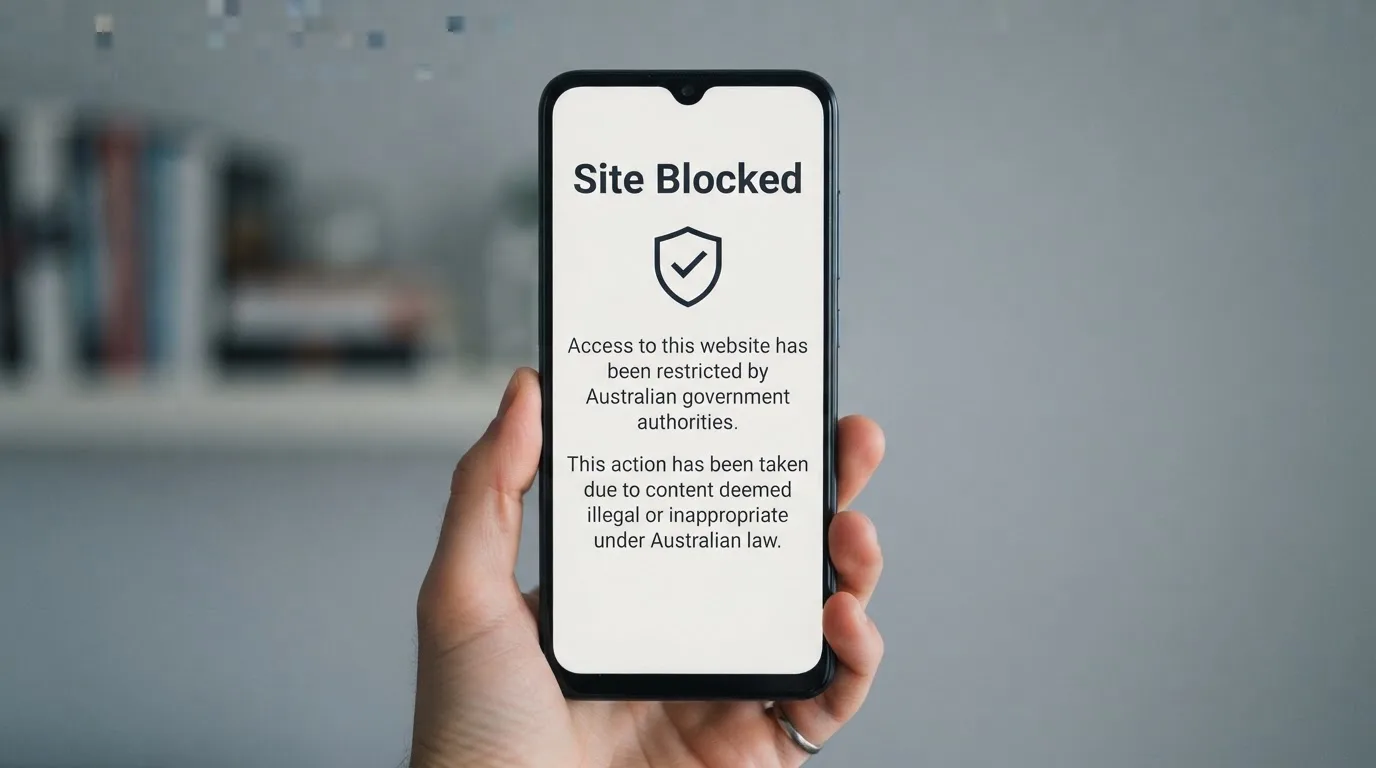
A formal warning is a written notice, published on the ACMA’s website, naming the company that operates the service and the brand under which the service was offered. It is not a prosecution, but it is a regulatory record. A second warning, or a failure to comply, leads to a blocking request to Australian ISPs, which makes the site unreachable on most Australian networks within days. A reader who has an open account at a warned brand may find the site itself still loads on a foreign connection but is blocked at home, which leaves a balance stranded with an operator that has no Australian consumer protection body to complain to.
The 11 brands the ACMA has formally warned
What follows is not a shortlist to play at and not a ranking. Each brand is named because the ACMA itself issued a formal warning over it for offering prohibited services to people in Australia. A reader scanning these for an entry point will find, on each one, a description of who the regulator named, when the warning was published, and the position the brand sits in relative to the Australian frame. The pattern that emerges across them is the page’s actual finding: an offshore licence — Curaçao, Kahnawake, Cyprus — does not extend Australian protection to a brand, and the ACMA has issued formal warnings regardless of the licence the brand displays on its footer. None of these brands is licensable in Australia for the product they are offering, and “but the footer says Curaçao” is not an answer to that.
RocketPlay
The ACMA’s most recent published formal warning over RocketPlay names Pulsup Ltd as the operator, dated March 2026. The same brand sits under a 2022 warning to Dama N.V., one of the more frequently named operators in the ACMA’s register. An Australian reader looking for a live dealer product at RocketPlay is, at the time of writing, looking at a brand whose operator the regulator has named twice across four years. The site remains reachable outside Australia. From inside Australia, blocking applies on most major residential networks.
Level Up Casino
Level Up Casino sits under Dama N.V.’s May 2022 formal warning, alongside five other Dama brands named in the same notice. The brand appears in third-party live-dealer listings hosted by BGaming as a partner integration, which means the brand is on a supplier’s reference list rather than on a regulator’s. That distinction is the page’s point in a single line: a supplier listing is a marketing signal, not an Australian licence, and the ACMA has already named the operating company.
Woo Casino
Woo Casino’s warning was issued to Dama N.V. in March 2025 — a second Dama warning, after the 2022 batch. The pattern across Dama’s brands is the ACMA’s case for the kind of enforcement it runs: one operating company, multiple brand names, repeated warnings. Woo Casino is one of those brand names, and the underlying operating company has been warned again since.
Spirit Casino
Spirit Casino’s warning is also to Dama N.V., dated May 2025. Three Dama warnings in three years is the regulator’s signal that the operating company has not changed its posture toward the Australian market. Spirit Casino’s footer is, like the other Dama brands, an offshore licence. That licence does not speak to whether the brand can lawfully offer its product to a person in Australia.
National Casino
National Casino sits under Consolutetish S.R.L.’s July 2025 formal warning. A reader who has followed National Casino across reviews and listings will note the brand appears in third-party live-casino reference pages on Wikipedia, which is how a brand builds presence in the parts of the internet the ACMA’s blocking does not yet cover. The presence is not a sign of legitimacy for Australian readers — the ACMA has named the operator behind it.
Bizzo Casino
Bizzo Casino sits under two warnings: Consolutetish S.R.L. in July 2025, and an earlier 2022 warning to TechSolutions (CY) Group Limited and TechSolutions Group N.V. Two warnings across two operating-company names for one brand is the kind of pattern the regulator uses to make a case that the brand has changed hands without changing its behaviour. Bizzo Casino’s earlier 2022 warning was over the same prohibited product, and the new operator inherited a brand the ACMA already knew.
Ignition Casino
Ignition Casino sits under Bamboo Media’s July 2025 formal warning. Bamboo Media is less visible in the ACMA’s register than Dama N.V. or Consolutetish S.R.L., but the warning is on the same legal basis. Ignition Casino’s product mix — a poker room and a casino floor — overlaps the prohibited live dealer segment the ACMA named in the warning.
Instant Casino
Instant Casino sits under EOD Code SRL’s February 2025 formal warning. The brand’s marketing positions it as a quick-access casino for readers outside the regulated markets; the ACMA’s position is that “outside the regulated markets” does not include Australia for the product Instant Casino is selling.
Jackbit
Jackbit sits under Ryker B.V.’s April 2026 formal warning, alongside CasinOK in the same notice. The two-brand batch is the ACMA’s standard warning shape: one operator, multiple brands, one notice. The reader sees two different homepages; the regulator sees one operator.
Casino Intense
Casino Intense sits under Sterplay Holding Ltd’s April 2025 formal warning. The brand appears in third-party reference listings that include Australian media coverage and the ACMA’s own formal warning publication — the brand is documented in the very registers an Australian reader would consult to verify a brand, and the register’s verdict on it is a formal warning.
Sky Crown
Sky Crown sits under Hollycorn N.V.’s formal warning, alongside Blue Leo in the same notice. Hollycorn N.V. is the most recent of the major multi-brand operators to receive an Australian formal warning. The same legal frame applies to Sky Crown as to every other brand on this list: the offshore licence displayed on the footer is not an Australian licence, and the IGA applies to the offering regardless of the licence.
| Brand | ACMA action and date | Operator named by the ACMA | Position on Australian access |
|---|---|---|---|
| RocketPlay | March 2026 (and May 2022, under Dama N.V.) | Pulsup Ltd | Blocked on most Australian residential networks; no Australian licence for the product |
| Level Up Casino | May 2022 | Dama N.V. | Blocked on most Australian residential networks; no Australian licence for the product |
| Woo Casino | March 2025 | Dama N.V. | Blocked on most Australian residential networks; no Australian licence for the product |
| Spirit Casino | May 2025 | Dama N.V. | Blocked on most Australian residential networks; no Australian licence for the product |
| National Casino | July 2025 | Consolutetish S.R.L. | Blocked on most Australian residential networks; no Australian licence for the product |
| Bizzo Casino | July 2025 and 2022 | Consolutetish S.R.L. (2025); TechSolutions (2022) | Blocked on most Australian residential networks; no Australian licence for the product |
| Ignition Casino | July 2025 | Bamboo Media | Blocked on most Australian residential networks; no Australian licence for the product |
| Instant Casino | February 2025 | EOD Code SRL | Blocked on most Australian residential networks; no Australian licence for the product |
| Jackbit | April 2026 | Ryker B.V. (alongside CasinOK) | Blocked on most Australian residential networks; no Australian licence for the product |
| Casino Intense | April 2025 | Sterplay Holding Ltd | Blocked on most Australian residential networks; no Australian licence for the product |
| Sky Crown | Hollycorn N.V. formal warning | Hollycorn N.V. (alongside Blue Leo) | Blocked on most Australian residential networks; no Australian licence for the product |
Crypto and the live dealer question for Australian readers
A reader asking about a live dealer casino that takes Bitcoin is asking, in practice, about one of two things: a brand that holds a Curaçao or Kahnawake licence and accepts cryptocurrency, or a brand positioned as crypto-native with no fiat rails at all. Both sit on the same side of the Australian line. The Interactive Gambling Act 2001 prohibits the offering of the product, not the payment method. The Australian rules on payment — the credit card ban of 11 June 2024 and the digital currency ban on licensed wagering — apply to Australian-licensed operators, not to the offshore brands those readers would be considering. The practical effect is that an offshore crypto live dealer site is doubly outside the Australian frame: the product is prohibited, and the payment method is a banned route for the licensed Australian operator that would, in any case, not be offering that product anyway.
H2 Gambling Capital’s 2025 estimate of A$3.9 billion in annual Australian losses to illegal gambling sites includes crypto-denominated play. The share going through cryptocurrency rails has grown year on year since 2021, and the ACMA’s blocking list includes a number of crypto-positioned brands. The crypto framing is not a way around the prohibition; it is a parallel rail to the prohibited product, and the regulator’s blocking catches it the same way.
A reader who wants a live dealer product and is choosing between a fiat-funded offshore brand and a crypto-funded offshore brand is choosing between two ways of accessing the same prohibited service. Neither route changes the legal position. The difference between them is operational: a Bitcoin deposit can be hard to reverse once sent, which means a withdrawal dispute has fewer practical remedies than a debit card dispute through a chargeback scheme. That is the practical bite of choosing crypto at an offshore brand, and it applies whether the brand’s marketing frames itself as a “Bitcoin casino” or just lists BTC among its deposit methods.
Bonuses, free spins and the arithmetic behind live dealer offers
A live dealer welcome bonus, like any online casino welcome bonus, is built out of three things: a headline number (a match percentage, a free-spin count, a cash amount), a wagering requirement that multiplies the bonus by a factor before any of it can be withdrawn, and a set of game-weighting rules that determine how much each bet contributes to clearing that requirement. Live dealer games are usually weighted at 10-20% of a slots bet, which means a live-dealer-focused bonus is harder to clear than a slots-focused bonus at the same headline number. That asymmetry is rarely surfaced in marketing language.
A representative package might offer a 100% match up to A$500 with a 40x wagering factor on the bonus, with live dealer bets contributing 10% toward clearing. On a A$500 bonus, the required turnover is A$20,000 at full slots weighting; at the live dealer 10% rate, the same turnover requires A$200,000 of live dealer bets. At a A$10 stake per blackjack hand, that is 20,000 hands of blackjack. The expected loss on those hands, at an optimal-strategy house edge of 0.28% under liberal Las Vegas Strip rules, is around A$56 — modest on its own, but the bonus pays out only if the player clears the full turnover, and most do not. The arithmetic is a machine for converting bonus headlines into expected losses.
This is the gap between the marketing word and the practical cost, and it is the gap the live dealer format is built to obscure. The streamed table looks like a normal casino experience; the bonus underneath is a turnover-multiplied clearing requirement that turns “free money” into a long sequence of bets whose expected cost is rarely smaller than the bonus’s face value. A reader attracted by a “200% welcome bonus” headline should read the wagering factor before reading anything else; the headline is the smallest piece of information about the offer.
The house edges behind the popular live dealer games
Live dealer catalogues are dominated by baccarat, blackjack and roulette, with craps showing up at suppliers that run the US-leaning studios. The house edges are well documented and matter to anyone calculating what a bonus costs to clear. Baccarat runs 1.06% on the Banker bet, 1.24% on the Player bet and 14.36% on the Tie — the Tie is the casino’s favourite number on a sign, because it pays 8-to-1 and carries an edge near ten times the rest of the table. Blackjack at optimal strategy runs about 0.28% under liberal Las Vegas Strip rules and 0.43% under Atlantic City rules; the difference between rule sets is what a “liberal rules” or “strict rules” lobby filter actually means. Roulette is split between the European single-zero wheel at 2.70% and the American double-zero wheel at 5.26% — a single-zero wheel is one of the rare cases where a player can ask the question of the dealer rather than accept whatever wheel is in front of them. Craps, where it is offered live, runs 1.41% on Pass/Come, 1.36% on Don’t Pass/Don’t Come and 11.11% on Any Craps.
These figures are what make a bonus arithmetic realistic. A turnover figure translated into expected loss through one of these edges is the dollar amount the bonus costs the average player who clears it. That dollar amount, for most live dealer welcome packages, sits within a small multiple of the bonus’s face value.
The lawful alternatives an Australian reader actually has
The thing a reader came to this page for does not exist lawfully online in Australia. The thing a reader can lawfully do is broader, and it sits in three places: licensed pokies venues, land-based casinos, and licensed pre-event sports and race wagering. The page’s other finding is that those alternatives are worth taking seriously before a reader goes looking offshore.
Licensed pokies venues and the pub and club network
Australian hotels and clubs run poker machines — pokies — under state and territory licensing. The machines themselves are regulated, the venues are audited, and consumer protection is enforceable through the state gambling regulator. A punter who wants the closest Australian equivalent to a slot session finds it at the local pub or club, with a guaranteed payout and a venue that has to comply with the state’s responsible-gaming rules. The product is not a live dealer table; the legal frame around it is real, and the consumer recourse is Australian.
Land-based casinos and their live dealer product
Crown Melbourne operates under the Victorian Gambling and Casino Control Commission, which replaced the VCGLR as Victoria’s casino regulator on 1 July 2022. Crown Melbourne offers three baccarat variants approved as table games — Traditional Baccarat, Crown Baccarat and 2 to 1 Baccarat — and a range of approved blackjack variants. The VGCCC publishes a public log of approved rule changes; recent entries include a December 2024 renaming of the “Perfect Pairs” side bet to “Crown Pairs” and a March 2024 introduction of a “Free Bet” option with a new “Pot of Gold” side bet. The Star Sydney operates under the NSW Casino Control Act 1992, whose section 66 requires every table game’s rules to be approved by the regulator and made available to patrons on request. Jupiters, The Star Gold Coast, Crown Perth and the smaller state-based casinos each run their own approved live dealer floors under their home state’s casino control regime.
A reader who wants a live dealer experience and lives near one of those venues has the lawful version of the product the search asks about. The price is the trip to the casino floor, the dress code, the operating hours and the responsible-gaming rules the venue enforces on entry. The benefit is that the dealer is real, the table is real, the rules are regulator-approved, and any dispute ends in an Australian complaints body rather than an offshore one.
Licensed pre-event sports and race wagering
Australian-licensed bookmakers can offer wagering on races and sporting events placed before the event. The 52 Northern Territory Racing and Wagering Commission licensees include the major sportsbooks, and the same product sits under state-level licensing elsewhere. In-play betting is prohibited; live dealer casino product is prohibited; pre-event wagering is the live category of lawful online gambling an Australian reader can use. A punter looking for an interactive experience that does not run into the IGA finds it here.
BetStop and the National Self-Exclusion Register
BetStop, the National Self-Exclusion Register, has been live since August 2023. A person who registers with BetStop is excluded from every Australian-licensed online and phone wagering service. The exclusion period is the registrant’s choice, from a minimum of three months up to a permanent exclusion. BetStop is a tool for people who want a clean break from wagering, and it covers the full licensed wagering market — every licensed Australian bookmaker, lottery and keno operator — at the point a person registers.
BetStop does not cover offshore casinos. An offshore brand is not connected to the Australian register, and an Australian punter who self-excludes at BetStop and then opens an offshore casino account will not be stopped by BetStop from doing so. That is a feature of what offshore means: the Australian register binds Australian-licensed operators, and an operator that is not Australian-licensed is not bound. BetStop is the appropriate tool for someone who has decided to step back from wagering; it is not, on its own, a barrier against the prohibited product this page is about.
The National Gambling Helpline — 1800 858 858 — is free, 24/7 and offers chat at Gambling Help Online. The service is for anyone affected by gambling harm, whether the gambling is at an Australian-licensed venue or at an offshore site, and it is the appropriate first call for someone who is reading this page because of a person in their life rather than because of an offer on a homepage.
The calculation the ACMA’s blocking record actually carries
The ACMA’s June 2026 figure is 1,751 illegal gambling and affiliate marketing websites blocked since November 2019. The June 2026 round added 12 names. The arithmetic belongs to the page rather than to the regulator: the average blocking rate over the period between November 2019 and June 2026 is what the ACMA’s blocking record says about how fast the prohibited market is being closed down, and the rate is itself a piece of information a reader can act on.
The span from the first blocking request in November 2019 to the ACMA’s June 2026 report is roughly 79 months. Across those months, the ACMA’s blocking list grew to 1,751 entries. The average rate is approximately 22 blocked sites per month across the full period — but the rate is not constant. Early enforcement, immediately after the 2017 amendments and the first 2019 blocking round, was concentrated in catching up with the existing prohibited market; later rounds have grown the list more slowly as the marginal new entrant gets caught faster. The reader’s takeaway is that the blocking is cumulative and ongoing, not a one-off clean-up. A brand not on the list today can be on it within months. A punter’s account at an unlisted brand is not protected by that absence.
This is also the answer to the framing question behind the search: an Australian reader who wants a live dealer product today is choosing between an offshore brand that is, on average, around 22 sites per month closer to being on the blocking list than it was at the start of the year, and a lawful alternative that does not move on that list at all. The blocking rate is the rate at which the offshore route is being closed down. The lawful alternative is the route that does not require that calculation.
The verdict on each brand, in plain English
What the page is about, finally, is the reader’s choice. The 11 brands the ACMA has named share a feature: none of them is licensable in Australia for the product they are offering. The differences between them sit in the surrounding facts — the recency of the warning, the operating company’s history of warnings, the supplier listings the brand appears in — and those differences are worth saying once and not three times.
RocketPlay’s picture is the freshest of the eleven: a March 2026 warning naming Pulsup Ltd, on top of a 2022 warning to Dama N.V. Two warnings across four years, two operating-company names. The brand is on the regulator’s active list, and the operator has changed since the first warning. A reader who is going to use the brand regardless has the highest regulatory profile among the eleven.
Level Up Casino sits under Dama N.V.’s May 2022 warning — older, but Dama is one of the most-named operators in the ACMA’s register, and the brand sits on a BGaming partner list. The brand is documented where Australian readers check for documentation, and the documentation is a warning.
Woo Casino and Spirit Casino share an operating company and sit under 2025 warnings — March and May respectively. The brand’s recency on the ACMA list is fresh, and Dama’s third warning across three years is the regulator’s signal that the operator has not changed course.
National Casino and Bizzo Casino share an operator too — Consolutetish S.R.L., July 2025 — and Bizzo Casino carries an additional 2022 warning under TechSolutions. Two operating-company names for one brand is the pattern the regulator uses to make the case that brands move between operators without changing behaviour.
Ignition Casino, Instant Casino and Jackbit sit under three different operating companies — Bamboo Media (July 2025), EOD Code SRL (February 2025) and Ryker B.V. (April 2026) respectively. Each is a single warning rather than a recurring name, which is the lighter end of the regulatory profile the ACMA maintains.
Casino Intense, under Sterplay Holding Ltd’s April 2025 warning, appears in reference listings that include Australian media coverage and the ACMA’s own publications. A reader who follows that trail finds the warning on the same page as the brand, which is itself the page’s point.
Sky Crown, under Hollycorn N.V., shares its notice with Blue Leo. Hollycorn is the most recent of the multi-brand operators to enter the ACMA’s register, and the warning is on the same legal basis as the others.
The verdict across all eleven is the same: the offshore licence on the footer is not an Australian licence, the warning is on the regulator’s register, and the reader’s practical protection is the same regardless of which brand they choose. The differences between them are about recency and operating-company history, not about whether they are lawful for an Australian player.
What the choice looks like from the reader’s side
A reader who landed on this page for a working shortlist has, at the end of it, three honest options. The first is to choose a lawful Australian alternative — a land-based casino’s live dealer floor, a licensed bookmaker’s pre-event sports or race product, or a pub or club’s licensed pokies. Each is the product this page was exploring in a form that fits inside the IGA. The second is to use an offshore brand with the eyes-open understanding that the brand is not licensable in Australia, that the ACMA has named most of the larger ones, that the site can be blocked while a balance is on it, and that there is no Australian complaints body to take a dispute to. The third is to step back from the product altogether, and the right tool for that is BetStop for the licensed wagering market and the National Gambling Helpline — 1800 858 858 — for the conversation that leads to it.
The page’s position is that the first option is the one that fits the IGA, the third is the one that fits a reader who has decided wagering is not what they want, and the second is the option the ACMA’s blocking rate is, on average, around 22 sites per month closer to closing down.
Frequently asked questions
How many live tables did Evolution operate from its Riga studios by 2013?
By 2013 Evolution was running 100 live tables from its Riga studios — the largest single-site casino operation in Europe at that point. The company opened a Malta studio in 2014 and now supplies more than 700 gambling platforms worldwide with live tables streamed 24/7.
Does a live dealer casino accept cryptocurrency deposits?
Some offshore live dealer casinos accept Bitcoin and other cryptocurrencies. A reader sitting in Australia is on the wrong side of two rules at once: the IGA prohibits the live dealer product regardless of payment method, and the digital currency ban that took effect for Australian-licensed wagering on 11 June 2024 covers licensed Australian operators. An offshore crypto casino sits outside both rules rather than between them.
Is it legal for a live dealer casino to accept Australian players?
No. Providing an online casino-style gambling service — which covers live dealer baccarat, blackjack and roulette — to a person in Australia is a prohibited interactive gambling service under the Interactive Gambling Act 2001. The prohibition sits on the provider, not on the player, which is why the ACMA’s enforcement names operators rather than punters.
What responsible-gambling tools should a live dealer casino site provide?
Australian-licensed wagering services must connect to BetStop, the National Self-Exclusion Register, which has been live since August 2023. The minimum responsible-gambling toolset includes deposit limits, time-out periods, self-exclusion and access to the National Gambling Helpline at 1800 858 858. An offshore brand is not connected to BetStop and is not bound by the Australian requirements.
What is usually attached to a live dealer casino welcome bonus?
A wagering factor that multiplies the bonus before withdrawal is permitted, plus game-weighting rules that typically count live dealer bets at 10-20% of a slots bet. A A$500 bonus with a 40x factor and 10% live dealer weighting requires A$200,000 of live dealer bets to clear, with an expected loss on those bets that is rarely smaller than the bonus itself.
Can Australians find a shortlist of licensed live table games anywhere other than online?
Yes — at land-based casinos. Crown Melbourne runs approved baccarat and blackjack variants under the Victorian Gambling and Casino Control Commission, and The Star Sydney runs approved tables under the NSW Casino Control Act 1992. Crown Perth, Jupiters and The Star Gold Coast each run approved live dealer floors under their home-state regimes.