
Quick-withdrawal casinos in Australia — what’s pitched, what’s paid, and what’s prohibited
Current as of 30 October 2026, checked against the Australian Communications and Media Authority’s formal warning register.
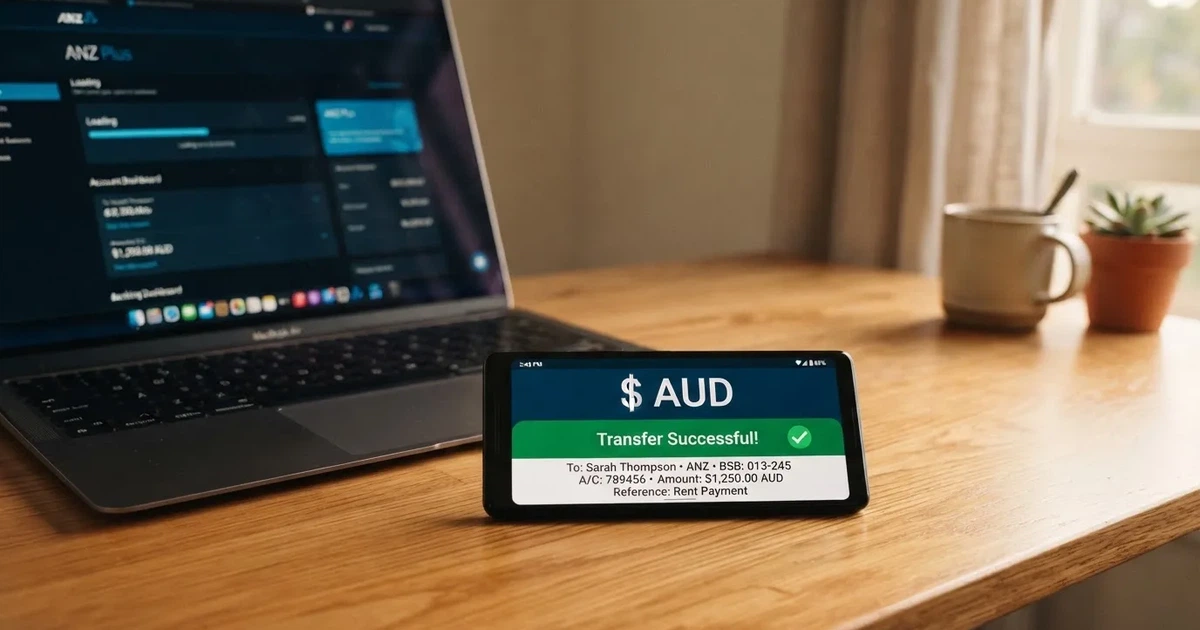
Every offshore casino running “instant withdrawal” ads in 2026 is selling the same thing: speed. Deposits in seconds. Withdrawals in minutes. A fast-payout badge on the homepage that supposedly separates this brand from every other behind it. Australian readers shopping for a quick-withdrawal casino find the marketing easy to find. The legal framework around it pushes in the opposite direction: no state or territory licenses online casino games, the Interactive Gambling Act 2001 makes it an offence to offer them to a person physically in Australia, and the regulator has been quietly working through a list of offshore operators since 2017.
This page treats the marketing as the marketing. It walks through three things that actually matter for a player weighing options in 2026: the responsible-gambling tools that bind Australian players, the settlement rails that already move money in seconds inside Australian banking, and the eleven offshore brands the ACMA has put on its formal warning register since 2022. The paths on offer divide cleanly. An Australian player can use AU-licensed wagering under Australian rules, can rely on the AU banking rails that already settle in under a minute, can self-exclude through BetStop, or can step outside every layer of consumer protection to chase an offshore “instant” that no Australian regulator has jurisdiction over. The choice is the reader’s. The material on each path is below.
Table of Contents
- Responsible gambling comes first — and it isn’t the casino’s job
- How “quick” actually moves money in Australia — the settlement rails
- Eleven offshore brands the ACMA has formally warned — and what the public record actually shows
- The fundamentals of the offshore “quick withdrawal” pitch
- What Australian law actually says — and what it changed in 2026
- Frequently asked questions
Responsible gambling comes first — and it isn’t the casino’s job
Offshore marketing never opens with this section. That alone tells a reader almost everything about whose interests the marketing serves. A quick-withdrawal pitch aimed at Australian readers sells speed; what it skips is the entire consumer-protection layer an Australian-licensed wagering service is required to provide. The two are not the same product. The fastest payout in the world does nothing for a player who cannot exclude themselves, complain to anyone, or recover a balance when an offshore operator decides not to pay.
The centrepiece of Australian consumer protection is BetStop, the National Self-Exclusion Register, live since August 2023. A player who registers with BetStop is excluded from every Australian-licensed online and phone wagering service for a chosen period — the minimum is three months, the maximum is lifetime. The system is binding on the licensed bookmaker side, which means an AU-licensed operator has to honour the registration without exception. What it cannot do is touch an offshore casino. An offshore operator is not connected to BetStop, has no obligation to honour it, and is in many cases the very brand a player is trying to exclude themselves from. Self-exclusion through BetStop is therefore the cleanest protection a resident can take against legal Australian wagering. It does not, on its own, do anything about an offshore account.
Free, confidential support is available twenty-four hours a day at the National Gambling Helpline on 1800 858 858. Chat counselling is also available through Gambling Help Online, with web and phone support in every state and territory. Financial counsellors can work through the practical side of restricting access — banking blocks, credit-limit reductions, restructuring direct debits — which an offshore casino will not do for a player and which an Australian-licensed bookmaker can only do within its own product. A banking block applied through the player’s own bank stops deposits at the card layer, irrespective of which offshore brand sits behind the cashier page, and the player’s bank will set it up over the phone in a single call.
Two further points matter. BetStop is free, the helpline is free, and neither requires a player to engage with the offshore site they are considering. The most useful first step is sometimes not a deposit at all. A read-through of the AU banking tools discussed further down this page takes ten minutes and leaves the player with more controls than the offshore pitch ever offers, because the offshore pitch is not selling controls.
The angle matters. An Australian player considering an offshore quick-withdrawal casino is choosing to step outside every layer of consumer protection the Australian system provides — and that choice is made before any money is deposited, not after. The most important number on this page is not a payout time. It is the one a player dials when the choice stops working.
How “quick” actually moves money in Australia — the settlement rails
The fastest payout an offshore casino can honestly promise an Australian player is what the Australian banking system already delivers to a regular bank account. Osko settles in under a minute, twenty-four hours a day, seven days a week, including weekends and public holidays. The New Payments Platform that carries it has been accessible to the public since 13 February 2018, is owned by a non-profit company whose thirteen shareholders include the Reserve Bank of Australia and each of the major banks, and runs on a service-level commitment that limits monthly outages to no more than two minutes. By April 2025 more than 25 million PayID identifiers had been registered on the platform, and over 100 Australian financial institutions were offering PayID-based instant transfers. The rails already exist. They cost a regular account holder nothing.
PayID does something the offshore pitch quietly relies on the player not noticing: it shows the name of the account holder before the transfer is sent. AP+, the operator of both PayID and Osko, warns that being asked to send money to a PayID on an illegal gambling site almost always means a scam site — because the receiving name will be a person rather than a registered business, and no licensed Australian operator processes casino payouts to a personal PayID. A player who can read a PayID confirmation page has, in that single screen, more verification than any offshore marketing page offers. The verification costs the player nothing.
BPAY, the bill-payment service run by the same Australian Payments Plus, has been operating since 18 November 1997 and sits inside the online banking of over 140 Australian banks, credit unions and building societies, offered by over 95,000 businesses. It is not a payout rail — a casino is not a biller — but it is the longest-running example of Australian banking processing transactions at scale under local rules, and the same ownership structure applies. ANZ, Commonwealth Bank, National Australia Bank and Westpac each own a quarter of Cardlink Services Limited, BPAY’s parent. Offshore brands operate outside this kind of domestic accountability entirely.
The card and wallet side is more complicated, and the marketing knows it. By the end of 2025, Apple Pay, Google Pay and Samsung Pay transactions together made up roughly 45 per cent of all card payments in Australia by number. Apple does not charge consumers a fee for Apple Pay in stores, online or in apps; any surcharge a player sees comes from the merchant’s card-processing costs, not from Apple. Transaction limits and PIN requirements on Apple Pay are set by the card issuer or the merchant, not by Apple itself. The Reserve Bank of Australia’s July 2025 review proposes removing surcharges on eftpos, Mastercard and Visa card transactions, but it explicitly leaves American Express outside the proposed ban — American Express was established as a freight-forwarding company in 1850 and only issued its first charge card on 1 October 1958, and as a three-party scheme it issues cards and processes transactions itself rather than running the four-party network that Visa and Mastercard use. None of this is a payout rail. It is the deposit side, and on licensed Australian wagering services it is now strictly cash-funded: credit cards and credit-related products have been banned as payment for licensed online wagering since 11 June 2024, and the ban extends to credit-funded digital wallets.
What does this mean for the offshore pitch? It means the speed is already there. The fastest “instant withdrawal” an offshore casino can offer an Australian player is, at best, the speed of the rail it pays out to — which for an Australian player receiving funds in an Australian bank account via Osko is under a minute. Anything an offshore operator claims to add on top of that is internal processing time, and that is what the marketing actually sells. There is no public ledger of those processing times, no Australian complaints body if the time is never delivered, and no Australian regulator an Australian player can complain to when the rail works but the operator decides not to send anything down it. The speed is on the rail. The choice is the operator’s. The marketing calls the choice a feature.
The rails above are not a forecast of what an offshore casino will deliver. They are a record of what an Australian bank account already does, every day, with no marketing budget. A player weighing the offshore pitch against an Australian bank account is weighing the operator’s word against the rail’s record. The two are not on the same footing.
Australian banks are also tightening the card side. Westpac operates a gambling block at card level that refuses authorisation of any transaction registered under the merchant category code “Betting/Casino Gambling” on eligible personal credit and debit cards. ANZ‘s gambling transaction block, activated inside the ANZ app, blocks gambling transactions made through a digital wallet such as Apple Pay on an eligible card — not just the physical card — and a 48-hour cooling-off period applies before the block can be switched off again. Commonwealth Bank lets customers apply a gambling lock through the CommBank app, blocking most gambling transactions on eligible cards. Each of the three warns that not every gambling transaction will be caught and that some non-gambling transactions may be caught in error. None of the three advertises itself as a quick-withdrawal casino. What each is, is the layer underneath the marketing — the place where a withdrawal actually arrives, and where a card-based deposit is now actively filtered.
AUSTRAC’s threshold-transaction-report rule, which requires reporting of transfers of A$10,000 or more, applies only to physical cash. Ordinary electronic bank transfers are not subject to that per-transaction reporting rule, regardless of the amount sent. The offshore marketing sometimes uses this fact to imply that small electronic transfers go unreported. They go through the regular banking system either way. The reporting rule is not the relevant regulator; the offshore status of the receiving site is.
Eleven offshore brands the ACMA has formally warned — and what the public record actually shows
The eleven brands below are not a ranking. They appear because the ACMA itself has published a formal warning over each of them, under the Interactive Gambling Act 2001, for offering prohibited online casino games to Australians. The dates and operators are the ACMA’s own publication. What the table shows is what the public record actually contains, in the form the regulator put on its website.
The right-hand column lists the only sources identified for a fast-payout claim regarding each brand. An em dash indicates that public records lack evidence confirming such claims. Where a source is named, it is the only identified location for the claim, rather than an independent verification by an Australian regulator. Online casino games cannot be licensed anywhere in Australia, whatever licence an offshore site displays.
| Brand | ACMA formal warning | Operator named by the ACMA | Fast-payout claim per public listings |
|---|---|---|---|
| RocketPlay | March 2026; earlier May 2022 | Pulsup Ltd (2026); Dama N.V. (2022) | Per Gamblinginsider.com listings only |
| Level Up Casino | May 2022 | Dama N.V. | Per Westpac.com.au listings only |
| Woo Casino | March 2025 | Dama N.V. | — |
| Spirit Casino | May 2025 | Dama N.V. | — |
| National Casino | July 2025 | Consolutetish S.R.L. | Per ACMA, AUSTRAC and BetStop listings |
| Bizzo Casino | July 2025; earlier 2022 | Consolutetish S.R.L. (2025); TechSolutions (2022) | Per Gamblinginsider.com listings only |
| Ignition Casino | July 2025 | Bamboo Media | — |
| Instant Casino | February 2025 | EOD Code SRL | Per ecoPayz and PayID listings |
| Jackbit | April 2026 | Ryker B.V. | — |
| Casino Intense | April 2025 | Sterplay Holding Ltd | Per AUSTRAC, BetStop and Gamblinginsider.com listings |
| Sky Crown | September 2022 | Hollycorn N.V. | — |
Each brand below is treated on its own public record, in the order the ACMA register first named it.
RocketPlay
Two formal warnings from the ACMA, in two different corporate hands. Dama N.V. was named over RocketPlay in May 2022. In March 2026 the warning was repeated under Pulsup Ltd, the operator of Rocketplay.com.au. The brand has therefore been on the regulator’s public record for the better part of four years, and the front-of-house operator name has changed once in that time.
That is not unusual for offshore operators moving between licence holders. The licence holder changes, the front-end URL is renewed, the marketing carries on across both. The RocketPlay pattern is the cleanest version of it in this list: same brand, same Australian-facing front end, two different corporate hands, two formal warnings. The pattern tells an Australian reader that the front-end name is the constant and the licence holder is not.
The fast-payout claim for the brand sits on Gamblinginsider.com listings only. Nothing on the ACMA, AUSTRAC or BetStop registers confirms a settlement time for Rocketplay.com.au, and the operator’s own marketing is the only source the public listings draw on.
Two ACMA warnings four years apart, two different corporate hands, the same Australian-facing front end. The marketing carried on across both. An “instant withdrawal” on an Australian-facing site the ACMA has warned twice is the kind of speed a player cannot enforce.
Level Up Casino
A single warning, May 2022, naming Dama N.V. as the operator. Three years on, the brand’s presence on Westpac.com.au’s merchant-category listings is the only public signal that the product is still offered to Australian residents. The warning itself remains on the ACMA register; whether the operator behind it has changed in the meantime is not something the public record shows.
The single-warning brand is the more common shape on the ACMA’s register than the re-warning pattern. It tells a player two things at once. The brand is on the register, which means the ACMA has at some point looked at it. It has not been re-warned, which means either the brand has stopped offering to Australians or — more usually — the brand has moved on under a new licence holder without the regulator naming the new holder on this register entry.
A four-year-old warning sits on a regulator’s register long after a brand’s marketing cycle has moved on. The warning is the public record; the public record has not been refreshed. The brand’s marketing is the more current of the two, and the more current source is the one the marketing always wants a player to read.
Woo Casino
A warning to Dama N.V. over Woo Casino in March 2025, on the same licence-holder arc as Level Up Casino. The earlier Dama N.V. warnings in 2025 cover a string of brands; the March 2025 warning is one of two issued in successive months to the same operator over different skins. A single licence holder accumulating Australian-facing warnings faster than the warnings age out is itself a marker.
The fast-payout claim for Woo Casino lacks independent verification. No Australian regulatory database lists such a claim for this brand, and affiliate pages merely repeat the operator’s own marketing. An “instant withdrawal” sourced solely from the operator’s own pages is not a verified figure.
Two warnings to one operator in two months is not a coincidence. The pattern is operator-level, not brand-level, and a player reading either brand should read both. The marketing on Woo Casino has not changed shape to address the warning, and the ACMA register does not carry a fast-payout listing to compare against. The marketing line is the only line a player can read.
Spirit Casino
The second of the March-May 2025 Dama N.V. warnings, published in May 2025 over Spirit Casino. The pattern mirrors Woo Casino: same licence holder, different brand, separate warning two months later. The marketing for Spirit Casino repeats the same fast-payout structure found elsewhere, yet official sources provide no confirmation for these speed claims.
The fast-payout claim for Spirit Casino sits on the same absence of independent confirmation. The operator’s own marketing is the only source for any settlement-time claim, and that is the kind of source the public listings rules out by design. The brand’s own pages are not the public listing the ACMA register would call independent.
Same operator as Woo Casino, two months later. The second warning does not soften the first; together they make the operator the marker, not the brand. A player reading Spirit Casino who has read Woo Casino reads the same operator name twice in two months — which is two formal warnings the ACMA has decided to publish, in order, over the same corporate hand. The marketing for Spirit Casino has not been changed to address either warning.
National Casino
Consolutetish S.R.L. was named in July 2025, and the ACMA, AUSTRAC and BetStop registers all carry the National Casino reference. That the brand shows up across three separate Australian regulatory contexts is unusual; the ACMA warning is the only one tied to online casino games specifically, but the cross-listing tells a player that the same operator name is already in scope of multiple Australian agencies.
AUSTRAC’s involvement reflects the operator’s exposure to Australian financial flows. BetStop’s involvement reflects that the brand name has appeared in the National Self-Exclusion Register’s data, whether because an Australian player has tried to register a complaint, a financial counsellor has logged the brand, or an Australian-licensed counterparty has flagged the cross-listing. None of those is an ACMA-level enforcement; all three are independent registers that did not need to carry the National Casino name and have chosen to.
Cross-listed with AUSTRAC and BetStop is unusual. A player reading the ACMA register for National Casino is also reading two other Australian registers, which is more regulatory contact than the ACMA warning alone would suggest. The brand is not on the ACMA’s most recent enforcement round; it is on three registers at once.
Bizzo Casino
A two-warning brand. TechSolutions (CY) Group Limited and TechSolutions Group N.V. were named in a 2022 warning, and Consolutetish S.R.L. took the second warning over the same brand in July 2025. The brand has therefore been in scope for over four years under three different corporate names.
Among the eleven brands here, Bizzo Casino is the longest continuous regulatory trail. The corporate names have changed; the brand has not. The front-end URL has been maintained across the licence-holder transitions, and the Australian-facing marketing has carried on across all three. The continuity tells a player two things. The brand has not left the Australian-facing market in four years. The brand has not stayed with the same licence holder for more than two of them.
The fast-payout claim for this brand relies only on Gamblinginsider.com listings. As the operator’s own marketing is the sole source, this claim fails the standard of independent verification required for reliable reporting. None of the official Australian regulatory registers confirm a settlement time for Bizzo Casino.
Three corporate names, two warnings, four years. The brand has not left the Australian regulatory space; it has moved between licence holders within it. A player weighing Bizzo Casino is weighing four years of continuity against three different operator names — and the speed claim at the centre of the marketing has not been verified at any of the three.
Ignition Casino
Bamboo Media, July 2025. The brand is older than the warning; the Australian-facing surface is what brought it onto the register. Ignition Casino is one of several brands here where the operator name on the ACMA register is the most informative single line, because it tells a reader which corporate hand was running the brand at the time the regulator looked.
Bamboo Media is not a name that recurs across the ACMA’s earlier warnings, making the July 2025 entry the regulator’s first published action against this operator regarding Australian-facing products. The brand’s own marketing constitutes the sole source for settlement-time claims, as independent confirmation is absent from official records.
Older brand, recent warning. The signal a player reads is that the ACMA is still naming Australian-facing brands after them, however old the brand. The signal that an older brand with no prior ACMA history has now been named once fits the regulator’s working pattern rather than the brand’s life cycle. A player weighing Ignition Casino is weighing a marketing line the public listings do not verify against an operator name the ACMA has decided to publish once — and may publish again.
Instant Casino
EOD Code SRL, February 2025. The warning sits early in the ACMA’s 2025 enforcement wave — the next two months brought Woo Casino and Spirit Casino over the same Dama N.V. licence holder, then Casino Intense in April 2025 — and it is the first appearance of the EOD Code SRL operator name on the register. ecoPayz and PayID listings are the only public sources for the brand’s Australian-facing payment footprint.
A warning that prefigures a wave is the kind of regulator signal a player should weight more than a warning that closes one. The brand is not the largest in the table by either name recognition or Australian-facing surface, but the timing of the EOD Code SRL warning is closer to the start of the year’s enforcement than to the end. The first warning of a wave is also the one that tells the regulator what the year is going to look like.
The fast-payout claim for Instant Casino sits on the same absence of independent confirmation. ecoPayz and PayID listings are the only public sources the research draws on, and both are payment-method pages rather than operator statements of settlement time. A payment-method page is not a settlement-time statement, and reading it as one is the kind of read the marketing invites.
An early-2026 warning that prefigured the rest of the year’s enforcement wave. The brand is the start of a pattern, not the end of one. A player reading Instant Casino today reads an EOD Code SRL warning from before the year turned, and a marketing line the public listings do not verify.
Jackbit
Ryker B.V., April 2026. The most recent operator name in the table. The fast-payout claim here lacks independent confirmation; no official Australian regulatory register carries a listing for the brand’s settlement speed, and the operator’s claims remain unverified by external authorities.
The April 2026 action also named CasinOK under the same Ryker B.V. licence holder. The two brands share a corporate hand but carry different front-end URLs, and the ACMA’s separate treatment of each URL tells a player that the regulator is naming each brand individually rather than treating the operator name as a single line item. The regulator looked twice in the same round.
The freshest operator name in the table, and therefore the freshest signal. A player looking at the ACMA register today sees Ryker B.V. at the top of the most recent round. An “instant withdrawal” on a brand the regulator named last month is the kind of speed claim a player cannot verify in advance — the verification would come only after the regulator names the brand again, which is the kind of verification a player would rather have before they deposited.
Casino Intense
Sterplay Holding Ltd, April 2025. AUSTRAC, BetStop and Gamblinginsider.com all carry the Casino Intense reference; the ACMA warning is the live regulatory action. The cross-listing with AUSTRAC and BetStop puts Casino Intense in scope of three Australian regulatory contexts in the same way as National Casino, though the two warnings were issued by different ACMA-led actions.
The Casino Intense cross-listing pattern tells a player that the brand name is not just on the ACMA register. AUSTRAC’s involvement reflects exposure to Australian financial flows. BetStop’s involvement reflects that the brand name has appeared in the National Self-Exclusion Register’s data, whether through a complaint, a financial counsellor entry, or a counterparty flag. None of those is an ACMA-level enforcement; all three are independent registers that did not need to carry the Casino Intense name.
Cross-listed with AUSTRAC, BetStop and Gamblinginsider.com. The ACMA warning is the live regulatory action; the cross-listing puts the brand name in scope of more Australian agencies than the ACMA warning alone would. A player reading Casino Intense is reading three registers at once, and the operator’s release time is not on any of them.
Sky Crown
Hollycorn N.V., September 2022. The Hollycorn N.V. formal warning covers Sky Crown and Blue Leo in one action. The brand sits at the older end of the table’s date range, which means the regulatory signal has been on the public record the longest without being lifted.
The Hollycorn N.V. entry is one of two warnings on the ACMA’s register that name a single operator over two brands. The paired structure tells a player that the ACMA’s decision to publish was at the operator level, and that the regulator has not subsequently published a separate warning over either brand. The single decision, two brands shape is unusual enough to be worth naming.
The fast-payout claim for Sky Crown lacks independent verification. No Australian regulatory database confirms this brand’s settlement speed, and affiliate pages merely repeat the operator’s own marketing line without external proof.
The Hollycorn N.V. warning covers two brands in one action, and has been on the register since 2022 — the longest-sitting warning in the table. The marketing for Sky Crown has carried on across the four years the warning has been sitting on the register, and none of the public listings has been updated to verify the operator’s release time.
The fundamentals of the offshore “quick withdrawal” pitch
The pitch is built on three things. None of them is what an Australian player is led to believe.

The first is speed. Marketing materials say “instant”, “fast payout”, “withdrawal in minutes”. A withdrawal is, in practice, two distinct operations: the operator’s internal decision to release the funds, and the rail that then moves them. The rail is Australian — usually Osko, sometimes a card scheme, occasionally a wallet — and the rail does its job in under a minute. The internal decision is the operator’s, and there is no Australian regulator holding the operator to a stated timeframe. The “instant” sits entirely on the operator’s side of the wall. An offshore brand that takes 24 hours to release funds is not breaking an Australian rule; there is no Australian rule on the operator’s release time. An offshore brand that takes five minutes is not breaking one either. The marketing simply trusts the player not to ask which side of the wall the speed sits on. A useful frame for an Australian player is to ask what “quick” actually means in dollar terms. Osko settles in under a minute. A 24-hour release window at an offshore operator is, against that rail, fifteen hours of operator-controlled delay before the rail starts. A five-minute release window at the same operator is five minutes of operator-controlled delay. The rail’s speed is constant. The operator’s release window is the variable, and the variable is exactly the part of the withdrawal the offshore pitch owns.
The second is volume. The same marketing usually lists ten or fifteen payment methods, of which perhaps two or three are available to an Australian player in practice. A payment method listed on an offshore brand’s cashier page is not the same as a payment method that actually clears an Australian bank account at the other end. Where the pitch says “crypto, e-wallet, card, bank transfer”, the realistic list for an Australian player is shorter and includes only methods that are consistent with the player’s own bank’s terms. The list length is itself the marketing. The realistic list is what an Australian player can verify on their own banking app before they deposit. The second thing worth asking is what “instant” actually means in the operator’s own terms. The marketing copy usually treats the term as a single thing — deposits in, withdrawals out, both at the same speed. In practice the deposit rail is fully automated and the withdrawal rail runs through an operator-controlled review. The deposit is faster because the operator wants it to be. The withdrawal is slower because the review lets the operator be. The asymmetry is the marketing’s quiet centre.
The third is independence. The pitch presents the offshore brand as a faster, looser alternative to the licensed Australian market — fewer checks, faster payouts, less paperwork. The Interactive Gambling Act 2001 does not make this trade-off legal. It makes the offering itself the offence. The provider — not the player — is the target of the law. The consequence for the player is the absence of an Australian complaints body, an Australian consumer-protection framework, an Australian recourse if the operator refuses a withdrawal, and the genuine possibility that the site is blocked mid-balance. The speed is real on the rail. The protection is real elsewhere — and an Australian player choosing the offshore pitch is choosing to be outside it.
This is the fundamental shape of the offshore quick-withdrawal pitch in 2026. The marketing sells a rail. The protection sits somewhere else entirely, and the player’s decision is whether the speed on the rail is worth the protection it costs.
What Australian law actually says — and what it changed in 2026
The Interactive Gambling Act 2001 (the IGA) makes it an offence to provide certain interactive gambling services to a person physically in Australia. Online casino games and online pokies are prohibited interactive gambling services; no state or territory licenses them. The Interactive Gambling Amendment Act 2017 strengthened enforcement and gave the ACMA the power to issue formal warnings and direct Australian internet service providers to block offending sites. What is licensable is wagering on racing and sport placed before the event, lotteries, and keno — in practice licensed by the Northern Territory Racing and Wagering Commission, which regulates 52 of Australia’s online bookmakers (including Sportsbet, Bet365 and Ladbrokes) for tax reasons, runs without full-time staff and meets once a month in Darwin. The minimum age for any Australian gambling product is 18.
What the ACMA actually does, day to day, is investigate complaints, publish formal warnings on its website, and direct ISPs to block sites that continue to offer prohibited services. By the middle of 2026 the cumulative total was 1,751 illegal gambling and affiliate marketing websites blocked since the first blocking request in November 2019, with more than 230 unlicensed gambling services having left the Australian market since enforcement was strengthened in 2017. The most recent published round, on 26 June 2026, asked ISPs to block 12 more sites in one action — 7Signs, ChromaBet, Donbet, Duospin, Freshbet, Slots Gem, Jacks Club, Lucky Start, Pointsbetz.com, Spinrise, Vinyl Casino and Wildsino. The list has length, pace and a regulator’s name attached. It does not have a brand-level appeal mechanism, and an offshore site that disappears from a player’s screen mid-balance leaves that balance on the operator’s books. The speed is over. The balance stays where it was.
In 2026 itself, the Interactive Gambling Amendment (Gambling Reform) Bill 2026 passed Parliament on 19 August 2026. Its advertising and inducement measures commence on 1 January 2027 — law with a start date, not yet in force on a 2026 page. The bill tightens what Australian-licensed operators can put in front of Australian players; it does not legalise online casino games. The shape of the prohibition is unchanged, and the speed claim for an offshore brand does not gain any new legal standing.
Payments under Australian law are a separate, and sharper, constraint. Since 11 June 2024, Australian-licensed online wagering services cannot accept payment by credit card or other credit-related products — penalties up to A$247,500 for operators. The ban extends to credit-funded digital wallets. Legal deposit routes for licensed wagering are debit card, bank transfer, PayID/Osko and BPAY. A site asking an Australian player for a credit card or a crypto deposit is, on the licensed side, automatically non-compliant. On the offshore side, it is an early signal that the site is not running on Australian rules at all. The licensed and offshore markets use the same Australian banking rails on the way in; they apply different rules about what can ride those rails. A player receiving Osko from an offshore brand is receiving the same rail an AU-licensed bookmaker would use, with no consumer-protection layer on top.
The market’s own terms, on the loss side, are the H2 Gambling Capital 2025 figures: Australians lose about A$3.9 billion a year to illegal gambling sites, and the share of gambling going through legal channels has fallen from 74 per cent in 2021 to 64 per cent. The share number is the cleaner of the two for an Australian player weighing options. Three in ten gambling dollars now go through channels that sit outside the Australian regulatory framework. The market’s own trade.
Tax is the last layer, and the smallest. Gambling winnings of a recreational player are not assessable income under section 6-5 of the ITAA 1997, and losses are not deductible, unless the player carries on a business of gambling. The model is “check with the ATO” for anyone whose gambling activity is more than a hobby. None of this changes the legal status of the underlying product. It changes only what happens to the money when it is back in an Australian bank account.
How fast the ACMA’s block list actually grows — a rate, not a forecast
Across the full enforcement window from November 2019 to the cumulative total published in June 2026, the ACMA’s blocking activity has averaged in the low twenties of sites per month — somewhere between roughly 18 and 27 depending on how the period is carved, and tracking higher in the last 12 months than the long-run figure. The work happens in discrete rounds rather than as a constant stream: the June 2026 round alone asked ISPs to block 12 sites in a single action, and earlier 2025 rounds cleared five or six at a time. Read across the full window, the cumulative pace is steady rather than accelerating. Read across the last 12 months, it is closer to one new block per working day than to the long-run average.
Two conditions sit on top of the average. The count is cumulative — sites blocked once do not come back onto the total when a new round runs, and a re-emerging brand under a new licence holder is counted as a new blocking request rather than a re-listing of the old one. The work is asymmetric: an enforcement round can sweep up a dozen sites in one day, while intervening weeks see nothing at all. The headline figure — 1,751 sites — is the running total. The pace at which it grows depends on the ACMA’s workload, on how many sites the offshore operators re-emerge under, and on how many of the older blocked sites have already been knocked off the Australian-facing internet. None of that is a forecast the regulator publishes, and none of it tells a player how many of those blocked sites were the ones they were playing on.
Frequently asked questions
What counts as a “quick withdrawal” at a real-money casino, in terms of actual hours or days?
A quick withdrawal is two operations: the operator’s release decision, then the rail. The rail — usually Osko or a card scheme for an Australian bank account — settles in under a minute, twenty-four hours a day. The release decision is the operator’s, with no Australian rule on a maximum window. “Instant” is shorthand for the operator’s release time.
Do quick withdrawal casinos in Australia specifically use faster local payment rails, or the same global ones?
They use the same global rails, which for an Australian player typically means PayID or Osko at the receiving end. The rails are local; the speed the marketing sells is the operator’s processing time on top of the rail, not a faster version of it. An Osko payout from an AU-licensed bookmaker and one from an offshore brand arrive at the same speed once the rail starts.
How does a quick withdrawal casino differ from an ordinary online casino in how it processes payouts?
The processing difference is internal to the operator — the time between a withdrawal request and the operator releasing the funds — and is set entirely by the operator’s own policies. The Australian banking side is the same in both cases. What differs is the regulatory framework: an AU-licensed operator sits inside the IGA framework, an offshore operator does not.
How long does a quick win at a casino typically take to actually reach a player’s withdrawal?
Once the rail receives the funds, under a minute via Osko to a participating Australian bank, twenty-four hours a day. The time before that — between a win landing and the operator initiating the payout — is the operator’s release window, which is where “quick” actually lives. That is the part that varies by operator, and the part with no Australian rule on it.
Is a “quick withdrawal” claim from an offshore casino something Australians can actually rely on?
The rail part of the claim is honest: Osko or PayID does deliver in under a minute. The operator’s release time is whatever the operator decides on the day, and there is no Australian regulator an Australian player can complain to if the time is never delivered. The offshore brand may also be blocked mid-balance, with whatever funds were in transit sitting where the regulator’s blocking instruction left them.