
Instant withdrawal casinos in Australia — a market the Interactive Gambling Act doesn’t permit
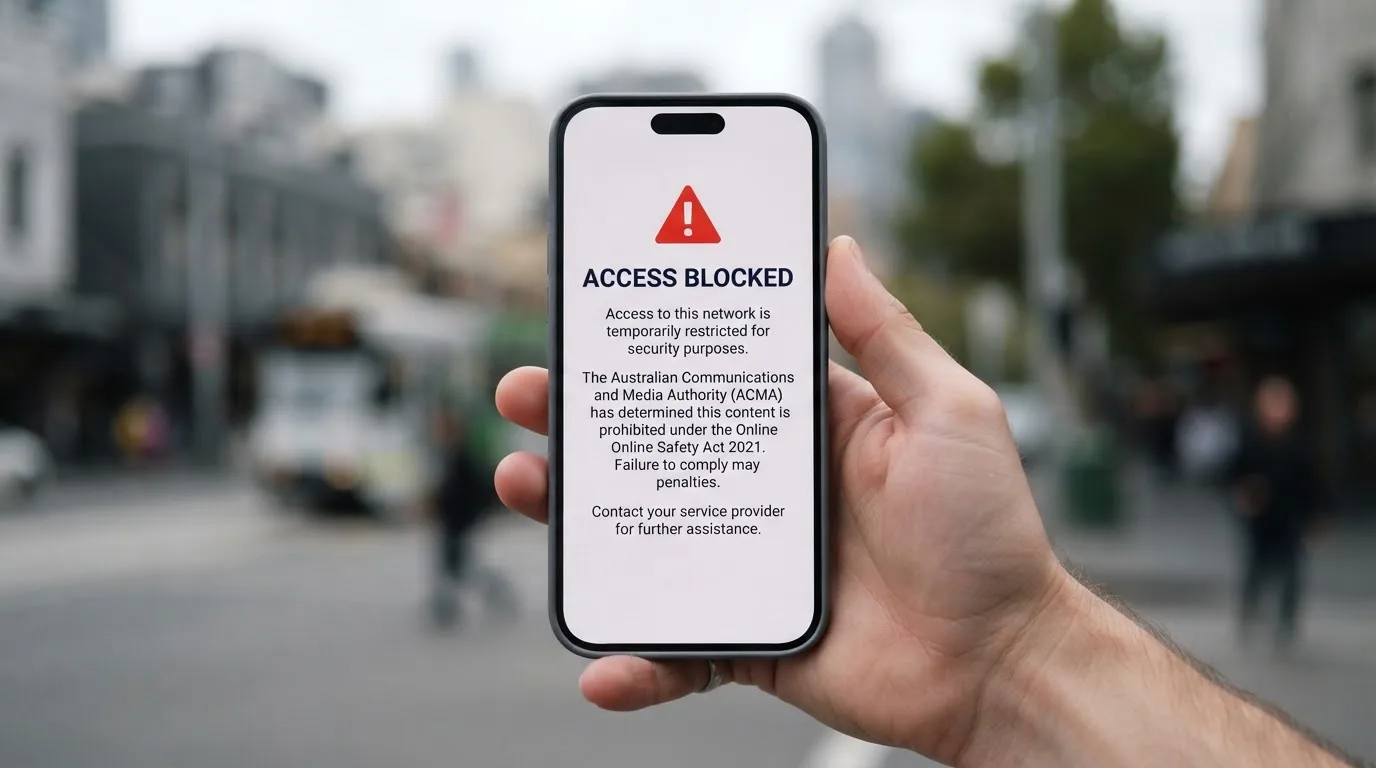
A reader typing “instant withdrawal casino” or “casino instant withdrawal” usually wants a shortlist of online casinos that pay out fast. In Australia, that shortlist doesn’t exist in the form the search implies. The Interactive Gambling Act 2001 makes it an offence to provide online casino games, online pokies or in-play betting to anyone physically in Australia, and no state or territory issues a licence for any of it. What the ACMA has built up instead is an enforcement record: formal warnings issued, internet service providers directed to block websites, and an estimated A$3.9 billion a year flowing to offshore sites that the law doesn’t reach.
This page walks that picture in full. It lays out the legal frame first, then the player-protection tools that do work in Australia, then the payment infrastructure — PayID, Osko, BPAY — that makes a withdrawal fast when it’s allowed at all. The brands named in the comparison are brands the ACMA has acted against, not brands the page is recommending. Where the law has another route — licensed wagering, land-based pokies, BetStop self-exclusion — that route is named too.
Currency and date stamp: current as of 1 November 2026 against the ACMA register and the Australian Communications and Media Authority’s formal-warning register, both as published by the regulator.
Table of Contents
- How the prohibition actually works in Australia
- The ACMA’s enforcement record against offshore casino brands
- The blocking-rate calculation — what the ACMA record actually adds up to
- Player protection that actually binds in Australia
- Crypto and anonymity — what an “instant withdrawal, no verification” claim really means in Australia
- Payments and payout speed — what “instant” actually looks like in Australia
- The licensed-where-it-exists alternative: where the reader can actually play
- Comparison: brands the ACMA has acted against
- The brands, in the order the regulator reached them
- What a reader comparing these names actually decides
- The wider Australian picture
- What an Australian reader leaves this page with
- Frequently asked questions
How the prohibition actually works in Australia
The Interactive Gambling Act 2001, as strengthened by the Interactive Gambling Amendment Act 2017, targets the provider, not the player. Offering an online casino game, an online pokie or in-play betting to a person in Australia is the offence; placing a bet from Australia is not. That asymmetry shapes everything a reader notices about this market: enforcement action names the operator, the website and the corporate group; the player who lost the money is not the one receiving the warning.
What the Act permits is narrower than the offshore marketing suggests. A wagering service can be licensed, but only for bets placed before the event — racing and sport, not casino games, not in-play. Lotteries and keno are licensable separately. The Northern Territory Racing and Wagering Commission (NTRWC) regulates 52 of Australia’s online bookmakers — Sportsbet, Bet365, Ladbrokes among them — but the commission itself runs on a thin footprint: no full-time staff, a monthly meeting in Darwin, and a remit that covers wagering only, never online casino. No Australian jurisdiction, territory or state, issues a licence for an online casino game.
Two consequences flow from that. First, any site showing an Australian logo, an Australian regulator ID or “licensed in Australia” on its footer is misrepresenting itself — the licence it actually carries is an offshore one (Curaçao, Anjouan, Kahnawake) and sits outside Australian consumer law. Second, an offshore site gives an Australian player no Australian complaints body, no local recourse if a withdrawal is refused, and no guarantee the balance survives the next ACMA blocking round. The site can be blocked while the player’s money is still inside it.
The ACMA’s enforcement record against offshore casino brands
The ACMA’s job on this file is to investigate, to issue formal warnings, and — when warnings are ignored — to ask Australian internet service providers to block websites. The cumulative numbers came in a round reported on 26 June 2026: 1,751 illegal gambling and affiliate marketing websites blocked since the first blocking request in November 2019, and more than 230 unlicensed gambling services having left the Australian market since enforcement was strengthened in 2017. The same round added twelve more names: 7Signs, ChromaBet, Donbet, Duospin, Freshbet, Slots Gem, Jacks Club, Lucky Start, Pointsbetz, Spinrise, Vinyl Casino and Wildsino.

The pace hasn’t slowed. In April 2026 the ACMA warned Ryker B.V. over Jackbit and CasinOK, and in March 2026 it warned Pulsup Ltd over Rocketplay. In July 2025 it warned Bamboo Media over Ignition Casino and Consolutetish S.R.L. over National Casino and Bizzo Casino, with Bizzo Casino having already drawn a 2022 warning to TechSolutions (CY) Group Limited and TechSolutions Group N.V. In April 2025 Sterplay Holding Ltd drew a warning over Casino Intense; in February 2025 EOD Code SRL drew one over Instant Casino; in May 2025 Dama N.V. drew one over Spirit Casino, and in March 2025 Dama N.V. drew one over Woo Casino — the second formal warning on the same operator group in three years, after the May 2022 warning covering Bambet, Dazard, Level Up, Rocketplay, Wild Tornado and Cobra Casinos. Hollycorn N.V. has drawn a warning over Sky Crown and Blue Leo.
For the reader, that record answers a question the marketing never does: which operators have been told, in writing, that their product is illegal in Australia. A formal warning is the regulator’s last open step before a blocking request; the operators in the comparison below are the operators the ACMA has reached that step with.
The blocking-rate calculation — what the ACMA record actually adds up to
The arithmetic that earns this section is the running total of blocked sites, the date of the first blocking request, and the current date. Since the first blocking request in November 2019 and the report dated 26 June 2026, the ACMA’s tally stands at 1,751 blocked sites. Over that interval — roughly 79 months from November 2019 to the June 2026 cut-off — the average works out to a band of roughly 22 blocked sites per month, or about one every 33 hours. The condition that has to sit beside the band: it is an average over the regulator’s reporting cycle, not a steady weekly rate, and it includes affiliate marketing domains as well as the casino and sportsbook front-ends.
Two corollaries follow. The first is that an offshore operator that survived a particular month has not survived the regime — the ACMA’s blocking requests are ongoing, and the next round is the one that names the operator a reader is currently using. The second is that an Australian balance sitting with a blocked operator is a balance sitting with an Australian bank account the player can no longer reach through that domain. The regulator doesn’t return the money; the operator behind the URL does, or doesn’t.
Player protection that actually binds in Australia
The National Self-Exclusion Register, BetStop, has been live since August 2023 and binds every Australian-licensed online and phone wagering service. Register once and the licensed bookmaker can’t take your bet, send you marketing, or open a new account in your name. An offshore casino is not connected to BetStop — it doesn’t see the register and isn’t obliged to honour it — which is the gap the ACMA’s enforcement record maps out.
The 24/7 national helpline is 1800 858 858, free from any Australian phone, with web chat at Gambling Help Online. Both are run outside the commercial layer; neither asks for a deposit history. The Commonwealth Bank, ANZ and Westpac each offer gambling-block toggles on their card products: Westpac’s block refuses authorisation on transactions carrying the merchant category code “Betting/Casino Gambling” on eligible cards; ANZ’s block extends to digital-wallet payments through Apple Pay on the same card, but takes 48 hours to switch off once turned on, and the bank warns that not every gambling transaction will be blocked and some non-gambling transactions might be blocked in error. CommBank’s lock operates inside the CommBank app on eligible cards, with the same caveat that some gambling transactions may not be stopped. None of these blocks reaches an offshore casino the merchant-code system doesn’t classify as gambling; some do, many don’t, and a bank-block is a backstop rather than a firewall.
Crypto and anonymity — what an “instant withdrawal, no verification” claim really means in Australia
The marketing language around instant-withdrawal, no-verification casinos leans hard on crypto. The shape of the offer is straightforward on the surface: deposit Bitcoin or USDT, play, request a withdrawal, receive it on-chain without the casino ever asking for an ID. The Australian picture is more constrained.
Crypto is not a route the licensed wagering channels use. Since 11 June 2024, the Interactive Gambling Act’s credit-card ban was extended to digital currency as a payment method for any Australian-licensed online wagering service; the operator penalty for taking a crypto deposit on a licensed Australian wagering site runs up to A$247,500. The legal deposit routes for licensed wagering — debit card, bank transfer, PayID/Osko and BPAY — are the four routes the regulator recognises.
An offshore site taking USDT or Bitcoin from an Australian customer is, by definition, an unlicensed site operating outside the Australian rules. That has three concrete consequences. First, the ACMA’s enforcement record is the only Australian pressure on it, and the offshore licence it actually carries doesn’t recognise Australian consumer law. Second, “no verification” on the way in doesn’t mean no verification on the way out — most offshore operators will run KYC when a withdrawal is requested in fiat, and the no-verification claim usually applies only to the deposit leg. Third, the wallet-to-wallet transfer may be quick, but the conversion of that crypto back into an Australian dollar balance is the slow step, and it carries the bank’s own monitoring rules around the receiving PayID or BSB.
For a reader who has decided to use crypto anyway, the practical order is worth keeping straight: the on-chain transfer can be fast, the casino’s internal approval can be fast, and the Australian bank’s acceptance of the incoming transfer can take a working day or longer — and the receiving bank is entitled to query a transfer whose origin doesn’t match its stated purpose.
Payments and payout speed — what “instant” actually looks like in Australia
What makes a withdrawal feel instant on a legal Australian wagering service is the New Payments Platform, which became accessible to the public on 13 February 2018 and sits under Australian Payments Plus (AP+). The participants — the Reserve Bank and the country’s major banks among them — agree to keep the platform’s monthly outages to no more than two minutes.
PayID is the addressing layer. Pay an Australian bank account through PayID and the recipient’s name appears on screen before the transfer is sent — a safeguard AP+ highlights, because being asked to transfer money to a PayID on an illegal gambling site almost certainly means a scam site. By April 2025 more than 25 million PayIDs had been registered across over 100 Australian financial institutions.
Osko is the speed layer. A bank transfer between participating Australian banks arrives in under a minute, 24/7 including weekends, addressed either to a BSB and account number or to a PayID. For a withdrawal on a licensed wagering service — a bet on a horse race, a sports multi — that is what “instant” actually looks like on this side of the law.
BPAY is the bill-payment route, in online banking since 1997, owned jointly by ANZ, Commonwealth Bank, National Australia Bank and Westpac through Cardlink Services Limited, available through over 140 banks and financial institutions, and accepted by over 95,000 businesses. It is a bill-payment rail, not a payout rail — useful for funding an account from a participating bank, not for receiving a withdrawal from a wagering service.
The credit-card ban in Australia has shaped how the digital wallets fit into the picture. Apple Pay, Google Pay and Samsung Pay together accounted for around 45% of all card payments in Australia by number at the end of 2025.
Legal payment routes for wagering
| Method | Typical speed | Availability |
|---|---|---|
| PayID | Instant (under a minute) | 24/7, all major banks |
| Osko | Instant (under a minute) | 24/7, all major banks |
| Debit card | Same-day or next-day | Standard across licensed sites |
| BPAY | Next business day | All major banks |
Apple Pay does not surcharge consumers — any surcharge a merchant charges comes from the merchant’s own card-processing fees, not from Apple — and the transaction limits and PIN requirements are set by the card issuer and the merchant, not by Apple. The 2023 amendment to the Interactive Gambling Act means an Australian-licensed wagering service cannot accept credit-card or credit-related products, and a linked digital wallet like Apple Pay falls under the same restriction when the underlying card is a credit card. The legal wagering deposit routes — debit card, bank transfer, PayID/Osko, BPAY — do not run on credit.
Two card-network details matter. American Express, established in 1850 as a freight-forwarding company and issuing its first charge card on 1 October 1958, operates as a three-party scheme: issuer and processor under one roof. The Reserve Bank of Australia’s July 2025 review proposes removing surcharges only on eftpos, Mastercard and Visa — leaving American Express outside the proposed surcharge ban. For an Australian punter, that distinction matters because Amex-acceptance on a wagering site is rarer than Visa or Mastercard acceptance, and the surcharge that does apply sits outside the proposed ban.
AUSTRAC’s threshold-transaction-report rule, which requires reporting of transfers of A$10,000 or more, applies only to physical cash. Ordinary electronic bank transfers are not subject to that per-transaction reporting requirement regardless of the amount sent — a fact that bears on the experience of large withdrawals, but not on the reporting an Australian bank runs automatically on its own accounts.
The licensed-where-it-exists alternative: where the reader can actually play
The Australian law does not leave a player with nothing to do. Land-based casinos operate in every mainland state and territory under state and territory licensing. Licensed pokies venues — clubs, pubs and hotels — run pokie machines under state-level regulation. Licensed online wagering — Sportsbet, Bet365, Ladbrokes, the other 49 NTRWC-licensed bookmakers — takes bets on racing and sport, placed before the event, not in-play, paid out through PayID and Osko when settlement is allowed. Lotteries and keno operate under separate state regulation.
That is the shelf the page would point an Australian reader toward. It is not a withdrawal-speed comparison; the speed is the same — Osko, sub-minute, 24/7 — and what differs from the offshore marketing is the licence behind it. A balance on a licensed wagering service sits inside Australian consumer law, inside BetStop’s reach, inside the bank’s gambling-block safeguards, and outside the ACMA’s blocking list.
For pokie play specifically, the legal channel is the pokie machine on the floor of a licensed venue, not the online pokie on an offshore site. The H2 Gambling Capital 2025 estimate — Australians losing about A$3.9 billion a year to illegal gambling sites, with the share of gambling going through legal channels falling from 74% in 2021 to 64% — captures the gap between what the law allows and what Australians actually do. The licensed alternatives are smaller in marketing spend, slower to grab attention, and not built around “instant withdrawal” — but they are built around an Australian licence, which the marketing pages never are.
Comparison: brands the ACMA has acted against
The brands below are not a recommendation. They are the operators the ACMA has issued a formal warning to for offering prohibited interactive gambling services to Australians. The ACMA action is the only Australian-language measure of an operator’s standing on this file; the offshore licence the operator displays is not. Subject support here records where the operator is named in the public Australian sources the regulator, the bank, or the payments layer keeps — the ACMA register, AUSTRAC, BetStop, the payments-infrastructure pages — and is not a measure of the operator’s quality.
Comparison landscape
| Brand | ACMA action and date | Operator named by the ACMA | Subject support |
|---|---|---|---|
| RocketPlay | Pulsup Ltd, March 2026 (earlier Dama N.V., May 2022) | Pulsup Ltd | listings in industry coverage; no Australian register entry |
| Level Up Casino | Dama N.V., May 2022 | Dama N.V. | listings in industry coverage; no Australian register entry |
| Woo Casino | Dama N.V., March 2025 | Dama N.V. | no Australian-source data |
| Spirit Casino | Dama N.V., May 2025 | Dama N.V. | no Australian-source data |
| National Casino | Consolutetish S.R.L., July 2025 | Consolutetish S.R.L. | listings on ACMA, AUSTRAC and BetStop reference pages |
| Bizzo Casino | Consolutetish S.R.L., July 2025 (earlier TechSolutions, 2022) | Consolutetish S.R.L. | listings in industry coverage; not on Australian consumer-protection pages |
| Ignition Casino | Bamboo Media, July 2025 | Bamboo Media | no Australian-source data |
| Instant Casino | EOD Code SRL, February 2025 | EOD Code SRL | listings on payments-infrastructure pages, including PayID guidance |
| Jackbit | Ryker B.V., April 2026 | Ryker B.V. | no Australian-source data |
| Casino Intense | Sterplay Holding Ltd, April 2025 | Sterplay Holding Ltd | listings on AUSTRAC and BetStop reference pages; industry-coverage presence |
| Sky Crown | Hollycorn N.V. (Sky Crown and Blue Leo), September 2022 | Hollycorn N.V. | no Australian-source data |
What the table shows — and what the prose beside it has to earn — is that the ACMA’s record covers most of these operators once, several twice, and that the second warning tends to arrive inside three years of the first on the same corporate group. A formal warning is not a blocking request; it is the regulator’s open step before one. The reader sitting on a balance with any of these brands is sitting on a balance the regulator has already told the operator is in breach of Australian law.
The brands, in the order the regulator reached them
RocketPlay
Two warnings: Pulsup Ltd in March 2026, and the earlier Dama N.V. warning in May 2022 covering Rocketplay alongside five other brands. The 2026 escalation is the more telling one — same brand, different corporate wrapper, four years on. A reader who picked up RocketPlay through an affiliate link and never saw a 2022 notice has had no signal from the operator itself that the legal standing in Australia has changed.
Level Up Casino
The May 2022 Dama N.V. warning covered Level Up alongside Bambet, Dazard, Rocketplay, Wild Tornado and Cobra Casinos — a single regulator action against a single operator running six front-end brands. The pattern is the one to remember: an offshore licence is held by a corporate group that runs a portfolio of skins, and one warning names the group rather than the brand the player sees.
Woo Casino
The Dama N.V. warning in March 2025 came three years after the 2022 warning to the same operator group. Two warnings on the same group is the record the ACMA keeps before a blocking request; the group’s response to the first one was the test, and the second warning records the failure.
Spirit Casino
Same Dama N.V. group, warned in May 2025, two months after the Woo Casino warning. Two warnings on the same group inside a quarter reads less like an outlier and more like the regulator’s enforcement cycle closing on a portfolio it has already addressed.
National Casino
Consolutetish S.R.L. drew the July 2025 warning, the same regulator action that named Bizzo Casino. The brand has the rare distinction of appearing in the ACMA, AUSTRAC and BetStop reference pages — meaning the consumer-protection side of the Australian payments and self-exclusion infrastructure has a record of the name, not just the regulator’s enforcement side.
Bizzo Casino
Two warnings, four years apart. Consolutetish S.R.L. in July 2025, and TechSolutions (CY) Group Limited and TechSolutions Group N.V. in 2022. The two-warning arc is the same shape as RocketPlay: same brand, different corporate wrapper, regulator reaching the second wrapper after the first one stopped responding. The reader-side question is whether the offshore marketing ever showed the first warning; the regulator-side answer is that it didn’t need to.
Ignition Casino
Bamboo Media drew the July 2025 warning. The brand’s name in Australian-source material is otherwise thin — the regulator-side record is the record that exists.
Instant Casino
EOD Code SRL drew the February 2025 warning. Instant Casino is named on Australian payments-infrastructure pages — including the PayID guidance that warns against transferring to a PayID on an illegal gambling site — which is the payments-layer equivalent of the regulator’s record. A reader who has ever paid Instant Casino through PayID and seen the recipient-name check has been told, at the point of payment, that the site is one the payments layer flags.
Jackbit
Ryker B.V. drew the April 2026 warning, covering both Jackbit and CasinOK. The grouping — two front-ends, one operator warning — matches the Dama N.V. six-brand pattern. Australian-source material on Jackbit specifically is thin; the ACMA record is the record there is.
Casino Intense
Sterplay Holding Ltd drew the April 2025 warning. Casino Intense appears on AUSTRAC and BetStop reference pages and in industry coverage — meaning the Australian consumer-protection layer has the name alongside the regulator’s enforcement record.
Sky Crown
Hollycorn N.V. drew the warning covering Sky Crown and Blue Leo, dated September 2022. Four years on, the brand is still operating; the warning is the open record the regulator holds.
What a reader comparing these names actually decides
The reader’s comparison is not “which of these pays fastest”. Every one of these operators sits outside Australian consumer law, and “instant withdrawal” on any of them is the marketing line for a payment the ACMA may block next month. The reader’s comparison is closer to “which of these has the smallest paper trail back to me when the next blocking round closes the URL I used”.
Three things are worth pulling out of the comparison table for that frame. First, the brands that recur in the ACMA record (RocketPlay, Bizzo Casino) are the brands the regulator has already had to warn twice — once through one corporate wrapper, once through another. Second, the brands that appear on AUSTRAC and BetStop pages (National Casino, Casino Intense) have moved from the regulator’s enforcement register into the consumer-protection register — a step that suggests the names have surfaced in player-side complaints as well. Third, the brands with no Australian-source data beyond the ACMA record (Woo Casino, Spirit Casino, Ignition Casino, Jackbit, Sky Crown) are the brands the ACMA has acted against without the consumer-protection layer separately picking them up.
What none of this settles is whether the reader’s withdrawal was paid. The ACMA’s record settles whether the operator is lawful in Australia; the operator’s payment record settles whether the reader’s balance is reachable. Those are different questions, and the second one is the one the ACMA cannot answer for the reader.
The wider Australian picture
Two things sit outside this comparison and matter for the reader’s decision. The first is the tax position. Gambling winnings of a recreational player are not assessable income under section 6-5 ITAA 1997, and losses are not deductible — unless the person carries on a business of gambling, which is a separate ATO test rather than a casual punter’s reality. The second is the 2026 reform package. The Interactive Gambling Amendment (Gambling Reform) Bill 2026 passed Parliament on 19 August 2026; its advertising and inducement measures commence on 1 January 2027. The law is in place; the inducement rules are not yet in force, and an Australian reader comparing operators in the meantime is comparing operators against a regime whose marketing curbs are about to land.
The H2 Gambling Capital estimate — A$3.9 billion a year to illegal sites, the legal-channel share down from 74% in 2021 to 64% — is the macro context for the comparison. The licensed alternatives (52 NTRWC-licensed bookmakers, state-licensed pokie venues, lotteries, keno) sit underneath a market that is losing share to offshore sites. The ACMA’s blocking list is the response on the enforcement side; the inducement ban coming in 2027 is the response on the marketing side. Neither is a withdrawal-speed comparison.
What an Australian reader leaves this page with
The “instant withdrawal” promise is real on the licensed side — PayID and Osko settle in under a minute, 24/7, and the licensed wagering services paid out that way already. It is also real on the offshore side, in the narrow sense that an on-chain transfer can be sub-minute. The two are not the same promise. The licensed payout is inside Australian consumer law, inside BetStop, and outside the ACMA’s blocking list. The offshore payout is none of those things and may be inside a balance the next blocking round freezes.
For a reader who arrived looking for a shortlist of instant-withdrawal casinos, the honest shortlist is the licensed wagering services for racing and sport, the state-licensed pokie venues for pokie play, and BetStop for the self-exclusion route that does reach the licensed side. The brands the ACMA has acted against are not a shortlist; they are the regulator’s record of operators the law doesn’t permit.
For a reader who arrived looking for the marketing phrase “instant withdrawal, no verification”, the answer is that the licensed wagering side asks for verification at account opening and pays out fast anyway, the crypto side is closed to licensed wagering under the 2024 ban, and the offshore side’s “no verification” claim usually applies to the deposit leg and not the withdrawal leg. None of that is what the marketing page promised, and all of it is what the Australian reader actually has to work with.
Frequently asked questions
What’s the difference between a payout and a withdrawal request?
A withdrawal request is the player pressing the button; a payout is the money actually moving. On a licensed wagering service the two are usually close together — Osko settles in under a minute, 24/7 — but the operator still runs an internal approval step that can take a few minutes or longer depending on the account. The “instant” in the marketing refers to the settlement rail, not the operator’s internal queue.
Why might a casino require identity verification before an instant withdrawal?
Even when a casino offers an “instant” payout, most run a Know Your Customer check the first time money moves out — passport or driver’s licence, proof of address, sometimes a source-of-funds check. The “no verification” marketing claim usually applies to the deposit side. The payout side triggers the check precisely because money is leaving the casino.
Is it legal for an online casino to process withdrawals for players in Australia?
No. Offering online casino games to a person in Australia is an offence under the Interactive Gambling Act 2001; no state or territory issues a licence for it. The operator is the one the law targets, not the player, but the operator sits outside Australian consumer law, outside the BetStop register, and on the ACMA’s enforcement list.
Can a bank transfer withdrawal arrive within minutes in Australia?
Yes — through PayID and Osko on a participating bank, a transfer settles in under a minute, 24/7. That’s the licensed wagering side. On an offshore casino the operator’s own queue comes first, the ACMA’s blocking round can come later, and the receiving bank’s own checks sit on top of both.
Does a crypto withdrawal skip identity checks entirely?
Usually on the deposit leg; rarely on the withdrawal leg. Most offshore operators run KYC when a player asks for a fiat payout, and crypto payouts are typically converted back into Australian dollars before they reach an Australian bank, which brings the bank’s own monitoring rules into the picture. The 2024 credit-card ban extended to digital currency for licensed wagering — so crypto is closed to the Australian-licensed side of the market.
What red flags suggest an instant withdrawal claim is not genuine?
Three: the site claims an Australian licence (no Australian jurisdiction issues one); the site accepts credit cards or crypto for an Australian-licensed wagering product (both are banned); and the site’s name appears on the ACMA’s formal-warning register. The first two are marketing tells; the third is the regulator’s own tell.