
Fast Payout Casinos in Australia — The Honest Answer Is That There Is No Legal Market
A reader typing something like “best fast payout online casino australia” into a search box is usually looking for a shortlist of brands they can sign up to tonight and have winnings in their account by morning. The Australian situation makes that ask simpler to describe than it is to fulfil: online casino games — the pokies, blackjack, roulette and live-dealer tables that a fast-payout casino normally trades in — cannot be lawfully offered to anyone in Australia. No state or territory issues a licence for them. The Interactive Gambling Act 2001, as tightened by the Interactive Gambling Amendment Act 2017, makes the supply itself the offence. The Australian Communications and Media Authority enforces the prohibition by issuing formal warnings and directing internet providers to block offending sites.
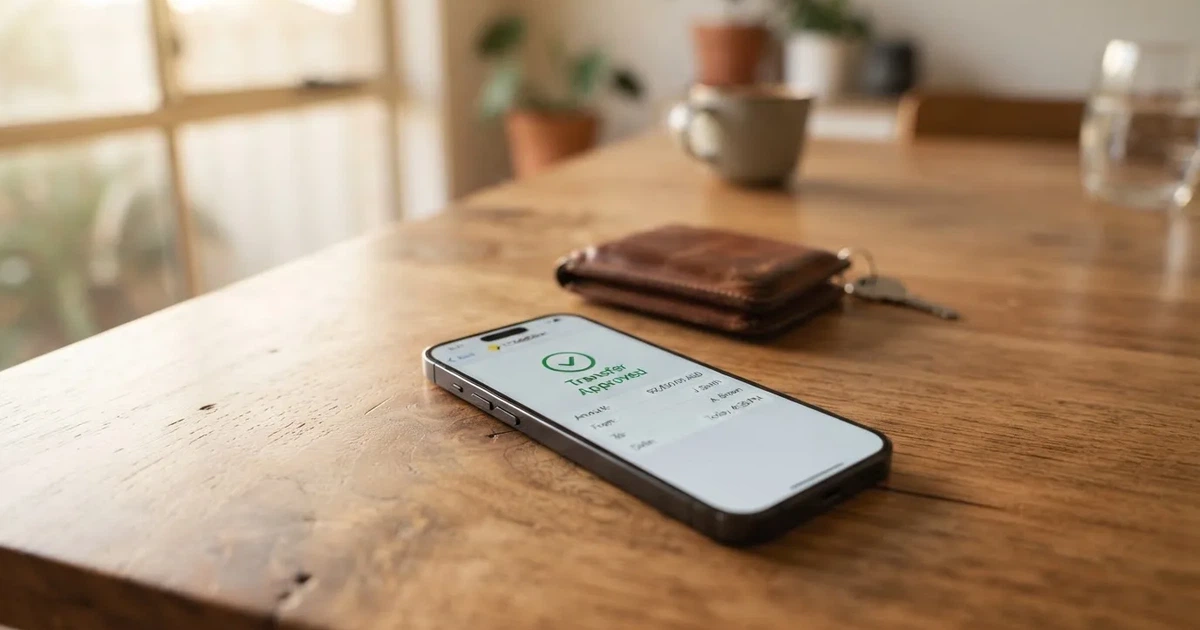
That is not the answer most affiliate pages deliver. The honest version is what this page is built around — what the speed claim is actually about, what an offshore site promises versus what it can be made to deliver, and what a player in Australia is left with once the marketing is set aside. The angle is one of choice rather than endorsement: there are paths a reader can take, and the question is which one suits which situation.
Currency, compliance and ACMA action current as of 30 October 2026, verified against the ACMA register, AUSTRAC and the Reserve Bank of Australia’s published material.
Table of Contents
- The Legal Picture Behind Every Fast-Payout Casino Pitch
- How Often the ACMA Has Had to Act
- Responsible Play — What Is Actually Available in Australia
- Cryptocurrency and the Promise of Anonymous Payouts
- Payment Methods and What “Fast Payout” Actually Means in Australia
- Brands the ACMA Has Formally Warned — What a Comparison Across Them Looks Like
- What an Australian Reader Is Actually Left With
- What the 2026 Reform Changes — and What It Does Not
- What to Read in a Fast-Payout Claim
- Frequently Asked Questions
The Legal Picture Behind Every Fast-Payout Casino Pitch
The Interactive Gambling Act 2001 (IGA) draws a hard line between what an Australian-licensed operator can offer and what is prohibited. Wagering on racing and sport before the event is licensable; lotteries and keno are licensable; online casino games and online pokies are not. The line was redrawn in 2017, when the Interactive Gambling Amendment Act 2017 expanded the prohibition and gave the ACMA real enforcement tools — formal warnings, civil penalties, and the power to ask Australian internet service providers to block non-compliant sites.

What is licensable in practice falls under the Northern Territory Racing and Wagering Commission (NTRWC), which regulates 52 of the country’s online bookmakers, including Sportsbet, Bet365 and Ladbrokes. The commission is small — it has no full-time staff and meets once a month in Darwin — but the licences it issues cover sports and race wagering, not casino. Anything calling itself an online casino in Australia is, by definition, operating outside what the IGA permits, even where it displays a Curaçao or Kahnawake licence at the foot of its homepage. The licence is real; what it does not do is authorise the service in Australia.
What the ACMA Has Done With That Power
The enforcement record is the closest thing Australia has to a published blacklist of fast-payout operators. As of June 2026, the ACMA had asked Australian ISPs to block 1,751 illegal gambling and affiliate-marketing websites since the first blocking request in November 2019, and more than 230 unlicensed services had left the Australian market since enforcement was strengthened in 2017. In the round reported on 26 June 2026 alone, twelve new sites went on the list: 7Signs, ChromaBet, Donbet, Duospin, Freshbet, Slots Gem, Jacks Club, Lucky Start, Pointsbetz, Spinrise, Vinyl Casino and Wildsino. The list is not theoretical. Sites on it stop resolving for Australian households on the major ISPs.
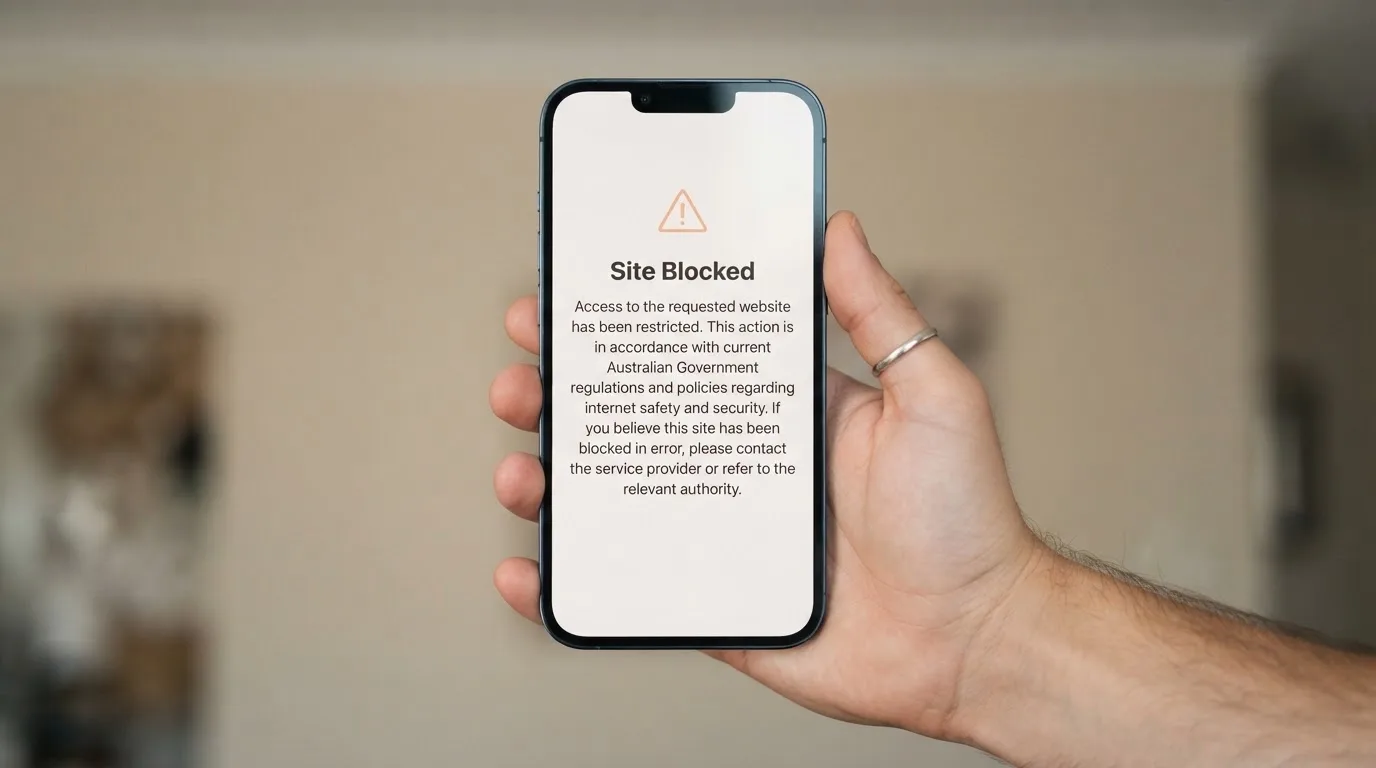
The formal-warning track has been the more common route. The ACMA issues these warnings under section 313 of the Telecommunications Act 1997, which gives it a published lever that is faster than a civil penalty proceeding. Between 2022 and the present round, named operators include:
- Dama N.V., warned in May 2022 over six casino brands — Bambet, Dazard, Level Up, Rocketplay, Wild Tornado and Cobra Casinos — then again in March 2025 over Woo Casino and in May 2025 over Spirit Casino.
- TechSolutions (CY) Group Limited and TechSolutions Group N.V., warned in 2022 over Bizzo Casino.
- EOD Code SRL, warned in February 2025 over Instant Casino.
- Hollycorn N.V., warned in September 2022 over Sky Crown and Blue Leo.
- Sterplay Holding Ltd, warned in April 2025 over Casino Intense.
- Bamboo Media, warned in July 2025 over Ignition Casino.
- Consolutetish S.R.L., warned in July 2025 over National Casino and Bizzo Casino (the latter already on the record from 2022).
- Pulsup Ltd, warned in March 2026 over Rocketplay.
- Ryker B.V., warned in April 2026 over Jackbit and CasinOK.
The names themselves are less important than the pattern: the ACMA names operators, not just brands, and the same operator entities turn up under multiple brands, which is why a warning to Dama N.V. in one year covers half a dozen storefronts in the next. The list of eleven brands later in this page sits inside that pattern. None of them is offered to the reader as a place to play — they are presented because the ACMA itself has acted against them, and the comparison block is between the warnings, not between the brands.
How Often the ACMA Has Had to Act
The blocking total cited above — 1,751 websites blocked since November 2019, against twelve more added in a single round reported on 26 June 2026 — provides a clear reference point. The calculation here illustrates how much the prohibition has had to be enforced, rather than how often it has been observed in practice.
The blocking rate over the period from the first request in November 2019 through the snapshot reported on 26 June 2026 is roughly 27 sites blocked per month, with the June 2026 round alone adding twelve. The point is not the running average but the surge pattern: when a single round can ask ISPs to drop twelve at once, the supply side is matching enforcement volume for volume. A reader holding an account at any brand not on the latest round has no guarantee that the brand will not appear on the next one.
The figure is best read as a band rather than a fixed number, because the ACMA’s rounds vary in size and the rate of departure of operators from the Australian market sits alongside the block list. Across the period as a whole, the running total implies the prohibition has been active enough to require several blocking actions a week on average; the figure should be treated as an order-of-magnitude estimate rather than a precise tally, since individual rounds consolidate earlier requests and the first round’s date sits well before the most recent enforcement rounds.
Responsible Play — What Is Actually Available in Australia
The Australian framework around gambling harm is real, but it binds Australian-licensed operators, not offshore casinos. The headline tool is BetStop, the National Self-Exclusion Register, which has been live since August 2023. BetStop blocks a registered individual from opening new accounts or depositing with any Australian-licensed online or phone wagering service for a period of the registrant’s choice — three months, twelve months, or permanently. The list of participating providers covers the licensed bookmaker side, not offshore casino brands.
That is the gap. A player who has registered with BetStop and then opens an account with an offshore casino is not breaking the BetStop terms — the offshore casino is not connected to the register. BetStop cannot stop the deposit, and the offshore casino has no obligation to honour the exclusion. The safeguard the Australian framework provides is meaningful for the licensed bookmaker and lottery side of the market, and meaningfully absent from anything calling itself an online casino.
A second layer sits with the banks rather than with the regulator. Westpac’s gambling block works at card level: it refuses authorisation of transactions registered under the merchant category code “Betting/Casino Gambling” on eligible personal credit and debit cards. ANZ offers a similar block through its app, and importantly the ANZ block also covers gambling transactions made through a digital wallet such as Apple Pay on an eligible card, not only the physical card. Commonwealth Bank lets customers apply a gambling lock to eligible cards via the CommBank app. The limitation is consistent across all three: each bank states plainly that it cannot guarantee every gambling-related transaction will be stopped, and some non-gambling transactions may be blocked in error. The block is a friction layer rather than a fence.
Free, confidential support is available through the National Gambling Helpline on 1800 858 858, available 24 hours a day, and through Gambling Help Online’s chat service. Neither route turns an offshore casino into a licensed one, but both are the right place to start if gambling has started to cause problems, and both are designed to handle the situation regardless of which platform the gambling is happening on.
Cryptocurrency and the Promise of Anonymous Payouts
A reader looking up “fast payout crypto casino” or “bitcoin casino fast payout” is usually after one of two things: speed, or a transaction that does not pass through a bank that might block it. The Australian answer on the second point is partly reassuring and partly the opposite.
The reassuring part is that licensed Australian online wagering services cannot accept payment by credit card or by credit-related products at all — the prohibition was added to the Interactive Gambling Act 2001 by the 2023 amendments, with enforcement commencing on 11 June 2024 and penalties of up to A$247,500 for operators. Digital currency sits alongside credit on the prohibited list. In other words, a licensed Australian operator cannot ask a customer to deposit in bitcoin; the prohibition makes the payment method unavailable on the lawful side of the market.
The less reassuring part is that the prohibition applies to licensed operators, not to offshore casinos. An offshore casino can ask for crypto, can settle in crypto, and will quote a fast-payout window against a blockchain confirmation count rather than against an Australian bank’s processing time. From the player’s perspective, that solves two problems: the bank is not in the loop to block the transaction, and the settlement is fast in the sense the casino means when it says it. From the regulator’s perspective, the speed is real and the protection is not — there is no Australian complaints body, no Australian recourse if a withdrawal is refused, and the operator can still be blocked by ISPs with whatever balance remains on the account.
Crypto does not make an illegal service lawful. The brand that promotes bitcoin as a fast-payout method is generally an offshore brand that the ACMA has either warned or could warn on the basis of supplying prohibited games to Australian residents. The Payment Methods section below covers the practical side of speed; the legal side is settled by the IGA, not by the choice of coin.
Payment Methods and What “Fast Payout” Actually Means in Australia
The speed claim is doing two different jobs on the page, and they need to be separated. The casino-side speed is how quickly the operator releases funds once a withdrawal is requested — the internal processing step. The bank-side speed is how quickly the released funds arrive in an Australian account. Both matter, and the two together produce the figure a player actually experiences.
Inside the Casino: The Internal Processing Window
Offshore casinos typically quote internal processing windows ranging from instant to seventy-two hours. The honest reading of “instant” is usually that the casino has flagged the withdrawal as not requiring manual review for the account in question — first withdrawal from a new account, a withdrawal above a threshold, or a withdrawal to a new method will almost always be reviewed. The realistic figure is closer to 24-48 hours for a clean account on a crypto or e-wallet route. Cards and bank transfers are slower because of the bank’s own processing on the receiving end.
The casino-side speed is also where the marketing word “fast” starts to lose its grip. A casino that processes withdrawals “instantly” still applies a wagering check, a bonus-clearing check, a verification check, and — increasingly — a source-of-funds check above certain amounts. The processing window is the time between those checks finishing and the money moving. A reader who treats the headline number as the whole picture will be surprised by the queue behind it.
Into an Australian Bank: The Real Bottleneck
Once a withdrawal has been released, the question is how it gets from wherever the casino pays out into a normal Australian transaction account. The relevant infrastructure is the New Payments Platform, which became accessible to the public on 13 February 2018 and is owned by New Payments Platform Australia Ltd, a non-profit whose 13 shareholders include the Reserve Bank of Australia and the country’s major banks. Through the NPP, two payment methods dominate for fast settlement: Osko and PayID.
Osko transfers between participating Australian banks arrive in under a minute, twenty-four hours a day, seven days a week, including weekends. The transfer works whether it is addressed to a BSB and account number or to a PayID. Over 100 Australian financial institutions support PayID-based instant transfers, and more than 25 million PayID identifiers had been registered on the platform as of April 2025. Participants in the NPP must keep the platform’s monthly outages to no more than two minutes. The system is fast because it was built to be fast, and it is reliable because the contractual outage budget keeps it that way.
PayID adds a safety check that matters for the casino question. When a payment is made to a PayID, the name of the account holder is shown before the transfer is sent. AP+ warns plainly that being asked to transfer money to a PayID on an illegal gambling site almost certainly means a scam site. A player who sees a casino asking for a PayID transfer should treat it as a signal, not as a feature — the same NPP that makes fast payouts possible also makes the destination visible.
BPAY is the third rail and the slowest. BPAY is a bill-payment service accessed through a payer’s own online banking: the payer enters the Biller Code and the Customer Reference Number printed on the bill. It has operated in Australia since 1997 and is available through over 140 banks and financial institutions. It is fast for paying bills but is not designed for casino withdrawals — it is push-only, and a casino would have to be a registered BPAY biller for the flow to work in reverse. As a deposit method it is fine; as a withdrawal destination, it is not the right rail.
BPAY, PayID and Osko are now run by Australian Payments Plus, the entity formed when the ACCC authorised the 2021 merger of BPAY Group, eftpos and NPP Australia.
Cards, Digital Wallets and the New Rules
Cards remain the most common deposit method but the least useful withdrawal method for an Australian reader. American Express, established in 1850 as a freight-forwarding company, is unusual among card networks: it operates as a three-party scheme, issuing cards and processing transactions itself rather than working through the four-party Visa/Mastercard model. The Reserve Bank of Australia’s July 2025 review proposes removing surcharges only on eftpos, Mastercard and Visa transactions, explicitly leaving American Express outside the proposed surcharge ban. For a withdrawal, what matters is the receiving bank’s processing time, which is generally one to three business days for card refunds and slower for cross-border refunds from offshore operators.
Digital wallets are a more mixed picture. Apple Pay, Google Pay and Samsung Pay collectively accounted for around 45% of all card payments in Australia by number at the end of 2025. Apple does not charge fees to consumers for using Apple Pay in stores, online or in apps — any surcharge is the merchant’s own card-processing cost, not Apple’s. Apple is clear that transaction limits and PIN requirements are set by the card issuer or merchant, not by Apple itself. For gambling specifically, ANZ’s gambling block also blocks gambling transactions made through Apple Pay on an eligible card, and the same is true of Westpac’s card-level block: a digital wallet does not bypass the bank-side check. The headline is that the digital wallet is fast at the point of sale; it is not faster than the underlying card once the bank’s gambling-transaction logic sees the merchant category code.
Reporting Thresholds and What They Mean
AUSTRAC’s threshold-transaction-report rule requires reporting of transfers of A$10,000 or more, but it applies only to physical cash. Ordinary electronic bank transfers are not subject to that per-transaction reporting requirement, regardless of the amount sent. A reader who has been told that a large withdrawal will trigger a “report” is being told something that does not apply to the payment method they are actually using. A bank may still apply its own internal review above its own thresholds, but the AUSTRAC rule is not the reason.
Brands the ACMA Has Formally Warned — What a Comparison Across Them Looks Like
The eleven brands below are not a recommended shortlist. Each of them is included because the ACMA itself has issued a formal warning over it for offering prohibited interactive gambling services to Australians. The comparison is between the warnings — what the regulator has said, who it said it to, and whether the same operator entity is named more than once. A reader looking for a place to play will not find one in this table; a reader looking for the shape of the offshore market that targets Australians will.
The columns used here are: the brand as the ACMA named it; the date and form of ACMA action; the operator entity the ACMA named; and the subject-support status — what can be said about the brand’s connection to the topic from sources other than the ACMA. Where the ACMA warns an operator rather than a brand directly, the operator is the entity carrying the warning forward.
| Brand | ACMA action and date | Operator named by the ACMA | Subject support |
|---|---|---|---|
| RocketPlay | Formal warning, March 2026 (Pulsup Ltd); earlier warning May 2022 (Dama N.V.) | Pulsup Ltd; Dama N.V. | Listings-only coverage from GamblingInsider — no Australian licensing, no Australian consumer protection |
| Level Up Casino | Formal warning, May 2022 | Dama N.V. | Listings-only coverage from Westpac — the warning predates the brand’s wider Australian-facing marketing |
| Woo Casino | Formal warning, March 2025 | Dama N.V. | No data — the warning is the only material the ACMA has published against this brand |
| Spirit Casino | Formal warning, May 2025 | Dama N.V. | No data |
| National Casino | Formal warning, July 2025 | Consolutetish S.R.L. | Listings-only coverage from acma.gov.au, austrac.gov.au and betstop.gov.au — the regulatory side of the warnings, not the brand’s own material |
| Bizzo Casino | Formal warning, July 2025 (Consolutetish S.R.L.); earlier warning 2022 (TechSolutions) | Consolutetish S.R.L.; TechSolutions (CY) Group Limited and TechSolutions Group N.V. | Listings-only coverage from Gamblinginsider.com |
| Ignition Casino | Formal warning, July 2025 | Bamboo Media | No data |
| Instant Casino | Formal warning, February 2025 | EOD Code SRL | Listings-only coverage from EcoPayz and PayID — payment-rail coverage rather than endorsement |
| Jackbit | Formal warning, April 2026 | Ryker B.V. | No data |
| Casino Intense | Formal warning, April 2025 | Sterplay Holding Ltd | Listings-only coverage from Austrac, BetStop and GamblingInsider |
| Sky Crown | Formal warning, September 2022 | Hollycorn N.V. | No data |
The shape of the table is the point. The same operator entities appear across multiple rows: Dama N.V. is named in five of the eleven warnings, either as the entity warned in the same year or in a later round over a related brand. Consolutetish S.R.L. and TechSolutions share the National Casino and Bizzo Casino record. A reader who treats each brand as an independent operator is reading the table wrong — the offshore market that targets Australia is concentrated in a handful of operator groups, and the ACMA is naming them.
The “Subject support” column reflects a strict separation. A row marked “no data” means the ACMA warning is the only material the public record carries against that brand; nothing else is asserted about it. A row marked “listings-only” means third-party listings mention the brand in connection with the topic, but those listings are not endorsements and do not change the underlying regulatory position: the brand remains an offshore operator outside the Australian framework. None of the eleven brands is licensed by an Australian jurisdiction for the supply of online casino games, and none is offered here as a place to play.
What an Australian Reader Is Actually Left With
The choice the page returns to is between three paths, and the choice depends on what the reader is trying to do.
Licensed Australian wagering. Sports and racing, placed before the event, are licensable in Australia through the NTRWC and equivalent state regimes. The full Australian framework applies — credit cards are not accepted, gambling blocks at the bank level can be activated, BetStop self-exclusion works against these operators, and disputes go through Australian complaints channels. The product is narrower than what an offshore casino offers: no online pokies, no live-dealer roulette, no blackjack. The speed of withdrawal into an Australian bank is constrained by what the operator processes internally, not by what the NPP can do on the receiving end. A PayID or Osko payout from a licensed bookmaker lands in the customer’s account in under a minute once the operator has released it.
Land-based venues and licensed pokies. Australian clubs, hotels and casinos operate pokies and table games under state and territory licensing. Crown Melbourne, Crown Perth, The Star Sydney, The Star Gold Coast, SkyCity Adelaide and the casino at Lasseters in Alice Springs are the headline names; thousands of clubs and hotels operate poker machines under separate state regimes. The product is the closest analogue to what an offshore online casino offers, and the consumer protections are Australian ones. The product is in person, not online, and the choice is between travelling to a venue or playing the gaming machines available at a licensed club.
Offshore online casinos, accepting the regulatory gap. The third path is the one most affiliate pages are built around, and the one this page has been deliberately built to describe rather than recommend. The trade the offshore casino offers is product breadth and convenience; the trade the reader pays is the absence of Australian consumer protection, the absence of BetStop coverage, the standing possibility of an ACMA blocking round that strands whatever balance remains on the account, and the absence of an Australian complaints body if a withdrawal is refused or a bonus term is read against the player. The marketing word “fast” describes the operator’s internal processing window and the speed of the underlying payment rail. It does not describe what happens if the operator stops replying.
What the 2026 Reform Changes — and What It Does Not
The Interactive Gambling Amendment (Gambling Reform) Bill 2026 passed Parliament on 19 August 2026. The bill’s headline measures on advertising and inducements commence on 1 January 2027 — law with a start date, not yet in force on a 2026 page. The substantive changes it brings are aimed at licensed Australian wagering operators rather than at the offshore market, which is the harder one to reach. A reader comparing options in 2026 should treat the bill as forward-looking context, not as a settled rule.
The underlying prohibition has not changed. Online casino games remain prohibited under the Interactive Gambling Act 2001, the credit-card prohibition has been in force since 11 June 2024, and the ACMA’s enforcement record through 2026 shows that the prohibition continues to require active enforcement rather than passive compliance.
What to Read in a Fast-Payout Claim
Three checks cut through the marketing layer without requiring legal advice.
First, the licence. Where is the operator licensed, and is the licence for the product the operator is offering to Australians? A Curaçao or Kahnawake licence for online casino games does not authorise the supply in Australia; the IGA targets the act of supplying, not the act of holding a foreign licence. An Australian jurisdiction licence for sports and racing does not extend to casino games.
Second, the operator entity. The ACMA names operators rather than brands, and the same operator entity appears across multiple brands. A reader who checks the brand name without checking the operating company may sign up to a brand whose operator entity has already been warned — and may then find that the brand is treated as the same legal entity for enforcement purposes.
Third, the payment rail. A licensed Australian wagering operator settles into Australian bank accounts through PayID, Osko or BPAY. An offshore operator typically settles through crypto, e-wallets or international bank transfer; the speed is real on crypto and e-wallet rails, and the consumer protection is correspondingly thinner. PayID also displays the destination account name before a transfer is sent, which AP+ treats as a deliberate safety feature against illegal-gambling scams.
The fast-payout question a reader is actually asking — how quickly the winnings land — depends on the rail on the receiving end. The fastest lawful path is Osko via PayID from a licensed Australian operator, and the timing on that path is set by the NPP, not by the casino. The fastest unlawful path is bitcoin from an offshore operator, and the timing on that path is set by the casino, with no Australian protection behind it.
Frequently Asked Questions
What counts as a fast payout time for a casino transaction?
A fast payout is generally under twenty-four hours from the moment the withdrawal is requested, but the figure breaks into two parts: the casino’s internal processing and the receiving rail’s settlement time. A licensed Australian operator releasing funds to a PayID through Osko delivers in under a minute end-to-end. An offshore operator sending bitcoin typically releases within hours; sending to an Australian bank via international transfer takes one to three business days once released.
How quickly does an Osko bank transfer arrive between Australian banks?
Under one minute, twenty-four hours a day including weekends, whether addressed to a BSB and account number or to a PayID. The constraint sits with the sending institution rather than the NPP itself — the sender has to release the funds for the Osko window to begin.
Is it legal for an online casino to offer fast payouts to players in Australia?
No. The Interactive Gambling Act 2001, as amended in 2017, prohibits the supply of online casino games and online pokies to anyone in Australia. The speed of a payout does not change the legal status of the service supplying it; what the law targets is the offering, not the settlement. A licensed Australian wagering service can offer fast payouts on sports and racing, but not on casino games.
Do faster payout claims make an offshore casino any safer to use?
No. The speed is a description of the operator’s internal processing and the payment rail; the safety question — Australian consumer protection, BetStop coverage, recourse if a withdrawal is refused — is independent of it. In several cases the offshore operators with the fastest quoted payouts are also the ones the ACMA has acted against most recently, because the same operator entities tend to run both the speed claim and the warning record.
What payment method typically settles quickest into an Australian bank account?
PayID via Osko, at under a minute once the sending institution has released the funds. The constraint on that speed is the sender, not the rail; on the receiving side, the New Payments Platform is built to settle in that window, and the contractual monthly outage budget is two minutes across all participants. Crypto can be faster still on the offshore side, but it does not arrive in an Australian bank account without an additional conversion step.