
Ethereum casinos aimed at Australian players — what’s on offer, what’s off the table
Data current as of 30 October 2026 and cross-checked against the ACMA’s formal warning list.
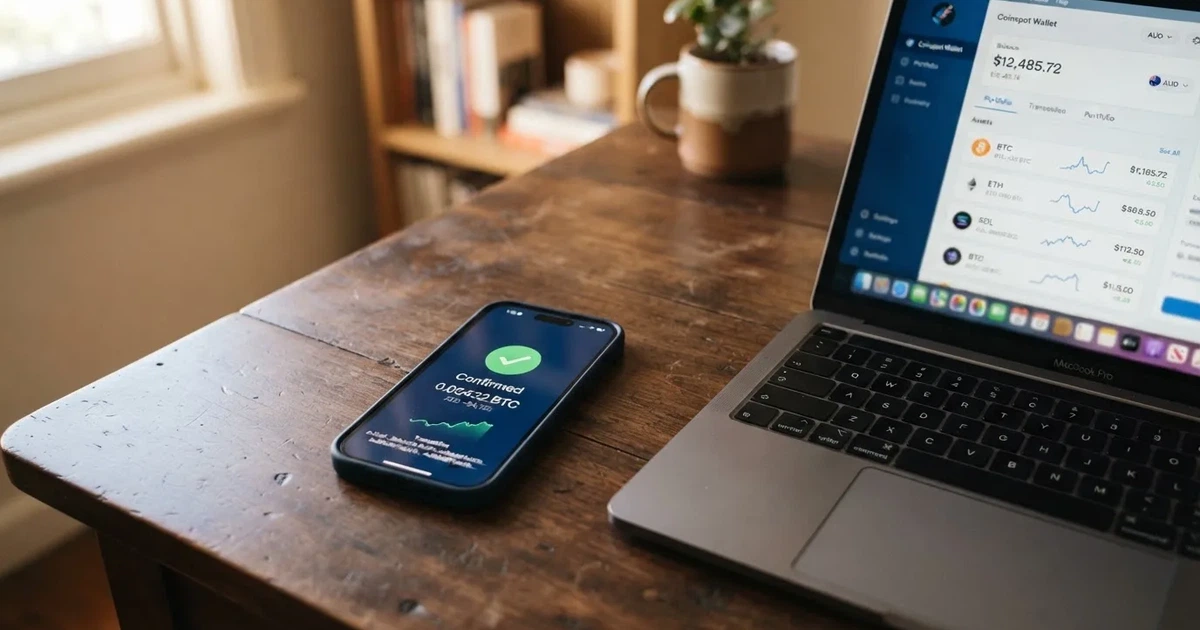
Ethereum-accepting casino sites exist, advertise to Australians, and process ETH deposits. That is the first half of the picture, and it is true. The second half sits underneath it: under the Interactive Gambling Act 2001, no operator may lawfully provide online casino games or online pokies to a person physically in Australia, and the currency used to fund the account changes nothing about that. The page below walks through both halves at the depth the material carries — what an ETH deposit actually does, what an Australian player can and cannot do with one, and which offshore brands have already drawn formal warnings from the regulator that handles this market.
Table of Contents
- Why Ethereum has no special standing with the regulator
- What paying with Ethereum actually changes at the cashier
- Where the responsible-gambling frame sits — and where it does not
- What an Ethereum slot or live table actually looks like
- The eleven brands the ACMA has formally warned
- Reading the eleven brands individually
- How the blocking rate has actually moved
- How to choose — three honest paths
- Frequently asked questions
Why Ethereum has no special standing with the regulator
Australia’s prohibition runs on the activity, not the coin. The Interactive Gambling Act 2001 (IGA), tightened by the Interactive Gambling Amendment Act 2017, makes it an offence to supply online casino games, online pokies or in-play wagering to someone in Australia, regardless of who takes the payment or in what unit. A 2023 amendment closed a payment-method gap that had let some licensed wagering services route through digital currency: as of 11 June 2024, credit cards, credit-related products and digital currency are all banned for Australian-licensed wagering, with penalties of up to A$247,500 for the operator that breaches the rule. The legal deposit routes that remain — debit card, bank transfer, PayID/Osko and BPAY — are not how an Ethereum casino takes money.
Two practical consequences follow. The first is that an Ethereum casino, whatever licence badge it shows on its footer, is not licensed in Australia for the activity it is selling. Offshore regulators — Curaçao, Anjouan — authorise the operator to run a casino, but they do not authorise it to take Australian players. The second is that the consumer protections Australian punters take for granted at a TAB outlet or a Sportsbet account simply do not attach to an offshore ETH site. No local complaints body, no local dispute route, no local recourse if a withdrawal stalls or a balance is voided. When the regulator blocks the site, the balance that was sitting on it is part of what gets cut off.
See also Deposits.
What the ACMA has actually done
The Australian Communications and Media Authority (ACMA) investigates suspected breaches of the IGA, issues formal warnings, and can ask Australian internet service providers to block non-compliant sites. A block is the bluntest tool in the kit and the last one the regulator reaches for. The formal-warning layer sits in front of it, and it is where most of the named brands on this page appear.
In the round reported on 26 June 2026, the ACMA asked ISPs to block a further 12 sites — 7Signs, ChromaBet, Donbet, Duospin, Freshbet, Slots Gem, Jacks Club, Lucky Start, Pointsbetz, Spinrise, Vinyl Casino and Wildsino. That round brought the cumulative total of blocked sites since the first blocking request in November 2019 to 1,751, with more than 230 unlicensed services having left the Australian market since enforcement was strengthened in 2017. H2 Gambling Capital’s 2025 estimate puts annual losses to illegal offshore gambling at roughly A$3.9 billion, with the share of gambling routed through legal channels falling from 74% in 2021 to 64%.
The formal-warning record carries its own picture. Two operators in particular have drawn repeat attention from the regulator: Dama N.V. (warnings over six brands in May 2022, then over Woo Casino in March 2025 and Spirit Casino in May 2025), and the network around TechSolutions and Consolutetish S.R.L. (Bizzo Casino drew a 2022 warning to TechSolutions, then a 2025 warning to Consolutetish over both National Casino and Bizzo). The pattern matters because it shows the regulator chasing the same operating groups across rebrandings, not just the same front-end domains.
What licensed wagering actually looks like
The thing that is licensed in Australia is wagering on races and sport before the event, plus lotteries and keno. In practice, 52 of Australia’s online bookmakers — Sportsbet, Bet365 and Ladbrokes among them — are licensed by the Northern Territory Racing and Wagering Commission, and that commission has no full-time staff and meets once a month in Darwin. The licence covers the operator, the activity and the payment methods. It does not extend to casino games. An Australian player looking for a licensed product gets a wagering account and a wall against slots, table games and live dealer products.
What paying with Ethereum actually changes at the cashier
A token transfer and a card payment clear through different rails, and the differences show up at the cashier, on the network and on the player’s record.
An Ethereum deposit is a transfer of ETH between two wallets. The player sends from a wallet they control to a deposit address the casino publishes. Miners — or, since 15 September 2022, validators — confirm the transfer by including it in a block. The Merge cut Ethereum’s energy use by more than 99% and switched the network to a proof-of-stake consensus mechanism; blocks now land roughly every 12 seconds. Once the transfer is included in a block and reaches a depth the casino accepts (often a small number of confirmations), the casino credits the account. The credit is denominated in whatever the cashier converts the ETH to — usually USD or the casino’s own unit — and from that point the deposit behaves like any other credit at that operator.
Three things are worth being clear about before a player sends any ETH.
The first is that Ethereum is a public blockchain. Every transfer between two wallets is recorded on a ledger anyone can read. A wallet does not carry a name, but it carries a full transaction history, and that history is permanent. A casino that wants to can trace where the player’s ETH has been. A regulator that wants to can subpoena the casino for the wallet addresses it holds on file.
The second is that confirmed ETH transfers cannot be undone. There is no chargeback mechanism at the protocol level. Once a transaction has the confirmations the casino requires, the funds are at that address. If the casino declines to credit the account — wrong address sent, KYC failure, the site itself has been blocked — there is no built-in refund rail. The player is negotiating with the operator, not with a card issuer.
The third is network fees. Ethereum gas fees vary with congestion, and they come out of the wallet, not out of the casino balance. A small deposit can be eaten by a fee the player did not budget for, and a withdrawal back to the player’s own wallet will carry a second fee. The fee is not the casino’s; it is paid to validators for the work of including the transaction in a block.
What an Australian player cannot use
The 2023 IGA amendment closed the door on credit cards, credit-related products and digital currency for Australian-licensed wagering from 11 June 2024. A licensed Australian bookmaker cannot lawfully accept an ETH deposit. The only Australian-licensed products still available — wagering, lotteries, keno — settle through debit card, bank transfer, PayID/Osko or BPAY. An Australian player who wants to fund an account with ETH is, by definition, sending it to an operator that is not licensed for the activity it is offering.
What the AUSTRAC layer adds
AUSTRAC, Australia’s anti-money-laundering and counter-terrorism financing regulator, treats crypto-to-fiat and, since 31 March 2026, crypto-to-crypto exchanges as digital currency exchange (DCE) activity. A business providing those services to Australian customers must be on AUSTRAC’s DCE register and renew every three years. The Australian Taxation Office classifies crypto as property, not money, so most disposals — selling for AUD, swapping for another crypto, spending ETH at a casino cashier — are CGT events, with a 50% discount on assets held longer than 12 months under current rules and a CPI-indexation regime plus a 30% minimum rate taking effect from 1 July 2027. None of that protects a player at an offshore casino; it does shape the tax treatment of the ETH itself.
Where the responsible-gambling frame sits — and where it does not
Australian consumer protection in gambling runs through three pieces of infrastructure: a minimum age, the National Self-Exclusion Register, and a free 24/7 helpline. None of them are designed for, or attached to, an offshore ETH casino.
The minimum age is 18, set against the licensed Australian product. The BetStop register, the National Self-Exclusion Register, has been live since August 2023, but it binds only Australian-licensed online and phone wagering services — an offshore site is not connected to it. A player who self-excludes through BetStop remains free to deposit ETH at a Curaçao-licensed casino, and that casino has no obligation to honour the exclusion. The National Gambling Helpline (1800 858 858) is free, available around the clock, with chat at Gambling Help Online, and it does take calls from people whose gambling is happening offshore.
For an ETH-funded account, the practical responsible-gambling discipline is the player’s own. Two specifics make that harder than it sounds. Network fees mean a small budget can be partly consumed before any stake is placed. Confirmed transfers cannot be undone, so a deposit limit set at the casino, if the casino offers one, is the only thing standing between a moment of poor judgement and a transfer already on-chain. The most useful single move an Australian player can make is to decide the budget in fiat, convert it to ETH once, send it once, and treat the resulting casino balance as a closed envelope.
The Interactive Gambling Amendment (Gambling Reform) Bill 2026
The most recent legislative step is the Interactive Gambling Amendment (Gambling Reform) Bill 2026, which passed Parliament on 19 August 2026. Its advertising and inducement measures commence 1 January 2027 — law with a start date, not yet in force at the time of writing. The bill does not legalise online casino games for Australian players; it tightens the marketing and inducement rules around what licensed operators can do. The wider prohibition remains in place.
What an Ethereum slot or live table actually looks like
The slot and live-dealer products an ETH casino lists are the same games other casinos list, with the same reels, the same paylines, the same rules. The currency a player funds the account with does not change the game’s mathematics. An Ethereum slot pays out the same as the same title funded with USDT or a credit card; the return-to-player figure, the volatility profile and the bonus-feature frequency are set by the game studio, not by the cashier. Where ETH changes the experience is at the deposit and withdrawal edges — speed, fees, traceability — and not at the wheel or the reels.
The titles a casino advertises as “ETH slots” are typically the high-volatility or branded releases the casino wants to surface: the kind that pay out rarely and heavily when they do. The cashier routes a bet into the game as a unit of the casino’s house currency after conversion, and any win returns along the same route. There is no Ethereum-specific bonus round, no ETH-denominated paytable, and no special RTP for paying with one coin rather than another.
For live tables, the same logic applies. The dealer, the studio and the stream are operated by an external provider; the player’s stake is converted at the cashier and wagered in the casino’s internal unit. The dealer does not know, and does not need to know, which currency funded the account.
The eleven brands the ACMA has formally warned
The table below covers the eleven brands the regulator has named in formal warnings. No brand is recommended; the order follows the ACMA’s own publication timeline, and the column on Ethereum support is honest about where research carries no data.
| Brand | ACMA action and date | Operator named by the ACMA | Subject support |
|---|---|---|---|
| RocketPlay | Formal warning, March 2026 (Pulsup Ltd); earlier warning to Dama N.V., May 2022 | Pulsup Ltd | — |
| Level Up Casino | Formal warning, May 2022 | Dama N.V. | — |
| Woo Casino | Formal warning, March 2025 | Dama N.V. | — |
| Spirit Casino | Formal warning, May 2025 | Dama N.V. | — |
| National Casino | Formal warning, July 2025 | Consolutetish S.R.L. | — |
| Bizzo Casino | Formal warning, July 2025 (Consolutetish S.R.L.); earlier 2022 warning to TechSolutions | Consolutetish S.R.L. | — |
| Ignition Casino | Formal warning, July 2025 | Bamboo Media | — |
| Instant Casino | Formal warning, February 2025 | EOD Code SRL | — |
| Jackbit | Formal warning, April 2026 | Ryker B.V. | — |
| Casino Intense | Formal warning, April 2025 | Sterplay Holding Ltd | — |
| Sky Crown | Formal warning, September 2022 | Hollycorn N.V. | — |
The cumulative count is the wider signal. The same operators keep surfacing under new names — Dama N.V. across six brands in 2022 and then again in 2025, TechSolutions and Consolutetish across Bizzo in two different years, Hollycorn across multiple skins. That pattern of regulatory chasing is the most useful piece of information the table carries, because it tells an Australian player that an unfamiliar brand name at an ETH casino may sit one corporate layer away from a brand the regulator has already named.
Reading the eleven brands individually
RocketPlay — the brand the regulator named twice
RocketPlay has drawn ACMA attention twice under different operating entities. Pulsup Ltd received a formal warning in March 2026 over Rocketplay, and the brand itself was one of the six Dama N.V. received a warning over in May 2022. The two warnings, years apart and to different companies, suggest the brand has been moved between operator shells. For an Australian player, the repeated attention is the clearest single fact: the regulator has identified this brand’s offering to Australian residents as a breach of the IGA, and it has done so more than once.
The verdict, on the picture the regulator and the research carry, is that RocketPlay sits at the heavy end of the ACMA’s attention list. The brand has been named twice across four years, under different corporate owners, and the activity it offers is the activity the IGA prohibits for Australian players regardless of currency. A player funding an ETH account here is funding an account the regulator has already acted against, and that action is not the marketing material’s strongest selling point.
Level Up Casino — a 2022 warning still standing
Level Up Casino received its formal warning in May 2022, as part of the same Dama N.V. action that covered RocketPlay, Wild Tornado, Cobra Casinos, Bambet and Dazard. The 2022 warning is older than some of the others in this list, but it has not been withdrawn; the regulator names the conduct, the operator and the brands in one document, and the document is still on the ACMA’s record.
The verdict is that Level Up Casino has been the subject of a coordinated regulatory action against an entire operating group, not a one-off warning over a single domain. The Dama N.V. action covered six brands at once, which suggests a compliance posture at the operating level rather than an isolated slip on one skin.
Woo Casino — the first of the 2025 Dama warnings
Woo Casino received its formal warning in March 2025, the first of two Dama N.V. warnings issued in 2025 (Spirit Casino followed in May). The pattern — Dama warned over six brands in 2022, then warned again over two more in 2025 — points to an operator group whose compliance position has not stabilised between actions.
The verdict is that Woo Casino is the second time the regulator has reached for Dama N.V. in three years. An Australian player looking at Woo Casino is looking at a brand the regulator has identified as offering prohibited services in 2022 and again in 2025, under the same corporate parent. The IGA does not depend on a coin: ETH or AUD, the activity is the same.
Spirit Casino — the second of the 2025 Dama warnings
Spirit Casino was named in the May 2025 Dama N.V. formal warning, three months after Woo Casino received its own warning under the same operator. The closeness of the two actions — same parent, three months apart — is what makes Spirit Casino worth reading alongside Woo Casino rather than on its own.
The verdict is that Spirit Casino joins Woo Casino on the regulator’s 2025 record for Dama N.V. The two together make 2025 the year the regulator resumed action against an operator group that had already been named in 2022, and the brand list is now longer, not shorter.
National Casino — Consolutetish enters the record
National Casino received its formal warning in July 2025, alongside Bizzo Casino, under Consolutetish S.R.L. The Consolutetish action is the second round of regulatory attention the brand group has received — Bizzo was the subject of a 2022 warning to TechSolutions (CY) Group Limited and TechSolutions Group N.V., then again in 2025 to Consolutetish. National Casino is the new entry on the second-round list.
The verdict is that National Casino is part of a network the regulator has chased across at least two operating-company names. The repeated pattern matters more than any single warning date, because it tells an Australian player that the brand’s parent structure has changed between actions without the underlying conduct changing.
Bizzo Casino — named twice across two operators
Bizzo Casino is the brand the regulator has named under two different corporate owners. The 2022 warning went to TechSolutions (CY) Group Limited and TechSolutions Group N.V.; the 2025 warning went to Consolutetish S.R.L. The brand itself did not move — it was the operator shell around it that changed, and the regulator named the new shell when it acted.
The verdict is that Bizzo Casino has drawn the regulator’s attention under two different corporate parents in three years. For an Australian player, that history is the most informative single fact about the brand, because it says the conduct — offering prohibited services to Australian residents — has continued across a corporate restructure that was supposed to address it.
Ignition Casino — Bamboo Media’s 2025 warning
Ignition Casino received its formal warning in July 2025, alongside the Consolutetish action, under Bamboo Media. The 2025 action against Bamboo Media is the first formal warning the ACMA’s record shows for that operator over Ignition Casino.
The verdict is that Ignition Casino is a brand the regulator has acted against once, in 2025, under an operator whose name appears for the first time in this context. A single warning is a less heavy signal than the Dama or Consolutetish double-actions, but it remains a formal regulator action over the brand’s offering to Australian residents.
Instant Casino — the February 2025 EOD Code action
Instant Casino received its formal warning in February 2025, under EOD Code SRL. The action was earlier in 2025 than most of the others on this list, and it sits alone under its operator — there is no second brand named in the same EOD Code warning on the regulator’s public record.
The verdict is that Instant Casino has drawn one formal warning from the ACMA, in February 2025, under an operator that has not otherwise appeared in this list. A player weighing Instant Casino against the rest is weighing one warning against several, which is a less heavy signal but still a regulator action.
Jackbit — the 2026 Ryker warning
Jackbit received its formal warning in April 2026, alongside CasinOK, under Ryker B.V. The action is the most recent in this table and falls in the same regulatory period as the RocketPlay warning to Pulsup Ltd.
The verdict is that Jackbit is a brand the regulator named in 2026, the same year RocketPlay was named under a different operator. Both warnings sit inside the current period of ACMA activity, and Jackbit joins RocketPlay, CasinOK and the rest of the 26 June 2026 blocking round as the recent edge of the regulator’s work.
Casino Intense — the April 2025 Sterplay warning
Casino Intense received its formal warning in April 2025, under Sterplay Holding Ltd. The action is the only ACMA record for the brand on the published list, and Sterplay Holding Ltd does not appear elsewhere on this table.
The verdict is that Casino Intense is a brand the regulator acted against once, in April 2025, under a holding company that has not been named in any other warning on this list. The signal is the warning itself — a regulator action over the brand’s offering to Australian residents — rather than a pattern of repeated attention.
Sky Crown — the Hollycorn N.V. record
Sky Crown is named in the ACMA’s September 2022 formal warning to Hollycorn N.V., alongside Blue Leo. Hollycorn is the operator behind a wider portfolio of casino brands, and the warning is one of several the regulator has issued to the group over time.
The verdict is that Sky Crown is the brand the regulator named in its 2022 action against Hollycorn, and the warning predates most of the others on this list. An Australian player weighing Sky Crown is weighing the oldest formal warning in the table against the most recent.
Ethereum casinos aimed at Australian players — More on this topic at casino mobile au.
How the blocking rate has actually moved
The blocking-rate calculation the page runs is straightforward. The ACMA’s published total at the round reported on 26 June 2026 was 1,751 illegal gambling and affiliate marketing websites blocked since the first blocking request in November 2019. That is six and a half years of blocking action, against an underlying market in which more than 230 unlicensed services have left Australia since enforcement was strengthened in 2017. A conservative back-of-the-envelope reading puts the average blocking rate somewhere in the high-200s per year over the full period, with the rate running faster in the more recent rounds than in the early ones — the 26 June 2026 round alone took 12 sites off the accessible end of the market in one action.
The condition that sits beside the figure is the more useful one. The blocking rate is a measure of regulator activity, not a measure of the size of the offshore market; the regulator’s reach is bounded by what it investigates, and the market beyond that reach keeps operating under new domain names. A player reading 1,751 as a number to feel safer about is reading it the wrong way — the same conditions that produced the 1,751 also produced the >230 services that left voluntarily, and the same conditions continue to produce new brands the regulator has not yet named.
How to choose — three honest paths
Australian players who land on this page generally arrive with one of three goals, and the paths through it are different.
The first path is the player who wants to gamble online with cryptocurrency and has not yet decided whether to play from Australia. For this reader, the central fact is that the IGA prohibits the supply of online casino games to Australian residents regardless of currency, and that ETH changes nothing about that. The path that respects the law is to play from a jurisdiction where the activity is licensed and lawful for the player, not to look for an Australian-friendly offshore ETH casino.
The second path is the player who has decided to play at an offshore ETH casino anyway and wants to understand the cost of that choice. For this reader, the central facts are: no Australian consumer protection attaches to the account, the regulator can block the site with a balance still on it, and confirmed ETH transfers cannot be reversed if a withdrawal stalls. The disciplined approach is to set a fiat budget, convert once, send once, and treat the casino balance as a closed envelope. The 1800 858 858 helpline and Gambling Help Online remain available.
The third path is the player who wants the licensed Australian product — sports wagering, racing, lotteries — and is curious why ETH is not an option. For this reader, the answer is the 2023 IGA amendment that took effect on 11 June 2024: licensed Australian wagering cannot accept credit cards, credit-related products or digital currency. The legal deposit routes for a Sportsbet or Ladbrokes account are debit card, bank transfer, PayID/Osko and BPAY.
Frequently asked questions
Is it legal for a casino site to accept Ethereum from a player in Australia?
No. The Interactive Gambling Act 2001 prohibits the supply of online casino games and online pokies to a person in Australia, regardless of the currency used. The 2023 amendment that took effect on 11 June 2024 also closed the door on licensed Australian wagering accepting digital currency, so an ETH-accepting casino aimed at Australians is by definition operating outside the Australian licensing frame. The individual player is not the target of the law; the operator is.
How does an Ethereum deposit get confirmed before it is credited to a casino account?
An ETH transfer is a transaction broadcast to the network and included in a block by validators under the proof-of-stake mechanism that has run since the Merge on 15 September 2022. Blocks now land roughly every 12 seconds, and the casino credits the account once the transaction reaches the confirmation depth the cashier requires. The credit is denominated in the casino’s internal unit; from that point the funds behave like any other casino balance.
Are network fees deducted from an Ethereum deposit before it reaches a casino balance?
No. Gas fees are paid to validators for the work of including the transaction in a block, and they come out of the sending wallet rather than out of the casino balance. A small deposit can be partly consumed by a fee the player did not budget for, and a withdrawal back to the player’s own wallet will carry a second fee. The fee varies with network congestion and is not set by the casino.
Do Ethereum slot titles pay out any differently from the same game funded with cash?
No. The currency a player funds the account with does not change a slot’s return-to-player figure, volatility profile or bonus frequency. Those are set by the game studio and apply to every version of the same title. ETH changes the deposit and withdrawal rails; it does not change what the reels do.
Is an Ethereum wallet address linked to a person’s identity by the casino?
The wallet itself does not carry a name, but it carries a permanent public transaction history that anyone — including the casino or a regulator with access to the casino’s records — can trace. AUSTRAC requires digital currency exchanges serving Australian customers to register, and the ATO treats crypto as property for CGT purposes. Treating an ETH wallet as anonymous because it does not carry a name is the wrong frame.
What identity checks apply to an Ethereum withdrawal from an offshore casino?
The offshore casino sets its own KYC rules, and most require some form of identity verification before a withdrawal — often a government ID and proof of address — even if the deposit was made in ETH. Where the casino holds the wallet address it paid out to, that address sits in the casino’s records. Australian consumer-protection law does not reach the offshore operator, and there is no local complaints body to approach if a withdrawal is refused.