
Best casino sign up bonus Australia 2026: the legal landscape and the alternatives
Anyone typing “best casino sign up bonus” into a search engine expects a short list of casinos, a number next to each, and a clear winner. In Australia that is not the page that can be honestly written, and this one is written instead. The Interactive Gambling Act 2001 prohibits offering online casino games to anyone physically in Australia, no state or territory issues the licence such an offer would imply, and the regulator — the Australian Communications and Media Authority — has spent the past several years issuing formal warnings and asking Australian internet providers to block the very brands an affiliate ranking would otherwise put at the top of the list. The first job of this guide is to lay that out plainly, with the names and dates the regulator has put on the record. The second job is to point to what is actually available to a person sitting in Australia: licensed wagering on sport and racing, licensed pokies in clubs and pubs, the state-based land casinos, and the self-exclusion register the law does cover.

Current as of 4 November 2026. Operator and licence claims verified against the ACMA’s formal warning register and the Reserve Bank of Australia’s payments publications.
Table of Contents
- The legal gap behind every “best sign-up bonus” list
- What the ACMA has actually done — the formal warning record
- How an Australian reader can still move money into, and out of, an account
- What “no deposit” actually means at an offshore bonus
- Crypto, Bitcoin and the anonymity promise
- What a sign-up bonus really costs the player who clears it
- BetStop, gambling blocks and what self-exclusion actually covers
- What is actually licensed for an Australian player
- The brand-by-brand picture: eleven names the ACMA has put on the record
- Operator comparison
- What a reader comparing offers should do with this page
- Frequently asked questions
The legal gap behind every “best sign-up bonus” list
Search results for casino sign-up bonuses are written for a market in which the activity is licensed. The Australian market is not that market. The Interactive Gambling Act 2001, as tightened by the Interactive Gambling Amendment Act 2017, makes it an offence for a provider to offer online casino games, online pokies or in-play betting services to a person who is in Australia. The offence sits with the provider, not the player — no Australian reader is personally at risk of prosecution for clicking through — but the consequence for any reader comparing offers is that none of the bonuses a comparison article might rank is offered by an Australian licensee. What those offers actually are is marketing from offshore operators, written for an audience the law has decided is closed.

A handful of specific things follow from that, and they are the ones a reader comparing bonuses needs in front of them before anything else.
First, “licensed” on an offshore casino page is not the same word as “licensed” in Australia. A Curaçao or Anjouan sub-licence displayed at the foot of a casino homepage authorises the operator to take bets from jurisdictions that recognise those regimes. It does not authorise the operator to take bets from someone in Australia, because the activity itself is prohibited here. The footer is a piece of marketing, not a consumer protection.
Second, the ACMA’s enforcement is not theoretical. A running total of 1,751 illegal gambling and affiliate websites have been blocked since the first blocking request in November 2019. A single round reported on 26 June 2026 added twelve more: 7Signs, ChromaBet, Donbet, Duospin, Freshbet, Slots Gem, Jacks Club, Lucky Start, Pointsbetz, Spinrise, Vinyl Casino and Wildsino. The same authority counts more than 230 unlicensed services that have left the Australian market since enforcement was strengthened in 2017. The pace has been steady enough that any bonus listing written even a few months ago can already include a brand that is no longer reachable from an Australian IP address without a VPN.
Third, the gap is now quantified in dollars. H2 Gambling Capital’s 2025 estimate puts annual losses to illegal gambling sites at roughly A$3.9 billion, and the share of gambling going through legal channels fell from 74% in 2021 to 64%. The market exists; the licence structure that would cover it does not.
Fourth, the 2026 reform package passed Parliament on 19 August 2026. The Interactive Gambling Amendment (Gambling Reform) Bill 2026 tightens the regime further, with the advertising and inducement measures commencing on 1 January 2027. A reader sitting with this page in 2026 is reading about a regime that is already in place, with the next tightening due to bite the marketing around it from the start of next year.
None of this is a value judgement on offshore casinos as a product. It is what the law in Australia is, and a comparison page that does not name it is one a reader cannot act on.
See also First deposit bonus casinos in Australia.
What the ACMA has actually done — the formal warning record
The clearest way to see how the prohibition is enforced is to look at who has been warned and when. The ACMA publishes a register of formal warnings under the Interactive Gambling Act, and the pace is a useful corrective to any impression that the regime is mostly on paper.
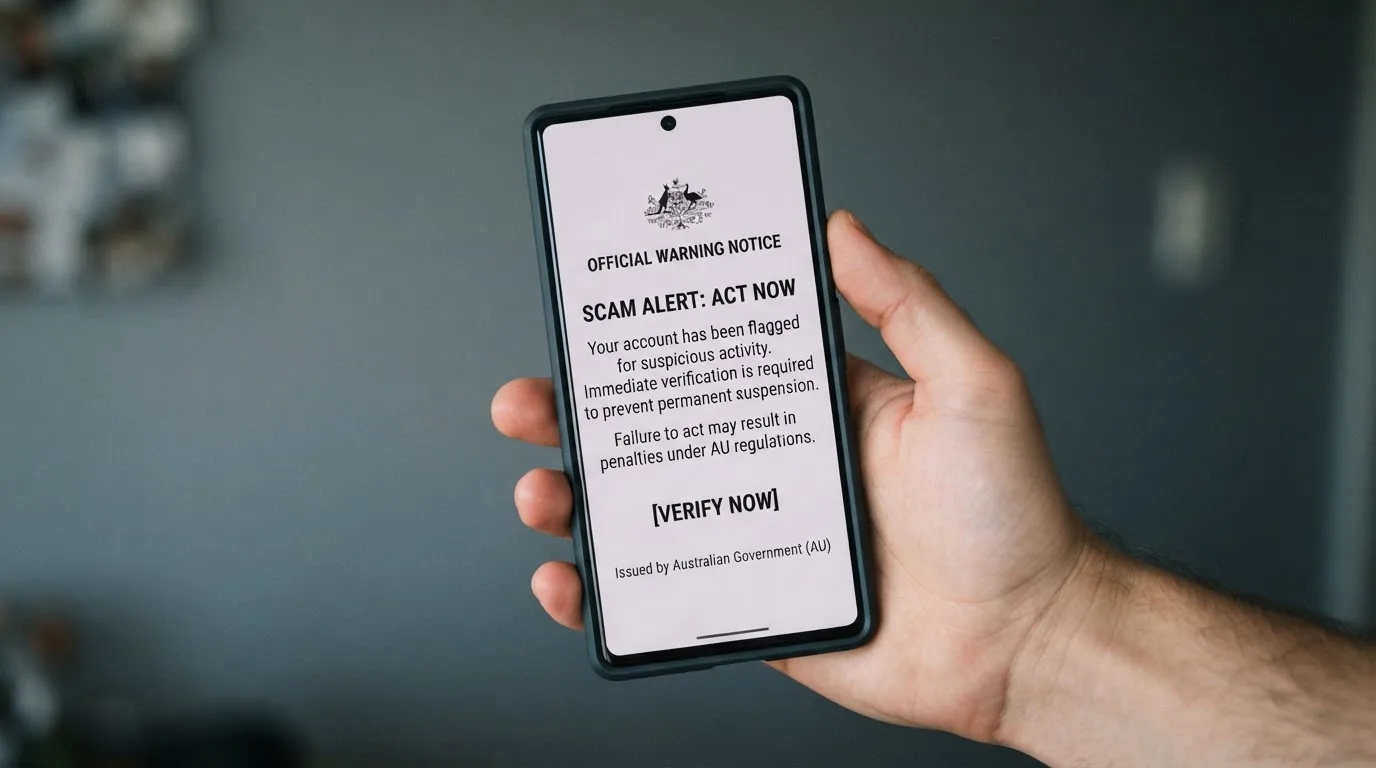
Dama N.V., a Curaçao-registered operator that runs a portfolio of casino brands, is the most heavily represented name on the register. In May 2022 the ACMA warned Dama N.V. over six brands in one notice: Bambet, Dazard, Level Up, Rocketplay, Wild Tornado and Cobra Casinos. Two more Dama brands were added in 2025 — Woo Casino in March, Spirit Casino in May. A separate Dama brand, Rocketplay, was warned again in March 2026, this time against the entity Pulsup Ltd.
Consolutetish S.R.L. picked up a warning in July 2025 covering both National Casino and Bizzo Casino. Bizzo’s history is longer than that — it was already the subject of a 2022 formal warning issued to TechSolutions (CY) Group Limited and TechSolutions Group N.V., which is the kind of repetition the register is built to record.
Bamboo Media was warned in July 2025 over Ignition Casino. EOD Code SRL was warned in February 2025 over Instant Casino. Ryker B.V. was warned in April 2026 over Jackbit and CasinOK together. Sterplay Holding Ltd was warned in April 2025 over Casino Intense. Hollycorn N.V. was warned in September 2022 over Sky Crown and Blue Leo.
A reader looking at the register and comparing it to any shortlist of “best casino sign-up bonuses” will notice that the two lists overlap almost entirely. That overlap is the central fact about the Australian market for this kind of offer.
The blocking-rate picture, in plain arithmetic
The arithmetic behind the regulator’s progress is what the prescribed calculation is for. A running total of 1,751 websites had been blocked by June 2026, with the first blocking request issued in November 2019. That is roughly seven and a half years of enforcement. Across that span, the average pace sits in the high two-hundreds per year — but the rate is not even. Early rounds were small and irregular; later rounds cluster around twenty to thirty sites per quarter. A reader who treats the current pace as steady understates what is actually happening: a few particularly busy quarters have carried the bulk of the total, and the ACMA’s 2026 output so far suggests this is one of the busier years.
The figure to carry forward is not the average but the band: somewhere around two hundred and fifty to three hundred and fifty sites blocked per year over the last three years, with the 2026 total likely to land toward the higher end of that range once the year is complete. The condition that holds this together is that the ACMA’s pace is governed by the cadence of formal warnings it issues, and a formal warning is usually the precondition for a blocking request rather than an alternative to one.
What a formal warning is, and what it is not
A formal warning under the Interactive Gambling Act is a public step, not a prosecution. It puts the operator on notice that the ACMA considers the service prohibited, and it gives the regulator a recorded basis to ask Australian ISPs to block the site if the service continues. A warning does not stop an offshore casino from operating in any other jurisdiction, and it does not cost the operator anything in Australia beyond losing its Australian audience. The warning does, however, give an Australian reader one piece of useful information: the regulator has already looked at this brand and concluded it falls on the prohibited side of the line.
How an Australian reader can still move money into, and out of, an account
The payment question is the one where the offshore bonus market and the Australian law actually intersect in a reader’s day-to-day. A few practical points sit behind the headline.
Cards and digital wallets. Australian banks have built transaction-level gambling blocks that work at the merchant category code level. Westpac’s gambling block refuses authorisation of transactions tagged under the merchant code for betting and casino gambling on eligible personal credit and debit cards. ANZ’s gambling block, activated through the ANZ app, also blocks gambling transactions made through a digital wallet such as Apple Pay on an eligible card — the block follows the card, not the device. Commonwealth Bank’s gambling lock in the CommBank app is built to the same standard, with the same honest caveat that the bank cannot guarantee every gambling-related purchase will be stopped. Apple Pay itself does not charge consumers a fee, but the transaction limits and PIN requirements on a given card are set by the card issuer, not by Apple. By the end of 2025, Apple Pay, Google Pay and Samsung Pay together accounted for around 45% of all card payments in Australia by number, so the digital-wallet block matters for a substantial slice of everyday spending.
The legal position is tighter. Since 11 June 2024, Australian-licensed online wagering services cannot accept payment by credit card or credit-related products, and the rule was written to extend to digital wallets and crypto used to fund gambling. A licensed operator asking an Australian for a credit card or a crypto deposit is asking for something it is not allowed to take.
Bank transfers and PayID. Most Australian bank transfers now move through the New Payments Platform, which became accessible to the public on 13 February 2018 and is owned by New Payments Platform Australia Ltd, a non-profit whose thirteen shareholders include the Reserve Bank of Australia and the major banks. Osko, the platform’s instant-transfer product, settles between participating banks in under a minute, twenty-four hours a day, including weekends, whether the transfer is keyed to a BSB and account number or to a PayID. Paying to a PayID shows the name of the account holder before the transfer is sent, which is a small but useful safeguard: Australian Payments Plus warns that being asked to transfer to a PayID on an illegal gambling site almost certainly means a scam site. As of April 2025, more than 25 million PayID identifiers had been registered on the platform, and PayID-based instant transfers are available at over 100 Australian financial institutions.
BPAY. BPAY has been operating since 18 November 1997, is available in the online banking of over 140 banks and financial institutions and is offered by over 95,000 businesses. It is a bill-payment service — the payer enters the Biller Code and the Customer Reference Number printed on the bill — and it is run by Australian Payments Plus, the same operator as PayID and Osko. The relevant history is the 2021 ACCC authorisation that merged BPAY Group, eftpos and NPP Australia under a single holding entity, which is why the same company now runs all three rails.
Credit reporting thresholds. AUSTRAC’s threshold transaction report rule, which requires reporting of transfers of A$10,000 or more, applies only to physical cash. Ordinary electronic bank transfers, however large, are not subject to that per-transaction reporting requirement.
A reader looking at those four rails sees an Australian payments system built for an Australian regulatory regime. The offshore casino shortlist does not run on those rails; it runs on the methods the rails are explicitly designed to reject.
What “no deposit” actually means at an offshore bonus
“No deposit” is the phrase that does most of the work in any “casino sign up bonus” comparison. The promise is that the reader signs up, the casino credits the bonus, and the reader plays without putting their own money on the line. The actual product is more constrained than the phrase, and the constraints are where the comparison either lives or fails.
Three constraints recur across the market. First, wagering requirements: a no-deposit bonus is paid in bonus funds, and those funds cannot be withdrawn until a multiple of the bonus has been turned over on eligible games. Second, a maximum cashout cap: even after the wagering requirement is met, the bonus usually allows a withdrawal only up to a fixed ceiling, often in the low hundreds of dollars. Third, a maximum bet per spin or hand while the bonus is in play, set low enough that the wagering requirement takes a long time to clear at the stake size the player can actually use.
None of those constraints is unique to one brand, and none of them is hidden in a fine print footer — they are the structure of the product. A reader who treats “no deposit” as a free play is treating marketing as fact. A reader who treats it as a chance to test the casino’s payout behaviour at small scale is closer to what the offer is.
For Australian readers specifically, “no deposit” sits on top of the legal question rather than resolving it. The casino offering the bonus is operating under a regime that the ACMA has already concluded falls on the prohibited side of the line. A no-deposit bonus from such a casino still requires an account, still requires the player to provide identifying information, and still asks the player to deposit eventually if they want to keep playing. The cost of entry is the registration data, not the deposit the bonus is structured around.
Crypto, Bitcoin and the anonymity promise
A separate shelf of search terms asks about crypto and Bitcoin specifically: bitcoin casino sign up bonus, crypto casino no deposit sign up bonus. The promise on that shelf is closer to anonymity — no bank rails, no card rails, no Australian bank able to block the transaction.
The Australian law is not sympathetic to the promise. Since 11 June 2024, the prohibition on credit-related products has been written to extend to digital currency used to fund gambling on a licensed service. An offshore casino does not have a licensed Australian side, so the question becomes whether the offshore operator accepts crypto at all — most do — and whether the player’s exchange on the Australian side treats the transfer as a gambling transaction. The exchanges operating under AUSTRAC’s digital currency exchange registration regime have their own transaction-monitoring obligations, and transfers to a counterparty the exchange has reason to believe is a gambling operator can be reported and refused.
The anonymity is partly real and partly performative. The blockchain ledger is public, the wallet addresses can be traced, and the Australian exchange at the on-ramp or off-ramp holds the customer’s identity against the on-chain activity. A reader using a crypto deposit to a casino is not anonymous to the Australian side of the transaction; they are simply anonymous to the casino’s Australian-facing fraud team, which is rarely a meaningful distinction.
What a sign-up bonus really costs the player who clears it
Wagering requirements are the part of any sign-up bonus offer that the marketing spends the least time on, and the part that costs the player the most. The arithmetic is straightforward. A bonus of, say, A$100 with a 40x wagering requirement asks the player to place A$4,000 of qualifying bets before any winnings become withdrawable. At a stake of A$1 per spin on a game with a 96% return-to-player, A$4,000 of turnover produces an expected loss of A$160 — more than the bonus itself. The bonus is not a credit; it is a structured attempt to extract turnover.
A reader working through one of these offers in practice will find that the bonus funds and the player’s own deposited funds are usually held in separate balances. Stakes are drawn from the bonus balance first, winnings from bonus play stay in the bonus balance, and the player cannot withdraw either until the wagering requirement is met. That is the part of the offer the headline does not say out loud.
The maximum bet cap is the second cost. A common ceiling of A$5 per spin on bonus play is small enough that clearing A$4,000 of wagering at the cap requires 800 qualifying spins. At ten seconds a spin, that is just over two hours of play. At a stake of A$1, the same turnover requires 4,000 spins and roughly eleven hours. The cap is not there to protect the player from over-betting; it is there to slow the wagering requirement down, which slows the time at which the player is likely to walk away.
A useful test for a reader is to compute the expected loss at the stated RTP before committing. The mathematics is the same across the market; what changes is the wagering multiple, the maximum cashout cap and the contribution rate of different game types. Slots usually contribute 100% to wagering; table games often contribute 10% or 0%. A reader who plans to clear a bonus on blackjack will find the wagering requirement effectively multiplied by ten.
Best casino sign up bonus Australia 2026 — More on this topic at casino mobile au.
BetStop, gambling blocks and what self-exclusion actually covers
The National Self-Exclusion Register, branded as BetStop, has been live since August 2023. It binds every Australian-licensed online and phone wagering service. A person registered with BetStop cannot open a new account with any of those services, and existing accounts are closed.
What BetStop does not cover is the other half of the comparison. An offshore casino is not a licensed Australian wagering service, so a BetStop registration does not stop it. A person who has self-excluded because they wanted to stop gambling does not, by registering with BetStop, prevent themselves from sitting down at an offshore casino that the ACMA has already warned. The protection is real for the licensed market; it is partial for the market this page is about.
The bank-level blocks are a useful complement. Westpac’s card-level block, ANZ’s app-based block and Commonwealth Bank’s CommBank gambling lock all work at the merchant category code level, and ANZ’s block extends to digital-wallet transactions on the underlying card. ANZ’s block has a 48-hour waiting period to remove it once set, which is a small but useful friction against an impulsive reversal. None of these blocks covers every gambling transaction — the banks themselves state that — but the gap is smaller than it was three years ago.
The free, twenty-four-hour support line is 1800 858 858, the National Gambling Helpline, with chat at Gambling Help Online. A reader who is using this page to think about whether to keep playing is the reader for whom that line exists.
What is actually licensed for an Australian player
A useful answer to the “best casino sign-up bonus” question, given everything above, is to point at what the law does license and let the reader decide what fits.
Licensed wagering on racing and sport, placed with a Northern Territory-licensed or equivalent bookmaker, is the most direct substitute for the offshore bonus market. The Northern Territory Racing and Wagering Commission regulates 52 of Australia’s online bookmakers, including Sportsbet, Bet365 and Ladbrokes. The commission has no full-time staff and meets once a month in Darwin, which is itself a fact worth knowing about the regime — the regulator is small, the regulated population is not. The legal deposit rails for those services are debit card, bank transfer, PayID or Osko and BPAY; credit cards and crypto are out.
Licensed pokies in clubs, pubs and casinos are the land-based equivalent of the offshore slots market. Each state and territory has its own regulator and its own voluntary pre-commitment or self-exclusion arrangements, which vary in coverage. A reader who wants the slots experience in a regulated environment is a reader for whom the local pub or club is the right answer, not the offshore casino.
Lotteries and keno are licensed at the state level and run through approved retail and online channels. The advertising around them is governed by the same 2026 reform package that tightens the casino marketing rules, with the inducement measures commencing on 1 January 2027.
State-based land casinos — Crown Melbourne, The Star Sydney, The Star Gold Coast, Crown Perth and the smaller venues in each jurisdiction — operate under state casino licences and offer table games, pokies and the rest of the in-person product. A reader who wants the full casino experience in a regulated environment is a reader for whom those venues are the answer.
None of those alternatives comes with a “sign-up bonus” in the offshore sense. What they come with is consumer protection: a complaints body, a regulator who can act on a refused withdrawal, a self-exclusion register that binds the operator, and a tax position that is clear (recreational gambling winnings are not assessable income and losses are not deductible, unless the person carries on a business of gambling, in which case the ATO is the authority to consult).
The brand-by-brand picture: eleven names the ACMA has put on the record
This is not a ranking. The brands below are listed in the order research set out, and each is included because the ACMA itself issued a formal warning about it. A reader who arrived at this page looking for a recommended casino will not find one. A reader who arrived looking for an honest picture of what the regulator has done will find that picture here.
RocketPlay
RocketPlay sits at the top of the regulator’s recent record. The ACMA issued a formal warning to Pulsup Ltd in March 2026 over Rocketplay. The brand had already been the subject of a May 2022 warning to Dama N.V. as one of six brands in a single notice. Two warnings across the same brand, four years apart, on different operating entities, is the pattern the register was designed to surface: a brand carried from one corporate wrapper to the next as each one is warned in turn. A reader who sees RocketPlay marketed with a current licence and a generous welcome bonus is seeing the second part of that pattern.
Level Up Casino
Level Up was named in the May 2022 Dama N.V. warning alongside Rocketplay, Wild Tornado, Cobra Casinos, Bambet and Dazard. It is one of the six brands caught by that single notice, and the ACMA has not had to add a second warning to keep the brand on its record.
Woo Casino
Woo Casino picked up a Dama N.V. warning in March 2025, three years after the original Dama notice covered its sibling brands. A reader comparing the Woo Casino bonus offer to the offer on a brand the ACMA has not warned about is comparing a warned brand to a non-warned brand, and the comparison favours the latter in a way no marketing line will spell out.
Spirit Casino
Spirit Casino received a Dama N.V. warning in May 2025. The same year saw the Woo Casino warning, which together represent the second round of formal action against Dama’s portfolio since the 2022 notice. A reader who notices that Dama’s brands keep reappearing on the register across years is reading the register correctly.
National Casino
National Casino was warned in July 2025, with the operator named as Consolutetish S.R.L. The same notice covered Bizzo Casino, and the ACMA published both names together. A reader who arrived at National Casino via an affiliate link and saw only the bonus terms has missed the regulator’s view of the brand.
Bizzo Casino
Bizzo Casino has two warnings on the register. The first, in 2022, named TechSolutions (CY) Group Limited and TechSolutions Group N.V. The second, in July 2025, named Consolutetish S.R.L. A brand that has cycled through two operator entities and been warned twice is a brand the regulator has had to look at more than once.
Ignition Casino
Ignition Casino was warned in July 2025 with Bamboo Media named as the operator. It is a separate name from the Consolutetish notice of the same month, which is a useful reminder that the formal warning register covers distinct operating entities and not a single shared list.
Instant Casino
Instant Casino was warned in February 2025 with EOD Code SRL as the named operator. It is the earliest of the 2025 warnings on the register, and the only one in that year that did not also name a sibling brand in the same notice.
Jackbit
Jackbit was warned in April 2026 alongside CasinOK, with Ryker B.V. named as the operator. The notice is one of two published in the same month, which gives a reader who looks at the register in chronological order a sense of the cadence the ACMA works to.
Casino Intense
Casino Intense was warned in April 2025 with Sterplay Holding Ltd named as the operator. A reader who has been working through the list will notice that the named operators do not repeat across notices, which is consistent with the brands being run by separate companies rather than a small number of portfolio operators — though Dama’s repeated appearance shows the pattern can go either way.
Sky Crown
Sky Crown was warned in September 2022 with Hollycorn N.V. named as the operator, in the same notice that covered Blue Leo. It is the earliest warning on the list and the only one from 2022 still in the current register’s featured set, which is itself a useful fact: the ACMA’s warnings have staying power.
Operator comparison
The matters below are the ones a reader comparing these brands needs in front of them. The column set is the one that gives a reader a way to see the regulator’s view of each brand at a glance, without taking any single column to mean more than it does.
| Brand | ACMA action and date | Operator named by the ACMA | Subject support |
|---|---|---|---|
| RocketPlay | March 2026 (also May 2022) | Pulsup Ltd (2026); Dama N.V. (2022) | Listed on industry listings |
| Level Up Casino | May 2022 | Dama N.V. | Listed on payment-rail sites |
| Woo Casino | March 2025 | Dama N.V. | No data |
| Spirit Casino | May 2025 | Dama N.V. | No data |
| National Casino | July 2025 | Consolutetish S.R.L. | Listed on regulator and payments sites |
| Bizzo Casino | July 2025 (also 2022) | Consolutetish S.R.L. (2025); TechSolutions (2022) | Listed on industry listings |
| Ignition Casino | July 2025 | Bamboo Media | No data |
| Instant Casino | February 2025 | EOD Code SRL | Listed on payments sites |
| Jackbit | April 2026 | Ryker B.V. | No data |
| Casino Intense | April 2025 | Sterplay Holding Ltd | Listed on regulator and payments sites |
| Sky Crown | September 2022 | Hollycorn N.V. | No data |
The “subject support” column records whether the inputs carry any independent mention of the brand outside the ACMA register. A dash here means the page has no extra data to add, not that the brand is or is not otherwise known. The honest reading of the column is that the ACMA register is the most consistent source on these brands, and that the listings a reader would otherwise consult are the very pages the regulator has been acting against.
What a reader comparing offers should do with this page
The intended use of the page is not to send a reader to a casino. It is to give the reader the legal position in front of them, the regulator’s record on the brands most commonly marketed, the structure of the typical bonus offer, and the licensed alternatives that the law does cover.
A reader who is in Australia and reading this page for a decision has four realistic paths in front of them. They can use a licensed Australian wagering service for racing and sport, with the deposit and self-exclusion protection the law provides. They can use a licensed pokies venue in their state or territory, with the in-venue self-exclusion arrangements that regulator provides. They can use one of the state-based land casinos for the in-person table and pokies product. Or they can register with BetStop if what they want is to stop, with the bank-level blocks and the National Gambling Helpline behind that decision.
A reader who, after all of the above, still intends to look at offshore casino offers has the picture they need to look with. They know the activity is prohibited under Australian law. They know the ACMA has warned most of the brands a comparison article would put in front of them. They know the bank-level gambling blocks may stop the deposit before it leaves the account. They know the wagering requirement is the cost of the bonus, not the bonus itself. They know BetStop does not bind the offshore operator. They know the support line is free and available around the clock.
The arithmetic on the regulator’s progress is the right note to close on. Across the years since November 2019, the ACMA has built up a blocking record that now sits at 1,751 websites. The pace in the most recent year is faster than the early pace, not slower. The 2026 reform package adds further restrictions that begin to bite from the start of next year. The legal direction of travel is toward a tighter market, not a looser one, and the brands that survive that direction of travel will be the ones the regulator has not had to warn.
Frequently asked questions
What is the difference between a sign-up bonus and a no-deposit bonus?
A sign-up bonus is the broader category — the promotional credit a casino offers to a new account on first deposit, usually scaled to the deposit amount. A no-deposit bonus is a smaller credit issued just for registering, before any deposit is made. The wagering requirement and the maximum cashout cap are typically tighter on the no-deposit version.
What does turnover, or wagering requirement, mean for a sign-up bonus?
Turnover is the total amount a player has to stake on eligible games before bonus winnings become withdrawable. A 40x wagering requirement on a A$100 bonus means A$4,000 of qualifying bets. The requirement is the cost of clearing the bonus, and at typical RTPs it usually exceeds the bonus amount in expected loss before the player sees a cent.
Is it legal for an online casino to offer a sign-up bonus to players in Australia?
No. The Interactive Gambling Act 2001 prohibits offering online casino games to anyone physically in Australia. No state or territory licenses online casino games. The offence sits with the provider, not the player, but the offer itself is not lawful. The ACMA enforces the prohibition through formal warnings and ISP blocking requests.
Can a sign-up bonus be claimed using a cryptocurrency deposit?
Offshore casinos often accept crypto, and the deposits are processed on-chain. The legal position in Australia is that licensed wagering services cannot accept crypto for gambling, with the rule in force since 11 June 2024. AUSTRAC-registered exchanges on the Australian side of the transfer have transaction-monitoring obligations that can flag transfers to gambling operators.
Why do sign-up bonus terms usually cap the maximum bet allowed?
The cap slows the rate at which the wagering requirement is cleared. A A$5 cap on bonus play forces the player to make many small qualifying bets rather than a few large ones, which extends the time and the number of bets the casino collects the house edge on. The cap is a structural part of the offer, not a player protection.
What happens to an unused sign-up bonus if the wagering period expires?
The bonus and any winnings held in the bonus balance are forfeited when the wagering window closes. The window is typically seven to thirty days from the issue date. The player’s own deposited funds remain in their cash balance and can be withdrawn, but anything earned from the bonus itself is lost. The expiry is the part of the offer that punishes a player who pauses.