
Quickspin Slots in Australia — Regulatory Enforcement and Player Risk
Quickspin is a real slot studio, with a real licence, run by real people in Stockholm, Sliema and Kyiv. None of that gets a person in Australia any closer to playing Quickspin games for cash online, because the Interactive Gambling Act 2001 prohibits the supply of online casino games and online pokies to anyone physically in Australia. No state or territory issues that licence. The sites that market Quickspin titles to Australian visitors do so without one, and the ACMA has spent the last several years writing them letters about it.
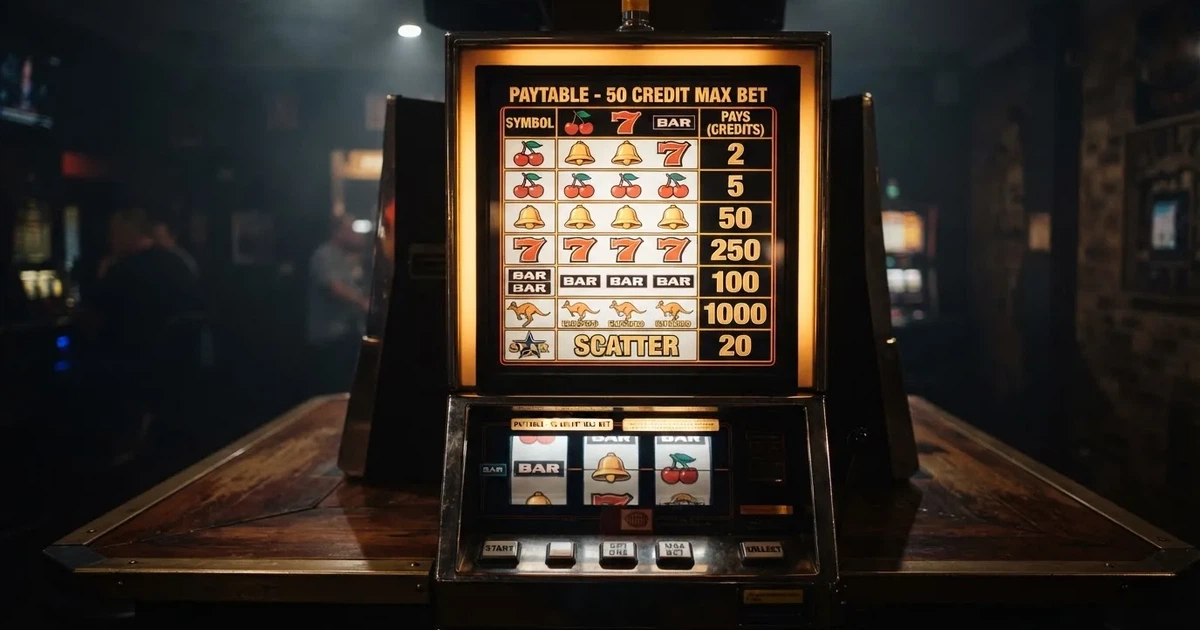
Data current as of 9 November 2026 and checked against the ACMA’s published formal-warning register.
Table of Contents
- Eleven sites the ACMA has named — and what that action actually does
- What Quickspin actually is — and what it is not
- The legal shape — Interactive Gambling Act 2001 in this market
- Responsible gambling — what the ACMA action does not do
- How deposits and withdrawals actually work on the sites in this list
- Bonuses and free spins — what the inducement actually costs
- Mobile — how these sites perform on a phone
- Specific games — paytable details that actually matter
- The blocking-rate arithmetic
- How this shortlist was put together
- Closing reading
- Frequently asked questions
Eleven sites the ACMA has named — and what that action actually does
The shortlist below is not a recommendation. Every brand listed here is a brand the ACMA has formally warned for offering prohibited online casino services to Australians — most of them while carrying Quickspin or comparable studios on their game page. The framework, the column meanings and the operator order are the only things the page inherits from research; the verdict under each brand is the page’s own judgement.

| Brand | ACMA action and date | Operator named by the ACMA | Subject support |
|---|---|---|---|
| RocketPlay | Formal warning, March 2026 | Pulsup Ltd | — |
| Level Up Casino | Formal warning, May 2022 | Dama N.V. | listings carry Wazdan |
| Woo Casino | Formal warning, March 2025 | Dama N.V. | — |
| Spirit Casino | Formal warning, May 2025 | Dama N.V. | — |
| National Casino | Formal warning, July 2025 | Consolutetish S.R.L. | listings carry Betsoft, Pragmatic Play |
| Bizzo Casino | Formal warning, July 2025 (also 2022 to TechSolutions) | Consolutetish S.R.L. | — |
| Ignition Casino | Formal warning, July 2025 | Bamboo Media | — |
| Instant Casino | Formal warning, February 2025 | EOD Code SRL | — |
| Jackbit | Formal warning, April 2026 | Ryker B.V. | — |
| Casino Intense | Formal warning, April 2025 | Sterplay Holding Ltd | listings carry 1spin4win |
| Sky Crown | Formal warning, September 2022 | Hollycorn N.V. | — |
A formal warning is not a fine. It is a written record that the ACMA has told the operator, on the public register, that the named service is being offered in breach of the Interactive Gambling Act 2001. The next step after a warning is normally a blocking request to Australian ISPs, and the operator has not been authorised to take Australians’ money at any point in the chain — warning, blocking, criminal referral. What an offshore licence from Curaçao, Malta or Anjouan entitles the site to do is irrelevant in Australia: the IGA applies to the act of supplying, not to the licence the supplier holds elsewhere.
RocketPlay — warned twice, by two different operators
RocketPlay’s history is the cleanest illustration of why a warning does not end the matter. The ACMA wrote to Dama N.V. about this brand and five others in May 2022. In March 2026 the ACMA wrote again, this time to Pulsup Ltd, over RocketPlay. The domain changed hands; the offer to Australians did not. There is no Australian licence for the new owner to inherit and no Australian regulator to apply to. From a reader’s perspective this is the same site by a different name; the second letter is just the regulator catching up to the rebrand.
Level Up Casino — old warning, current page
Level Up Casino was on the same Dama N.V. letter of May 2022 that started RocketPlay’s file. The site is still listed by studios that supply to it, which means it is still being marketed; the ACMA’s formal warning is from more than four years ago and there has been no public follow-up. A warning that old is not a warning that has been satisfied — the IGA’s prohibition has no statute of limitations — but it is a sign that the operator either changed domains, changed payment rails, or is operating under a structure the regulator has not yet re-papered.
Woo Casino — Dama N.V.’s second bite
In March 2025 the ACMA wrote to Dama N.V. specifically about Woo Casino, separate from the 2022 letter. That a single operator group has attracted two letters on two different brands in three years says less about the regulator’s patience than about how Dama N.V. structures its corporate web — each brand sits behind its own sub-licence and its own front company, and the ACMA has to write again each time a new one surfaces.
Spirit Casino — Dama N.V.’s third letter in eight weeks
Spirit Casino drew its own Dama N.V. letter in May 2025. Two letters to the same parent in two months means the operator is standing up new brands faster than enforcement is taking them down. From a player’s point of view the brands may look independent; from the regulator’s they are sibling sites and the warnings travel together.
National Casino — named studio, named operator
National Casino is one of the brands the ACMA named in its July 2025 letter to Consolutetish S.R.L. Studios that list National Casino on their aggregator pages — including Betsoft and Pragmatic Play — keep doing so, which is how a brand surfaces in a Quickspin-adjacent search even where the studio itself is not directly named. The pattern is worth noting: the supplier list is the supply chain, and warnings tend to move along it.
Bizzo Casino — warned twice under two different owners
Bizzo Casino has the unusual honour of two ACMA letters: the first to TechSolutions (CY) Group Limited and TechSolutions Group N.V. in 2022, the second to Consolutetish S.R.L. in July 2025. Two operators, one URL, the same prohibition. The intervening period is the part that matters to a reader — anyone who deposited with the site between those letters was depositing with an entity the regulator had already told once, and was sending money to a service that the ACMA would warn again about a year later.
Ignition Casino — Australian-facing, US-branded
Ignition Casino is better known in the United States. The ACMA wrote to its operator, Bamboo Media, in July 2025. Australians visiting the site from an Australian IP do not see a different page from the US audience — and the ACMA’s intervention is the regulator’s way of telling the operator that one audience is not a different audience as far as the IGA is concerned.
Instant Casino — recent warning, fresh rebrand
The ACMA wrote to EOD Code SRL over Instant Casino in February 2025. The site is one of a clutch of “instant” branded casinos that appear in affiliate lists under Quickspin-style search terms. A warning this recent is the most likely to be followed by a blocking request within the next reporting cycle, and any balance a reader has on the account when that blocking request is signed becomes a withdrawal problem with no Australian recourse.
Jackbit — warned alongside CasinOK
In April 2026 the ACMA wrote to Ryker B.V. about Jackbit and CasinOK in the same letter. Jackbit is one of the more crypto-forward brands in the offshore market, which makes it doubly problematic in Australia: crypto is one of the payment methods the licensed wagering rules explicitly ban, so a deposit there is barred on two fronts at once.
Casino Intense — older warning, named supplier
Sterplay Holding Ltd drew a formal warning over Casino Intense in April 2025. The site’s supplier list runs through 1spin4win, a Curaçao-licensed studio; that supplier trail is how the brand surfaces in Quickspin-adjacent searches even though Quickspin is not directly named on its page.
Sky Crown — Hollycorn’s first Australian letter
Hollycorn N.V. was named in the ACMA’s September 2022 warning over Sky Crown and Blue Leo. The Hollycorn stable has grown considerably since then and the operator has been the subject of further action elsewhere; the ACMA’s record on this brand is what is on the public register, and the register’s standing is what counts here.
What Quickspin actually is — and what it is not
Quickspin was started in Stockholm by three developers who set out to make the slot games they wanted to play themselves. The studio describes its 2016 acquisition by Playtech on its own site as a “major milestone”. It now operates from offices in Stockholm, Sliema and Kyiv, with about 100 staff of more than 30 nationalities spread across five countries. The studio is not small and the studio is not fake. Its Malta Gaming Authority Critical Gaming Supply Corporate licence is number MGA/CRP/137/2007, issued 6 December 2018, and its games also flow through parent company Playtech’s UK Gambling Commission account (number 38516).
What Quickspin is not is a casino. The studio does not take bets, does not hold player balances and does not process withdrawals. It supplies games to operators, and the operator is the entity the IGA prohibits from supplying those games to Australians. A reader who searched for Quickspin and landed on a casino site is at the operator end of the supply chain, not the studio end.
Studios that sit next to Quickspin in the same searches
Three other studios turn up in the same aggregator listings as Quickspin and share the same regulatory situation in Australia:
1spin4win. Founded in 2021 by a group of professionals with fifteen years of iGaming experience; games built in HTML5 for low-bandwidth connections. Headquartered at Scharlooweg 39, Willemstad, Curaçao, under a Curaçao gaming licence; portfolio of more than 190 online slots; more than 1,000 partnerships with online casinos and aggregators; total bet sum up 46% in the first half of 2025 against the first half of 2024.
Aristocrat Leisure. Australian-founded, founded in 1953 by Leonard Ainsworth, ASX-listed in 1996 under the ticker ALL. Administrative and research headquarters in North Ryde, Sydney; further offices in South Africa, Russia and the United States. The largest gambling-machine manufacturer in Australia and the second-largest slot-machine manufacturer worldwide, behind International Game Technology. 2025 revenue A$6.30 billion; normalised net profit after tax and amortisation A$1.55 billion; 7,400 employees. Online arms are Product Madness (social games) and Aristocrat Interactive (regulated real money); Aristocrat Interactive was formed in April 2024 by combining Anaxi with the newly acquired NeoGames group, which includes Aspire Global, BtoBet and Pariplay.
Betsoft. Founded in 2006; more than 200 RNG games across slots, table games, video poker and specialty titles. States compliance with Italy’s ADM, RNG certification from Quinel and Gaming Labs International, and more than 500 operator partnerships in Europe, Scandinavia, Latin America and Africa.
The supply-chain picture
The studios supply the operators. The operators buy the games and put them on a casino page. The page takes deposits from Australians. The IGA makes the last step unlawful and the ACMA chases the operator. A reader comparing the two ends of the chain sees one set of names that are clean and licensed (the studios) and another (the operators) where the ACMA’s register is the relevant document.
The legal shape — Interactive Gambling Act 2001 in this market
The Interactive Gambling Act 2001, strengthened by the Interactive Gambling Amendment Act 2017, makes it an offence to provide online casino games, online pokies or in-play betting to a person in Australia. What is licensable is wagering on races and sport placed before the event, lotteries and keno — in practice licensed by the Northern Territory through the Northern Territory Racing and Wagering Commission, which regulates 52 of Australia’s online bookmakers including Sportsbet, Bet365 and Ladbrokes. The commission has no full-time staff and meets once a month in Darwin.
Minimum age is 18. The individual player is not prosecuted — the IGA targets the provider — but an offshore site gives no Australian consumer protection, no complaints body and no recourse if a withdrawal is refused. It can be blocked with a balance still on it.
What the ACMA does about it
The ACMA investigates, issues formal warnings and directs internet service providers to block illegal sites. According to the ACMA as reported in June 2026, a total of 1,751 illegal gambling and affiliate marketing websites had been blocked since the first blocking request in November 2019, and more than 230 unlicensed gambling services had left the Australian market since enforcement was strengthened in 2017. In the round reported on 26 June 2026 the ACMA asked Australian ISPs to block 12 more illegal gambling websites: 7Signs, ChromaBet, Donbet, Duospin, Freshbet, Slots Gem, Jacks Club, Lucky Start, Pointsbetz, Spinrise, Vinyl Casino and Wildsino.
What an offshore licence is worth in Australia
Nothing. Curaçao, Anjouan and the like authorise the operator to take bets from jurisdictions where that licence is recognised. They do not authorise the operator to take bets from Australia, where the IGA’s prohibition overrides the licence the operator holds elsewhere. A reader who sees a Curaçao or Malta badge on a casino page is seeing a licence that has no jurisdiction over the question they actually need answered: is this site legal for me?
What an Australian player has and does not have
Player protection that exists: BetStop, the National Self-Exclusion Register, live since August 2023, but it binds only Australian-licensed online and phone wagering services — an offshore casino is not connected to it. The National Gambling Helpline is 1800 858 858, free, 24/7, with chat at Gambling Help Online. Gambling winnings of a recreational player are not assessable income (section 6-5 ITAA 1997) and losses are not deductible, unless the person carries on a business of gambling — a fact to check with the ATO, not to take from this page.
Player protection that does not exist for an offshore site: anywhere to complain, anywhere to escalate a refused withdrawal, any way to compel a payout. The ACMA’s enforcement powers end with the operator; the player’s only contractual relationship is with the operator’s terms of service, which usually give the operator the final word.
The 2026 reform and what it changes
The Interactive Gambling Amendment (Gambling Reform) Bill 2026 passed Parliament on 19 August 2026. Its advertising and inducement measures commence 1 January 2027. Law with a start date, not yet in force on a page dated 2026 — the affiliate marketing pages that funnel Australians towards these offshore sites are the kind of activity the new provisions target, and the year boundary is the practical one for any reader watching this space.
Responsible gambling — what the ACMA action does not do
A formal warning is regulator-facing, not player-facing. It does not refund balances, it does not pause pending withdrawals, it does not enrol the player in any self-exclusion register. The thing the ACMA’s letter does is make the next blocking request easier; the thing it does not do is anything the player can act on the day the letter is published.
What a reader worried about their own play can do is use BetStop if they are wagering with a licensed Australian operator; call 1800 858 858 if they are not and want to talk about it; or look up the state and territory self-exclusion schemes run by the venues that hold the equivalent land-based machines. None of those routes ends a balance on an offshore site, which is one of several reasons not to have one in the first place.
Where to complain about an offshore site
The ACMA’s reporting portal at acma.gov.au is where complaints about illegal services go. The complaint is a record the ACMA can add to its file; it is not a refund mechanism. The path to a refund, where one exists at all, is through the operator’s own dispute process — and the operator’s own dispute process is the body whose decision the reader is trying to reverse.
How deposits and withdrawals actually work on the sites in this list
The licensed Australian wagering world has a closed payment rail: debit card, bank transfer, PayID/Osko and BPAY. Credit cards, credit-related products and digital currency are banned as payment for licensed online wagering since 11 June 2024, with penalties up to A$247,500 for operators. A site asking an Australian for a credit card or a crypto deposit is operating outside the Australian rules.
The sites in this list are almost all ask for a credit card or a crypto deposit. Jackbit is the most explicit — crypto is its main rail. The others mix cards, e-wallets and a handful of cryptocurrencies, with bank transfer sometimes available and sometimes quietly de-prioritised. From a player’s point of view the payment method tells them which set of rules they are under: an Australian-licensed operator’s rail, where a disputed deposit has a path back; or an offshore rail, where the operator decides.
Settlement times as the operator reports them
Offshore operators publish settlement windows that range from “instant” on the e-wallet side to two to five business days on a bank transfer. Those windows assume the operator pays out, which the ACMA’s register of warnings is one piece of evidence that not all of them do. A reader who treats the headline number as a guarantee has skipped a step.
What happens when a site gets blocked mid-session
The site stops loading. Anything in the cashier — pending withdrawals, unclaimed free-spin winnings, a balance yet to be wagered through — sits on the operator’s side of the connection. There is no Australian complaints body to escalate to. The operator’s own terms usually require the player to have raised the dispute inside a window that starts at “before you deposited” and ends at “before you tried to withdraw”.
Bonuses and free spins — what the inducement actually costs
The headline figure on a Quickspin-branded casino page is the welcome package: a percentage match, a number of free spins, sometimes both. The same legal frame that prohibits the supply of online casino games to Australians does not prohibit the supply of inducements, and affiliate marketing pages are the second thing the ACMA’s reform targets from 1 January 2027.
The wagering requirements attached to those packages are what the package actually costs. A 100% match up to a stated cap, with a stated wagering multiple, gives the player a bonus balance they must turn over a number of times before the bonus becomes withdrawable. A free-spin bundle has a similar cap on what the winnings convert to. The headline number is a marketing number; the requirement is the price.
What a wagering requirement does in practice
Take a typical package: a 100% match on first deposit, with a 40-times wagering multiple on the bonus. A player who deposits A$200 and claims the full match receives A$200 in bonus funds on top of the A$200 cash deposit. They must turn over the A$200 bonus forty times — A$8,000 of slot play — before any of the bonus balance becomes withdrawable. The slots on which that turnover counts are usually a restricted list that excludes high-RTP titles. The maximum bet per spin during the wagering period is usually capped at a low figure. The expiry on the bonus is usually measured in days, not weeks.
Why “free spins” are not free
A free-spin bundle is a fixed number of spins on a named slot at a fixed stake. The winnings from those spins land as bonus balance. The bonus balance is subject to the same wagering multiple as a cash bonus, sometimes higher. The maximum cashout on free-spin winnings is sometimes capped at a multiple of the winnings. The marketing language and the terms-of-service language describe two different products.
The cap that matters
The cap that matters more than the headline is the maximum-cashout cap. A bonus that converts to withdrawable cash only up to a stated multiple of the bonus — five times the bonus, ten times the bonus — turns the headline offer into a fixed-cost entry fee. Anything the player wins above the cap is removed at conversion. The cap is in the terms; the marketing does not name it.
Game weighting
Not every game contributes 100% to wagering. Slots usually do, at 100%. Table games often contribute 10% or 20% or nothing at all. A player who tries to clear a bonus on a roulette variant at 10% weighting must turn over ten times as much to clear the same bonus — a fact buried in the weighting table, not in the headline.
Mobile — how these sites perform on a phone
Quickspin’s catalogue runs in HTML5, the same as every other modern slot supplier. Load times on a current-generation phone over a normal Australian mobile network are short, and the games themselves are touch-tuned — pinch to zoom on the reels, swipe to set the stake, tap to spin. The studio has done the work.
The sites those games sit on are a different story. Some of them ship a downloadable app for iOS and Android; some of them run as progressive web apps that look like an app and behave like a website; some of them are a website in a mobile browser and nothing else. The ACMA’s blocking requests apply at the ISP level and work the same way against all three. A downloaded app does not bypass a block; a mobile browser on a domestic connection does not bypass a block.
Browser versus app
Browser play has the advantage of leaving no trace on the device. App play has the advantage of being one tap from the home screen, and the disadvantage of being a file the next person who uses the phone can see. For an Australian reader weighing these, the practical question is not which is faster — both are fast enough — but which leaves the smaller footprint when the site is the subject of a blocking request.
What changes when a site is blocked
The site stops loading. Any app that depends on a connection to the operator’s servers stops working. The balance sits where it was. There is no migration path from an offshore site to a licensed Australian equivalent because there is no equivalent — the licensed Australian market does not offer online pokies.
Specific games — paytable details that actually matter
Two specific data points from research are worth carrying because they are the only ones the page has hard figures for:
Betsoft’s Good Girl Bad Girl 2. Published RTP 96.22%, “Very High” volatility, 15.59% hit rate, on 5 reels and 20 paylines.
Betsoft’s The Slotfather. Published RTP 95.69%, “Medium” volatility, 8.17% hit rate, on 5 reels and 30 paylines. Live since 13 December 2012.
These figures are for two named Betsoft titles, not for Quickspin. They are the kind of paytable data a reader comparing studios would want to see: RTP is the percentage of stakes the game returns to players over a very large number of spins; volatility is the size and frequency of the wins; hit rate is the share of spins that produce any win. They are not predictions for any individual session — they are statistical averages over the long run.
What RTP and volatility mean together
A 96% RTP at “Very High” volatility is a different proposition from a 96% RTP at “Low” volatility. The Very High game returns roughly the same percentage in the long run, but the wins come less often and in larger chunks. A player who wants frequent small wins picks low volatility; a player who wants rare large wins picks high. The two are not interchangeable and the choice depends on what the session is for.
What the no-data marker means in this context
A paytable figure that research does not carry is left as a gap, not estimated. The studio’s own game pages carry the full numbers for any reader who wants to look them up directly; the gap here is just an acknowledgement that this page has not pulled every title’s paytable into a single table. The audit’s marker for “no data here” is the dash, and the dash is doing work — it is telling the reader that the page’s silence is not the studio’s silence.
The blocking-rate arithmetic
The ACMA’s blocking programme has been running since November 2019. From the first blocking request that month to the June 2026 round, the ACMA’s tally is 1,751 illegal gambling and affiliate marketing websites blocked. That is roughly six years and seven months, or about 79 months.
Spread evenly across that period, the blocking rate is 1,751 divided by 79 — approximately 22 websites blocked per month. The arithmetic is the page’s, not the regulator’s; the ACMA publishes the running total and the rounds, not a monthly rate. The figure is an average and the rounds are not monthly — they are issued in batches, sometimes with months between them and sometimes a dozen sites in a single round. The 22-per-month figure is the smoothed shape of a programme that is, in practice, uneven. A reader who treats it as “the ACMA takes down about 22 sites a month” should read it as “the ACMA’s cumulative count rises at a rate of roughly 22 sites a month across the life of the programme”.
The bigger number is the 230-plus unlicensed services that have left the Australian market since enforcement was strengthened in 2017. Leaving is not the same as being blocked — many of those operators withdrew voluntarily, often after a formal warning — but the net effect on the supply side is the same: the supply of illegal online casino services to Australians has shrunk, even as the marketing pages keep reaching into the country through affiliates.
What the arithmetic tells the reader
Twenty-two per month is the average, but the rounds are bunched. A site that drew a warning in one round can be on a blocking list a few weeks later — or it can keep operating for a year before the ISP is asked to take it down. The arithmetic predicts a count, not a date, and the gap between warning and block is where the operator collects deposits.
The losses number
H2 Gambling Capital’s 2025 report estimates that Australians lose about A$3.9 billion a year to illegal gambling sites, and that the share of gambling going through legal channels fell from 74% in 2021 to 64%. The losses figure is an estimate; the share figure is the more interesting one, because it shows the legal channel’s erosion in four years. A$3.9 billion is a marketing-side number for the offshore operators and a tax-revenue number for the Treasury — for the individual player it is the amount the house edge took.
How this shortlist was put together
The brands above are not a ranking. The criteria separating one from another are all regulatory, not commercial: each is on the ACMA’s published register of formal warnings, in the date order the ACMA published them. The criteria that an ordinary casino comparison might apply — payout speed, bonus generosity, mobile polish, game catalogue — are not what the page is comparing. The page is comparing who the ACMA has warned, in what order, and what that warning has and has not changed.
The order is the regulator’s, not the page’s
The list runs from the most recent warning (RocketPlay, March 2026) backwards in the ACMA’s date order, with one wrinkle: where the same operator group drew multiple letters, the brands appear under the letter that names them. Dama N.V.’s 2022 letter covers Level Up; its 2025 letters cover Woo Casino and Spirit Casino separately. Consolutetish S.R.L.’s 2025 letter covers National Casino and Bizzo Casino. The grouping is a property of the regulator’s file structure, not a judgement about which brand is worse than another.
The verdict closes each block
The judgement under each brand is the page’s own — it answers a different question for each, because the question is different for each. RocketPlay’s two warnings under two different owners are the regulator catching up to a rebrand. Level Up’s old warning is the file nobody has re-papered. Woo and Spirit are the same operator group standing up brands faster than the regulator can warn them. National Casino surfaces through the studio list even where the studio is not directly named. Bizzo has been warned twice under two different owners. Ignition is the US-facing brand that does not gate its audience by IP. Instant is the recent rebrand at the front of the next blocking queue. Jackbit is the crypto-on-top-of-illegal case. Casino Intense is the studio-trail route into the same warning register. Sky Crown is Hollycorn’s first letter in a stable that has grown considerably since. Each verdict names the thing the block was about. The brands are not interchangeable and the closing sentences are not interchangeable.
Closing reading
Quickspin is a real studio with a real licence. None of the eleven sites above hold an Australian one. The page has walked through who the ACMA has named, what the Interactive Gambling Act 2001 prohibits, what an offshore licence is and is not worth in this market, how the blocking arithmetic actually reads, and what the marketing language on these sites hides in the terms. The thing the page has not done is recommend a place to play. The reason is not editorial caution — it is that the place to play does not exist in the form the search asked for, and a page that invented one would be inventing the answer to the reader’s actual question.
The licensed alternatives are land-based. The Australian pokies on the floor of a club or casino in Sydney, Melbourne, Perth or a regional centre are regulated by state and territory authorities, and the venues run self-exclusion schemes that BetStop does not. They are not Quickspin games. They are not what the search asked for. They are what is actually on offer, and saying so is the page’s last service to the reader.
Frequently asked questions
Is Quickspin legally available to players in Australia?
No. Quickspin is a real, licensed slot studio — its Malta Gaming Authority licence is MGA/CRP/137/2007, issued in 2018 — but the Interactive Gambling Act 2001 prohibits the supply of online casino games and online pokies to anyone in Australia, and no state or territory issues that licence. The prohibition sits on the operator, not the studio.
What kinds of games does Quickspin make?
Online video slots, mostly five-reel HTML5 titles with mechanics the studio has iterated on since 2011. Quickspin’s own catalogue is what a reader lands on when they visit the studio’s site; what they do not see is that the catalogue is licensed to offshore operators, not to any Australian-facing casino site.
Are Quickspin games offered at land-based venues in Australia?
Not under the Quickspin name. The Australian pokies on the floor of a club or casino are made by other studios — Aristocrat Leisure, the country’s largest gambling-machine maker, is the dominant supplier. The IGA’s prohibition applies to online supply, not to the machines themselves, which are regulated state by state.
How can Australians check whether a Quickspin title is fair before ever considering play?
The studio publishes return-to-player and hit-rate figures on its own game pages, and the licensing bodies that audit those figures (the Malta Gaming Authority, the UK Gambling Commission) carry the certifications on their public sites. Neither of those checks answers the legal question — only the IGA does — but both are the right places to look at the maths.
Why do offshore sites keep advertising Quickspin games to Australian visitors?
Because the affiliate marketing pages that funnel Australians towards them are still legal, for now. The Interactive Gambling Amendment (Gambling Reform) Bill 2026, passed on 19 August 2026, brings advertising and inducement measures into force on 1 January 2027. Until then, the marketing is unregulated even though the supply is prohibited.
What should an Australian do if they see a Quickspin game promoted by an unlicensed site?
Report it to the ACMA through acma.gov.au. The complaint is a record, not a refund; if the reader has a balance on the site, the only path back is the operator’s own dispute process, which the reader is unlikely to win. The Gambling Help Online line at 1800 858 858 is free and 24/7 for anyone whose own play is the worry.