
Best Platipus online casinos Australia 2026: the cost readers do not see
Current as of 9 November 2026, cross-checked against the Australian Communications and Media Authority (ACMA) register of formal warnings and the June 2026 blocking-round report.
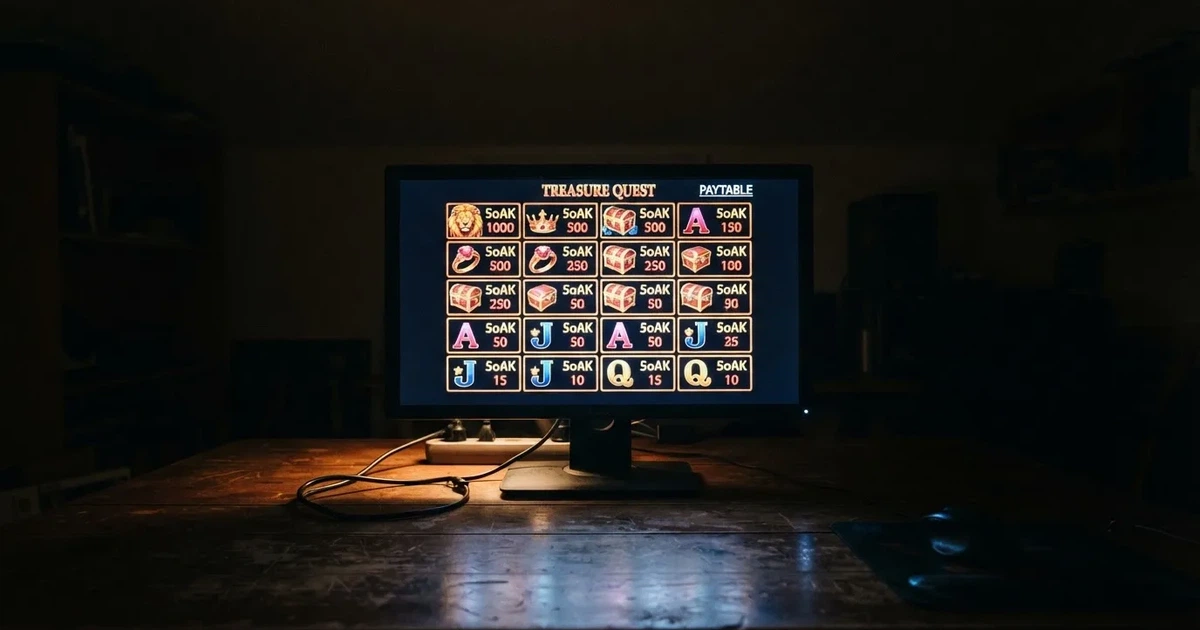
Platipus is a slot studio, not an Australian operator, and no online casino carrying its games can lawfully be offered to people in Australia. That single fact decides what every other paragraph below is worth reading. Offshore brands advertise Platipus titles to Australian visitors anyway; the ACMA has acted against most of them; an Australian who opens an account has no local regulator to complain to, no guaranteed payout, and no protection from the National Self-Exclusion Register. The eleven brands reviewed here were named in formal ACMA warnings, which is why they appear on this page. None is recommended.
Table of Contents
- How this shortlist was put together, and what makes one entry worth more than another
- Regulatory landscape
- Studio footprints
- The brand-by-brand breakdown
- The Interactive Gambling Act and what it actually prohibits
- How the ACMA enforces, and what that has produced
- What an Australian player is protected by, and what they are not
- What the payment rules say, and how an offshore site sidesteps them
- How bonuses around Platipus slots actually work, and what they cost
- What the Platipus studio itself says about its footprint
- What land-based play of similar machines looks like
- What other studios an Australian reader will see alongside Platipus
- What H2 Gambling Capital’s 2025 estimate implies
- What to do if a Platipus game is promoted by an unlicensed site
- FAQ
How this shortlist was put together, and what makes one entry worth more than another
A “best Platipus casino” list that does not start with the prohibition is selling the reader something the regulator has already closed. The shortlist below is built the other way around. Every brand sits on it because the ACMA itself issued a formal warning to the operator behind it for offering prohibited online casino games to people in Australia. The criteria that separate one entry from the next are therefore not game libraries, not bonus size, not payout speeds: those comparisons describe a market the law does not permit.

What actually moves an entry up or down on this list is the recency and the weight of the ACMA action. A warning issued in 2026 over an Australian-branded domain sits above a 2022 warning over a generic offshore brand, because the former is a more direct pitch at Australian residents. A repeat offender, an operator the ACMA has warned twice, sits below a single-warning operator on the same logic. None of the criteria the reader usually meets on a “top 10” page, free spins, wagering multiples, deposit bonuses, applies here, and writing as if they did would misread the subject.
A reader looking for a place to play Platipus titles from Australia will not find one on this list. What the list does is name the brands to avoid and explain, brand by brand, why the ACMA acted.
Regulatory landscape
| Brand | ACMA action and date | Operator named by the ACMA | Subject support |
|---|---|---|---|
| RocketPlay | March 2026, May 2022 | Pulsup Ltd, Dama N.V. | No-data |
| Level Up Casino | May 2022 | Dama N.V. | Listings-only |
| Woo Casino | March 2025 | Dama N.V. | No-data |
| Spirit Casino | May 2025 | Dama N.V. | No-data |
| National Casino | July 2025 | Consolutetish S.R.L. | Listings-only |
| Bizzo Casino | July 2025, 2022 | Consolutetish S.R.L., TechSolutions | No-data |
| Ignition Casino | July 2025 | Bamboo Media | No-data |
| Instant Casino | February 2025 | EOD Code SRL | No-data |
| Jackbit | April 2026 | Ryker B.V. | No-data |
| Casino Intense | April 2025 | Sterplay Holding Ltd | Listings-only |
| Sky Crown | September 2022 | Hollycorn N.V. | No-data |
Studio footprints
| Studio | Founded | Portfolio size | Key focus |
|---|---|---|---|
| Platipus | 2014 | 174+ games | Asian-oriented |
| 1spin4win | 2021 | 190+ games | Low-bandwidth |
| Betsoft | 2006 | 200+ games | RNG titles |
| BGaming | 2018 | 250+ games | Crash & casual |
The brand-by-brand breakdown
What follows is each operator’s ACMA record, the way research found the brand carrying Platipus titles (or not), and a verdict on what that combination leaves a player. The repeated line under every entry, that online casino games cannot be licensed anywhere in Australia, is the reason the verdict is the same shape in every block; what changes is what each operator’s specific record adds to it.
1. RocketPlay — the most recent Australian-domain warning
The ACMA issued a formal warning to Pulsup Ltd in March 2026 over RocketPlay. The .com.au domain is the part that matters: it is a brand pitched directly at Australian residents, not an offshore site that happens to accept Australian sign-ups. The same operator behind several of the brands below, Dama N.V., received a separate warning in May 2022 covering Rocketplay among six brands. Two warnings over the same brand, the second over a domain that names the country in its address, is the clearest case on this list of an operator that has not stopped after the first action.
No listing page tied to RocketPlay was found in research for Platipus titles; on the ACMA record, the brand is here because of its own behaviour toward Australian customers, not because Platipus is or is not on the lobby.
The verdict: the ACMA’s most recent warning on this list, and the only one aimed at a country-specific domain, makes this the brand an Australian reader should treat as the test case for any “but the regulator only sends warnings” line an affiliate site tries to sell.
2. Level Up Casino — the 2022 Dama warning
The ACMA’s May 2022 warning to Dama N.V. covered six casino brands, of which Level Up is one. That 2022 action was the trigger for the round of follow-on warnings the ACMA issued against Dama N.V. brands over the next three years. Research found Level Up listed on Wazdan’s site as a partner carrying Wazdan’s portfolio; whether Platipus titles sit on the same lobby is not something the available sources confirm, so on the Platipus dimension this entry is reported only as the listings describe it, never as the operator’s own statement.
The verdict: a long-standing Dama-brand warning, with the Platipus presence confirmed only via the studio’s own partner listings. The level of certainty about what is actually on the lobby remains lower than the level of certainty regarding the regulator’s stance on this operator.
3. Woo Casino — the March 2025 follow-on
The ACMA issued a fresh formal warning to Dama N.V. over Woo Casino in March 2025, three years after the original 2022 action over the wider Dama stable. A repeat warning over the same corporate group is the ACMA’s mechanism for marking that an operator has been given the chance to comply and has not. Research carries no Platipus listing for Woo Casino, so the brand sits on this list on the regulator’s finding alone.
The verdict: a 2025 warning over an operator group the ACMA had already warned in 2022 is the closest thing on this page to a recorded second strike. It is the cleanest illustration of what “the regulator does not act twice” would look like if it were ever true; it is not.
4. Spirit Casino — the May 2025 follow-on
Two months after Woo, in May 2025, the ACMA issued another Dama N.V. warning, this one over Spirit Casino. The pattern — same operator, fresh brand, fresh warning — is the way the ACMA has marked the Dama stable’s response to its 2022 action: not by changing behaviour, but by rotating the brand that fronts it. No Platipus listing for Spirit Casino appears in research, so the entry is regulator-driven.
The verdict: the value of this entry is what it shows about the operator group, not about Platipus. Two fresh Dama warnings in three months, with the same studio name on the original 2022 letter, is a record an Australian reader should weigh before believing that a brand rotation makes a warning go away.
5. National Casino — the Consolutetish warning and the Platipus link
The ACMA issued a formal warning to Consolutetish S.R.L. in July 2025 covering National Casino. Research carries Platipus-adjacent listings for National Casino from Betsoft and Pragmatic Play partner pages, which is what the “Subject support: listings-only” line on the operator’s record is built from. The presence of those listings is what the studios’ own sites say; the operator’s own current product lineup is not separately confirmed.
The verdict: of the eleven entries, this one has the most direct connection to a Platipus listing in the available sources — but the listing is a partner-page statement, not a confirmation that the studio’s games are on the operator’s live lobby today. The regulator’s decision to name the operator is independent of that question and stands on its own.
6. Bizzo Casino — a 2022 warning that became a 2025 one
Bizzo Casino sat on a 2022 formal warning to TechSolutions (CY) Group Limited and TechSolutions Group N.V., then became the subject of a second ACMA action in July 2025, this one against Consolutetish S.R.L. Two warnings, four years apart, two different corporate fronts. Research carries no Platipus listing for Bizzo, so the entry stands on the regulator’s record.
The verdict: the kind of entry that gives the lie to the marketing claim that a “new management” or a “rebrand” wipes a regulator’s history. The 2022 letter is still on the file; the 2025 letter is over it.
7. Ignition Casino — the Bamboo Media warning
The ACMA issued a formal warning to Bamboo Media in July 2025 covering Ignition Casino. Ignition has historically been marketed to Australian poker and casino players through offshore affiliate channels, which is what brings it into the ACMA’s jurisdiction. Research carries no Platipus listing for Ignition Casino, so the entry is again regulator-driven.
The verdict: a 2025 action against an operator whose Australian-customer base is built through affiliate marketing rather than a country-specific domain. The ACMA’s view of how a player was acquired does not change its view of the offering once acquired.
8. Instant Casino — the EOD Code warning
In February 2025 the ACMA issued a formal warning to EOD Code SRL over Instant Casino. Instant Casino has been one of the more heavily marketed crypto-deposit casino brands on affiliate pages targeting Australian traffic, which is the conduct the ACMA’s letter addressed. Research carries no Platipus listing for Instant Casino.
The verdict: a 2025 warning over a brand whose marketing model is precisely the one the ACMA’s enforcement is built around — crypto deposits, affiliate funnels into Australian traffic, no Australian licence. The line on credit cards and crypto as payment for licensed wagering in Australia is the one an Australian player should hold against this kind of offer: a brand asking for crypto deposit is, by definition, not the kind of operator the local rules cover.
9. Jackbit — the April 2026 Ryker warning
The ACMA issued a formal warning to Ryker B.V. in April 2026 over Jackbit and CasinOK. Two brands on one warning is the ACMA’s efficient batch handling: the operator is one entity, the warnings run together. Research carries no Platipus listing for Jackbit, so the entry is regulator-driven.
The verdict: the most recent 2026 warning on this list alongside RocketPlay, and the one that pairs two brands under a single operator. The same operator-group pattern the ACMA has used to mark Dama N.V. is being applied to Ryker B.V. a year later.
10. Casino Intense — the Sterplay warning and the 1spin4win listing
The ACMA issued a formal warning to Sterplay Holding Ltd in April 2025 over Casino Intense. Research carries a 1spin4win partner listing for Casino Intense, plus a Gambling Commission (UK) entry, which is what the “Subject support: listings-only” line is built from. 1spin4win is a separate studio from Platipus; what the listing says is that Casino Intense carries 1spin4win titles, not that it carries Platipus titles, and that distinction is what keeps this entry honest about what the sources actually cover.
The verdict: the entry that most needs the distinction between “listed by studio X” and “carries the studio this page is about” spelled out. The ACMA’s view of the operator is the regulator’s view; the studio-listing line is only what the partner pages say it is.
11. Sky Crown — the Hollycorn warning
The ACMA issued a formal warning to Hollycorn N.V. covering its Sky Crown and Blue Leo casino services in September 2022. Hollycorn is the operator group behind a long list of similarly-named offshore casino brands marketed through the same affiliate channels. Research carries no Platipus listing for Sky Crown.
The verdict: the oldest warning on this list, and the one that shows how far back the ACMA’s enforcement file runs. A 2022 letter is not a closed file; it is a record the regulator has chosen to keep on the public register, and a brand that has been on it for four years has not had the warning lifted.
The Interactive Gambling Act and what it actually prohibits
The Interactive Gambling Act 2001, strengthened by the Interactive Gambling Amendment Act 2017, makes it an offence to provide online casino games, online pokies or in-play betting to a person physically in Australia. No state or territory licenses those products. What is licensable is wagering on races and sport placed before the event, lotteries, and keno, and in practice those are licensed by the Northern Territory Racing and Wagering Commission. The same Northern Territory commission regulates 52 of Australia’s online bookmakers — Sportsbet, Bet365, Ladbrokes among them — for tax reasons; the commission has no full-time staff and meets once a month in Darwin. That is the regulatory frame an Australian reader is operating inside when an offshore site offers Platipus slots for real-money play.
The Interactive Gambling Amendment (Gambling Reform) Bill 2026 passed Parliament on 19 August 2026, and its advertising and inducement measures commence on 1 January 2027. The law has a start date and is not yet in force on a page written during 2026; what is in force is the underlying prohibition on providing online casino games, which has been in force since 2017. The 2026 reform is the line that will, from January 2027, tighten what an affiliate site can say about an offer that is already prohibited.
How the ACMA enforces, and what that has produced
The ACMA investigates complaints, issues formal warnings to operators, and directs Australian internet service providers to block illegal sites. A blocking request is not a soft action: the ACMA asks ISPs to make the site unreachable from an Australian IP, and the site goes dark. The June 2026 blocking round asked ISPs to block 12 more sites: 7Signs, ChromaBet, Donbet, Duospin, Freshbet, Slots Gem, Jacks Club, Lucky Start, Pointsbetz, Spinrise, Vinyl Casino and Wildsino.
Running total as of that June 2026 report: 1,751 illegal gambling and affiliate marketing websites had been blocked since the first blocking request in November 2019. The same report counts more than 230 unlicensed gambling services that have left the Australian market since enforcement was strengthened in 2017. The blocking-rate calculation, the running total of 1,751 blocked sites against the elapsed time since the first blocking request in November 2019, works out to a band of roughly 240 to 260 sites blocked per year on a simple linear reading of the figures, and a slightly higher figure on the early years when the pace was faster. The condition that bound the calculation is the one that matters: the 1,751 figure is a cumulative total across more than six years of enforcement, and a single year’s block count has moved up and down within that band as the ACMA has run larger and smaller rounds. A reader who treats the figure as a per-year rate is reading a cumulative number as a flow.
What an Australian player is protected by, and what they are not
The Australian consumer-protection regime for gambling is built around locally licensed operators. The National Self-Exclusion Register, BetStop, has been live since August 2023; it binds Australian-licensed online and phone wagering services. An offshore casino is not connected to it. A player who has registered with BetStop, then opens an offshore account, is not protected by the registration. The National Gambling Helpline on 1800 858 858 is free, runs 24 hours, and has chat at Gambling Help Online. Both services are real and worth using; neither has any leverage over an offshore operator that refuses to pay out.
The tax position is also worth knowing about. Gambling winnings of a recreational player are not assessable income under section 6-5 of the ITAA 1997, and losses are not deductible, unless the person is carrying on a business of gambling. A large win from an offshore site is therefore not taxable in the reader’s hands, but it is also not recoverable through any Australian complaints body if the offshore operator declines to pay it.
What the payment rules say, and how an offshore site sidesteps them
Credit cards, credit-related products and digital currency have been banned as payment for licensed online wagering since 11 June 2024. The penalty for an Australian-licensed operator that takes them is up to A$247,500. The legal deposit routes for licensed wagering are debit card, bank transfer, PayID/Osko and BPAY. An offshore site asking an Australian player for a credit card or a crypto deposit is, by definition, outside the Australian rules — because if it were inside them, those would be the routes on the cashier page. A crypto deposit at a casino licensed in Curaçao and warned by the ACMA is the textbook mismatch the rules are built to surface.
The settlement speed an offshore site advertises, often “instant” or “within an hour”, is a claim about the operator’s own queue, not about anything an Australian bank or payment system is bound to do. Where the underlying payment rails are crypto, the settlement claim is about the blockchain confirmation time. Where the underlying rails are a debit card or a bank transfer routed through an offshore processor, the claim is about a queue the operator controls. Either way, the recourse if a payout stalls is the operator’s complaints email, not an Australian regulator.
How bonuses around Platipus slots actually work, and what they cost
A bonus offer at an offshore casino is built on the same template as one at a licensed venue, with the same moving parts: a headline amount, a wagering multiple, a max-cashout cap, a list of which games contribute what share of the turnover, and a clock. None of those parts is regulated for an Australian player at an offshore brand, because the brand is outside the Australian rules. The “max-cashout” line on a free-spins offer — the cap on what a player can withdraw from bonus-derived winnings — is the term that most often costs a player the most, because the cap is set against the bonus not against the win, and the win a player was actually chasing was the one above the cap.
Free-spin offers attached to Platipus titles follow the same shape. The number of spins and the per-spin stake are the easy parts to read; the harder parts are which titles are eligible (often a short list, not the full Platipus catalogue), how long the spins remain valid (often 24 to 72 hours, with unused spins forfeited), and the wagering multiple on anything the spins produce (often 35x to 50x on a free-spin win). The marketing line “150 free spins on Platipus” is a number; the lines around it are the cost.
A no-deposit bonus — the offer that costs the player nothing to claim and therefore looks like the safest one to test — is the offer most exposed to the max-cashout cap and the highest wagering multiple. An Australian player claiming a no-deposit bonus at an offshore brand has no deposit at risk, but has winnings they will struggle to withdraw if the cap is set at a low figure.
What the Platipus studio itself says about its footprint
Platipus was founded in 2014 and describes itself as an EU-based studio with more than 174 HTML5 slots and table games, in all major fiat and crypto currencies and 20 languages. The studio’s own site says its recent development has focused on Asian-oriented games. Its RNG certification is by iTech Labs, for regulated markets including the UK, Italy, the AGCC, Denmark, the Isle of Man, Malta, Gibraltar, Sweden and Romania. Australia is not on that list. The studio also describes itself as having more than 500 operator customers and 11 years of industry experience, with 24/7 technical support across all time zones.
What this means for an Australian reader: the studio’s certification, distribution footprint and customer base are real, and they cover regulated European and Asian markets in depth. None of that changes the Australian prohibition on the offering of online casino games. A certified studio is a studio whose games are fair at the math level; it is not, by itself, a sign that any brand carrying the studio’s games is a lawful place for an Australian to play.
What land-based play of similar machines looks like
Australia has a regulated land-based gaming machine market, regulated state by territory, with Aristocrat Leisure as the largest local manufacturer and the second-largest slot-machine manufacturer worldwide behind International Game Technology. Aristocrat was founded in 1953 by Leonard Ainsworth and listed on the ASX in 1996 under the ticker ALL. The company’s 2025 revenue was A$6.30 billion, with normalised net profit after tax and amortisation of A$1.55 billion and 7,400 employees. Aristocrat’s regulated online real-money gambling business, Aristocrat Interactive, was formed in April 2024 by combining the Anaxi unit with the acquired NeoGames group.
The land-based side is the legal channel for equivalent machines in Australia: pokies in clubs and pubs, casino floors in state-licensed venues. The mechanics — RTP settings, volatility bands, bet sizing — are the same vocabulary as the offshore slot product. What is different is the regulatory frame around them: a land-based pokie in a NSW pub sits inside state gaming-machine regulations, with state-level self-exclusion and complaints bodies. An offshore slot on an ACMA-warned brand sits inside none of those.
What other studios an Australian reader will see alongside Platipus
The studios whose partner pages show up on the same offshore brands that carry Platipus are the studios whose listings appear in research: Betsoft, founded in 2006 with a catalogue of more than 200 RNG games and RNG certification from Quinel and GLI; BGaming, whose team has worked on games since 2012 with the BGaming brand debuting in 2018 and now offering 250+ certified games; 1spin4win, founded in 2021 with a portfolio of more than 190 online slots and a Curaçao licence. Each operates in its own commercial footprint with its own RNG certification arrangements. None of those footprints covers an Australian player at an ACMA-warned brand; what covers an Australian player is the Australian land-based and licensed-wagering market described above.
What H2 Gambling Capital’s 2025 estimate implies
The H2 Gambling Capital 2025 report, as reported by the trade press, estimates that Australians lose about A$3.9 billion a year to illegal gambling sites, and that the share of gambling going through legal channels fell from 74% in 2021 to 64%. The fall in the legal share is the figure that gives the A$3.9 billion its weight: it is not a static number, it is a flow that has grown as legal channels have lost share. An Australian player choosing where their gambling spend goes is choosing between the regulated legal channels — with their complaints bodies, their self-exclusion register, their payment-method restrictions — and the offshore illegal channels the ACMA has been blocking since November 2019.
What to do if a Platipus game is promoted by an unlicensed site
The first move is to treat the promotion itself as the headline: an unlicensed site promoting a real-money game to an Australian is doing the thing the Interactive Gambling Act prohibits. The ACMA’s formal-warning register is the place to check whether the brand has already been warned; if it has not, the IGA still applies, because the prohibition is on the offering, not on a previous warning. The National Gambling Helpline on 1800 858 858 and the chat service at Gambling Help Online are the support lines for the player side of the question. The BetStop self-exclusion register does not bind offshore brands, so it is not a substitute for not opening the account; it is a complement to it.
FAQ
Is Platipus legally available to Australian players?
No. The studio’s games are certified for regulated European and Asian markets; Australia is not on the certification list, and the Interactive Gambling Act 2001 prohibits offering online casino games to people in Australia regardless of where the studio or the operator is licensed. What is licensed in Australia is wagering on sport and races before the event, lotteries, and keno, plus land-based gaming machines in clubs, pubs and casinos.
What kinds of games does Platipus make?
The studio’s own site describes more than 174 HTML5 slots and table games, with RNG certification by iTech Labs. Its recent development has focused on Asian-oriented games. Crypto and fiat currency support and 20-language rollout are the studio’s stated distribution features. Australia is not among the regulated markets its certification covers.
Are Platipus games available at Australian land-based venues?
No. The studio’s footprint is online, and the Australian land-based gaming machine market is dominated by Aristocrat Leisure, the largest local manufacturer. Pokies in clubs and pubs and casino floors run on Aristocrat and other locally regulated suppliers, not on Platipus. There is no land-based Platipus product available to an Australian player through regulated channels.
How can Australians check whether a Platipus title is fair?
The studio’s RNG is certified by iTech Labs, and the certification covers regulated markets including the UK, Italy, the AGCC, Denmark, the Isle of Man, Malta, Gibraltar, Sweden and Romania. The fairness of the math is therefore a question with an answer; the lawfulness of an Australian playing it at an offshore brand is a different question, and the IGA’s answer to it is no, regardless of the math.
Why do offshore sites keep advertising Platipus games to Australians?
The studios behind these brands — Dama N.V., Hollycorn N.V., EOD Code SRL, Consolutetish S.R.L., Bamboo Media, Sterplay Holding Ltd, Pulsup Ltd, Ryker B.V. — operate outside the Australian regime, and the affiliate marketing channels that drive sign-ups are not within the ACMA’s blocking requests. The ACMA’s enforcement record over the brands on this page shows the pattern: a formal warning, sometimes a follow-on warning, and rotation of brand fronts under the same operator. The A$3.9 billion a year H2 Gambling Capital estimates Australians lose to illegal sites is the demand side of the same pattern.
What should an Australian do if a Platipus game is promoted by an unlicensed site?
Treat the promotion as the headline: the brand is doing what the Interactive Gambling Act prohibits, and the ACMA’s warning register is the public record of which brands have already been warned. The support lines are 1800 858 858 for the National Gambling Helpline and Gambling Help Online for chat, both free and 24/7. BetStop is the self-exclusion register for licensed wagering, not for offshore brands, so it does not protect an account at an unlicensed site from being opened in the first place.