
BGaming casinos in Australia: what the offer costs in 2026
A search for “BGaming casinos” lands here for one reason: the BGaming studio name is being treated as a marker of quality by people who want to find a site carrying its slots. The problem with that search in Australia is that every site carrying BGaming titles for real money is, by definition, operating outside Australian law. The Interactive Gambling Act 2001 prohibits the supply of online casino games and online pokies to anyone in Australia, and no state or territory issues a licence for them. So the page below is not a ranking, not a “where to play” guide, and not a comparison of bonus size. It is the cost sheet — what a BGaming casino actually is, what the offer looks like once the marketing is stripped back, and what the Australian player is left holding when the spin button stops responding.
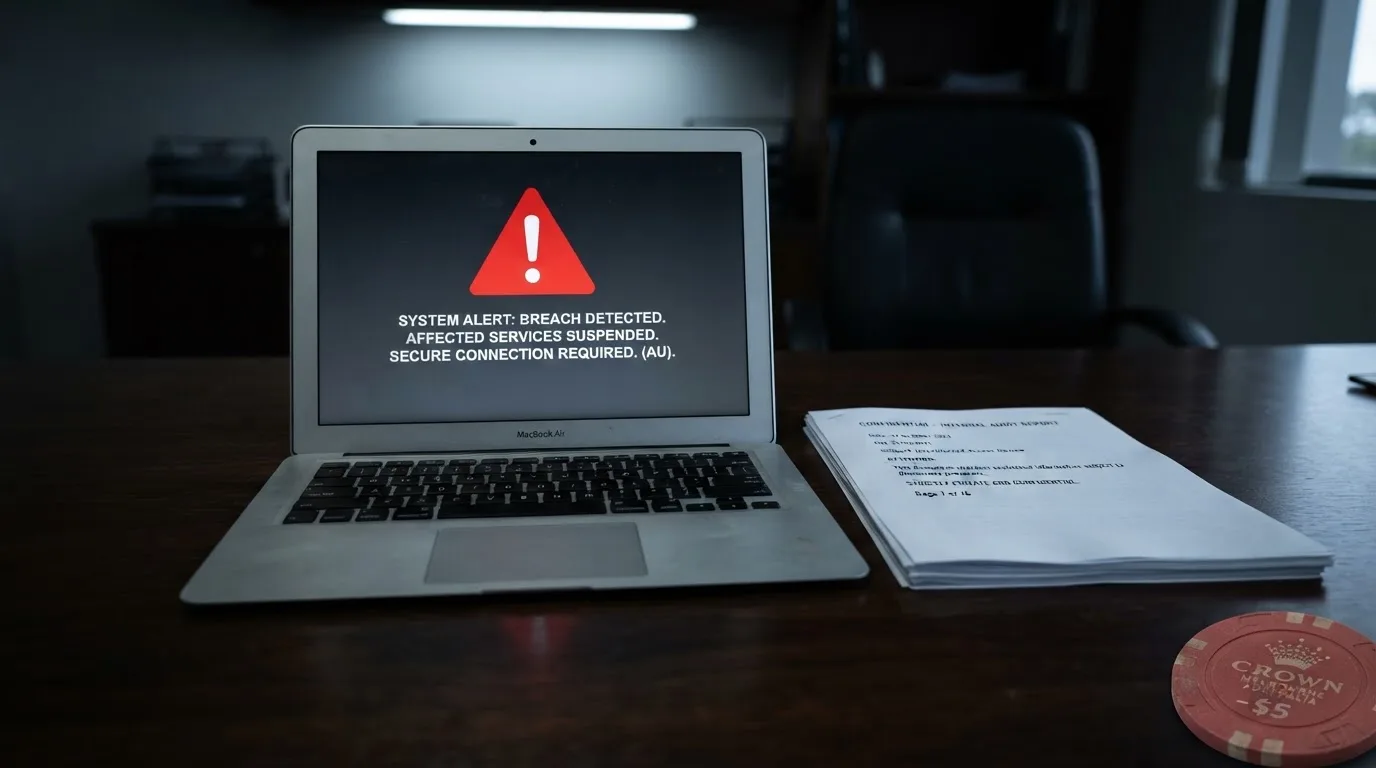
Data current as of 9 November 2026, checked against ACMA formal-warning publications and the Interactive Gambling Act 2001.
Table of Contents
- What BGaming is, and what it is not
- How a BGaming slot is actually built
- The legal floor under a BGaming casino in Australia
- What the offer looks like once marketing is stripped back
- The payment side, kept informational
- Mobile: what “BGaming casino app” actually is
- What a comparison of BGaming-carrying sites would weigh, if one existed
- Operators the ACMA has formally warned
- The cost sheet, summarised
- What to do if the offer starts to feel compulsory
- Frequently asked questions about BGaming casinos in Australia
What BGaming is, and what it is not
BGaming is a game studio, not a casino operator. The brand debuted in 2018, though the team behind it has been building games since 2012. It now offers more than 250 certified titles spanning video slots, video poker, lottery, card, scratch, crash and casual games. The portfolio includes proprietary mechanics such as TRUEWAYS — a pay system that opens up to 262,144 ways to win on a single spin — alongside MultiDice X and Merge UP. BGaming reports that its games are used by over 3,000 operators worldwide, and names Blaze, Pin-Up and Gamdom among the brands carrying its content.

The studio is operated by Stable Games Ltd, registered in Valletta, Malta, and holds a Malta Gaming Authority Critical Gaming Supply Licence (MGA/B2B/785/2020) for Type 1 B2B gaming services, issued on 18 March 2021. That is a B2B supply licence — a licence to provide games to other licensed operators — not a licence to take bets from players. BGaming does not run a casino. It sells its games to casinos that do. The MGA licence governs that supply relationship inside Malta’s regulatory perimeter, and it carries no weight in Australia, where the IGA makes the receiving end of that transaction unlawful for any operator.
That distinction matters for the cost analysis below. A player who walks into an “BGaming casino” is not buying a product from a regulated studio. They are playing a studio’s games on a site that the studio has licensed elsewhere, in a country where that site is prohibited from serving them. The cost of that arrangement starts with the licence mismatch and runs through every payment, bonus term and withdrawal attempt that follows.
How a BGaming slot is actually built
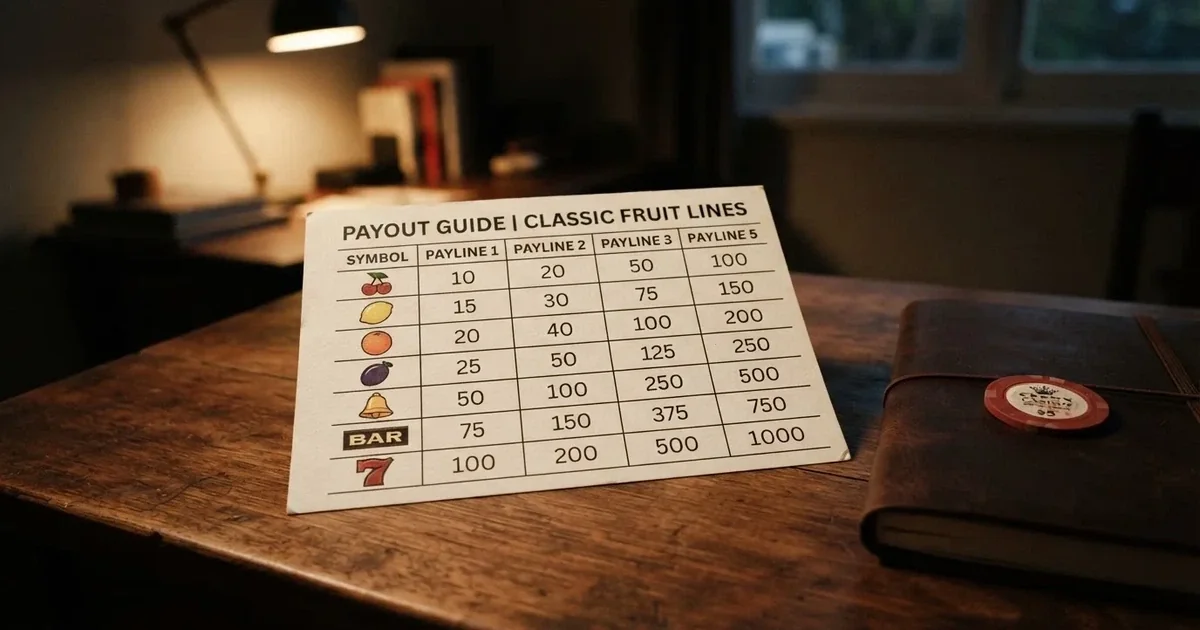
A BGaming title is, mechanically, a standard online video slot: five reels (in most cases), a fixed or adjustable number of paylines, a return-to-player percentage published in the help screen, and a volatility rating that the studio assigns to its own catalogue. The two structural choices that set BGaming apart from older studios are the multiplier-driven “ways to win” mechanics — TRUEWAYS being the most aggressive example — and a willingness to publish the per-symbol payout table openly, rather than locking it behind in-game exploration. The reason a player searching by studio name gets a different experience is mostly that range of mechanics: games where 262,144 ways to win is the headline number behave very differently from a 20-payline classic, even when the RTP is in the same neighbourhood.
What a paytable generally shows:
- The value of each symbol at minimum stake, typically five to ten tiers.
- The value of scatter and wild substitutes, which usually pay independently of position.
- The trigger conditions for free spins, respins or bonus rounds, and the multiplier attached.
- The published RTP — usually between 95% and 97% — and the volatility class (low, medium, high, very high).
- The maximum exposure, often shown as a multiple of stake (e.g. 5,000×).
The arithmetic that decides what a session costs is the same as for any other slot: every spin draws from a distribution whose long-run return is the published RTP, less the house edge. The marketing word around a 96% RTP is “almost fair”; the actual number is that the house keeps about 4 cents of every dollar wagered, averaged across millions of spins. A single session of a few hundred spins will not average out. That is the cost line every BGaming title prints on its paytable page, and it is the line this page leans on when an offer is being priced.
The legal floor under a BGaming casino in Australia
What the IGA prohibits
The Interactive Gambling Act 2001, as tightened by the Interactive Gambling Amendment Act 2017, makes it a criminal offence to provide online casino games, online pokies or in-play betting to a person in Australia. No state or territory issues a licence for those products. What can be licensed is wagering on races and sporting events placed before the event, lotteries and keno — in practice, those are licensed through the Northern Territory Racing and Wagering Commission, which regulates 52 online bookmakers including Sportsbet, Bet365 and Ladbrokes.
A BGaming slot is an online casino game. A site carrying BGaming titles for real money is therefore a prohibited interactive gambling service as far as the IGA is concerned, regardless of any offshore licence the operator displays in its footer. The Australian Communications and Media Authority (ACMA) investigates complaints, issues formal warnings, and directs Australian internet service providers to block illegal sites. As of the round reported on 26 June 2026, the ACMA has asked ISPs to block 1,751 illegal gambling and affiliate marketing websites since the first blocking request in November 2019. The blocking list is not theoretical: an offshore site can lose Australian access with a balance still on it, and there is no Australian consumer protection framework standing behind the player.
What enforcement looks like in practice
The ACMA’s enforcement moves in waves. A site can be operating one day and unreachable from an Australian IP the next. The clearest recent example is the 26 June 2026 blocking round, which named 12 sites: 7Signs, ChromaBet, Donbet, Duospin, Freshbet, Slots Gem, Jacks Club, Lucky Start, Pointsbetz, Spinrise, Vinyl Casino and Wildsino. The 12 is one round; the running total is 1,751.
The rate at which the ACMA is blocking sites provides a clear view of its recent enforcement intensity. From the first blocking request in November 2019 to the cumulative total of 1,751 on 26 June 2026, that is roughly 6 years and 7 months, or about 79 months. Dividing the two gives an average blocking rate of around 22 sites per month across the full period. The early years were slower; recent rounds have been much heavier. In just the rounds research carries — 12 sites in one round in June 2026, plus the named formal warnings over the operators listed below — the ACMA is closing sites at a clip of multiple dozens per quarter in 2026. The number that matters for a reader is not the cumulative total but the direction: a site that is up this week may not be reachable next, and a balance parked on it is at risk of becoming unreachable with it.
What the player is not protected by
An offshore casino is not connected to BetStop, the National Self-Exclusion Register that has been live since August 2023. BetStop binds Australian-licensed online and phone wagering services only. Registering with BetStop does not stop an offshore site from accepting deposits from the same player. There is no Australian complaints body an offshore operator answers to, no dispute resolution forum with jurisdiction, and no recourse if a withdrawal is refused. The IGA targets the provider, not the player, but the protection that the IGA’s licensing regime would normally give a player — segregated player funds, audited RTP, identity verification on withdrawal — is precisely what the offshore site sits outside.
The H2 Gambling Capital 2025 estimate puts Australian losses to illegal gambling sites at around A$3.9 billion a year. The share of gambling going through legal channels fell from 74% in 2021 to 64%. That decline tracks the ACMA’s enforcement work from the other direction: as more sites are blocked, the legal share should rise, but the gap between A$3.9 billion and zero is what the offshore market is currently absorbing.
What the offer looks like once marketing is stripped back
What “BGaming casino bonus” usually means
The bonus mechanics on a BGaming-carrying offshore site follow the same template as the wider offshore market: a deposit match, free spins tied to specific BGaming titles, or both, with a wagering requirement attached before any of it can be withdrawn. The wagering requirement is the cost of the bonus, and it is the line that decides whether the offer is worth taking. A 100% match up to A$500 with a 40× wagering requirement on the bonus amount means A$20,000 of slot turnover before the bonus balance becomes withdrawable — and that is at the modest end of the range.
The free-spins side is usually advertised as a feature; what it actually is, on the cost sheet, is a fixed number of spins at a fixed stake (often the minimum, sometimes A$0.20) on a named BGaming title. The wins from those spins typically land as bonus money, not as cash, and the same wagering requirement applies. Free spins on a high-volatility title with a 96% RTP, played at the minimum stake, return on average less than the face value of the “free” package, because every spin carries the house edge and the bonus multiplier on top.
A deposit-gated package keeps that deposit gate for a reason: the gate is what funds the bonus pool. A “no deposit” offer removes the gate but tightens the conditions elsewhere — usually a higher wagering multiple and a maximum cashout cap that limits what the bonus can ever produce. The marketing word for both is “free”; the cost is the wagering requirement and the cap, which is what the player is paying for the chance to keep any of it.
What the offer costs in turnover
A worked example: assume a A$200 bonus at 40× wagering on the bonus amount, played on a BGaming slot with a 96% RTP at A$1 per spin. The required turnover is A$200 × 40 = A$8,000. At A$1 per spin, that is 8,000 spins. At five seconds per spin, 8,000 spins is 40,000 seconds, or about 11.1 hours of continuous play. The expected loss over those 8,000 spins, at a 4% house edge (1 − 0.96), is A$8,000 × 0.04 = A$320. That is the average cost of clearing the bonus — the floor under which no player finishes, and the figure around which most players cluster.
The conclusion from that calculation is the only thing the formula can answer: how long to clear the bonus, and what it costs in expected loss. It does not speak to whether the player will win, what the bonus will pay out, or whether the site will release the withdrawal when the requirement is met. Those outcomes sit outside the arithmetic.
What a “no deposit” offer costs in practice
A “no deposit” bonus on the same site typically arrives with a 50× to 60× wagering multiple and a maximum cashout cap — a hard ceiling on what the bonus can ever produce, regardless of how the wagering plays out. The arithmetic is the same shape as a deposit match, scaled up. A A$20 no-deposit bonus at 50× wagering on the bonus is A$1,000 of turnover. At A$0.20 per spin, that is 5,000 spins, or about 6.9 hours at five seconds per spin, with an expected loss of A$40 against a bonus whose cashout cap may sit at A$100 or below. The cap is the binding constraint, not the wagering: the player can clear the requirement, hit the cap, and walk away with less than the wagering cost.
What “promo code” adds, in practice
A promo code is a tracking tag for the affiliate that referred the player. It does not change the offer — the offer is the same as without the code. It does, in most cases, change who gets paid if the player deposits. There is no player-facing advantage to entering one, and no disadvantage to leaving the field blank. The marketing language around “exclusive promo codes” is the affiliate trying to claim the player as its own, not the site offering anything extra.
The payment side, kept informational
What the IGA prohibits on the rails
Credit cards, credit-related products and digital currency have been banned as payment for licensed online wagering since 11 June 2024, with penalties up to A$247,500 for operators. The legal deposit routes for licensed wagering are debit card, bank transfer, PayID/Osko and BPAY. A site asking an Australian player for a credit card number or a crypto wallet address is not operating inside the Australian rules — it is operating outside them, on the offshore rails the IGA was amended to close.
That matters for what happens to a balance. A deposit made via crypto on an offshore site has no chargeback path. A withdrawal request made to a different wallet from the deposit wallet is, on most offshore sites, the trigger for an additional identity check that the site is under no obligation to complete. The player protection that comes with PayID or a debit card — a regulated intermediary, a paper trail, a complaints body — does not exist on the offshore rails.
What payout speed looks like when it works
When an offshore BGaming-carrying site processes a withdrawal without a hold, the timeline is usually advertised as 24 to 72 hours. The advertised figure is the floor; the realistic figure includes a verification queue, a bonus-wagering check, and a payment-processor batch. Crypto withdrawals are typically faster on paper — minutes to a few hours once approved — but the approval step is the bottleneck, and the approval step is where most offshore sites apply the terms that turn a fast advertised payout into a slow one in practice.
The cost of a slow payout is not just the wait. It is the time during which the balance is on the site, exposed to the next blocking round, the next terms-of-service change, or the next “additional verification” request that the player is asked to satisfy before the money moves.
What a blocking round does to a parked balance
A balance on a site that gets blocked from Australian ISPs is not lost automatically — the site itself is still operating, the player can still reach it via VPN or direct URL, and the balance still nominally exists. What is lost is the route: the player cannot deposit via PayID or debit card from an Australian bank without that transaction potentially falling inside the IGA’s prohibited-payment rules, and the player cannot complain to an Australian body if the balance is not paid out. The cost of a blocking round is the cost of being on the wrong side of an unregulated transaction when the regulator’s next move lands.
Mobile: what “BGaming casino app” actually is
BGaming titles are built in HTML5, which means they run in a mobile browser without a separate download. There is no BGaming casino app — BGaming is a studio, not an operator — and any “BGaming casino app” advertised by a search result is an app for one of the offshore sites carrying BGaming games. The app installs a webview wrapper around the same mobile-browser experience the player would get by opening the site in Safari or Chrome.
The risk profile of the app is the same as the site, with one addition. A native app installed on the phone asks for notification permissions, which most offshore casino apps use to push bonus offers and “we miss you” reloads. The cost of those notifications is not the data they consume; it is the impulse cycle they keep alive between sessions. Disabling notifications on install is the cheapest single intervention a player can make.
A mobile browser session, by contrast, closes when the tab is closed. The session is bounded by the player’s attention; the app is bounded only by the operating system. The two are not the same product even when the games on them are identical.
What a comparison of BGaming-carrying sites would weigh, if one existed
A fair comparison of BGaming-carrying offshore sites would look at five things:
- The licence displayed in the footer — Curaçao, Anjouan, Kahnawake — and what that licence actually requires the operator to do in practice.
- The bonus terms — match percentage, wagering multiple, game contribution, max cashout — and whether the terms are reachable on the named BGaming title.
- The withdrawal timeline, in the median case, including the verification queue.
- The payment methods accepted from Australia — and whether any of them are inside the IGA’s prohibited rails.
- The ACMA action history — whether the operator has been formally warned, and how recently.
Every site on the list below scores 0 on point 5, because every site on the list below has been the subject of an ACMA formal warning. That is not a comparison finding — it is the precondition for the list being the list.
Operators the ACMA has formally warned
The 11 operators below are listed because the ACMA itself issued a formal warning over each one for offering prohibited interactive gambling services to Australians. This is not a ranking. The order follows the ACMA’s own publication sequence.
RocketPlay
The ACMA issued a formal warning to Pulsup Ltd over Rocketplay in March 2026. RocketPlay had earlier appeared in the May 2022 warning to Dama N.V., which covered six brands including Bambet, Dazard, Level Up, Rocketplay, Wild Tornado and Cobra Casinos. The same operator being named twice is the ACMA’s pattern when an entity shifts corporate vehicle and continues the same line of business under a different parent. The verdict for a player reading this: a brand on its second ACMA warning is a brand the regulator has already tried once and seen continue anyway. The cost of that continuity is borne by the player whose withdrawal request lands during the next enforcement round.
Level Up Casino
The ACMA issued a formal warning to Dama N.V. over Level Up Casino in May 2022, as part of the same six-brand batch. Level Up’s catalogue, as listed by Wazdan.com, includes titles from Wazdan alongside BGaming content. A site carrying multiple studios is not a softer target — every studio’s content is wrapped in the same offshore licence, and the same blocking round applies to all of it. The verdict: a brand carrying a recognisable studio name does not change the underlying licence mismatch, and the studio’s MGA B2B supply licence does not extend to the player side of the transaction.
Woo Casino
The ACMA issued a formal warning to Dama N.V. over Woo Casino in March 2025, fourteen months after the May 2022 batch. The same operator, the same brand, and the same line of business — the gap between warnings is the time it took the ACMA to act on the renewed activity. The verdict: a brand that resurfaces after an earlier warning is not a reformed operator; it is one the regulator has had to warn twice.
Spirit Casino
The ACMA issued a formal warning to Dama N.V. over Spirit Casino in May 2025, two months after the Woo Casino warning. Spirit Casino’s profile, on the cost side, is identical to Woo Casino’s: same parent, same offshore structure, same prohibition. The verdict: the cost sheet does not differ between two Dama N.V. brands carrying the same BGaming content, because the licence mismatch sits above the catalogue.
National Casino
The ACMA issued a formal warning to Consolutetish S.R.L. over National Casino in July 2025. National Casino’s catalogue, as listed by Betsoft.com, Pragmaticplay.com and en.wikipedia.org, includes Betsoft and Pragmatic Play titles alongside BGaming content. The verdict: a multi-studio catalogue on an offshore site spreads the brand’s recognition across several names but concentrates the regulatory exposure on a single operator. The cost is the same shape as a single-studio site, just wearing more labels.
Bizzo Casino
The ACMA issued a formal warning to Consolutetish S.R.L. over Bizzo Casino in July 2025. Bizzo had already been the subject of a 2022 formal warning to TechSolutions (CY) Group Limited and TechSolutions Group N.V. — the same brand, two operators, two warnings. The cost of that pattern is straightforward: every additional warning is one more round of blocking requests, one more narrowing of the route back to the site, and one more piece of evidence the ACMA will cite when the next round is announced.
Ignition Casino
The ACMA issued a formal warning to Bamboo Media over Ignition Casino in July 2025. Ignition’s offshore positioning targets the Australian market from a US-facing brand — the name carries poker heritage that Australian players recognise. The cost sheet is unchanged by that heritage: an offshore licence, a prohibited product, and a regulator that has now named the brand by name. The verdict: brand familiarity does not survive the warning.
Instant Casino
The ACMA issued a formal warning to EOD Code SRL over Instant Casino in February 2025. Instant Casino is the brand on the list with the shortest gap to an ACMA action and a marketing name that leans directly into the speed narrative — instant withdrawals, instant play. The cost of that naming is the gap between the marketing word and the verification queue that actually decides when the money moves.
Jackbit
The ACMA issued a formal warning to Ryker B.V. over Jackbit and CasinOK in April 2026. Jackbit’s profile, on the operator side, is a Curaçao-registered entity carrying a multi-studio catalogue. The verdict: a brand warned in the same breath as another brand under the same operator is one enforcement event, not two — and the player on either brand is exposed to the same blocking round.
Casino Intense
The ACMA issued a formal warning to Sterplay Holding Ltd over Casino Intense in April 2025. Casino Intense’s catalogue, as listed by 1spin4win, en.wikipedia.org and gamblingcommission.gov.uk, includes 1spin4win titles alongside BGaming content. 1spin4win is a Curaçao-headquartered studio with a Curaçao gaming licence and a portfolio of more than 190 online slots. The cost of a multi-studio catalogue on Casino Intense is the same shape as National Casino’s: more recognition labels, same single-operator exposure.
Sky Crown
The ACMA issued a formal warning to Hollycorn N.V. over Sky Crown and Blue Leo, as published in the ACMA’s September 2022 formal-warning PDF. Sky Crown is the brand on the list with the longest unbroken tenure on the ACMA’s radar — a 2022 warning that has not, on the available evidence, been followed by an exit. The verdict: a brand that has survived an ACMA warning without leaving the market is a brand that has decided the cost of staying is lower than the cost of leaving, and that calculation is paid in the player balances left on it during the next enforcement round.
The cost sheet, summarised
What a BGaming casino costs an Australian player, broken into the lines that do not change and the lines that do:
| Line item | What it costs | Where it lands |
|---|---|---|
| Licence mismatch | No Australian consumer protection; no complaints body; no recourse on a refused withdrawal | Every session, every transaction |
| ACMA blocking exposure | Balance can become unreachable from an Australian IP | Roughly 22 sites blocked per month on average since November 2019; recent rounds faster |
| Bonus wagering | A$8,000 of turnover per A$200 bonus at 40×, with an expected loss around A$320 | Every claimed offer |
| Free-spin house edge | 4% on a 96% RTP title, averaged over many spins | Every free spin |
| No-deposit cap | Hard ceiling on cashout, usually below the wagering cost | Every no-deposit claim |
| Payment rails | No chargeback on crypto; no Australian intermediary on any rail | Every deposit and withdrawal |
| Self-exclusion gap | BetStop does not bind offshore sites | Every reload notification |
The number that does not appear in the table is the one the marketing does carry: the headline bonus figure. That figure is the entry price on a transaction whose true cost is the seven lines above it.
What to do if the offer starts to feel compulsory
If the search for a BGaming casino has shifted from a comparison exercise to a compulsion, free confidential help is available around the clock. Gambling Help Online runs a 24/7 chat service, and the National Gambling Helpline is 1800 858 858 — free from any Australian phone. BetStop, the National Self-Exclusion Register, has been live since August 2023 and binds every Australian-licensed online and phone wagering service; it does not bind offshore sites, but it does close the regulated side of the player’s account portfolio, which is the side the IGA actually protects.
The minimum age for any gambling product in Australia is 18. The minimum age for asking for help is the same.
Frequently asked questions about BGaming casinos in Australia
Is BGaming an operator or just a studio?
BGaming is a game studio, not a casino. The brand debuted in 2018, the team behind it has been building games since 2012, and it holds a Malta Gaming Authority B2B supply licence (MGA/B2B/785/2020) — a licence to provide games to other licensed operators, not to take bets from players. The studio reports that over 3,000 operators worldwide use its games.
Can BGaming titles be played for real money at any licensed Australian casino?
No. Online casino games and online pokies cannot be licensed anywhere in Australia under the Interactive Gambling Act 2001. Every site carrying BGaming titles for real money operates outside Australian law, regardless of any offshore licence it displays.
How does a BGaming slot differ from other studios’ games on its paytable?
The most distinctive feature is the TRUEWAYS mechanic, which can open up to 262,144 ways to win on a single spin. Most BGaming titles also publish a per-symbol payout table openly in the help screen, with a stated RTP usually between 95% and 97% and a volatility class assigned by the studio.
Does BGaming operate its own casino?
No. BGaming sells its games to operators that run casinos. Names the studio lists as carrying its content include Blaze, Pin-Up and Gamdom. None of those operate under an Australian licence, because no Australian licence for online casino games exists.
Why do offshore casinos highlight BGaming as a selling point to Australians?
The studio name carries recognition among players searching by brand. BGaming’s MGA B2B licence and 250+ title portfolio give the affiliate marketing pages something concrete to quote. The recognition does not change the underlying licence mismatch: a site carrying BGaming titles for Australians is offering a prohibited interactive gambling service under the IGA, and the ACMA has issued formal warnings over multiple operators doing exactly that.
Is it legal for a site to offer BGaming games for real money to people in Australia?
No. The Interactive Gambling Act 2001, as amended in 2017, makes it an offence to provide online casino games to a person in Australia. The ACMA investigates, issues formal warnings, and directs Australian ISPs to block illegal sites. As of 26 June 2026, 1,751 sites had been blocked since November 2019. The individual player is not prosecuted under the IGA, but the offshore site offers no Australian consumer protection, no complaints body, and no recourse on a refused withdrawal.