
Uptown Pokies Casino in Australia 2026: The Cost Behind the Marketing
A site styled “Uptown Pokies” advertises brightly to Australians. The page you are reading does not argue with the colours; it argues with the cost. What does an offshore casino of this kind actually charge an Australian player, in money, in time, and in recourse when something goes wrong? That is the angle this review takes, because the legal prohibition is the headline the search engines reward and the lived experience is the headline the reader pays for.
The page closes every shelf a reader searching this subject has a right to see: where the site sits in the offshore landscape, what the law actually says, where to turn if gambling stops being fun, the payment rails these sites name, the bonus mechanics they push, what changes (and what does not) on a phone, the games on offer, and a side-by-side against ten other brands the regulator has acted against. The calculation runs through the arithmetic of how many illegal sites the ACMA has asked to be blocked since November 2019 and what that rate looks like 2026.
Data current as of 9 November 2026, verified against ACMA formal-warning publications and the regulator’s own blocking-round notices.
Table of Contents
- The Landscape: Where Uptown Pokies Actually Sits
- The Legal Frame Australians Actually Face
- Responsible Play and What BetStop Does Not Cover
- Payments and the Speed Trap
- Bonuses, Free Spins and What the Small Print Costs
- Mobile and App: What Changes on a Phone
- Games, Providers and the Lobby Behind the Marketing
- The Eleven Brands, Side by Side
- How Fast the ACMA Is Blocking: The Numbers Behind the Curtain
- The Reviewed Brands in Detail
- What the Table Leaves Out
- The Cost the Page Does Not List
- Frequently Asked Questions
The Landscape: Where Uptown Pokies Actually Sits
There is no clean answer to what Uptown Pokies “is”, because the answer depends on who is asking. For a player, it is a brand the ACMA has named in a formal warning issued in August 2022 under the Interactive Gambling Act 2001 for breach by supplying Realtime Gaming-branded software to illegal online casinos serving Australians. To an Australian player, it is a website that asks for a deposit, an ID document and a withdrawal method it controls, none of which sits inside the Australian licensing system.

The Australian Communications and Media Authority treats online casino games and online pokies as a prohibited interactive gambling service. No state or territory licenses them. What is licensable is wagering on races and sport placed before the event, lotteries and keno — in practice licensed through the Northern Territory Racing and Wagering Commission, which regulates 52 of Australia’s online bookmakers including Sportsbet, Bet365 and Ladbrokes. The commission has no full-time staff and meets once a month in Darwin. That is the size of the regulator Australian players imagine is keeping an eye on them.
The site styled Uptown Pokies sits outside that frame entirely. Below are ten brands reviewed alongside it on this page, each the subject of an ACMA formal warning for offering prohibited services to Australians.
| Brand | ACMA action and date | Operator named by the ACMA | Subject support |
|---|---|---|---|
| RocketPlay | Formal warning, March 2026 | Pulsup Ltd | Listings-only |
| Level Up Casino | Formal warning, May 2022 | Dama N.V. | Listings-only |
| Woo Casino | Formal warning, March 2025 | Dama N.V. | no-data |
| Spirit Casino | Formal warning, May 2025 | Dama N.V. | no-data |
| National Casino | Formal warning, July 2025 | Consolutetish S.R.L. | Listings-only |
| Bizzo Casino | Formal warning, July 2025 | Consolutetish S.R.L. | Listings-only |
| Ignition Casino | Formal warning, July 2025 | Bamboo Media | no-data |
| Instant Casino | Formal warning, February 2025 | EOD Code SRL | Listings-only |
| Jackbit | Formal warning, April 2026 | Ryker B.V. | no-data |
| Casino Intense | Formal warning, April 2025 | Sterplay Holding Ltd | Listings-only |
| Sky Crown | Formal warning, September 2022 | Hollycorn N.V. | no-data |
They share one operational feature that matters more than any bonus: not one of them answers to an Australian complaints body.
That absence is the cost no marketing page names. A licensed Australian wagering service binds itself to dispute resolution, identity checks, transaction monitoring and the National Self-Exclusion Register called BetStop. None of these offshore brands do, because none of them have to. The “freedom” their marketing sells is the freedom to keep your money when a withdrawal is refused and to leave you without a phone number to call.
What the ACMA has actually done
The regulator does not merely warn. It asks Australian internet service providers to block illegal services, and it publishes the list. As reported in June 2026, a total of 1,751 illegal gambling and affiliate marketing websites had been blocked since the first blocking request in November 2019, and more than 230 unlicensed gambling services had left the Australian market since enforcement was strengthened in 2017. In the round reported on 26 June 2026 the ACMA asked ISPs to block a further 12 sites in one go: 7Signs, ChromaBet, Donbet, Duospin, Freshbet, Slots Gem, Jacks Club, Lucky Start, Pointsbetz.com, Spinrise, Vinyl Casino and Wildsino.
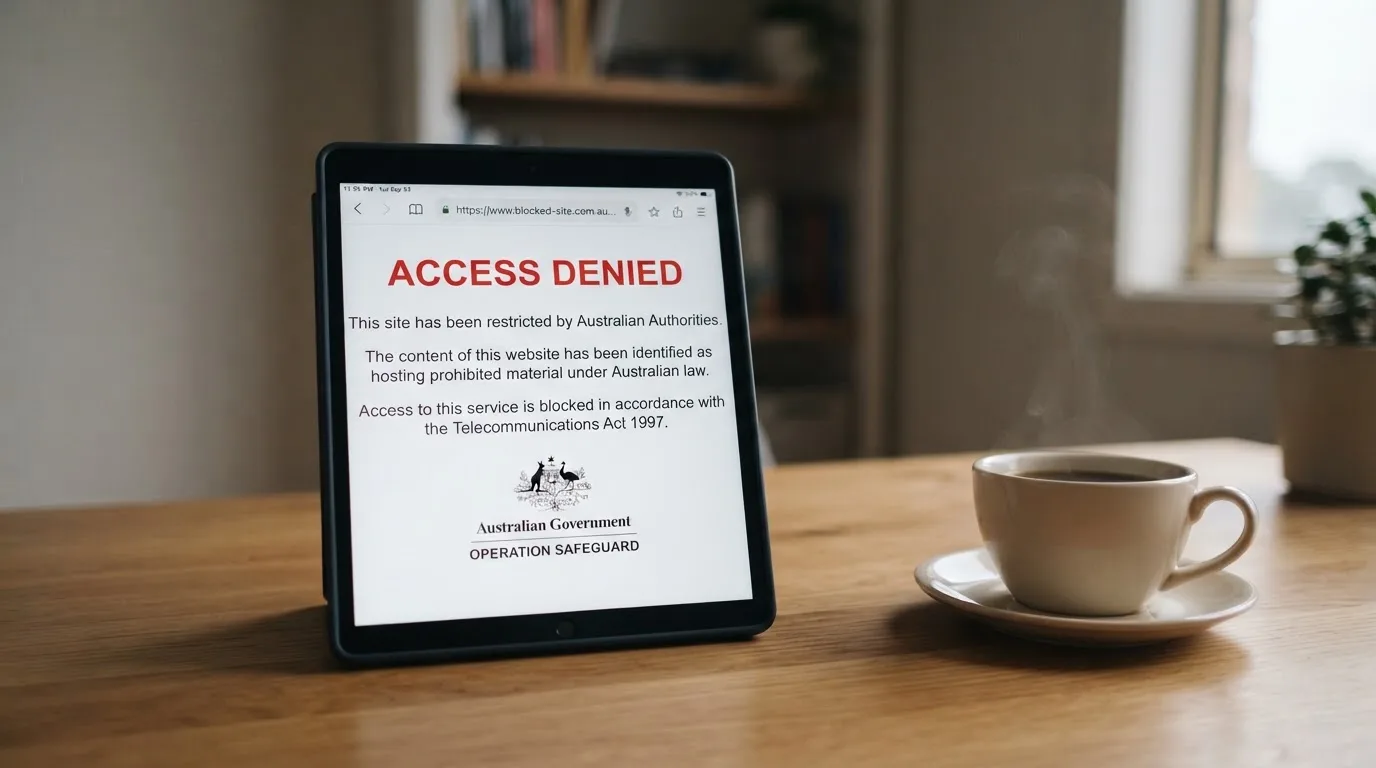
The blocking rate is not a footnote. It is the mechanism that gives the regulatory system any teeth at all, and it is the metric that tells an Australian reader how often “the site that worked last week” stops working.
The Legal Frame Australians Actually Face
The Interactive Gambling Act 2001, strengthened by the Interactive Gambling Amendment Act 2017, makes it an offence to provide online casino games, online pokies or in-play betting to a person physically in Australia. The offence sits with the provider, not the individual player — Australians are not prosecuted for placing a bet offshore — but the practical consequence for the player is harsher than a prosecution would be. A prosecution has a sentence and an end. An offshore site has no complaints body, no obligation to pay out, and no reason to keep its word once it has a balance in its favour.
What the law does permit is online wagering on sport and racing placed before the event, lotteries and keno. That is the legal floor under which every “online casino for Australians” site advertises, and it is the reason none of them describe themselves as licensed in Australia. The brands reviewed on this page carry licences issued in Curaçao or similar offshore jurisdictions. Those licences are real documents issued by real regulators; they are not licences to accept Australian players. The distinction is not pedantry. It is the difference between a complaint you can take to a body and a complaint you take to a chat window.
The 2026 reform picture: the Interactive Gambling Amendment (Gambling Reform) Bill 2026 passed Parliament on 19 August 2026, and its advertising and inducement measures commence on 1 January 2026+1. The bill is law with a start date. It is not yet in force on a page dated 2026. What changes is the marketing Australians see: inducements targeted at Australian customers become unlawful in their own right, on top of the prohibition already in place on the underlying service.
What an ACMA formal warning means in practice
A formal warning is the regulator’s first public step. It names an operator, names a brand, and gives the operator a chance to stop. It is not a prosecution and not a fine. It is a marker on the public record. The 11 brands on this page carry one each, dating from 2022 through to March and April 2026. The warnings are issued under the Interactive Gambling Act 2001 and they refer to the same offence: providing prohibited interactive gambling services to Australians.
What the warning does not do is stop the site. It puts the regulator’s position on the file, and it often precedes a blocking request. For the player, the warning is a public answer to the question “is this legitimate”: no Australian regulator licenses the activity, and the Australian regulator has said so in writing to the operator.
Responsible Play and What BetStop Does Not Cover
The starting point for any responsible play conversation in Australia is BetStop, the National Self-Exclusion Register. It went live in August 2023 and it binds every Australian-licensed online and phone wagering service. A person who registers with BetStop cannot open a new account with any licensed Australian bookmaker for the period they choose, and the operator is required to close any existing account and return the balance.
BetStop does not bind an offshore casino. It cannot, because the casino is not licensed in Australia and is not connected to the system. A person who has registered with BetStop to stop gambling and then opens an account with a site styled Uptown Pokies has self-excluded from a set that does not include the site they are now using. The block sits on the legal channel; the leak sits in the illegal one.
Self-exclusion tools on offshore sites are not equivalent. They are site-level settings, set and reset at the operator’s discretion, and they apply only while you stay on that brand. They are useful as a single-site speed bump. They are not a substitute for a register that binds the whole Australian legal market.
The National Gambling Helpline is 1800 858 858, free, 24/7, with chat at Gambling Help Online. The line is staffed by counsellors trained in gambling harm specifically, not as a general mental-health line. Australians worried about their own play or someone else’s are the people it is built for, and it answers when the rest of this page does not.
The card-level blocks that complement BetStop
Australian banks now offer gambling blocks that work at card level, and the major banks describe them in similar terms. Westpac’s gambling block refuses authorisation of transactions registered under the merchant category code “Betting/Casino Gambling” on eligible personal credit and debit cards. ANZ’s gambling transaction block, activated in the ANZ app, blocks gambling transactions made through a digital wallet such as Apple Pay on an eligible card, not only on the physical card itself.
The ANZ block carries a 48-hour waiting period before it can be removed. The bank also warns that not all gambling transactions will be blocked, and that some non-gambling transactions might be blocked in error. The honest reading of those warnings is that a card block is a useful layer, not a guarantee. A card block stops the card. A person who wants around a card block can find a route around it. The block raises the friction; it does not end the possibility.
What card blocks have in their favour is that they apply to legal and illegal sites alike. A Westpac card that refuses a Sportsbet deposit will refuse an offshore deposit at the merchant category code level, because the code is the same. That is the mechanism by which a bank instrument reaches into a market the regulator cannot.
Payments and the Speed Trap
The site styled Uptown Pokies advertises a payment menu drawn from the offshore-standard kit: Visa, Mastercard, Neosurf, Bitcoin, a handful of e-wallets. The names sound familiar because the names are familiar — they are the same brands Australians use for legal wagering. What changes is what sits behind them: the card network, the bank and the regulator.
Cards and credit
Under the Interactive Gambling Act 2001 as amended in 2023, Australian-licensed online wagering services cannot accept payment by credit card or other credit-related products. The restriction also constrains gambling use of linked digital wallets such as Apple Pay: a debit card funded Apple Pay transaction may still be lawful where the underlying card is not a credit product, but the law treats the credit-funded path as closed. The change came into force on 11 June 2024 and the penalties for operators who breach it run up to A$247,500.
A site asking an Australian for a credit card deposit is operating outside the Australian rules. That is not a guess. It is a fact about the licence status of the site.
Mastercard and eftpos are the cards the Reserve Bank of Australia’s July 2025 review proposes removing surcharges on. American Express sits explicitly outside the proposed surcharge ban, which is why Amex surcharges tend to be visible on the merchant’s own page rather than absorbed. None of that matters for the offshore casino question. What matters is that the card you fund it with sits inside an Australian dispute system the casino does not answer to.
Apple Pay, Google Pay and the digital-wallet layer
By the end of 2025, Apple Pay, Google Pay and Samsung Pay collectively accounted for around 45% of all card payments in Australia by number. The wallets are not separate money; they are a way of presenting the underlying card at the point of sale. Apple does not charge consumers fees for using Apple Pay in stores, online or in apps, and any surcharge on a wallet transaction comes from the merchant’s own card-processing fees, not from Apple. Apple also states that transaction limits and PIN requirements for Apple Pay purchases are set by the card issuer or merchant, not by Apple.
For an Australian gambling block to work on Apple Pay, the block has to sit on the underlying card, not on the wallet. ANZ’s gambling block does this: it blocks gambling transactions made through a digital wallet such as Apple Pay on an eligible card, not only on the physical card. A wallet on an unblocked card is a route around the block, because the merchant sees a wallet token, not a card.
Bank transfers, PayID and Osko
PayID and Osko are the rails that make Australian bank transfers instant. With Osko, a bank transfer between participating Australian banks arrives in under a minute, 24/7, including weekends, whether addressed to a BSB and account number or to a PayID. PayID-based instant transfers are available at over 100 Australian financial institutions.
PayID has a property the offshore casinos do not advertise: paying to a PayID shows the name of the account holder before the transfer is sent. AP+ warns that being asked to transfer money to a PayID on an illegal gambling site almost certainly means a scam site. The warning is not a guess. PayID reveals the recipient, and an illegal operator does not want the recipient revealed to the customer.
The wider plumbing matters too. Australia’s New Payments Platform became accessible to the public on 13 February 2018 and is owned by New Payments Platform Australia Ltd, a non-profit company whose 13 shareholders include the Reserve Bank of Australia and the country’s major banks. More than 25 million PayID identifiers had been registered on the platform as of April 2025. Participants must keep the platform’s monthly outages to no more than two minutes. In 2021 the ACCC authorised merging NPP Australia with BPAY and eftpos into a single company, Australian Payments Plus (AP+).
The relevance for an offshore casino is not the convenience. The relevance is the surveillance and the audit trail. PayID names the recipient; AUSTRAC tracks the money; the bank sees the merchant description. None of that is a problem for legal wagering, where the recipient is licensed. For an illegal site, the same transparency is the risk it is asking the customer to absorb.
BPAY
BPAY is a bill-payment service in online banking: the payer enters the Biller Code and the Customer Reference Number (CRN) printed on the bill. BPAY has operated in Australia since 1997, is available in the online banking of over 140 banks and financial institutions and is offered by over 95,000 businesses. It is run by Australian Payments Plus, the same operator as PayID and Osko.
BPAY is built for bills, not for casino deposits. That is the practical reason offshore sites do not advertise it as a deposit route. Bills do not have to pay out winnings, do not have to keep a balance, and do not have to answer to a customer who later disputes the charge. A casino account is none of those things.
AUSTRAC thresholds and what they actually mean
AUSTRAC’s threshold-transaction-report rule, which requires reporting of transfers of A$10,000 or more, applies only to physical cash. Ordinary electronic bank transfers are not subject to that per-transaction reporting requirement, regardless of the amount sent. The threshold is a cash rule. It is not a “send under A$10,000 and you are invisible” rule, because AUSTRAC also operates on patterns, on reporting entities’ obligations and on the bank’s own transaction monitoring.
The cleanest way to read the threshold is as a definition of what AUSTRAC gets an automatic single-transaction report on. It is not a ceiling on suspicion, and it is not a ceiling on reportable activity.
Bonuses, Free Spins and What the Small Print Costs
The bonus menu the site styled Uptown Pokies advertises — sign-up bonus, no-deposit bonus, deposit bonus, free spins, birthday bonus — is the marketing layer the regulator cannot see from the outside. The only public sources for the small print are affiliate marketing pages, and the affiliate pages are paid per signup. The page you are reading does not reproduce the bonus terms. It describes what an offer of this kind tends to ask for and what that ask tends to cost the player.
The structural pattern is the same on every offshore site of this kind. A welcome bonus is announced as a headline number (“up to AZ” headline into a real ceiling well below the headline. Time limits turn the playthrough into a sprint rather than a strategy.
A birthday bonus and a loyalty bonus follow the same logic with smaller numbers. They are paid in bonus money, not in cash. The wagering requirement still applies. The max-cashout cap still applies. The game weighting still applies. The marketing calls them “rewards”. The small print calls them “promotional credits with a 40x wagering requirement and a maximum withdrawal of 5x the bonus value, to be used within 7 days of issue”.
The cost the marketing does not publish is the expected loss of the wagering itself. A bonus with a wagering requirement is not free money. It is money the casino is willing to pay only after the player has risked a multiple of it. For a recreational player who would have played anyway, the bonus is a small refund. For a player who deposits to chase the bonus, it is a more expensive way to play.
Free spins and the “no deposit” trap
Free-spin offers and no-deposit bonuses are the most expensive marketing per dollar of headline value, because they recruit the player before the player has put up any money of their own. The cost is in the same small print: a wagering requirement on the winnings, a max-cashout cap on what can be withdrawn, and a game list restricted to a handful of titles where the casino knows the margin.
The trap is structural. A no-deposit bonus gives the player money the casino is willing to lose, in exchange for the player’s name, email and (eventually) payment details. The expected loss to the casino of giving away A$10 in bonus money is small. The value to the casino of a player who then deposits A$200 to clear the wagering is large. The marketing calls it a “free trial”. The arithmetic calls it a customer-acquisition cost.
Birthday and loyalty bonuses
Birthday bonuses and loyalty bonuses are the offers the marketing frames as “we value you”. They are paid in the same currency as the welcome bonus: bonus money with a wagering requirement and a max-cashout cap. The condition that does the most damage is the time limit. A 24-hour or 7-day expiry on a bonus forces the player to play in a window that suits the casino’s accounting, not the player’s calendar.
For an Australian reader, the honest read is that no bonus on an offshore site converts to real withdrawable cash without the player first risking a multiple of the bonus. The headline number is the ceiling on what the bonus could pay out, not what it does pay out. The small print is the floor on what it costs.
Mobile and App: What Changes on a Phone
The site styled Uptown Pokies is built mobile-first, because the audience is on a phone. What does not change on a phone is the licence status, the dispute route and the absence of BetStop binding. What does change is the surface.
A typical offshore casino of this kind runs in a browser as an HTML5 site, with optional downloadable apps for Android (as an APK sideload, because Google Play does not carry real-money casino apps in Australia) and for iOS (as a web clip wrapper or a TestFlight build, because Apple’s App Store review rejects real-money casino apps for Australian distribution). The marketing calls the app a “native experience”. The honest reading is a website with a launcher icon.
What the app does not add is anything the operator would not already be required to do under a real licence. There is no Australian identity check baked in. There is no link to BetStop. There is no connection to a complaints body. The app is a container for the same site, with push notifications for promotions and biometric login if the device supports it.
A card-level gambling block on the underlying card still works against a wallet on a phone. ANZ’s gambling block, for instance, blocks gambling transactions made through Apple Pay on an eligible card, not only on the physical card. A phone on hotel Wi-Fi does not change the bank-side check, which is what does the blocking. The phone is a screen. The bank is the gate.
Games, Providers and the Lobby Behind the Marketing
The games on offer at a site styled Uptown Pokies are what an offshore casino of this kind stocks by default: pokies, jackpot pokies, table games (blackjack, roulette, baccarat) and a live-casino section. The provider names — Realtime Gaming, Betsoft, Visionary iGaming for the live tables — are familiar from other offshore brands, and the ACMA formal warning issued to Proxous Advanced Solutions Limited in August 2022 names Uptown Pokies specifically in relation to Realtime Gaming-branded software supplied to illegal online casinos serving Australians.
The RTP figures on these games are public and vary by title. They are also set by the operator through the game configuration, and offshore operators have been known to publish one RTP and run another. The audit that catches the discrepancy is the regulator’s audit, and the regulator does not audit sites it does not license. For an Australian player, the published RTP is a marketing claim until the regulator chooses to verify it.
Pokies, jackpots and the live casino
The pokie lobby is the centre of gravity. Pokies are what the site advertises, what the free-spin offers target, and what the RTPs are quoted for. The jackpot pokies carry the largest advertised prizes and the longest odds, and the live casino runs the highest table limits. None of these categories changes the underlying regulatory position: they are all prohibited interactive gambling services for an Australian audience, and the operator is offering them anyway.
The “lobby” itself is a marketing frame. The same game can sit in different lobbies on different sites, depending on which titles the operator has signed up to feature. The frame does not change the math. The math sits in the game’s own RTP, in the wagering requirement layered on top, and in the cash-out cap on the way out.
The Eleven Brands, Side by Side
The table below names the eleven offshore casino brands reviewed on this page and what the ACMA has said about each. The table is not a ranking and not a recommendation. Each brand sits on it because the regulator itself issued a formal warning over it for offering prohibited interactive gambling services to Australians. The dates and operator names are those the ACMA has published.
| Brand | ACMA action and date | Operator named by the ACMA | Subject support |
|---|---|---|---|
| RocketPlay | Formal warning, March 2026 | Pulsup Ltd (Rocketplay.com.au); earlier Dama N.V., May 2022 | Listings-only |
| Level Up Casino | Formal warning, May 2022 | Dama N.V. | Listings-only |
| Woo Casino | Formal warning, March 2025 | Dama N.V. | — |
| Spirit Casino | Formal warning, May 2025 | Dama N.V. | — |
| National Casino | Formal warning, July 2025 | Consolutetish S.R.L. | Listings-only |
| Bizzo Casino | Formal warning, July 2025; earlier 2022 | Consolutetish S.R.L.; earlier TechSolutions | Listings-only |
| Ignition Casino | Formal warning, July 2025 | Bamboo Media | — |
| Instant Casino | Formal warning, February 2025 | EOD Code SRL | Listings-only |
| Jackbit | Formal warning, April 2026 | Ryker B.V. | — |
| Casino Intense | Formal warning, April 2025 | Sterplay Holding Ltd | Listings-only |
| Sky Crown | Formal warning, September 2022 | Hollycorn N.V. | — |
The table is a public record of regulator action. It is not a buying guide. The recurring operator name across five of the eleven — Dama N.V. — is the regulator’s signal that the operator behind the brand is the unit the ACMA treats as the responsible party for multiple brands at once.
How Fast the ACMA Is Blocking: The Numbers Behind the Curtain
The arithmetic on this page is the rate at which the ACMA has asked Australian internet service providers to block illegal gambling websites since the first blocking request in November 2019. As reported in June 2026, the running total was 1,751 websites blocked, with the first blocking request issued in November 2019. That gives a span of roughly 79 months from the first blocking request to the June 2026 snapshot, or about 6 years and 7 months.
Working the rate from the running total and the date of the first blocking request gives roughly 22 blocking requests per month across the period, or about 265 blocking requests per year. That is a band, not a single figure, because the ACMA does not publish a fixed cadence and the early rounds were smaller than the recent ones. The rate of one round in the latest reporting week — 12 sites in one blocking notice, on 26 June 2026 — is at the upper end of what the system has done, and it is consistent with a regulator that has settled into a regular rhythm rather than an ad hoc one.
The cost of that rate to an Australian player is the answer to “how long does this site work for”. A blocking request on a brand sits on top of any warning the ACMA has already issued. A blocking request makes the brand unreachable through the major Australian ISPs without a VPN. A balance on the account at the moment of the block is, in practice, lost to the customer, because the customer has no complaint route that does not depend on the operator answering.
The 230 unlicensed services that have left the Australian market since enforcement was strengthened in 2017 is the second figure the rate makes sense of. That is the services that did not wait for a block; they withdrew. The blocking rate and the exit rate are the two halves of the same mechanism: the regulator makes the market expensive, and the marginal operator decides it is cheaper to leave than to fight.
The Reviewed Brands in Detail
Each of the eleven brands below carries the same regulatory position: the ACMA has named it, and it offers prohibited services to Australians. What differs is the operator behind the brand and the dates on the public record. The verdicts below do not recommend any of them. They name what each brand has cost the Australian player to date and what the public record establishes.
RocketPlay
The ACMA issued a formal warning to Pulsup Ltd over Rocketplay.com.au in March 2026, on top of an earlier warning to Dama N.V. in May 2022. The brand has cycled operators on the public record, which is itself the kind of detail that matters when the same brand name reappears under a different corporate front. The cost the player pays for that corporate cycling is the same in every case: no Australian licence, no Australian complaints body, no BetStop binding. Rocketplay’s value to a player reading this page is as the marker for the kind of corporate continuity the regulator is willing to call out twice on one brand.
Level Up Casino
Level Up Casino sits on the May 2022 Dama N.V. warning. The brand has not been the subject of a separate published warning since, which makes it a useful comparator: the regulator’s record on it is older rather than newer. The cost to the player is the older warning plus the absence of any licensing change since. A warning issued in 2022 is not extinguished by time; it remains on the regulator’s file.
Woo Casino
The ACMA issued a fresh formal warning to Dama N.V. over Woo Casino in March 2025. Woo sits inside the same Dama N.V. group as Level Up Casino, Spirit Casino, RocketPlay and several other brands the regulator has named. The pattern is the one Australian players should read: when the regulator warns an operator, the brand is one name on a longer list. The cost is the operator’s repeated breaches, not a single one.
Spirit Casino
Spirit Casino carries an ACMA formal warning issued in May 2025 to Dama N.V. Like Woo Casino, it sits inside the same operator group. The verdict on Spirit is the same as the verdict on Woo: the regulator has acted, and the operator has continued under a related brand. For a player, the relevant signal is that the regulator’s list of Dama N.V. brands is longer than the warning count, and the brand list keeps moving.
National Casino
National Casino carries a July 2025 formal warning issued by the ACMA to Consolutetish S.R.L. The same operator name sits behind Bizzo Casino on the public record. National is one of the two Consolutetish S.R.L. brands the ACMA has named; the operator’s wider footprint is what makes the warning worth more than a single brand.
Bizzo Casino
Bizzo Casino carries a July 2025 warning to Consolutetish S.R.L. on top of an earlier 2022 warning to TechSolutions (CY) Group Limited and TechSolutions Group N.V. Two operators, two warnings, one brand: that is the corporate continuity the regulator’s record reveals. A player who looked at the brand’s licence footer in 2022 and again in 2025 would have seen the same brand and a different operator, which is exactly the pattern the ACMA’s repeat naming is designed to surface.
Ignition Casino
The ACMA issued a formal warning to Bamboo Media over Ignition Casino in July 2025. Ignition is one of the brands the regulator has named under an operator that does not appear elsewhere on the table; the warning establishes the operator’s footprint on the public record. The cost to the player is the absence of any Australian recourse if a withdrawal stalls.
Instant Casino
Instant Casino carries a February 2025 formal warning to EOD Code SRL. The brand has been the subject of one of the more visible ACMA warnings in recent rounds, which makes it a useful reference point for “how recent is the regulator’s attention”. The answer for Instant Casino is recent enough that the warning is the freshest part of the brand’s public profile.
Jackbit
Jackbit carries an April 2026 formal warning to Ryker B.V. The brand is one of two on the public record for Ryker B.V., which means the same warning cycle applies to Jackbit that applies to the other brand on the same operator name. The cost to the player is the April 2026 date: this is fresh enough that the brand is on the regulator’s active list.
Casino Intense
Casino Intense carries an April 2025 formal warning to Sterplay Holding Ltd. The regulator’s record on it is recent enough that the warning is part of the brand’s current public file. Casino Intense is on the table as one of the smaller-footprint operators the ACMA has named, which is itself a useful comparator to the multi-brand operators above.
Sky Crown
Sky Crown carries the ACMA’s formal warning to Hollycorn N.V., which is also the warning the regulator issued over Blue Leo. Two brands, one operator, one warning. The cost to the player is the same as the cost on every other brand on this page, with the small extra that the operator name Hollycorn N.V. is now on the public record twice over for related brands.
What the Table Leaves Out
The table above is a regulator-action table. It is not a bonus table, not a payout-speed table, not a games-count table. Those tables exist on affiliate marketing pages, where they are paid for by the operators they describe. The cleanest read of an affiliate page is that its numbers are accurate until they are not, and there is no audit that catches the inaccuracy because no regulator audits it.
What an Australian player cannot get from any public source is a reliable payout time on any of these brands, a reliable dispute resolution route, or a reliable identity of who sits behind a particular corporate front at a particular moment. The audit trail the regulator keeps on each warning is the public source that does exist. It is shorter than a marketing review, and it is more honest than one.
The Cost the Page Does Not List
A reader who has reached this far has read about a regulator that blocks, an operator group that rebrands, a payment system that names the recipient, and a self-exclusion register that does not reach offshore sites. The arithmetic is the cost, and the cost has three parts.
The first part is the expected loss of the play itself, which is a function of the game’s RTP and the size of the wager. For a recreational player on a slot at a 96% RTP, A$100 of play produces an expected loss of A$4, before any bonus or wagering requirement. That figure is the same on a legal site and an illegal one. It is the cost of the activity, not the cost of the licence.
The second part is the cost of the wagering requirement on top of the play. A bonus with a 40x wagering requirement on a A$100 bonus means the player must risk A$4,000 of bonus money before the bonus converts to withdrawable cash. The expected loss of A$4,000 of play at a 96% RTP is A$160, against a bonus headline of A$100. The expected loss is greater than the bonus. That is the cost of the marketing.
The third part is the cost of recourse if something goes wrong. A legal Australian wagering service has a complaints body, an ombudsman route and a regulator that will answer the phone. An offshore service has none of those. If the withdrawal is refused, the balance is, in practice, what the operator decides it is. The expected loss of a dispute is the full balance the operator chooses to withhold.
The three parts together — game edge, bonus edge, dispute edge — are the cost the marketing does not name. The marketing names the bonus. The marketing does not name the wagering. The marketing does not name the cap. The marketing does not name the dispute. The page you are reading does, because that is the work a page like this is for.
Frequently Asked Questions
Is the site styled Uptown Pokies actually licensed to accept Australian players?
No. Online casino games and online pokies are a prohibited interactive gambling service under the Interactive Gambling Act 2001, and no state or territory licenses them. The ACMA issued a formal warning in August 2022 to Proxous Advanced Solutions Limited specifically naming Uptown Pokies among services breaching the Act by supplying Realtime Gaming-branded software to illegal online casinos serving Australians.
What sign-up bonus does a site styled Uptown Pokies typically advertise?
Affiliate pages describe a multi-part welcome package of bonus funds plus free spins, paid in bonus money with a wagering requirement, game weighting and a max-cashout cap. The only public sources for the small print are affiliate marketing pages, which are paid by signup and are not audited by any Australian regulator.
Does a site like this behave differently through its app compared with its regular website?
No, in any way that matters to the regulatory position. The app is typically an HTML5 site wrapped in an Android sideload or an iOS web clip, with push notifications and biometric login. The licence status, the dispute route and the absence of BetStop binding are unchanged. A card-level gambling block on the underlying card still works against a wallet on the phone.
What do reviews say about how a site styled this way handles a birthday or loyalty bonus claim?
Affiliate reviews describe a tiered loyalty scheme with comp points convertible to bonus money, plus a birthday bonus in the same form. The mechanics are the same as a welcome bonus: bonus money with a wagering requirement, a max-cashout cap and a time limit. The reviews do not publish an audited payout rate on loyalty conversions because no Australian regulator audits it.
How can someone check whether a site calling itself Uptown Pokies is legitimate before depositing anything?
The check that matters is whether the site accepts Australian customers for a prohibited service. The answer for any site offering online casino games or online pokies to an Australian is no, regardless of the licence the site displays. The ACMA’s formal warning register lists the brands and operators it has named; the blocking register lists the domains it has asked ISPs to block.
What withdrawal method does a site like this typically mention, and does it matter?
Affiliate pages name a standard offshore kit: Visa, Mastercard, Neosurf, Bitcoin, e-wallets. The choice matters less than the absence of any Australian dispute route on the withdrawal. A bank transfer or PayID deposit to a site asking for an Australian PayID leaves a paper trail in the Australian banking system and the AUSTRAC monitoring system, but the dispute sits with the operator, not with the regulator.