
Lightning Link Online Pokies Australia: What the Game Is, and What the Law Allows
The Lightning Link name belongs to a cabinet format that lives in pubs, clubs and casinos across Australia, not on a website. Online, “Lightning Link pokies” is a phrase that drifts between an Aristocrat-linked reel set and a marketing label pasted on whatever hold-and-spin game a given brand happens to run. This page sorts those uses apart, walks through the bonus feature the cabinets are built around, and looks at the offshore brands the ACMA has warned for offering the same product over the internet to Australian residents.
Current as of 9 November 2026; licence and enforcement status verified against the Australian Communications and Media Authority’s published register.
Table of Contents
- How Lightning Link Pokies Actually Work
- The Land-Based Pokies Landscape in Australia
- Why No Online Version Is Lawful in Australia
- What an Australian Player Loses by Playing Offshore
- The Bonus Mechanics: How Hold-and-Spin Extends a Session
- Mobile and App Offers
- Specific Games and What the Reel Sets Actually Offer
- What the Featured Brands Have in Common
- What the Warning Register Actually Shows
- The Blocking Rate as a Structural Number
- The Payment Layer and the IGA’s Edge
- Responsible Play Around a Hold-and-Spin Format
- What a Serious Search for Lightning Link Online Pokies Actually Looks Like
- Tax, Wins and the ATO
- The Current State of Reform
- Lightning Link Pokies Australia: What to Carry Away
- Frequently Asked Questions
How Lightning Link Pokies Actually Work
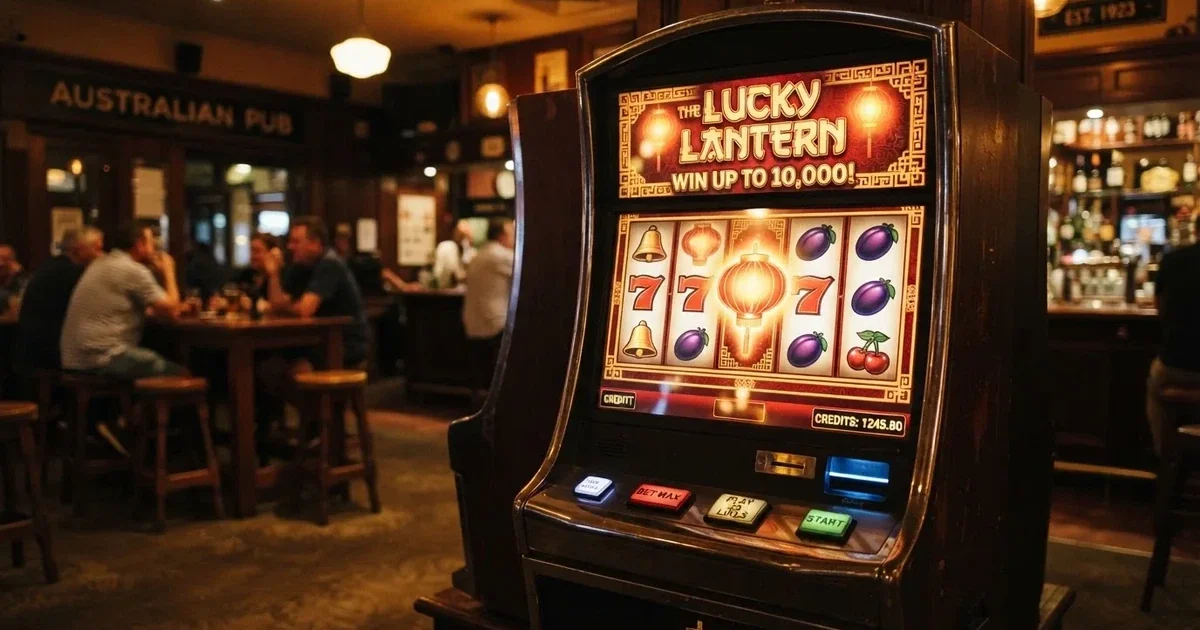
A Lightning Link cabinet is a five-reel video slot with a hold-and-spin feature bolted to a base game. The base game pays on standard left-to-right combinations. The bonus is what makes the format recognisable: when six or more “orb” symbols land anywhere on the reels, the bonus round triggers and the orbs lock in place. Three re-spins reset to three whenever another orb lands, and the round ends when the player runs out of re-spins with no new orb appearing, at which point every locked orb pays the credit value printed on it. Some variants add a “Grand” jackpot orb, worth a fixed top prize, that pays only when the entire reel set fills.
The hold-and-spin mechanic is engineered to extend a session rather than to reward it quickly. Each locked orb asks the player, implicitly, to spin again to land the next one. The longer the streak, the larger the apparent pot, and the harder the round is to walk away from mid-feature. A player who sets a fixed time limit before sitting down, rather than relying on an in-game prompt, is the only safeguard the format itself provides.
The reel sets themselves are themed: the original Happy Lantern, the higher-denomination Magic Pearl, the Buffalo-themed Lightning Cash, the high-volatility Sahara and several more. Each carries its own paytable, volatility and bonus structure. The mechanic is identical across them; the volatility, hit frequency and maximum exposure differ. A punter who learns one of the cabinets has, in practical terms, learned the format, but has not necessarily learned the title.
The Land-Based Pokies Landscape in Australia
Poker machines arrived in Australia in 1956, when registered clubs in New South Wales installed the first legal models. The country now runs them in every state and territory under rules that vary considerably from one jurisdiction to the next.
Western Australia is the outlier: poker machines were banned in pubs and clubs when Crown Perth opened in 1985, and the casino’s own machine count has since grown from roughly 200 to about 2,500, all approved by the state’s Gaming and Wagering Commission. Tasmania held the other monopoly, run by the Federal Group from 1968 until legislation passed in November 2021 ended it and moved oversight to the Tasmanian Liquor and Gaming Commission. The Commission has planned nation-leading mandatory pre-commitment cards for the machines since 2021; the rollout was delayed to late 2025 and is the closest Australia has come to a universal harm-reduction tool.
The numbers tell the scale. Australians bet close to A$150 billion through gaming machines in 2020-21 and lost A$12.18 billion on them. Australia holds around 3% of the world’s pub and club poker machines with about 0.3% of the global population. New South Wales runs 87,298 machines outside casinos across 2,195 venues, with player losses of A$8.18 billion in 2022-23. Queensland operates 21,122 machines across 351 venues; Victoria runs 26,380 outside Crown Casino in 488 venues under a hard statewide cap of 30,000.
Return-to-player floors also vary. NSW, the Northern Territory, Queensland and most of Victoria set 85%; Crown Melbourne sits at 87%; the Australian Capital Territory and Tasmania at 87%; South Australia at 87.5%; Western Australia at 90%. The same cabinet format, sold in two adjacent states, can be configured with two different minimum payback percentages. Lightning Link cabinets are tuned to whatever each jurisdiction allows.
Why No Online Version Is Lawful in Australia
Australia’s prohibition on online casino gambling is set out in the Interactive Gambling Act 2001, strengthened by the Interactive Gambling Amendment Act 2017. It is an offence to provide online casino games, online pokies or in-play betting to a person physically in Australia. No state or territory licences online casino games. What is licensable is wagering on races and sport placed before the event, lotteries and keno.
The provider is the one on the wrong side of the IGA, not the individual player. The Australian Communications and Media Authority investigates, issues formal warnings, and asks internet service providers to block illegal sites. Since the first blocking request in November 2019, the ACMA has reported a running total of 1,751 illegal gambling and affiliate marketing websites blocked, and more than 230 unlicensed services have left the Australian market since 2017. In a single round reported on 26 June 2026, twelve more sites were referred for blocking: 7Signs, ChromaBet, Donbet, Duospin, Freshbet, Slots Gem, Jacks Club, Lucky Start, Pointsbetz, Spinrise, Vinyl Casino and Wildsino.
The Interactive Gambling Amendment (Gambling Reform) Bill 2026 passed Parliament on 19 August 2026. Its advertising and inducement measures commence on 1 January 2027. They are law with a start date, not law in force, so a 2026 page cannot treat them as live.
What this means for a Lightning Link search is simple. Any site offering online casino games to an Australian is doing so without an Australian licence; whether the site displays a Curaçao, Kahnawake or Maltese licence is irrelevant to that point. The offshore licence authorises the brand to operate in the licence’s jurisdiction. It does not reach into Australia.
What an Australian Player Loses by Playing Offshore
The product may look identical. The protection around it does not.
BetStop, the National Self-Exclusion Register, has been live since August 2023, but it binds only Australian-licensed online and phone wagering services. An offshore casino is not connected to it, so a self-exclusion registered there cannot prevent the same account from logging in offshore. The National Gambling Helpline (1800 858 858) and the chat service at Gambling Help Online are free and available 24/7, but the support they offer is universal — it is not the consumer-protection framework BetStop represents.
A withdrawal refused, a bonus term quietly changed, a balance held under a vague “review” condition: an offshore site answers to its own regulator, not to the ACMA. The IGA targets the provider, not the player, which means the player has no Australian complaints body to take a dispute to. If a balance is locked at the moment the site is blocked, the money is, in practical terms, gone.
The cost is also measurable at a market level. H2 Gambling Capital’s 2025 report estimates Australians lose about A$3.9 billion a year to illegal gambling sites. The share of gambling going through legal channels has fallen from 74% in 2021 to 64%. That slide is the structural cost of the offshore offer.
The Bonus Mechanics: How Hold-and-Spin Extends a Session
Hold-and-spin is the format’s hook. Six orb symbols anywhere on the reels triggers the bonus. Three re-spins are awarded, resetting to three every time a new orb lands. The round ends when three re-spins run out without a fresh orb, after which every locked orb pays its printed value. The feature is balanced so that a long streak of orbs feels close to a jackpot, with a fixed top prize reserved for the rare round that fills every reel position.
The psychology runs the same way on any themed variant — Happy Lantern, Magic Pearl, Sahara, Buffalo-themed Lightning Cash. The reel art and the bonus values change; the rhythm of the round does not. A player chasing a single “Grand” jackpot orb on a Sahara cabinet is running the same mechanic as a player after a Magic Pearl orb, with the same risk of a 200-spin losing streak in the base game before the feature triggers at all.
A promotional “Lightning Link casino bonus” or “Lightning Link casino bonus spins” attached to one of these games online is, in plain language, a marketing label over a hold-and-spin game the operator has acquired or licensed from a different studio. The brand on the cashier page does not change the format. The volatility and the bonus frequency sit wherever the underlying game sets them, not wherever the operator’s headline claims.
Mobile and App Offers
A search for “lightning link casino app” or “lightning link pokies app” turns up a long list of offshore brands offering hold-and-spin games on iOS and Android, usually under their own brand name and a Lightning Link label. The packaging varies: a downloadable native app, a progressive web app that behaves like one, a mobile browser version. None of it changes the legal position.
The same offshore brand accessible from a desktop is the same brand wrapped for a phone. The same cashier and the same unlicensed activity sit inside the icon. A player who uses an app because it feels safer than a website has bought the icon, not the regulation.
Specific Games and What the Reel Sets Actually Offer
Lightning Link is not one game; it is a family of reel sets built on the same chassis. The original Happy Lantern is the lowest-volatility entry in the lineup, with smaller orb values and more frequent bonus rounds. Magic Pearl sits a notch higher, with larger orb payouts and longer base-game stretches between features. Sahara and Lightning Cash lean into the high-volatility end: bigger top prizes, longer dry spells, and a bonus round that lands less often but pays harder when it does. Each variant is configured for the jurisdiction it ships to, which is why the same theme can carry a different payback floor from one state to the next.
The game’s design vocabulary is borrowed by a long list of imitators. Buffalo-style games, “hold and win” cabinets, jewel-themed orbs — every one of them is a riff on the format Lightning Link made mainstream. Aristocrat’s cabinets are not the only hold-and-spin games on a club floor; they are the most visible. On an offshore site, the same vocabulary travels further from its source.
What the Featured Brands Have in Common
| Brand | ACMA action and date | Operator named by the ACMA | Subject support |
|---|---|---|---|
| RocketPlay | Formal warning — May 2022; March 2026 | Dama N.V.; Pulsup Ltd | — |
| Level Up Casino | Formal warning — May 2022 | Dama N.V. | listings-only |
| Woo Casino | Formal warning — March 2025 | Dama N.V. | — |
| Spirit Casino | Formal warning — May 2025 | Dama N.V. | — |
| National Casino | Formal warning — July 2025 | Consolutetish S.R.L. | listings-only |
| Bizzo Casino | Formal warning — July 2025; 2022 | Consolutetish S.R.L.; TechSolutions | — |
| Ignition Casino | Formal warning — July 2025 | Bamboo Media | — |
| Instant Casino | Formal warning — February 2025 | EOD Code SRL | — |
| Jackbit | Formal warning — April 2026 | Ryker B.V. | — |
| Casino Intense | Formal warning — April 2025 | Sterplay Holding Ltd | listings-only |
| Sky Crown | Formal warning — September 2022 | Hollycorn N.V. | — |
The brands on the list below share one thing: each of them has been the subject of a formal ACMA warning for offering online casino games to Australians. The ACMA’s formal warning register is the source for every brand, date and operating-company name that follows. The register is not a “best of” list and it is not a recommendation. It is the regulator’s own catalogue of operators it has acted against for the same conduct.
The fact that every brand sits on the same page is, in itself, the headline. None of them is licensed to provide online casino games in Australia. Some carry offshore licences the page lists for completeness; the licences authorise the operator in their own jurisdiction, not in Australia.
RocketPlay
RocketPlay has been the subject of two ACMA formal warnings under the Interactive Gambling Act 2001. The first, in May 2022, named Dama N.V. as the operator across six brands including RocketPlay. The second, in March 2026, named Pulsup Ltd specifically over Rocketplay. The operator name change is the operating entity’s own move, not a regulatory one.
The brand displays no Australian licence, because none is available to display. What it displays instead is an offshore licence that does not reach into Australia. For a player reading a RocketPlay landing page and assuming the licence badge means the regulator approves of an Australian account, the warning register is the counter-evidence.
The mismatch this brand has with the Lightning Link subject is clean: it offers online casino games to Australians, which the IGA prohibits. It is on the page for that reason, and the verdict is the same as the law — a player looking for a lawful hold-and-spin cabinet has the land-based clubs; a player looking for an offshore Lightning Link-style app has the regulator’s attention.
Level Up Casino
Level Up Casino sits on the May 2022 Dama N.V. warning alongside five other Dama brands. The ACMA’s published notice names the operator and the date, and that is the entire Australian-side record.
The brand carries itself online as a multi-studio casino with a deep game library. The studio listings that show Level Up running Lightning Link-style titles reference only the providers’ own press pages. There is no record of Level Up itself certifying any specific hold-and-spin game’s RTP or volatility. The label on the page is a marketing one.
The verdict for a reader is that the same offshore posture applies here as to every brand on this list. The studio listings carry no regulatory weight in Australia. The operator is in the ACMA’s warning register, and that is the most current Australian-side fact about it.
Woo Casino
Woo Casino was named in a March 2025 ACMA formal warning to Dama N.V. The Dama group has now accumulated three published warnings — May 2022, March 2025, May 2025 — across the brands it operates. A pattern of repeated warnings from the same operator is the regulator’s signal that the conduct has not stopped.
The brand’s own terms continue to advertise Australian-friendly deposit routes and a wide game library. From the Australian player’s side, the terms page is a marketing document; the warning is the regulatory one.
Spirit Casino
Spirit Casino carries the May 2025 Dama N.V. warning. The brand is one of the more recent Dama launches, which means its regulatory history in Australia is short but unambiguous: one warning, no licence, no Australian consumer protection framework.
National Casino
National Casino is named in the July 2025 ACMA warning to Consolutetish S.R.L., the same warning that also covers Bizzo Casino. Wikipedia’s listing for the brand notes its presence in the market; that listing is the closest the brand comes to a neutral source.
The Consolutetish S.R.L. warning follows the pattern set by Dama N.V. — a parent operator running multiple brands and receiving multiple warnings, each covering a specific brand. The structure is the offshore groups’ standard response to Australian enforcement: rebrand, reincorporate, continue. Each new entity has its own clean licence badge; the regulatory history follows the operator.
Bizzo Casino
Bizzo Casino carries the same July 2025 Consolutetish S.R.L. warning as National Casino, plus an earlier 2022 warning when TechSolutions (CY) Group Limited and TechSolutions Group N.V. were the named operators. Two warnings, two different operating entities, the same brand — the clearest example on the list of how an offshore operator rebrands its Australian-facing surface in response to enforcement.
Ignition Casino
Ignition Casino was named in the July 2025 ACMA warning to Bamboo Media. The brand positions itself for an Australian audience through USD deposit routes and a poker-room offering, which is precisely the audience the IGA prohibits it from serving.
The Bamboo Media warning sits alongside the Consolutetish warnings in the same month, which is the regulator’s signal that the conduct is widespread across multiple operators rather than concentrated in one group.
Instant Casino
Instant Casino carries the February 2025 ACMA warning to EOD Code SRL. The brand markets itself around “instant” withdrawals, which is the marketing word a player is most likely to hear before the regulator’s word catches up.
The reality is straightforward: a withdrawal refused, a balance locked, a “review” condition applied to a withdrawal request — none of these has an Australian complaints body behind it. The marketing claim and the regulatory reality are, in this market, not the same statement.
Jackbit
Jackbit was named in the April 2026 ACMA warning to Ryker B.V., alongside CasinOK. Ryker is the most recent operator named on this list, and the warning is one of the ACMA’s most recent published actions.
The brand runs a crypto-heavy cashier, which is a second Australian problem on top of the IGA issue: credit cards, credit-related products and digital currency are banned as payment for licensed online wagering since 11 June 2024. A crypto-only cashier is operating outside the Australian payment rules in addition to operating outside the Australian licence rules.
Casino Intense
Casino Intense carries the April 2025 ACMA warning to Sterplay Holding Ltd. ABC News has reported on the brand in the context of the broader ACMA enforcement programme, alongside the ACMA’s own published notice.
Sterplay Holding Ltd is the operating entity, and the warning is the regulator’s published record of the conduct.
Sky Crown
Sky Crown sits on the September 2022 ACMA warning to Hollycorn N.V. alongside Blue Leo. Hollycorn’s two brands are the most senior entries on this list; the warning is older, but no Australian licence has been issued in the years since.
The Hollycorn warning is also a useful reference point for the rest of the list. It establishes the ACMA’s standard practice: name the operator, name the brand, date the warning, publish the notice. Every brand on this list has gone through that same process.
What the Warning Register Actually Shows
The table below reads the ACMA’s published register against the operators the regulator has acted against. The columns are: brand, ACMA action and date, operating entity named by the ACMA, and whether the research carried any subject-side listing for the brand.
| Brand | ACMA action and date | Operator named by the ACMA | Subject support |
|---|---|---|---|
| RocketPlay | Formal warning — May 2022; Formal warning — March 2026 | Dama N.V.; Pulsup Ltd | — |
| Level Up Casino | Formal warning — May 2022 | Dama N.V. | listings-only |
| Woo Casino | Formal warning — March 2025 | Dama N.V. | — |
| Spirit Casino | Formal warning — May 2025 | Dama N.V. | — |
| National Casino | Formal warning — July 2025 | Consolutetish S.R.L. | listings-only |
| Bizzo Casino | Formal warning — July 2025; Formal warning — 2022 | Consolutetish S.R.L.; TechSolutions (CY) Group Limited / TechSolutions Group N.V. | — |
| Ignition Casino | Formal warning — July 2025 | Bamboo Media | — |
| Instant Casino | Formal warning — February 2025 | EOD Code SRL | — |
| Jackbit | Formal warning — April 2026 | Ryker B.V. | — |
| Casino Intense | Formal warning — April 2025 | Sterplay Holding Ltd | listings-only |
| Sky Crown | Formal warning — September 2022 | Hollycorn N.V. | — |
The shape of the table is the point. Eleven brands, ten distinct operating entities (Dama N.V. covers three), warnings stretching from September 2022 to April 2026. The accumulation is steady: roughly one warning every two to three months, with no apparent decline as enforcement tightens. The offshore groups absorb the warning, reincorporate or rebrand, and continue.
The Blocking Rate as a Structural Number
Since the first ACMA blocking request in November 2019, the regulator’s published running total of blocked illegal gambling and affiliate marketing websites has reached 1,751. That figure covers more than six years of enforcement and includes the affiliate marketing pages, not just the casinos themselves. Working the running total against the elapsed time gives a band, not a single number, because the blocking requests have come in published rounds rather than at a steady rate.
A simple calculation frames it: 1,751 sites blocked across roughly 80 months from November 2019 to June 2026 is an average of close to 22 sites blocked per month. The most recent published round alone referred 12 more sites. The band is wide because some months carry a single referral and some carry a dozen, but the order of magnitude is the structural answer: the ACMA’s blocking programme is running at a pace of tens of sites per month, not single digits per year.
What that figure does not show is the success rate. A blocked site can be replaced by a mirror within hours; an affiliate page can be relaunched under a new domain. The 230-plus unlicensed services that have left the Australian market since 2017 is the cleaner measure of the regulator’s cumulative effect: the operators who decided the cost of staying was too high.
The Payment Layer and the IGA’s Edge
Since 11 June 2024, credit cards, credit-related products and digital currency have been banned as payment for licensed online wagering in Australia, with operator penalties of up to A$247,500. The legal deposit routes for licensed wagering are debit card, bank transfer, PayID/Osko and BPAY.
A site asking an Australian for a credit card or a crypto deposit is operating outside the Australian payment rules. That is a separate breach from the IGA prohibition, and it is the second thing to check on any cashier page: not just whether the operator is licensed, but whether the deposit method itself is one the Australian rules permit. Two separate breaches is the standard offshore configuration.
Responsible Play Around a Hold-and-Spin Format
A hold-and-spin feature is built to extend a session, not to wrap it up. The locked orbs ask for another spin, the new orb resets the counter, the streak feels like it must run until the bonus pays. The base game between bonus rounds is, by design, longer and quieter than the bonus itself.
A fixed time limit matters more than any in-game prompt. The feature offers no signal that the round is “long enough”; the player has to bring that limit. Setting it before sitting down, and walking away when it is reached, is the only safeguard the format itself respects.
For any player who wants help, the National Gambling Helpline on 1800 858 858 is free, available 24/7 and answers in the caller’s language. The chat service at Gambling Help Online extends that to text. BetStop, the National Self-Exclusion Register, covers Australian-licensed online and phone wagering services — an offshore brand is not connected to it, so a BetStop registration does not prevent the same player from logging into an offshore casino, which is one more reason the offshore option is a different category of risk.
What a Serious Search for Lightning Link Online Pokies Actually Looks Like
A search that lands on this page usually starts with one of three questions. Is the game online? Is it legal? What does the bonus actually do? Each has the same honest answer.
The game exists as a cabinet format in licensed venues. The legal version of “playing Lightning Link” is at a pub, club or casino that holds the relevant state or territory authorisation. The bonus round — six orbs, three re-spins resetting on a fresh orb, locked orb values paying at the end — is the same mechanic across every themed variant.
The online version does not exist as a licensed product for Australian residents. Every brand offering hold-and-spin games over the internet to Australians is offering the same prohibited service, and the ACMA has formally warned each of the eleven brands on the list above for that conduct.
The marketing words on those offshore sites — “Lightning Link casino bonus”, “Lightning Link happy lantern slot”, “lightning link casino app” — are labels. The product behind the label is a hold-and-spin game of unknown provenance running under an offshore licence that does not reach Australia. The verdict, after eleven warnings and 1,751 blocked sites, is that the marketing and the regulatory truth are not the same document.
Tax, Wins and the ATO
Gambling winnings of a recreational Australian player are not assessable income, under section 6-5 of the Income Tax Assessment Act 1997. Losses are not deductible. A player who carries on a business of gambling — professional punter, in the ATO’s language — sits in a different category. The model is: recreational wins are tax-free, recreational losses cannot be claimed, and the boundary between the two is the ATO’s call, not the player’s. Anyone in doubt should check with the ATO directly.
The Current State of Reform
The Interactive Gambling Amendment (Gambling Reform) Bill 2026 passed Parliament on 19 August 2026 and is the first material change to the IGA’s advertising and inducement framework since 2017. The advertising and inducement measures commence 1 January 2027. Until then, the existing 2001/2017 frame holds.
The reform’s main targets are inducements — bonus offers, sign-up incentives and “free bet” promotions — that target Australian accounts. The shift will not change the IGA’s prohibition on online casino games themselves; it will tighten what an offshore operator can put in front of an Australian player before that player even opens an account. The prohibition is older than the reform, and the reform is closer to the marketing layer than to the legal layer.
Lightning Link Pokies Australia: What to Carry Away
A Lightning Link cabinet is a specific format: five reels, a hold-and-spin bonus with locked orbs and a top prize for a full reel. The format runs in clubs and casinos in every state and territory except Western Australia’s pubs. It does not run lawfully online for Australian residents.
Every “Lightning Link online pokies” page that takes an Australian’s deposit is offering an offshore product, an offshore licence and an offshore consumer-protection framework. The ACMA has formally warned each of the eleven brands above for that conduct, and the regulator’s blocking programme has referred 1,751 sites to Australian ISPs since November 2019.
A player who wants Lightning Link on the merits has the licensed clubs and casinos. A player who wants a hold-and-spin game online has the regulator’s register to read first, and the regulator’s blocking programme as the second fact. The cabinet format and the marketing label are not the same product, and the marketing label is the one the ACMA has been warning about for years.
Frequently Asked Questions
Is it legal to play Lightning Link online pokies for real money in Australia?
No. Under the Interactive Gambling Act 2001, it is an offence to provide online casino games or online pokies to a person in Australia, and no Australian state or territory licences them. Any site offering Lightning Link pokies to an Australian resident is doing so without an Australian licence; the offshore licence the site displays does not authorise Australian-facing operations.
What triggers the hold-and-spin bonus round on a Lightning Link machine?
Six or more orb symbols anywhere on the reels trigger the bonus. Three re-spins are awarded, resetting to three each time a new orb lands, and the round ends when three re-spins pass without a fresh orb. Every locked orb then pays its printed value; a “Grand” jackpot orb pays only when every reel position is filled.
Is Lightning Link available at regulated land-based venues in Australia?
Yes. Lightning Link cabinets run in licensed clubs, pubs and casinos across every state and territory except in Western Australia’s pubs (Western Australia banned poker machines in pubs and clubs in 1985 and limits them to Crown Perth). The minimum return-to-player is set per jurisdiction — 85% in NSW, 87% at Crown Melbourne and 90% in Western Australia.
Do Lightning Link promo codes work the same way across different cabinet themes?
Promo codes operate at the venue level, not at the cabinet level. A “Lightning Link casino promo code” attached to an offshore brand is a marketing label over whichever hold-and-spin game that brand has acquired; the mechanic is the same across themed variants but the underlying game, the studio and the volatility are not necessarily the same.
Does a Lightning Link app on a phone offer a different game to the desktop version?
No. The same offshore brand accessible from a desktop is the same brand wrapped for a phone, with the same cashier and the same unlicensed activity. The app format does not change the legal position, and an app installed on a phone does not connect to BetStop or to any Australian consumer-protection framework.
What separates the different Lightning Link reel sets from each other?
The mechanic is identical across themed variants; the volatility, hit frequency and maximum exposure differ. Happy Lantern is the lower-volatility entry, Magic Pearl sits a notch higher, and Sahara and Lightning Cash sit at the high-volatility end. Each is tuned per jurisdiction, so the same theme can carry a different payback floor from one Australian state to the next.