
New Australian Online Pokies in 2026: Why the Shortlist Does Not Exist and What Does
The phrase “new Australian online pokies” promises a list, and an honest page has to say at the top what that list cannot be. Under the Interactive Gambling Act 2001, offering online casino games (which is the category “online pokies” sits inside) to anyone in Australia is prohibited, and no state or territory issues a licence for it. So when the search results page shows ten operators promising fresh releases and real-money play, every one of them is operating outside Australian law. What an Australian reader can do is read this clearly: know which sites the regulator has named, understand why the prohibition is what it is, and turn to what is actually licensed, which is the regulated pub, club and casino floor, plus pre-event wagering through Northern Territory-licensed bookmakers. That is the full set of lawful options, and it is the set this article covers.

Currency and data stamp: figures verified against the ACMA register as of 5 November 2026; loss estimates cross-checked against H2 Gambling Capital’s 2025 report.
Table of Contents
- The Australian Legal Picture Around Online Pokies
- Why “New Release” Is a Marketing Word More Than a Legal One
- How Pokies Are Regulated State by State
- Player Protection Tools Available to Australians
- The Brands the ACMA Has Acted Against
- What Is Actually Legal for Australians
- Payment Methods That Actually Work in Australia
- What “New” Looks Like on a Regulated Australian Floor
- Reading the Marketing Around “New” Pokies Bonuses
- The Blocking Rate as a Measure of Enforcement Reach
- The 2026 Reform That Has Not Yet Taken Effect
- What the Reader Should Take Away
- Frequently Asked Questions
The Australian Legal Picture Around Online Pokies
What the Interactive Gambling Act 2001 actually prohibits
The Interactive Gambling Act 2001 (IGA), tightened by the Interactive Gambling Amendment Act 2017, makes it an offence to provide online casino games, online pokies and in-play betting to a person physically in Australia. The Act targets the provider, not the individual player — Australians are not prosecuted for placing bets on offshore sites — yet the provider side of that equation is the entire business model. Wagering on races and sporting events placed before the event is licensable, as are lotteries and keno. Casino-style games delivered over the internet are not. Minimum age is 18.

The Northern Territory Racing and Wagering Commission (NTRWC) regulates 52 of Australia’s online bookmakers (including Sportsbet, Bet365 and Ladbrokes), licensed in the Territory for tax reasons. The commission itself has no full-time staff and meets once a month in Darwin. Online casino is outside even that narrow licensable frame.
How the prohibition is enforced
The Australian Communications and Media Authority (ACMA) is the body that investigates, issues formal warnings and directs internet service providers to block illegal sites. According to the ACMA as reported in June 2026, a total of 1,751 illegal gambling and affiliate marketing websites had been blocked since the first blocking request in November 2019, and more than 230 unlicensed gambling services had left the Australian market since enforcement was strengthened in 2017. In a round reported on 26 June 2026, the ACMA asked Australian internet service providers to block a further 12 sites: 7Signs, ChromaBet, Donbet, Duospin, Freshbet, Slots Gem, Jacks Club, Lucky Start, Pointsbetz, Spinrise, Vinyl Casino and Wildsino.
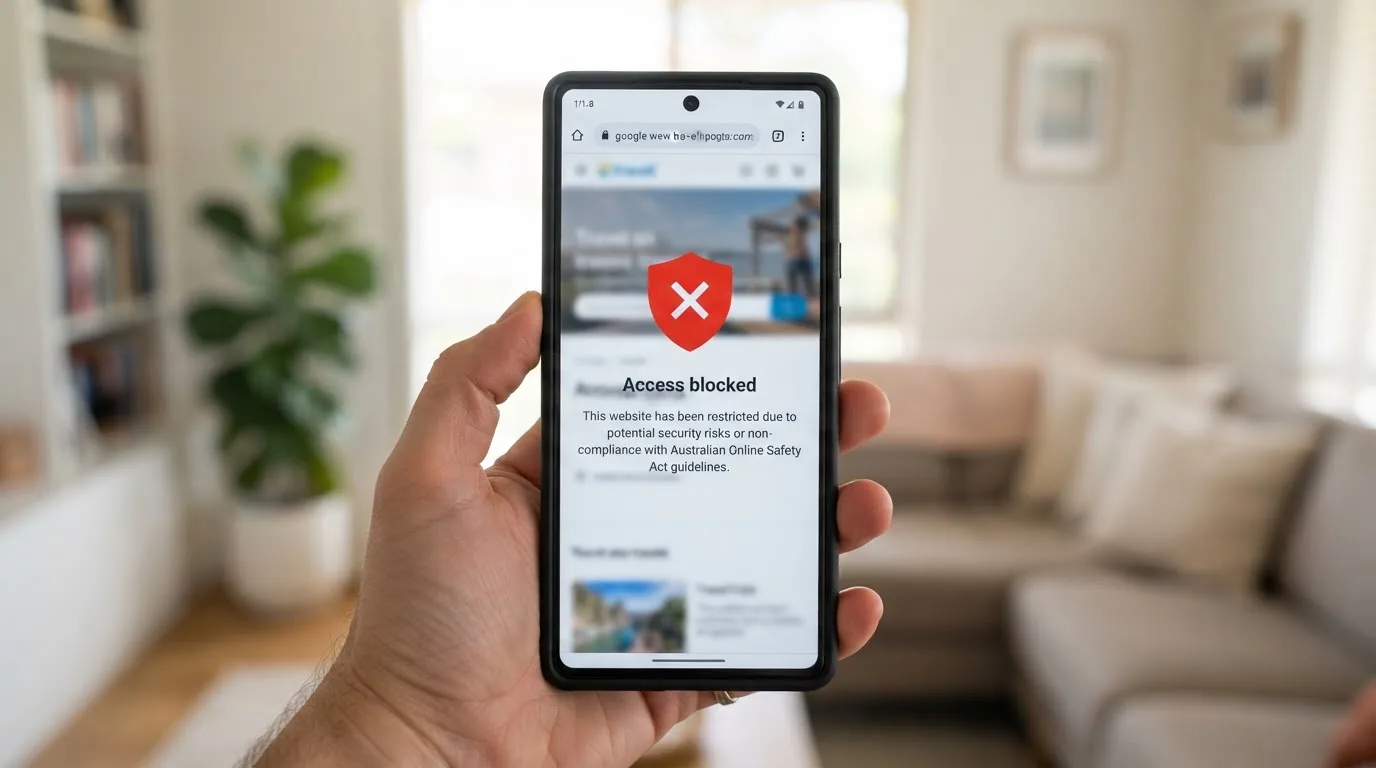
The blocking has a cost to the punter who has funds on a site when it goes dark. An offshore operator is not bound by Australian consumer protection law. There is no Australian complaints avenue if a withdrawal is refused, and a balance can be stranded when an ISP-level block lands. The deposit side is no safer. Since 11 June 2024, credit cards, credit-related products and digital currency are banned as payment for licensed online wagering, with penalties of up to A$247,500 for operators that breach the rule. The legal deposit routes for licensed wagering are debit card, bank transfer, PayID/Osko and BPAY. A site that asks an Australian for a credit card or a crypto deposit is operating outside the Australian rules, and the deposit method itself is a tell.
The price Australians actually pay
H2 Gambling Capital’s 2025 report puts losses to illegal gambling sites at around A$3.9 billion a year, and shows the share of gambling going through legal channels falling from 74% in 2021 to 64%. That is not a “the market is growing” number, it is a “more money is leaving the regulated system” number. The regulated system exists because decades of state-by-state policy decided that gaming machines should be licensed and visible, and that decision is what an offshore site bypasses.
Why “New Release” Is a Marketing Word More Than a Legal One
What gets called new and what is actually new
The market definition of a “new pokies release” is a game that has launched on a platform in the last few weeks or months, typically with a launch-window promotion, a distinctive art package and a feature mechanic that the studio wants to push. Australian readers who search for “new online pokies” or “new release pokies” are looking for that freshness, and it does exist — on regulated club, pub and casino floors, where new games are tested and approved before they go live.
What “new” does not mean is “legal for online play in Australia”. A pokies title that launched on an offshore platform last month is a new release in marketing terms and a prohibited service under the IGA. Freshness is the part of the offer the operator controls. The bit the operator cannot control is the regulatory status, and that bit has been settled since 2001 and tightened in 2017.
The catalogue depth that licensed venues carry
Australian licensed clubs, pubs and casinos run real catalogues. New South Wales had 87,298 gaming machines outside casinos across 2,195 venues as of June 2023, with player losses of A$8.18 billion in 2022–23. Queensland had 21,122 gaming machines operating in 351 venues in October 2023; Victoria ran 26,380 machines outside Crown Casino in 488 venues in 2021–22, capped at a 30,000-machine statewide limit. Each of those is a state that licenses and regulates its own machine fleet, with its own approval process and its own minimum return-to-player. The variety on offer across those venues is wider than any single offshore platform, because the venue is part of the offer.
How Pokies Are Regulated State by State
Minimum return-to-player varies by jurisdiction
The legal minimum return-to-player for poker machines varies by Australian jurisdiction: 85% in New South Wales, the Northern Territory, Queensland and (generally) Victoria, 87% at Crown Melbourne, 87% in the Australian Capital Territory and Tasmania, 87.5% in South Australia, and 90% in Western Australia. Each jurisdiction separately regulates the design and operation of these machines, which is why the floor of return-to-player is not one number but eight. Western Australia took the strongest line: poker machines were banned in pubs and clubs when Crown Perth opened in 1985, and the casino’s own machine count has since grown from about 200 in 1985 to roughly 2,500, all approved by the state’s Gaming and Wagering Commission.
Tasmania’s monopoly and the pre-commitment reform
The Federal Group held a monopoly licence over all of Tasmania’s poker machines from 1968. Legislation passed in November 2021 ended that monopoly and moved oversight of the machines to the Tasmanian Liquor and Gaming Commission. Tasmania then planned nation-leading mandatory pre-commitment cards for its poker machines, but implementation of the reform was delayed until late 2025. Registered clubs operated Australia’s first legal poker machines from 1956, in New South Wales, which makes the pokies-on-club-floor tradition a seventy-year arrangement rather than a recent arrival.
Player Protection Tools Available to Australians
BetStop and the National Self-Exclusion Register
BetStop, the National Self-Exclusion Register, has been live since August 2023. It binds Australian-licensed online and phone wagering services. An Australian who registers with BetStop is opting out of the regulated wagering market. What it cannot do is reach an offshore casino, because offshore operators are not connected to the system. The tool is real and useful within its scope, and the scope stops at the border.
The National Gambling Helpline
The National Gambling Helpline on 1800 858 858 is free, operates 24/7 and connects to chat support at Gambling Help Online. It is the line for anyone whose gambling is becoming a problem, regardless of where the gambling is happening — licensed venue or otherwise — and it is the one part of the support system that an offshore site does not interfere with.
Credit card and crypto ban as a protection
The 11 June 2024 ban on credit cards, credit-related products and digital currency as payment for licensed online wagering is itself a player-protection measure. Removing the credit card from the deposit menu cuts off a path that had been used to disguise problem gambling as ordinary spending, and the A$247,500 operator penalty is the enforcement weight behind it. The protection covers licensed wagering only; offshore sites accepting credit cards or crypto from Australians are operating outside both the prohibition and the protection.
The Brands the ACMA Has Acted Against
What a formal warning means
The ACMA’s enforcement record is the most useful single picture of what an Australian reader is likely to encounter if they search for “new online pokies Australia”. Each operator in the table below was the subject of a formal warning under the Interactive Gambling Act 2001 for offering prohibited online casino games to Australians. A formal warning is the regulator’s recorded statement that a service is operating in breach of the Act; it is not a conviction, but it is the regulator naming the operator and the breach.
The offshore licence the operator displays (a Curaçao sub-licence, an Anjouan licence, a Costa Rica incorporation) does not change this. The IGA targets the act of offering prohibited services to Australians, irrespective of the licence the operator holds elsewhere. The eleven brands below were all named in formal warnings published by the ACMA.
The ACMA record, brand by brand
| Brand | ACMA action and date | Operator named by the ACMA | Subject support |
|---|---|---|---|
| RocketPlay | Formal warning, March 2026 (and earlier, May 2022) | Pulsup Ltd (RocketPlay); Dama N.V. | — |
| Level Up Casino | Formal warning, May 2022 | Dama N.V. | Listed by BGaming as a partner studio |
| Woo Casino | Formal warning, March 2025 | Dama N.V. | — |
| Spirit Casino | Formal warning, May 2025 | Dama N.V. | — |
| National Casino | Formal warning, July 2025 | Consolutetish S.R.L. | Listed in public records as an operator |
| Bizzo Casino | Formal warning, July 2025 (and earlier, 2022) | Consolutetish S.R.L.; TechSolutions | — |
| Ignition Casino | Formal warning, July 2025 | Bamboo Media | — |
| Instant Casino | Formal warning, February 2025 | EOD Code SRL | — |
| Jackbit | Formal warning, April 2026 | Ryker B.V. | — |
| Casino Intense | Formal warning, April 2025 | Sterplay Holding Ltd | Listed in public records as an operator |
| Sky Crown | Formal warning, September 2022 | Hollycorn N.V. | — |
The Dama N.V. cluster — RocketPlay (in 2022), Woo Casino and Spirit Casino — shows the regulator naming the same operator company under different brand skins. The repetition is not accidental; offshore operators commonly rebrand to dodge blocks. Consolutetish S.R.L. shows the same pattern with National Casino and Bizzo Casino, and Bizzo had already been warned back in 2022 under TechSolutions.
Reading the column
The names on the right of the table are not endorsements. They are the entities the ACMA published in the formal warning. A reader who sees one of these brands promoted in an affiliate marketing piece is seeing a brand the regulator has named for offering prohibited services to Australians.
What Is Actually Legal for Australians
Licensed wagering with Northern Territory operators
The licensable online market in Australia is wagering on races and sport before the event, run by Northern Territory-licensed bookmakers (52 of them, including the three named earlier). Deposit by debit card, bank transfer, PayID/Osko or BPAY; no credit card, no crypto. Identity verification is required. BetStop opt-outs are honoured. Winnings are returned to an Australian bank account in the player’s own name. That is the complete set of legal online gambling products available to an Australian reader.
Licensed pokies venues
Pokies are licensed and regulated state by state, and the licensed venue (a club, a pub with the appropriate authorisation, or a casino) is where a “new pokies release” can be played without breaching the IGA. New South Wales clubs and pubs carry close to 90,000 machines; Queensland around 21,000; Victoria about 26,000 outside Crown. The new-release titles that the marketing pushes online are tested and approved by the relevant state authority before they go on a licensed floor. A punter who wants the freshness the search implies, on a regulated platform, is a punter in a venue.
Crown Melbourne baccarat, blackjack and the table-game catalogue
Crown Melbourne offers three baccarat variants as approved table games — Traditional Baccarat, Crown Baccarat and 2 to 1 Baccarat — regulated by the Victorian Gambling and Casino Control Commission, which replaced the VCGLR as Victoria’s casino regulator on 1 July 2022. Baccarat’s house edge is 1.06% on the Banker bet, 1.24% on the Player bet and 14.36% on the Tie; punto banco, the variant most played today, was developed in Havana during the 1940s and the casino banks the game at all times. Cards 2–9 count at face value, 10/J/Q/K count as zero and aces count as one, with hand totals taken modulo 10.
Blackjack sits beside baccarat on the same floor. With optimal strategy, the house edge is about 0.28% under liberal Las Vegas Strip rules (dealer stands on soft 17, double on any two cards, double after split, resplit aces, late surrender) and about 0.43% under Atlantic City rules. Blackjack’s immediate predecessor was the English game vingt-un; a related game called veintiuno was described in Miguel de Cervantes’ Rinconete y Cortadillo around 1601–1602, and the game was renamed “blackjack” around 1899, with prospectors during the Klondike Gold Rush credited with the modern name. Established blackjack variants include Spanish 21 (played without 10s but with liberal player-favourable rules), Double Exposure Blackjack (both dealer cards face-up), Blackjack Switch (players can swap cards between two hands) and Super Fun 21 (up to four splits).
That is the licensed table-game catalogue an Australian reader can actually sit at. Under section 66 of the NSW Casino Control Act 1992, a casino operator must not permit a game such as baccarat to be played unless the game and its rules are approved by the regulator, and the operator must make a copy of the approved rules available to patrons on request. The same approval logic runs through every licensed Australian casino floor.
Payment Methods That Actually Work in Australia
PayID, Osko and BPAY as the legal routes
PayID is the legal real-time deposit route for Australian-licensed wagering, with Osko as the underlying instant-payment scheme and BPAY as the bill-payment fallback. They all settle into an Australian bank account in the player’s own name, which is also what makes them traceable, which is also what makes them the payment methods that match Australian identity-verification and anti-money-laundering requirements. The presence of PayID on a deposit page is a marker that the operator has done the work to integrate with the Australian payments system, and offshore operators who show a PayID logo on a deposit page are typically routing the payment through a third party rather than holding an Australian-licensed relationship.
Why credit card and crypto deposit pages are a red flag
A site that asks an Australian for a credit card deposit is asking the player to do something the operator cannot lawfully do through a licensed Australian channel. A site that asks for crypto is doing the same in a different currency. Both deposit methods are banned for licensed online wagering since 11 June 2024, and any Australian-facing operator accepting either is operating outside the Australian framework. The deposit method is one of the cleanest tells.
Withdrawal risk on offshore sites
The withdrawal side is where the offshore model most often breaks. The site will happily accept the deposit; the test is whether the withdrawal clears into an Australian bank account without delay, identity re-verification beyond what was reasonable, or a refusal. An Australian consumer protection body cannot compel an offshore operator to pay. The 1,751 blocked sites figure is the headline; the quieter cost is the balances stranded on sites that go dark.
What “New” Looks Like on a Regulated Australian Floor
The release pipeline
A new pokies title on a regulated Australian floor moves through a defined approval pipeline before it sees a punter. The studio proposes the game to the venue operator and the state regulator; the regulator checks the return-to-player against the jurisdictional minimum (85% to 90%, depending on the state), the rules, the random number generator, the advertising compliance and the responsible-gaming features (display of session time, spend caps, pre-commitment where required). On approval, the game is rolled out to the floor. Tasmania’s planned mandatory pre-commitment cards, delayed until late 2025, would have added a per-player spend and time limit at the machine; the rollout slipped, but the direction of travel in Australian regulation is toward more pre-commitment, not less.
Why “new online pokies” is not a regulated category
The phrase “new online pokies” is a marketing category on offshore platforms, not a regulatory one in Australia. The regulated category is “newly approved games on licensed floors”, and the audience for that category is the punter who goes to a club, pub or casino. The online search the punter is doing leads back to the venue, with a paytable and a return-to-player figure the state regulator has signed off on.
Reading the Marketing Around “New” Pokies Bonuses
What a “new pokies bonus” actually costs
A new pokies bonus on an offshore platform is typically a deposit match, free spins, or both. The wagering requirements on these bonuses are commonly 35x to 50x the bonus amount, and the game weighting often counts pokies at 100% while excluding table games or counting them at a fraction. A bonus that looks generous on the headline number can require several thousand dollars of turnover to clear, on a math that the house edge grinds down every spin. The bonus exists because it earns the operator more than it costs, and the cost is borne by the player who clears it.
The blocked-site bonus as a stranded balance
A bonus on a site the ACMA has named is a bonus on a balance the player cannot easily withdraw to an Australian bank account once the site is blocked. The block lands by ISP-level direction, and the player with a pending withdrawal finds themselves corresponding with a customer support desk that has no obligation to Australian law. The bonus is real; the ability to convert it into a usable withdrawal is the part the marketing does not address.
The Blocking Rate as a Measure of Enforcement Reach
The arithmetic of a multi-year enforcement campaign
The ACMA’s blocking record starts with the first blocking request in November 2019. By June 2026, the running total of blocked sites stood at 1,751, with more than 230 unlicensed gambling services having left the Australian market since enforcement was strengthened in 2017. Worked as a blocking rate from the first request in November 2019 to the June 2026 reporting round, that is a span of about 79 months and an average block rate in the order of 22 sites per month across the period, though the monthly figure varies sharply with the size of each published round. The band is wide because the blocking work is published in batches; the single round reported on 26 June 2026 alone covered 12 sites.
What the rate tells the reader
A blocking rate in the low-twenties per month, applied across roughly six and a half years, is what it looks like when a regulator takes the position that the prohibition is the policy. The 230-plus services that have left the market are a separate and quieter measure — operators who pulled out rather than waited to be blocked. Both numbers are the same enforcement posture, expressed two ways. The reader who searches for “new Australian online pokies” is searching into that current.
The 2026 Reform That Has Not Yet Taken Effect
The Interactive Gambling Amendment (Gambling Reform) Bill 2026
The Interactive Gambling Amendment (Gambling Reform) Bill 2026 passed Parliament on 19 August 2026. Its advertising and inducement measures commence on 1 January 2027. A reform with a commencement date that has not yet arrived is law, but it is not yet in force; an Australian-facing operator advertising inducements in late 2026 is governed by the rules as they stood before the reform, not by the rules the reform will bring in. For an Australian reader, the practical takeaway is that the rules around offshore advertising will tighten in early 2026+1, and the tightening is the direction of travel.
What the reform does not change
The reform does not legalise online casino games or online pokies. The Interactive Gambling Act 2001 prohibition on offering online casino games to Australians remains in place. What the reform tightens is the advertising and inducement side — the part of the offer that reaches the Australian reader through an affiliate marketing page, a YouTube video, or a banner ad. The underlying product remains prohibited.
What the Reader Should Take Away
The set of lawful options is shorter than the search results suggest
The lawful options for an Australian reader who wants new pokies are: visit a licensed club, pub or casino; place pre-event wagering through a Northern Territory-licensed bookmaker; or not gamble. The set is smaller than what an affiliate marketing page suggests, and it is the set the IGA, the ACMA’s blocking record and the credit-card-and-crypto ban all assume.
The offshore “new release” is a marketing offer, not a regulatory one
A site that displays a Curaçao sub-licence and a “new pokies every week” banner is offering a product that is prohibited for Australian readers. The new-release catalogue is real, the bonus structure is real, the gameplay is real. What is not real is the consumer protection around it, the legal right of recourse if a withdrawal is refused, or the connection to BetStop. The reader who walks into the offshore offer with eyes open has made a choice; the reader who walks into it expecting Australian-style protection has been sold a fiction.
The regulated floor is the place the new-release pipeline actually runs
A new pokies release approved by the New South Wales, Victorian, Queensland, Tasmanian, South Australian, Western Australian, ACT or Northern Territory regulator is the new release that an Australian reader can actually play. The catalogue on a licensed floor is wider than any single offshore platform, and the new-release titles that the marketing pushes online are often the same titles, six months later, on the regulated floor. The wait is the price of the regulation; the regulation is what makes the wait worth it.
Frequently Asked Questions
How much do Australians lose on gaming machines in an average year?
In 2020–21 Australians bet almost A$150 billion through gaming machines and lost A$12.18 billion on them. That figure covers legal machines across every state and territory and does not include losses to offshore sites, which H2 Gambling Capital’s 2025 report estimates separately at around A$3.9 billion a year.
What counts as a new pokies release versus an established one?
A new release is a game that has been approved and rolled out within the last few weeks or months; an established title is one that has been on the floor long enough to settle into the catalogue. The label is a marketing one, and on a regulated Australian floor the release goes through state-level approval against that jurisdiction’s minimum return-to-player (85% to 90% depending on the state) before any punter can play it.
Is it legal for an online casino to offer new pokies titles to Australians?
No. Under the Interactive Gambling Act 2001, offering online casino games (including online pokies) to a person in Australia is prohibited, and the Interactive Gambling Amendment Act 2017 strengthened that prohibition. The provider side of the offer is the offence; the individual player is not prosecuted, but the site is operating outside Australian law whatever offshore licence it displays.
Can a new pokies bonus be claimed through a PayID deposit?
Not through a licensed Australian channel, because online casino games are not licensed in Australia. PayID is the legal real-time deposit route for Australian-licensed wagering, with Osko as the underlying scheme and BPAY as the fallback. An offshore casino that displays a PayID logo on its deposit page is typically routing the payment through a third party rather than holding an Australian-licensed relationship, and the bonus on offer is on a prohibited product.
Are new pokies titles tested before they appear on licensed club or pub floors?
Yes. Each Australian state and territory separately regulates the design and operation of gaming machines, and a new title is approved against that jurisdiction’s minimum return-to-player and other rules before it goes on the floor. Tasmania went further, planning mandatory pre-commitment cards, though implementation was delayed until late 2025.