
High Volatility Slots in Australia — The Honest Map of What Stands, What Is Blocked, and Where the Money Goes
A punter who searches for “high volatility slots” in Australia is usually looking for two things at once: a working shortlist of casinos that will pay out fast, and a sense of whether the search itself is legal. The honest answer this page is built around is that these are different questions, and only one of them has a clean answer. Online casino games cannot be licensed anywhere in Australia under the Interactive Gambling Act 2001 — every brand a reader meets in the wild is operating outside Australian law, and the Australian Communications and Media Authority has spent seven years blocking and warning the operators behind them. The catalogue of “best high volatility slots” therefore has to be read as a record of what the ACMA has acted against, not as a recommended list of where to play. What the law does offer Australians is a parallel set of options: licensed wagering on races and sport, land-based pokies venues that publish their return-to-player rates, and self-exclusion tools that actually bind Australian-licensed operators. This page works through both sides.
Current as of 2 November 2026 against the ACMA’s published register of formal warnings and blocking requests.
Table of Contents
- What “High Volatility” Actually Means at the Reel
- The Legal Map: What Australia Actually Prohibits
- The Player Safety Map: What Actually Binds
- Pokies on the Ground: What Australians Can Play at Home
- The Brands the ACMA Has Acted Against
- What the Catalogue Looks Like When You Step Back
- The Choices an Australian Reader Actually Has
- How to Read Any “Best” List in This Space
- Closing the Loop
- Frequently Asked Questions
What “High Volatility” Actually Means at the Reel
A high volatility slot is a slot machine whose paytable is loaded toward rare, larger payouts rather than frequent small ones. A gambler who plays one can lose for long stretches without hitting a paying combination, then collect a much larger sum when a top symbol or bonus round finally lines up. The opposite design — a low volatility slot — pays smaller amounts on a much more frequent schedule. Both run on a random number generator, both carry a house edge, and the long-run expected loss on each is set by the same arithmetic: stake multiplied by the number of spins, multiplied by one minus the return-to-player.

The shape of that paytable has mechanical roots. Charles Fey of San Francisco built the first automatic slot mechanism in the late nineteenth century — three reels, five symbols (horseshoes, diamonds, spades, hearts and a Liberty Bell), and three bells in a row paid the top prize of ten nickels. Bally’s “Money Honey” in 1963 introduced a bottomless hopper that paid up to 500 coins without an attendant, and the first video slot was developed by Fortune Coin Co. in 1976. The reel-to-screen shift is what opened the door to volatility as a designed feature: modern video slots can run five or more reels with fifty or more symbols per reel, producing top-jackpot odds as steep as 300 million to one, against the classic mechanical machine’s roughly 1,000 possible combinations. That range — from a few thousand combinations to hundreds of millions — is the design space volatility lives in.
For a player, what matters is the shape of the experience rather than the long-run return. A high volatility title can pay back a multiple of the session stake in a single feature, then eat ten sessions in a row without giving anything back. The bankroll requirement is the practical consequence: a player with a small balance is more likely to be wiped out before the rare hit lands, while a player with a larger balance can absorb the stretches and still be in the game when a feature triggers. That is why “high volatility” and “big bankroll” are paired in nearly every serious write-up of these games, and why the pairing shows up in the FAQ of any guide that takes the subject seriously.
The Mathematics of Swings
The size of the swing between dry spells and features is set by the symbol distribution and the bonus structure, not by anything a player can see on the screen. A typical modern video slot is dense with low-paying symbols and sparse with the high-paying ones and the bonus triggers, which is exactly what makes the top combinations feel rare. Two slots at the same theoretical RTP can sit at very different points on the volatility spectrum; the RTP only describes the average over a large number of spins, not the journey to get there.
The closest published analogy in a table-game context is baccarat’s house edges of 1.06% on the Banker bet, 1.24% on the Player bet and 14.36% on the Tie — same game, three different bets, and the swing on a Tie streak is enormous against the steady grind of a Banker-bet grind. Craps makes the same point with different numbers: Pass and Come at 1.41%, Don’t Pass and Don’t Come at 1.36%, Any Craps at 11.11%. These are not slots, but they show that the same expected loss can hide very different shapes of variance.
The Legal Map: What Australia Actually Prohibits
The Interactive Gambling Act 2001, strengthened by the Interactive Gambling Amendment Act 2017, makes it an offence for a provider to offer online casino games, online pokies or in-play betting to anyone in Australia. No state or territory issues a licence for those products, which means that any brand a reader meets offering “online pokies” or “online casino” to Australians is, by definition, unlicensed in Australia. The licence a brand displays — Curaçao, Anjouan, the Philippines — is a foreign credential. It does not change the Australian legal position, and it does not give an Australian player any Australian consumer protection if a withdrawal is refused.
What is licensable in Australia is wagering on races and sporting events placed before the event, lotteries, and keno. In practice most online bookmakers are licensed by the Northern Territory — Sportsbet, Bet365 and Ladbrokes among them — and the Northern Territory Racing and Wagering Commission is the regulator that oversees them. The commission has no full-time staff and meets once a month in Darwin. That thin regulator is a fact about how Australian wagering is run, and it explains why a brand operating from offshore but pitching to Australians does not feel the weight of an Australian enforcement visit.
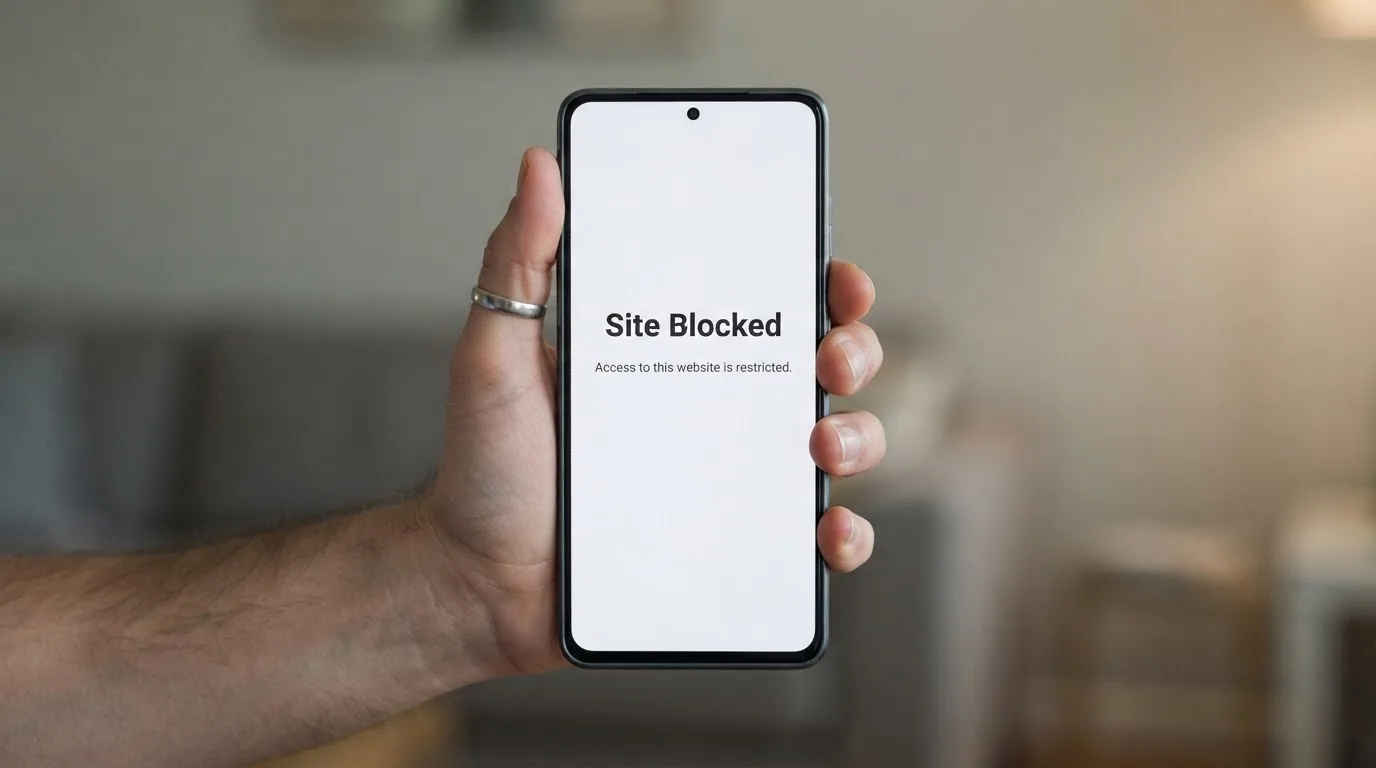
The penalty for the player is also worth setting out plainly. The IGA targets the provider; the individual punter is not prosecuted for placing a bet. What the player does lose is recourse: an offshore operator is not connected to any Australian dispute body, and an Australian court order against a Curaçao-registered company is not a practical remedy. The site can also be blocked with a balance still on the account.
What the ACMA Has Done, and at What Pace
The ACMA’s enforcement record is the clearest evidence of how the prohibition is applied in practice. As reported in June 2026, a running total of 1,751 illegal gambling and affiliate marketing websites had been blocked since the first blocking request in November 2019, and more than 230 unlicensed services had left the Australian market since the 2017 strengthening. The most recent round covered here asked Australian internet service providers to block 12 further websites: 7Signs, ChromaBet, Donbet, Duospin, Freshbet, Slots Gem, Jacks Club, Lucky Start, Pointsbetz.com, Spinrise, Vinyl Casino and Wildsino.
The warnings behind those blocks are public, dated and tied to specific operators. The ACMA issued a formal warning to Pulsup Ltd over Rocketplay.com.au in March 2026. In April 2026 it warned Ryker B.V. over Jackbit and CasinOK. Dama N.V. has been a repeat target: six of its brands — Bambet, Dazard, Level Up, Rocketplay, Wild Tornado and Cobra Casinos — drew a single warning in May 2022, with further warnings over Woo Casino in March 2025 and Spirit Casino in May 2025. The ACMA warned Bamboo Media over Ignition Casino and Consolutetish S.R.L. over National Casino and Bizzo Casino in July 2025, and Bizzo had already drawn a 2022 warning to a different operator. EOD Code SRL was warned over Instant Casino in February 2025, Sterplay Holding Ltd over Casino Intense in April 2025, and Hollycorn N.V. over its Sky Crown and Blue Leo services in September 2022.
The pattern is worth naming. The ACMA does not need to catch every new brand on launch; a single formal warning is enough for many operators to quietly withdraw from the Australian market, and the rest are blocked at the ISP layer before a player reaches them. The catalogue a reader might assemble from any search results page is therefore mostly a catalogue of brands the ACMA has already addressed. Treating that catalogue as a recommendation list — as it is often treated in affiliate marketing — is what the page is built to push back against.
The Blocking Rate
Two figures from research make the pace of that enforcement concrete. The first blocking request went to Australian ISPs in November 2019; the running total reported in June 2026 is 1,751 websites blocked since then. These figures simply break down the total to show the actual scale of the blocking program, rather than making any marketing claims.
Over a period running from November 2019 to June 2026 — a touch over six and a half years — 1,751 sites have been blocked, with 230 unlicensed services having left the market since 2017. Read across the full window of the blocking program, the rate sits in a band of roughly 250 to 270 sites added to the blocklist per year, which is the working pace the ACMA has settled into. That is not a single figure and it is not a forecast; it is the pace at which the program has actually moved, and the band is the honest way to describe it.
The implication for a reader evaluating any online casino brand is direct. If a brand is offering online casino games to Australians today, it has either not yet drawn the ACMA’s attention, has drawn a warning and continued to operate, or has been blocked and is being reached through a mirror. The blocking rate above is what makes that third category visible — the ACMA does not have to announce the block in every case for it to be in effect.
The Payment Side of the Prohibition
The payment rules for licensed Australian wagering carry their own consequences. Credit cards, credit-related products and digital currency have been banned as payment methods for licensed online wagering since 11 June 2024, with operator penalties of up to $247,500 for taking them. Legal deposit routes for an Australian-licensed wagering account are debit card, bank transfer, PayID/Osko and BPAY. A site that asks an Australian customer for a credit card or a crypto deposit is, by that fact alone, not operating under the Australian rules — it is one of the offshore brands covered by the IGA. The payment method a site accepts is, in effect, a quick read on whether the rest of what it says about itself should be believed.
The Player Safety Map: What Actually Binds
Australian readers have a parallel safety net that does not extend offshore. BetStop, the National Self-Exclusion Register, has been live since August 2023 and binds every Australian-licensed online and phone wagering service. A punter who registers with BetStop is excluded from every Australian-licensed account they hold and from opening any new one, for a period they choose between three months and a lifetime. The register does not bind offshore casino brands; a punter registered with BetStop who opens an offshore account is not protected by that register on that account. That asymmetry is the practical reason an offshore brand is also a self-exclusion problem — the safety net stops at the licensed edge of the market.
The National Gambling Helpline at 1800 858 858 is free, 24/7, and chat support is available at Gambling Help Online. These services are independent of any operator and are aimed at the person rather than at the regulator’s records. For a punter who is weighing whether to chase a feature on a high volatility slot, the line is the practical alternative to chasing.
Reform on the Calendar
The Interactive Gambling Amendment (Gambling Reform) Bill 2026 passed Parliament on 19 August 2026. Its advertising and inducement measures commence on 1 January 2027 — law with a start date, not yet in force on a 2026 page. The reform package does not change the underlying prohibition on offering online casino games to Australians; it tightens the rules around how Australian-licensed wagering can advertise and what inducements licensed operators can offer. The line between “in force” and “passed but not commenced” matters for any reader who is looking at what the rules actually are on the day they read this.
Pokies on the Ground: What Australians Can Play at Home
Australia’s gambling floor outside casinos is dominated by pokies-style slot machines in pubs and clubs. New South Wales alone had 87,298 pokies-style machines outside casinos as of June 2023. Victoria had 26,380 in 2021–22, Queensland 21,122 in October 2023, South Australia 11,672 in September 2023 and the ACT 3,587 in November 2023. New South Wales legalised slot machines in 1956; by 2010 Australia operated an estimated 97,103 gaming machines outside casinos, a per-capita rate about five times that of the United States. These figures are the actual density of slot machines in Australian daily life, and they are why the legal prohibition on online pokies sits on top of an entrenched physical market rather than a vacuum.
The comparison between states is also a comparison of how the regulatory regimes have played out. NSW clubs and hotels operate under a statutory return-to-player framework and a state-level self-exclusion scheme; Victoria’s regime is run through the VGCCC; the ACT’s smaller base is governed under ACT Gambling and Racing Commission rules. Each jurisdiction publishes the RTP and the volatility profile of the machines it licenses, which is something the offshore online market has no equivalent of. A punter weighing a high volatility title against the alternatives has more transparent information about the local pokies than about any online brand.
Where Live Tables Sit
The live table-game side of the Australian market lives inside the casino complexes. Crown Melbourne offers three baccarat variants — Traditional Baccarat, Crown Baccarat and 2 to 1 Baccarat — as approved table games regulated by the Victorian Gambling and Casino Control Commission, which replaced the VCGLR as Victoria’s casino regulator on 1 July 2022. Under section 66 of the NSW Casino Control Act 1992, a casino operator must not permit a game such as baccarat to be played unless the game and its rules are approved by the regulator, and the operator must make a copy of the approved rules available to patrons on request. In Victoria, the Casino Control Act 1991 requires the VGCCC to approve any rules for table games, including blackjack, and any change to those rules, before they are introduced at the Melbourne casino.
Blackjack variants approved at Crown Melbourne show what regulatory approval looks like in practice: the VGCCC’s public log records the renaming of the “Perfect Pairs” side bet to “Crown Pairs” on 23 December 2024 and the introduction of a “Free Bet” option with a new “Pot of Gold” side bet on 25 March 2024. The same VGCCC log covers baccarat and craps variants. With optimal strategy, blackjack’s house edge sits around 0.28% under liberal Las Vegas Strip rules and 0.43% under Atlantic City rules — useful context for any reader comparing the grind of a table game to the swings of a high volatility slot.
The Brands the ACMA Has Acted Against
The operators named below are not a recommended shortlist. They are listed because the ACMA itself issued a formal warning over each one for offering prohibited services to Australians. The brand names appear in the order the ACMA’s published register presents them, and each entry carries the date and the operator the warning names. Where research marks a brand’s support for high volatility slots as listings-only, the write-up below says only what those listings report and names them; where research carries no-data, the brand is presented on its other fields and is not attached to the subject either way.
| Brand | ACMA action and date | Operator named by the ACMA | Subject support |
|---|---|---|---|
| RocketPlay | Formal warning, March 2026 | Pulsup Ltd (Rocketplay.com.au) — earlier Dama N.V., May 2022 | — |
| Level Up Casino | Formal warning, May 2022 | Dama N.V. | listings-only (Bgaming.com) |
| Woo Casino | Formal warning, March 2025 | Dama N.V. | — |
| Spirit Casino | Formal warning, May 2025 | Dama N.V. | — |
| National Casino | Formal warning, July 2025 | Consolutetish S.R.L. | listings-only (en.wikipedia.org) |
| Bizzo Casino | Formal warning, July 2025; earlier 2022 | Consolutetish S.R.L.; earlier TechSolutions | — |
| Ignition Casino | Formal warning, July 2025 | Bamboo Media | — |
| Instant Casino | Formal warning, February 2025 | EOD Code SRL | — |
| Jackbit | Formal warning, April 2026 | Ryker B.V. | — |
| Casino Intense | Formal warning, April 2025 | Sterplay Holding Ltd | listings-only (Abc.net.au; acma.gov.au; Crownmelbourne.com.au) |
| Sky Crown | Formal warning, September 2022 | Hollycorn N.V. | — |
What the table is built to do, and what it deliberately is not.
The columns that show up are the columns the page needs: the brand a reader will recognise, the ACMA action that sits behind it, the operator the ACMA named in the warning, and what research actually carries about whether the brand’s own pages claim support for high volatility slots. Cells that research does not back are left as em dashes rather than filled with a guess. The table is not a ranking. None of the brands on it is presented as a place to play, and the order is the order of the ACMA register rather than an editorial pick.
RocketPlay
The most recent ACMA action in the table is over RocketPlay, where Pulsup Ltd was warned in March 2026 over Rocketplay.com.au. The brand had already been drawn into an earlier Dama N.V. action in May 2022, which puts RocketPlay in the small group of brands the ACMA has had to address twice — once at the operator level and once at what appears to be a successor entity. Reading the warning dates together is a better guide to the brand’s pattern of offering prohibited services to Australians than either warning is on its own. Research carries no information on the brand’s support for high volatility titles, leaving the focus purely on its enforcement history.
Level Up Casino
Dama N.V. drew a single May 2022 warning covering six of its brands, of which Level Up Casino is one. The brand’s appearance on listings associated with Bgaming — a studio whose catalogue includes high volatility titles — is what research carries, and is named here as that listing rather than as a verified feature of Level Up’s own site. A reader who meets Level Up on an affiliate list should weigh that listing against the fact that Level Up is unlicensed in Australia by definition.
Woo Casino
Dama N.V. drew a further formal warning in March 2025 over Woo Casino, on top of the May 2022 warning. The two-warning pattern — same operator, two different brands at two different dates — is a fair signal of how the ACMA treats repeat offenders: the brand gets named individually, and the underlying operator relationship does not shield it. Woo Casino does not appear in research with any verified support for high volatility slots, and the brand remains in the no-data category.
Spirit Casino
Spirit Casino sits in the same Dama N.V. cluster, with a formal warning in May 2025. The gap between the May 2022 warning and the May 2025 warning is a fair measure of how long an operator can keep cycling brands even after the ACMA has called the group out — three years of operations behind new brand names, before the regulator’s name catches up again. Research carries no support figure for Spirit Casino on high volatility slots.
National Casino
National Casino is one of the two brands Consolutetish S.R.L. was warned over in July 2025. The brand appears on listings indexed by Wikipedia-style catalogue pages rather than on a verified technical page, which is what the listings-only marker reflects. A reader who follows that listing back to the brand still ends up at an offshore operator outside Australian jurisdiction, regardless of what the listing says about its slot catalogue.
Bizzo Casino
Consolutetish S.R.L. was warned over Bizzo Casino in July 2025, on top of an earlier 2022 warning that named TechSolutions (CY) Group Limited and TechSolutions Group N.V. The two-warning pattern is similar to RocketPlay’s: same brand, two operators, two enforcement dates. Research lists no information on high volatility slot support for Bizzo Casino, so we conclude the entry with its regulatory status.
Ignition Casino
Bamboo Media drew a formal warning in July 2025 over Ignition Casino. The brand’s profile in the Australian market is the one the ACMA warning addresses; There is no evidence in research regarding high volatility support for Ignition Casino, which is why it remains in the no-data column.
Instant Casino
EOD Code SRL drew a formal warning in February 2025 over Instant Casino. The February 2025 warning predates most of the other entries in the table and gives a useful lower bound on how recent the ACMA’s enforcement attention has been. Research contains no specific data on Instant Casino’s support for high volatility titles.
Jackbit
Ryker B.V. drew a formal warning in April 2026 over Jackbit (and a parallel warning over CasinOK in the same round). The April 2026 timing is recent enough that any site still offering Jackbit to Australians at the time of writing is most likely operating through a mirror or a successor site after the ISP block. Research carries no support figure for Jackbit on the subject of the page.
Casino Intense
Sterplay Holding Ltd drew a formal warning in April 2025 over Casino Intense. The brand appears on listings indexed through Australian media sources rather than on a verified operator-supplied page, which the listings-only marker captures. The Australian media footprint of Casino Intense is, in other words, the footprint of being warned by the ACMA.
Sky Crown
Hollycorn N.V. drew a formal warning in September 2022 over its Sky Crown and Blue Leo casino services. The 2022 date makes Sky Crown one of the earlier entries in the ACMA register and gives it the longest tail of any brand in the table; it has also been drawn back into attention through the parallel Hollycorn entry for Blue Leo. There is no support figure carried by research for Sky Crown on high volatility slots.
What the Catalogue Looks Like When You Step Back
Step back from the table and the pattern is clearer than any single entry. The ACMA has, since 2017, been running an enforcement program that targets the operator behind the brand more often than the brand itself, and that returns to the same operator as it cycles brands. Dama N.V.’s appearance in May 2022, March 2025 and May 2025 — across six brands and then two more — is the clearest example in the table. Hollycorn N.V. and Consolutetish S.R.L. follow the same shape at smaller scale. The implication for a reader is that the catalogue of brands on any affiliate list is largely a catalogue of brand shells around a smaller set of operators, and the ACMA is targeting the operators rather than playing whack-a-mole with each new brand.
The pattern also matters for how a reader should read any new brand that appears. A new name attached to an operator the ACMA has already addressed is, structurally, the same risk profile as the brand the ACMA actually named — the licence displayed, the payment methods accepted and the absence of any Australian dispute body all carry over.
The Choices an Australian Reader Actually Has
The legal floor and the practical alternatives line up roughly as follows. A punter who wants to play a high volatility slot in Australia today is, in order of legal clarity:
- Playing pokies-style machines in a licensed pub, club or casino in their state or territory, where the RTP and the volatility profile are published by the regulator and a self-exclusion scheme applies.
- Playing online pokies through an Australian-licensed wagering account, which covers wagering on races and sport but does not extend to casino games — the licence does not authorise the product.
- Playing at an offshore casino, which the Interactive Gambling Act 2001 prohibits the operator from offering to Australians, and which carries no Australian consumer protection, no BetStop coverage and the realistic prospect of an ISP block.
The third option is the one the search results pages a reader will land on are usually built to push. The honest version of the page is that the third option is also the one with the least information behind it: no Australian regulator has signed off on the RTP, no Australian dispute body will hear a complaint, and the ACMA has already acted against most of the brands the page would recommend. The choice between the three is the choice between a regulated product with limited information, an unregulated product with even less information, or a regulated product in a different category that does not include slots.
How to Read Any “Best” List in This Space
A short, practical reading guide. Five things to check on any online casino page that claims to be a shortlist for Australian players.
- The licence jurisdiction. If the licence is not from an Australian state or territory, the operator cannot lawfully offer online casino games to Australians under the IGA — whatever licence the page displays is a foreign credential, not an Australian one.
- The payment methods accepted. A page asking for a credit card or a crypto deposit is one of the offshore brands covered by the IGA, by virtue of the 11 June 2024 ban alone.
- The presence of a BetStop exclusion pathway. A page that does not connect to BetStop is, by definition, not on the Australian-licensed side of the market.
- The ACMA register. A brand on the register has been formally warned or blocked. The current register is the public record of brands the ACMA has already acted against.
- The complaint pathway. An Australian-licensed operator is answerable to an Australian regulator and an Australian dispute body. An offshore operator is answerable to neither.
A reader who runs through those five checks against any page in this market is reading more carefully than most of the pages themselves do.
Closing the Loop
High volatility slots are a real product category with a real design lineage and a real mathematical shape. The Australian reader has clear access to the underlying game in pubs, clubs and casinos, where the regulatory framework is in place and the return-to-player is published. The online casino version of the same product is, by the Interactive Gambling Act 2001 and the ACMA’s enforcement record, a prohibited service. The honest map of “best high volatility slots Australia” is therefore not a recommendation list of where to play online — it is a record of what the ACMA has acted against, what the licensed alternatives look like, and where the safety net actually catches a punter who decides the game is not worth the chase.
Frequently Asked Questions
What does high volatility mean for a slot machine?
High volatility means the paytable is loaded toward rare, larger payouts rather than frequent small ones. A punter can lose for long stretches without a paying combination, then collect a much larger sum when a top symbol or bonus round lines up. The expected return over many spins is set by the RTP, which is unchanged by volatility — only the path to that return looks different.
How big are the swings between wins on a high volatility slot compared with a steadier one?
The swings are much wider. A low volatility slot pays smaller amounts on a more frequent schedule, while a high volatility title can eat ten sessions in a row without paying anything back and then return a multiple of the session stake on a single feature. Modern video slots with five or more reels and fifty or more symbols per reel can produce top-jackpot odds as steep as 300 million to one, against the classic three-reel machine’s roughly 1,000 possible combinations.
Is it legal to play high volatility slots at an online casino from Australia?
No. The Interactive Gambling Act 2001, strengthened by the Interactive Gambling Amendment Act 2017, makes it an offence for a provider to offer online casino games to anyone in Australia, and no state or territory issues a licence for those products. The individual player is not prosecuted; what is lost is recourse, since an offshore operator gives no Australian consumer protection, no complaints body and no remedy if a withdrawal is refused.
Are high volatility pokies-style machines common in Australian pubs and clubs?
Yes, and they are also the legally clearest place to play them in Australia. New South Wales alone had 87,298 pokies-style machines outside casinos as of June 2023, with Victoria at 26,380 in 2021–22, Queensland at 21,122 in October 2023, South Australia at 11,672 in September 2023 and the ACT at 3,587 in November 2023. Each state regulator publishes the RTP and volatility profile of the machines it licenses.
Why might a high volatility slot suit a player with a bigger bankroll?
Because the bankroll has to absorb the long stretches without a payout. A high volatility title can run through ten sessions in a row without paying anything back, and a small balance is more likely to be wiped out before the rare hit lands. A larger balance can carry the punter through the dry spells and still be in the game when a top combination or bonus feature finally triggers — which is why “high volatility” and “big bankroll” are paired in nearly every serious write-up of these games.