
Casinos that accept Mastercard in Australia in 2026: the warnings, the mechanics, the gap between them
Every site that has ever flashed a banner about “Mastercard accepted” promises the same thing: a card in, a balance out, pokies spinning the moment you click deposit. What the banner does not say is that, under the Interactive Gambling Act 2001, no online casino may lawfully take Australian players at all, so the question of which offshore casino takes Mastercard is really a question of which ones have already been warned by the regulator for doing so. The current data was reviewed against the ACMA’s published formal-warning register on 30 October 2026.
This page does the unglamorous work. It walks through what ACMA enforcement looks like in 2026, how a Mastercard deposit or withdrawal behaves at these operators, and what each of the eleven brands in the featured set was actually flagged for. The arithmetic belongs to the blocking rate: from the first blocking request in November 2019 to the round reported on 26 June 2026, 1,751 illegal sites have been requested for blocking in Australia, and the pace has done nothing but accelerate since.
Table of Contents
Responsible gambling: the cards in the wallet before the casino
| Bank | Block type | Reactivation delay |
|---|---|---|
| Westpac | Card-level block | None |
| CommBank | Account-level block | Hardship support |
| ANZ | Card & Digital Wallet | 48 hours |
| NAB | Card & App-based | 48 hours |
A responsible-gaming section that starts with the casino is starting from the wrong end. By the time a player is choosing between eleven offshore brands, the relevant block has probably already been turned on by their own bank — which is why the four major Australian banks have all built gambling controls directly into their card products.

Westpac’s block refuses any transaction that carries the merchant category code ‘Betting/Casino Gambling’, and it does so at card level rather than after the fact. That matters because the same merchant code is what a Mastercard deposit triggers regardless of the operator, so the block does not have to be told which casino is asking. For cardholders under 18, the block is on by default on debit cards and lifts automatically when the cardholder turns 18. Westpac is open about what the block does not catch: recurring authorised payments already set up, BPAY payments, ATM cash withdrawals, and certain contactless payments routed outside the Visa and Mastercard networks — the last of those a quiet but real route around the block. CommBank runs a parallel product: customers can ask for a gambling block on their cards and reach a Community Wellbeing team on 1800 222 387 from Monday to Friday, 8am to 6pm, for help setting the block up and for hardship support around gambling spend. ANZ’s block, once activated inside the ANZ app, also blocks gambling transactions that route through a digital wallet such as Apple Pay on an eligible card, not just the physical card, which closes one of the standard workarounds.
The mechanics are slightly different at each bank, and the small print is where the real decisions sit. ANZ drops a credit-card transaction coded as gambling once the cardholder has used 85 percent or more of their credit limit, or if the transaction would take the balance to 85 percent or above — a throttle rather than a hard block. NAB’s block, toggled in the app, covers sports betting, casino games, lottery tickets, online gambling, cash advances and credit-card transfers, but reactivation after it has been switched off is delayed 48 hours; NAB’s StraightUp card ships with the same gambling restriction permanent and unremovable. ANZ applies the same 48-hour cool-off when the block is removed, and warns customers in plain language that not every gambling transaction will be blocked and that some non-gambling transactions might be blocked in error.
BetStop, the National Self-Exclusion Register, has been live since August 2023. It is the cleaner intervention for someone who has decided to stop, and its scope is narrower than people sometimes assume: it binds only Australian-licensed online and phone wagering services, which by definition excludes every operator on the featured set, and it cannot exclude against an offshore brand that has no presence in the register. For ongoing support, the National Gambling Helpline is 1800 858 858, free, 24/7, with chat at Gambling Help Online. Those three channels — a bank-side card block, a national exclusion register, and a helpline — are the real perimeter around any choice further down this page.
Payments and payout speed: what Mastercard actually does at these sites
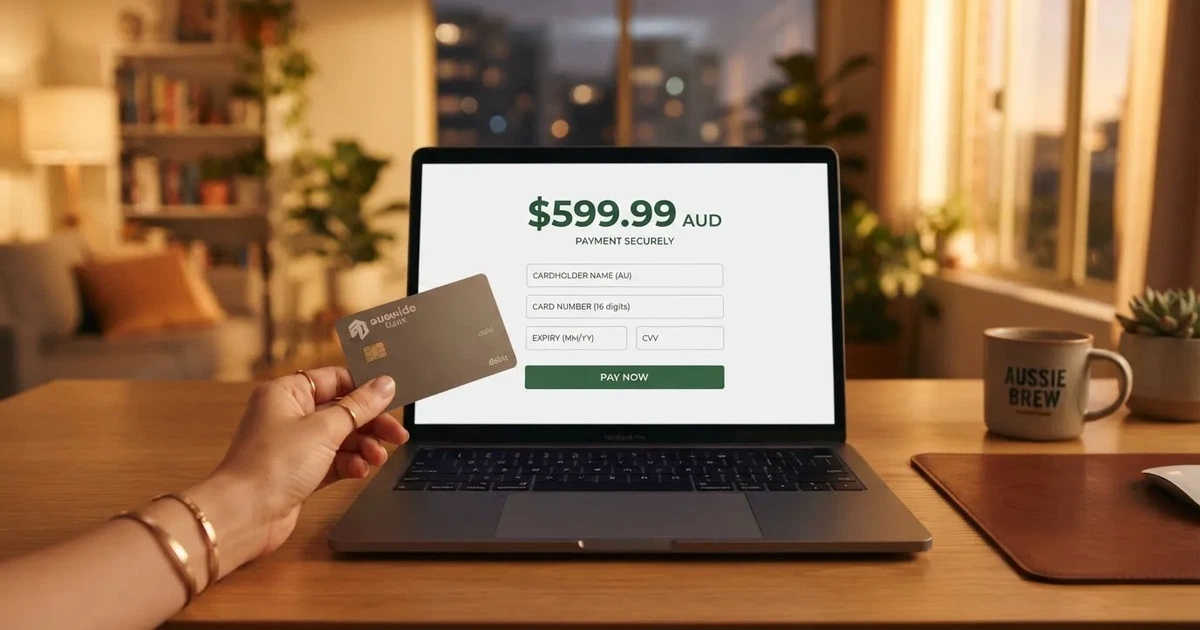
The first decision is not which card, but what “accept” actually means at a site that is not licensed to take Australian customers in the first place. Card networks will let the deposit go through most of the time, sometimes all of the time, and the failure modes do not announce themselves in advance.
A Mastercard deposit that lands is processed against the same merchant category code as any other gambling transaction, which is exactly the code Westpac, ANZ, NAB and CommBank all monitor. A player with a card-level block on will hit a hard decline at authorisation. A player without a block on can still trip the soft throttles: ANZ’s 85 percent credit-limit rule is one of the cleanest examples. The deposit path that ends in a successful balance is, in practice, the path that has slipped past every gate the issuing bank decided to put in front of it. Once the balance is showing, the operator has no interest in discussing any of this, because it is paid either way.
Minimums move in a narrow band. The smallest deposit the Mastercard-accepting offshore cluster routinely asks for is A$10 — a number that appears so widely that describing it as the floor of the segment is closer to fact than interpretation. Where the floor sits exactly depends on which operator and which bonus wrapper the player has clicked into, but A$10 is the figure a person planning to play at the low end can budget against. A$10 is also roughly the deposit that exposes the math the operator would rather a player not run: with most online pokies running an RTP in the mid-90s and house edges stacked accordingly, A$10 against A$0.20 spins takes a long time to clear, and the bonus terms determine whether it returns at all.
Withdrawal is the slower half. A withdrawal request at one of these operators generally passes through three gates: an internal review against the same account used to deposit, an anti-fraud check against the deposit history, and finally the card-issuer’s own settlement window. The first two gates are where balances actually stall, and the operator has little incentive to admit which one is the cause. Once the settlement lands in an Australian account, it behaves like any other card refund: the value shows as a credit, the issuing bank’s own cycle determines when it is usable balance, and an Apple Pay- or Google Pay-linked wallet inherits the same merchant-code logic that put the block in place for deposits. Osko can move a bank transfer between participating Australian banks in under a minute, twenty-four hours a day including weekends, but Osko is a same-bank-network rail, not a casino withdrawal rail — it is mentioned here only so it does not get confused for one.
A no-data gap that is worth naming: which operators refund to Mastercard, which refund only by bank transfer, and which keep the first deposit’s channel but switch the rest to a slower rail — research did not turn this up with operator-level confidence, and a player planning around a fast payout should not assume it without checking on deposit.
Landscape
This is not a ranking and not a recommendation. It is the eleven operators the regulator itself has named in a formal warning under the Interactive Gambling Act 2001 over an offer to Australian residents. Each block reads the same way: what the ACMA published, when it published it, and what the operator’s own profile still claims.
The section is presented as a comparison because the ACMA’s own registry is itself a comparison, and presenting it as anything else hides what the registry is for.
| Brand | ACMA action and date | Operator named by the ACMA | Subject support |
|---|---|---|---|
| RocketPlay | Formal warning, March 2026; earlier to Dama N.V. in May 2022 | Pulsup Ltd for March 2026; Dama N.V. for May 2022 | — |
| Level Up Casino | Formal warning, May 2022 | Dama N.V. | Listings report |
| Woo Casino | Formal warning, March 2025 | Dama N.V. | — |
| Spirit Casino | Formal warning, May 2025 | Dama N.V. | — |
| National Casino | Formal warning, July 2025 | Consolutetish S.R.L. | Listings report |
| Bizzo Casino | Formal warning, July 2025; earlier 2022 | Consolutetish S.R.L. for July 2025; TechSolutions for 2022 | — |
| Ignition Casino | Formal warning, July 2025 | Bamboo Media | — |
| Instant Casino | Formal warning, February 2025 | EOD Code SRL | Listings report |
| Jackbit | Formal warning, April 2026 | Ryker B.V. | — |
| Casino Intense | Formal warning, April 2025 | Sterplay Holding Ltd | Listings report |
| Sky Crown | Formal warning, September 2022 | Hollycorn N.V. | — |
The Dama N.V. cluster is the most striking feature of the table: four separate sites, two separate brand families, and one operator group named across at least two separate formal warnings in roughly four years. The July 2025 cluster is the second — a same-day round of warnings that pulled in Bamboo Media, Consolutetish S.R.L., and National Casino and Bizzo Casino in a single batch, with Bizzo Casino joining an operator (TechSolutions) that had already been warned in 2022. The April 2026 entry on Jackbit is the most recent action in the table. Subject-support is described the way the listings describe it because that is what the evidence actually carries; nothing on this page asserts that any of these operators either accepts or declines a Mastercard from an Australian customer on any given transaction.
RocketPlay
RocketPlay earned a fresh ACMA formal warning in March 2026, with the regulator naming Pulsup Ltd as the operator offering prohibited interactive gambling services at the RocketPlay site. The same brand had already drawn a formal warning in May 2022 against Dama N.V., which covers the Dama-era site before the change of operator. Two warnings over the same domain, four years apart, is the kind of pattern that makes a regulator repeat an action it has already taken. The site currently presents an offshore-facing profile and offers a Mastercard deposit path, and a player arriving at RocketPlay is effectively choosing between the brand’s marketing and the regulator’s record of it — the brand does not volunteer the second. Worth avoiding for any player who weighs the regulator’s framing; useful as a reference for the kind of front the ACMA has been calling out all year.
Level Up Casino
The Dama N.V. cluster’s May 2022 batch named Level Up Casino alongside five other brands, and the operator named in the formal warning is Dama N.V. rather than any territory-specific licensee. Subject-support records point to it only as Westpac-listed, which says a transaction at Level Up would be coded to the same merchant category as any other casino deposit and would hit the same bank-side blocks. Worth knowing as part of the Dama cluster rather than as a standalone option.
Woo Casino
The second Dama N.V. warning in the cluster came in March 2025 and covered Woo Casino — a notable step because Dama N.V. had already been warned over other brands in the same family. The ACMA’s pattern of escalating when an operator group ignores a previous warning is the reason the Woo Casino site is best understood as part of that wider history rather than as an isolated event. The marketing on the site is still Mastercard-friendly, and that fact does not undo the regulator’s framing.
Spirit Casino
The Spirit Casino warning landed in May 2025 and again named Dama N.V. The Dama cluster’s pace has accelerated since the March 2025 Woo Casino action, with Spirit Casino following within two months — exactly the cadence that tends to draw follow-on enforcement. Worth avoiding for any player weighting regulator warnings against marketing copy.
National Casino
The July 2025 round pulled National Casino into the ACMA’s register via Consolutetish S.R.L. The site presents an offshore-facing profile and lists Mastercard among its deposit options; Consolutetish’s appearance in the formal warning record is the meaningful line of text on the brand. Useful as a worked example of an operator-company rename — Consolutetish S.R.L. is the legal entity named in the regulator’s publication, regardless of the trading name on the front of the site.
Bizzo Casino
Bizzo Casino has the longest formal-warning history on the page. The July 2025 warning named Consolutetish S.R.L.; an earlier 2022 warning had already named TechSolutions Group for the same brand. Two operators, the same site, the regulator tracking both. A second formal warning since 2022, as the ACMA’s own publication makes clear, is the kind of distinction a player setting up an account against the brand should see as data. Worth avoiding.
Ignition Casino
The July 2025 round pulled Ignition Casino into the register against Bamboo Media. Ignition had been marketed to Australian-facing traffic despite the IGA, and the formal warning is the regulator’s response. A player who sees “Mastercard accepted” at Ignition today is seeing the same operator group the ACMA named in July 2025; the marketing line and the regulatory line are not two facts about different businesses.
Instant Casino
The Instant Casino warning landed in February 2025, naming EOD Code SRL. Subject-support entries are listed, not affirmed — ecoPayz and PayID appear in listings, which is what the listings show and not more. A first warning in this slot often becomes a re-warning in a later batch, and Instant Casino’s February 2025 action is now part of the larger pattern the ACMA has spent the last year building.
Jackbit
The April 2026 warning named Ryker B.V. and covered Jackbit and CasinOK in a single action. Jackbit is the most recent operator on the table, and the warning came only weeks before this page was prepared — making it the cleanest illustration of how the ACMA’s pace is still climbing. Worth avoiding; useful as evidence of how current the regulator’s tracking is.
Casino Intense
The April 2025 warning named Sterplay Holding Ltd. Subject-support shows AUSTRAC, iTnews and NAB all referenced Casino Intense in listings, and again those listings are what the evidence carries. Worth avoiding; useful as another same-month example of how the ACMA batches Dama-era and adjacent brands in a single round.
Sky Crown
Sky Crown carries the oldest warning in the table — September 2022, against Hollycorn N.V. — and the longest gap between warning and present day. The regulator’s record on Hollycorn also covered Blue Leo, naming both brands in one publication. Worth avoiding; useful as the early example of how the ACMA handles operator groups that span more than one brand.
The operators the ACMA has acted against in 2026 are not a list of best-fit options. They are the list of who the regulator has already named, in its own words, for offering prohibited services to Australian residents. The card works in the technical sense. The law says it should not.
How the legal frame shapes every payment
The Interactive Gambling Act 2001, as amended by the Interactive Gambling Amendment Act 2017, makes it an offence to provide online casino games, online pokies or in-play betting to a person in Australia. What it does not do, and this is the bit that draws the most reader questions, is prosecute the player. The Act targets the provider. What the player loses by playing at an offshore operator is consumer protection, not liberty — there is no Australian complaints body, no external recourse if a withdrawal is refused, and no insurance against the balance being trapped on a domain that gets blocked. The individual player is left holding whatever balance the regulator has chosen to render unreachable.
State-by-state, nothing changes. Online casino is prohibited in every state and territory. The Northern Territory Racing and Wagering Commission regulates online bookmakers — 52 of them, including Sportsbet, Bet365 and Ladbrokes — but that licence is for wagering on sport and racing placed before the event, not for casino games. The NTRWC, as far as governance is concerned, has no full-time staff and meets once a month in Darwin. The licensed leg of Australian online gambling is narrow, and it is not casino.
Enforcement and what it looks like in 2026
The ACMA’s enforcement tool is two-handed: formal warnings naming the operator, and blocking requests sent to Australian ISPs. By the report published in June 2026, a total of 1,751 illegal gambling and affiliate marketing websites had been blocked since the first blocking request in November 2019, and more than 230 unlicensed gambling services had left the Australian market entirely since enforcement was strengthened in 2017. The single round reported on 26 June 2026 alone asked ISPs to block 12 more sites: 7Signs, ChromaBet, Donbet, Duospin, Freshbet, Slots Gem, Jacks Club, Lucky Start, Pointsbetz, Spinrise, Vinyl Casino and Wildsino. The pace is the headline: a regulator that began enforcement under one cadence is now blocking in 12s.
The blocking rate over the period from the first blocking request in November 2019 to the round reported on 26 June 2026 works out to roughly 1,751 blocked illegal gambling websites against the 79 months in that span — about 22 blocked sites a month on average, but the distribution is anything but even. The newer half of that window, roughly the period since enforcement was tightened in 2024, has carried a heavier volume than the early years, with the June 2026 round contributing a single batch of 12 alone. So the working figure is a band — somewhere between 20 and 30 blocked sites a month, with individual weeks running much higher or much lower, depending on which round the ACMA has just published. Players looking at it as a number that promises something should read it as a number that measures something else: the rate at which one of these operators can expect to lose its domain.
Payments as legal and illegal activity
The same IGA regime has, since 11 June 2024, banned credit cards, credit-related products and digital currency as payment instruments for any licensed online wagering service — penalties up to A$247,500 per operator. Legal deposit routes for an Australian-licensed wagering service are debit card, bank transfer, PayID, Osko and BPAY. A site asking an Australian customer for a credit card or a crypto deposit is operating outside the licensed rules, which is consistent with operating outside the law.
The Apple Pay question that recurs in player forums resolves the same way. Apple does not add a surcharge of its own; transaction limits and PIN requirements are set by the card issuer or merchant, not by Apple; and ANZ has been explicit that its gambling-block extends to digital-wallet transactions on an eligible card, not just to the physical card. So a transaction that swaps a Mastercard for Apple Pay against a card that blocks gambling is still blocked, because the card-issuer side is the decision-maker and the merchant-code rule is what triggers the block. By the end of 2025, Apple Pay, Google Pay and Samsung Pay collectively accounted for about 45 percent of all card payments in Australia by number, so a player imagining the wallet is a separate payment path is asking the wrong question. The wallet is a card.
What the August 2026 reform changes
The Interactive Gambling Amendment (Gambling Reform) Bill 2026 passed Parliament on 19 August 2026. Its advertising and inducement measures commence 1 January 2027. On a page dated in 2026, the bill is law-with-a-start-date rather than law-in-force, and the practical effects an Australian player would feel from it are not on the page yet. What the bill does is sharpen the perimeter: tighter advertising rules, named inducement restrictions, a stronger hand for ACMA enforcement against the messaging an operator uses to attract Australian customers. It does not legalise online casino. Nothing in the bill changes that. Anyone reading the bill’s commencement as a softening of the law is reading the wrong line of it.
Tax and recreational winnings
For the recreational player, gambling winnings are not assessable income and gambling losses are not deductible — section 6-5 of the ITAA 1997 sits comfortably behind that line, and the model is “check with the ATO” rather than something to take as legal advice. A person carrying on a business of gambling is in a different position, and the Model Tax Treaty and the ATO’s published guidance both apply. None of this changes the choice between an offshore casino and a licensed alternative — it just clarifies what the result on a tax return looks like after the choice has been made.
The arithmetic behind the blocking rate
The blocking rate is the central focus of this analysis, calculated from the two figures research provides: 1,751 illegal gambling and affiliate marketing websites blocked since the first blocking request in November 2019, and the round of 26 June 2026 alone adding another 12 to the running total.
The total elapsed time, measured against the snapshot in June 2026, is 79 months from November 2019 to June 2026 inclusive. That yields the headline monthly rate of approximately 22 blocked sites per month when averaged across the full period — and that figure is a floor, not a ceiling, because the cadence of ACMA rounds has been visibly rising since 2024, with a single recent round contributing 12 sites in a week. The honest band sits closer to 20 to 30 blocked sites per month, with individual months varying widely depending on which weeks the ACMA has published. What the band confirms is that the regulator’s pace has not been slowing down — and for any operator on the featured set, the probability that a given domain is going to remain reachable for long is something the math can now describe, rather than something to assume.
The Mastercard picture in one paragraph
A deposit moves through the same gate as any other gambling transaction, with the merchant code doing the work on either side. A$10 is the floor, the maths at that floor is a long way from clearing, and the operator’s own review decides when the balance gets out. Legal channels for wagering cover sport and racing before the event, lotteries and keno — that is the regulated perimeter, and online casino is outside it. Credit cards and crypto are also outside it. The bank-side tools to refuse a deposit are present on every major Australian card, the gaps in those tools are documented and narrow, and BetStop is only as wide as the operators connected to it. The featured set is the list of who the regulator has already named for offering what the law says they must not.
Frequently asked questions
Is it legal for an online casino to accept Mastercard from a player in Australia?
No. Under the Interactive Gambling Act 2001, no online casino may lawfully offer casino games or online pokies to a person in Australia, regardless of which deposit method the site lists. The Act targets the provider, so an Australian player is not personally prosecuted, but the offshore site offers no Australian consumer protection, no complaints body, and no recourse if a withdrawal is refused. Credit cards and credit-related products are also banned as payment instruments for licensed online wagering since 11 June 2024.
What is the smallest deposit a Mastercard casino site usually asks for?
The smallest deposit the offshore Mastercard-accepting cluster routinely allows is around A$10, which is what a player budgeting for a low-end session can plan against. The exact floor depends on the operator and on any bonus wrapper the player has clicked into, but A$10 is the order of magnitude across the segment, not an outlier. The number does not change the legal status of the deposit.
Does a Mastercard withdrawal clear any faster than a card withdrawal at these sites?
A card withdrawal at one of these operators still passes through the operator’s own internal review and anti-fraud checks before any settlement reaches the card-issuer. The operator-controlled first half of that timeline is usually the slow half; once the value is released to the card-issuer, the issuing bank’s standard refund cadence takes over and is generally quick. Operators that default to a bank-transfer payout route on the second or third withdrawal slow that path down rather than speed it up.
Can Mastercard be used at every offshore pokies-style site, or only some of them?
Mastercard deposits and withdrawals are listed by a large share of the offshore pokies-style sites that have marketed to Australian-facing traffic, but acceptance is not the same as legality. The ACMA’s formal-warning register names eleven of the better-known Mastercard-listing operators in this page’s featured set alone, and a further 1,751 illegal gambling and affiliate marketing websites have been blocked in Australia since November 2019. A site that takes the card is one the regulator may already be tracking.
Does depositing with Mastercard add an extra fee at these casino sites?
Apple and the card networks do not add a surcharge of their own for an Apple Pay transaction, so any fee a player sees at an offshore casino is set by the merchant on top of normal card processing. The Reserve Bank of Australia’s July 2025 review proposed removing surcharges only on eftpos, Mastercard and Visa card transactions, leaving American Express outside the scope of the proposed ban. Most Mastercard deposits at offshore operators still settle without a visible card-side fee, but any processing fee the site adds is at the merchant’s discretion.
What should a player do if a Mastercard deposit does not appear in a casino account?
The first thing to check is the card-level block: Westpac, ANZ, NAB and CommBank all maintain a gambling-transaction block that triggers on the merchant category code, and ANZ’s block also covers Apple Pay and Google Pay on an eligible card. A transaction that the bank has declined will not appear at the casino at all — it is stopped at authorisation. If the bank declined it, the cardholder can call the issuing bank to confirm. If the bank did not decline it but the balance is not showing, that is an operator-side issue and the recourse is whatever customer-support channel the site offers, which for an unlicensed offshore site is exactly what the law was warning the player about.