
CashtoCode at Australian-facing casino sites — what a 20-digit voucher is actually buying here
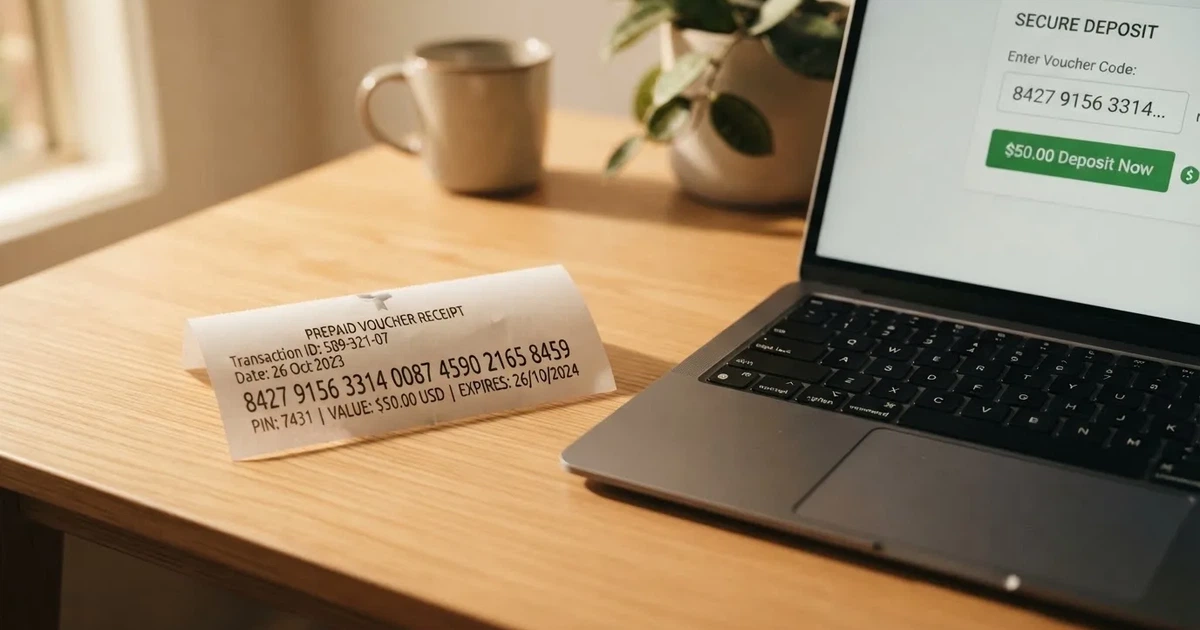
A CashtoCode eVoucher is a quiet payment instrument. No bank card, no crypto wallet, no name on the receipt — a printed or digital 20-digit code, sold in over 25 currencies, redeemed at the cashier of any site that lists CashtoCode among its deposit methods. For a player who would rather not hand a card number to a casino, it solves a real problem. For a player in Australia, it solves the wrong one. The same offshore sites that accept a CashtoCode voucher are the ones the ACMA has been warning, blocking and naming in formal correspondence for years, and the Interactive Gambling Act 2001 makes every one of them an unlawful place for an Australian to deposit with any payment method at all.
Current as of 2 November 2026 against the ACMA’s register of formal warnings and blocked websites.
Table of Contents
- Why a CashtoCode casino in Australia is a strange thing to be looking for
- How a CashtoCode deposit and withdrawal actually works at these sites
- Where the cashier actually shows CashtoCode — and what sits beside it
- The eleven operators a reader is most likely to meet at a CashtoCode cashier
- What the blocking record says about the choice a reader is making
- The legal frame around every CashtoCode deposit at an offshore casino
- Choosing — what the paths actually look like
- What to do if a CashtoCode deposit does not appear
- Frequently asked questions
Why a CashtoCode casino in Australia is a strange thing to be looking for
The Australian market for online casino games and online pokies is not grey, not unregulated, not restricted to a handful of operators. It is closed. No state or territory issues a licence for the product. What the Northern Territory Racing and Wagering Commission does license — 52 of Australia’s online bookmakers, including Sportsbet, Bet365 and Ladbrokes — is wagering on races and sport placed before the event, lotteries and keno. None of those is a casino game. A player in Australia who lands on a CashtoCode-accepting site is, by construction, on a site that is not licensed to take them.

A CashtoCode voucher nevertheless does land players at such sites, because the eVoucher itself does not check residency, and many offshore casinos have it listed at the cashier as a routine deposit method. From the player’s perspective the experience is straightforward: buy a voucher at a reseller, type the 20-digit code into the deposit field, see the funds appear. From the regulator’s perspective the same transaction is an offshore operator offering a prohibited interactive gambling service to a person physically present in Australia, paid for by a method that has no Australian consumer protection behind it.
That mismatch — a payment instrument doing exactly what it says on the wrapper, used at a destination the law does not recognise — is the spine of this page. Each section below unpacks a different layer of it: the voucher itself, the deposit and withdrawal mechanics, the operators a reader is most likely to meet at the cashier, the legal frame around them, and the responsible-gambling tools that do and do not reach them.
How a CashtoCode deposit and withdrawal actually works at these sites
CashtoCode is built for one direction of money flow. The official site offers no withdrawal option; the brand is deposit-only by design, and the brand’s own materials state the voucher is free of charge to the customer with no usage fees and that any unused balance keeps its full value. A player who deposits with CashtoCode cannot, in other words, withdraw back to a CashtoCode voucher. The withdrawal journey has to go through a different instrument — usually a bank transfer, sometimes a crypto wallet — and that is where the offshore operator’s manual checks sit.
The mechanics vary little from site to site. A minimum deposit in the $10 to $25 range is common at the brands that list CashtoCode, the casino credits the account in real time after the code is validated, and the wagering requirement on any bonus attached to that deposit runs in the 35x to 50x range across most of the operators a reader will meet. None of those figures is unusual for offshore online casinos as a class. They are the backdrop against which the CashtoCode specificity disappears — the voucher is just one of several deposit methods the cashier offers, and the conditions on a deposit made through it are the conditions on any deposit at the same site.
The deposit-only nature of CashtoCode is worth holding onto, because it is what makes the payment method feel safer than it is. No card number is shared with the casino, no bank account is exposed, no name sits on the receipt. That is genuinely useful if the concern is keeping a card out of an offshore database. It does nothing about the legality of the destination, and it does nothing about the absence of any Australian complaints body if the withdrawal half of the journey goes wrong. The player is protected from the casino seeing their card, not from the casino refusing to pay.
A handful of detail points are worth carrying forward through the rest of the page:
- CashtoCode eVouchers are 20-digit codes that need no personal details to use and are sold by resellers ranging from convenience stores to online platforms.
- The brand markets itself to gambling operators — its own catalogue lists game providers such as Pragmatic Play, Evolution, NetEnt and Playtech among the integrations it supports.
- A CashtoCode withdrawal request still has to clear the casino’s own manual checks before settlement reaches an Australian bank account, and those checks are the slowest part of the journey regardless of the payment instrument chosen for the deposit.
Where the cashier actually shows CashtoCode — and what sits beside it
A CashtoCode casino in Australia is, almost without exception, an offshore operator licensed somewhere outside the country and serving the Australian market in spite of the Interactive Gambling Act 2001 rather than under it. CashtoCode is one of several deposit methods these sites run, and the rest of the cashier tells the reader as much about the operator’s profile as the CashtoCode listing itself. A typical cashier on the brands this page covers carries a mix of cards, e-wallets, crypto and voucher systems, and the absence of any of those — or the presence of a credit card option aimed at Australian players — is itself a signal worth reading.
A CashtoCode-accepting site rarely charges an extra fee for using the voucher over other deposit methods. The fee structure is set by the casino, not by CashtoCode, and the brand’s own materials state that the voucher itself is free to the customer. That symmetry is what gives the impression that CashtoCode is just one more row on the deposit table. It is, on the deposit side. On the withdrawal side it is absent entirely, and the row that takes its place is the row that determines how long a balance takes to reach an Australian account.
Several adjacent payment realities matter here. Australian banks have, since 11 June 2024, been operating under a federal ban that prevents licensed online wagering services from accepting credit cards, credit-linked digital wallets or digital currencies as payment, enforced by the ACMA with penalties of up to A$247,500 for non-compliance. That rule binds licensed wagering services, not offshore casinos — but a card issuer’s own gambling block is a different lever, and several of the majors operate one. NAB, Commonwealth Bank, Westpac and St George let cardholders self-activate a transaction block on gambling merchants through their banking app, with the block usually applied immediately though lifting it can take up to two business days. Westpac’s gambling block works at card level, refusing authorisation of transactions registered under the merchant category code for betting and casino gambling on eligible personal credit and debit cards. ANZ’s block, activated in the ANZ app, also blocks gambling transactions made through a digital wallet such as Apple Pay on an eligible card, and removing the block once it is on requires a 48-hour waiting period.
For a player considering a CashtoCode deposit at an offshore casino, the practical effect is that the card block protects the card route and does nothing about the voucher route. The same player who would otherwise find their card declined at the cashier can walk past that refusal by buying a CashtoCode voucher with cash at a reseller. That is the instrument’s intended use in the markets where online casino is regulated. In Australia, where the destination is itself prohibited, the same property lets a regulator’s instrument be circumvented by a payment instrument.
The neighbouring payment landscape in Australia
A short inventory of the payment instruments an Australian reader will meet alongside CashtoCode makes the picture clearer.
| Instrument | What it is for online casino deposits in Australia | What it costs the reader |
|---|---|---|
| CashtoCode eVoucher | Listed by most offshore sites as a routine deposit method, no personal data required, redeemable at the cashier with a 20-digit code | Voucher itself is free to the customer; the casino’s own deposit terms apply to the credited funds |
| Debit card | Accepted at offshore casinos; subject to bank-level gambling blocks at NAB, CBA, Westpac, St George and ANZ | No fee from the bank; merchant surcharging rules apply |
| Apple Pay, Google Pay, Samsung Pay | Together around 45% of all Australian card payments by number at the end of 2025; covered by some banks’ gambling blocks at the wallet level (ANZ), not by others | Apple does not charge a fee to consumers; any surcharge comes from the merchant’s card-processing fees |
| Bank transfer via PayID or Osko | Instant transfer between participating Australian banks, 24/7 including weekends, in under a minute to a PayID or BSB and account number | No fee from the payer; over 100 Australian financial institutions support PayID-based instant transfers |
| Credit card, credit-linked digital wallet, digital currency | Banned as payment for licensed online wagering since 11 June 2024; offshore casinos are not bound by the ban | The licensed wagering penalty is up to A$247,500 against the operator, not the player |
The point of the inventory is not the per-row detail. It is that the row containing CashtoCode is the only one where a regulator’s bank-level block does not reach. A player who has asked their bank to block gambling transactions has made that block irrelevant the moment a CashtoCode voucher is bought with cash at a convenience store. That is the property the rest of this page keeps coming back to.
The eleven operators a reader is most likely to meet at a CashtoCode cashier
| Brand | ACMA action and date | Operator named by ACMA | Subject support |
|---|---|---|---|
| RocketPlay | March 2026 | Pulsup Ltd | No-data |
| Level Up Casino | May 2022 | Dama N.V. | Listings-only |
| Woo Casino | March 2025 | Dama N.V. | No-data |
| Spirit Casino | May 2025 | Dama N.V. | No-data |
| National Casino | July 2025 | Consolutetish S.R.L. | Listings-only |
| Bizzo Casino | July 2025 | Consolutetish S.R.L. | No-data |
| Ignition Casino | July 2025 | Bamboo Media | No-data |
| Instant Casino | February 2025 | EOD Code SRL | Listings-only |
| Jackbit | April 2026 | Ryker B.V. | No-data |
| Casino Intense | April 2025 | Sterplay Holding Ltd | Listings-only |
| Sky Crown | September 2022 | Hollycorn N.V. | No-data |
Every name in this ranking has been the subject of a formal warning from the Australian Communications and Media Authority for offering prohibited interactive gambling services to Australians.
A brand appearing here is not a recommendation. It is the ACMA’s own statement that this operator has offered prohibited services, paired with what is publicly known about whether the brand accepts CashtoCode at its cashier. Where the research found no listing confirming CashtoCode support at that brand, the entry says so rather than claiming it.
RocketPlay
The ACMA issued a formal warning to Pulsup Ltd over RocketPlay in March 2026, on top of an earlier warning to Dama N.V. over Rocketplay in May 2022. The site is offshore-licensed and accepts Australian players in spite of that warning. No public listing confirms or denies CashtoCode support at the cashier; the brand has been named twice by the regulator for the same underlying conduct. A player who meets RocketPlay at the cashier is meeting a brand the ACMA has returned to twice in four years — that is a signal the regulator takes the conduct seriously enough to repeat itself.
Level Up Casino
A formal warning over Level Up Casino was issued to Dama N.V. in May 2022, alongside warnings over Bambet, Dazard, Wild Tornado and Cobra Casinos — six Dama brands acted against in the same round. Westpac’s merchant category code list has, in the course of its gambling block page, surfaced Level Up Casino as a recognised gambling merchant, which is the cleanest indirect signal that an Australian card transaction at Level Up would trigger a cardholder’s gambling block. No direct confirmation of CashtoCode at Level Up’s cashier was found in the research; what was found is that Westpac treats it as a gambling merchant, which is what the rest of this page assumes about every brand on this list.
Woo Casino
The ACMA issued a formal warning to Dama N.V. over Woo Casino in March 2025, then issued a second warning to the same operator over Spirit Casino in May 2025 — two Dama brands acted against within roughly eight weeks. No public listing confirms CashtoCode at Woo Casino’s cashier. The relevant signal is not the absence of a CashtoCode confirmation but the regulator’s repeated engagement with the parent company across multiple brands, which is the same pattern the Level Up Casino entry sits inside.
Spirit Casino
The May 2025 warning to Dama N.V. is the most recent formal action against Spirit Casino. No public listing confirms CashtoCode support at the cashier. A reader who came to this page looking for Spirit Casino specifically has arrived because the brand is at the cashier of an affiliate site that lists CashtoCode; that listing is what a no-data entry on this page is honest about.
National Casino
Consolutetish S.R.L. received a formal warning over National Casino in July 2025, in the same round that brought a warning over Bizzo Casino. AUSTRAC’s threshold-transaction-report documentation and a general financial-press summary of Australian gambling payments have, in the research, surfaced National Casino as a recognised gambling merchant. As with Level Up Casino, that is indirect evidence the brand is wired into the Australian card system rather than direct evidence of CashtoCode at the cashier. The direct evidence was not found, and is not claimed here.
Bizzo Casino
Consolutetish S.R.L. received a formal warning over Bizzo Casino in July 2025, and TechSolutions (CY) Group Limited and TechSolutions Group N.V. received an earlier warning over Bizzo Casino in 2022 — two warnings from two different operators over the same brand within three years. No public listing confirms CashtoCode at Bizzo’s cashier. The repeated-action pattern is the same as the one Dama N.V. is exhibiting across Woo Casino and Spirit Casino: the regulator moves against the brand, the brand continues, and the regulator returns.
Ignition Casino
Bamboo Media received a formal warning over Ignition Casino in July 2025. Ignition is one of the better-known offshore brands among Australian-facing poker and casino sites, and the warning sits alongside Consolutetish’s warnings over National Casino and Bizzo Casino in the same ACMA round. No public listing confirms CashtoCode at Ignition’s cashier, and the same honest entry applies as for the other no-data brands on this list.
Instant Casino
EOD Code SRL received a formal warning over Instant Casino in February 2025. EcoPayz’s reseller listings and PayID’s own fraud-warning page have, separately, surfaced Instant Casino as a recognised gambling destination — EcoPayz as a deposit partner, PayID as a destination whose operators warn against using PayID to send money to illegal gambling sites. No public listing confirms CashtoCode at Instant Casino’s cashier directly. The signal is the same: the brand sits inside the Australian payments ecosystem even though it is not licensed to take Australian play.
Jackbit
Ryker B.V. received a formal warning over Jackbit and CasinOK in April 2026. No public listing confirms CashtoCode at Jackbit’s cashier. The April 2026 warning is the most recent formal action on this list, and the only one this calendar year besides RocketPlay’s.
Casino Intense
Sterplay Holding Ltd received a formal warning over Casino Intense in April 2025. AUSTRAC’s threshold-transaction-report documentation, an IT-news write-up of Australian gambling enforcement and NAB’s own gambling-block documentation have, in the research, surfaced Casino Intense as a recognised gambling merchant. The signal is again that the brand is in the Australian card system even though the product is not licensed for Australian residents — and again, no public listing confirms CashtoCode at Casino Intense’s cashier.
Sky Crown
Hollycorn N.V. received a formal warning over Sky Crown and Blue Leo casino services, the action captured in a September 2022 ACMA publication that remains the most recent formal action against Sky Crown. No public listing confirms CashtoCode at Sky Crown’s cashier. The relevant observation is that Hollycorn N.V. is the only single-operator name on this list with a single published warning over two distinct brands — Sky Crown and Blue Leo — and the warning dates from the earliest round of formal actions captured in the research.
How to read the list
The single judgement the table invites is whether any of the eleven is meaningfully safer to play at than the others. It is not. The ACMA has acted against every name. The product is prohibited across the whole list. The differences between brands are differences of operator name, of licence jurisdiction and of which regulator’s warning came most recently — they are not differences that change the underlying illegality of the offer to an Australian resident. The brands have been ordered by most recent ACMA action; they could equally well have been ordered alphabetically. A reader looking for a safer CashtoCode casino in Australia than the ones on this list will not find one, because the list is already the set of brands the regulator has decided to act against.
What the blocking record says about the choice a reader is making
The ACMA’s enforcement record is the single piece of independent measurement that can be brought to bear on the CashtoCode casino landscape in Australia. As of June 2026, the regulator reports that 1,751 illegal gambling and affiliate marketing websites had been blocked since the first blocking request was issued in November 2019, and that more than 230 unlicensed gambling services had left the Australian market since enforcement was strengthened in 2017. In a single round reported on 26 June 2026, the ACMA asked Australian internet service providers to block a further twelve sites: 7Signs, ChromaBet, Donbet, Duospin, Freshbet, Slots Gem, Jacks Club, Lucky Start, Pointsbetz, Spinrise, Vinyl Casino and Wildsino.
Set against a starting point of November 2019 and a snapshot of June 2026, the running total of 1,751 blocked sites covers a window of roughly six and a half years. Spread evenly across that period, the ACMA has been asking Australian ISPs to block illegal gambling and affiliate sites at a rate in the order of 250 to 280 sites per year, with the band widening to roughly 220 to 320 once the early months of 2019–2020 — when the blocking regime was new and the request pipeline was still being built — are weighted separately from the years that followed. The figure describes the regulator’s enforcement throughput, not the size of the offshore market; it counts the sites that have come up against an Australian blocking request, not the sites that operate.
H2 Gambling Capital’s 2025 estimate puts the financial scale of the same market at about A$3.9 billion a year in losses to illegal gambling sites, with the share of gambling going through legal channels falling from 74% in 2021 to 64%. The two figures together describe a market in which the regulator is pulling a growing number of sites out of reach for Australian residents, while the offshore market itself continues to absorb a large share of Australian gambling spend. The CashtoCode-accepting sites on this page sit inside that share.
A reader choosing where to deposit with CashtoCode is, on these numbers, choosing inside a market the regulator treats as prohibited and is actively reducing by name. The choice the ACMA’s record leaves available is not between safer and riskier offshore casinos. It is between continuing to deposit with an offshore operator while Australian consumer protections do not reach the transaction, and stopping. No version of the choice ends with a CashtoCode casino that is licensed in Australia, because none exists.
The legal frame around every CashtoCode deposit at an offshore casino
Under the Interactive Gambling Act 2001, as strengthened by the Interactive Gambling Amendment Act 2017, it is an offence to provide online casino games, online pokies or in-play betting to a person in Australia. No state or territory licenses these products. The individual player is not prosecuted — the Act targets the provider — but the offshore operator is the ACMA’s enforcement target, and the player is the consumer who loses access to Australian protections if anything goes wrong.
The enforcement toolkit the ACMA uses is the same one whose record is described above: formal warnings to operators (the basis on which every name in this ranking sits on this page), blocking requests to Australian internet service providers, and investigations that can lead to civil penalty proceedings. A balance held at a blocked site is a balance the player has no Australian complaints body to recover, no BetStop registration to lean against, and no recourse to enforce if the casino refuses to pay.
BetStop, the National Self-Exclusion Register, has been live since August 2023. It binds Australian-licensed online and phone wagering services — that is, the licensed bookmakers in the Northern Territory and equivalent arrangements elsewhere. An offshore casino is not connected to BetStop. A player who has registered with BetStop to exclude themselves from Australian wagering is not, by that registration, excluded from the CashtoCode-accepting offshore casinos on this page. The exclusion is the licensed market’s tool, not the offshore market’s.
The payment side of the law has tightened in parallel. From 11 June 2024, Australian online wagering service providers have been banned from accepting credit cards, credit-linked digital wallets or digital currencies as payment, a requirement enforced by ACMA with penalties of up to A$247,500 for non-compliance. As above, the rule binds licensed wagering services. An offshore casino accepting a credit card from an Australian player is not, on this rule, the subject of an A$247,500 penalty — but the card issuer’s own gambling block is the same lever in both directions, and that lever does reach the card route. It does not reach the CashtoCode route.
On 19 August 2026 Parliament passed the Interactive Gambling Amendment (Gambling Reform) Bill 2026. Its advertising and inducement measures commence on 1 January 2027. The bill is law with a start date, not yet in force at the time of writing; the calendar it sets is the one a 2026 page should not present as already in effect.
Where a player who needs help actually finds it
For anyone whose gambling has moved beyond what they want it to be, the national entry points are the National Gambling Helpline on 1800 858 858 — free, 24/7 — and Gambling Help Online, which offers chat. Both are reachable from any Australian state or territory. BetStop is the exclusion register for licensed wagering services, and an offshore casino is not one of those services, so BetStop is a useful complement rather than a complete answer for someone whose play has moved offshore.
The bank-level blocks described earlier are a different kind of help. They do not address the offshore casino directly. They address the card that would otherwise reach it. A player who turns on a bank gambling block and then deposits with CashtoCode has not been blocked; they have routed around their own block. That is the property the rest of this page keeps coming back to, and it is the property a reader considering CashtoCode as a route past their own limits should hold in mind.
Choosing — what the paths actually look like
A reader who has reached this page is choosing between paths rather than choosing between operators. The path the regulator has built is the licensed one: Sportsbet, Bet365, Ladbrokes and the other Northern Territory-licensed bookmakers, wagering on races and sport placed before the event, lotteries and keno. CashtoCode is not a deposit method on those services, because the product they offer is not the product a CashtoCode cashier sits behind.
The path the offshore market has built is the prohibited one. CashtoCode is a routine deposit method there. The eleven names on this page are the operators a reader is most likely to meet at that cashier. Every one of them is the subject of a formal ACMA warning. None of them is licensed in Australia. The deposit itself works. The withdrawal depends on the operator’s own checks and is not protected by Australian consumer law. The site can be blocked with a balance still on it. The exclusion registers that bind licensed wagering do not reach it.
For a player who wants to deposit with CashtoCode at an offshore casino anyway, the relevant comparisons are within the offshore set: which of the eleven listed above is most recently warned, which is the subject of repeated warnings from the same operator, which has a card-merchant record that puts it inside the Australian bank’s gambling-block perimeter. Those are the only comparisons the data supports. The comparison to a licensed Australian operator is not on the table, because no licensed Australian operator offers the product the offshore site is selling.
For a player who wants to stop, the route is BetStop for licensed wagering, the National Gambling Helpline on 1800 858 858 for help at any hour, the bank gambling block for the card route, and the recognition that the CashtoCode route was built to be reachable when the card route is closed. The same payment instrument that lets a player keep a card out of an offshore casino is the one that lets them keep their own limits from working. That is the choice the rest of this page has been describing.
What to do if a CashtoCode deposit does not appear
A small number of failures occur at the cashier end rather than the operator end. The 20-digit code is typed in, the casino confirms receipt, and the credited amount does not appear. The first move is to check the voucher status on CashtoCode’s own site or reseller confirmation — a code already redeemed at another site cannot be redeemed twice. If the voucher is clean, the next move is the casino’s support chat, with the transaction reference and the reseller receipt to hand. Most of the time the issue is a manual review queue at the operator’s end, and the credit arrives within the same day.
If the operator does not respond, the practical recourse is the same one an Australian player faces on any dispute with an offshore casino: there is no Australian complaints body to escalate to. The ACMA’s enforcement is against the operator, not on behalf of an individual player, and the operator is by definition outside any Australian consumer law. A player who has hit a non-responsive offshore casino has, on the law as it stands, no Australian lever to pull.
Frequently asked questions
Is it legal for an online casino to accept CashtoCode from a player in Australia?
No online casino may lawfully accept any payment from an Australian resident for casino games or online pokies, regardless of the payment instrument. The Interactive Gambling Act 2001 makes the offer of those games to a person in Australia a prohibited interactive gambling service, and CashtoCode changes only the form of payment, not the legality of the destination. The ACMA’s record of formal warnings and blocking requests is built around exactly this kind of offer.
What is the smallest deposit a CashtoCode casino site usually asks for?
The minimum deposit at the offshore casinos that list CashtoCode at the cashier typically sits in the A$10 to A$25 range, set by the casino rather than by CashtoCode itself. CashtoCode’s own materials state that the voucher is free to the customer and that any unused balance keeps its full value. The minimum on a specific brand is whatever the cashier says it is, and it varies by operator.
Does a CashtoCode withdrawal clear any faster than a card withdrawal at these sites?
CashtoCode is deposit-only; the brand offers no withdrawal option. Any withdrawal has to go through a different instrument — usually a bank transfer, sometimes a crypto wallet — and the time to settlement is determined by the casino’s own manual checks and by the receiving instrument’s own processing. The deposit instrument does not predict the withdrawal speed at these sites.
Can CashtoCode be used at every offshore pokies-style site, or only some of them?
CashtoCode is listed by a substantial share of offshore online casinos, but not by every one. The brand’s own catalogue lists game providers such as Pragmatic Play, Evolution, NetEnt and Playtech among the integrations it supports, which is why the coverage is broad rather than universal. The eleven names on this page are operators the ACMA has acted against; whether each one lists CashtoCode at the cashier is not something the public record confirms for most of them.
Does depositing with CashtoCode add an extra fee at these casino sites?
CashtoCode’s own materials state the voucher is free to the customer and carries no usage fees; any unused balance keeps its full value. Most offshore casinos do not add a fee for using CashtoCode over other deposit methods. Where a fee does apply, it is set by the casino rather than by the voucher brand, and it shows up in the deposit terms at the cashier rather than in the voucher purchase price.