
Casino sites that accept Skrill in Australia — what an Australian player should know in 2026
Current as of 31 October 2026 · verified against the Australian Communications and Media Authority’s public register of formal warnings and blocking requests
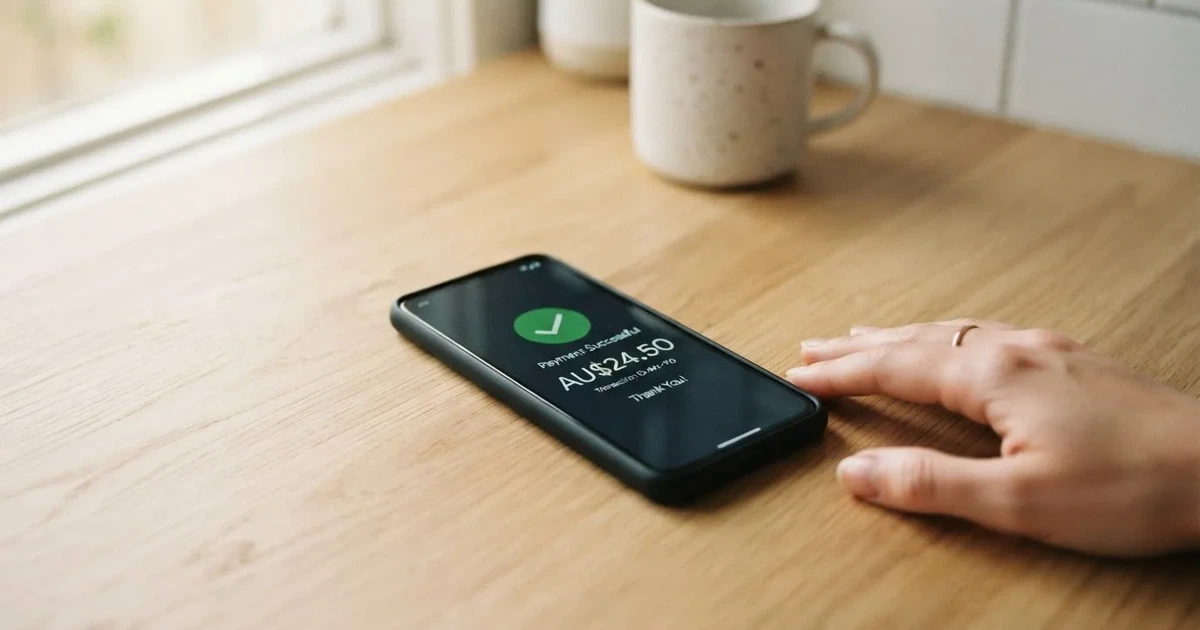
The phrase “casino sites that accept Skrill in Australia” pulls in two different directions at once. Skrill is a real, regulated e-money product, owned by Paysafe and authorised by the UK Financial Conduct Authority. Offshore casino sites accepting it are a different matter entirely. Online casino games and online pokies cannot be licensed anywhere in Australia under the Interactive Gambling Act 2001, no matter what payment rail sits between the player and the cashier. So when an offshore site advertises Skrill deposits to an Australian player, what it is actually offering is a prohibited interactive gambling service, paid for through a method that is perfectly lawful for many other uses. The rest of this page works through both halves of that picture and the small number of practical questions a player sitting on the fence actually has to settle.
Table of Contents
- Responsible gambling and the supports that apply when Skrill is the funding method
- Payments, payout speed and what Skrill actually costs at the cashier
- The shortlist, the criteria and what separates one option from another
- Regulatory overview of featured brands
- How online casino ended up prohibited in Australia
- Payments, deposit limits and the cost of funding the cashier
- Responsible gambling, payment choice and the decision the page is built around
- What the ACMA has done against specific brands
- How the blocking rate has actually run
- Using Skrill lawfully in Australia
- Where to find help
- Frequently asked questions
Responsible gambling and the supports that apply when Skrill is the funding method
Where Australian players can turn first
Anyone funding gambling of any kind — Skrill-funded or otherwise — has free, confidential support available around the clock. The National Gambling Helpline (1800 858 858) is free from any Australian phone, twenty-four hours a day. Gambling Help Online runs the same service as a live web chat and as a callback, with counsellors who understand the Australian market and the Australian terms players actually use. These two services are the front door and they refer into state-level programs where state-specific help is more appropriate.

What BetStop covers, and what it does not
BetStop, the National Self-Exclusion Register, has been live since August 2023 and is the single most powerful tool available to a player who wants the betting apps to stop accepting their money. Registration is free, the exclusion period is the player’s choice between three months and a lifetime, and the exclusion is enforced across every Australian-licensed wagering service. A regulated sports or racing bookmaker must check BetStop before letting a registered user deposit.
The catch matters. BetStop binds only Australian-licensed online and phone wagering services. Offshore casino sites operating against Australian residents are not connected to the register. Self-excluding through BetStop will not stop an offshore site from accepting a Skrill deposit. For a player who has self-excluded and is still being solicited by offshore casinos, the offshore site is the gap BetStop cannot close, and a separate decision — to delete those sites, to ask their bank to add a gambling block, to refuse the deposit at the cashier — is what closes it.
State self-exclusion registers for venue play
For land-based pubs and clubs, every Australian state and territory runs its own exclusion scheme. The Victorian Responsible Gambling Foundation, the NSW Responsible Gambling Fund, Queensland’s Self Exclusion Register and the Western Australian self-exclusion arrangements all work at the door: a person on the list is asked to leave and refused service if they try to enter. These registers bind physical venues, not offshore websites, and a Skrill deposit made from a Sydney apartment is exactly the situation they do not cover.
Bank-level gambling blocks as a backstop
The major Australian banks now let a cardholder block gambling transactions at card level. Westpac’s gambling block refuses authorisation on transactions registered under the merchant category code Betting/Casino Gambling on eligible personal credit and debit cards. ANZ runs a similar block inside its app and, importantly, extends the block to digital wallet transactions — meaning a gambling transaction routed through Apple Pay on an eligible ANZ card will also be refused. Once the ANZ block is on, removing it again requires a 48-hour waiting period; the bank warns openly that the block is not perfect and that some non-gambling transactions may be refused in error. These blocks are blunt instruments by design. They do not know whether a particular site is licensed or prohibited; they refuse the category.
A Skrill-funded deposit, going from a card to the Skrill account to the offshore cashier, can be stopped at two points. The card level, where Westpac and ANZ block by merchant code, is the surer one. The Skrill level is harder, because Skrill’s own transaction descriptions typically do not include the casino’s name, so a transaction the bank sees as a wallet top-up rather than as gambling may pass the merchant-code filter.
Payments, payout speed and what Skrill actually costs at the cashier
How Skrill works as a payment rail
Skrill began in 2001 as Moneybookers, was acquired by Investcorp in 2007, sold to CVC Capital Partners for EUR 600 million in 2013, and bought by Optimal Payments — later renamed Paysafe — for EUR 1.1 billion in 2015. Its parent, Paysafe, is authorised by the UK Financial Conduct Authority as an Electronic Money Institution and reported consolidated FY2022 revenue of about US$1.496 billion across Skrill, Neteller and paysafecard. The wallet sits in the middle of the transaction: the player funds the wallet from a card or bank transfer, then pays the casino from the wallet balance. To the casino’s cashier, the deposit arrives as a Skrill-to-Skrill or Skrill-to-merchant transfer rather than a card transaction, which is why the cashier can advertise Skrill deposits while the player’s bank may not even know a gambling transaction has occurred.
The licence attached to Skrill is a financial-services licence, not a gambling one. That matters because it lets Skrill operate lawfully in Australia for the many non-gambling uses of a digital wallet — remittance, online retail, forex trading — while saying nothing about whether any specific merchant it pays out to is itself licensed for what it sells. This separation is the reason the payment question and the legality question have to be answered separately.
The fees Skrill charges an Australian wallet holder
Skrill’s published Australian fee page is the source a player has to read, because it is where the small print that quietly eats into a bankroll is written. Local payment method deposits can carry a fee of up to 5.00%, and withdrawals carry a fee of 2.00% to 3.00% with a minimum fee of EUR 3.50. Currency conversions inside the wallet carry a foreign-exchange fee of 4.49%. Funding the wallet with a credit card can also trigger a “cash advance” fee from the card issuer, and Skrill flags this in its own fee notes because the charge sits outside Skrill’s control.
An inactivity service fee of EUR 5.00 per month (or local-currency equivalent) is charged when no login or transaction occurs in any six-month period. For a player who funded the wallet, played for a week, then forgot about the EUR 12 left in the account, that balance is slowly eaten by monthly fees. The fee schedule also includes a VIP tier structure that cuts the standard 1.50% cryptocurrency-purchase fee to 1.40% for Silver members and 1.30% for Gold and Diamond members; for a player who is funding a casino from a Skrill crypto purchase, the tier is the difference between a 1.50% drag on every deposit and a slightly smaller drag, which is not the kind of saving that changes a session’s economics.
Settlement times: the gap between a Skrill deposit and a Skrill withdrawal
Once the cashier accepts a Skrill deposit, the credit to the casino balance is effectively immediate. The same is not true of a withdrawal. Most offshore sites quote an internal processing window of twenty-four to seventy-two hours during which the withdrawal is reviewed, and only after that review does the wallet credit happen. A Skrill-to-Skrill transfer is then near-instant in business terms, but only after the casino’s own pending period has run. The marketing phrase “instant payouts” almost always means instant after pending, not instant from request.
The standard comparison a player will see online is Skrill against PayID and Osko, the Australian instant bank transfer rails. With Osko, a transfer between participating Australian banks arrives in under a minute, twenty-four hours a day, seven days a week, whether addressed to a BSB and account number or to a PayID. More than 25 million PayIDs had been registered on Australia’s New Payments Platform as of April 2025, and PayID transfers are available at over 100 Australian financial institutions. The friction here is that PayID and Osko are payment methods for legal Australian wagering services; an offshore site is unlikely to offer them at all, and the speed advantage Osko brings is not available on the route an offshore site can actually offer.
Why a bank may refuse a Skrill transaction anyway
The player’s own bank does not see the merchant the Skrill funds are eventually spent at. What it sees is a top-up to the Skrill wallet, classified under Skrill’s merchant code, which is a financial-services code rather than a gambling one. In a minority of cases the bank will classify the top-up as gambling-adjacent and refuse it; the bank does not publish a precise rule for when this happens. The clearer answer for a player whose bank is actively refusing Skrill top-ups is the bank-level gambling block in the responsible-gambling section above: with the block on, the card itself will refuse transactions registered under the gambling merchant code at the bank level, regardless of the wallet on top.
The shortlist, the criteria and what separates one option from another
How any honest shortlist is actually built
An honest shortlist of “casino sites that accept Skrill in Australia” cannot, in this market, be a ranking of best-to-worst casinos. The Interactive Gambling Act 2001 makes the underlying product a prohibited interactive gambling service, so the question the shortlist has to answer is not which casino is best but which warning the ACMA has issued most recently and which operator names sit behind which brand. The list below uses the ACMA’s own formal-warning publications as its raw material. It is the regulator’s list of operators who have offered prohibited services to Australians and been told, in writing, to stop. Treating those warnings as a quality ranking would be a misreading; treating them as the most reliable evidence of which brands are presently courting Australian players is the only reading the source supports.
Eleven brands feature below. The order is the order in which the ACMA’s formal-warning publications are most recently dated, and the table that follows compresses that record into a single view. Where a brand’s underlying operator was warned more than once — Dama N.V. alone has been warned three times across the brands in this set — only the most recent warning is shown in the table.
Criteria a reader should apply to any shortlist of this kind
Three tests separate a useful list from a marketing list. First, what is the most recent ACMA action against the operator named on the brand, and how recently was it issued? An older warning is not the same as a closed matter, because the ACMA’s enforcement is ongoing and a brand that was warned in 2022 is, in the absence of fresh information, presumed still to be operating as it was. Second, what does the operator name on the brand actually point to — a Curacao-registered entity, a Costa Rica shelf company, an unmapped beneficial owner? The ACMA names the legal entity; the brand name and the entity name are not always the same. Third, does the brand accept Skrill as a deposit method at all? The Skrill support column in the table below reflects what the regulator’s record and the major Australian payment-method listings say; for most brands in this set the Skrill question has to be answered from the cashier at the site, not from a regulator.
| Brand | ACMA action and date | Operator named by the ACMA | Skrill support |
|---|---|---|---|
| Jackbit | Formal warning, April 2026 | Ryker B.V. | — |
| RocketPlay | Formal warning, March 2026 | Pulsup Ltd (Rocketplay.com.au) | — |
| Sky Crown | Formal warning (Hollycorn N.V.) | Hollycorn N.V. | — |
| Casino Intense | Formal warning, April 2025 | Sterplay Holding Ltd | What listings report |
| Ignition Casino | Formal warning, July 2025 | Bamboo Media | — |
| National Casino | Formal warning, July 2025 | Consolutetish S.R.L. | What listings report |
| Bizzo Casino | Formal warning, July 2025 | Consolutetish S.R.L. (earlier TechSolutions, 2022) | — |
| Spirit Casino | Formal warning, May 2025 | Dama N.V. | — |
| Woo Casino | Formal warning, March 2025 | Dama N.V. | — |
| Instant Casino | Formal warning, February 2025 | EOD Code SRL | What listings report |
| Level Up Casino | Formal warning, May 2022 | Dama N.V. | What listings report |
Regulatory overview of featured brands
| Brand | ACMA action and date | Operator named by the ACMA | Subject support |
|---|---|---|---|
| 7Signs | Blocking request, June 2026 | Unlicensed | No-data |
| ChromaBet | Blocking request, June 2026 | Unlicensed | No-data |
| Donbet | Blocking request, June 2026 | Unlicensed | No-data |
| Duospin | Blocking request, June 2026 | Unlicensed | No-data |
| Freshbet | Blocking request, June 2026 | Unlicensed | No-data |
| Slots Gem | Blocking request, June 2026 | Unlicensed | No-data |
| Jacks Club | Blocking request, June 2026 | Unlicensed | No-data |
| Lucky Start | Blocking request, June 2026 | Unlicensed | No-data |
| Pointsbetz | Blocking request, June 2026 | Unlicensed | No-data |
| Spinrise | Blocking request, June 2026 | Unlicensed | No-data |
| Vinyl Casino | Blocking request, June 2026 | Unlicensed | No-data |
| Wildsino | Blocking request, June 2026 | Unlicensed | No-data |
What the criteria leave out
A conventional casino review would put game library size, jackpot depth, live-dealer count and welcome-bonus generosity at the top of the criteria list. None of those belongs in this page. Online casino games are prohibited in Australia; the offer itself is not a product that can be evaluated on its merits. A welcome bonus on a prohibited service is not a benefit, it is a marketing line on a prohibited product. The honest shortlist is therefore short on the dimensions a marketing-led shortlist is long on, and that is the point.
How online casino ended up prohibited in Australia
The Interactive Gambling Act and what it actually prohibits
The Interactive Gambling Act 2001, as amended most substantially by the Interactive Gambling Amendment Act 2017, makes it an offence to provide online casino games, online pokies or in-play betting to a person in Australia. No state or territory licenses these products, and the prohibition is not contingent on the operator being offshore or on the player being a problem gambler. The minimum age for the products that are licensed in Australia is 18.
What is licensed is a deliberately narrow set of products. Wagering on races and sport placed before the event, lotteries and keno are the legal offerings, and in practice the licensing work for wagering is done by the Northern Territory. The Northern Territory Racing and Wagering Commission regulates 52 of Australia’s online bookmakers — including Sportsbet, Bet365 and Ladbrokes — for tax reasons; the commission has no full-time staff and meets once a month in Darwin. The smaller state regulators issue the same kind of licence but to a much shorter roster of operators. The architecture is, in effect, one territory doing the bulk of the work for the whole market.
How the ACMA enforces the prohibition
The ACMA investigates suspected contraventions, issues formal warnings, accepts enforceable undertakings and, since 2019, has directed Australian internet service providers to block offending sites at the DNS level. According to the ACMA as reported in June 2026, a total of 1,751 illegal gambling and affiliate marketing websites had been blocked since the first blocking request in November 2019, and more than 230 unlicensed gambling services had left the Australian market since enforcement was strengthened in 2017. In the round reported on 26 June 2026 alone, twelve more sites were referred for blocking — 7Signs, ChromaBet, Donbet, Duospin, Freshbet, Slots Gem, Jacks Club, Lucky Start, Pointsbetz, Spinrise, Vinyl Casino and Wildsino.

The blocking is a numbers game. A site blocked at one domain reappears at another, and the ACMA’s blocking list is a running total rather than a closed matter. A site that was blocked last year is not necessarily gone; it may simply have moved.
What an offshore site does not give a player
An Australian player using an offshore casino site has, in practical terms, no Australian consumer protection. There is no Australian complaints body to take a refused withdrawal to. The site is not connected to BetStop, so a self-exclusion through the Australian register is not enforced against it. The site is not required to honour any Australian rule on credit-card use, on bonus advertising, on minimum return-to-player or on dispute resolution. If the cashier refuses to pay out, the practical remedies are an offshore regulator (whose complaint process is slow and whose jurisdiction is contested) and, in the worst case, a chargeback through the card issuer — which is harder to do when the original deposit went through a wallet rather than a card.
It is also worth being clear about who the law targets. The Interactive Gambling Act 2001 prohibits the provider, not the player. An Australian who deposits at an offshore casino is not personally prosecuted under the IGA, and the ACMA’s enforcement is directed at the operator. The legal exposure sits on the operator’s side; the practical exposure — a balance held by a site that gets blocked, a withdrawal that never arrives, an account closed with no recourse — sits entirely on the player’s side, and there is no Australian mechanism that reaches into it.
Estimated losses to illegal sites
The 2026 report by H2 Gambling Capital estimates that Australians lose about A$3.9 billion a year to illegal gambling sites, and that the share of gambling going through legal channels fell from 74% in 2021 to 64%. The figure is an estimate — the research firm’s methodology is proprietary — but the directional point it makes is the one the ACMA’s enforcement record also makes: a sizeable part of the Australian market is happening outside the Australian rules, and most of that spend sits with a small number of brands that the ACMA has been writing to for years.
Payments, deposit limits and the cost of funding the cashier
Common deposit limits attached to Skrill at offshore sites
Offshore sites tend to set Skrill-specific minimums rather than the A$10 floor that some marketing pages advertise across the board. A A$20 minimum is common at mid-tier sites and A$50 or A$100 is common at the high-roller tier. Maximums are usually set per transaction rather than per day, with weekly and monthly caps lifted for VIP accounts on request. These limits are the operator’s own policy, not an Australian regulatory rule, and they vary more between brands than any of the regulatory limits on a licensed Australian wagering service.
The licensed Australian wagering services that do accept deposits from Skrill — in practice, almost none, because Skrill is not on the small list of payment methods the licensed services are allowed to take — are bound by separate rules. Under the Interactive Gambling Act 2001 as amended in 2023, Australian-licensed online wagering services cannot accept payment by credit card or other credit-related products, and the restriction extends to digital wallets linked to a credit card. From 11 June 2024 credit cards, credit-related products and digital currency are banned as payment for licensed online wagering; penalties for operators who accept them run up to A$247,500. The legal deposit routes for licensed wagering are debit card, bank transfer, PayID/Osko and BPAY. A Skrill deposit, going through a wallet the player has funded from whatever source, sits outside that allowed list.
How the Interactive Gambling Amendment (Gambling Reform) Bill 2026 changes the picture
The Interactive Gambling Amendment (Gambling Reform) Bill 2026 passed Parliament on 19 August 2026. Its advertising and inducement measures commence on 1 January 2026. The bill is therefore law with a start date, not a regime already in force on this page’s 2026 publication. The provisions it adds — tighter controls on bonus advertising, on inducements to open new accounts, on the use of credit-related products — will reach into the offshore scene only to the extent the ACMA can enforce them against offshore operators, which is the same enforcement problem the existing IGA has been working on for years. For an Australian player in 2026 the practical consequence of the bill arriving on the books is mostly that the inducements plastered across offshore sites become harder for those sites to run without the ACMA’s attention turning to them.
Responsible gambling, payment choice and the decision the page is built around
The decision that has to be made
A reader who has reached this page has, in practical terms, three doors open and one decision to make. The first door is to play at an Australian-licensed wagering service — a sports or racing bookmaker licensed by the Northern Territory or a smaller state regulator — and to fund it with a debit card, a bank transfer, a PayID/Osko transfer or BPAY. That is the only door in which Skrill is not the question, because Skrill is not on the cashier. The second door is to use Skrill for its many non-gambling purposes — remittance, retail, forex — and to leave gambling out of the wallet’s footprint. The third door is to deposit at an offshore casino site, accepting that the underlying service is prohibited, that an Australian consumer-protection regime does not reach it, and that any Skrill balance left in the wallet will be slowly eaten by inactivity fees if the play stops.
Each door has a different reader in mind. The first suits the punter who wants to bet on the Melbourne Cup or the AFL and is comfortable with a smaller product set. The second suits anyone who keeps a Skrill wallet for other reasons and has decided that gambling is not one of them. The third is the door this page has spent most of its length warning against, because the page’s job is to spell out what is on the other side of it rather than to make the door look attractive.
What the criteria in the shortlist are actually for
The shortlist of brands the ACMA has acted against is, on a literal reading, a list of operators the regulator has told to stop. On a more useful reading it is a list of brand names that an Australian reader is most likely to encounter in search results and affiliate marketing — the names that will keep coming up in the SERPs, in the banner ads, in the bonus offers pushed through email. Knowing what the ACMA has said about a brand is the cheapest available defence against being sold a prohibited service by a name the player cannot otherwise verify. The eleven brands above are the brands the regulator’s record most clearly identifies as presently in scope.
Where to find help if the decision has already gone the other way
If a player has been depositing at one of the brands above and wants to stop, the order of operations matters. The first call is to the National Gambling Helpline (1800 858 858) or to Gambling Help Online. The second is to register with BetStop, which will close the door at every Australian-licensed wagering service. The third is to ask the bank to add a card-level gambling block — Westpac for Westpac cardholders, ANZ for ANZ cardholders, with similar arrangements at the other majors — so that even an offshore cashier receives a refusal from the card on the way through. The fourth is to ask the wallet provider to close the Skrill account so the cashier cannot be reached from that route at all.
The combination of those four steps — helpline, BetStop, bank block, wallet closure — is the most a player can practically do, and it is more than most players attempt. Each step closes a different door, and no single one of them closes all of them.
What the ACMA has done against specific brands
The formal-warning record, brand by brand
Across the eleven brands in the shortlist, the ACMA has published formal warnings covering Dama N.V. on three separate occasions, Consolutetish S.R.L. on two, and the remaining operator entities once each. Dama N.V. alone has been warned over Bambet, Dazard, Level Up, Rocketplay, Wild Tornado and Cobra Casinos in May 2022, over Woo Casino in March 2025 and over Spirit Casino in May 2025. Consolutetish S.R.L. was warned over National Casino and Bizzo Casino in July 2025, and Bizzo Casino had earlier been the subject of a 2022 formal warning to TechSolutions (CY) Group Limited and TechSolutions Group N.V.
In March 2026 the ACMA issued a formal warning to Pulsup Ltd over RocketPlay. In April 2026 the ACMA issued a formal warning to Ryker B.V. over Jackbit and CasinOK. In February 2025 the ACMA issued a formal warning to EOD Code SRL over Instant Casino. In April 2025 the ACMA issued a formal warning to Sterplay Holding Ltd over Casino Intense. The Hollycorn N.V. warning over Sky Crown and Blue Leo was published in September 2022.
A formal warning is not a fine and not a prosecution. It is the regulator’s written record that the operator has been put on notice that the conduct is a contravention of the Interactive Gambling Act 2001, and it is the step the ACMA takes before referring a domain for ISP-level blocking. A brand that has been formally warned and continues to accept them is, in the ACMA’s own framing, choosing to keep contravening.
What the warnings are not
The ACMA’s formal warnings are not findings of criminal guilt, not class actions and not compensation mechanisms. They do not entitle an Australian player to a refund, do not trigger a chargeback and do not bind the offshore operator in any Australian court. They are administrative warnings to the operator, and they are the ACMA’s bridge between an investigation and a blocking request. Their value to an Australian player is documentary: the regulator has confirmed, in writing, that the brand is offering a prohibited service, which is a stronger basis for refusing to deposit than the absence of an Australian licence alone.
Why the operator names matter
Most of the operator entities above — Dama N.V., Consolutetish S.R.L., Pulsup Ltd, Bamboo Media, Ryker B.V., Sterplay Holding Ltd, Hollycorn N.V. — are registered in jurisdictions the ACMA has no direct enforcement relationship with. The formal warning is delivered through the operator’s published contact channels and, if it is ignored, is followed by a blocking request to Australian ISPs. The brand name on the front of the site and the operator name on the back are not always the same, which is part of why the ACMA’s records name the legal entity rather than the consumer-facing brand.
For a player trying to verify a brand, the legal-entity name is the more useful search term. A consumer brand can be renamed in a weekend; the legal entity behind it is harder to retire and harder to rebrand without leaving a paper trail.
How the blocking rate has actually run
The arithmetic, in plain prose
The ACMA’s blocking record is a cumulative count: each round adds a small number of sites to the running total, and the running total since the first blocking request in November 2019 is the headline figure regulators and journalists quote. As reported in June 2026, the running total was 1,751 illegal gambling and affiliate marketing websites, with the first blocking request dating to November 2019. That puts the run at roughly six and a half years from first request to the June 2026 figure.
The blocking rate falls out as a band, not a single number. A simple average from November 2019 to June 2026 works out to about 270 sites a year, or around twenty-two a month, which is one useful way to state the rate. A more honest framing is that the rate has not been constant: early rounds were smaller and more deliberate, recent rounds have been larger and more frequent, and the June 2026 round alone added twelve sites. So the rate is somewhere in the band of roughly twenty to thirty per month on average, with material month-to-month variation, and with no month containing nothing.
The band matters because it carries the actual condition — a running total against a six-and-a-half-year window with non-zero monthly activity — without overstating what the figure tells. The point is not that 270 sites are blocked every year; the point is that the ACMA has been adding to this list steadily, and that a single round can sweep up a dozen at once.
Why the running total is the more useful figure
The running total is the figure that makes the scale of the offshore scene legible. The 1,751 figure outruns the population of Australian-licensed wagering services — fewer than sixty across the country — by an order of magnitude, and most of those 1,751 sites are casino-style, slots-style or pokies-style operations the IGA prohibits. The smaller per-round figures, read on their own, sound manageable; read as a cumulative total, they show an offshore scene that is being constantly replenished as fast as it is being blocked, with the operators behind the brands using new domains to keep one step ahead of the ACMA’s blocking list.
The 1,751 figure also includes affiliate marketing sites, which is a separate but related problem. An affiliate site that does not take deposits itself but routes traffic to offshore casinos is also a contravention, and a substantial share of the ACMA’s blocking list sits in this category. The implication for a player is that being directed to an offshore casino from an Australian-facing search result is itself the kind of marketing the regulator is trying to take down.
Using Skrill lawfully in Australia
Where Skrill fits in a non-gambling wallet
For the many Australians who keep a Skrill wallet for remittance, online retail, freelance platforms or digital subscriptions, the wallet is unremarkable — it is an FCA-authorised e-money product that does what it says on the tin. The fees on the Australian fee page apply to those uses exactly as they apply to gambling funding, which is the small-print problem the fee page exists to disclose. The five-percent deposit fee on local payment methods, the three-percent withdrawal fee with a EUR 3.50 minimum, the 4.49% foreign-exchange fee and the EUR 5.00 monthly inactivity fee are the same whether the wallet is paying a retailer or funding a casino cashier.
What Skrill cannot do for a player at an offshore cashier
Skrill cannot confer an Australian licence on the offshore site. Skrill cannot make a prohibited interactive gambling service legal. Skrill cannot bind the casino to BetStop or to any Australian consumer-protection regime. The wallet is a payment rail; it is not a regulatory shield, and it is not a guarantee of payout. If the offshore cashier refuses a withdrawal, Skrill’s role in the transaction is over by the time the refusal arrives.
What to read before funding the cashier
Two pages are worth a careful read before a Skrill deposit is made to any gambling site. The first is the Skrill Australian fee page, which sets out the deposit, withdrawal, FX and inactivity fees in full and is the only place those fees are reliably stated. The second is the cashier’s own terms, where the minimum deposit, the maximum withdrawal, the bonus terms (if any) and the pending period for payouts are written. A player who has read both pages before depositing is in a stronger position than a player who has read neither, and that gap is the difference Skrill cannot close on its own.
Where to find help
The first call for any Australian whose gambling has stopped being fun is the National Gambling Helpline, 1800 858 858, free from any Australian phone, twenty-four hours a day, with web chat and callback available through Gambling Help Online. BetStop, the National Self-Exclusion Register, is the binding tool for Australian-licensed wagering services and is free to register. State-level programs — the Victorian Responsible Gambling Foundation, the NSW Responsible Gambling Fund, Queensland’s Self Exclusion Register, the Western Australian self-exclusion arrangements — handle venue-based exclusion and referral into local counselling. The major Australian banks offer card-level gambling blocks: Westpac for Westpac cardholders, ANZ for ANZ cardholders, with similar arrangements at the other majors. The combination of those supports is the practical answer to the question the rest of the page has been working around.
Frequently asked questions
Is it legal for an offshore casino site to accept Skrill from an Australian visitor?
No. Under the Interactive Gambling Act 2001 as amended by the Interactive Gambling Amendment Act 2017, it is an offence to provide online casino games or online pokies to a person in Australia. The Skrill payment rail does not change that legal status. The IGA targets the provider, not the player, so an Australian depositor is not personally prosecuted, but the offshore site is operating against the Act and gives no Australian consumer protection.
How quickly does a Skrill transaction typically settle?
A Skrill deposit to a casino cashier credits the player’s balance effectively immediately after the wallet’s own processing. A Skrill withdrawal is not immediate: most offshore sites impose an internal pending period of twenty-four to seventy-two hours during which the withdrawal is reviewed, and only after that does the wallet credit happen. The marketing phrase “instant payouts” almost always means instant after pending, not instant from request.
Does using Skrill offer any buyer protection if an offshore site refuses to pay out?
Not in any practical sense. Skrill’s own terms do not insure casino withdrawals, the casino’s refusal is a commercial dispute with an offshore operator, and an Australian complaints body has no jurisdiction over it. The available remedies are an offshore regulator (slow, contested) and a card chargeback (harder when the original deposit went through a wallet rather than a card). Skrill is a payment rail, not a guarantee of payout.
Can Skrill be used to fund a licensed, land-based venue in Australia the same way it’s used online?
No. Skrill is a digital wallet, not a physical payment instrument, and Australian land-based venues do not accept it. Licensed Australian wagering — sports and racing bookmakers licensed by the Northern Territory or a smaller state regulator — takes debit card, bank transfer, PayID/Osko and BPAY. Skrill is not on that list. The licensed venues that do take in-person play are pubs and clubs that take cash and eftpos, neither of which Skrill provides.
What deposit limits are commonly attached to Skrill at offshore casino sites?
Offshore sites typically set Skrill-specific minimums of A$20 at mid-tier brands and A$50 or A$100 at high-roller tiers, with maximums usually per transaction rather than per day and weekly or monthly caps lifted on VIP request. These are the operator’s own policies rather than Australian regulatory rules, and they vary more between brands than any of the limits on a licensed Australian wagering service. Players should read the cashier’s own terms before depositing.