
Choosing between credit card casino sites as an Australian player in 2026
The question of which casino sites accept a credit card from an Australian player has two halves, and they don’t answer the same way. The first half is mechanical: can a card be entered at the deposit screen, does the transaction go through, does the money arrive. The second half is legal: the Interactive Gambling Act 2001 prohibits online casino games for Australians, so an offshore site that happily takes a credit card is not, on that account, a place where the activity is sanctioned — it is a place that takes payment for a product Australian law does not let it offer to you. Readers comparing options need both halves in front of them. This page sets them side by side, names eleven brands the ACMA itself has acted against, and works through what paying by credit card actually costs the person paying it.

Data current as of 6 November 2026 against the Australian Communications and Media Authority’s formal-warning register and the iGaming Business ACMA-blocking round report dated 26 June 2026.
Table of Contents
- Where Australian players stand on credit card gambling in 2026
- Responsible gaming supports relevant to credit-card gambling
- How credit card deposits and withdrawals actually work at offshore sites
- How this comparison ranks eleven credit card casino sites
- Reading the eleven brands in turn
- The blocking rate and what it says about the market
- Chargebacks and offshore credit card deposits
- What credit card casinos cost the Australian player
- Frequently asked questions
Where Australian players stand on credit card gambling in 2026
No online casino is licensed to serve Australian customers. The Interactive Gambling Act 2001, tightened by the Interactive Gambling Amendment Act 2017, makes it an offence to provide online casino games, online pokies or in-play betting to a person physically in Australia — no state or territory issues a licence for it. What is licensable is pre-event wagering on races and sport, lotteries and keno; in practice that is licensed through the Northern Territory, where 52 of Australia’s online bookmakers are regulated by the Northern Territory Racing and Wagering Commission. The commission has no full-time staff and meets once a month in Darwin, a structural detail that has drawn its own parliamentary attention in 2026.

The Australian Communications and Media Authority handles enforcement. It investigates, issues formal warnings, and can direct Australian internet service providers to block illegal sites. As of 26 June 2026, the ACMA had asked ISPs to block 1,751 illegal gambling and affiliate marketing websites since the first blocking request in November 2019. More than 230 unlicensed gambling services have left the Australian market since enforcement strengthened in 2017. The latest blocking round reported on the same day added twelve more names: 7Signs, ChromaBet, Donbet, Duospin, Freshbet, Slots Gem, Jacks Club, Lucky Start, Pointsbetz, Spinrise, Vinyl Casino and Wildsino. None of this reaches the individual player. The IGA targets the provider — not the punter who placed the bet. The practical consequence for a player is different: an offshore site offers no Australian consumer protection, no complaints body, and no recourse if a withdrawal stalls, and the site can be blocked with a balance still sitting on it.
H2 Gambling Capital’s 2025 report estimates Australians lose about A$3.9 billion a year to illegal gambling sites, and the share of gambling going through legal channels fell from 74 per cent in 2021 to 64 per cent. Those are the figures the regulator is contending with, and they explain why the enforcement tempo has not slowed.
The credit card ban that already applies to licensed wagering
Since 11 June 2024, Australian online wagering service providers have been banned from accepting credit cards, credit-related products including digital wallets, and digital currency as payment. ACMA oversees compliance and non-compliant operators face fines of up to A$247,500. This ban sits on top of an earlier reform: online wagering providers have been banned from offering credit to Australian customers since 17 February 2018, with an exemption for bookmakers under A$30 million annual turnover.
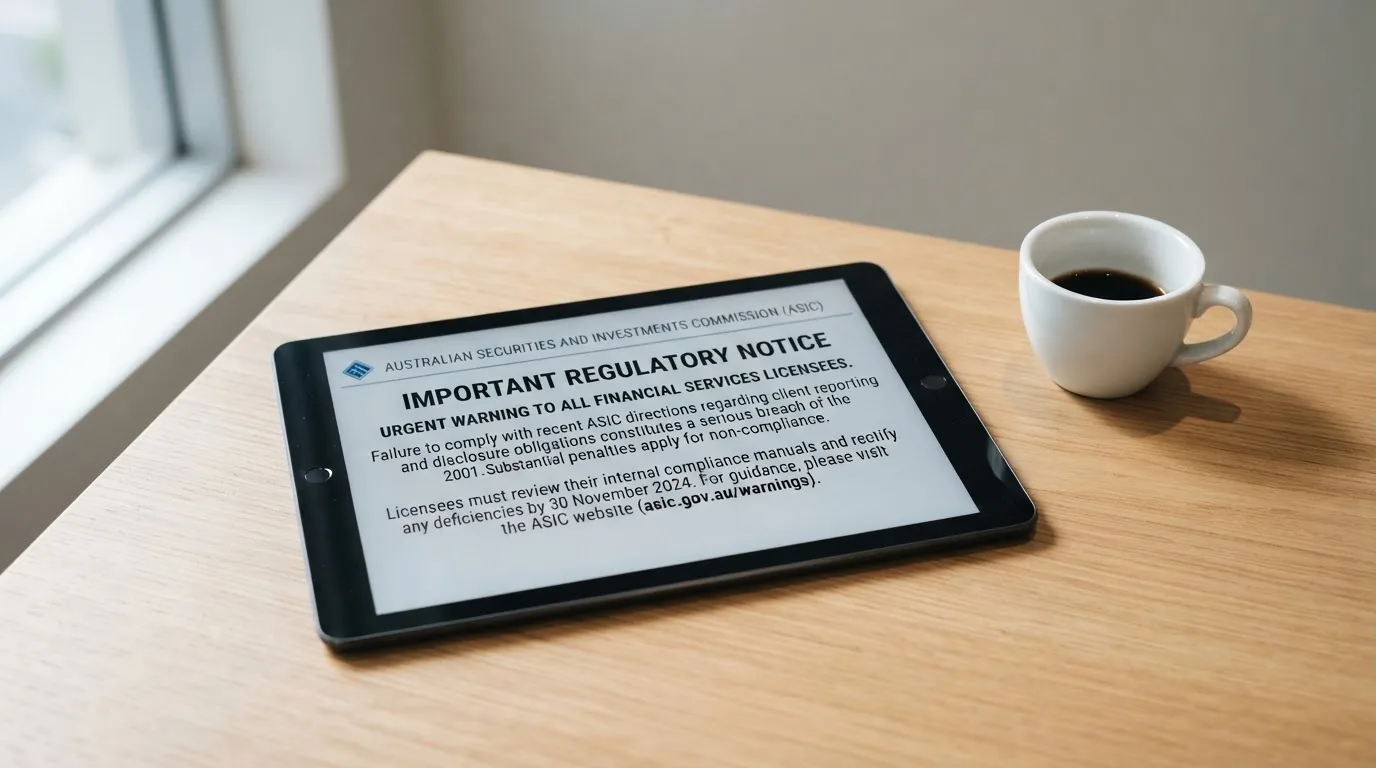
What that means in practice: a Sportsbet, a Ladbrokes, a Bet365 — all licensed in the Northern Territory — will not let an Australian customer deposit with a credit card. Legal deposit routes for licensed wagering are debit card, bank transfer, PayID/Osko and BPAY. A site that asks for a credit card or a crypto deposit is operating outside the Australian rules. The eleven brands covered in the comparison below are exactly that: sites the ACMA has issued formal warnings to for offering prohibited services to Australians. They accept credit cards because they are not licensed wagering operators; they accept them as offshore casino operators serving a market they are prohibited from serving.
2026 reform that has passed but not yet commenced
The Interactive Gambling Amendment (Gambling Reform) Bill 2026 passed Parliament on 19 August 2026. Its advertising and inducement measures commence 1 January 2027. For a reader in 2026, this is a law with a start date, not a rule already in force. It sits beside the credit card ban as the next tightening of the same regime, and it changes what licensed operators can advertise rather than what an offshore site can take as payment.
Responsible gaming supports relevant to credit-card gambling
A reader weighing offshore credit-card casino sites needs to see the Australian support structure clearly, because the offshore site itself offers none of it.
BetStop and the limits of the National Self-Exclusion Register
BetStop, the National Self-Exclusion Register, has been live since August 2023. It binds Australian-licensed online and phone wagering services. An offshore casino is not connected to BetStop. A player who excludes themselves through BetStop has not excluded themselves from any of the eleven brands named below. The register is a useful tool, and it is a tool that covers a narrower set of sites than a player comparing offshore options might assume.
Gambling transaction blocks on Australian cards
All four major Australian banks let customers switch on a gambling transaction block through their mobile apps. CommBank handles it through NetBank or the CommBank App’s card settings; ANZ through the ANZ App; NAB through the NAB app; Westpac through online banking’s card services menu. These blocks work at the card level — they refuse authorisation of transactions registered under the merchant category code that covers betting and casino gambling, on eligible personal credit and debit cards.
Macquarie Bank was the first major Australian bank to ban its credit cards outright for gambling: from 1 July of the year of its announcement, any transaction classified as gambling under the merchant codes is blocked on Macquarie credit cards. Other banks route through the toggle rather than a blanket ban. Once ANZ’s block is turned on, removing it again requires a 48-hour waiting period, and the bank warns that not all gambling transactions will be blocked and that some non-gambling transactions might be blocked in error. The block reaches transactions made through a digital wallet such as Apple Pay on an eligible ANZ card, not only the physical card.
The practical question this raises for a reader comparing offshore credit-card casino sites is whether the credit card they intend to use will even let the transaction through. A site can accept credit cards in principle and still see a transaction declined because the card issuer’s own block has been switched on, or because the issuer has applied a gambling classification that triggers refusal.
Help that is Australian and free
The National Gambling Helpline is 1800 858 858, free, 24/7, with chat available through Gambling Help Online. These services are Australian, confidential and not tied to any operator on this page. State-level support exists as well — the Victorian Responsible Gambling Foundation maintains the responsiblegambling.vic.gov.au site, which carries the card-block guidance cited above. A reader who finds themselves weighing offshore options at all is a reader for whom these supports are worth having in front of them, not buried at the bottom of the page.
How credit card deposits and withdrawals actually work at offshore sites
A site that accepts a credit card does so through the same card networks an Australian customer uses domestically — Visa, Mastercard, and in some cases American Express. The mechanics look ordinary from the deposit screen. The transaction is entered, the card is authorised, the funds appear in the casino balance. What differs from a domestic purchase is what sits behind that authorisation: the merchant category code that triggered the bank block, the possibility that the card issuer will treat the transaction as a cash advance, and the absence of any Australian dispute resolution if something goes wrong on the way out.
What a card transaction costs the cardholder
Skrill’s fee disclosure warns that funding gambling with a credit card can make the card issuer charge a cash-advance fee. That fee is on top of any interest the card accrues from the transaction date — cash advances typically do not enjoy the interest-free period of an ordinary purchase. The fee is set by the card issuer and varies between products. A reader who sees a deposit succeed and assumes the cost is the deposit amount has not seen the statement yet.
Surcharges and the October 2026 change
From 1 October 2026 the Reserve Bank of Australia is removing surcharging on debit, prepaid and credit card payments on the designated eftpos, Mastercard and Visa networks. American Express, BNPL services and Diners Club are not covered by the ban. The July 2025 RBA review that proposed the change made the American Express exclusion explicit. For an Australian cardholder this means the merchant’s card-processing fee — historically passed on as a surcharge — cannot be added to a Visa or Mastercard payment at a domestic merchant after 1 October 2026. The offshore casino is not a domestic merchant; whether it applied a surcharge before is not research the fact bank carries. What the reform does change is the comparison a reader can make at home, where surcharging on the same cards goes away.
Apple Pay, Google Pay and the wallet question
By the end of 2025, Apple Pay, Google Pay and Samsung Pay transactions collectively accounted for around 45 per cent of all card payments in Australia by number. A reader who deposits through a digital wallet is still depositing on a card, and the same merchant category codes apply. ANZ’s block reaches Gambling Transactions made through Apple Pay on an eligible ANZ card. The Interactive Gambling Act 2001 as amended in 2023 constrains gambling use of linked digital wallets as credit-related products. Apple’s own position is that it does not charge fees to consumers for using Apple Pay, and that transaction limits and PIN requirements are set by the card issuer or merchant, not by Apple. The wallet is a path; the credit card regulation behind it does not change.
Settlement times for credit card transactions
Card payments at merchants generally settle within one to three business days. The deposit itself appears in the casino balance on authorisation, which is effectively instant. The settlement — the actual transfer of funds from the card network to the merchant — runs on the network’s clearing cycle, which is typically T+1 to T+3 for Visa and Mastercard. For an Australian player this is usually invisible: the deposit screen shows success and the casino balance updates in real time.
For withdrawals the picture inverts. Most offshore casinos will not return funds to a credit card, because the card networks treat gambling-related credit transactions as cash-equivalent and the original authorisation has already settled. The common workarounds are bank transfer, e-wallet (Skrill, Neteller, ecoPayz) and increasingly cryptocurrency. Where a site does allow a credit card withdrawal, it is typically processed as a refund rather than a new transaction and runs on the same T+1 to T+3 window. The contrast with Australian instant-payment rails is sharp.
PayID, Osko and the Australian alternative for withdrawals
With Osko, a bank transfer between participating Australian banks arrives in under a minute, 24/7, including weekends, whether addressed to a BSB and account number or to a PayID. PayID-based instant transfers are available at over 100 Australian financial institutions, and more than 25 million PayID identifiers had been registered on Australia’s New Payments Platform as of April 2025. The New Payments Platform went live to the public on 13 February 2018 and is owned by New Payments Platform Australia Ltd, a non-profit whose 13 shareholders include the Reserve Bank of Australia and the country’s major banks. Participants must keep monthly platform outages to no more than two minutes; in 2021 the ACCC authorised merging NPP Australia with BPAY and eftpos into Australian Payments Plus.
PayID shows the name of the account holder before a transfer is sent. Australian Payments Plus warns that being asked to transfer money to a PayID on an illegal gambling site almost certainly means a scam site. For an Australian player who has won at an offshore casino and needs to get the money out, PayID or Osko to an Australian bank account is the fastest available rail. The offshore casino has to be willing to pay to it, which is its own decision. The AUSTRAC threshold-transaction-report rule applies only to physical cash; ordinary electronic bank transfers are not subject to that per-transaction reporting requirement, regardless of amount.
How this comparison ranks eleven credit card casino sites
The shelf here is unusual, and the comparison is set up to match it. Every brand listed is an offshore operator the ACMA itself has issued a formal warning to, for offering prohibited interactive gambling services to Australians. The list is not a recommendation. It is a record of what exists in the market the reader is searching within, ranked by the criterion that separates them: the ACMA action against them, the operator the regulator named, and what is actually verifiable about how each one handles a credit card deposit.
The comparison table
| Brand | ACMA action and date | Operator named by the ACMA | Subject support |
|---|---|---|---|
| RocketPlay | Formal warning, March 2026 (also May 2022 under prior operator) | Pulsup Ltd (2026); Dama N.V. (2022) | — |
| Level Up Casino | Formal warning, May 2022 | Dama N.V. | Westpac listing |
| Woo Casino | Formal warning, March 2025 | Dama N.V. | — |
| Spirit Casino | Formal warning, May 2025 | Dama N.V. | — |
| National Casino | Formal warning, July 2025 | Consolutetish S.R.L. | AUSTRAC and Wikipedia listings |
| Bizzo Casino | Formal warning, July 2025 (also 2022) | Consolutetish S.R.L. (2025); TechSolutions (2022) | — |
| Ignition Casino | Formal warning, July 2025 | Bamboo Media | — |
| Instant Casino | Formal warning, February 2025 | EOD Code SRL | ecoPayz and PayID listings |
| Jackbit | Formal warning, April 2026 | Ryker B.V. | — |
| Casino Intense | Formal warning, April 2025 | Sterplay Holding Ltd | AUSTRAC, iTnews, NAB listings |
| Sky Crown | Formal warning, September 2022 | Hollycorn N.V. | — |
The column that does most of the work is the second: every brand here has been the subject of a formal ACMA warning. Where research carries a listing reference for how the brand handles credit-card deposits, it appears in the fourth column. Where research does not, the cell is empty — that is the gap the reader needs to know about, not a fact that has been filled in from outside the inputs. The third column names the legal entity the regulator wrote to, because the brand name and the company behind it are not always the same thing, and the difference matters when a reader is trying to find out who actually took their deposit.
Reading the eleven brands in turn
Each entry below carries the ACMA action in full, the operator the regulator named, and what the research establishes about credit-card support for that specific brand. Where research carries no listing reference for a brand’s credit-card handling, the entry says so plainly — it does not invent a description.
RocketPlay
The ACMA issued a formal warning to Pulsup Ltd over RocketPlay in March 2026, and an earlier warning to Dama N.V. covering Rocketplay in May 2022 alongside five other brands. The site advertises credit card acceptance through its deposit screen. The research carries no listing reference for RocketPlay’s specific credit-card handling — the AUSTRAC register, the bank-block guidance pages, and the PayID directory do not name RocketPlay. A reader who wants to know whether their own bank’s gambling block will stop a RocketPlay deposit has to test it on the card they intend to use. The earlier 2022 warning is worth carrying forward because it shows the brand has continued to operate under successor operators without resolving the underlying issue.
Level Up Casino
The ACMA issued a formal warning to Dama N.V. in May 2022 covering Level Up alongside five other brands. The research carries a Westpac listing reference — Westpac’s gambling-block page is the source consulted for whether Level Up’s transactions fall under the betting and casino gambling merchant code. That listing matters because it tells a Westpac cardholder what the bank’s own block will and will not stop. Level Up’s status under Dama N.V. has not changed since 2022 in the research. A reader comparing Level Up against a newer brand is comparing a longer enforcement history, not necessarily a worse one.
Woo Casino
The ACMA issued a formal warning to Dama N.V. over Woo Casino in March 2025, part of a second round against the same operator following the 2022 batch. No listing reference for Woo Casino’s specific credit-card handling appears in research. The ACMA action is recent enough that the brand is unlikely to have changed its deposit infrastructure in response, but the formal warning is on the public record and a reader can find it on the ACMA site.
Spirit Casino
The ACMA issued a formal warning to Dama N.V. over Spirit Casino in May 2025, again in the same Dama N.V. cluster as Woo Casino the month before. No listing reference for Spirit Casino’s credit-card handling is carried by research. The site advertises credit card deposits; the ACMA’s action is what distinguishes it from any other site doing the same.
National Casino
The ACMA issued a formal warning to Consolutetish S.R.L. over National Casino in July 2025. The research carries two listing references: the AUSTRAC register and the Wikipedia entry for the New Payments Platform. Neither is a credit-card-specific listing; both are Australian regulatory and payments-context references that situate National Casino within the broader framework an Australian reader is operating in. A National Casino customer paying by credit card is paying through the same card networks any other Australian consumer uses, and the bank-side controls described above apply with the same force.
Bizzo Casino
The ACMA issued a formal warning to Consolutetish S.R.L. over Bizzo Casino in July 2025; Bizzo had already been the subject of a 2022 formal warning to TechSolutions (CY) Group Limited and TechSolutions Group N.V. Two warnings, two different operators, the same brand. No listing reference for Bizzo’s credit-card handling appears in research. The pattern here is the brand continuing to operate across successive operator entities while the underlying ACMA finding stands. A reader weighing Bizzo against a single-warning brand is not comparing equivalent enforcement histories.
Ignition Casino
The ACMA issued a formal warning to Bamboo Media over Ignition Casino in July 2025. No listing reference for Ignition’s credit-card handling is carried by research. Ignition is one of the older brands in this comparison; it has been named in enforcement actions in Australia and in other jurisdictions. The Australian reader comparing Ignition against a newer entrant is comparing a brand with a longer regulatory paper trail, on the Australian side as well.
Instant Casino
The ACMA issued a formal warning to EOD Code SRL over Instant Casino in February 2025. The research carries two listing references: ecoPayz and PayID. These are not credit-card-specific listings but e-wallet and instant-payment listings that tell a reader what alternative rails Instant Casino supports alongside any credit-card deposit option. For a reader weighing Instant Casino, the relevant comparison is between the credit-card deposit and the ecoPayz or PayID alternative — and the bank block that catches the first but not the second.
Jackbit
The ACMA issued a formal warning to Ryker B.V. over Jackbit and CasinOK in April 2026. Jackbit and CasinOK are named together in the same action; the research lists them as a single entry. No listing reference for Jackbit’s credit-card handling is carried by research. The 2026 date places this as the most recent formal warning in the set; for a reader looking at enforcement tempo, this is the freshest data point.
Casino Intense
The ACMA issued a formal warning to Sterplay Holding Ltd over Casino Intense in April 2025. The research carries three listing references: the AUSTRAC register, the iTnews article, and NAB’s site. As with National Casino, these situate the brand within the Australian regulatory and banking context rather than confirming its credit-card handling specifically. A reader comparing Casino Intense against another brand is comparing the same kind of evidence — the regulator’s own action — with the same kind of gap on the payment-method side.
Sky Crown
The ACMA issued a formal warning to Hollycorn N.V. over Sky Crown and Blue Leo; the formal warning is dated September 2022 and is published on the ACMA site as a PDF. No listing reference for Sky Crown’s credit-card handling is carried by research. The September 2022 date makes Sky Crown the oldest formal warning in the set. The Hollycorn N.V. entity named in the warning also covers Blue Leo, which appears in the ACMA action but not in this comparison’s operator list.
The blocking rate and what it says about the market
A reader looking at eleven offshore brands, each the subject of an ACMA formal warning, against a backdrop of 1,751 blocked sites since November 2019, can fairly ask how fast the regulator is catching up. The arithmetic belongs to the page because it tells the reader something the facts alone do not: how the enforcement tempo has held over the years since the regime was strengthened.
The ACMA’s running total moved from the first blocking request in November 2019 to 1,751 sites blocked by 26 June 2026. Over that period — roughly six and a half years — the rate works out to somewhere between 250 and 270 sites blocked per year on average. The exact figure depends on which month you count from: the first blocking request was issued in November 2019, and the ACMA reported the 1,751 figure in June 2026. Reading those dates as the start and end of the period gives a band rather than a single number, because the ACMA does not publish a month-by-month breakdown and a reader cannot pin the figure to a specific day. The lower end of the band reflects counting from the start of 2020; the upper end reflects counting from November 2019 itself.
What the band shows is that the ACMA has been blocking sites at a sustained pace rather than in one-off bursts. The June 2026 round alone added twelve more. The 230-plus unlicensed services that have left the Australian market since 2017 are the same picture from the other side — operators choosing to withdraw rather than face an active blocking request. For a reader choosing between credit-card casino sites, the rate tells them that any site they pick today is a site the regulator is statistically likely to act on within the next year or two.
Chargebacks and offshore credit card deposits
A common reason Australian readers give for preferring credit card deposits over other methods is the chargeback mechanism — the ability to ask the card issuer to reverse a transaction if the merchant fails to deliver. The mechanism exists. It is the standard consumer protection Visa and Mastercard offer on purchases that are not delivered as described. Whether it works on a credit-card deposit to an offshore casino is a different question, and the answer is conditional.
The card networks’ own rules treat gambling transactions as a distinct category, and the documentation a player would need to support a chargeback — proof the service was not delivered, evidence the merchant refused a legitimate withdrawal — has to come from outside the casino, because the casino controls the transaction log. The merchant’s terms typically include an arbitration clause pointing to a jurisdiction outside Australia. The card issuer may accept the chargeback and may decline it; the decision sits with the issuer, not with any Australian regulator. A chargeback that succeeds recovers the deposit. A chargeback that fails leaves the player where they started, with the site potentially blocked in the meantime.
This is the gap between the credit card as a domestic consumer tool and the credit card as an offshore gambling payment method. Unlike a domestic purchase, offshore deposits carry no guarantee of service or payout, and the resolution process is contested and slow. Readers weighing credit-card deposits against bank transfer or PayID should weigh this gap alongside the cash-advance fee possibility above.
What credit card casinos cost the Australian player
The costs stack. There is the cash-advance fee Skrill warns about, levied by the card issuer rather than the casino. There is the interest from the transaction date if the card balance is not paid in full, because cash advances typically do not carry an interest-free period. There is the merchant surcharge where one is applied, which the October 2026 RBA reform removes for domestic Visa, Mastercard and eftpos transactions but does not bind an offshore casino. There is the cost of the casino’s own house edge, which sits on top of all of it. And there is the cost of having a balance on a site the ACMA can ask ISPs to block, which is not a fee but is a real risk.
A reader choosing a deposit method on an offshore casino site is choosing which set of costs they carry. Bank transfer and PayID avoid the cash-advance classification. E-wallets sit between the card and the casino, and the e-wallet’s own fee structure applies. Cryptocurrency sits outside the card network entirely. The credit card is the most familiar option and the one with the most Australian consumer infrastructure behind it; it is also the option that triggers the issuer’s own gambling controls most reliably.
Frequently asked questions
Is it legal for an offshore casino site to accept a credit card from an Australian visitor?
No. The Interactive Gambling Act 2001 prohibits online casino games for Australians, and the 2024 credit-card ban prohibits licensed wagering operators from accepting credit cards. An offshore site that takes a credit card from an Australian is offering a prohibited service; the card transaction itself is processed by the card network, but the underlying activity the card pays for is not legal Australian-side.
How quickly does a credit-card transaction typically settle?
Card deposits appear in the casino balance on authorisation, which is effectively instant. The actual settlement between the card networks and the merchant runs one to three business days, which the player usually does not see. Withdrawals to a credit card are typically processed as refunds on the same T+1 to T+3 window, though most offshore casinos route withdrawals through bank transfer or e-wallet rather than back to the card.
Does paying by credit card help if an offshore site refuses to pay out?
The chargeback mechanism exists and is a real consumer protection on domestic purchases. On an offshore casino deposit it is contested: the card issuer decides, the merchant’s terms typically point to a non-Australian jurisdiction, and the documentation the player needs sits with the casino. A chargeback that succeeds recovers the deposit; a chargeback that fails leaves the player where they started. It is not the safety net it appears to be at the deposit screen.
Can a credit card be used to fund a licensed, land-based venue in Australia the same way it’s used online?
At a physical venue — a pub, a club, a land-based casino — a credit card can be used for the incidental spend (food, accommodation, non-gambling services) much as it would anywhere else. It cannot be used to draw cash for gambling on the premises, because Australian gambling venues do not extend credit for play. The credit-card ban under the Interactive Gambling Act applies specifically to online wagering services, not to transactions at a physical venue, though a venue’s own house rules and the card issuer’s policies still apply.
Why might a bank block a credit-card transaction flagged as gambling-related?
Because the merchant category code that covers betting and casino gambling is one the bank’s own gambling transaction block targets. Macquarie Bank blocks the codes outright on its credit cards from 1 July of the year of its announcement. The other majors offer the block as a toggle in their mobile apps. The block works at authorisation: the transaction is refused before it reaches the casino. Some non-gambling transactions may be blocked in error, and not all gambling transactions are caught, because the classification depends on how the merchant has registered with the card network.