
Real Money Casino Table Games for Australians in 2026: The Odds, the Law, and the Licensed Floor
Current as of 30 October 2026 and cross-checked against the Australian Communications and Media Authority’s register of formal warnings and website blocking actions.
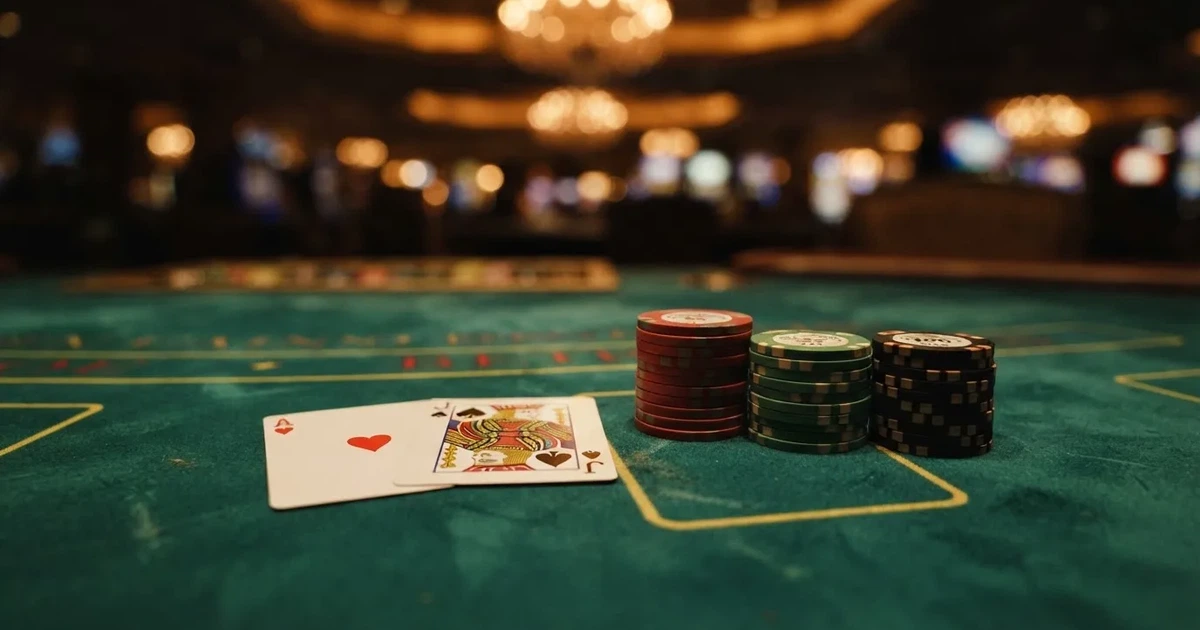
The “table games” shelf at a real casino is the part of the floor where the maths has been published in full. Every hand of blackjack, every spin of a roulette wheel, every baccarat deal carries a fixed house edge that anyone can look up before sitting down. That is what makes the category different from a slot machine: the price of the bet is known, in advance, to two decimal places. For Australians weighing where to play, that arithmetic is only the first question. The second is whether the site offering those odds is allowed to offer them at all — and the answer to that one is settled by statute, not by the operator.
This page covers the table-game landscape an Australian reader actually faces in 2026: the mechanics and the house edges, the legal status of online casino play, the licensed venues where these games are lawful, and the offshore brands the regulator has already acted against. The verdict a reader can draw from it is straightforward. Where the maths is published and the floor is licensed, the rules are honest. Where the operator is offshore, the maths may still be published, but the law sits somewhere else entirely.
Table of Contents
- How Table Game Odds Actually Work
- Where the Money Goes: A Quick Arithmetic on the Cost of Play
- Why Most Online “Table Games” Are Outside Australian Law
- The Blocking Rate: How Fast the Net Closes
- What Player Protection Actually Means in Australia
- Where Australians Can Actually Play
- Bitcoin, Crypto and the Blockchain Pitch
- The Catalogue an Offshore Site Sits Beside
- Offshore Brands the ACMA Has Acted Against
- Choosing a Table Game: What the Numbers Say
- Frequently Asked Questions
How Table Game Odds Actually Work
Casino table games are priced by the house edge — the slice of every dollar wagered that the casino keeps over the long run, expressed as a percentage. Lower is better for the player; the difference between 0.28% and 5.26% is not a rounding error, it is the price of choosing the wrong wheel.

The headline numbers, drawn from the published paytables that follow most of these games online, are these. Liberal-rules blackjack sits at about 0.28% under Las Vegas Strip conditions, the lowest figure on the table. Punto banco baccarat’s Banker bet runs 1.06%, the Player bet 1.24% and the Tie bet 14.36% at standard payout. Single-zero roulette sits at 2.70%; its double-zero American cousin nearly doubles that, to 5.26%. Craps’ Pass line, played correctly, runs about 1.41% — though the side bets on the same table run far higher: 5.56% on the Field, 11.11% on Hard 4 or Hard 10, and 16.67% on Any 7. Keno, where it is offered as a table game at all, runs between 25% and 29%.
Those numbers are not theoretical. They are what the game pays over millions of hands, and the reason casinos can afford to publish them is that the maths is the maths. The price of a bet does not change because the punter had a good night; the house edge is the long-run average, and a player’s session is always one slice out of an unimaginably long series.
Blackjack: the cheapest seat on the floor
Blackjack is the cheapest game on a casino floor for a player who plays the basic strategy chart. The rules are simple enough that the game has been documented since the early seventeenth century — Miguel de Cervantes wrote about a version of it in Rinconete y Cortadillo, composed around 1601-1602, and the modern name came into use around 1899 during the Klondike Gold Rush — but the maths is what keeps it relevant.
Cards count at face value for numbers, ten for face cards, and one or eleven for aces. A starting two-card total of 21 is a “blackjack” or “natural” and beats anything except another. The dealer draws to a fixed total, usually 17, and that rigidity is what makes the basic strategy chart a complete answer rather than a guide: every possible player hand has one correct play against every possible dealer up-card, and following it brings the house edge down to roughly its floor.
Under the most generous rule sets — dealer stands on soft 17, double on any two cards, double after split, resplit aces, late surrender — the edge falls to about 0.28%. Atlantic City rules, a touch tighter on resplitting and surrender, push it to about 0.43%. A player who deviates from the chart, even by standing on 16 against a dealer 10 when basic strategy says hit, gives back a fraction of a percent each time — fractions that compound across a session.
The variants on offer at a licensed floor usually carry a price tag slightly above the basic game. Spanish 21 strips the tens from the deck but offers liberal player rules to compensate. Double Exposure deals both dealer cards face-up, then takes its cut elsewhere. Blackjack Switch lets a player swap the top cards between two hands — a gimmick that adds entertainment value without making the math better. Super Fun 21 allows up to four splits. None of these are traps exactly, but they are not the 0.28% game, and a reader who treats them as such is paying for novelty without recognising the receipt.
Roulette: the wheel that decides your edge
Roulette’s odds depend entirely on the wheel. A single-zero wheel, the European format that has been played in roughly its present form since 1796 in Paris, runs a house edge of 2.70% on every bet except a five-number line on a double-zero layout. The double-zero American wheel adds a second green pocket and pushes the edge to 5.26% on most bets — nearly twice the price for the same game. The pocket is the entire difference. The bets, the payouts, the layout are identical; the only variable is whether the wheel carries one or two zeroes.
That is why a roulette table at a licensed Australian casino is single-zero, and why an offshore site offering “American roulette” alongside its European tables is presenting the worse game without much fanfare. The maths does not care which wheel the punter chose.
Side bets complicate the picture. Some roulette variants — particularly at online casinos — carry side wagers on number patterns, colours or jackpot events with house edges well above the main wheel’s 2.70%. Where the game offers them, the paytable is the document to read, not the marketing.
Baccarat: the banker bet, briefly
Baccarat looks exotic and plays simply. The casino banks the game permanently, deals two hands — Player and Banker — and the punter bets on which one wins. Cards two through nine count at face value, tens and face cards at zero, aces at one, and totals are read modulo ten. In Punto Banco, the variant developed in 1940s Havana and now standard worldwide, both hands are played out by fixed drawing rules: no choices, no strategy, no skill, just the bet.
The Banker bet wins slightly more often than the Player bet because the drawing rules favour it, and the house edge reflects that. In an eight-deck shoe, the Banker bet runs 1.06%, the Player bet 1.24%, and the Tie bet either 14.36% at an eight-to-one payout or 4.85% at a nine-to-one payout. The Tie is the bet to leave alone; its payout looks generous because it rarely wins, and the house edge on it is the steepest number on the table outside keno.
Some baccarat variants carry side bets — pairs, dragon bonuses, the “2 to 1 Baccarat” that Crown Melbourne lists alongside Traditional and Crown Baccarat — and those side bets carry their own edges, often considerably higher than the main game. The paytable attached to the table is the document to check; the same caution that applies to roulette side bets applies here.
Craps: the line bet, and the long list of worse ones
Craps is the most rule-heavy table game on a casino floor and the easiest to play badly. The Pass line bet, which wins on a 7 or 11 on the come-out roll and loses on 2, 3 or 12, runs about 1.41% against the player — competitive with blackjack and baccarat. The Don’t Pass line, its mirror image, is fractionally better at about 1.36%. Either is a reasonable bet.
What a beginner actually does, however, is follow the table’s energy. The stickman calls out prop bets — Any 7 at 16.67%, Hard 4 and Hard 10 at 11.11%, the Field at 5.56% — and the chips pile up on the centre of the layout where those bets live. The house edges on those bets are not secrets, and they are not equal to the Pass line. The Pass line is the cheap seat; the centre of the table is where the house does its best business.
Where the Money Goes: A Quick Arithmetic on the Cost of Play
The house edge translates the wager into a long-run cost. At 0.28% on liberal-rules blackjack, a player betting A$10 a hand for 500 hands in a session — a long evening — is playing through A$5,000 and losing on average A$14 to the house before tipping. At 5.26% on double-zero roulette, the same A$5,000 turnover costs A$263 over the same span. At 14.36% on a baccarat Tie, it costs A$718. The arithmetic is not subtle; the choice of game decides it.
This is also why the licensed floor publishes its edge and the offshore site does not have to. The number is the same whether the floor is in Melbourne or the website is in Curaçao, but the recovery of winnings on a losing streak depends entirely on which side of the law the operator sits on. At a Crown Melbourne table, the worst that happens on a bad night is the loss itself. At an offshore site, the worst that happens can include a withdrawal that never arrives — and no Australian complaints body to chase it through.
Why Most Online “Table Games” Are Outside Australian Law
No state or territory in Australia licenses an online casino to offer real-money table games. The Interactive Gambling Act 2001, tightened by the Interactive Gambling Amendment Act 2017, makes the provision of online casino games, online pokies or in-play betting to a person in Australia a breach of the Act, and the ACMA — the Australian Communications and Media Authority — is the body that enforces it. What is licensed, and what is taxed accordingly, is wagering on racing and sporting events placed before the event, lotteries and keno. Online poker, online blackjack, online roulette, online baccarat: these are not legal offers to Australians, whatever licence the offshore site displays at the bottom of its homepage.
The IGA targets the provider, not the player. An Australian who opens an account with an offshore casino is not personally prosecuted, but the protection they give up is real: no Australian complaints body, no recourse through the Australian Financial Complaints Authority, no guarantee that a withdrawal request will be honoured, and no certainty that the site will still be reachable in a month’s time. The ACMA can direct Australian internet service providers to block an illegal site, and balances held by players on it become unreachable along with it.
What the regulator has done
The ACMA’s enforcement record is the cleanest summary of where the boundary sits. As reported in June 2026, the authority had directed Australian ISPs to block 1,751 illegal gambling and affiliate marketing websites since the first blocking request in November 2019, and more than 230 unlicensed gambling services had withdrawn from the Australian market since the 2017 amendments took effect. The June 2026 round alone added twelve sites: 7Signs, ChromaBet, Donbet, Duospin, Freshbet, Slots Gem, Jacks Club, Lucky Start, Pointsbetz, Spinrise, Vinyl Casino and Wildsino.
The formal-warning register tells the same story at the operator level rather than the site level. The warnings the ACMA has published over table-game brands include:
- RocketPlay — Pulsup Ltd warned March 2026; previously Dama N.V. in May 2022.
- Level Up Casino — Dama N.V., May 2022.
- Woo Casino — Dama N.V., March 2025.
- Spirit Casino — Dama N.V., May 2025.
- National Casino — Consolutetish S.R.L., July 2025.
- Bizzo Casino — Consolutetish S.R.L., July 2025; previously TechSolutions in 2022.
- Ignition Casino — Bamboo Media, July 2025.
- Instant Casino — EOD Code SRL, February 2025.
- Jackbit — Ryker B.V., April 2026.
- Casino Intense — Sterplay Holding Ltd, April 2025.
- Sky Crown — Hollycorn N.V., with its Blue Leo sister brand, under a formal warning that remains on the register.
Each of those warnings names an operator the ACMA holds responsible for offering prohibited interactive gambling services to Australians. The brands change; the legal status does not. Any of them can be blocked in a future enforcement round.
The cost of going offshore
H2 Gambling Capital’s 2025 estimate puts Australian losses to illegal offshore gambling sites at about A$3.9 billion a year, and notes that the share of gambling going through legal channels fell from 74% in 2021 to 64% in the most recent reporting period. That is the cost of an offshore market the regulator cannot close, only chip away at the edges of.
The figure is also the gap that licensed Australian wagering — sports and racing, not casino — is supposed to fill. It does not, because casino games and sports betting are not interchangeable products, and an Australian who wants to play twenty-one at a table is not going to be redirected to a Saturday arvo multi-leg. The legal market, by design, does not offer the thing the offshore market is selling.
The Blocking Rate: How Fast the Net Closes
The arithmetic on the ACMA’s blocking pace is the kind of figure the regulator publishes in fragments. The first blocking request went out in November 2019; by June 2026 the cumulative count stood at 1,751 sites blocked. That works out to an average of roughly 260 sites blocked per year across the full span — but the rate has not been constant. The early years were slow, as the authority built the legal scaffolding for the action; the most recent rounds, by the same count, have been faster.
Stated as a band: somewhere around 200 to 350 sites per year since the first blocking request, with the most recent twelve months running toward the upper end of that range. The condition on the figure is straightforward — the ACMA only adds a site after a formal investigation, an attempted engagement with the operator, and an instruction to ISPs that follows the procedure set out in the Act. The blocking rate is a measure of regulator capacity as much as it is a measure of new offending sites.
What Player Protection Actually Means in Australia
The responsible gambling frame in Australia is built around licensed wagering, not online casino, and that gap is the part of the picture that offshore marketing never mentions.
BetStop, the National Self-Exclusion Register, has been live since August 2023. It binds every Australian-licensed online and phone wagering service: a punter who registers is excluded from opening new accounts or making deposits with any of them, and the exclusion runs for a minimum period set by the punter themselves. The catch is the word “licensed.” An offshore casino is not on the register and has no obligation to honour it. A punter who has self-excluded from every Australian bookmaker can still open an account at an offshore table-game site the same afternoon, and BetStop will not stop them.
The National Gambling Helpline — 1800 858 858 — is free, runs 24/7 and offers chat through Gambling Help Online. It is the right first call for anyone whose gambling has moved past entertainment into harm, and it connects callers to counselling services in their own state or territory. It works regardless of where the gambling happens, which matters because, by the time a punter is ringing the helpline, the offshore-versus-licensed distinction has usually stopped mattering.
The other half of the protection frame is payment. Since 11 June 2024, credit cards, credit-related products and digital currency have been banned as payment methods for licensed online wagering in Australia, with penalties of up to A$247,500 for operators who breach the rule. The legal deposit routes for a licensed Australian wagering account are debit card, bank transfer, PayID/Osko and BPAY. An offshore casino asking for a credit card or a Bitcoin deposit is not following the Australian rules, because it cannot — and the deposit route a site accepts is a fairly reliable tell about which side of the law it sits on.
Where Australians Can Actually Play
The lawful place to play real-money table games in Australia is the licensed casino floor. Every state and territory that allows casino gambling regulates the games that may be offered, the rules under which they must be played, and the house edges built into them.
In Victoria, the Victorian Gambling and Casino Control Commission — which replaced the VCGLR as the state’s casino regulator on 1 July 2022 — must approve any table-game rule or rule change before it is introduced at Crown Melbourne, under the Casino Control Act 1991. The approval process covers baccarat variants (Crown lists three: Traditional Baccarat, Crown Baccarat and 2 to 1 Baccarat), blackjack variants, roulette rules and any new side bets.
In New South Wales, the NSW Independent Casino Commission delegates game-rule approvals to Liquor & Gaming NSW, a delegation in place since 5 September 2022. The framework sits under the Casino Control Act 1992, and section 66 of that Act requires that a casino operator must not permit a game to be played unless the regulator has approved it, and that a copy of the approved rules must be made available to patrons on request. The two NSW casinos operate to that standard.
The Northern Territory Racing and Wagering Commission is the regulator most Australians have not heard of, despite its scale. It licenses 52 of Australia’s online bookmakers — Sportsbet, Bet365, Ladbrokes among them — for tax reasons rather than consumer-protection ones; the commission has no full-time staff and meets once a month in Darwin. Its writ covers wagering, not casino games, and an Australian looking to sit at a blackjack table in the Territory is not going to find one at a licensed NT online operator.
The licensed pubs and clubs across Australia run poker machines — pokies — at scale, but table games are a different product and are concentrated in the casino licences. The Crown complexes in Melbourne and Perth, The Star in Sydney and the Queens Wharf precinct in Brisbane carry the bulk of Australia’s licensed table-game floors. Crown Melbourne’s table-game offering, as approved by the VGCCC, is the most varied single site in the country.
Bitcoin, Crypto and the Blockchain Pitch
Crypto casino table games run the same software as standard online table games — the same random number generators, the same blackjack rules, the same roulette wheels — but settle deposits and withdrawals through blockchain-based payment rails rather than bank transfers. The pitch is speed: a Bitcoin deposit confirms in minutes where a bank transfer can take a day. Crypto-friendly sites also market anonymity, though in practice every licensed exchange in Australia reports transactions over A$10,000 to AUSTRAC under the Anti-Money Laundering and Counter-Terrorism Financing Act 2006.
The legal status does not change. The Interactive Gambling Act prohibits the provision of online casino games to Australians; the currency the games are paid in is irrelevant to the prohibition. A Bitcoin blackjack site licensed in Curaçao is offering prohibited services to Australians just as clearly as a credit-card roulette site licensed in Malta. The crypto wrapper may obscure the transaction, but it does not convert the offer into a lawful one.
The further point is that crypto’s advantages are not what the marketing suggests. A player who wants fast withdrawals and provably-fair games can have both at a licensed Australian wagering site — PayID deposits confirm in seconds, and the games at a licensed casino floor are regulated by a state authority whose name and rulings are public. The crypto pitch is a workaround for restrictions the licensed market does not actually impose, and the restrictions it does not work around — credit card bans, for instance — apply on the licensed side because the licensed side is the one that can be regulated.
The Catalogue an Offshore Site Sits Beside
The “table games” tab at a typical offshore casino carries a wider catalogue than any single licensed venue, and the breadth is part of the draw. Blackjack variants alone include Spanish 21, Double Exposure, Blackjack Switch and Super Fun 21; the baccarat tab offers Punto Banco, Chemin de fer and Mini Baccarat; the roulette tab runs European, American and French wheels plus a handful of novelty variants; and the live-dealer section, streamed from a studio somewhere, offers all of the above with a real human on the other side of the camera.
The point of running through that catalogue is to be clear-eyed about what the offshore market sells. The breadth is real; the prices are real; the games themselves, at the level of random number generators and rules, are recognisably the same games. The difference is the legal frame around them. At a licensed floor, the games are governed by a state regulator whose name appears on the rule approval. At an offshore site, the games are governed by whatever licence the operator has chosen to display — usually Curaçao, sometimes Malta, occasionally the Kahnawake Gaming Commission — and that licence binds the operator to its home jurisdiction, not to Australia.
Live-dealer table games are treated the same way under Australian law as RNG-based ones. The Interactive Gambling Act prohibits the provision of online casino games, and a game played against a real dealer streamed over video is still an online casino game. The fact that a human is shuffling the cards does not convert the offer into a lawful one, and the ACMA’s enforcement actions have covered live-dealer brands on the same footing as everything else.
Offshore Brands the ACMA Has Acted Against
The brands below are the ones the ACMA has issued formal warnings over for offering prohibited interactive gambling services to Australians. Each is named because the regulator named it, not because it has been reviewed or recommended. No Australian-licensed consumer protection applies to any of them. Where research has not confirmed a brand’s table-game support, the row carries an em dash rather than an invented detail.
| Brand | ACMA action and date | Operator named by the ACMA | Table-game support |
|---|---|---|---|
| RocketPlay | March 2026 (Pulsup Ltd); May 2022 (Dama N.V.) | Pulsup Ltd / Dama N.V. | — |
| Level Up Casino | May 2022 | Dama N.V. | Listed by BGaming as carrying its titles |
| Woo Casino | March 2025 | Dama N.V. | — |
| Spirit Casino | May 2025 | Dama N.V. | — |
| National Casino | July 2025 | Consolutetish S.R.L. | Listed on Wikipedia’s coverage of the brand |
| Bizzo Casino | July 2025 (Consolutetish); 2022 (TechSolutions) | Consolutetish S.R.L. / TechSolutions | — |
| Ignition Casino | July 2025 | Bamboo Media | — |
| Instant Casino | February 2025 | EOD Code SRL | — |
| Jackbit | April 2026 | Ryker B.V. | — |
| Casino Intense | April 2025 | Sterplay Holding Ltd | Listed across ABC, ACMA and Crown Melbourne coverage |
| Sky Crown | Published warning, Hollycorn N.V. | Hollycorn N.V. | — |
The “table-game support” column reflects what third-party listings — game-provider catalogues, reference articles, regulatory write-ups — have noted about the brand’s table-game offering. It is not an endorsement of the brand or its catalogue, and it is not a statement that the brand is licensed in Australia. None of the brands above is licensed to offer online casino games to Australians.
What the row pattern means
The eleven brands on this list span a five-year enforcement window — May 2022 to April 2026 — and four distinct corporate owners across them. Dama N.V. appears four times (Level Up, Woo, Spirit, RocketPlay’s earlier warning); TechSolutions and its successors appear twice (Bizzo in 2022 and 2025). The pattern is not random. The ACMA’s enforcement is concentrated on the operators that hold multiple brands under one corporate structure, because a warning to one entity covers its sister sites as a matter of practice. A player who moves between Woo and Spirit after the May 2022 warning to Dama N.V. is moving between two brands the regulator has already named.
The “table-game support” column is sparse for a reason. Research confirmed table-game carry only where a third-party source — a game provider’s own catalogue, a reference article, a regulatory write-up — explicitly noted it. Where research turned up nothing, the row carries an em dash rather than an invented detail. The gap is itself information: most of these brands market themselves primarily on pokies and sportsbook, and the table-game offering is a secondary product whose breadth varies.
The closure on each brand is the same. None is licensed to offer online casino games to Australians; the ACMA has acted against each for offering prohibited services; the only consumer-protection regime that covers them is whatever regime exists in their home jurisdiction, and that jurisdiction is not Australia. A punter who deposits at any of them is doing so without recourse to an Australian complaints body, and the site can be blocked in a future enforcement round with any account balance still on it.
Choosing a Table Game: What the Numbers Say
The question “which table game should I play” has a cleaner answer than most casino-floor guides admit. The choice is between the games whose house edge is published and the side bets whose house edge is also published but considerably worse.
For the punter who wants the cheapest game on the floor, liberal-rules blackjack at 0.28% is the answer. The catch is that the rules matter: a blackjack table that does not allow late surrender, or that requires the dealer to hit on soft 17, runs a higher edge than the published figure, and the difference shows up over a session. The paytable on the table — or the rule sheet available from the floor manager — is the document to read.
For the punter who wants a game with no decisions to make, Punto Banco baccarat’s Banker bet at 1.06% is the answer. The Tie bet, despite its eight-to-one or nine-to-one payout, is the worst regular bet on the table at 14.36%; it should be left alone. Side bets — dragon bonus, pairs, the “2 to 1” variants that some licensed floors offer — should be checked against the paytable before they are played.
For the punter who wants the simplest game that does not involve a deck of cards, single-zero roulette at 2.70% is the answer. Double-zero roulette at 5.26% is the same game with worse odds; if the only roulette on offer is double-zero, the choice is to find a single-zero table or to play a different game entirely.
Craps is the outlier. The Pass line at 1.41% is competitive, but the table layout is built to draw chips toward the centre, where the prop bets carry edges of 5.56% to 16.67%. A punter who sticks to the Pass line and the Don’t Pass line is fine; a punter who follows the stickman’s calls is not.
The arithmetic across all four is the same shape: the edge compounds with turnover. At 1% house edge, A$5,000 of action costs A$50 over the long run. At 5%, it costs A$250. The choice of game is a choice about how much of the bankroll is paid to the house for the privilege of playing.
Frequently Asked Questions
How does the house edge on blackjack compare with roulette or craps at a typical casino?
Blackjack under liberal rules runs about 0.28%, the cheapest seat on the floor. Craps’ Pass line runs about 1.41%, competitive but harder to play correctly. Punto Banco baccarat’s Banker bet sits at 1.06%. Single-zero roulette runs 2.70%; double-zero roulette nearly doubles that to 5.26%. Craps side bets, however, run far higher than the Pass line — Any 7 at 16.67%, Hard 4 and Hard 10 at 11.11%. The spread within a single craps table is wider than the spread across the rest of the floor.
Are live-dealer table games treated any differently under Australian law compared with RNG-based ones?
No. The Interactive Gambling Act 2001 prohibits the provision of online casino games to Australians, and a live-dealer game streamed over video is still an online casino game for the purposes of the Act. The fact that a human dealer is shuffling the cards does not convert the offer into a lawful one. The ACMA’s enforcement actions have covered live-dealer brands on the same footing as RNG-based ones.
What’s the difference between American and European roulette in terms of odds for the player?
The wheel. A single-zero European wheel runs a house edge of 2.70% on nearly every bet. A double-zero American wheel adds a second green pocket and pushes the edge to 5.26%. The bets, the payouts and the layout are otherwise identical; the choice of wheel is the entire difference. Licensed Australian floors offer single-zero wheels; offshore sites may offer both, and the American wheel is the worse game by a wide margin.
Do crypto casino table games use the same rules as a standard online table game, just with a different currency?
The rules, the random number generators and the house edges are the same. What changes is the payment rail — blockchain-based deposits and withdrawals rather than bank transfers — and the marketing claim of faster settlement and greater anonymity. The legal status does not change. The Interactive Gambling Act prohibits the provision of online casino games to Australians regardless of currency, and a Bitcoin blackjack site licensed offshore is offering prohibited services just as clearly as a credit-card roulette site. Crypto may obscure the transaction; the offer remains prohibited.
Where can someone actually play real-money table games legally near them in Australia?
The lawful place is a licensed casino floor. Crown Melbourne and Crown Perth in the west, The Star Sydney in NSW, and the Queens Wharf precinct in Brisbane carry the bulk of Australia’s licensed table-game offering. Smaller venues — the Wrest Point and Country Club in Tasmania, SkyCity Adelaide, the casino at Darwin’s Mindil Beach — offer table games on a more limited scale. The state regulator in each jurisdiction approves the rules of every game offered, and a copy of those rules must be available on request. What no Australian licence covers is an online casino offering real-money table games to a person physically in Australia.
What should a beginner know about baccarat’s banker bet before sitting down at a table?
The Banker bet is the cheapest regular bet on the table, at 1.06% in eight-deck Punto Banco. It wins slightly more often than the Player bet (1.24%) because the fixed drawing rules favour it. The Tie bet, despite an attractive-looking payout, runs 14.36% at the standard eight-to-one — leave it alone. The casino banks the game permanently in Punto Banco, so there is no skill element: the punter places a bet and watches the dealer play both hands. Side bets — dragon bonus, pairs, the “2 to 1” variants at some licensed floors — carry their own edges that should be checked against the paytable before they are played.