
Casino dice games for Australian players: the real landscape in 2026
A player who searches for a casino dice game in Australia in 2026 is rarely searching for one thing. Some are trying to work out which craps bet is least punishing. Some want to know whether an offshore site advertising sic bo is anything they should trust. Some are weighing Crown Melbourne against Crown Perth and wondering what baccarat variants each floor actually runs. The single phrase “casino dice game” sits over a landscape that splits cleanly: a small set of licensed Australian casino floors that do run dice and dice-adjacent games under state regulation, and a much larger set of offshore sites the regulator has spent the last several years warning, blocking and pushing out of the market. This page lays that landscape out, with the house edges and the licence numbers the choices actually turn on.
Currency A$ as of 30 October 2026 against current ACMA and state regulator publications.
Table of Contents
- Responsible gambling supports that matter for dice players
- Specific games: house edges, mechanics and which bets to leave alone
- The eleven offshore brands the ACMA has warned: a comparison and what the warning means
- The Australian casino landscape: what is actually licensed and where
- Legality and regulation: how the Australian rules actually work
- Frequently asked questions
Responsible gambling supports that matter for dice players
A page that compares casinos without naming where to get help is one a person reads when they should not be playing. Casino dice games — craps especially, with its rhythm of repeated small bets — are not the highest-edge table game in the house, but they are among the easiest to sit at for a long stretch without noticing the meter running. The supports below are free, Australian, and work regardless of which channel the player came in through.

Gambling Help Online and the National Gambling Helpline. Gambling Help Online is the national counselling and information service, with web chat and a 24-hour phone line at 1800 858 858. It is free, confidential, and available to anyone in Australia — not only people who play with a licensed operator. Craps players who have moved from a casino floor to offshore sites are exactly the audience this service was built to reach, since offshore sites give no Australian consumer protection of their own.
BetStop, the National Self-Exclusion Register. BetStop went live in August 2023 and lets a person exclude themselves from every Australian-licensed online and phone wagering service in one registration. The scope matters: BetStop binds Australian-licensed bookmakers and wagering operators, which means sports and racing — not offshore casino sites. An offshore dice site is not connected to BetStop, and a player who has registered with BetStop but who then opens an offshore account is not protected by that registration against the offshore site. State-level self-exclusion registers run separately for casino floors — each state and territory’s gaming regulator runs its own venue exclusion scheme, and Crown Melbourne, Crown Perth and The Star Sydney each maintain their own.
State-level casino exclusions and venue support. For players who frequent a particular casino floor, the relevant exclusion scheme is the state one. Victoria’s exclusion register is run through the Victorian Gambling and Casino Control Commission (VGCCC). New South Wales runs its exclusion scheme through Liquor & Gaming NSW. Western Australia runs exclusion through the Department of Local Government, Sport and Cultural Industries. Each scheme lets a person ban themselves from a venue for a chosen period, and the period cannot be shortened once it starts.
What an offshore dice site does not give. An offshore site gives no Australian consumer protection: no complaints body, no recourse if a withdrawal is refused, and no guarantee that a balance is safe if the regulator blocks the domain. The 230-plus services that have left the Australian market since 2017, and the 1,751 sites blocked since November 2019, include sites that simply stopped paying out when the ACMA asked their payment processors and ISPs to act. A reader who has used an offshore site and run into a payout refusal has nowhere to escalate inside Australia.
The decision this page supports is not “find a casino”. It is: figure out which path is legal in the player’s state, what that path actually offers, and where to get help if the game has stopped being a choice.
Specific games: house edges, mechanics and which bets to leave alone
Casino dice games are not one game. They are a small family with very different mathematics, very different pace, and very different legal exposure in Australia. A player who treats them as interchangeable loses at the rate the worst bet in any of them charges. The mechanics below are the ones that decide what a session actually costs.
Craps and its house-edge spread
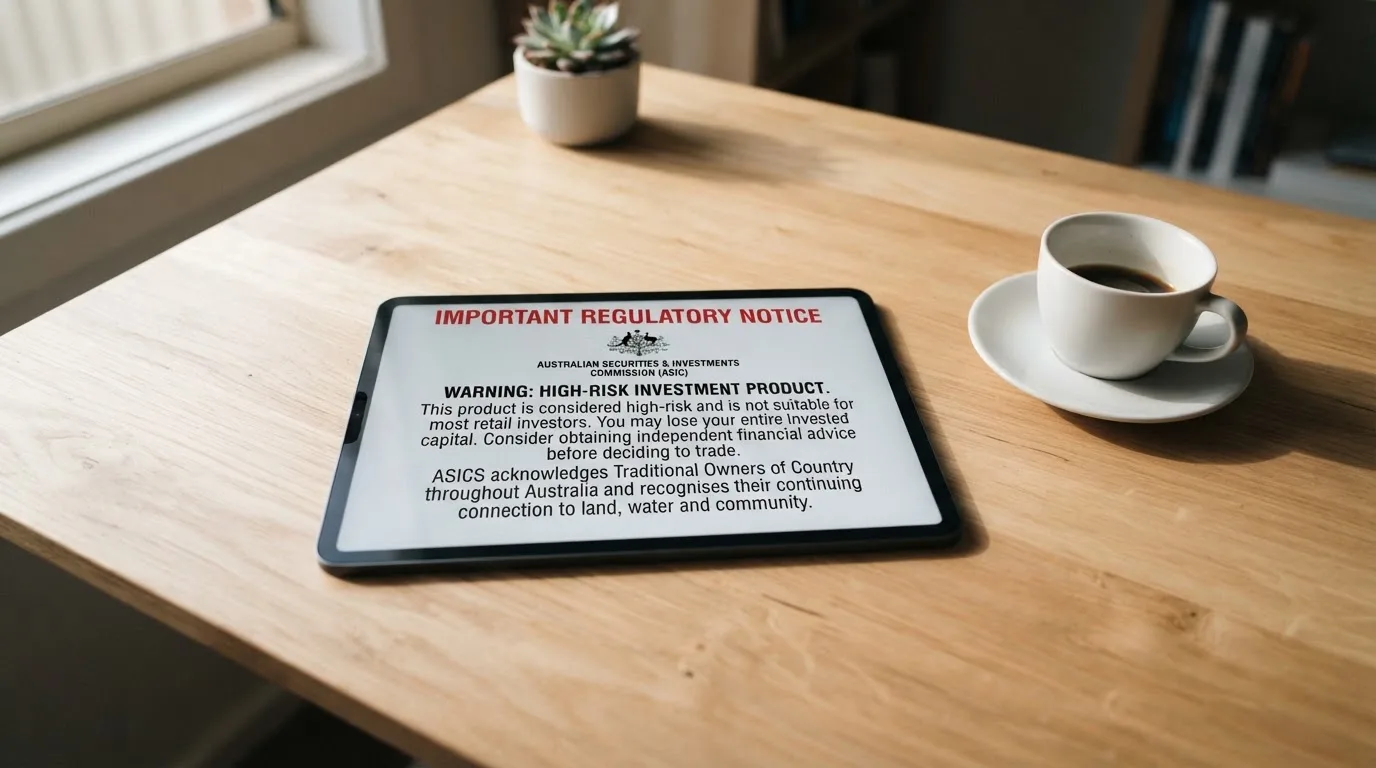
Craps is the dice game most readers mean when they search this key. Two dice, a come-out roll, and a layout of bets that spans from genuinely cheap to punishing. The spread is wide enough that the choice of bet, not the game, is what decides what the table costs over a session.
The cheap bets. Pass Line and Come both carry a 1.41% house edge — the dice must roll a 7 or 11 on the come-out, and any other number becomes a “point” that must be rolled again before a 7. Don’t Pass and Don’t Come are slightly cheaper still, at 1.36%, on the opposite side of the same event. Odds bets, placed behind a Pass or Don’t Pass line once a point is set, carry no house edge at all — the casino pays true odds, and the only cost is whatever the table requires to back the original line bet. A craps player who stays on Pass/Come, Don’t Pass/Don’t Come and the odds behind them is paying roughly 1.4% in expectation, comparable to baccarat’s Banker bet.
The expensive bets. Any Craps — a one-roll bet that wins on 2, 3 or 12 — carries an 11.11% house edge. Hardways (a specific double, like 4-4 or 6-6) carry roughly 9-11% depending on the number. Hop bets, proposition bets and the 7 (“any seven”) all sit in the same punishing range. A player who chases these bets between Pass Line decisions can turn a 1.4% game into a 5-7% session in a dozen rolls, and that is the mechanism by which craps tables earn their reputation.
Right bettors and wrong bettors. A “right bettor” stakes the Pass Line and bets with the shooter; a “wrong bettor” stakes Don’t Pass and bets against. The two are mirror bets, with Don’t Pass slightly cheaper, and the table runs both simultaneously. Nothing prevents a player from being either or from switching mid-session, though etiquette on a live table discourages loudly rooting against the shooter.
Sic bo, the three-dice original
Sic bo is older than craps and is played with three dice rather than two. The Chinese name literally means “precious dice”, and the game was introduced to the United States by Chinese immigrants in the early 20th century. Australian casino floors run it less often than craps, but it appears under both names — “sic bo” and “dai siu” or “big and small” — at several licensed Asian-themed tables in Melbourne and at Crown Perth’s international gaming rooms.
The mathematics. With three dice there are 216 equally likely outcomes, of which 56 are distinguishable when triples are treated as one outcome. Big/Small — betting that the total will be high (11-17) or low (4-10) excluding triples — carries a 2.78% house edge, roughly twice what craps charges on Pass Line. Specific Triple bets, where a player picks the exact number that will come up on all three dice, run from 11.6% to 30.09% depending on the ruleset, and are the bets the floor is most eager to advertise.
Why the spread matters. As in craps, the choice of bet is the decision. A player who stays on Big/Small is paying 2.78%; a player who moves to Specific Triples is paying closer to 30%. Sic bo tables are quieter than craps tables and the pace is slower, so a session on the cheaper bets can run for hours at modest cost; a session that drifts to triples runs at a rate most players do not recognise until the meter has done its work.
Two-up, an Australian coin game that is not dice
Two-up is the game most often mistaken for a dice game in Australian searches, and it is not a dice game at all. Two coins are tossed, and the bet is that both will land with the same side facing up — “heads” wins. The game evolved from the 18th-century English and Irish game “cross and pile” and was brought to Australia by convicts. It is illegal across most of Australia, with narrow exceptions: New South Wales permits it on Anzac Day under the Gambling (Two-Up) Act 1998, played in RSL clubs and hotels; Kalgoorlie in Western Australia hosts Australia’s only year-round legal two-up school; Crown Perth and Crown Melbourne are the only licensed casinos where it can be played on a regular basis, a permission Crown has held since Hobart’s casino legalised it in 1973.
The relevance to a page on casino dice games is mostly definitional: a searcher who lands here from “two-up” deserves to be told they have come to a place for a different game, and to be pointed to Crown’s gaming floors or to Anzac Day.
Baccarat, chemin de fer and punto banco
Baccarat is not a dice game either, but it sits in the same category on an Australian casino floor: a fast table game with a fixed house-edge structure. The Banker bet carries 1.06%, Player carries 1.24%, and Tie carries 14.36%. Punto banco, the variant most played today, was developed in Havana in the 1940s and is dealt from a shoe of 6 or 8 decks, with cards 2-9 at face value, 10/J/Q/K at zero and aces at one, totals taken modulo 10. The casino banks the game at all times and plays out both hands by fixed drawing rules, so a player who understands the bet layout can play without further decision.
Crown Melbourne runs three baccarat variants — Traditional Baccarat, Crown Baccarat and 2 to 1 Baccarat — each approved as a table game by the VGCCC under the Victorian Casino Control Act 1991. NSW requires the same kind of approval under section 66 of the Casino Control Act 1992.
Blackjack, the comparison the dice player is weighing against
Blackjack is not a dice game, but it is the table game most often compared to craps and baccarat when a player is choosing which table to sit at. With optimal strategy the house edge runs about 0.28% under liberal Las Vegas Strip rules (dealer stands on soft 17, double on any two, double after split, resplit aces, late surrender) and about 0.43% under Atlantic City rules. Crown Melbourne’s blackjack variants include Spanish 21, played without 10s, and Double Exposure, both of which sit closer to 0.4-0.6% with optimal play. Side bets such as Perfect Pairs (renamed Crown Pairs in late 2024) and the new Free Bet / Pot of Gold option run several points higher.
The mechanics matter because a craps player who decides baccarat or blackjack is easier will pay roughly the same edge on the basic bet of each game, but will lose the social rhythm of craps and the chance to layer odds bets behind the line.
Why the choice of bet matters more than the game
Across craps, sic bo, baccarat and blackjack, the spread within each game is wider than the spread between games on their cheapest bets. Pass Line craps, Big/Small sic bo, Banker baccarat and optimal blackjack all sit between roughly 0.3% and 2.8%. Any Craps, Specific Triples, Tie baccarat and a blackjack side bet all sit between 5% and 30%. The player who picks the game first and then plays whatever bets the table offers is choosing the wrong variable.
The eleven offshore brands the ACMA has warned: a comparison and what the warning means
The set below is not a ranking and not a recommendation. It is a list of brands the Australian Communications and Media Authority itself has issued formal warnings to, because each one offered prohibited interactive gambling services to people in Australia. The figures in the table are the ACMA’s own dates and operator names. Online casino games cannot be licensed anywhere in Australia, whatever offshore licence a site displays, and any brand in this list operates outside the Australian regulatory regime.
| Brand | ACMA action and date | Operator named by the ACMA | Subject support |
|---|---|---|---|
| RocketPlay | Formal warning, March 2026; earlier warning to a prior operator, May 2022 | Pulsup Ltd (Rocketplay.com.au); Dama N.V. (2022) | — |
| Level Up Casino | Formal warning, May 2022 | Dama N.V. | listings report dice-style content on third-party aggregators |
| Woo Casino | Formal warning, March 2025 | Dama N.V. | — |
| Spirit Casino | Formal warning, May 2025 | Dama N.V. | — |
| National Casino | Formal warning, July 2025 | Consolutetish S.R.L. | listings report table-game categories on aggregator pages |
| Bizzo Casino | Formal warning, July 2025; earlier warning, 2022 | Consolutetish S.R.L.; TechSolutions (2022) | — |
| Ignition Casino | Formal warning, July 2025 | Bamboo Media | — |
| Instant Casino | Formal warning, February 2025 | EOD Code SRL | — |
| Jackbit | Formal warning, April 2026 | Ryker B.V. | — |
| Casino Intense | Formal warning, April 2025 | Sterplay Holding Ltd | listings report table-game categories on aggregator pages |
| Sky Crown | Formal warning, September 2022 | Hollycorn N.V. | — |
The pattern in the table is the point. Of eleven brands, ten sit under ten different offshore operators, with Dama N.V. alone appearing three times across RocketPlay, Level Up, Woo Casino and Spirit Casino. Two brands — Bizzo Casino and RocketPlay — have been warned twice, in different corporate wrappers. The ACMA’s action targets the operator, not the brand, which is why the same offshore group can rebrand and continue operating while the ACMA’s case against the previous entity remains on the public record.
The “Subject support” column is what third-party listings — aggregator pages and review sites — say each brand offers in the way of dice-style content. None of these listings is the operator’s own statement, none is an Australian regulator’s approval, and the listings report what is advertised rather than what a player is guaranteed to receive. Brands with no-data carry no third-party listing of dice-style content at all in the consulted material, and are presented on their other fields only.
What none of these brands offers the player is the thing onshore play does: an Australian consumer protection pathway, a complaint to the state gaming regulator, a payout subject to local law, and a self-exclusion register that actually binds the operator. The 1,751 sites blocked since November 2019 include some of the domains above, and a balance left on a blocked site is a balance the player has no Australian mechanism to recover.
The Australian casino landscape: what is actually licensed and where
The onshore side of this picture is small. Six licensed casinos operate in Australia: Crown Melbourne, Crown Perth, The Star Sydney, The Star Gold Coast (now The Star Brisbane in its expanded form), Skycity Adelaide, and Skycity Darwin. Tasmania does not have a standalone casino but runs gaming on the Spirit of Tasmania and at country clubs. Each casino is regulated by its state or territory gaming authority, and each runs an approved mix of table games under the relevant Casino Control Act.
Victoria. Crown Melbourne is the largest, with the broadest table-game mix in the country. The VGCCC, which replaced the VCGLR on 1 July 2022, approves every game and every change to a game’s rules before it is introduced on the floor. Craps, baccarat (in three variants), blackjack (including Spanish 21 and Double Exposure), roulette and sic bo all run at Crown Melbourne under approved rules. The Crown Pairs rename and the Free Bet / Pot of Gold introduction are recent examples of changes that required VGCCC sign-off before they reached the floor.
Western Australia. Crown Perth is the state’s only casino and runs the only regular licensed two-up school in the country besides Kalgoorlie’s year-round operation. Craps, baccarat and blackjack all run there under the Gaming and Wagering Commission Act. WA’s broader casino regulation is more restrictive than the eastern states’, and WA residents are largely barred from gambling at Crown Perth except for limited categories.
New South Wales. The Star Sydney runs craps, baccarat and blackjack under Liquor & Gaming NSW oversight. Section 66 of the Casino Control Act 1992 requires the regulator to approve every game and to publish the approved rules on patron request.
Queensland, South Australia, Northern Territory. The Star Brisbane, Skycity Adelaide and Skycity Darwin round out the floor set. Skycity Darwin is regulated by the NT Gaming Commission, the same body that licenses 52 of Australia’s online bookmakers — including Sportsbet, Bet365 and Ladbrokes — under Northern Territory Racing and Wagering Commission oversight, though the NTRWC has no full-time staff and meets once a month in Darwin.
What this means for an offshore site offering dice games. None of these state regulators has authority over a Curacao-, Kahnawake- or Costa Rica-licensed operator. An offshore site’s “Australian players welcome” landing page is not a statement the state regulator can verify or enforce. A blocked ACMA notice is the closest thing to local enforcement an offshore site will see.
Legality and regulation: how the Australian rules actually work
The rules below are the frame any honest reading of this market sits inside. They are not a prohibition on playing, and they are not aimed at the player. They are aimed at the operator, and they are the reason an offshore site offering dice games to Australians is operating outside Australian law.
The Interactive Gambling Act 2001, as amended in 2017. The IGA, strengthened by the Interactive Gambling Amendment Act 2017, makes it an offence to provide online casino games, online pokies or in-play betting to a person in Australia. “Provide” is the verb the law uses: the offence is on the operator, not the player. No state or territory licenses online casino games, because none can — the IGA pre-empts them. What is licensable is wagering on races and sport placed before the event, lotteries and keno. Minimum age is 18.
The ACMA’s enforcement record. Since November 2019, when the ACMA issued its first blocking request, a total of 1,751 illegal gambling and affiliate marketing websites have been blocked. The blocking rate has been irregular: a single reporting round in June 2026 saw the ACMA ask ISPs to block 12 more sites in one batch (7Signs, ChromaBet, Donbet, Duospin, Freshbet, Slots Gem, Jacks Club, Lucky Start, Pointsbetz.com, Spinrise, Vinyl Casino and Wildsino). More than 230 unlicensed gambling services have left the Australian market since enforcement was strengthened in 2017, and H2 Gambling Capital’s 2025 report estimates Australians lose about A$3.9 billion a year to illegal gambling sites, with the share of gambling going through legal channels falling from 74% in 2021 to 64%.
The blocking rate, by year and by reporting round
The cumulative total of 1,751 blocked sites reached over a period of roughly six and a half years, between the first blocking request in November 2019 and the June 2026 reporting round. Spread evenly over that interval, the figure works out at a long-run rate of roughly 260-270 blocked sites per year, or close to one site per working day on average. The pace has not been even. Early rounds blocked a handful at a time as the ACMA developed its blocking practice; later rounds have run to a dozen or more in a single ask, and the 12-site round in June 2026 is consistent with that later pace. The figure is best read as a band — roughly 250 to 300 sites per year across the period, with individual reporting rounds varying widely around that average — rather than as a single daily rate. The blocking list is published on the ACMA’s website and is updated as each new round completes.
Credit cards, crypto and the payment ban. Since 11 June 2024, credit cards, credit-related products and digital currency have been banned as payment for licensed online wagering, with penalties of up to A$247,500 for operators who breach the rule. The legal deposit routes for a licensed wagering account are debit card, bank transfer, PayID/Osko and BPAY. An offshore casino asking for a credit card or a crypto deposit is signalling that it is operating outside the Australian rules; that signal is independent of whether the site advertises a Curacao or Kahnawake licence.
The 2026 reform package. The Interactive Gambling Amendment (Gambling Reform) Bill 2026 passed Parliament on 19 August 2026. Its advertising and inducement measures commence on 1 January 2027, so they are law with a start date but not yet in force. The bill tightens the rules around inducements, bonus offers and how licensed operators can advertise. Offshore operators fall outside its scope; the bill targets the licensed side of the market.
Tax treatment of winnings. Gambling winnings of a recreational Australian player are not assessable income under section 6-5 of the ITAA 1997, and gambling losses are not deductible. The exception is a person who carries on a business of gambling, which is a separate question and one to take up with the ATO.
What a player should read in a warning
The ACMA’s formal warnings are public documents, and each one names the operator, the date, the specific conduct complained of, and the relevant sections of the IGA. A warning is not a prosecution and does not carry a financial penalty, but it is the regulator’s clearest signal that an operator is targeting Australians in breach of the law. Two warnings to the same operator in different corporate wrappers — Dama N.V. across RocketPlay, Level Up, Woo Casino and Spirit Casino, Consolutetish S.R.L. across National Casino and Bizzo Casino, TechSolutions across Bizzo Casino in 2022 — are a pattern the ACMA tracks in its own enforcement file.
Frequently asked questions
What is the house edge on a Pass Line bet in craps?
Pass Line carries a house edge of 1.41%, calculated over the full resolution of the bet through any point cycle. It is one of the cheapest bets on any Australian casino floor. The cheapest craps bets are Don’t Pass and Don’t Come at 1.36%, with true-odds bets behind them carrying no house edge at all.
Why does the Any Craps one-roll bet carry a much higher house edge than Pass Line?
Any Craps wins on a single roll of 2, 3 or 12 and loses on every other roll, so it resolves in one decision rather than over a point cycle. The shorter resolution and the smaller number of winning combinations push the edge to 11.11%. It is the bet a craps table advertises most loudly and the bet a serious player leaves alone.
Are dice games like craps offered on licensed Australian casino floors?
Yes, on Crown Melbourne, Crown Perth and The Star Sydney at minimum, with each game’s rules approved by the relevant state gaming regulator before it can be introduced. Sic bo is also available at Crown Melbourne’s international gaming rooms. Two-up runs on the Crown floors as a licensed variant.
What is the difference between a ‘right’ bettor and a ‘wrong’ bettor in craps?
A right bettor stakes Pass Line and bets with the shooter on the come-out roll; a wrong bettor stakes Don’t Pass and bets against the shooter. Don’t Pass is marginally cheaper at 1.36% versus 1.41%, though etiquette discourages loudly rooting against a live shooter.
Can an online dice game legally be offered to someone based in Australia?
No. The Interactive Gambling Act 2001, as amended in 2017, prohibits the provision of online casino games — including dice games — to people in Australia. The offence is on the operator, not the player. An offshore site offering such games is operating outside the Australian regime and gives no Australian consumer protection.
Do all casino dice games use the same house-edge structure as craps?
No. Sic bo’s Big/Small bet runs 2.78%, roughly twice craps Pass Line, and its Specific Triple bets run 11.6% to 30.09% depending on the ruleset. Across craps, sic bo, baccarat and blackjack, the spread within each game is wider than the spread between games on their cheapest bets, which is why the choice of bet matters more than the choice of game.
| Bet | House edge |
|---|---|
| Craps Don’t Pass / Don’t Come | 1.36% |
| Craps Pass Line | 1.41% |
| Sic bo Big/Small | 2.78% |
| Craps Any Craps | 11.11% |
| Sic bo Specific Triple | 11.6% to 30.09% |