
Newest online casinos and no-deposit bonus offers: the Australian picture for 2026
The “newest” stamp on a casino site changes nothing about whether it is legal for Australians. Offshore sites launch constantly, rebrand constantly, and the bonus terms on the landing page are marketing copy rather than Australian consumer law. This page is written for readers weighing a brand-new offshore casino against the actual legal landscape they sit inside: the Interactive Gambling Act 2001 makes online casino games and online pokies prohibited interactive gambling services in this country, no state or territory licenses them, and what looks like a fresh launch often sits behind a warning notice the ACMA has already filed. Data current as of 30 October 2026 and cross-checked against the ACMA’s published formal warnings list.

Table of Contents
- The fundamentals: what “newest” actually means on the Australian market
- The legal frame Australians actually face
- Where to get help if the offshore site is doing what it is doing
- Payments on the newest sites: what Australians will be asked for
- The games on the landing page
- How the newest sites actually appear: the launch-and-relaunch pattern
- The blocking-rate picture: what the ACMA’s enforcement record looks like in numbers
- The eleven brands the ACMA has acted against
- Side-by-side: the ACMA’s formal-warning record
- Where the newest sites sit when an Australian reader compares them
- The choice a reader actually has
- Frequently asked questions
The fundamentals: what “newest” actually means on the Australian market
“Newest” is a marketing description, not a regulatory one. A site launches, takes a brand, advertises a “brand-new” or “launched this month” banner, and invites Australian sign-ups under a Curaçao or Kahnawake licence. The licence is real. The licence does not, in any state or territory of Australia, authorise the site to take bets from Australians on online casino games.
The Australian picture in 2026 is shaped by the Interactive Gambling Act 2001 as amended in 2017, which makes it an offence to provide prohibited interactive gambling services — casino games, online pokies and in-play wagering — to a person physically in Australia. Wagering on races and sport before the event, lotteries and keno are licensed in practice by the Northern Territory Racing and Wagering Commission, which administers 52 online bookmakers including Sportsbet, Bet365 and Ladbrokes. The NTRWC has no full-time staff and meets once a month in Darwin; it is a regulator on paper for sports and racing, and has nothing to do with the casino products that the “newest” sites promote.

So a brand-new casino site, by definition, is offshore, and offshore carries three concrete consequences for an Australian reader. There is no Australian complaints body. There is no Australian recourse if a withdrawal is refused. The site can be blocked by the ACMA while a real-money balance is sitting on it.
The marketing promise the newest sites lead with — a no-deposit bonus, free spins on sign-up, a launch-day prize pool — is real in the sense that the site will credit the bonus. It is unreal in the sense that the bonus sits behind a wagering requirement the marketing page is not required to surface clearly, and there is no Australian body a player can complain to if the free-spins winnings are capped or the wagering terms are revised mid-play. The reader’s position is the same as for any other offshore site: the bonus exists, the licence does not apply here, and any dispute is a private commercial dispute in the operator’s jurisdiction.
The data behind the marketing. H2 Gambling Capital’s 2025 report estimates that Australians lose about A$3.9 billion a year to illegal gambling sites, and that the share of gambling going through legal channels fell from 74 per cent in 2021 to 64 per cent in 2025. That is the scale of the offshore market that the newest sites are competing for. The official register of blocked sites is one way of reading the same picture from the enforcement side: the ACMA reported in June 2026 that 1,751 illegal gambling and affiliate marketing websites had been blocked since the first blocking request in November 2019, and more than 230 unlicensed gambling services had left the Australian market since enforcement was strengthened in 2017.
The newer the brand, the more likely the domain has had prior life. The same operators cycle through brand names — rebrand after a warning, re-launch under a new skin, advertise themselves as “newest” again. Reading “brand-new” on a casino site tells the reader almost nothing about who is actually running it.
See also Choosing a no deposit bonus casino in Australia in 2026.
The legal frame Australians actually face
Online casino is prohibited. The Interactive Gambling Act 2001, as amended by the Interactive Gambling Amendment Act 2017, makes it an offence for a provider to supply online casino games, online pokies or in-play betting services to a person physically in Australia. The offence is on the provider, not the player. No Australian is arrested for opening an account on an offshore site, and the IGA targets the operator.
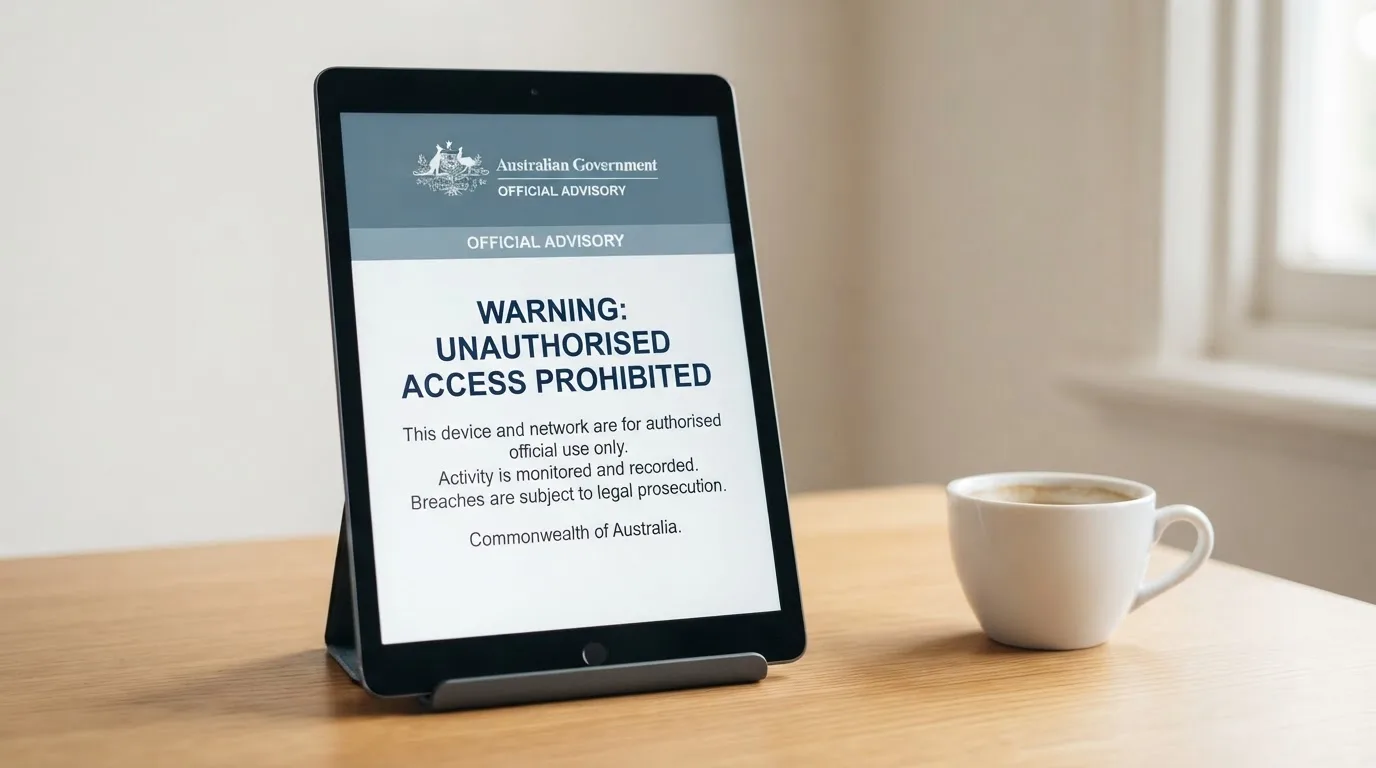
Enforcement runs through the ACMA. The Australian Communications and Media Authority investigates complaints, issues formal warnings under section 254 of the Act, and can direct Australian internet service providers to block specific domains. The ACMA publishes its formal warnings list on its website, naming the operator company and the brand, and the blocking orders go to ISPs that comply at the infrastructure level. The result is that the domain stops resolving in Australia — the site does not load for readers on Australian connections.
Two further restrictions matter for the reader deciding whether to deposit. First, the credit-card ban. From 11 June 2024, Australian-licensed online wagering services cannot accept payment by credit card or other credit-related products, a restriction that also bites digital wallets linked to a credit line. The ban is on the licensed Australian wagering side — an offshore casino is not bound by it — but the reader who tries to deposit with a credit card at an offshore site is being asked to use a payment method that an Australian-licensed operator would refuse. Second, the new inducement rules under the Interactive Gambling Amendment (Gambling Reform) Bill 2026, which passed Parliament on 19 August 2026 and commences on 1 January 2027. The advertising and inducement measures are law with a future start date; on a page read in 2026 they are not yet in force, but the calendar is fixed and the rules will apply from 1 January 2027.
What the offshore licence display on a casino site does, and does not, do. A Curaçao Gaming Control Board licence, a Kahnawake Gaming Commission number, an Anjouan licence badge — these are licences issued by their respective jurisdictions. They authorise the operator to run a casino business in that jurisdiction. They do not authorise the operator to take bets from Australians on online casino games, because Australia does not licence that activity at all. The page that says “Licensed and regulated” is making a true statement about its own jurisdiction; it is not, and cannot be, a statement about Australia.
What “licensed in Australia” actually covers. Australian licensing covers wagering on racing and sport (bookmakers), lotteries and keno. The Northern Territory Racing and Wagering Commission is the regulator of record for 52 online bookmakers. Tasmania, the ACT and other states have their own lottery and keno licences. None of these licences covers online casino. A site that is licensed in Australia for racing does not, and cannot, extend that licence to an online casino product.
Where to get help if the offshore site is doing what it is doing
The “newest” framing is also a category a reader is more likely to encounter after a hard night than a sober afternoon, and the help-services picture is part of the same legal frame the page sits inside. BetStop — the National Self-Exclusion Register, live since August 2023 — binds Australian-licensed online and phone wagering services. It does not bind an offshore casino, because an offshore casino is not a BetStop participant. A player who has self-excluded through BetStop and then opens an account on a brand-new offshore site is outside the protection the register provides. The register works on licensed wagering. The “newest” sites are not licensed wagering.
The national help line is 1800 858 858, free, 24/7, with chat at Gambling Help Online. State-level services sit underneath that. The gambling block tools on Australian bank cards are a separate layer: Westpac’s block refuses authorisation of transactions registered under the merchant category code “Betting/Casino Gambling” on eligible personal credit and debit cards, ANZ’s block can be turned on in the ANZ app and blocks gambling transactions made through a digital wallet such as Apple Pay on an eligible card, and Commonwealth Bank’s gambling lock works through the CommBank app on eligible cards. ANZ’s block carries a 48-hour waiting period to remove and the bank warns that not all gambling transactions will be blocked and some non-gambling transactions might be blocked in error. The bank-side blocks work on merchant category codes, and the bank cannot guarantee coverage. They do not, in any case, stop a withdrawal from being processed once a deposit has gone through.
A note on the language used in this section. Gambling Help Online is the chat service. BetStop is the register. The helpline is the phone number. These are Australian services and they are free. A reader who has lost money on an offshore site and feels the loss is already affecting decisions they would not otherwise make is a reader who should call.
Payments on the newest sites: what Australians will be asked for
The deposit-side payment story on a newest online casino site is a story about the same handful of rails the rest of the market uses, and about the Australian bank’s merchant-category block that decides whether any of them reach the site. The read on this page is descriptive, not an endorsement — these are the methods newest-casino landing pages list, and the Australian rules that govern whether the deposit clears at the bank.
PayID is the rail most often pitched as the “instant” deposit method on newest sites, with transfers that resolve in under a minute, 24/7 including weekends when they go through Osko by PayID to a BSB and account number or to a PayID identifier. PayID is built on Australia’s New Payments Platform, which became accessible to the public on 13 February 2018 and is owned by New Payments Platform Australia Ltd, a non-profit whose 13 shareholders include the Reserve Bank of Australia and the major banks. More than 25 million PayID identifiers had been registered on the platform as of April 2025, and PayID-based instant transfers are available at over 100 Australian financial institutions. The platform runs on a two-minute monthly outage cap. Australian Payments Plus — AP+ — runs the platform after the 2021 ACCC-authorised merger of NPP Australia, BPAY and eftpos. PayID has a built-in anti-scam check: paying to a PayID shows the name of the account holder before the transfer is sent, and AP+ warns that being asked to transfer money to a PayID on an illegal gambling site almost certainly means a scam site.
Osko is the settlement layer behind PayID and ordinary NPP transfers. A bank transfer between participating Australian banks through Osko arrives in under a minute, 24/7, whether addressed to a BSB and account number or to a PayID. The bank’s gambling block is what decides whether the Osko transfer completes. Westpac’s block rejects transactions flagged with the merchant category code “Betting/Casino Gambling” on eligible personal cards. ANZ’s block, turned on in the ANZ app, blocks gambling transactions made through a digital wallet such as Apple Pay on an eligible card as well as on the card itself. Commonwealth Bank’s gambling lock works through the CommBank app on eligible cards. None of these is a guaranteed block — each bank warns that not all gambling transactions will be blocked and some non-gambling transactions might be blocked in error.
BPAY is the bill-payment rail, owned since 1997 by Australia’s four major banks via Cardlink Services Limited and run today by AP+. The payer enters a Biller Code and a Customer Reference Number, and BPAY is offered by over 95,000 businesses and available in the online banking of over 140 Australian financial institutions. BPAY is not a deposit method on offshore casino sites. It is the rail that licensed Australian wagering services use, and a reader who sees BPAY on a casino site’s deposit page is seeing a rail that licensed operators accept and unlicensed operators cannot.
Digital wallets sit on top of the cards. Apple Pay, Google Pay and Samsung Pay collectively accounted for around 45 per cent of all card payments in Australia by number at the end of 2025, and the Reserve Bank’s July 2025 review proposes removing surcharges only on eftpos, Mastercard and Visa card transactions — American Express is explicitly left out of the proposed surcharge ban. Apple Pay itself does not add a fee to consumers; any surcharge a reader sees at checkout is the merchant’s card-processing fee, not Apple’s. Apple sets the transaction limits and PIN requirements through the card issuer and the merchant, not on its own. The wallet does not bypass the card’s gambling block: ANZ’s block reaches Apple Pay transactions on an eligible card, and the IGA credit-card ban reaches a wallet linked to a credit line.
American Express is the outlier on the surcharge question. The RBA’s review leaves Amex outside the proposed surcharge ban because Amex runs as a three-party scheme — issuer, acquirer and network in one — rather than the four-party network Visa and Mastercard run. American Express dates to 1850 as a freight-forwarding company and issued its first charge card on 1 October 1958. Amex’s three-party structure is the reason it sits outside the surcharge-ban scope. The merchant, including a newest-casino site, sets the surcharge. Amex is also a card the Australian gambling block can flag at the merchant category code.
Credit and crypto are the rails that signal an offshore site. A newest casino page that asks for a credit card is asking for a payment method that an Australian-licensed wagering service is forbidden to accept from 11 June 2024, with operator penalties of up to A$247,500 for licensed operators who do. A page that asks for crypto — Bitcoin, Ethereum, USDT — is asking for a payment method that licensed Australian wagering services are also restricted on. AUSTRAC’s threshold-transaction-report rule, which requires reporting of transfers of A$10,000 or more, applies to physical cash, not to electronic bank transfers — so the size of an ordinary electronic deposit does not, on its own, trigger a report.
The page’s reading of the deposit picture. The newest sites, like the rest of the offshore market, take deposits through cards, PayID and crypto. The card rail sits under Australian bank blocks and under the credit-card ban. The PayID rail runs through AP+, with the recipient-name check as a built-in scam screen. Crypto runs outside the Australian rules altogether. The reader’s job is to read the deposit list with the bank’s merchant block and the IGA’s payment rules in mind — and to remember that a deposit cleared on the page does not mean a withdrawal cleared in the same way.
The games on the landing page
A newest casino site tends to lead with the same handful of content categories: online pokies, online slots, live dealer tables, and the “newest RTG casinos” framing that connects to Realtime Gaming as a software provider. The read here is on what each category means on the page, not on which titles to play.
Online pokies is the Australian term for slot machines. They are prohibited interactive gambling services under the IGA — the same legal status as any other online casino game. A newest casino site that lists “the latest pokies” is listing products Australia does not licence. The titles themselves change constantly; the legal status does not.
Online slots and online slot machines are the international terms. Pages that lead with “newest online slots” or “newest slot games” are writing to an international audience. For an Australian reader the legal position is identical to the pokies position: these are prohibited interactive gambling services, and the site displaying them is offering them to Australians in spite of the IGA, not under any Australian licence.
Realtime Gaming is the software provider most often associated with the “newest RTG casinos” framing. RTG’s product is a casino platform; the casinos that run on it are the licensed or unlicensed operators that licence the platform. The platform provider is not the casino, and the operator carrying an RTG licence is the entity the ACMA names in a formal warning, not RTG itself. The newest RTG framing is therefore a hint about the platform, not about the legal standing of the casino.
Live dealer tables are the live-streamed blackjack, roulette and baccarat games that newest sites list as a differentiator. The streaming is real and the studio is usually offshore; the offer to an Australian reader is a prohibited interactive gambling service on the same basis as any other casino game.
The game’s legal status is the page’s load-bearing point. A newest RTG casino, a newest online pokies page and a newest online slots page all converge on the same Australian legal status. The marketing framing differs; the IGA does not.
How the newest sites actually appear: the launch-and-relaunch pattern
The ACMA’s blocking round reported on 26 June 2026 asked Australian ISPs to block 12 more illegal gambling websites: 7Signs, ChromaBet, Donbet, Duospin, Freshbet, Slots Gem, Jacks Club, Lucky Start, Pointsbetz, Spinrise, Vinyl Casino and Wildsino. That is a single round in a continuing enforcement pattern. The first ACMA blocking request was issued in November 2019; by June 2026, 1,751 illegal gambling and affiliate marketing websites had been blocked since that first request.
The pattern on the operator side is launch, warning, rebrand, relaunch. A new brand appears, takes deposits from Australians, the ACMA files a formal warning, the brand either complies or the ACMA moves to a blocking request. Some operators comply and leave the Australian market. Others move the brand to a new skin and advertise themselves as new again. The Dama N.V. record is one example: formal warnings in May 2022 covered six casino brands — Bambet, Dazard, Level Up, Rocketplay, Wild Tornado and Cobra Casinos. The ACMA issued further formal warnings to Dama N.V. over Woo Casino in March 2025 and Spirit Casino in May 2025. The same operator company keeps appearing under different brand names.
The “newest” framing is, on this page’s reading, a flag rather than a signal. A site advertising itself as “newest” is making a marketing claim about its launch date. It is not making a claim about its operator, its licence in any jurisdiction an Australian can use, or its record with the ACMA. A reader who sees “newest” on a casino landing page and treats it as evidence the site has a clean record is reading past the page’s actual content.
The blocking-rate picture: what the ACMA’s enforcement record looks like in numbers
This is the page’s one calculation. It is built from the ACMA blocking totals reported in June 2026 and the date of the first blocking request in November 2019, and the running total gives the enforcement rate.
The arithmetic. The ACMA reported a running total of 1,751 illegal gambling and affiliate marketing websites blocked as of June 2026. The first blocking request was issued in November 2019. The interval from November 2019 to June 2026 is 79 months. Divide 1,751 by 79 and the rate is roughly 22.2 blocked sites per month over the full period. June 2026’s round alone asked for 12 domains to be blocked, which is just under half a month’s worth under the long-run rate, in a single round.
State the result as a band rather than a single figure. The long-run rate from November 2019 to June 2026 sits at roughly 22 blocked sites per month, but the rate per round varies widely — some rounds block single sites, some block the dozen that June 2026’s round named — and individual months can run well above or below the long-run average as blocking requests cluster. A reader looking at a “newest” landing page is looking at one site among the roughly 22 the ACMA’s enforcement arm removes each month on the long-run average, and a brand that survives a year in the Australian market sits among the minority that has not yet been blocked.
The rate is a property of enforcement, not a property of the market. H2 Gambling Capital’s 2025 estimate of A$3.9 billion a year in losses to illegal gambling sites is the demand-side figure. The blocking rate is the supply-side response. The two numbers are not directly comparable — losses are dollars, blocked sites are domains — but the picture they paint together is one of an offshore market the ACMA removes from the Australian internet roughly twenty-two domains at a time, every month, and which keeps replenishing.
The eleven brands the ACMA has acted against
Each brand below is listed because the ACMA itself issued a formal warning over it for offering prohibited services to Australians. This is not a ranking, and it is not a recommendation. The list is in the order research lays out, which is by recency and severity of ACMA action rather than by any quality judgment. The page’s read on each one is the same: online casino games cannot be licensed anywhere in Australia, whatever licence the site displays.
RocketPlay
Pulsup Ltd, identified by the ACMA as the operator in a formal warning regarding Rocketplay.com.au in March 2026, was also subject to an earlier Dama N.V. warning in May 2022. The site’s subject support was confirmed only by Gambling Insider listings, which is the same kind of source as the affiliate marketing pages the ACMA’s blocking rounds target. A reader looking at this brand is looking at a brand that has been named in two ACMA formal warnings under different operator companies over a four-year span. The relevant comparison is with any “newest” framing the site uses today: a brand with two ACMA entries in the formal warnings register is not new in any sense an Australian reader can rely on.
Level Up Casino
Dama N.V. received a formal warning from the ACMA in May 2022 covering six brands, including Level Up. The site sits in the same Dama N.V. cluster as Rocketplay, Wild Tornado, Cobra Casinos, Bambet and Dazard. Subject support is listings-only, sourced from Westpac.com.au, which is the bank’s own gambling-block page rather than an affiliate marketing source. The bank’s block rejects transactions on the merchant category code, and Level Up sits on the same block list as other casino brands under that code. The “newest” framing on the site is, on the same reading as RocketPlay, a brand name rather than a fresh launch.
Woo Casino
Woo Casino received a formal warning from the ACMA in March 2025, which also cited Dama N.V. as the operator. This is a separate warning from the May 2022 cluster, and the ACMA treated Woo as a distinct enforcement target. Subject support has no data in research, so the page does not attach payment methods or other subject-key facts to the brand; it stays on the ACMA formal warning and the IGA legal status, which is what research carries. Woo’s case is the same Dama N.V. operator company that the ACMA has named multiple times over multiple brand names.
Spirit Casino
In May 2025, the ACMA published a formal warning for Spirit Casino, identifying Dama N.V. as the company responsible. Two months after Woo, and the same operator company. Subject support has no data, so the brand is on the page for the warning and the legal status, nothing more. The pattern of Dama N.V. warnings under different brand names is one the page treats as a single operator with multiple skins.
National Casino
The ACMA’s formal warning for National Casino in July 2025 named Consolutetish S.R.L. as the operator. Subject support is listings-only, sourced from acma.gov.au, austrac.gov.au and betstop.gov.au — the ACMA’s own warnings page, AUSTRAC’s threshold-transaction-reports page, and BetStop’s National Self-Exclusion Register. The first source is the warning itself; the second is the regulator that handles large-cash reporting; the third is the self-exclusion register that binds Australian-licensed wagering services. National Casino is, on this evidence, more directly connected to Australian regulatory infrastructure than most of the others on the list, by way of being the subject of more Australian regulatory pages.
Bizzo Casino
For Bizzo Casino, the ACMA issued a formal warning in July 2025 listing Consolutetish S.R.L. as the operator, on top of an earlier warning to TechSolutions (CY) Group Limited and TechSolutions Group N.V. in 2022. Bizzo is the brand on the list with two separate ACMA warnings under two separate operator companies. Subject support is listings-only, sourced from Gambling Insider. The 2022 and 2025 warnings, under different operator names, are the kind of pattern the ACMA’s enforcement record is built around: a brand survives a warning under one operator, comes back under another.
Ignition Casino
Regarding Ignition Casino, the ACMA’s formal warning in July 2025 specified Bamboo Media as the operator. Subject support has no data, so the brand sits on the warning and the legal status. Ignition is one of the brands the ACMA’s July 2025 round covered alongside National Casino and Bizzo Casino. The same month, three separate warnings — three separate brands, three separate operator companies. The round is on the ACMA’s published formal warnings list.
Instant Casino
The ACMA issued a formal warning to EOD Code SRL in February 2025 for its Instant Casino service. Subject support is listings-only, sourced from Ecopayz.com and Payid.com.au — an e-wallet provider’s page and the PayID service’s own page. Instant Casino is, on this evidence, a brand that has appeared in payment-method-side listings on the same kinds of services the rest of the offshore market lists. The warning is dated earlier than the July 2025 cluster, and the subject support is a different kind — payment method rather than regulatory.
Jackbit
Ryker B.V. appeared in an ACMA formal warning concerning Jackbit and CasinOK in April 2026. The April 2026 warning covers two brands under one operator. Subject support has no data. Jackbit is one of the most recent warnings on the list, and CasinOK is named in the same warning — a single formal-warning document covering two brands.
Casino Intense
Sterplay Holding Ltd was cited by the ACMA in a formal warning regarding Casino Intense in April 2025. Subject support is listings-only, sourced from austrac.gov.au, betstop.gov.au and Gamblinginsider.com. Casino Intense sits in the same enforcement frame as National Casino: the warning is published on the ACMA’s page, the regulator’s threshold-transaction-reports page lists it as a relevant entry, and BetStop’s register page sits adjacent in the listing ecosystem.
Sky Crown
Hollycorn N.V. was cited by the ACMA in a formal warning over Sky Crown and Blue Leo casino services, published in September 2022. This is the earliest formal warning on the list. Subject support has no data, so the brand sits on the warning and the legal status. Hollycorn N.V. is the operator company behind both Sky Crown and Blue Leo — the ACMA covered two brands in one warning.
Newest online casinos and no-deposit bonus offers — More on this topic at casino mobile au.
Side-by-side: the ACMA’s formal-warning record
The table below lays out the eleven brands the ACMA has acted against, the operator company the ACMA named, and the date the formal warning was issued. Subject support shows whether the page carries a confirmed, listings-only or no-data source for the payment methods or related subjects research attached to the brand.
| Brand | ACMA action and date | Operator named by the ACMA | Subject support |
|---|---|---|---|
| RocketPlay | Formal warning, March 2026 | Pulsup Ltd (Rocketplay.com.au) | listings-only |
| Level Up Casino | Formal warning, May 2022 | Dama N.V. | listings-only |
| Woo Casino | Formal warning, March 2025 | Dama N.V. | — |
| Spirit Casino | Formal warning, May 2025 | Dama N.V. | — |
| National Casino | Formal warning, July 2025 | Consolutetish S.R.L. | listings-only |
| Bizzo Casino | Formal warning, July 2025 | Consolutetish S.R.L. | listings-only |
| Ignition Casino | Formal warning, July 2025 | Bamboo Media | — |
| Instant Casino | Formal warning, February 2025 | EOD Code SRL | listings-only |
| Jackbit | Formal warning, April 2026 | Ryker B.V. | — |
| Casino Intense | Formal warning, April 2025 | Sterplay Holding Ltd | listings-only |
| Sky Crown | Formal warning, September 2022 | Hollycorn N.V. | — |
Reading the table. Two operator companies appear on the list more than once. Dama N.V. sits behind four of the eleven brands — Level Up, Woo, Spirit and the Rocketplay warning. Consolutetish S.R.L. sits behind two — National Casino and Bizzo Casino. The other seven brands are under separate operator companies, but the page treats the warning register as the only signal an Australian reader has: an operator company with multiple formal warnings is a brand that has been on the ACMA’s radar across multiple brand names. The table does not name “newest” — the ACMA’s register does not record launch dates, and the page does not either.
Where the newest sites sit when an Australian reader compares them
The side-by-side reading. None of the eleven brands is licensed to take online casino bets from Australians. None has an Australian consumer-law recourse. None is bound by BetStop, because BetStop binds Australian-licensed wagering services and these are not Australian-licensed wagering services. The differences between the brands are not in legal standing — they are all in the same legal position — but in the ACMA’s enforcement record and the source ecosystem the brand sits inside.
A reader who is comparing these brands is not choosing between an Australian-licensed option and an offshore one; that choice has already been made by the IGA. The reader is choosing which offshore brand to risk money on, and the ACMA’s published formal warnings list is the only public record of operator-level conduct that an Australian reader has. The page’s take is that the formal warnings list is the minimum a reader should consult before depositing, and that “newest” is the framing the marketing leads with precisely because the ACMA’s record is what it is.
The advertising and inducement rules coming on 1 January 2027 under the Interactive Gambling Amendment (Gambling Reform) Bill 2026 are the next move on this front. They will restrict how Australian-facing advertising can run, which in turn changes the shape of the marketing a newest site can run for an Australian audience. They are law with a start date, not yet in force on a 2026 page, but the calendar is fixed and the rules will apply from that date.
The choice a reader actually has
A reader weighing a newest online casino and its no-deposit bonus offer is choosing between two things: the offshore offer, and what the Australian legal frame actually allows.
The offshore offer. A no-deposit bonus, free spins on sign-up, a launch-day prize pool. The bonus is credited on sign-up. The wagering terms sit behind the marketing, sometimes clearly, sometimes buried in a footer link. The withdrawal is the moment the wagering terms bite — the max-cashout cap, the bonus-only balance, the wagering requirement the marketing page did not lead with. There is no Australian complaints body. There is no Australian recourse. The ACMA can block the domain while a balance sits on it.
The Australian legal frame. The Interactive Gambling Act 2001 prohibits the supply of online casino games to a person in Australia. The credit-card ban stops licensed wagering operators from taking credit deposits from 11 June 2024. BetStop binds licensed wagering services and does not bind the offshore casino. The bank-side gambling block is the closest thing a reader has to a withdrawal from the option, and even the bank warns it does not guarantee coverage.
The page’s read. The “newest” stamp is a marketing description. The legal status is the IGA’s, and it does not change. The ACMA’s formal warnings list is the public record a reader has of operator conduct. The choice the reader makes on this set of brands is a choice about which offshore operator to trust with a deposit, and the trust signal in the Australian context is the formal warnings list, not the launch date.
Frequently asked questions
What usually changes first when a casino site is brand new — its bonus terms or its game library?
The bonus terms. A new site leads with a no-deposit bonus, free spins on sign-up, or a launch-day prize pool to attract sign-ups; the game library is usually a smaller version of the platform provider’s standard catalogue and is filled out over time. The bonus terms are what the brand-new site most wants the reader to see, and they are also the terms the wagering requirements, max-cashout caps and game-weighting rules sit behind.
Do the newest online pokies and slot titles advertised on these sites actually differ from older ones?
The titles rotate constantly and a “newest pokie” page is mostly a marketing refresh — same provider, same engine, new artwork, new theme. For an Australian reader the legal status is identical regardless of release date, because online pokies are a prohibited interactive gambling service under the IGA whether the title launched this month or five years ago.
Is a newest-online-casino no-deposit bonus claim from an offshore site enforceable for an Australian player?
The bonus credit is real in the sense that the site will pay it; whether the winnings can be withdrawn depends on the site’s own terms, which the marketing page does not surface clearly. There is no Australian complaints body an Australian player can take an offshore dispute to, no Australian regulator that can compel a payout, and the ACMA’s blocking power sits over the domain rather than over an individual balance.
How can someone tell a genuinely new casino site from a reskin of an older, already-warned one?
The ACMA’s formal warnings list names the operator company behind the brand, not just the brand name, so a “newest” site whose operator company appears on the warnings list under a different brand is a reskin, not a fresh launch. The warnings list is the only public operator-level record available; the landing page’s launch-date claim is marketing copy.
Why do newest RTG casino pages and newest online slot pages so often overlap on the same domains?
Because RTG is a casino platform provider, and the casinos that licence the platform pool the same game catalogue; a page that lists “newest RTG casinos” is listing casinos running the same software family, and the games those casinos offer overlap because the underlying catalogue overlaps. The platform provider is not the casino, and the operator carrying the platform licence is the entity the ACMA names.
What should change in how cautious someone is, simply because a casino site is new rather than established?
A new site has a shorter track record, less public conduct data and a higher chance of being a rebrand under a new name after a prior warning. The ACMA’s formal warnings list is the public record an Australian reader has, and a new site that does not appear there yet is not the same as a site with a clean record — it is a site whose record has not yet accumulated. The legal status under the IGA is the same either way.