
High cashback bonuses in Australia: the legal shape of the offer and where Australian readers actually stand in 2026
A cashback bonus is one of the most heavily marketed promotions in offshore online casino advertising, and it is one of the hardest offers for an Australian reader to claim lawfully. This guide lays out what a high cashback casino bonus actually is, why every offshore brand offering one to a person in Australia is operating against the Interactive Gambling Act 2001, and what genuinely licensed and protected alternatives look like for anyone reading from Australia. The data is current as of 30 October 2026 and was checked against the Australian Communications and Media Authority’s published register of formal warnings and blocking actions.

Table of Contents
- Why the offer is shaped the way it is: the Australian legal frame
- How a cashback bonus actually works, off the page
- Why the offer is structurally hard for an Australian reader to use
- The crypto-shaped end of the same offer
- Responsible gambling, and what actually binds an Australian player
- The rank order: what the ACMA record actually shows
- What a person reading this from Australia can actually do
- Frequently asked questions
Why the offer is shaped the way it is: the Australian legal frame
Australia is unusual among English-language gambling markets because online casino games — slots, table games, live dealer, online pokies — are prohibited as a category. The Interactive Gambling Act 2001 (the IGA) makes it an offence to provide interactive gambling services of that kind to anyone physically in Australia. The Interactive Gambling Amendment Act 2017 strengthened the regime and gave the ACMA the power to issue formal warnings, accept enforceable undertakings, and direct Australian internet service providers to block offending websites.
What is allowed is narrower than the marketing suggests. Wagering on races and sporting events placed before the event is licensable, as are lotteries and keno. In practice the online bookmakers — Sportsbet, Bet365, Ladbrokes — are licensed in the Northern Territory through the Northern Territory Racing and Wagering Commission, which regulates 52 of Australia’s online bookmakers and has no full-time staff, meeting once a month in Darwin. Online casino games are not on that menu. No state or territory issues a licence for them.

The provider is the target. The IGA targets the operator, not the player — no Australian reader has been prosecuted for playing at an offshore casino — but the consequence falls on the person depositing. An offshore casino gives no Australian consumer protection, no local complaints body and no recourse if a withdrawal stalls or is refused. If the ACMA moves to block the site, the balance can sit in a frozen account on a platform with no Australian-facing dispute resolution. The minimum age to gamble is 18.
The ACMA enforcement record, in numbers
The Australian Communications and Media Authority keeps a running record of its blocking actions and formal warnings, and the rate has climbed every year since the regime was strengthened. As of the snapshot reported in June 2026, the ACMA had asked Australian ISPs to block 1,751 illegal gambling and affiliate marketing websites since the first blocking request in November 2019. More than 230 unlicensed gambling services have left the Australian market since 2017. The latest published round alone, on 26 June 2026, asked ISPs to block a further twelve sites: 7Signs, ChromaBet, Donbet, Duospin, Freshbet, Slots Gem, Jacks Club, Lucky Start, Pointsbetz, Spinrise, Vinyl Casino and Wildsino.
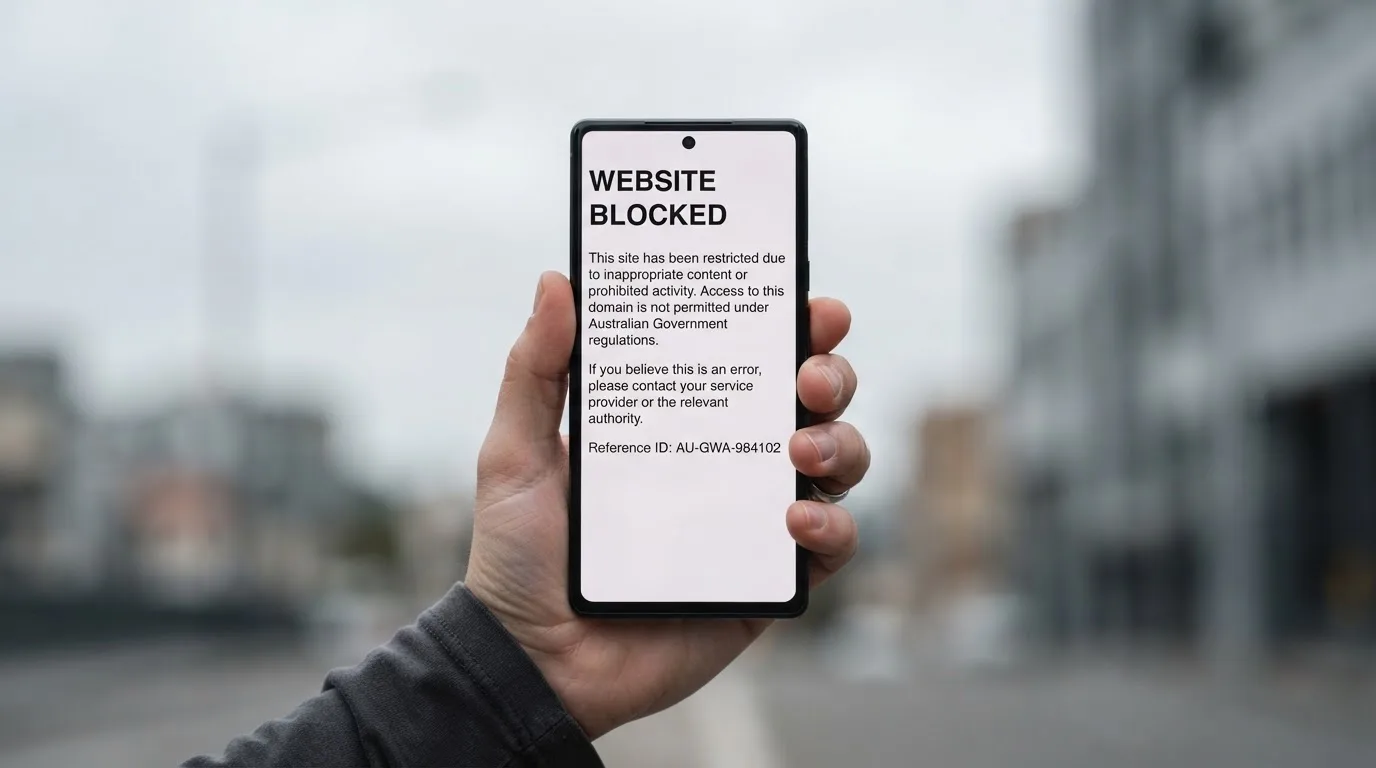
The market figure behind those blocks is large. H2 Gambling Capital’s 2025 estimate puts Australian losses to illegal gambling sites at roughly A$3.9 billion a year. The share of gambling going through legal channels fell from 74% in 2021 to 64%. The implication is not subtle: the offshore cashback offers this guide is named for sit inside the channel that has been losing ground.
What the ACMA has actually warned — the brand record
Formal warnings are the ACMA’s preferred mid-level enforcement tool — one step short of an enforceable undertaking and one step above a direction to block. The agency publishes them with the operator’s legal name and the date. The list that follows is the brands that appear in the ACMA’s published record and that the offshore cashback market advertises heavily to Australian readers.
| Brand | ACMA action and date | Operator named by the ACMA | Subject support |
|---|---|---|---|
| RocketPlay | Formal warning, March 2026 (Pulsup Ltd) — earlier Dama N.V. warning May 2022 | Pulsup Ltd (Rocketplay); Dama N.V. | Listings-only |
| Level Up Casino | Formal warning, May 2022 | Dama N.V. | Listings-only |
| Woo Casino | Formal warning, March 2025 | Dama N.V. | — |
| Spirit Casino | Formal warning, May 2025 | Dama N.V. | — |
| National Casino | Formal warning, July 2025 | Consolutetish S.R.L. | Listings-only (acma.gov.au, austrac.gov.au, betstop.gov.au) |
| Bizzo Casino | Formal warning, July 2025 — earlier 2022 warning to TechSolutions | Consolutetish S.R.L.; TechSolutions (CY) Group Limited and TechSolutions Group N.V. | Listings-only |
| Ignition Casino | Formal warning, July 2025 | Bamboo Media | — |
| Instant Casino | Formal warning, February 2025 | EOD Code SRL | Listings-only |
| Jackbit | Formal warning, April 2026 | Ryker B.V. | — |
| Casino Intense | Formal warning, April 2025 | Sterplay Holding Ltd | Listings-only (austrac.gov.au, betstop.gov.au) |
| Sky Crown | Formal warning, September 2022 | Hollycorn N.V. | — |
The pattern is plain: the operators are mostly Curaçao-registered holding companies with a long list of brand skins. Dama N.V. alone has been warned three times across RocketPlay, Level Up, Woo Casino and Spirit Casino. Consolutetish S.R.L. carries both National Casino and Bizzo. The “Subject support” column reflects what the consulted sources themselves reported — directories, payment pages, the ACMA’s own register. A brand with no supporting listing here has no Australian-facing footprint beyond the warning itself.
The 2026 reform package, and what it changes
The Interactive Gambling Amendment (Gambling Reform) Bill 2026 passed Parliament on 19 August 2026. Its advertising and inducement measures commence on 1 January 2027 — meaning the law has a start date that has not yet arrived as of this guide’s snapshot. On a page read in 2026 the reform is law on paper, not law in effect. Anyone reading this from a date after 1 January 2027 will be looking at a different landscape, and that difference matters for the cashback offer in particular: inducements — the category a high cashback bonus lives in — are central to the new measures.
See also Welcome Bonuses at Online Casinos for Australian Players in 2026.
How a cashback bonus actually works, off the page
A cashback bonus is a rebate on net losses over a defined window. The shape varies, but the core mechanism is the same across brands. The casino calculates the player’s net losses over a period — typically a week, sometimes a day or a month — and returns a percentage of those losses, credited as either cash or bonus funds. The headline number is the percentage: 10%, 15%, 20%, sometimes higher. A “high cashback” offer is usually anything pitched above the 10-15% band the wider market treats as standard.
The marketing sits in front of several conditions a reader has to read past. The first is the calculation base. Some offers calculate cashback on net losses across the casino’s full game library; others exclude live dealer, jackpot slots or specific providers. The second is the form of the payment. Cashback paid as cash can be withdrawn or played further; cashback paid as bonus funds is subject to wagering requirements before withdrawal, and those requirements usually run higher than the equivalent on a deposit match bonus. The third is the cap. Most offers cap the rebate at a fixed ceiling per period — a maximum cashback figure that the percentage applies to. A 20% cashback capped at A$200 on weekly net losses of A$1,000 is worth A$200; the same headline on A$5,000 of net losses is still worth A$200. The fourth is the eligibility. Some offers require a minimum net loss to qualify; others require a deposit in the qualifying period; a few require a bonus code at opt-in.
The “high” in a high cashback bonus is usually paid for in one of three places: a higher wagering requirement, a tighter cap on the maximum rebate, or a shorter window in which to qualify. The page cannot verify any of these terms for the brands the ACMA has acted against — those terms are advertised on affiliate pages whose only source is the operator itself — and so this guide cannot quote them. What it can say is that across the offshore market the cashback figure that looks generous is almost always recovered in one of those three places.
Why the offer is structurally hard for an Australian reader to use
The Interactive Gambling Act 2001 prohibition sits on the operator, but the friction lands on the player in three concrete ways.
Payments are restricted on licensed platforms, and offshore ones don’t accept the ones that aren’t
From 11 June 2024, Australian-licensed online wagering services cannot accept credit card or other credit-related products, including through linked digital wallets such as Apple Pay. The penalty for operators that breach the rule runs to A$247,500. The legal deposit routes for a licensed Australian wagering account are debit card, bank transfer, PayID and Osko, and BPAY. A site asking for a credit card or a cryptocurrency deposit from an Australian reader is, on those grounds alone, operating outside the Australian rules — regardless of any licence the offshore brand displays in its footer.
Australian bank gambling blocks apply to most card payments
Westpac’s gambling block operates at the card level: it refuses authorisation of transactions registered under the merchant category code for betting and casino gambling on eligible personal credit and debit cards. Commonwealth Bank offers a gambling lock in the CommBank app, with the same caveat that the bank cannot guarantee every gambling transaction will be stopped. ANZ’s gambling block, activated through the ANZ app, also blocks gambling transactions made through a digital wallet such as Apple Pay on the underlying card, not just the physical card. Once the block is on, removing it requires a 48-hour waiting period. ANZ also warns that some non-gambling transactions might be blocked in error, and that not all gambling transactions will be blocked — the merchant code is the trigger, not the merchant name.
The major card networks and digital wallets around the edges
American Express operates differently from Visa and Mastercard. It is a three-party scheme — issuer, processor and network in one — rather than a four-party arrangement. That structure is why the Reserve Bank of Australia’s July 2025 review of merchant card payment costs proposes removing surcharges only on eftpos, Mastercard and Visa transactions, leaving American Express outside the scope of the proposed ban. Apple Pay does not charge consumers a fee for in-store, online or in-app use; any surcharge on an Apple Pay transaction comes from the merchant’s card-processing fees. Transaction limits and PIN requirements for Apple Pay are set by the card issuer or the merchant, not by Apple itself. None of these mechanics override the underlying prohibition: a cashback bonus funded by an American Express charge through Apple Pay, on a prohibited interactive gambling service, is still a prohibited transaction.
The crypto-shaped end of the same offer
A reader searching for “crypto casino cashback” or “bitcoin casino cashback” finds a parallel market run on similar bones — a Curaçao-registered brand, a high cashback percentage, deposits and withdrawals in bitcoin, ethereum or stablecoins. The mechanics of the bonus are the same as the fiat version: net losses over a window, returned as cash or bonus funds, with a wagering requirement attached.
The legal position in Australia is the same. Cryptocurrency is one of the categories banned as payment for licensed online wagering since 11 June 2024. An offshore casino accepting bitcoin from an Australian reader is operating outside the Australian rules on payment, regardless of whether bitcoin is treated as property or as a payment method under the operator’s own licence. A cashback bonus paid in bitcoin to an Australian wallet is a cashback bonus paid on a service the ACMA can block. The crypto angle changes nothing about the prohibition; it changes the practical friction around a chargeback.
Where the crypto offer does shift the picture is on anonymity. A bitcoin deposit moves through a public ledger; an Australian bank account does not, but is reported to AUSTRAC under the standard reporting regime. AUSTRAC’s threshold-transaction-report rule, which requires reports on transfers of A$10,000 or more, applies to physical cash — not to ordinary electronic bank transfers, regardless of size. A bitcoin transaction is not anonymous in the legal sense; it is pseudonymous, and a chain analysis firm can often tie wallet activity back to a person. The marketing of “anonymous play” in this market is a misdescription.
Responsible gambling, and what actually binds an Australian player
The Australian responsible-gambling framework sits on top of the wagering services that are licensed, and it does not extend to offshore casinos.
BetStop, the National Self-Exclusion Register, has been live since August 2023. It binds every Australian-licensed online and phone wagering service — every sports bookmaker and every racing bookmaker licensed in Australia. It does not bind an offshore casino. A player who has registered with BetStop and then opens an account at a Curaçao-licensed brand offering a high cashback bonus is not, from BetStop’s point of view, self-excluded from that brand. The register was built on the licensed wagering side, and the prohibition sits on the other side of the same wall.
What it does offer a player reading this page is a tool that does work. A BetStop registration of three months or longer blocks the player from opening new accounts, depositing and using marketing promotions at Australian-licensed wagering services. The minimum registration period is three months; longer periods run to one year, three years, five years or a permanent exclusion. The choice is irrevocable for the period selected.
The other end of the framework is the National Gambling Helpline on 1800 858 858 — free, 24/7, with chat available at Gambling Help Online. Both are independent of the licensed-versus-offshore question. A reader using them is taking a step the offshore cashback offer does not give them.
High cashback bonuses in Australia — More on this topic at casino mobile au.
The rank order: what the ACMA record actually shows
This is not a ranking of casinos to play at. The Interactive Gambling Act 2001 makes offering online casino games to a person in Australia a prohibited interactive gambling service. Every brand below has been formally warned by the ACMA for offering prohibited services to Australians. The order is the ACMA’s own publication order, grouped by operator for legibility, and the verdict that closes each entry is the page’s read of what the warning record means for someone considering the brand.
1. RocketPlay
The ACMA issued a formal warning to Pulsup Ltd over Rocketplay in March 2026, on top of an earlier May 2022 warning to Dama N.V. that covered Rocketplay among six brands. The brand is advertised in Australian-facing affiliate listings as a high-cashback casino. The current Australian-facing record is two warnings across two operators in four years. Whatever bonus terms the affiliate pages quote, the operator standing behind them is a Curaçao-registered company the ACMA has had to warn twice.
2. Level Up Casino
The May 2022 Dama N.V. warning covered Level Up among six brands. No further ACMA action on Level Up specifically has been published. The brand shares an operator with RocketPlay, Woo Casino and Spirit Casino. The pattern is one operator, four brand skins, repeat warnings. A reader looking at the brand is looking at the operator record.
3. Woo Casino
The ACMA’s March 2025 formal warning to Dama N.V. covered Woo Casino. A 2025 action against an operator that had already been warned in 2022 is a regulatory signal: the earlier warning did not stop the conduct. Woo Casino has no Australian-facing footprint beyond the warning record itself — none of the consulted listings reported subject support for this brand.
4. Spirit Casino
The May 2025 Dama N.V. warning covered Spirit Casino. The same operator, the same year as Woo Casino. The ACMA’s pattern across Dama N.V. brands is consistent: one warning is issued, more brands surface, the operator is warned again.
5. National Casino
Consolutetish S.R.L. was warned in July 2025 over National Casino. The warning carries forward the trajectory from the 2022 TechSolutions warning on Bizzo: the brand portfolio has migrated across operators, and the ACMA has followed. The consulted listings place National Casino across Australian-facing directories, the ACMA register, AUSTRAC material and BetStop — a deeper Australian-facing trail than most on this list.
6. Bizzo Casino
Consolutetish S.R.L. was warned in July 2025 over Bizzo, on top of the 2022 warning to TechSolutions (CY) Group Limited and TechSolutions Group N.V. A brand that has been warned twice across two operators over three years is one the ACMA has treated as a repeat offender. The offer to Australian readers has been the same on each occasion: prohibited services.
7. Ignition Casino
Bamboo Media was warned in July 2025 over Ignition Casino. The brand has no other Australian-facing footprint in the consulted sources. The warning is the only documented record of contact between the brand and the Australian regulator.
8. Instant Casino
EOD Code SRL was warned in February 2025 over Instant Casino. The consulted sources for this brand run through an e-wallet listing and PayID material — a payment trail that overlaps with the Australian payments framework the IGA prohibits for licensed wagering. Instant Casino is the clearest example on this list of an offshore brand intersecting with the Australian payment rails the IGA was built to keep gambling transactions on.
9. Jackbit
Ryker B.V. was warned in April 2026 over Jackbit. The brand is on the recent end of the ACMA’s published list. No further Australian-facing footprint in the consulted sources.
10. Casino Intense
Sterplay Holding Ltd was warned in April 2025 over Casino Intense. The consulted sources place the brand across AUSTRAC material, BetStop material and Gambling Insider material — the same Australian-facing trail as National Casino.
11. Sky Crown
The ACMA’s published warning to Hollycorn N.V. covered Sky Crown and Blue Leo, dated September 2022. The earliest warning on this list, and the only Hollycorn-branded entry. The brand has no further Australian-facing footprint in the consulted sources.
The order is the ACMA’s record, not a recommendation. Reading the record as a whole: eleven brands, seven operators, two operator-level repeats (Dama N.V. across four brands; Consolutetish S.R.L. across two). No brand on the list has been licensed by any Australian jurisdiction. None of the bonuses these brands offer can be lawfully claimed by a person in Australia.
What a person reading this from Australia can actually do
The legal route in Australia is narrow and specific. Online casino games are not on it. What is on it is wagering on races and sporting events before the event, lotteries and keno — all licensable, all regulated, all bound by BetStop and the National Gambling Helpline, all paid for through the legal payment routes (debit card, bank transfer, PayID, Osko, BPAY).
The cashback-style offer exists on the licensed side too, but it is shaped differently. Licensed Australian bookmakers run promotions that look like cashback — money-back offers on certain bet types, second-chance wagers, refund-if-loser promotions — under inducement rules that the Interactive Gambling Amendment (Gambling Reform) Bill 2026 tightens from 1 January 2027. The legal route also carries consumer protection. If a licensed wagering service refuses a withdrawal, the player has an Australian complaints body to approach; if an offshore casino does the same, the player has none.
Where the cashback offer is genuinely available in Australia
For a person who wants the cashback shape of offer and wants to claim it in Australia, the alternatives are land-based. Licensed Australian casinos — Crown Melbourne, Crown Perth, The Star Sydney, The Star Gold Coast, SkyCity Adelaide, Lasseters Alice Springs, Casino Canberra — operate cashback programmes for members through their loyalty cards. The cashback is paid as a credit on play, in the AUD, against losses on the gaming floor. The Australian pokies venues licensed by state regulators offer similar rewards through club loyalty schemes. None of these are offshore; none of them are subject to the IGA prohibition because the offer is consumed in person, on premises licensed by an Australian jurisdiction.
For a reader outside Australia
For a reader who is not in Australia, the prohibition does not apply. The brands on the ACMA warning list operate in jurisdictions where online casino play is legal — Curaçao in most cases, sometimes Anjouan, sometimes Kahnawake — and a reader in those jurisdictions can claim whatever bonus terms the operator is offering. The warnings record that the operators have offered the same services to Australian readers, which is the relevant finding for a page addressed to Australian readers. The page does not advise readers outside Australia on what to claim.
Frequently asked questions
What does a cashback bonus actually pay back?
A cashback bonus pays back a percentage of net losses over a defined window — a week, a day or a month. The percentage is the headline figure; the conditions around it (which games count, whether the rebate is cash or bonus funds, the cap on the maximum rebate, the wagering requirement if bonus funds) determine what the offer is actually worth. A 20% cashback paid as bonus funds with a 40x wagering requirement is worth less than a 10% cashback paid as cash with no requirement.
Is a cashback bonus the same thing as a deposit match?
No. A deposit match adds bonus funds equal to a percentage of the player’s deposit. A cashback bonus returns a percentage of net losses after the play has happened. The two offers run in opposite directions: the deposit match rewards depositing more; the cashback bonus rewards losing more. The wagering requirement, the cap and the form of the credit differ between them in ways that affect what each is actually worth.
Is it legal for an offshore casino to offer cashback to players in Australia?
No. The Interactive Gambling Act 2001 prohibits offering online casino games to a person in Australia. A cashback bonus on those games is part of the prohibited offering. The ACMA’s enforcement record — 1,751 sites blocked since November 2019 and more than 230 services having left the Australian market — is the practical shape of that prohibition.
Can a crypto casino pay a cashback bonus differently from a fiat one?
No. The Interactive Gambling Act 2001 and the credit-card and digital-currency ban from 11 June 2024 apply to the service, not to the payment method. A cashback bonus paid in bitcoin to an Australian wallet on a prohibited service is still a prohibited transaction. The crypto shape changes the friction around a chargeback; it does not change the legal status of the offer.
What usually caps how much cashback can be earned?
Three things, in roughly this order of how often they bite. A maximum rebate per period, which caps the percentage at a fixed dollar amount. A wagering requirement, when the cashback is paid as bonus funds rather than cash. An excluded-game list, which removes parts of the casino’s library from the net-loss calculation. A minimum net loss to qualify is the fourth cap, less common but present in some offers.
Does a high cashback percentage make up for unfavourable terms elsewhere?
It depends on where the unfavourable term sits. A 20% cashback with a low cap and a long wagering requirement is worth less than a 10% cashback with a higher cap and no requirement. The percentage is the figure the marketing leads with; the cap, the wagering multiple and the qualifying window are the figures that determine what the offer pays out. A reader comparing two offers should start with the cap and the requirement, not the headline percentage.